Graviteam Tactics: Tunisia 1943 similar games & best alternatives
Graviteam Tactics: Tunisia 1943
2017
Related articles
Quick resume
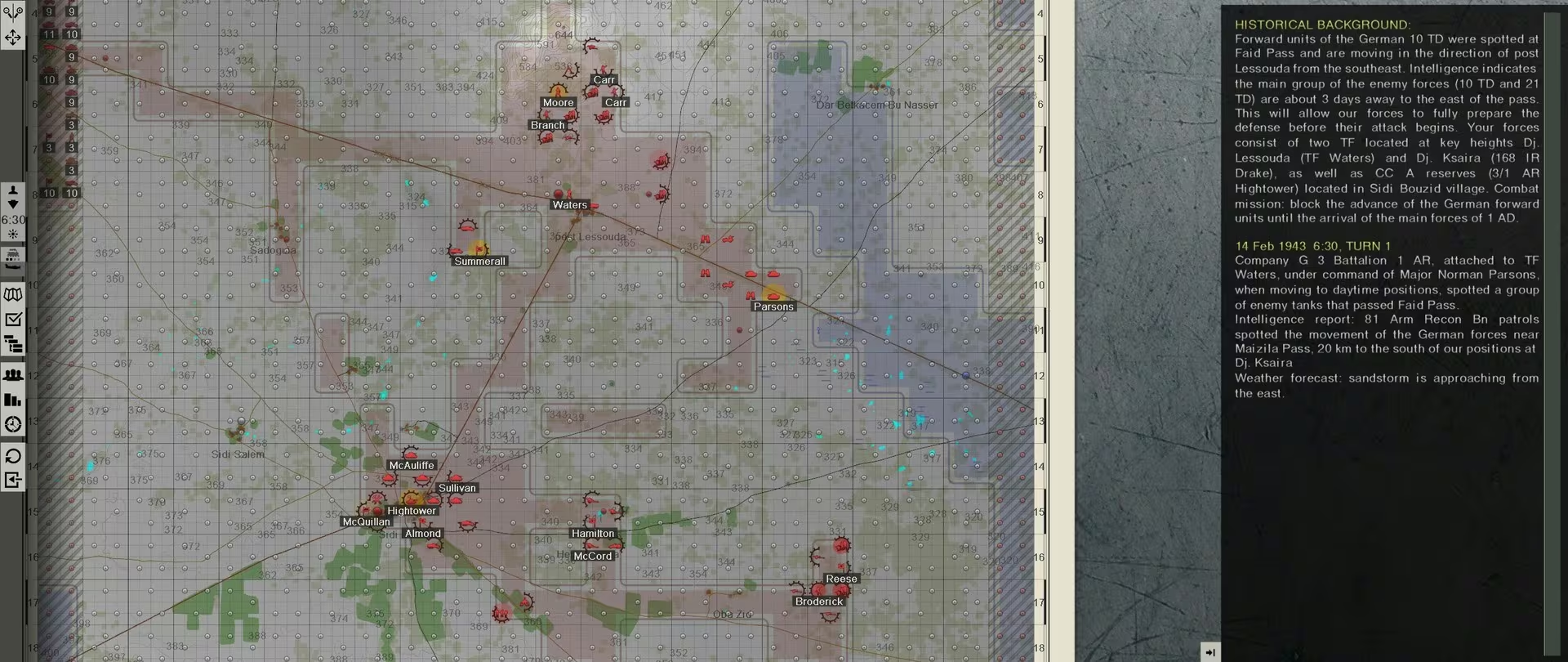
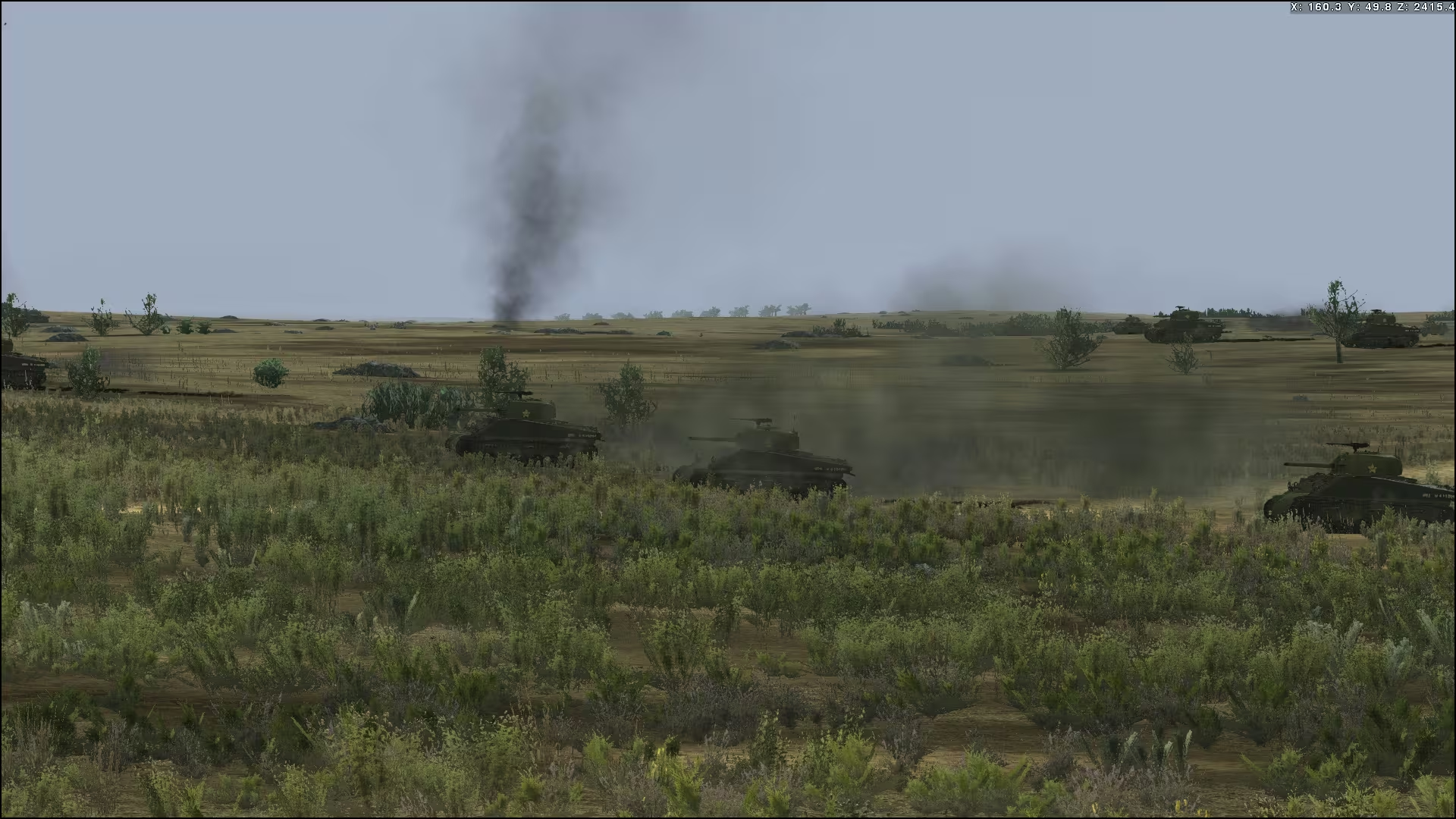
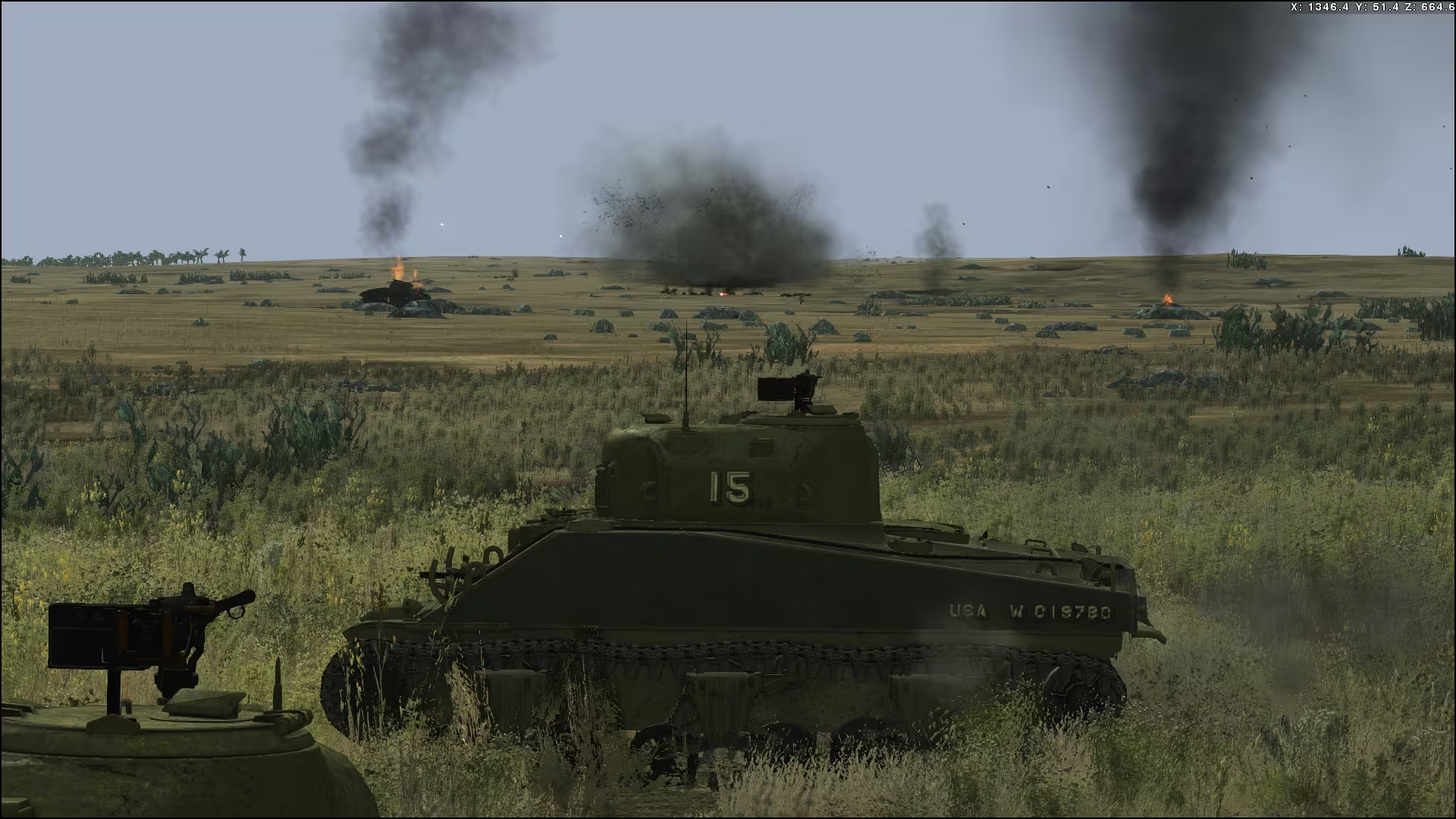
Tank Warfare: Tunisia 1943 - tactical battalion level combat simulation. During the Tunisian Campaign in winter 1943 German Panzer battlegroups launch a counteroffensive against the Allied forces to drive them out of Eastern Dorsal.
Global score
84/100
Genres
Simulator, Strategy
Similar games
Pros
- Highly realistic and detailed ww2 tactical simulation
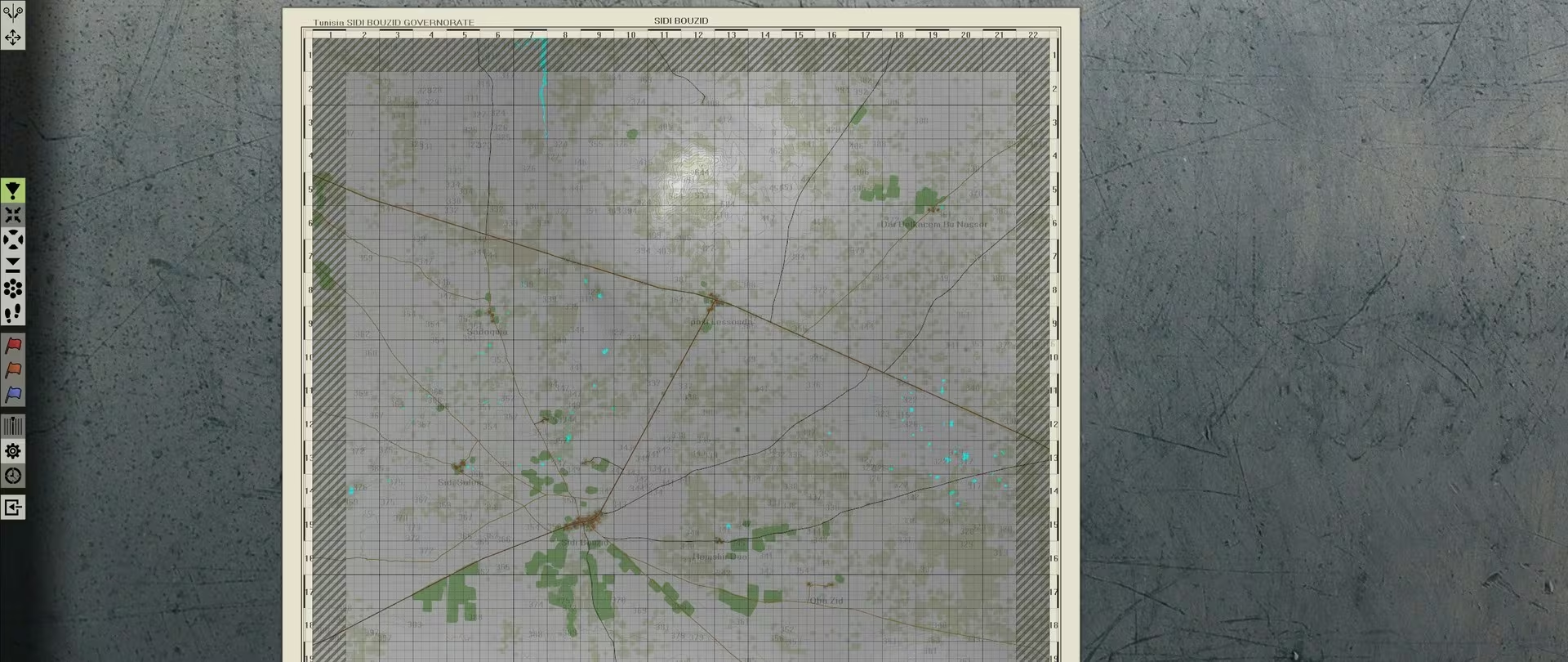
- Large, varied maps with authentic terrain
- Deep strategic and tactical gameplay
- Active developer support and community
- High replay value with campaigns and editor
Cons
- Steep learning curve and unintuitive ui
- Lack of multiplayer and cooperative modes
- Sparse tutorials and documentation
- Occasional ai quirks and bugs
- Graphics and sound could be improved
Analysis
Less representative of its motivational profile, with noticeable differences. Motivations that often define this kind of title include Leadership, Survival, Violence, Strategy. It leans lower than usual among comparable games on Fantasy, Expression, Relaxation.
How to use the graph
Similar games map
Each dot is a game. They are arranged from the same motivation profile as in the “Motivations” section below. Closer dots usually mean more similar reasons to play (exploration, competition, relaxation, etc.)—not that one game is “better” than another.
- Larger dot with a light outline: the game you are viewing.
- Colour: groups of games with comparable motivation patterns (statistical clusters).
- Hover a dot to see the game name; click to open its page.
- Scroll or double-click the chart to zoom out and see more games.
Why don’t the axes read like a score? This view uses t-SNE: it only keeps who is close to whom. The scales are not “good to bad” or hours played—they separate groups on the map. Read distance between dots, not the axis numbers.
Motivations
-
Autonomy4
"Players have significant control over strategic and tactical decisions, planning battles and issuing orders with freedom, though unit execution is partly AI-driven."
-
Competence5
"High skill ceiling with complex mechanics, realistic ballistics, and tactical depth requiring learning and mastery."
-
Competition-3
"Focus is on single-player experience against AI; multiplayer is absent and there is little emphasis on player-vs-player competition."
-
Continuation4
"Players invest many hours overcoming steep learning curve and enjoy long, involved battles and campaigns."
-
Cooperation-4
"Gameplay centers on individual command and control of units; multiplayer and cooperative modes are not present."
-
Creativity3
"Players can create custom battles and scenarios with an editor, allowing some creative input beyond preset campaigns."
-
Domination-4
"Interactions are with AI opponents; no evidence of social dominance or player power assertion over others."
-
Escapism3
"Provides immersive historical simulation and distraction from real life, though with a focus on realism rather than fantasy."
-
Expectation-4
"Players engage voluntarily driven by personal interest and intrinsic motivation to master the complex simulation."
-
Experimenting4
"Encourages experimentation with tactics, unit placement, and use of terrain; steep learning curve invites trial and error."
-
Exploration2
"Maps are large and varied with realistic terrain, encouraging tactical exploration and use of environment."
-
Expression-3
"Limited cosmetic customization; focus is on realistic unit representation rather than player self-expression."
-
Fantasy-5
"Strong emphasis on historical accuracy and realistic simulation rather than imaginative or fictional elements."
-
Fellowship-4
"Minimal social interaction; community exists but gameplay is primarily solo against AI."
-
Growth4
"Players develop skills and knowledge over time to master complex systems and tactics."
-
Health-4
"Sedentary gameplay with no physical activity involved."
-
Idle-3
"Requires sustained attention and planning; battles can last hours demanding focus."
-
Intimacy-5
"No evidence of close social relationships or emotional sharing; interactions are limited to gameplay."
-
Leadership5
"Players act as commanders issuing orders to subordinate units, managing large formations and strategy."
-
Progression3
"Campaigns involve managing resources, unit experience, and reinforcements, showing progression over time."
-
Relaxation-2
"Game is challenging and requires patience; can be tense and demanding rather than purely relaxing."
-
Sensation2
"Visual and auditory effects contribute to immersion but graphics are functional rather than flashy."
-
Status-4
"No social status or recognition systems; achievements are personal and not publicly ranked."
-
Story3
"Campaigns are historically based with narrative context, though focus is on tactical simulation."
-
Strategy5
"Heavy emphasis on planning, problem solving, and tactical/operational decision making."
-
Thrill2
"Tension arises from realistic combat scenarios but pacing is slow and methodical rather than high-adrenaline."
-
Value4
"Players report high replay value and satisfaction for the price, especially during sales."
-
Violence4
"Realistic depiction of combat, destruction, and casualties is central to gameplay."
-
Survival4
"Players must manage unit survival, avoid losses, and maintain combat effectiveness under threat."
Last update: 29/04/2026