NOBUNAGA'S AMBITION: Souzou Thumbnail

NOBUNAGA'S AMBITION: Souzou similar games & best alternatives

NOBUNAGA'S AMBITION: Souzou

PC (Microsoft Windows) • 2014

Related articles

Quick resume

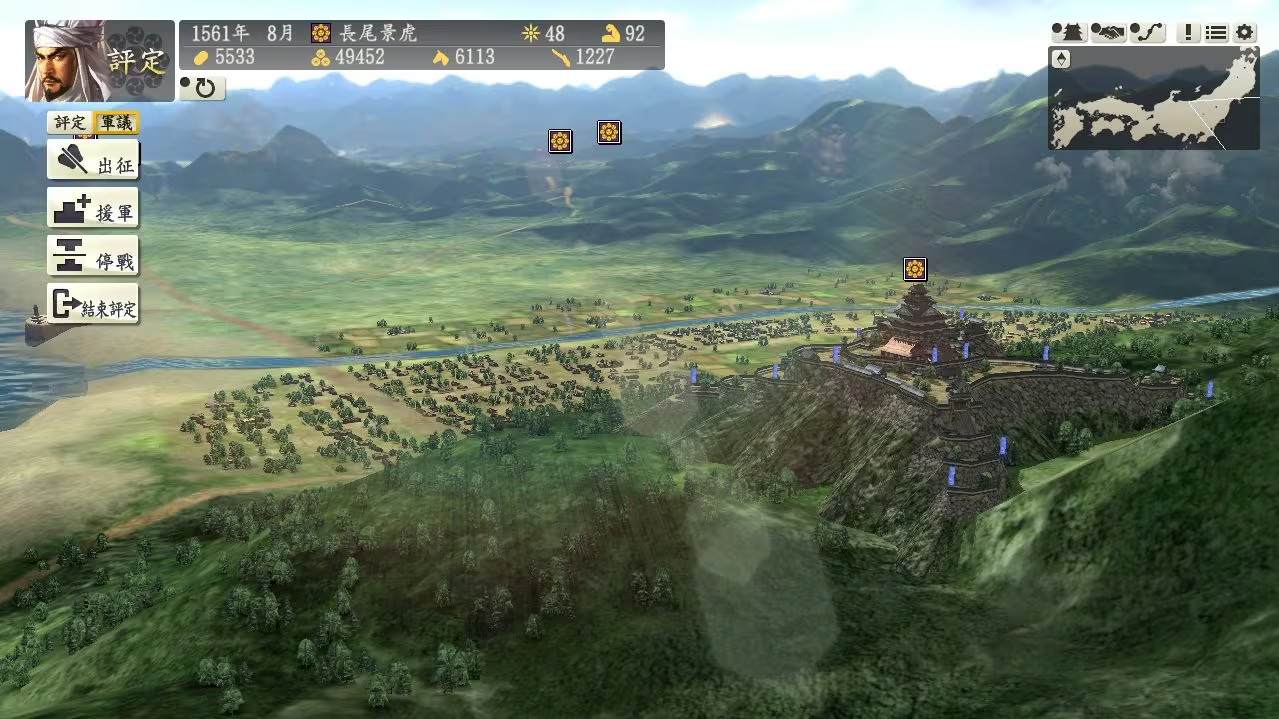
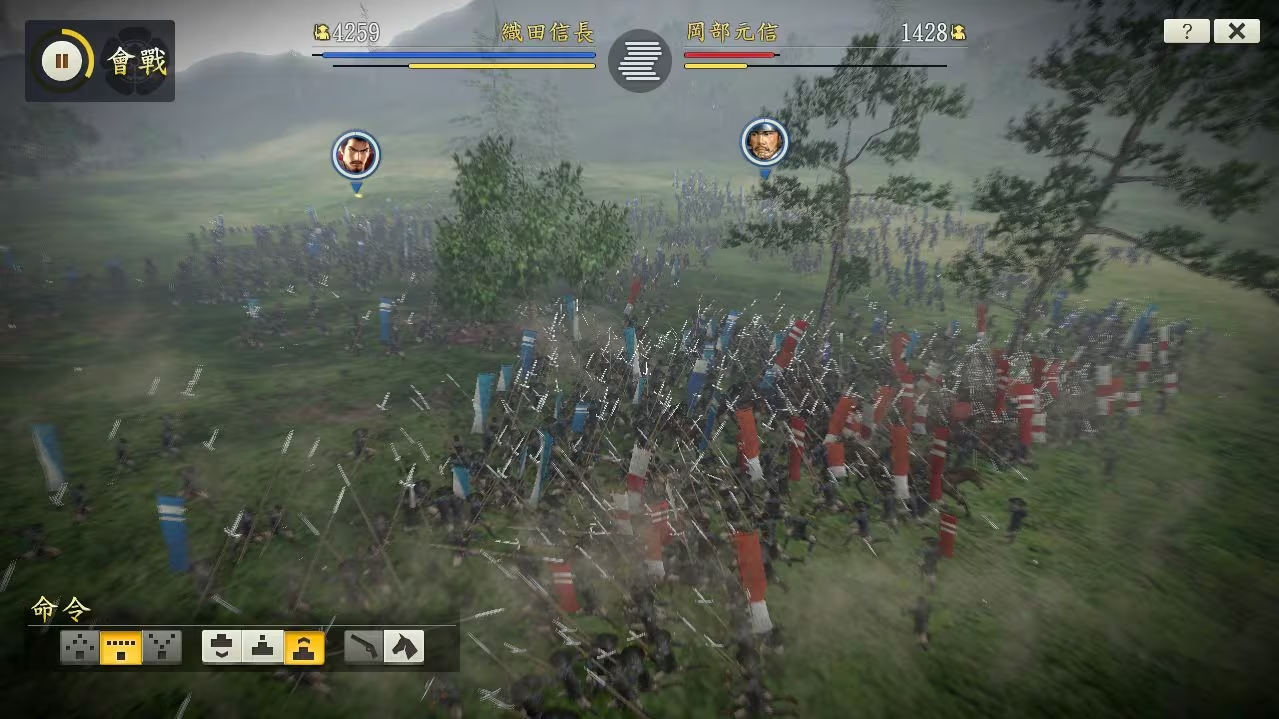
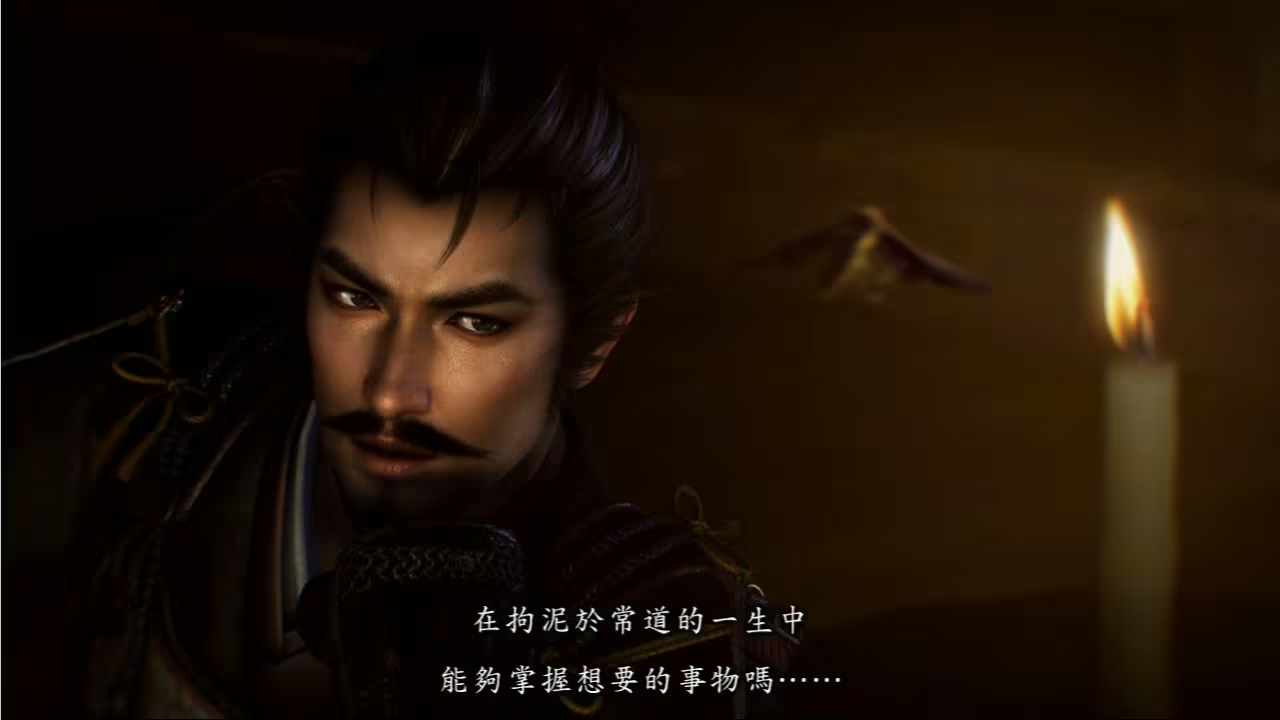
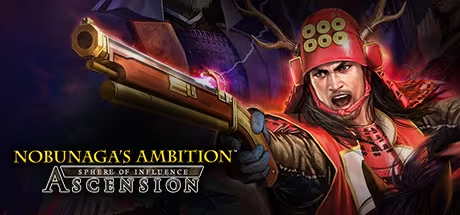
The 14th entry of the the historical simulation series "Nobunaga's Ambition." Become a daimyō of the Warring States era, and unite the land! With "the creation of a new age" as the key concept, this title features beautifully recreated castle towns, dynamic battlefield action and dramatic event scenes.

Global score

87/100

Genres

Strategy

Similar games

    Pros

    • Deep historical simulation
    • Complex strategy and city management
    • Rich character and event system
    • High replayability with multiple scenarios
    • Immersive music and art

    Cons

    • Technical bugs and crashes
    • Lack of english and chinese language support
    • Simplified or unsatisfying combat mechanics
    • Some ai and gameplay balance issues
    • Interface and usability frustrations

    Analysis

    Less representative of its motivational profile, with noticeable differences. Motivations that often define this kind of title include Leadership, Survival, Violence, Strategy. It leans lower than usual among comparable games on Fantasy, Value, Domination.

    How to use the graph
    Similar games map

    Each dot is a game. They are arranged from the same motivation profile as in the “Motivations” section below. Closer dots usually mean more similar reasons to play (exploration, competition, relaxation, etc.)—not that one game is “better” than another.

    • Larger dot with a light outline: the game you are viewing.
    • Colour: groups of games with comparable motivation patterns (statistical clusters).
    • Hover a dot to see the game name; click to open its page.
    • Scroll or double-click the chart to zoom out and see more games.

    Why don’t the axes read like a score? This view uses t-SNE: it only keeps who is close to whom. The scales are not “good to bad” or hours played—they separate groups on the map. Read distance between dots, not the axis numbers.

    Motivations

    • Autonomy
      4

      "Players have significant control over city development, army management, and strategic decisions, including creating their own characters and choosing battle tactics."

    • Competence
      3

      "The game offers complex strategic and tactical challenges, including managing resources, diplomacy, and battles, though some reviews note simplified combat mechanics."

    • Competition
      Insufficient data
    • Continuation
      4

      "Many players report long playtimes, habitual engagement, and deep involvement with the game's historical scenarios and strategic depth."

    • Cooperation
      Insufficient data
    • Creativity
      4

      "Players can create their own characters, customize armies, and develop cities with various strategies, fostering creative gameplay."

    • Domination
      Insufficient data
    • Escapism
      3

      "Players immerse themselves in a detailed historical simulation, often to escape and explore the Sengoku period and its events."

    • Expectation
      -3

      "Players engage voluntarily out of personal interest and passion for Japanese history and strategy games, not out of obligation."

    • Experimenting
      3

      "The game encourages trying different strategies, city layouts, and battle tactics, though some players note repetitive elements later."

    • Exploration
      2

      "Exploration is mostly historical and strategic, with discovery of events and managing many castles and regions."

    • Expression
      3

      "Customization of characters and armies is possible, including creating new figures and managing unique traits."

    • Fantasy
      -4

      "The game strongly emphasizes realistic historical simulation and plausible scenarios from the Sengoku period."

    • Fellowship
      Insufficient data
    • Growth
      4

      "Players develop skills in strategy, resource management, and historical knowledge; character growth systems are detailed."

    • Health
      -5

      "The game is a sedentary, traditional strategy game with no physical activity involved."

    • Idle
      -4

      "Requires focused attention and continuous engagement due to complex management and strategic depth."

    • Intimacy
      Insufficient data
    • Leadership
      4

      "Players lead armies, manage territories, and guide historical figures, embodying a leadership role."

    • Progression
      4

      "Strong emphasis on accumulating resources, upgrading cities, and growing armies and characters."

    • Relaxation
      1

      "Some players find the game relaxing and immersive, though others note frustration with bugs and complexity."

    • Sensation
      2

      "Enjoyment comes from historical music, art, and strategic challenge rather than intense sensory stimulation."

    • Status
      Insufficient data
    • Story
      4

      "Strong narrative immersion with historical events, character stories, and scenario-based gameplay."

    • Strategy
      5

      "Core gameplay revolves around deep strategic planning, resource management, diplomacy, and tactical battles."

    • Thrill
      2

      "Some thrill from managing battles and historical events, though overall pace is measured and strategic."

    • Value
      1

      "Many players feel the game offers good value especially on sale, though some criticize bugs and lack of language support."

    • Violence
      2

      "Combat is present but more tactical and less focused on graphic violence; destruction is part of warfare simulation."

    • Survival
      3

      "Players must manage resources and avoid defeat, emphasizing survival and strategic defense."

    Last update: 29/04/2026