Palindrome Syndrome: Escape Room similar games & best alternatives
Palindrome Syndrome: Escape Room
2020
Related articles
Quick resume
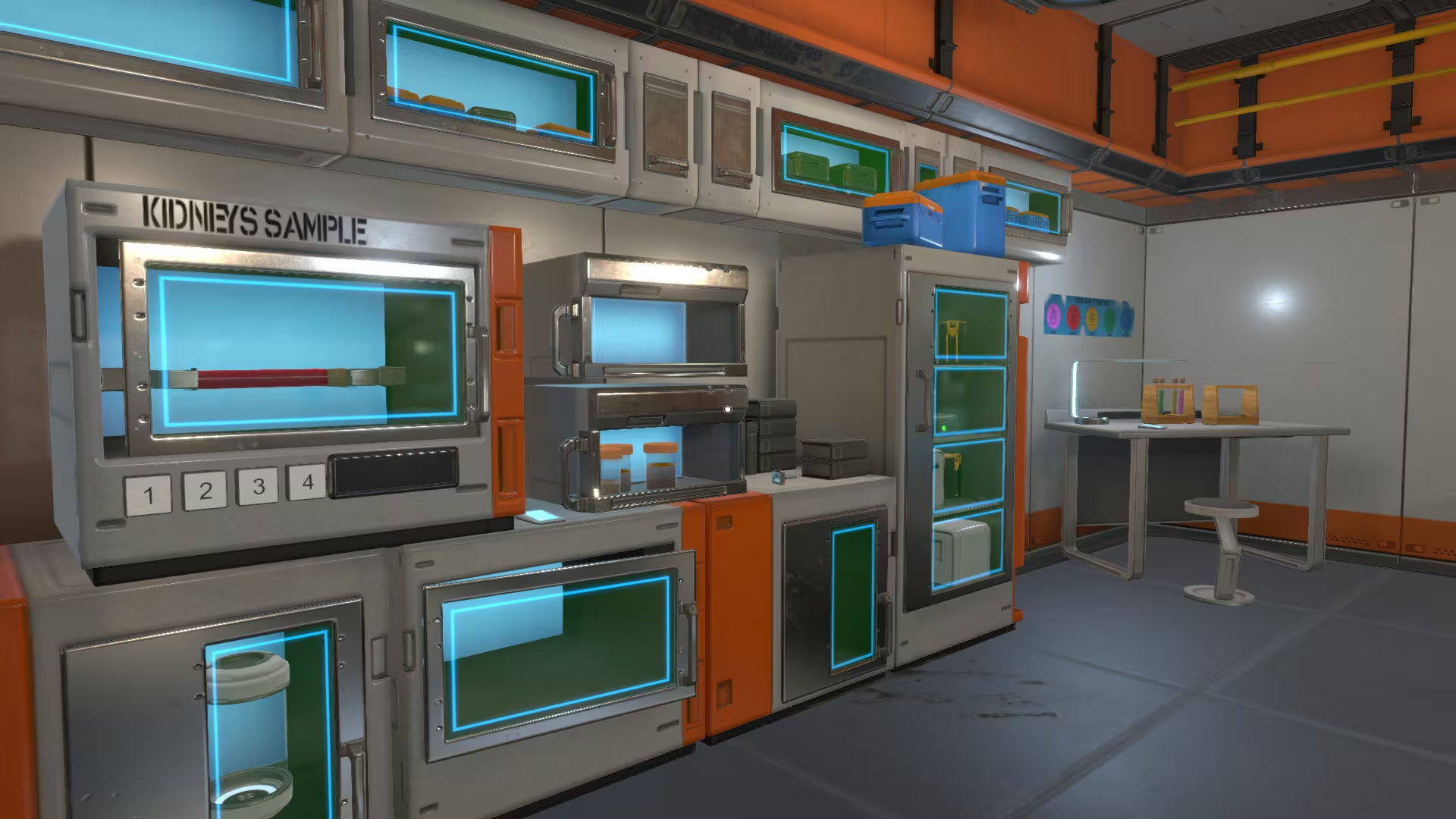
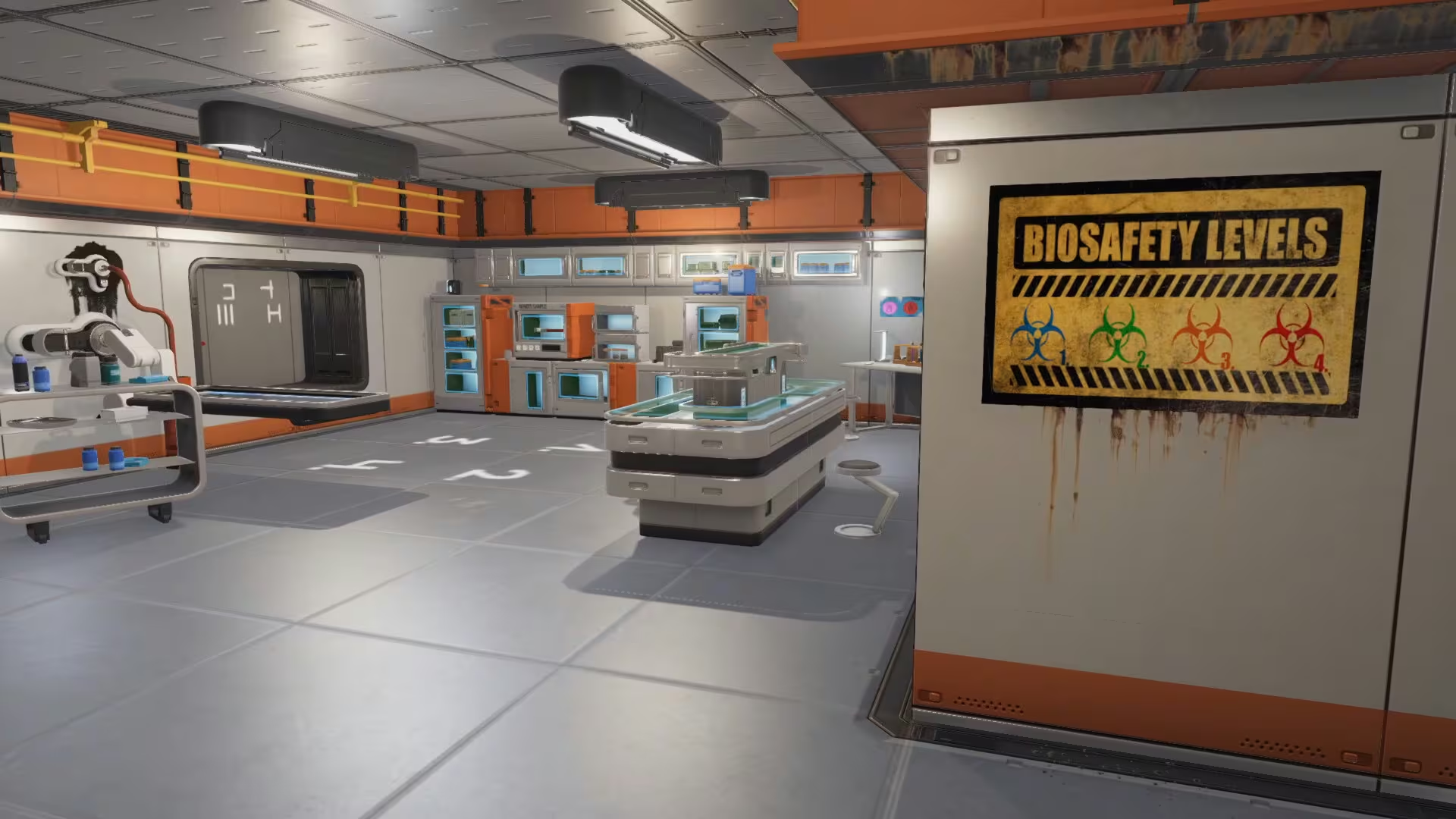
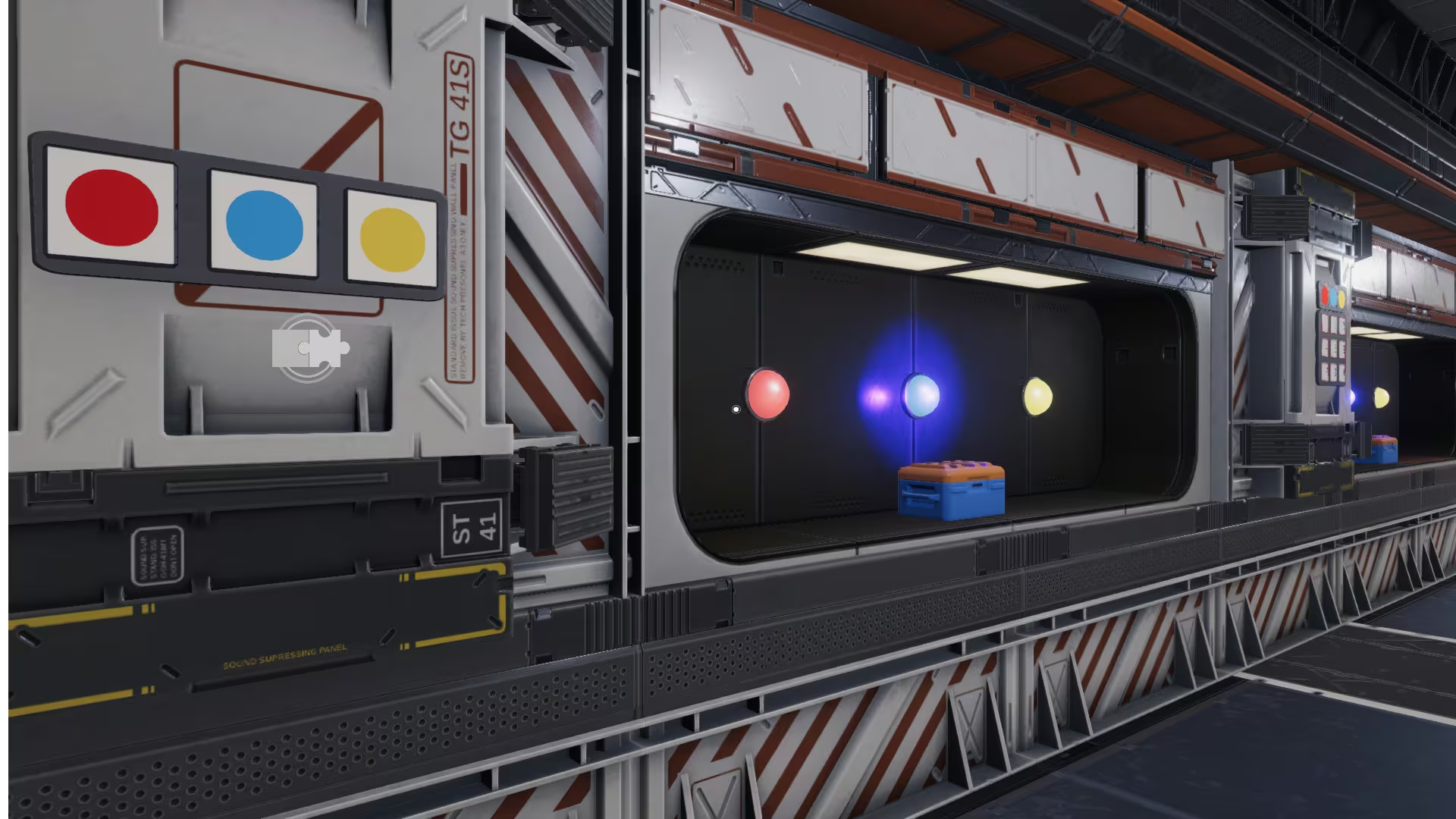
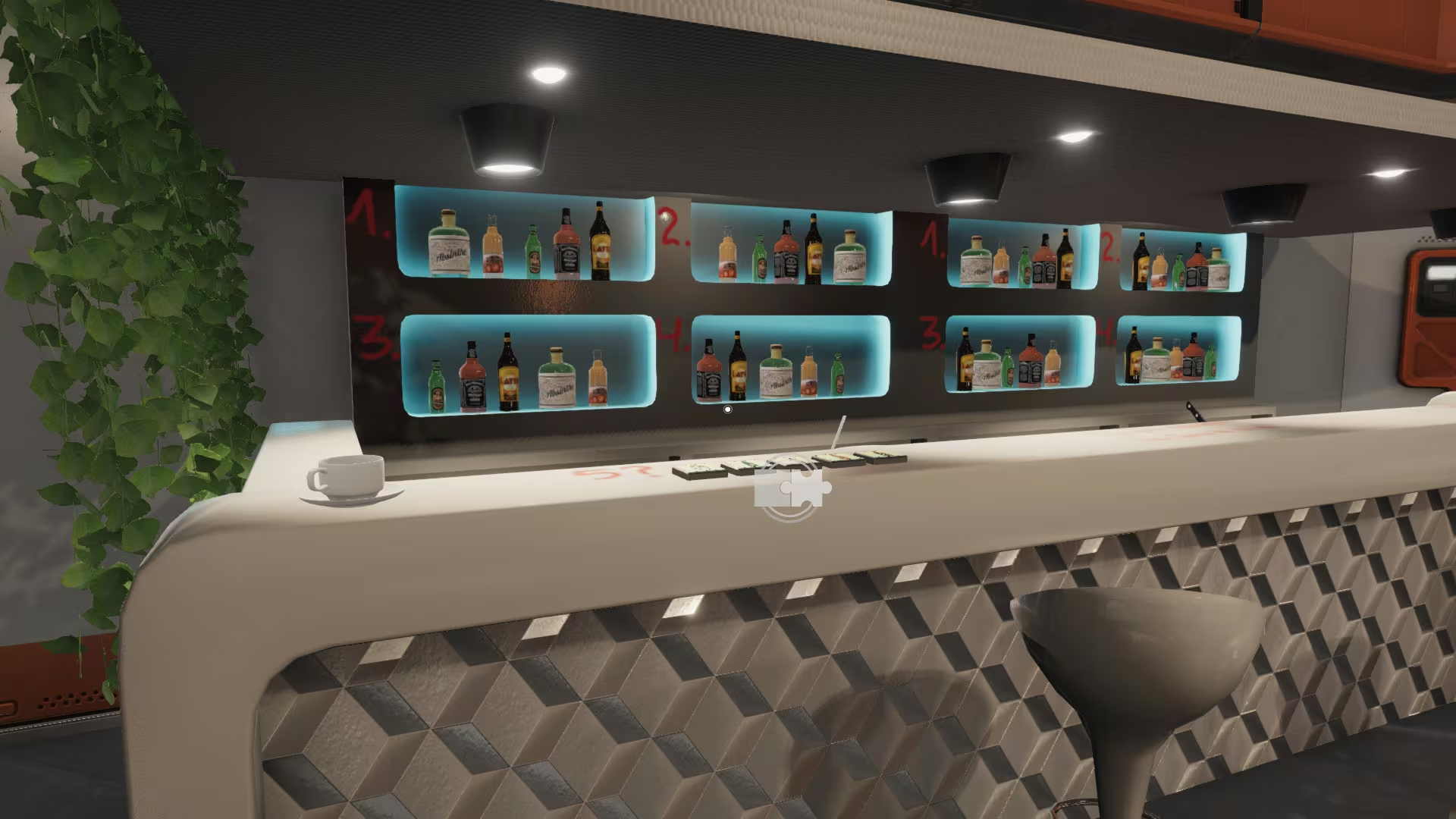
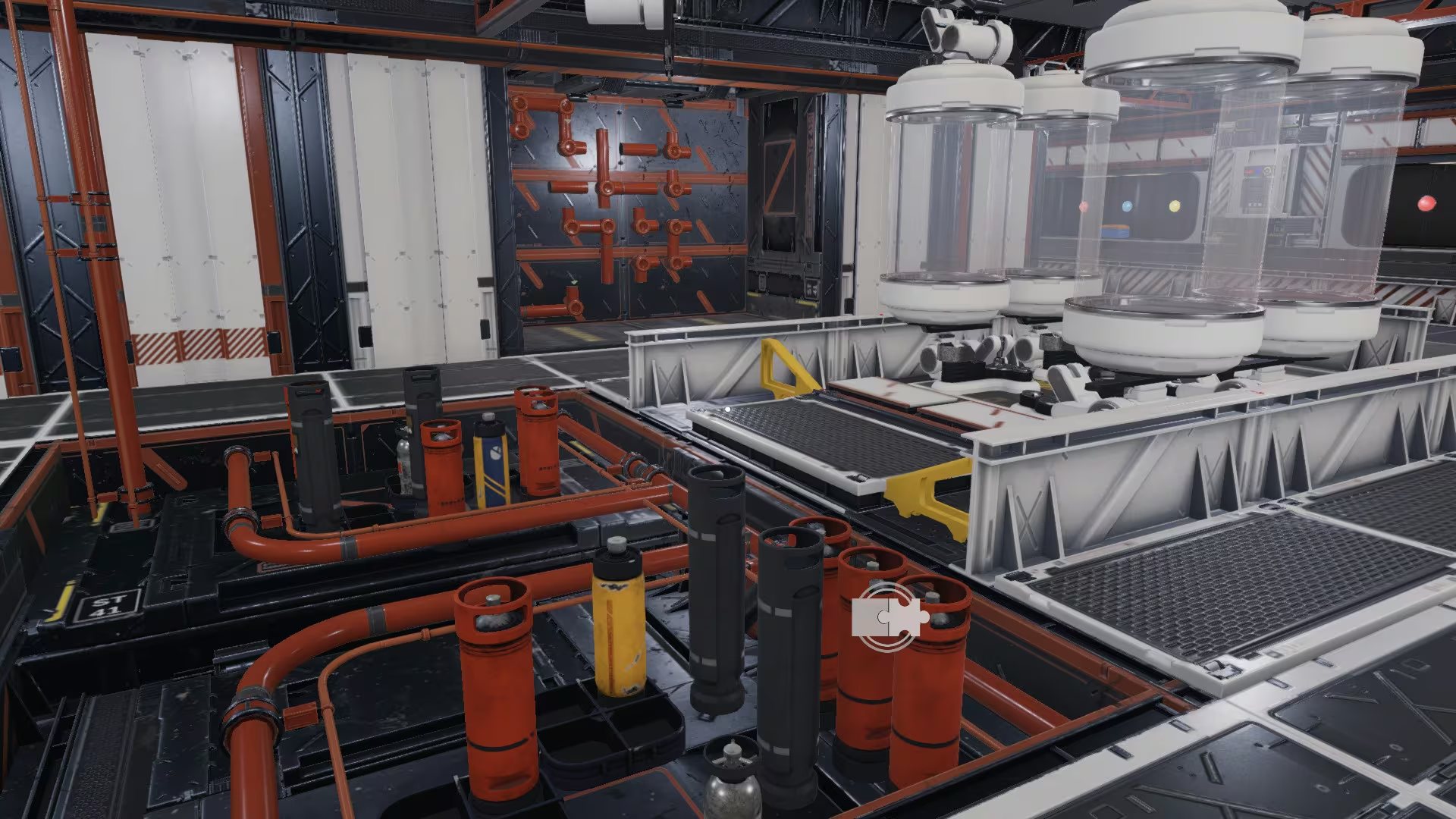
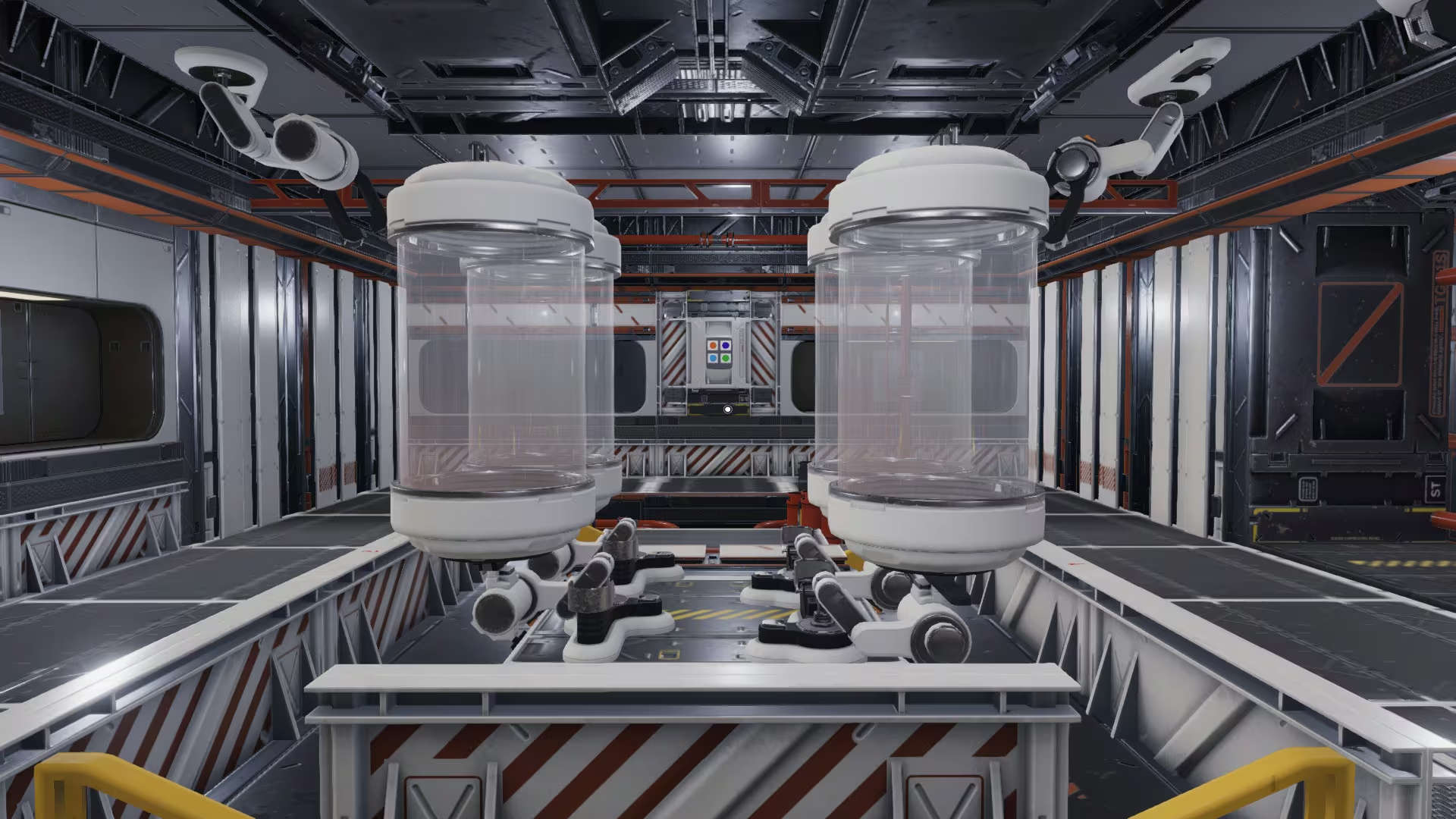
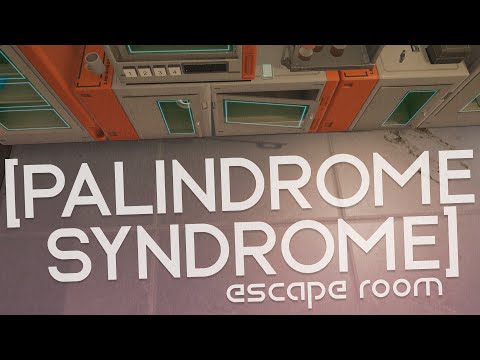
You wake up in a spaceship with no memories. In this escape room with a sci-fi setting you will have to investigate your past solving different puzzles. Will you be able to discover what happened to you and how did you get there?
Global score
82/100
Genres
Adventure, Indie, Puzzle, Point-and-click
Similar games
Pros
- Engaging and logical puzzles
- Relaxing atmosphere and music
- Well-designed escape room experience
- Good for casual and puzzle fans
- Fair value on sale
Cons
- Short game length
- Some puzzles lack clear logic
- No autosave feature
- Clunky controls and slow movement
- Weak or predictable story and ending
Analysis
Less representative of its motivational profile, with noticeable differences. Motivations that often define this kind of title include Survival, Violence, Fellowship, Expression. Here, the score leans higher than usual among comparable games on Cooperation. It leans lower than usual among comparable games on Exploration, Expression.
How to use the graph
Similar games map
Each dot is a game. They are arranged from the same motivation profile as in the “Motivations” section below. Closer dots usually mean more similar reasons to play (exploration, competition, relaxation, etc.)—not that one game is “better” than another.
- Larger dot with a light outline: the game you are viewing.
- Colour: groups of games with comparable motivation patterns (statistical clusters).
- Hover a dot to see the game name; click to open its page.
- Scroll or double-click the chart to zoom out and see more games.
Why don’t the axes read like a score? This view uses t-SNE: it only keeps who is close to whom. The scales are not “good to bad” or hours played—they separate groups on the map. Read distance between dots, not the axis numbers.
Motivations
-
Autonomy3
"Players have control over puzzle solving and exploration within rooms, but the game is linear and puzzle progression is fixed."
-
Competence3
"Puzzles provide a range of challenges requiring logic and problem solving, with some moments of skill and insight."
-
Competition-4
"Focus is on individual puzzle solving at own pace without comparison or competitive elements."
-
Continuation2
"Players tend to engage in sessions lasting a few hours, with some reports of continuous play until completion."
-
Cooperation1
"While primarily single-player, some users play with friends or family collaboratively, but no in-game cooperation mechanics."
-
Creativity2
"Players creatively solve puzzles and take notes, but the game uses predefined puzzle structures without creation or modification."
-
Domination-5
"No elements of exerting control or superiority over others; experience is solitary and non-competitive."
-
Escapism4
"Players use the game as a relaxing distraction and mental challenge, escaping from everyday stress."
-
Expectation-4
"Players engage voluntarily out of interest and enjoyment rather than obligation or external pressure."
-
Experimenting1
"Some exploration of puzzle solutions and approaches, but mostly following logical steps rather than novel experimentation."
-
Exploration-3
"Game is linear with limited environment exploration; players move from one room to the next with little discovery outside puzzles."
-
Expression-5
"No customization or self-expression features; players interact with fixed environments and puzzles."
-
Fantasy2
"Set in a sci-fi space station with a fictional story, but grounded in logical puzzles rather than high fantasy or mythology."
-
Fellowship-3
"Primarily a solo experience with minimal social interaction; some players share experience with friends but no community features."
-
Growth3
"Players develop problem-solving skills and logical reasoning through puzzle challenges."
-
Health-5
"Sedentary gameplay with no physical activity or health-related features."
-
Idle-4
"Requires focused attention and active problem solving; not suited for background or idle play."
-
Intimacy-5
"No social or emotional relationship building; experience is solitary and puzzle-focused."
-
Leadership-5
"No leadership or group management elements; purely individual gameplay."
-
Progression3
"Progression through rooms and puzzles with incremental unlocking of new areas and story elements."
-
Relaxation3
"Generally relaxing atmosphere with calming music and moderate challenge, though some frustration reported."
-
Sensation2
"Pleasant visual and auditory design create an engaging sensory experience without intense stimulation."
-
Status-5
"No social recognition or status systems; achievements are personal and not publicly displayed."
-
Story2
"A narrative is present and unfolds through puzzles, but it is light and not the main focus."
-
Strategy3
"Requires logical thinking, pattern recognition, and problem solving to complete puzzles."
-
Thrill-2
"Low suspense and risk; gameplay is calm and methodical rather than thrilling or tense."
-
Value1
"Generally considered fair value especially on sale; some players feel price is high for length."
-
Violence-5
"No violence or destructive gameplay; focus on constructive puzzle solving."
-
Survival-5
"No survival or threat avoidance mechanics; stable environment focused on puzzles."
Where to buy
Last update: 29/04/2026