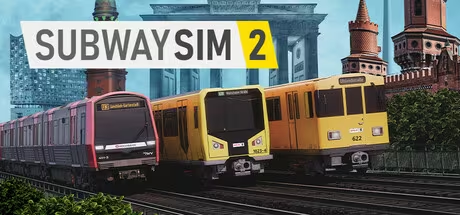
World of Subways 2 – Berlin Line 7 Thumbnail

World of Subways 2 – Berlin Line 7 similar games & best alternatives

World of Subways 2 – Berlin Line 7

PC (Microsoft Windows) • 2014

Related articles

Quick resume

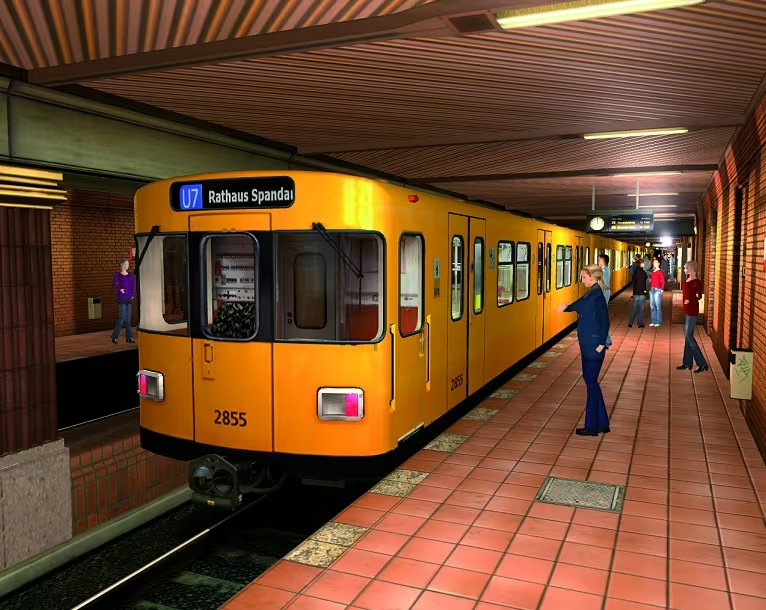
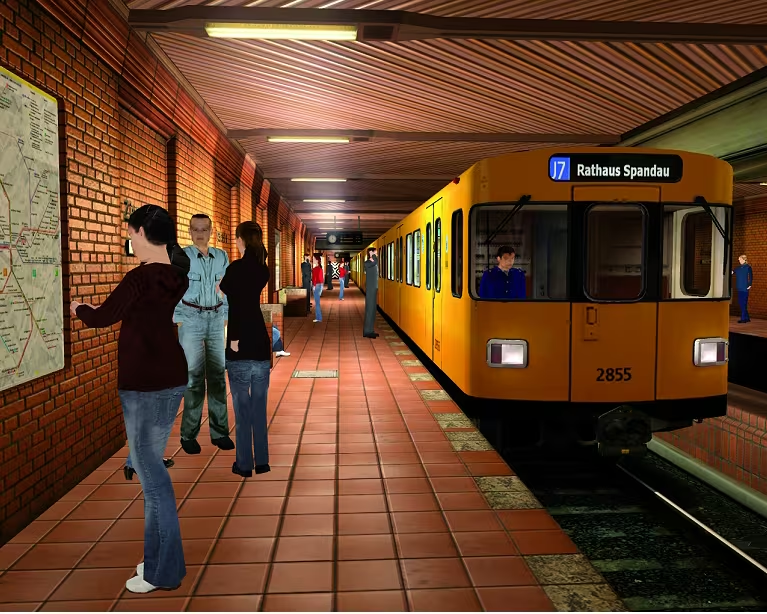
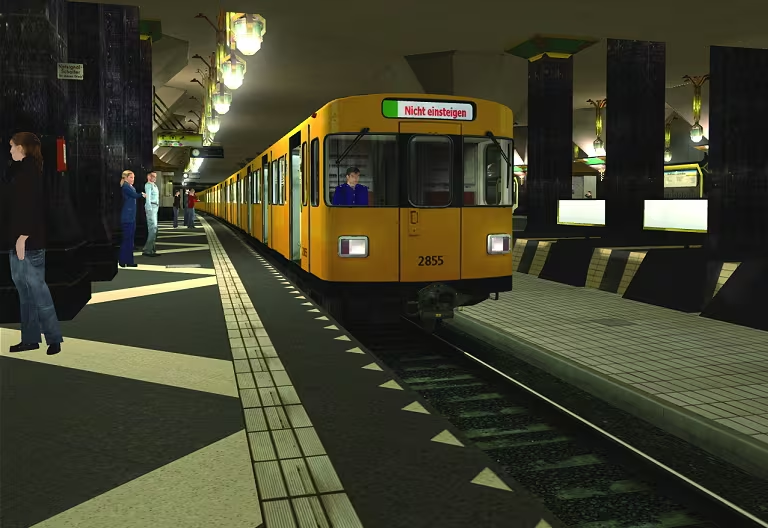
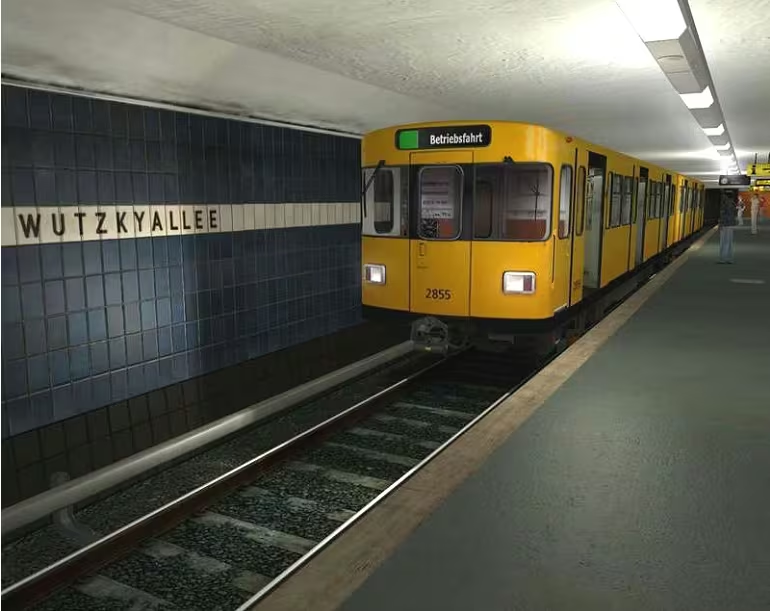
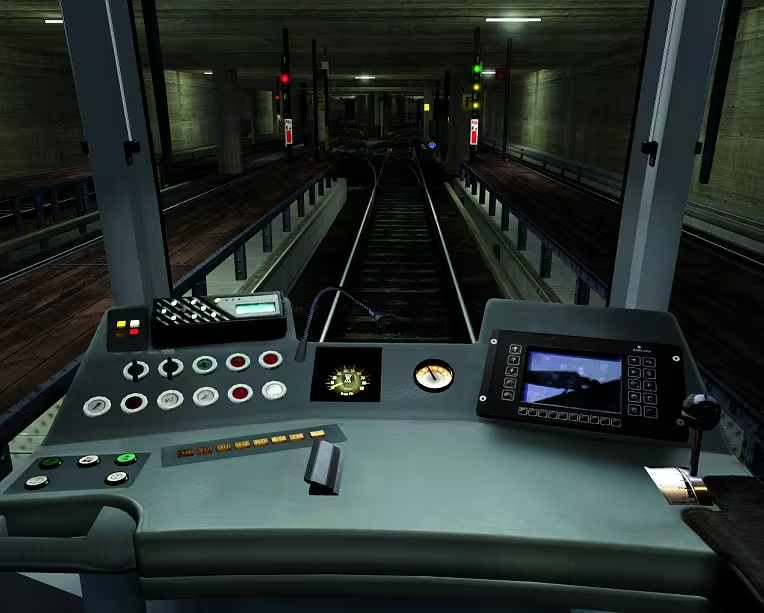
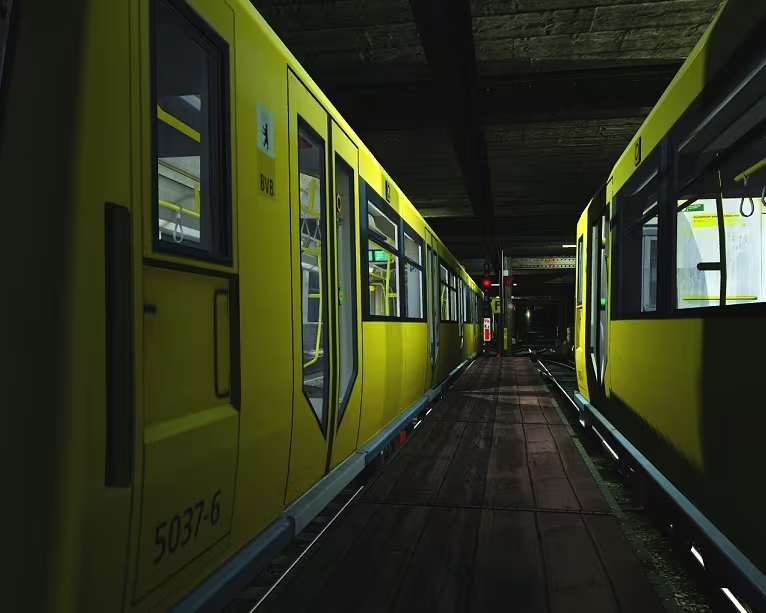
Volume 2: "U7 - Berlin" is the next release continuing the successful product series " World of Subways" introducing famous subway lines around the world to all subway enthusiasts. After Vol. 1, Vol. 2 contains the route U7 of Berlin`s subway.

Global score

75/100

Genres

Casual, Indie, Simulator

Similar games

    Pros

    • Realistic berlin u7 subway simulation
    • Detailed train models and stations
    • Authentic sounds and announcements
    • Two different train types with distinct controls
    • Immersive atmosphere and route accuracy

    Cons

    • Lack of tutorial and difficult controls for beginners
    • Static passengers and limited animation
    • Frequent crashes and bugs reported
    • Dated graphics and ui issues
    • Repetitive gameplay with limited variety

    Analysis

    Less representative of its motivational profile, with noticeable differences. Motivations that often define this kind of title include Fantasy, Violence, Story, Thrill. It leans lower than usual among comparable games on Creativity, Expression, Fantasy.

    How to use the graph
    Similar games map

    Each dot is a game. They are arranged from the same motivation profile as in the “Motivations” section below. Closer dots usually mean more similar reasons to play (exploration, competition, relaxation, etc.)—not that one game is “better” than another.

    • Larger dot with a light outline: the game you are viewing.
    • Colour: groups of games with comparable motivation patterns (statistical clusters).
    • Hover a dot to see the game name; click to open its page.
    • Scroll or double-click the chart to zoom out and see more games.

    Why don’t the axes read like a score? This view uses t-SNE: it only keeps who is close to whom. The scales are not “good to bad” or hours played—they separate groups on the map. Read distance between dots, not the axis numbers.

    Motivations

    • Autonomy
      3

      "Players have control over train operation, choosing between two train types and managing controls, but must follow strict route and procedures."

    • Competence
      4

      "Driving the trains requires learning complex controls and mastering braking and signaling, providing a skill challenge."

    • Competition
      -4

      "Focus is on individual simulation experience without competitive elements or player comparison."

    • Continuation
      1

      "Some players report long sessions and immersion, but others find gameplay repetitive and disengage quickly."

    • Cooperation
      -5

      "Game is a solo simulation experience with no multiplayer or cooperative gameplay."

    • Creativity
      -3

      "Players operate within a fixed simulation environment with limited customization or creative modification."

    • Domination
      -5

      "No elements of exerting control over others; purely individual simulation."

    • Escapism
      4

      "Players use the game to immerse themselves in a detailed subway environment, escaping real life through simulation."

    • Expectation
      -4

      "Players engage voluntarily out of interest in trains and simulation rather than obligation."

    • Experimenting
      2

      "Some experimentation with controls and train operation is needed, though within a fixed route and system."

    • Exploration
      1

      "Exploration is limited to the subway line and stations; no open world or discovery beyond route."

    • Expression
      -4

      "No character or environment customization; players use preset trains and routes."

    • Fantasy
      -5

      "Game simulates realistic subway driving without fictional or fantastical elements."

    • Fellowship
      -5

      "No social or community features; gameplay is solitary."

    • Growth
      3

      "Players develop skills in train operation and route management through practice and learning."

    • Health
      -5

      "Sedentary gameplay typical of simulation games."

    • Idle
      -3

      "Requires focused attention on controls and signals; not suitable for casual or background play."

    • Intimacy
      -5

      "No social or emotional connections formed within the game."

    • Leadership
      -5

      "No leadership or management roles; player controls only their own train."

    • Progression
      1

      "Limited progression through completing missions and mastering controls, but no item or upgrade accumulation."

    • Relaxation
      2

      "Some players find the simulation relaxing and immersive, though others find it repetitive and stressful due to signals."

    • Sensation
      2

      "Realistic sounds and visuals provide sensory engagement, but graphics are dated and limited."

    • Status
      -5

      "No social recognition or status systems present."

    • Story
      -3

      "Minimal narrative or story elements; focus is on simulation tasks and route driving."

    • Strategy
      2

      "Requires planning and timing to keep schedule and obey signals, but limited strategic depth."

    • Thrill
      -3

      "Gameplay is low risk and predictable, with some tension from signal stops but no high suspense."

    • Value
      1

      "Generally considered fair value for train simulation fans, especially at sale prices."

    • Violence
      -5

      "No violent or destructive gameplay; focused on constructive simulation."

    • Survival
      -5

      "No survival or threat elements; stable and controlled environment."

    Last update: 29/04/2026