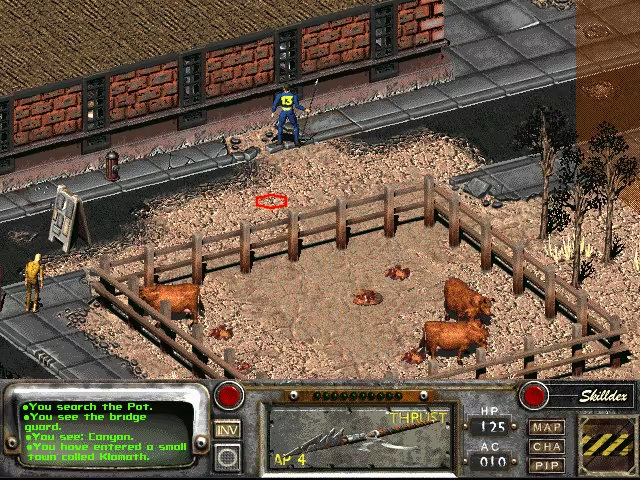
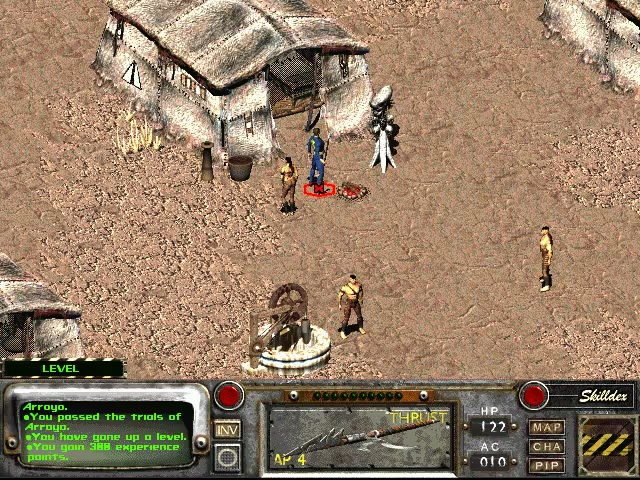
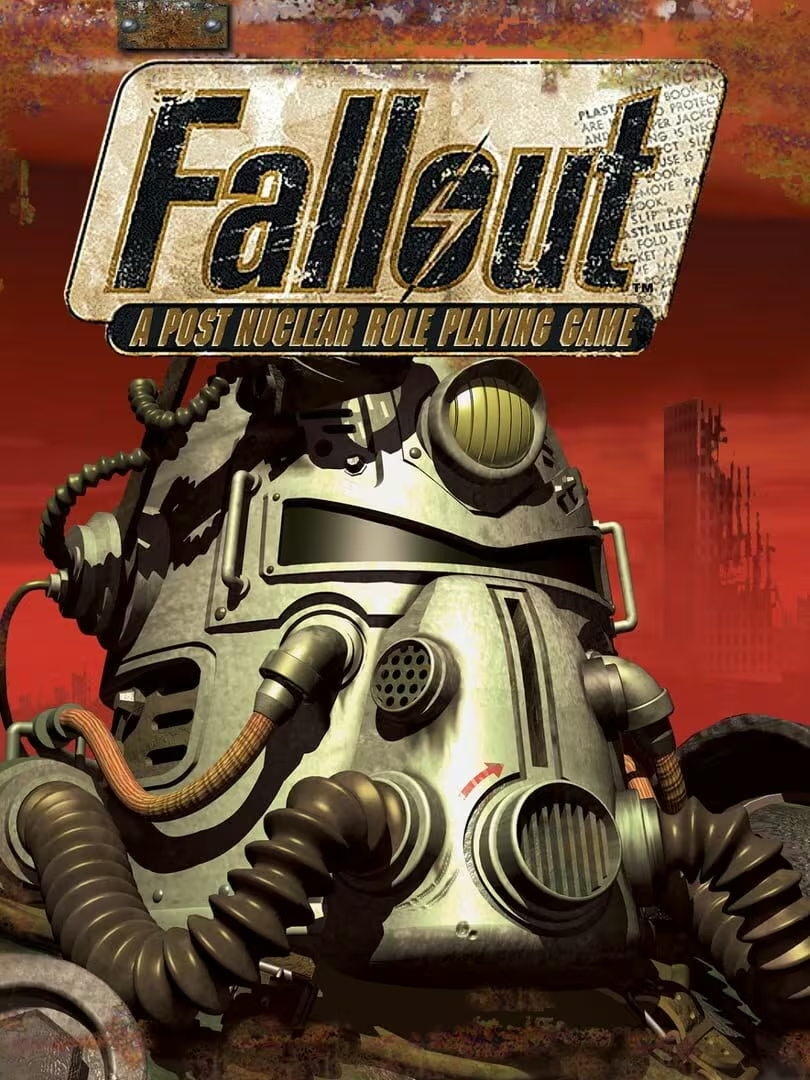
Fallout 2: A Post Nuclear Role Playing Game Thumbnail

Fallout 2: A Post Nuclear Role Playing Game similar games & best alternatives

Fallout 2: A Post Nuclear Role Playing Game

PC (Microsoft Windows) • 2009

Related articles

Quick resume

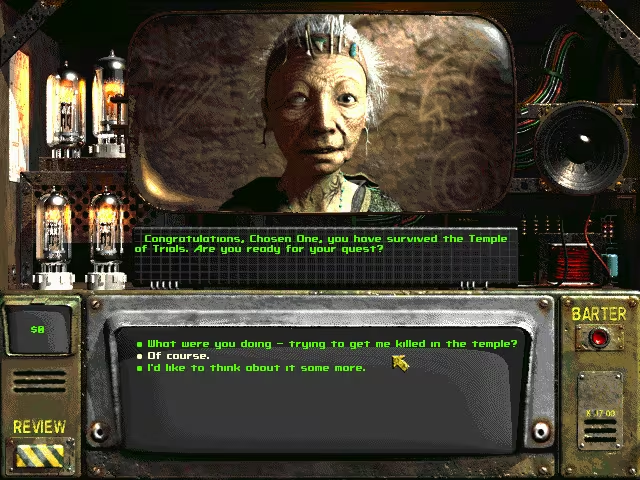
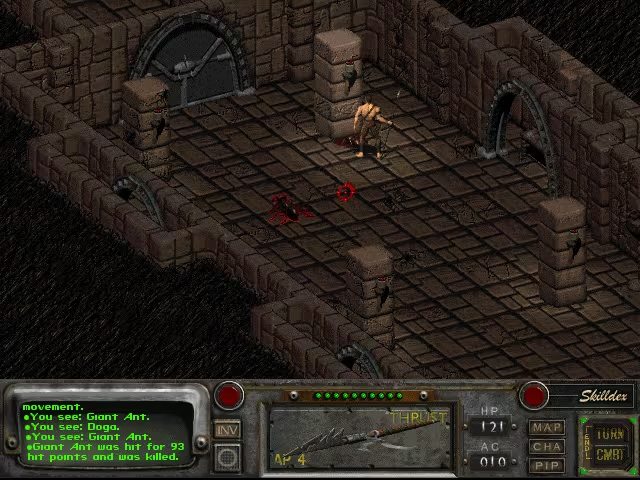
Fallout® 2 is the sequel to the critically acclaimed game that took RPG'ing out of the dungeons and into a dynamic, apocalyptic retro-future. It's been 80 long years since your ancestors trod across the wastelands.

Global score

94/100

Genres

Role-playing (RPG)

Similar games

    Pros

    • Extensive player freedom and roleplaying options
    • Deep and engaging story with multiple quest solutions
    • Large open world with many locations and secrets
    • High replayability and content richness
    • Dark humor and atmospheric audio

    Cons

    • Dated graphics and interface
    • Early game difficulty and steep learning curve
    • Bugs and crashes especially on modern systems
    • Companion ai can be frustrating
    • Slow pacing and turn-based combat may not appeal to all

    Analysis

    Less representative of its motivational profile, with noticeable differences. Motivations that often define this kind of title include Cooperation, Fellowship, Intimacy, Leadership. Here, the score leans higher than usual among comparable games on Story, Leadership, Status.

    How to use the graph
    Similar games map

    Each dot is a game. They are arranged from the same motivation profile as in the “Motivations” section below. Closer dots usually mean more similar reasons to play (exploration, competition, relaxation, etc.)—not that one game is “better” than another.

    • Larger dot with a light outline: the game you are viewing.
    • Colour: groups of games with comparable motivation patterns (statistical clusters).
    • Hover a dot to see the game name; click to open its page.
    • Scroll or double-click the chart to zoom out and see more games.

    Why don’t the axes read like a score? This view uses t-SNE: it only keeps who is close to whom. The scales are not “good to bad” or hours played—they separate groups on the map. Read distance between dots, not the axis numbers.

    Motivations

    • Autonomy
      5

      "Players have extensive freedom to create characters, choose playstyles, and make decisions that shape the story and world."

    • Competence
      4

      "Game involves skill development, strategic combat, and problem solving with feedback on performance; early game difficulty requires mastery."

    • Competition
      -3

      "Focus is on personal progression and story; no evidence of competitive multiplayer or leaderboards."

    • Continuation
      5

      "Highly replayable with many hours of gameplay and multiple playthroughs common among players."

    • Cooperation
      2

      "Players can recruit and manage companions, though AI can be frustrating; cooperation is present but limited to NPC allies."

    • Creativity
      5

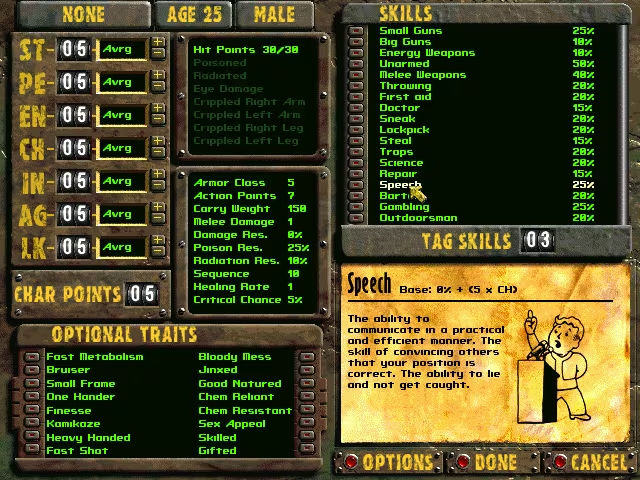
      "Strong emphasis on player creativity in character build, quest approaches, and roleplaying different personas."

    • Domination
      -2

      "Interactions emphasize player choice and consequences rather than imposing authority over others."

    • Escapism
      5

      "Players immerse in a richly detailed post-apocalyptic world to escape reality and experience complex narratives."

    • Expectation
      -4

      "Players engage voluntarily out of intrinsic interest and love for RPGs, not obligation or external pressure."

    • Experimenting
      5

      "Game encourages trying different builds, dialogue options, and quest solutions, fostering exploration of mechanics."

    • Exploration
      5

      "Large open world with many locations, secrets, and random encounters to discover."

    • Expression
      4

      "Character customization and roleplaying allow personal expression, though graphical customization is limited."

    • Fantasy
      3

      "Post-apocalyptic setting with fictional elements and dark humor, though grounded in plausible scenarios."

    • Fellowship
      3

      "Players form bonds with companions and engage with a community of fans, though social multiplayer is absent."

    • Growth
      5

      "Strong focus on learning game mechanics, character development, and improving skills over time."

    • Health
      -4

      "Sedentary gameplay with no physical activity; drug use and violence are prominent themes."

    • Idle
      -3

      "Requires focused attention and strategic planning; not suited for casual or background play."

    • Intimacy
      2

      "Some emotional connections with companions and NPCs, but limited to in-game interactions without deep social bonds."

    • Leadership
      3

      "Players lead a party of companions and influence factions, making strategic decisions."

    • Progression
      5

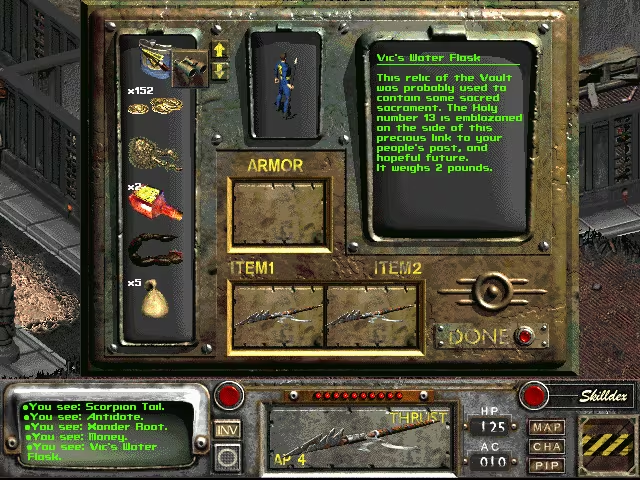
      "Strong progression through leveling, acquiring items, perks, and unlocking new quests."

    • Relaxation
      -1

      "Game can be tense and challenging, especially early on, but also offers moments of humor and flow."

    • Sensation
      2

      "Enjoyable audio and visual style with atmospheric music and dark humor, but graphics are dated."

    • Status
      1

      "Recognition comes from in-game reputation and karma systems, but no social status or multiplayer ranking."

    • Story
      5

      "Rich narrative with branching quests, multiple endings, and deep worldbuilding."

    • Strategy
      5

      "Turn-based combat and quest solutions require planning, tactical thinking, and problem solving."

    • Thrill
      3

      "Game offers suspense and risk, with high stakes in combat and consequences for choices."

    • Value
      4

      "Players perceive high value from extensive content, replayability, and depth for the price."

    • Violence
      4

      "Violence and combat are central gameplay elements, including graphic and brutal depictions."

    • Survival
      4

      "Survival elements include resource management, avoiding threats, and strategic defense."

    Last update: 29/04/2026