Mind Snares: Alice's Journey Thumbnail

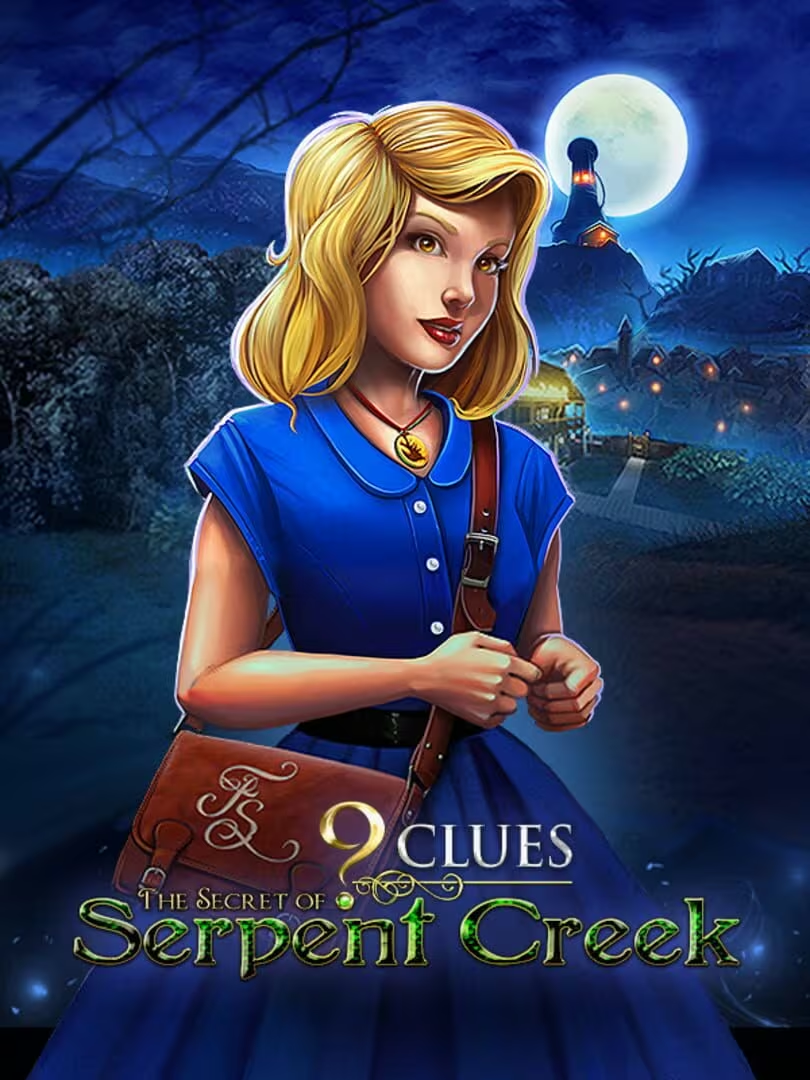
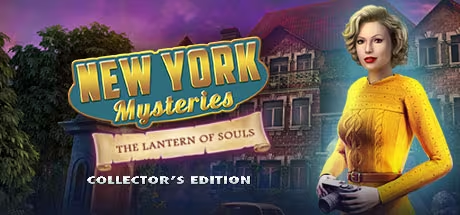
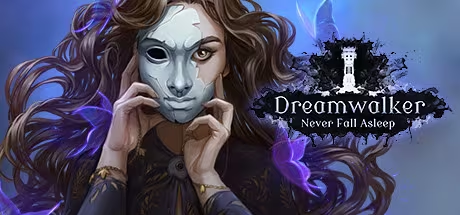
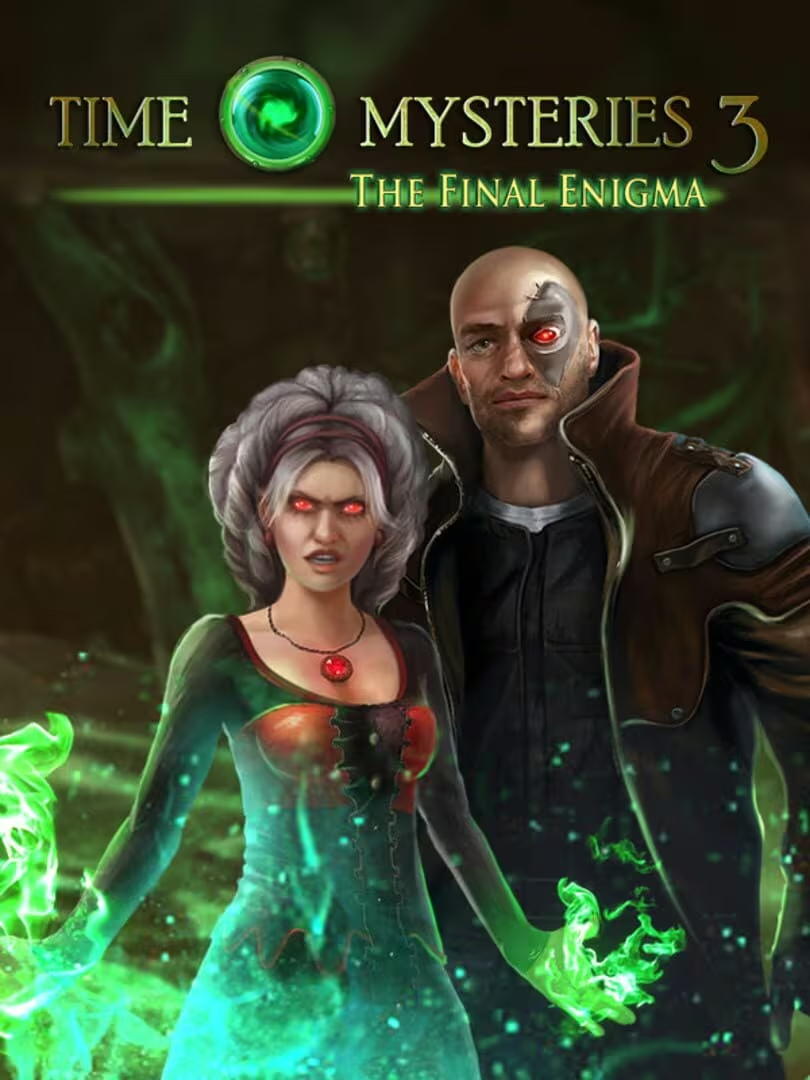
Mind Snares: Alice's Journey similar games & best alternatives

Mind Snares: Alice's Journey

PC (Microsoft Windows), Mac, iOS, Windows Phone, BlackBerry OS, Android, Linux • 2015

Related articles

Quick resume

Escape from the Shadow Land!

Global score

88/100

Genres

Adventure, Casual, Puzzle

Similar games

    Pros

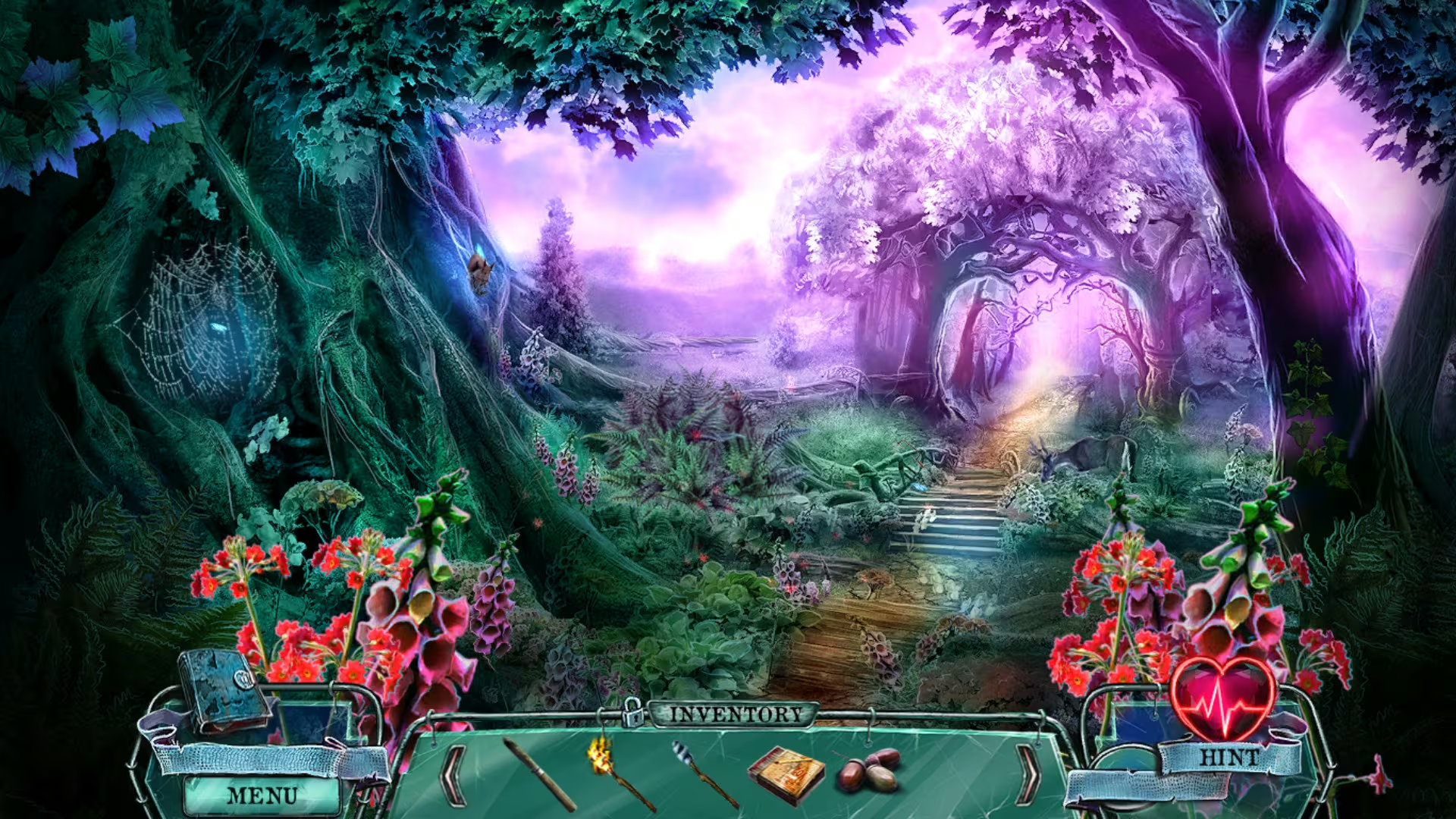
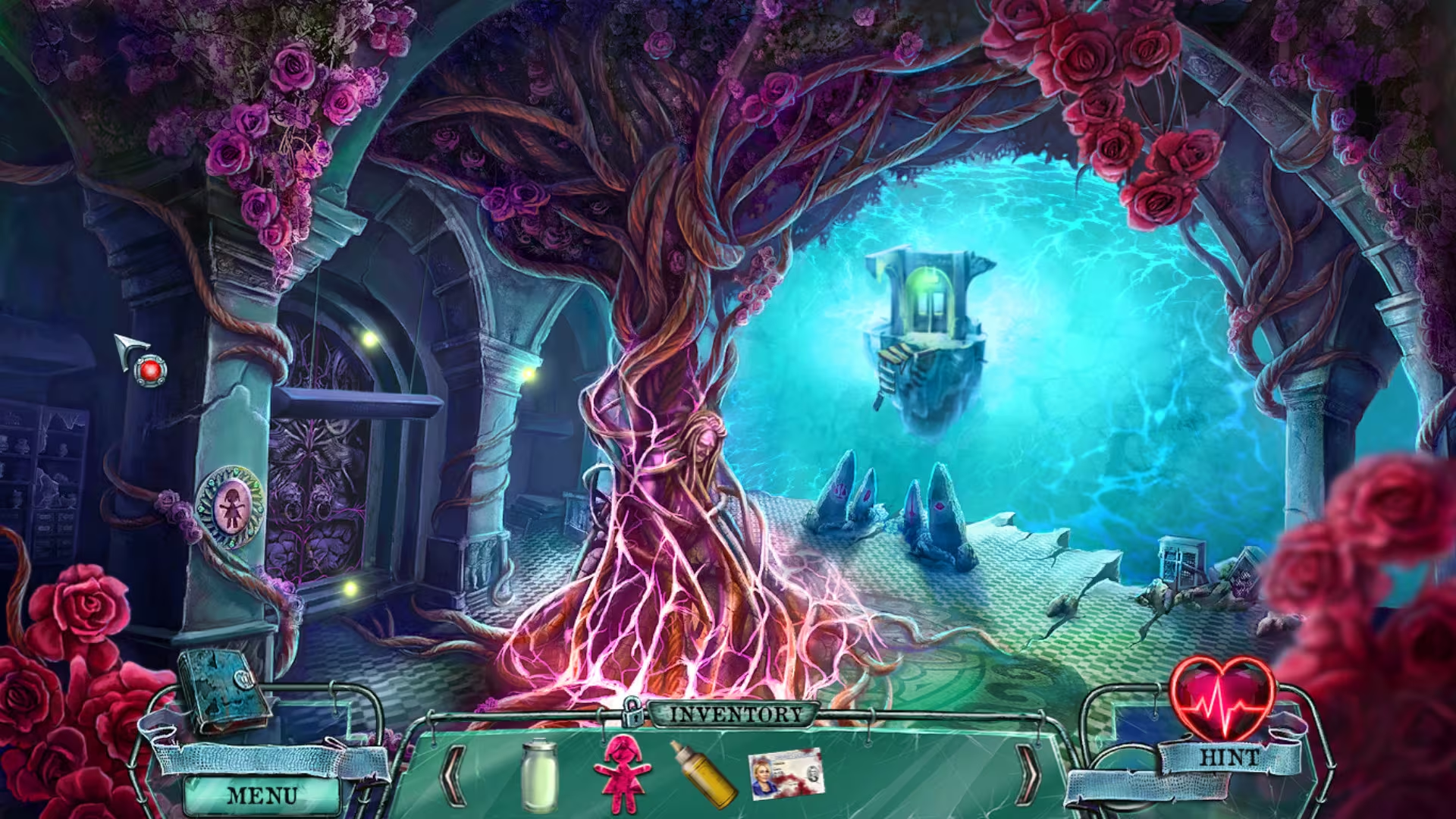
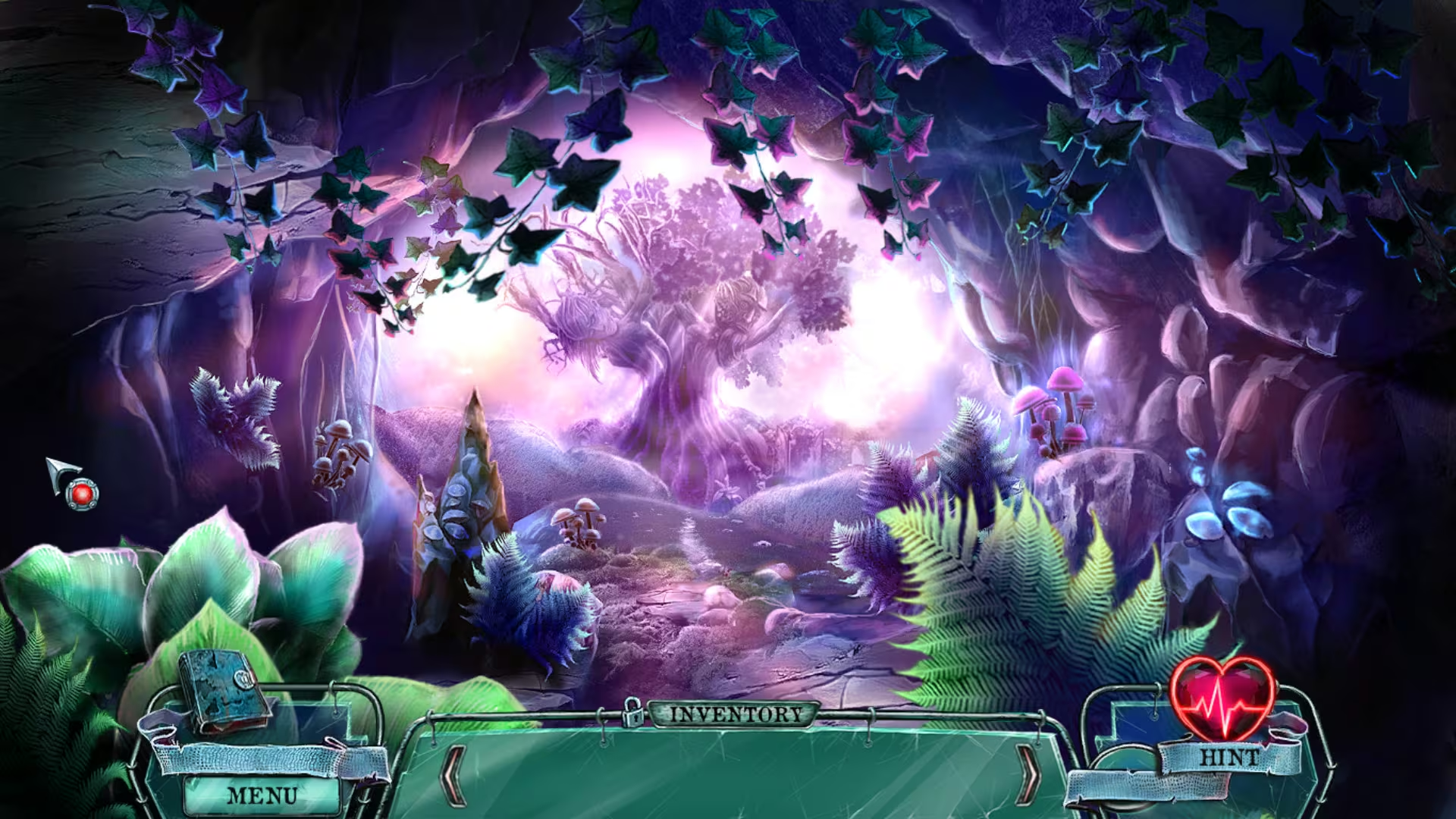
    • Beautiful hand-painted art and atmospheric music
    • Interesting psychological and symbolic story
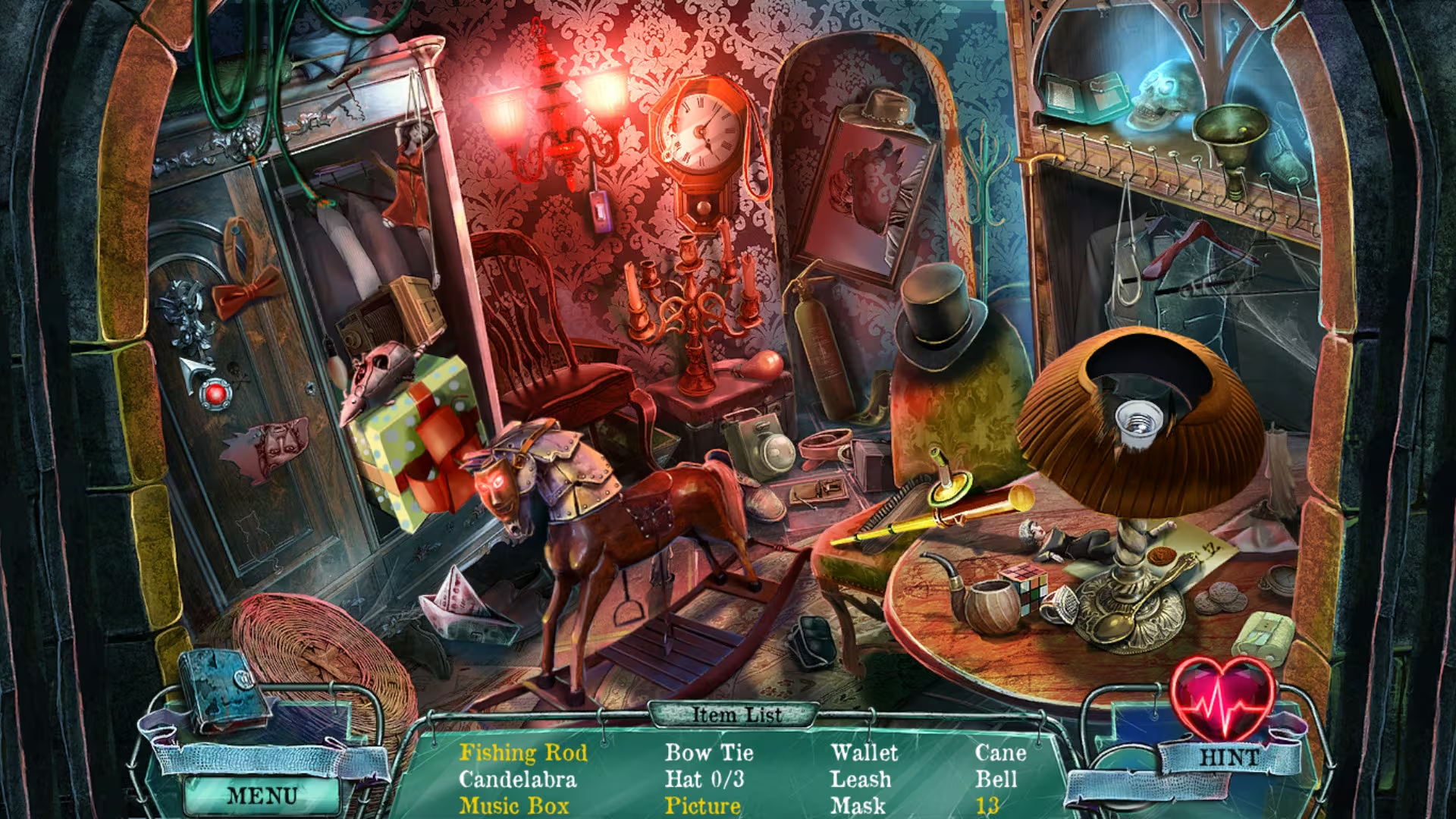
    • Accessible puzzles and hidden object scenes
    • Smooth interface with fast travel map
    • Relaxing and immersive gameplay experience

    Cons

    • Short game length with limited replay value
    • Some players found the ending abrupt and unsatisfying
    • Puzzles generally easy and not very challenging
    • Lack of character customization or social features
    • Minor translation issues and occasional hitbox frustrations

    Analysis

    Broadly representative of its motivational profile, with a few distinct shifts. Motivations that often define this kind of title include Autonomy, Strategy, Experimenting, Competence. Here, the score leans higher than usual among comparable games on Strategy, Competence, Exploration.

    How to use the graph
    Similar games map

    Each dot is a game. They are arranged from the same motivation profile as in the “Motivations” section below. Closer dots usually mean more similar reasons to play (exploration, competition, relaxation, etc.)—not that one game is “better” than another.

    • Larger dot with a light outline: the game you are viewing.
    • Colour: groups of games with comparable motivation patterns (statistical clusters).
    • Hover a dot to see the game name; click to open its page.
    • Scroll or double-click the chart to zoom out and see more games.

    Why don’t the axes read like a score? This view uses t-SNE: it only keeps who is close to whom. The scales are not “good to bad” or hours played—they separate groups on the map. Read distance between dots, not the axis numbers.

    Motivations

    • Autonomy
      -3

      "Gameplay is mostly linear and puzzle-driven with limited player choice or branching paths."

    • Competence
      2

      "Puzzles and hidden object scenes provide moderate challenge but are generally easy and accessible."

    • Competition
      -5

      "No competitive elements; focus is on solo play and personal progress."

    • Continuation
      -2

      "Short game length and lack of replay value reduce habitual or extended play."

    • Cooperation
      -5

      "Single-player experience with no multiplayer or cooperative features."

    • Creativity
      3

      "Artistic hand-painted environments and symbolic story elements encourage imaginative engagement."

    • Domination
      -5

      "No elements of exerting control or superiority over others."

    • Escapism
      4

      "Players immerse in a surreal, psychological world to escape real-life stress and routine."

    • Expectation
      -4

      "Players engage voluntarily for enjoyment and personal interest rather than obligation."

    • Experimenting
      -1

      "Mostly follows established hidden object and puzzle game conventions with limited novelty."

    • Exploration
      2

      "Players explore multiple distinct dreamlike locations within the game world."

    • Expression
      -4

      "No character customization or player-driven aesthetic changes."

    • Fantasy
      4

      "Strong surreal and psychological fantasy themes with symbolic and dreamlike settings."

    • Fellowship
      -5

      "No social or community features; strictly single-player."

    • Growth
      2

      "Players develop puzzle-solving skills and engage with a narrative about personal change."

    • Health
      -5

      "Typical sedentary gameplay with no physical activity elements."

    • Idle
      -3

      "Requires focused attention and puzzle solving; not suited for casual background play."

    • Intimacy
      -4

      "Limited emotional connection mainly through story; no social or relationship building."

    • Leadership
      -5

      "No leadership or group management mechanics."

    • Progression
      3

      "Progression through collecting items and solving puzzles to advance the story."

    • Relaxation
      3

      "Generally relaxing gameplay with moderate challenge and atmospheric immersion."

    • Sensation
      3

      "Visually striking art and fitting music provide sensory engagement."

    • Status
      -5

      "No social recognition or status systems."

    • Story
      3

      "Narrative driven with psychological themes and character development."

    • Strategy
      1

      "Puzzles require some problem solving but are mostly straightforward."

    • Thrill
      1

      "Some suspenseful and creepy moments but overall low risk and tension."

    • Value
      -1

      "Short length and lack of replayability reduce perceived value at full price."

    • Violence
      -4

      "No combat or destructive gameplay; focus on exploration and puzzle solving."

    • Survival
      -4

      "No survival or resource management mechanics; stable gameplay conditions."

    Last update: 29/04/2026