Optika Thumbnail

Optika similar games & best alternatives
Optika

PC (Microsoft Windows), Mac • 2016

Related articles

Quick resume

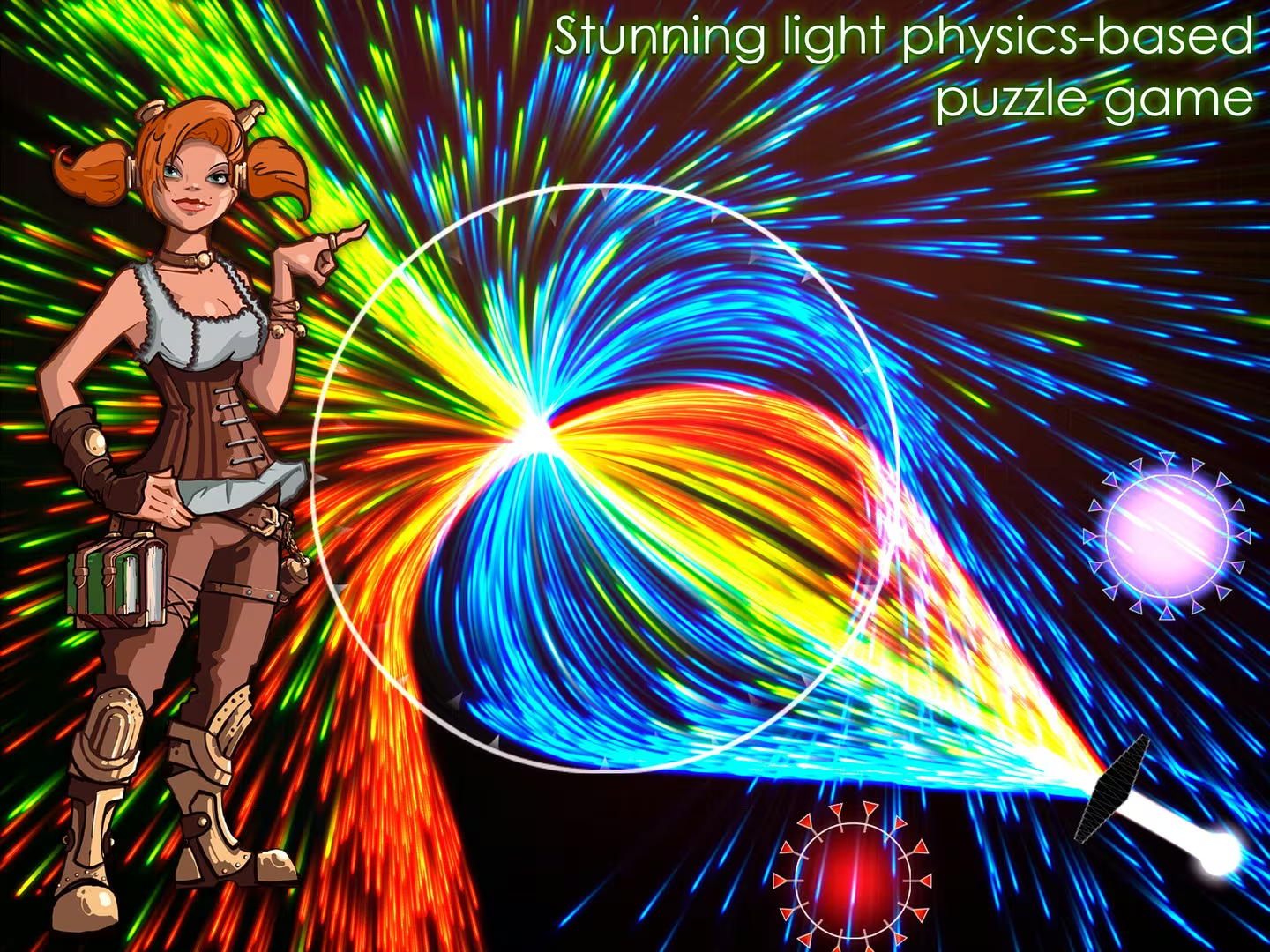
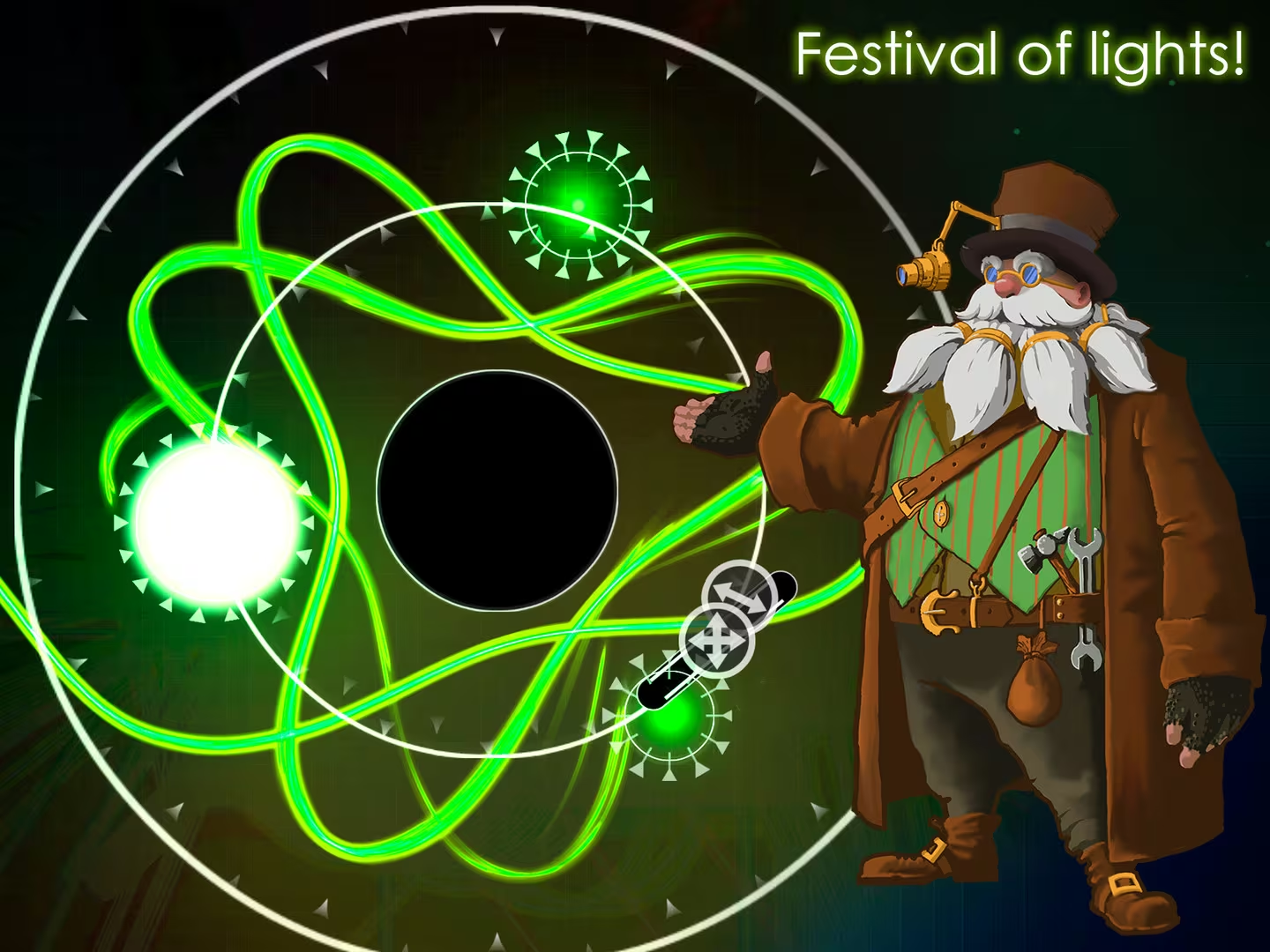
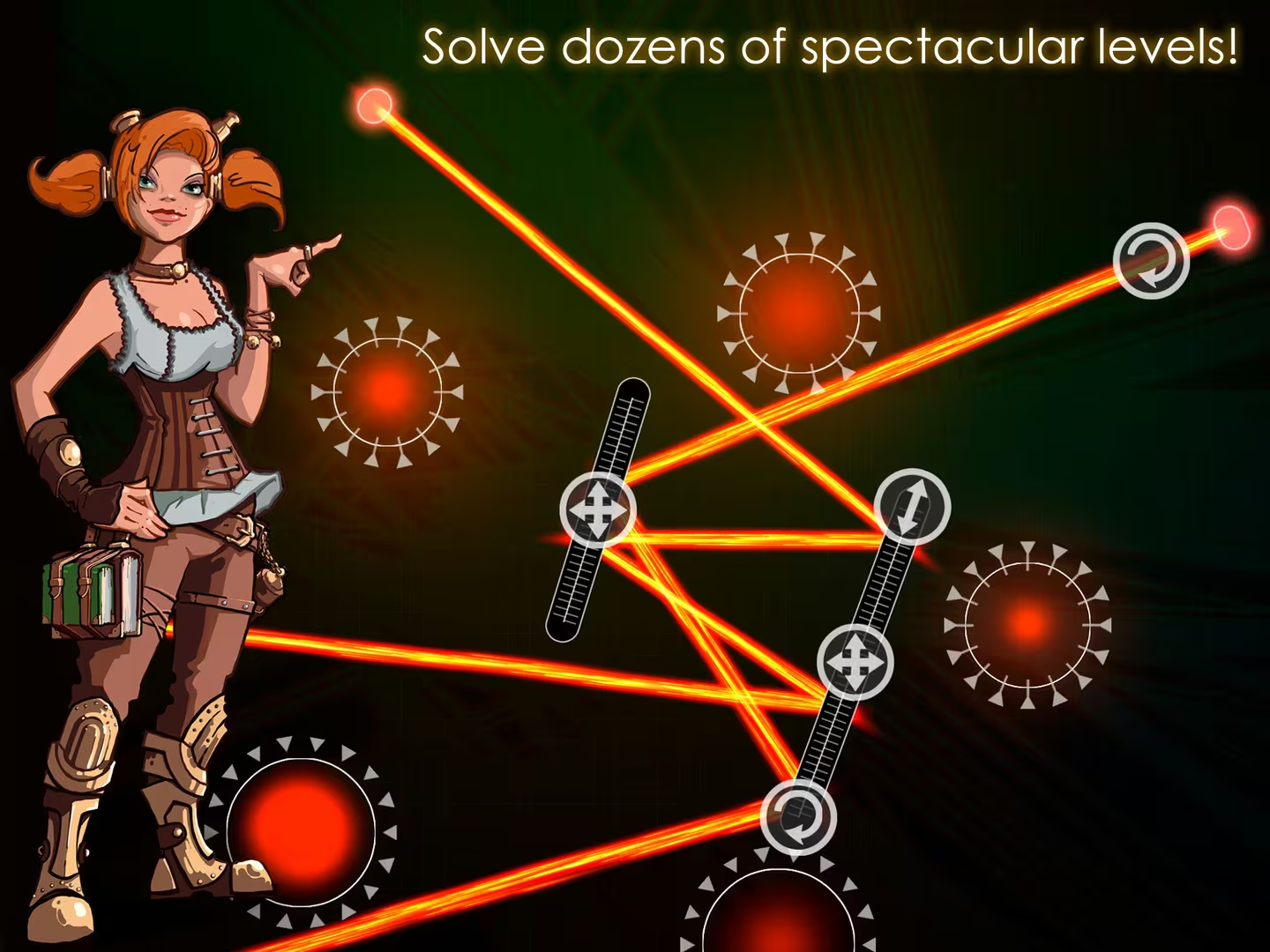
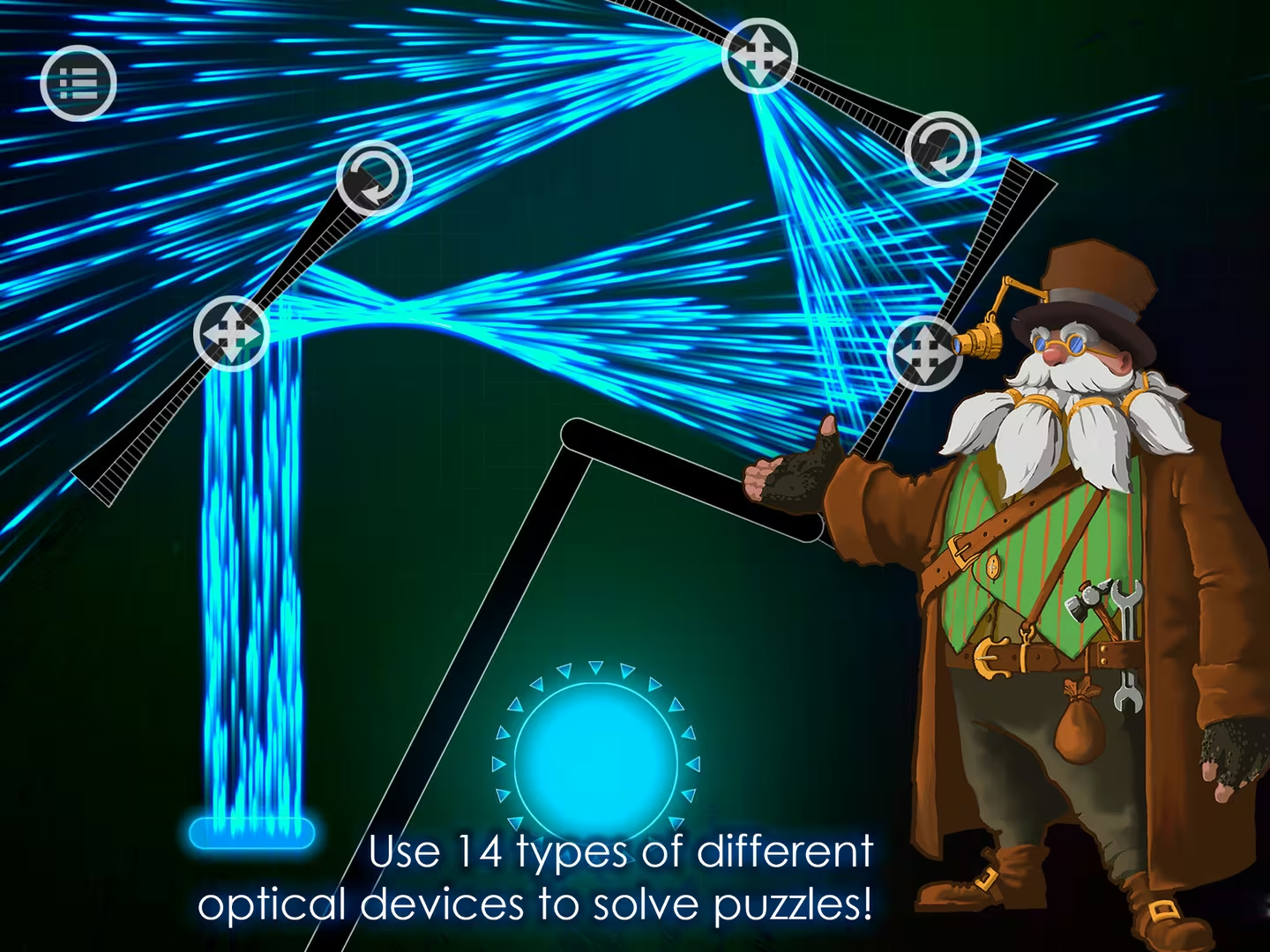
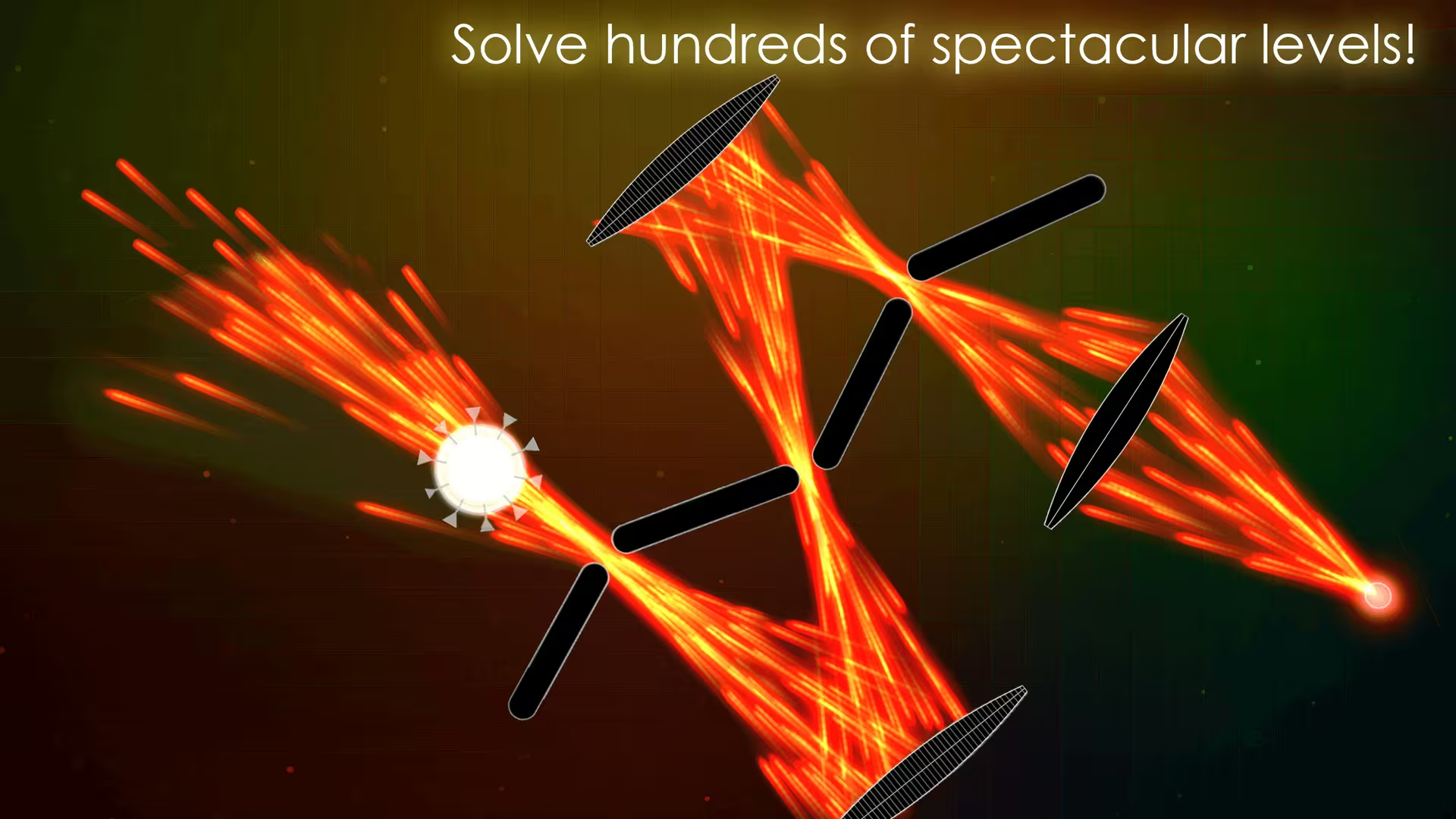
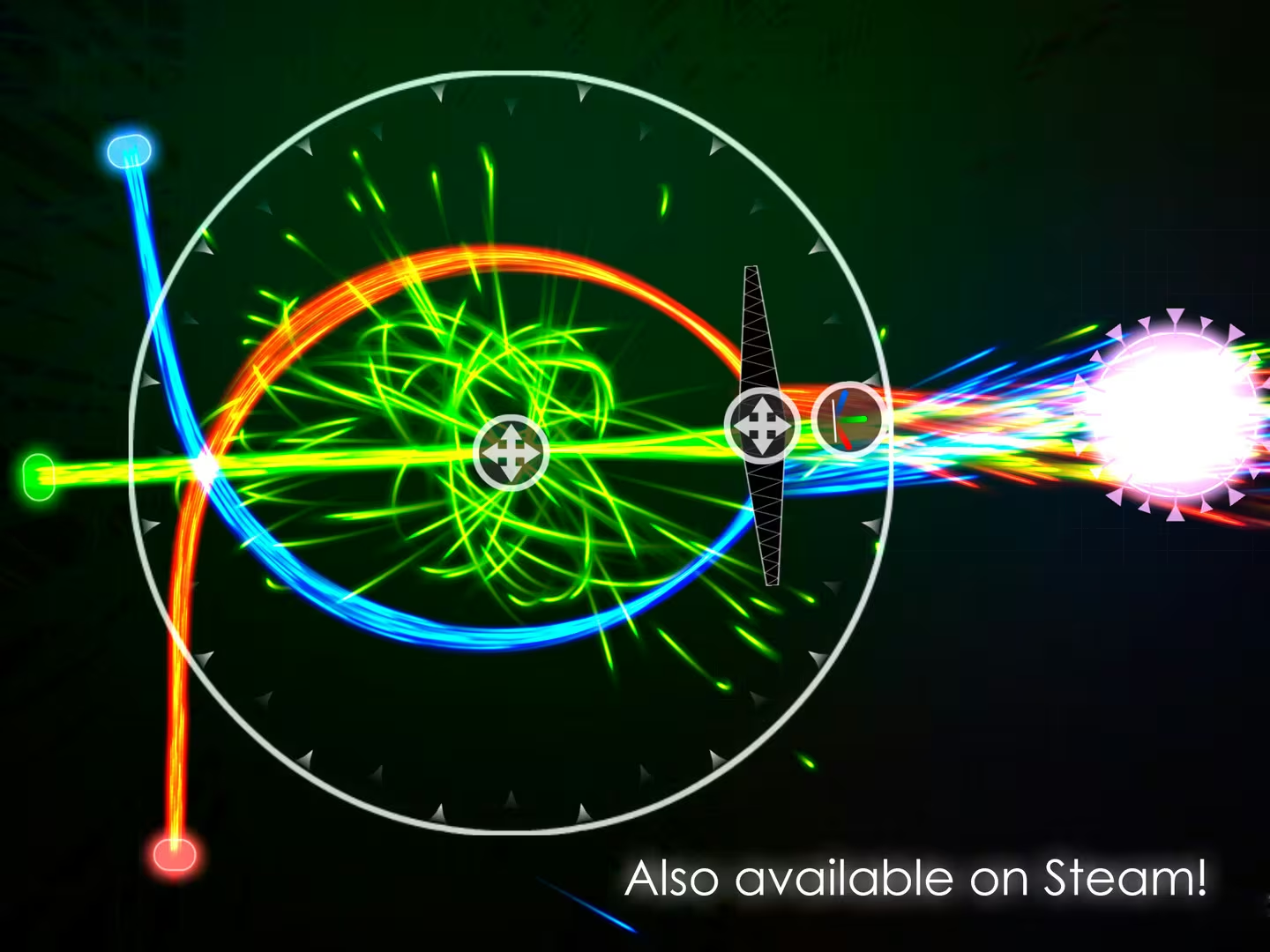
Discover the world of light physics: play with lasers, prisms, mirrors, magnets and dozens of other optical devices. Explore the world of Optika with Prof. Opticus and his assistant, Sofia! Research and complete more than one hundred challenging puzzles!

Global score

86/100

Genres

Adventure, Casual, Indie, Puzzle

Similar games

    Pros

    • Relaxing and visually appealing
    • Educational physics-based puzzles
    • Large number of levels
    • Good soundtrack
    • Valuable collectible cards and backgrounds

    Cons

    • Inconsistent difficulty and level design
    • Some controls are fiddly and imprecise
    • Achievements are buggy
    • Short overall playtime
    • Physics mechanics not fully realistic

    Analysis

    Broadly representative of its motivational profile, with a few distinct shifts. Motivations that often define this kind of title include Fantasy, Violence, Story, Thrill. It leans lower than usual among comparable games on Exploration, Survival, Thrill.

    How to use the graph
    Similar games map

    Each dot is a game. They are arranged from the same motivation profile as in the “Motivations” section below. Closer dots usually mean more similar reasons to play (exploration, competition, relaxation, etc.)—not that one game is “better” than another.

    • Larger dot with a light outline: the game you are viewing.
    • Colour: groups of games with comparable motivation patterns (statistical clusters).
    • Hover a dot to see the game name; click to open its page.
    • Scroll or double-click the chart to zoom out and see more games.

    Why don’t the axes read like a score? This view uses t-SNE: it only keeps who is close to whom. The scales are not “good to bad” or hours played—they separate groups on the map. Read distance between dots, not the axis numbers.

    Motivations

    • Autonomy
      4

      "Players freely manipulate optical elements (mirrors, lenses, magnets) to solve puzzles with no fixed routine."

    • Competence
      2

      "Some puzzles require skill and precision, but many levels are easy or solved by trial and error."

    • Competition
      -5

      "No evidence of competitive modes or player comparison; focus is on individual puzzle solving."

    • Continuation
      1

      "Players engage for a few hours; some find it relaxing and return occasionally, but overall short playtime."

    • Cooperation
      -5

      "Single-player puzzle game with no multiplayer or cooperative elements."

    • Creativity
      3

      "Players experiment with positioning and rotating optical devices to create solutions and visual effects."

    • Domination
      -5

      "No social dominance or power dynamics; purely individual puzzle solving."

    • Escapism
      3

      "Many players describe the game as relaxing and a way to unwind, providing mental escape."

    • Expectation
      -4

      "Players engage voluntarily for enjoyment and learning, not out of obligation or pressure."

    • Experimenting
      4

      "Game encourages trying different configurations and tinkering with light paths and devices."

    • Exploration
      -3

      "Levels are puzzle-focused with limited exploration; players work within known mechanics and environments."

    • Expression
      2

      "Some visual customization through arranging elements and creating colorful light patterns."

    • Fantasy
      -3

      "Game is based on physics concepts, though some mechanics are unrealistic; overall leans toward realism."

    • Fellowship
      -5

      "No social or community gameplay; strictly solo experience."

    • Growth
      3

      "Players learn about optics and physics concepts, improving problem-solving skills."

    • Health
      -5

      "Sedentary gameplay with no physical activity involved."

    • Idle
      -3

      "Requires focused attention to solve puzzles; not designed for idle or background play."

    • Intimacy
      -5

      "No social or emotional relationship building in gameplay."

    • Leadership
      -5

      "No leadership or group management elements present."

    • Progression
      3

      "Players progress through 160 levels with increasing difficulty and new optical devices."

    • Relaxation
      4

      "Many reviews highlight relaxing music, visuals, and calming gameplay experience."

    • Sensation
      4

      "Bright neon colors, particle effects, and satisfying light animations provide sensory enjoyment."

    • Status
      -4

      "No social recognition or ranking; achievements and cards exist but are mostly personal."

    • Story
      -4

      "Minimal narrative; characters appear only in tutorial; focus is on puzzle mechanics."

    • Strategy
      2

      "Some puzzles require planning and problem solving, but many rely on trial and error."

    • Thrill
      -4

      "Game is calm and soothing; lacks suspense or risk elements."

    • Value
      3

      "Good value especially on sale; card trading can offset cost; some complaints about price."

    • Violence
      -5

      "No violence; gameplay is constructive and puzzle-based."

    • Survival
      -5

      "No survival or threat elements; stable puzzle environment."

    Last update: 29/04/2026