Safety First! Thumbnail

Safety First! similar games & best alternatives

Safety First!

PC (Microsoft Windows), Nintendo Switch • 2016

Related articles

Quick resume

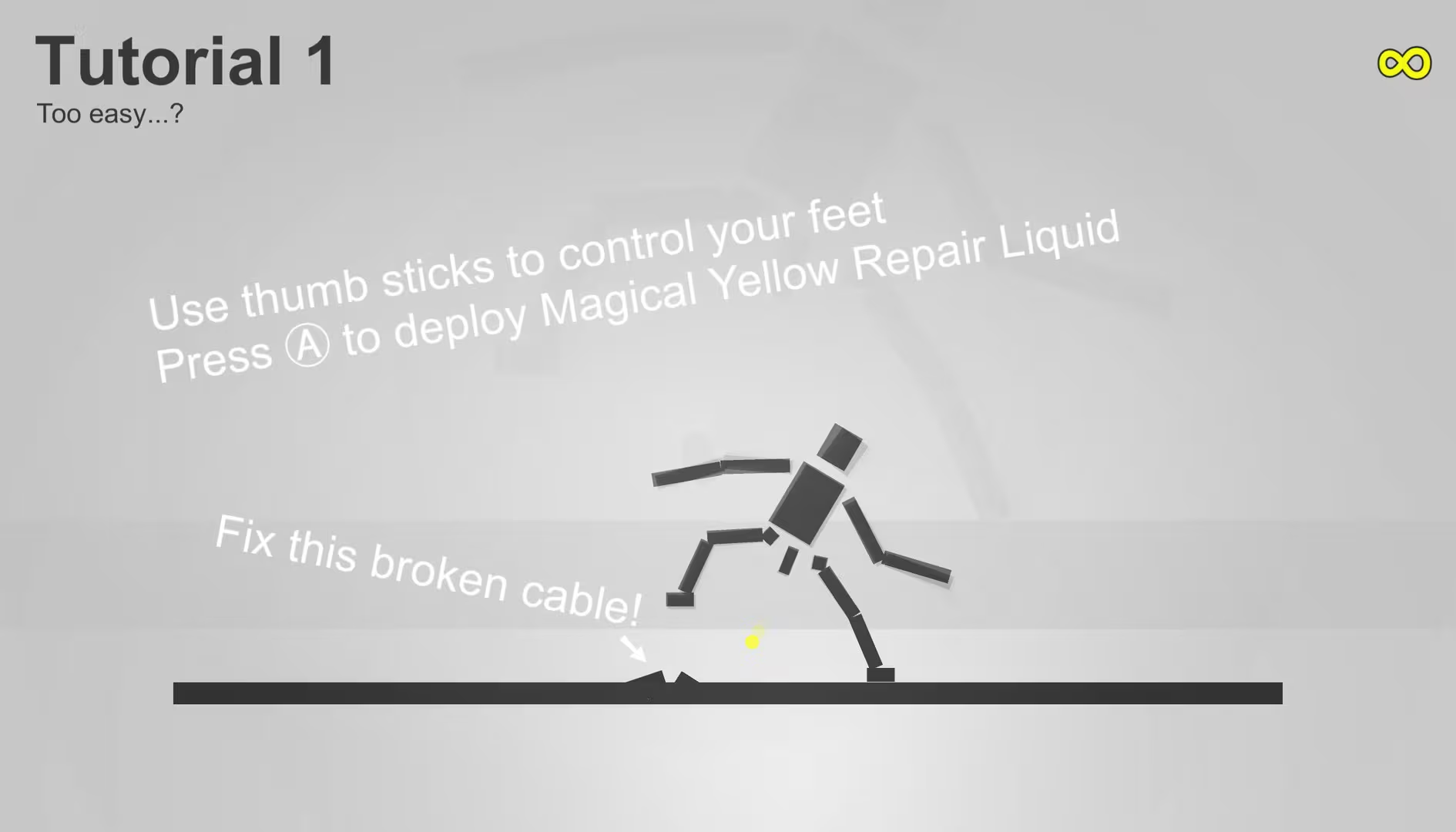
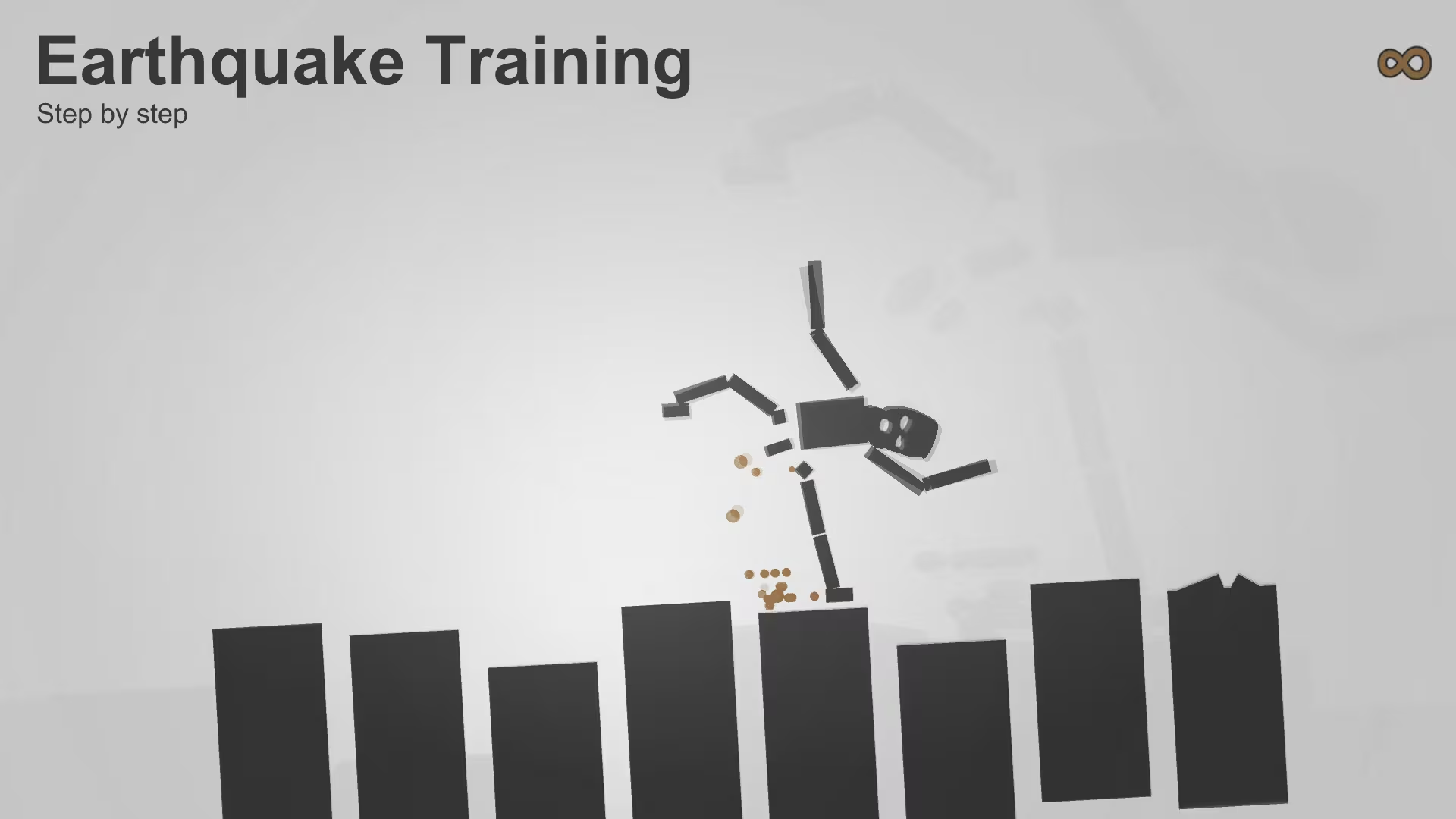
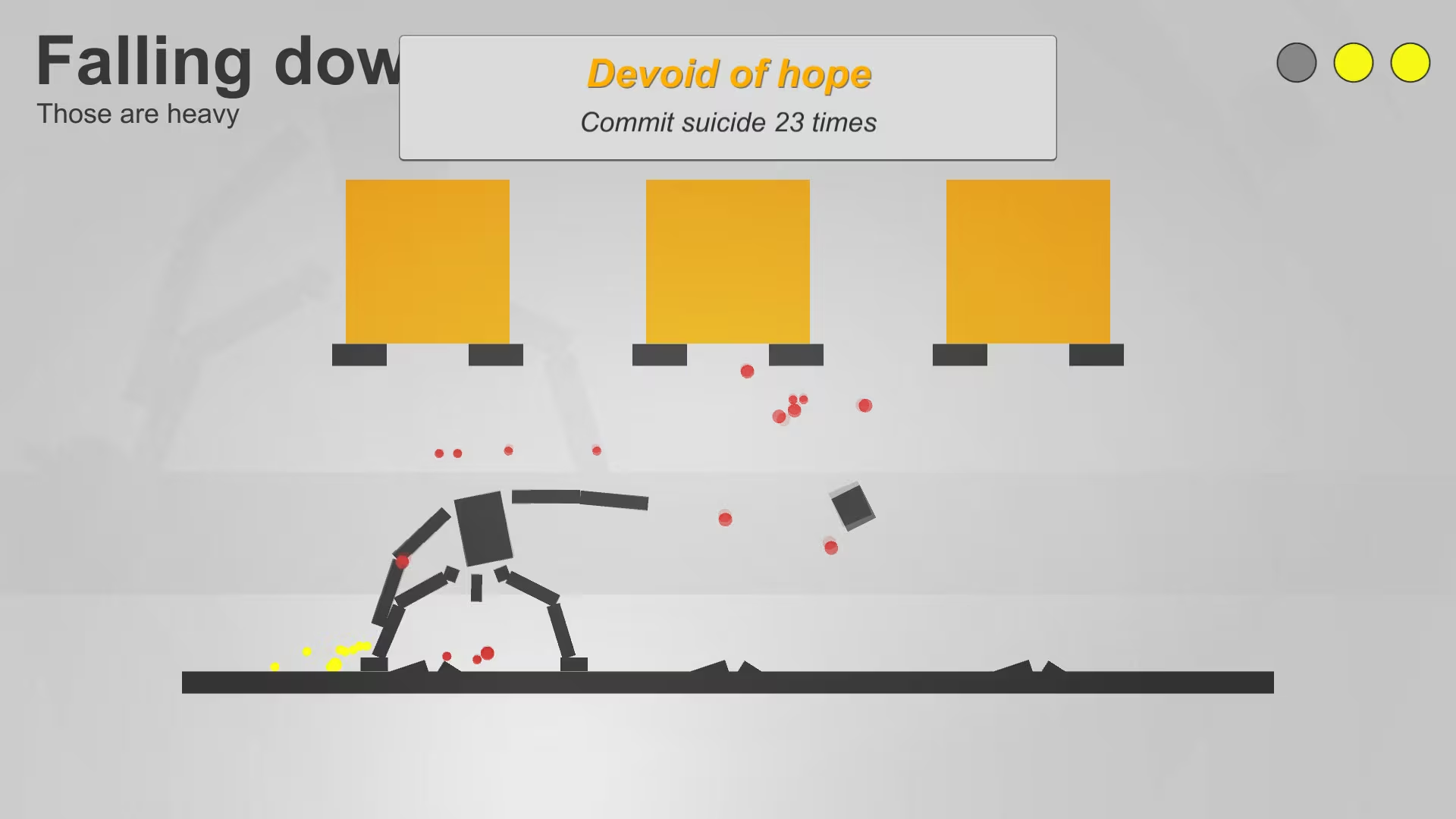
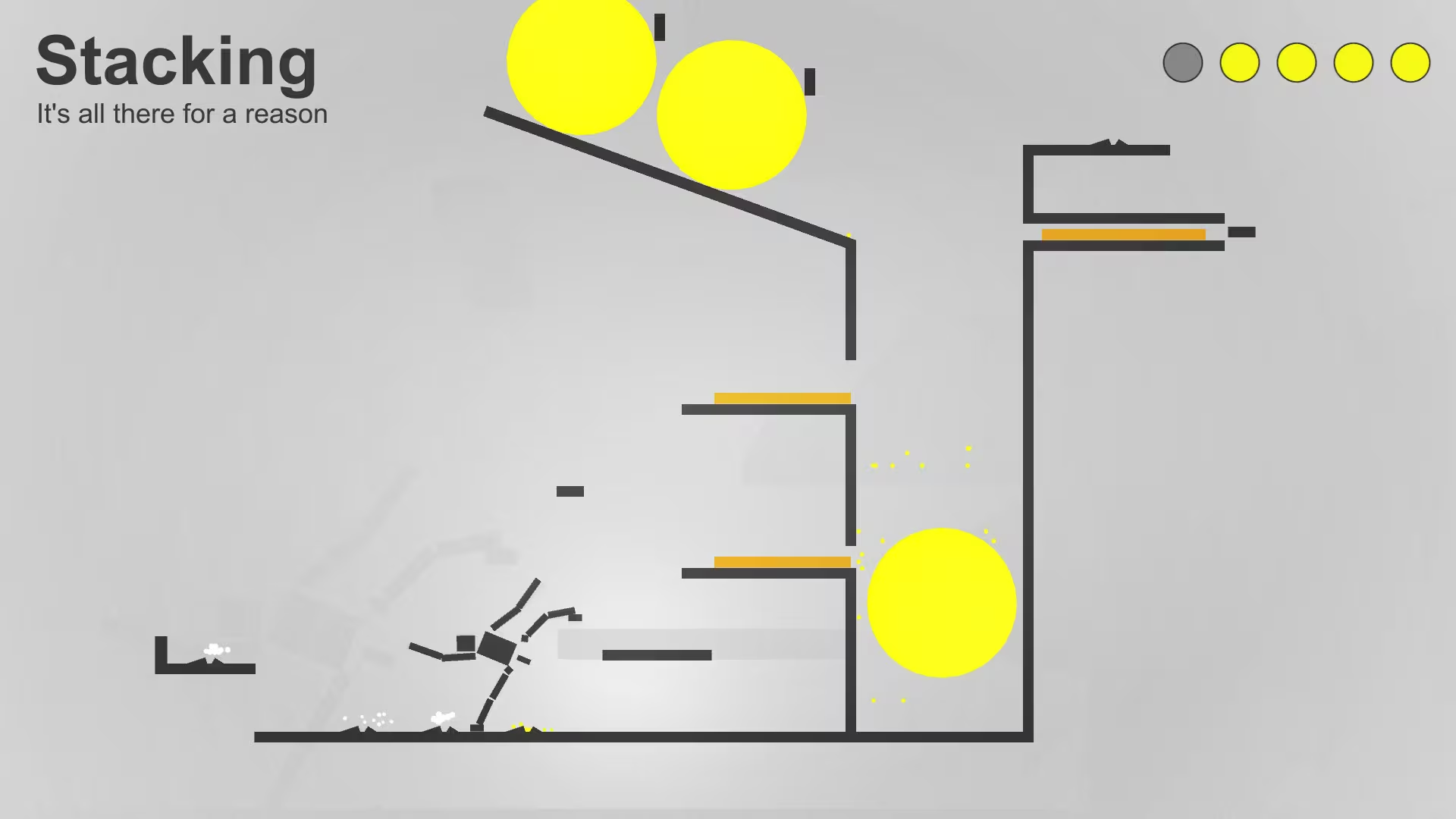
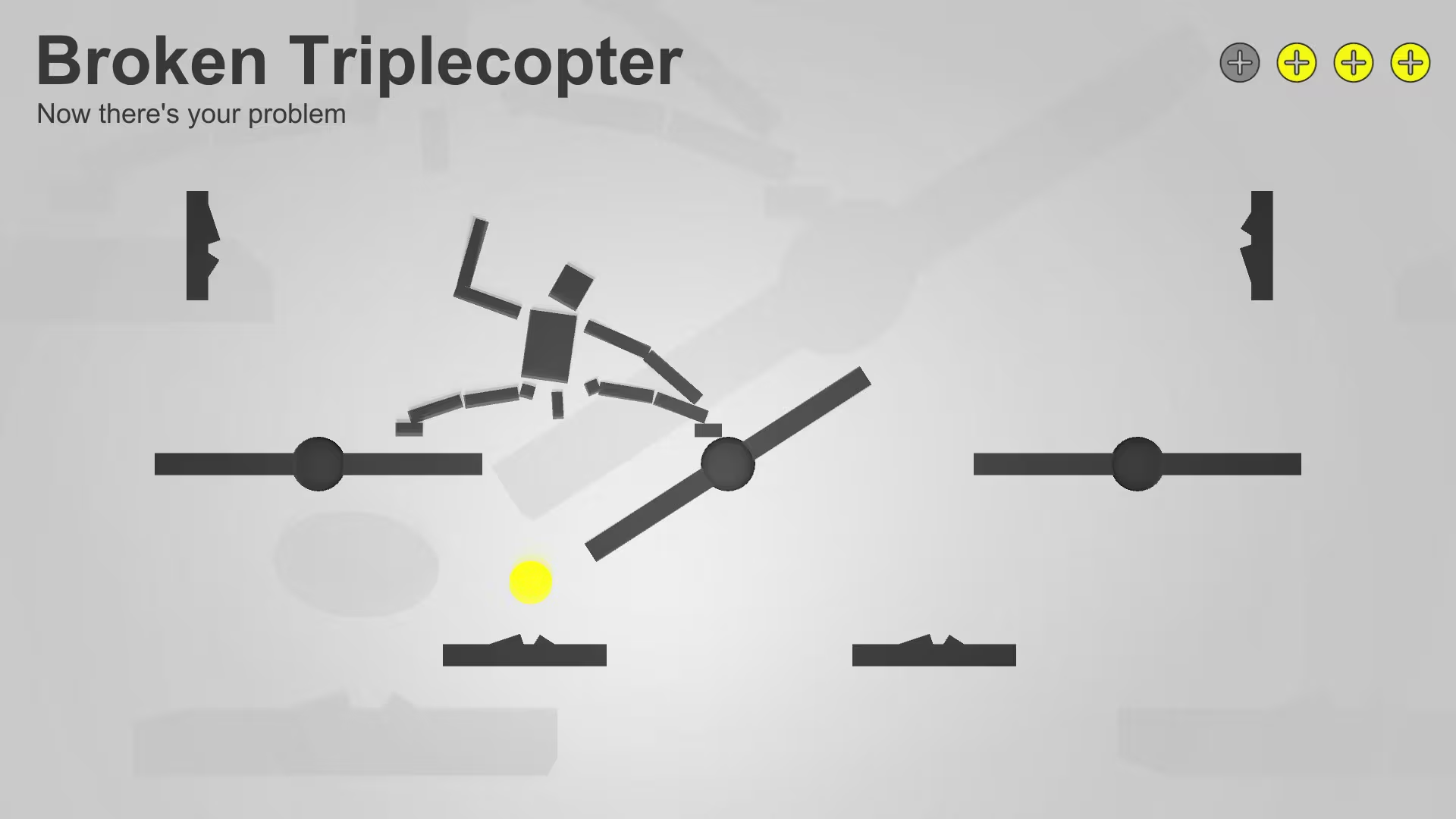
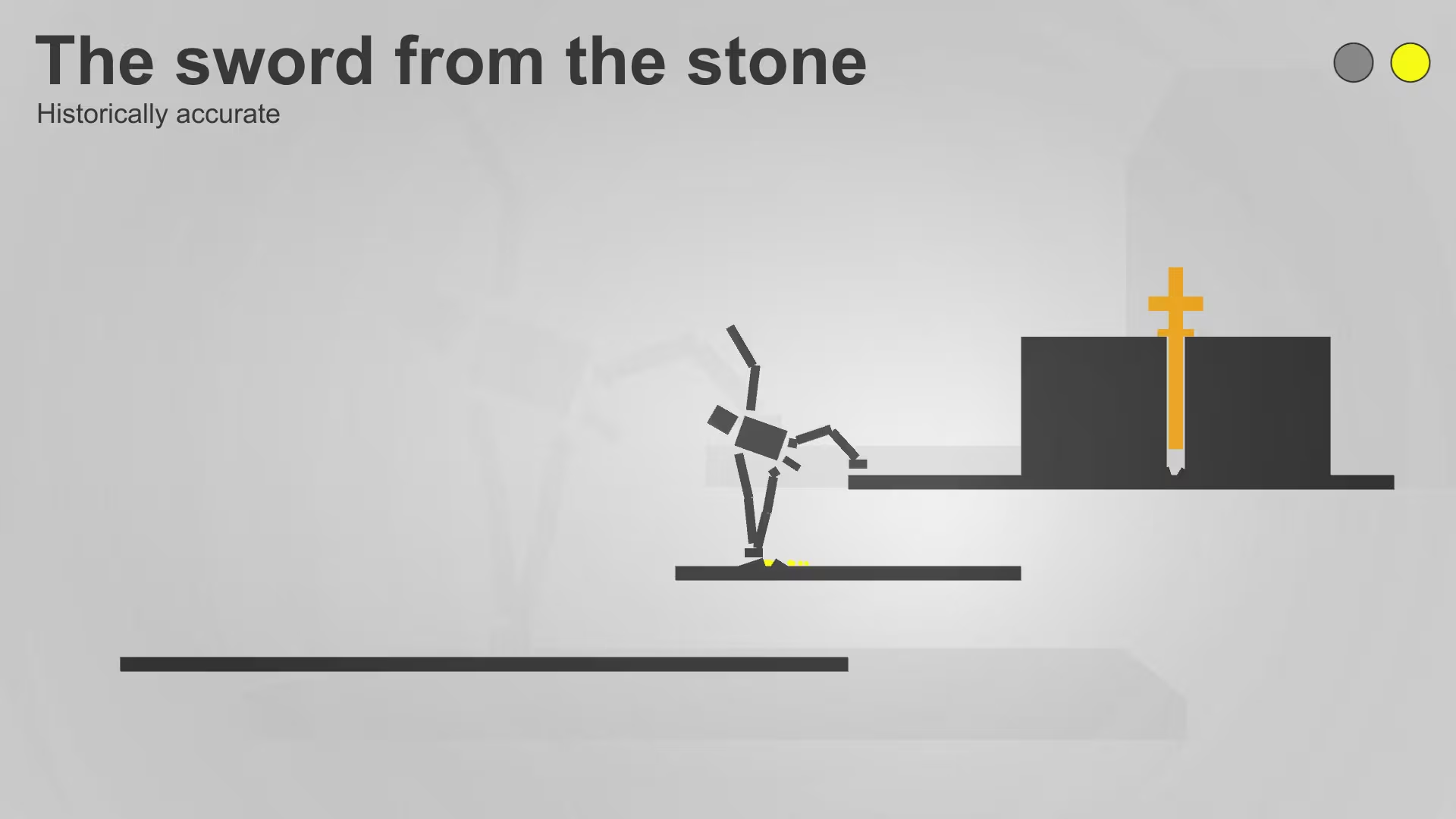
Safety First! is a twin stick physics puzzler in which you have to fix broken electric wires using your Magical Yellow Repair Liquid (MYRL). Can you beat all 69 levels?

Global score

81/100

Genres

Casual, Indie, Simulator, Sport, Arcade, Puzzle

Similar games

    Pros

    • Unique and humorous concept
    • Challenging and skillful physics-based puzzles
    • Good value for price
    • Multiple game modes and campaigns
    • Addictive and funny gameplay

    Cons

    • Frustrating difficulty spikes
    • Minimal graphics and sound quality
    • Awkward keyboard controls
    • Lack of multiplayer or social features
    • Some levels rely on luck or have inconsistent physics

    Analysis

    Broadly representative of its motivational profile, with a few distinct shifts. Motivations that often define this kind of title include Relaxation, Survival, Violence, Fellowship. It leans lower than usual among comparable games on Story, Violence, Expression.

    How to use the graph
    Similar games map

    Each dot is a game. They are arranged from the same motivation profile as in the “Motivations” section below. Closer dots usually mean more similar reasons to play (exploration, competition, relaxation, etc.)—not that one game is “better” than another.

    • Larger dot with a light outline: the game you are viewing.
    • Colour: groups of games with comparable motivation patterns (statistical clusters).
    • Hover a dot to see the game name; click to open its page.
    • Scroll or double-click the chart to zoom out and see more games.

    Why don’t the axes read like a score? This view uses t-SNE: it only keeps who is close to whom. The scales are not “good to bad” or hours played—they separate groups on the map. Read distance between dots, not the axis numbers.

    Motivations

    • Autonomy
      4

      "Players have direct control over individual legs and precise movements, allowing freedom in how to approach puzzles."

    • Competence
      4

      "Game requires skillful coordination and dexterity to master challenging physics-based puzzles."

    • Competition
      -3

      "Focus is on personal puzzle solving and mastery rather than competing against others."

    • Continuation
      3

      "Many players report addictive gameplay and repeated attempts to overcome difficult levels."

    • Cooperation
      -4

      "Primarily a single-player experience with individual control and no multiplayer modes."

    • Creativity
      3

      "Players creatively solve puzzles using physics and unique movement mechanics."

    • Domination
      -5

      "No evidence of exerting control or superiority over others; gameplay is individual and non-confrontational."

    • Escapism
      4

      "Players use the game as a humorous distraction and stress relief from real life."

    • Expectation
      -4

      "Players engage voluntarily out of personal interest and enjoyment, not obligation."

    • Experimenting
      4

      "Game encourages trying different movements and strategies to solve puzzles."

    • Exploration
      2

      "Players explore new level designs and physics challenges, though within a limited environment."

    • Expression
      -3

      "Minimal customization or personalization; character and environment are standardized."

    • Fantasy
      2

      "Game features a humorous fictional premise with exaggerated physics and cartoonish elements."

    • Fellowship
      -4

      "Mostly solo play with limited social interaction or community involvement."

    • Growth
      4

      "Players develop skills in precise control and puzzle solving over time."

    • Health
      -5

      "Sedentary gameplay with no physical activity or health-related features."

    • Idle
      -4

      "Requires focused attention and continuous engagement to manage complex controls."

    • Intimacy
      -5

      "No close social relationships or emotional sharing involved in gameplay."

    • Leadership
      -5

      "No leadership or group management roles; purely individual control."

    • Progression
      3

      "Players progress through multiple levels and unlock game modes, showing advancement."

    • Relaxation
      -2

      "Game can be frustrating and tense due to difficulty and physics unpredictability."

    • Sensation
      2

      "Humorous sounds and ragdoll physics provide sensory stimulation and emotional fun."

    • Status
      -4

      "No social status or recognition systems like leaderboards or rankings."

    • Story
      -4

      "Minimal narrative; gameplay is context-free and focused on puzzle mechanics."

    • Strategy
      3

      "Players plan routes and movements to solve increasingly complex puzzles."

    • Thrill
      2

      "Some tension and suspense arise from challenging physics and risk of failure."

    • Value
      4

      "Players perceive good value for money given the amount of content and fun."

    • Violence
      -3

      "Game features cartoonish dismemberment but focuses on constructive puzzle solving."

    • Survival
      3

      "Players must avoid failure by carefully managing fragile character limbs and limited resources."

    Last update: 29/04/2026