Tcheco in the Castle of Lucio Thumbnail

Tcheco in the Castle of Lucio similar games & best alternatives

Tcheco in the Castle of Lucio

PC (Microsoft Windows), Xbox One, Nintendo Switch, PlayStation 4 • 2015

Related articles

Quick resume

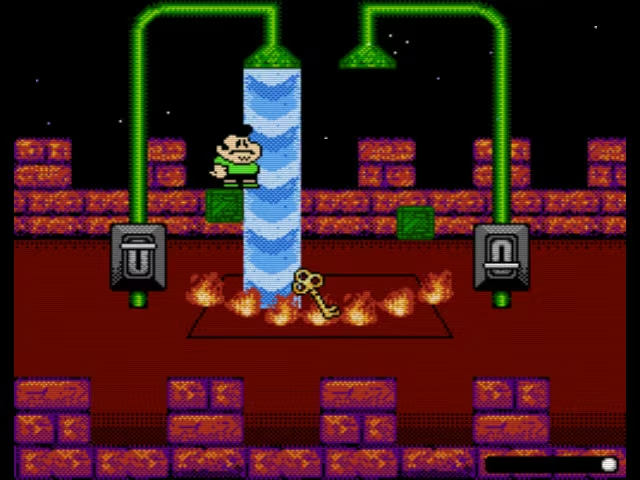
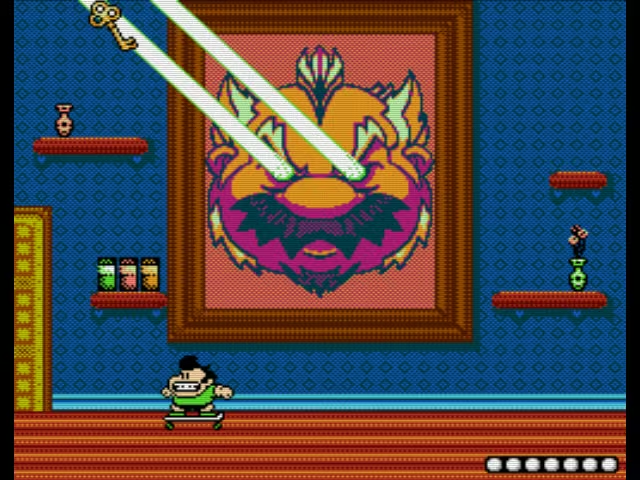
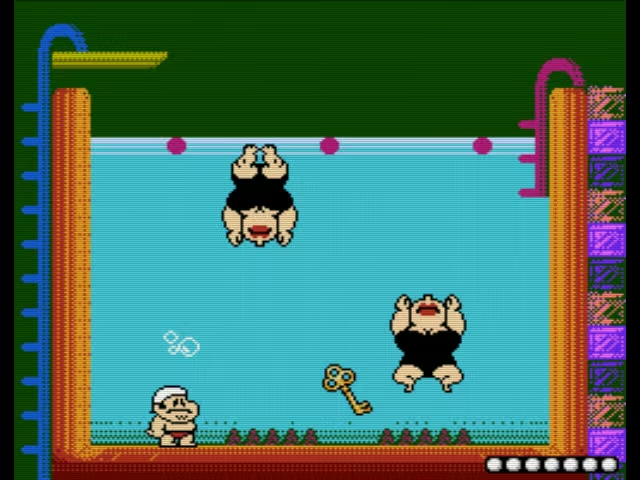
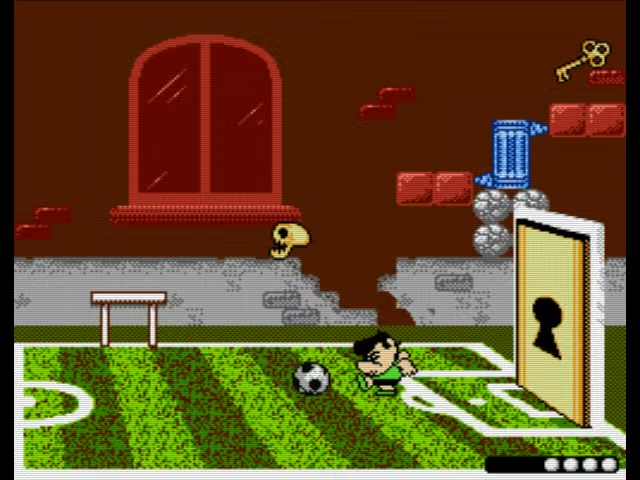
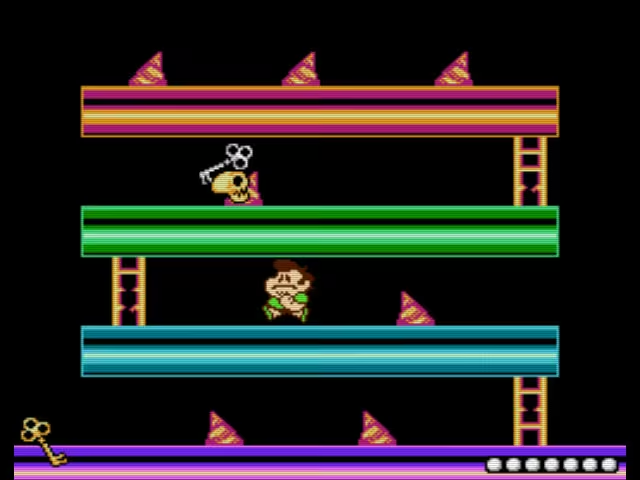
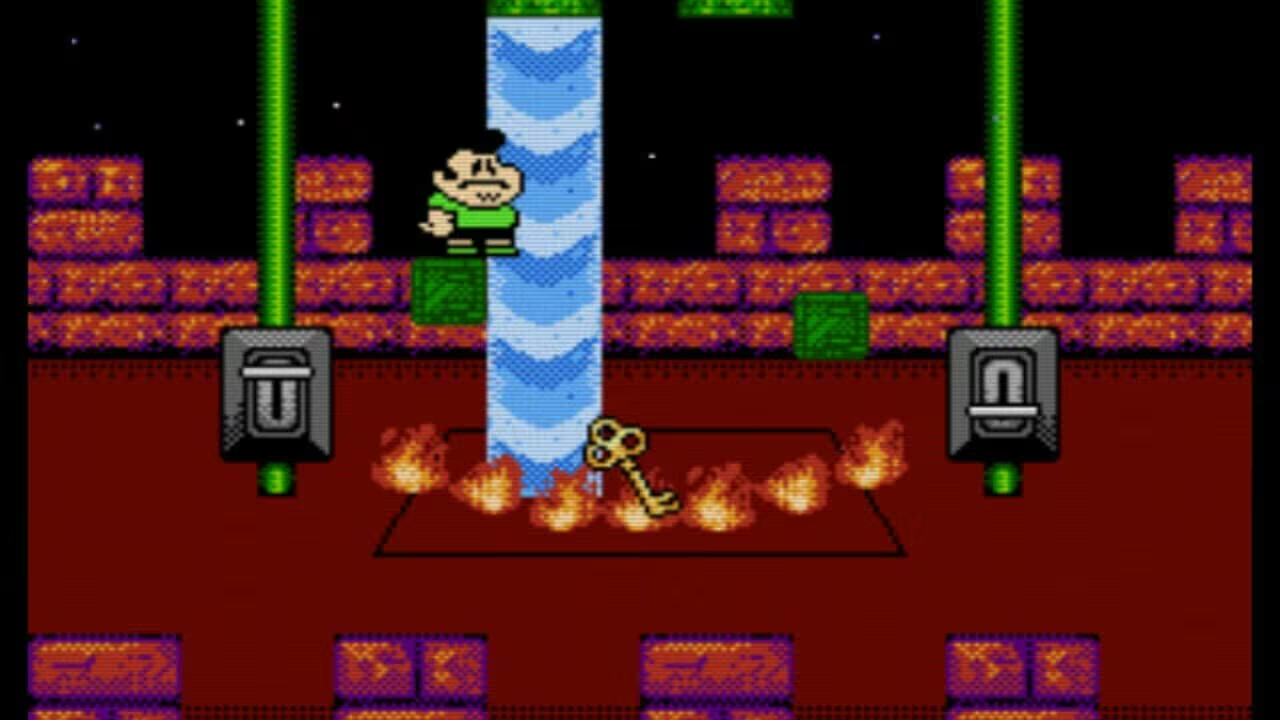
Tcheco in the Castle of Lucio is an exciting, fast-paced action game.Help Tcheco the Adventure Boy to leave a mysterious castle full of deadly creatures! Be ready for a big challenge, full of nonsense humor and retro goodness.

Global score

90/100

Genres

Action, Indie, Adventure, Platform, Arcade

Similar games

    Pros

    • Faithful retro nes-style graphics and sound
    • Highly challenging and skill-based gameplay
    • Unique and creative level design with humor
    • Very low price and good value
    • Strong nostalgic appeal

    Cons

    • Lack of save points or checkpoints can frustrate some players
    • No options menu or key remapping
    • Fixed resolution and scanline effects may not suit all
    • Minimal narrative and social features
    • Some control and gameplay quirks

    Analysis

    Broadly representative of its motivational profile, with a few distinct shifts. Motivations that often define this kind of title include Relaxation, Survival, Violence, Fellowship. It leans lower than usual among comparable games on Story, Expression, Violence.

    How to use the graph
    Similar games map

    Each dot is a game. They are arranged from the same motivation profile as in the “Motivations” section below. Closer dots usually mean more similar reasons to play (exploration, competition, relaxation, etc.)—not that one game is “better” than another.

    • Larger dot with a light outline: the game you are viewing.
    • Colour: groups of games with comparable motivation patterns (statistical clusters).
    • Hover a dot to see the game name; click to open its page.
    • Scroll or double-click the chart to zoom out and see more games.

    Why don’t the axes read like a score? This view uses t-SNE: it only keeps who is close to whom. The scales are not “good to bad” or hours played—they separate groups on the map. Read distance between dots, not the axis numbers.

    Motivations

    • Autonomy
      4

      "Players must learn and memorize levels, but have freedom in how to approach each screen and improve skills through repeated attempts."

    • Competence
      5

      "High difficulty with no checkpoints demands skill mastery and learning from failure, providing strong feedback on player performance."

    • Competition
      -3

      "Focus is on personal challenge and progression rather than competing against others; no mention of multiplayer or leaderboards."

    • Continuation
      3

      "Players often engage in repeated attempts and long sessions to overcome difficult levels, showing habitual play despite frustration."

    • Cooperation
      -5

      "Game is single-player with no cooperative elements or multiplayer interaction."

    • Creativity
      4

      "Each screen presents unique puzzles and mechanics; the game constantly invents new situations and challenges."

    • Domination
      -5

      "No evidence of exerting control over others; gameplay is individual and self-directed."

    • Escapism
      4

      "Players use the game as a nostalgic escape into a retro, humorous, and bizarre world distinct from real life."

    • Expectation
      -4

      "Players engage voluntarily out of intrinsic interest and nostalgia, not due to obligation or external pressure."

    • Experimenting
      3

      "Players explore new mechanics and puzzles on each screen, requiring adaptation and learning."

    • Exploration
      3

      "Game features many distinct screens with different layouts and surprises, encouraging discovery."

    • Expression
      -3

      "Limited customization; players control a fixed character with no avatar personalization."

    • Fantasy
      4

      "Game presents a quirky, imaginative world with bizarre characters and nonsensical scenarios."

    • Fellowship
      -4

      "Experience is primarily solo with minimal social interaction beyond community appreciation."

    • Growth
      5

      "Strong emphasis on learning, memorization, and skill improvement through repeated play."

    • Health
      -5

      "Sedentary gameplay with no physical activity or health-related features."

    • Idle
      -4

      "Requires focused attention and continuous engagement due to high difficulty and no checkpoints."

    • Intimacy
      -5

      "No close social relationships or emotional sharing; gameplay is individual."

    • Leadership
      -5

      "No leadership or group management elements present."

    • Progression
      4

      "Progression through levels and collecting keys; no save points means progression is skill-based rather than item-based."

    • Relaxation
      -3

      "High difficulty and repeated failures create tension rather than relaxation."

    • Sensation
      3

      "Retro visuals and sound design provide nostalgic sensory stimulation and emotional enjoyment."

    • Status
      -4

      "No social status or recognition systems; achievements and cards exist but social evaluation is minimal."

    • Story
      -3

      "Minimal narrative; focus is on gameplay and humor rather than plot or lore."

    • Strategy
      3

      "Players must plan timing and actions carefully to overcome traps and puzzles."

    • Thrill
      3

      "Challenge and risk of failure create suspense and tension during gameplay."

    • Value
      5

      "Very low price with high entertainment value; players feel they get good return on investment."

    • Violence
      1

      "Some combat elements present but not the main focus; game is more about platforming and puzzles."

    • Survival
      4

      "Players must avoid death and manage limited lives to progress, reflecting survival challenge."

    Where to buy

    Last update: 29/04/2026