Space Simulation Toolkit Thumbnail

Space Simulation Toolkit similar games & best alternatives

Space Simulation Toolkit

PC (Microsoft Windows) • 2020

Related articles

Quick resume

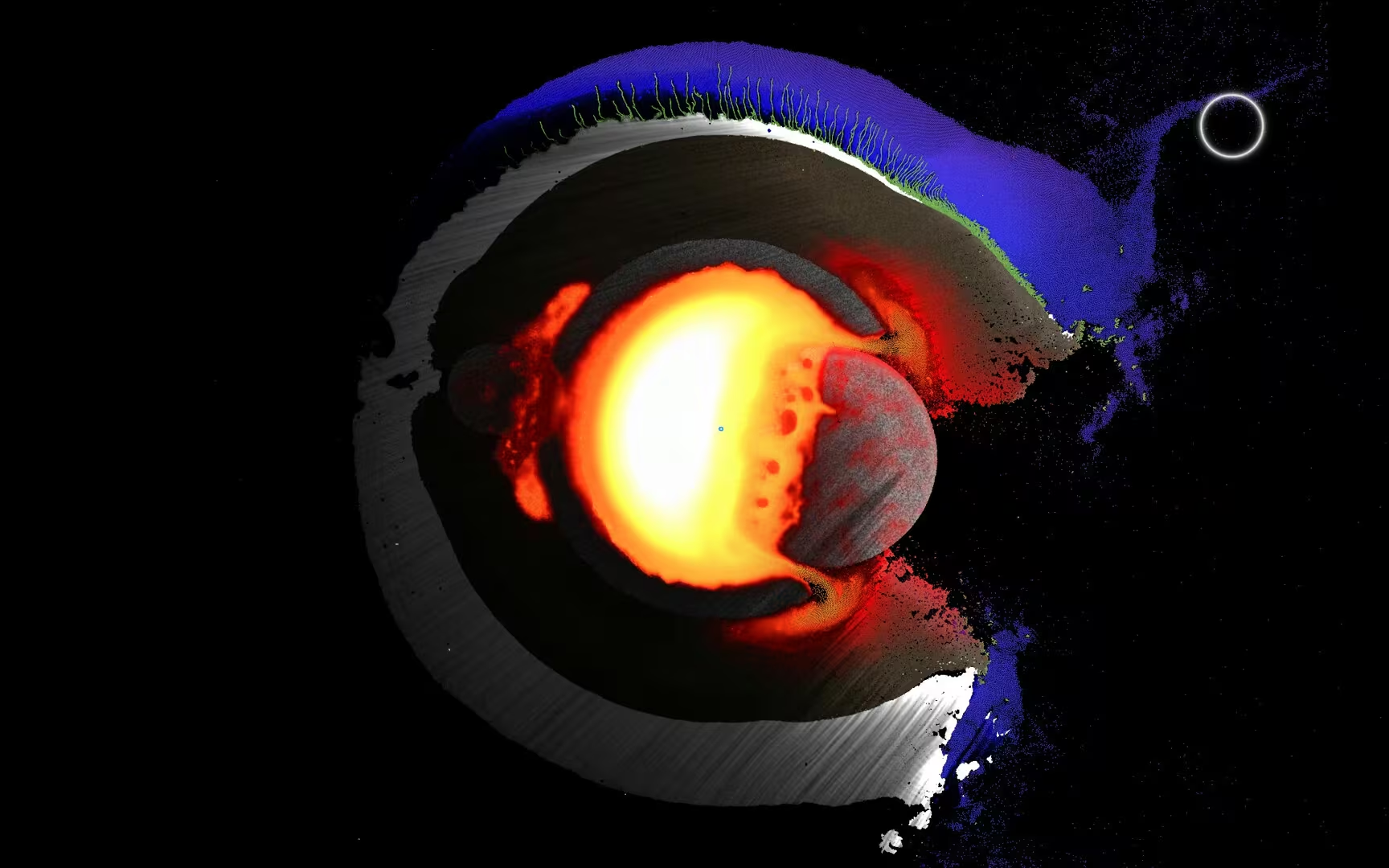
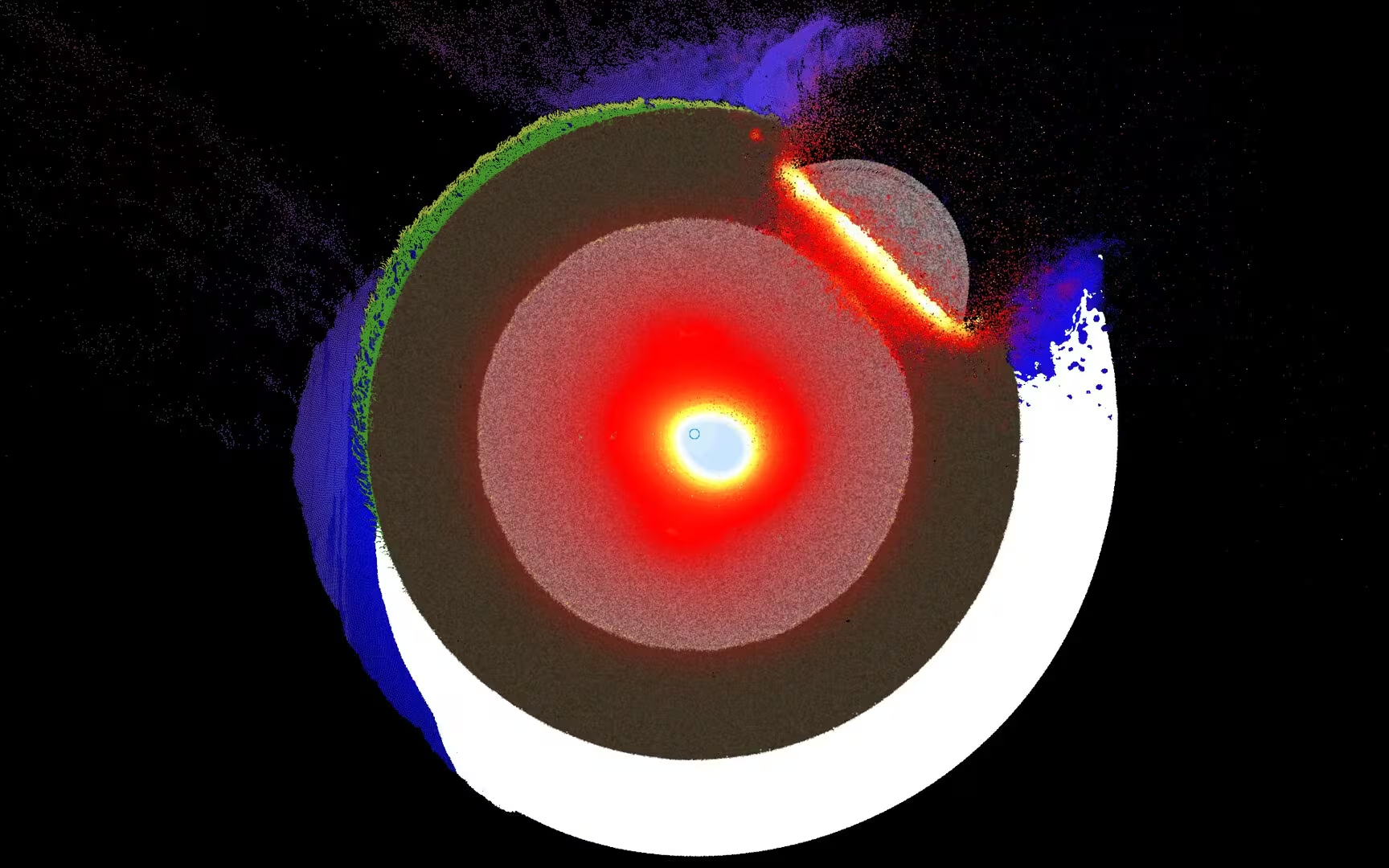
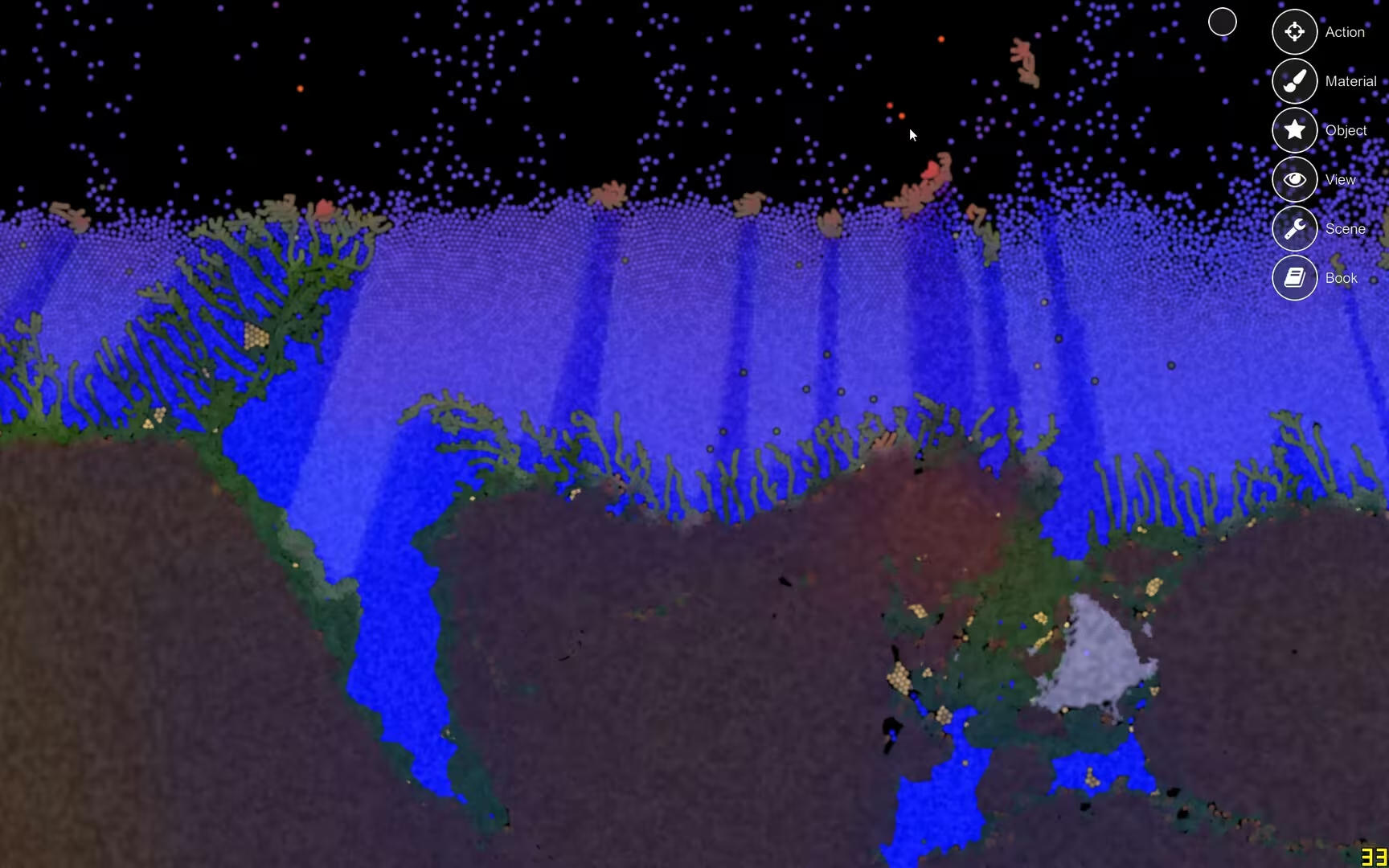
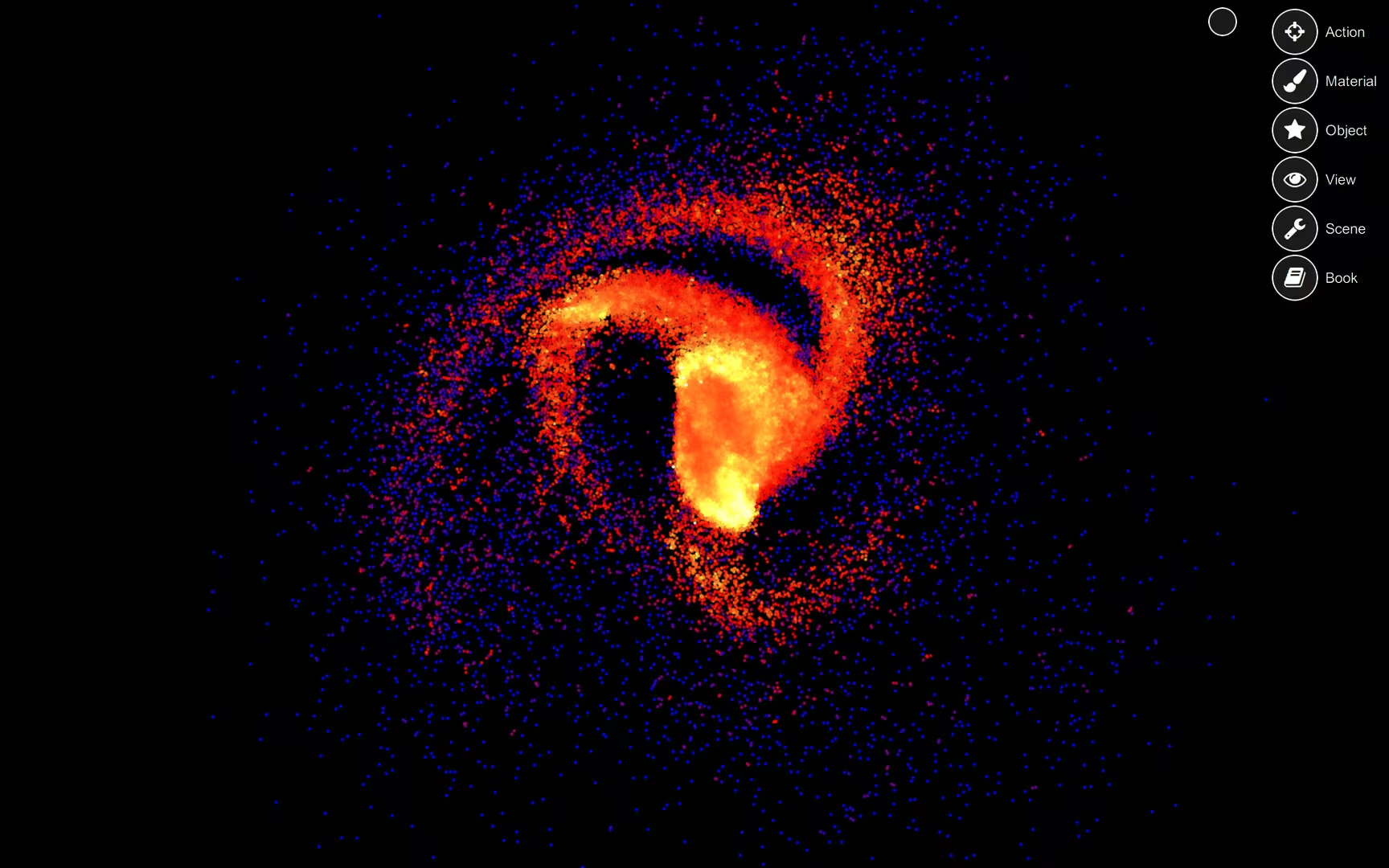
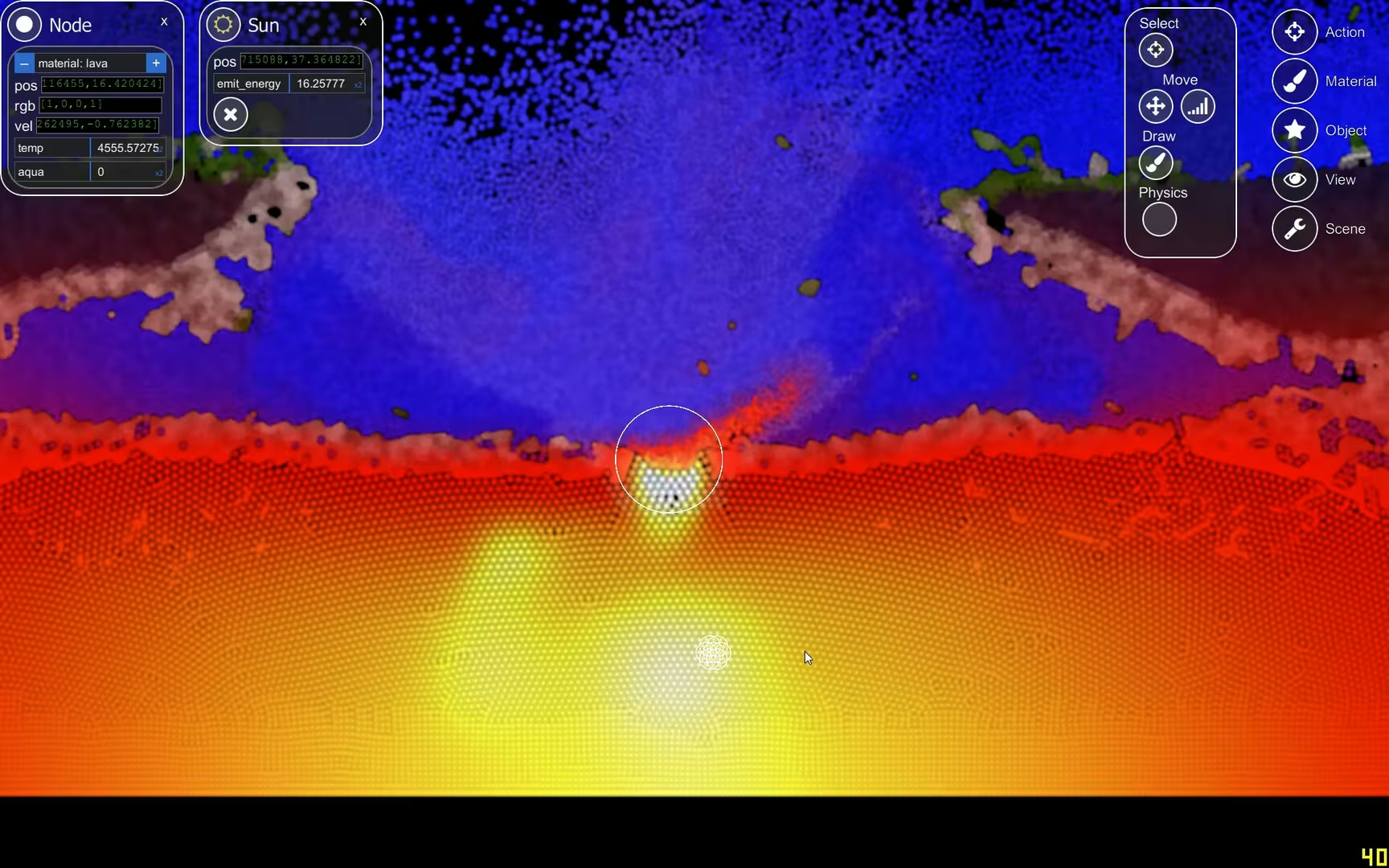
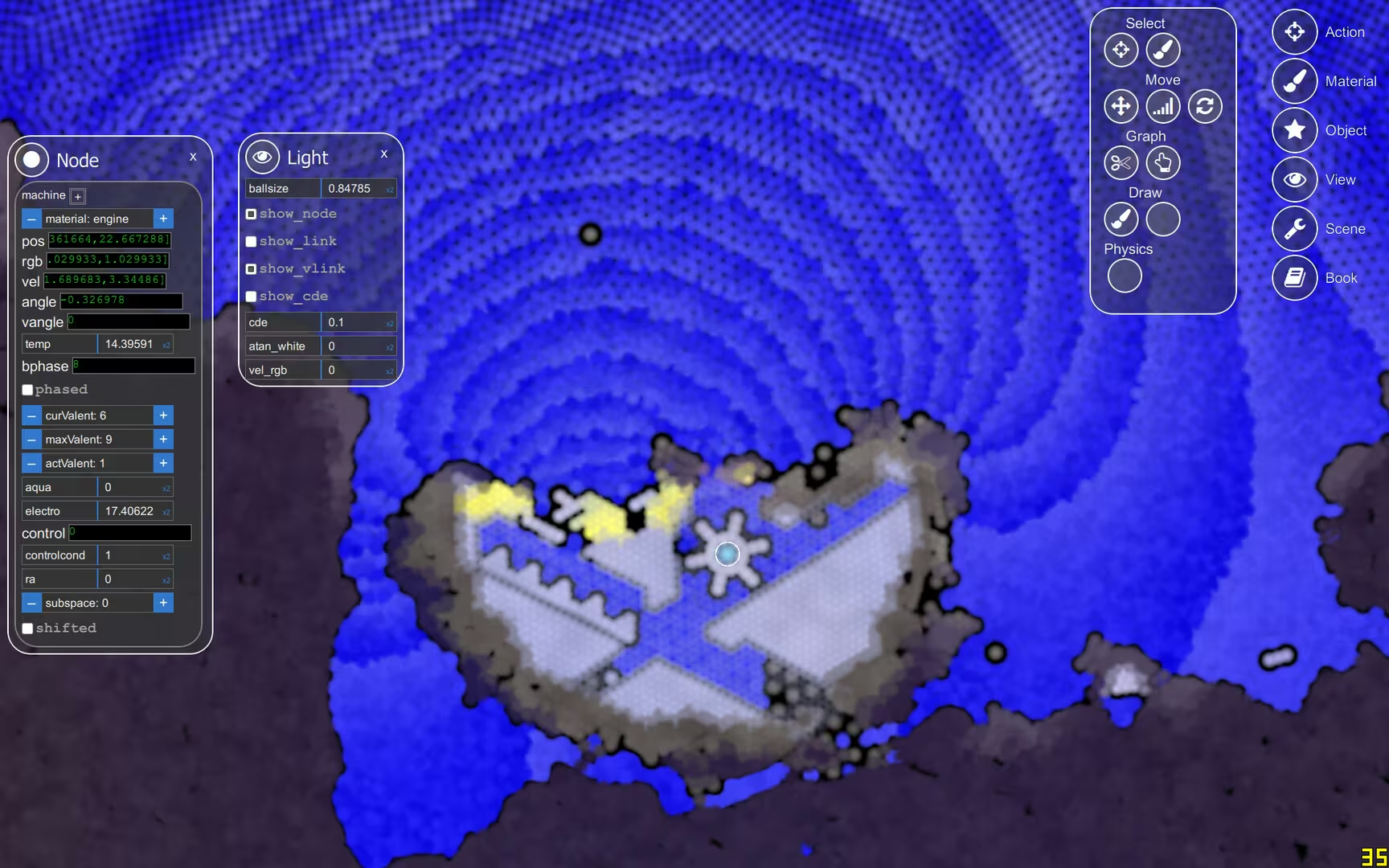
Physics sandbox game that uses a graphics card as a supercomputer. Change the laws of physics, design mechanisms, create A-Life worlds and inhabit them with living beings, experiment with evolution and AI.

Global score

81/100

Genres

Indie, Simulator, Free To Play, Early Access

Similar games

    Pros

    • Highly detailed and optimized particle physics simulation
    • Extensive customization and creativity potential
    • Active developer engagement and community support
    • Multiple simulation modes including evolution and planetary physics
    • Absorbing and relaxing experience for enthusiasts

    Cons

    • Steep learning curve with poor ui and lack of tutorials
    • Frequent crashes and stability issues
    • High hardware requirements, limited amd support
    • Early access with incomplete features and content
    • Expensive for current state and limited guidance

    Analysis

    Broadly representative of its motivational profile, with a few distinct shifts. Motivations that often define this kind of title include Fantasy, Violence, Story, Thrill. Here, the score leans higher than usual among comparable games on Expression. It leans lower than usual among comparable games on Value, Story.

    How to use the graph
    Similar games map

    Each dot is a game. They are arranged from the same motivation profile as in the “Motivations” section below. Closer dots usually mean more similar reasons to play (exploration, competition, relaxation, etc.)—not that one game is “better” than another.

    • Larger dot with a light outline: the game you are viewing.
    • Colour: groups of games with comparable motivation patterns (statistical clusters).
    • Hover a dot to see the game name; click to open its page.
    • Scroll or double-click the chart to zoom out and see more games.

    Why don’t the axes read like a score? This view uses t-SNE: it only keeps who is close to whom. The scales are not “good to bad” or hours played—they separate groups on the map. Read distance between dots, not the axis numbers.

    Motivations

    • Autonomy
      4

      "Players have extensive control over particle types, simulation parameters, and can create custom simulations, indicating high personal freedom and control."

    • Competence
      3

      "The game involves managing complex physics simulations and tweaking many parameters, offering skill-based challenges and feedback, though some users find it difficult to master."

    • Competition
      -4

      "Focus is on personal experimentation and simulation creation without competitive or ranked elements."

    • Continuation
      3

      "Many users report spending hours experimenting and returning repeatedly despite crashes, indicating habitual engagement."

    • Cooperation
      -5

      "The game is a single-player simulation tool with no multiplayer or cooperative features."

    • Creativity
      5

      "Strong emphasis on creating and modifying simulations, materials, and particle behaviors, with plans for modding and scripting support."

    • Domination
      -5

      "No elements of exerting control over others; purely individual simulation experience."

    • Escapism
      3

      "Users describe the game as relaxing and absorbing, providing distraction and stress relief through immersive simulation."

    • Expectation
      -4

      "Players engage voluntarily out of personal interest and curiosity rather than obligation or external pressure."

    • Experimenting
      5

      "Core gameplay revolves around testing new particle interactions, physics parameters, and simulation setups."

    • Exploration
      2

      "Players explore different simulation modes and particle behaviors, though environments are mostly abstract and 2D."

    • Expression
      4

      "Customization of particles, materials, and simulation parameters allows for personal expression through creations."

    • Fantasy
      -2

      "The game simulates realistic physics and natural phenomena rather than imaginative or fictional settings."

    • Fellowship
      -3

      "Limited social interaction; community exists but gameplay is primarily solo."

    • Growth
      3

      "Players learn complex simulation mechanics and improve skills in managing physics and parameters."

    • Health
      -5

      "Sedentary computer-based simulation with no physical activity involved."

    • Idle
      -3

      "Requires focused attention to set up and manage simulations; not typically used as background activity."

    • Intimacy
      -5

      "No close social or emotional relationships formed through gameplay."

    • Leadership
      -5

      "No leadership or group management elements present."

    • Progression
      2

      "Some sense of progression through unlocking or creating new materials and simulations, but no traditional leveling or item collection."

    • Relaxation
      3

      "Many users find the simulation relaxing and enjoyable to watch, despite occasional frustration from crashes."

    • Sensation
      2

      "Visual and physics effects provide moderate sensory stimulation, but minimal auditory or emotional excitement."

    • Status
      -5

      "No social recognition or ranking systems; achievements are personal and private."

    • Story
      -5

      "No narrative or plot; gameplay is context-free simulation."

    • Strategy
      3

      "Requires planning and problem solving to create stable or interesting simulations and manage parameters."

    • Thrill
      -2

      "Low risk and suspense; gameplay is calm and methodical rather than thrilling."

    • Value
      -1

      "Mixed opinions on value; some find it worth the price for the simulation depth, others feel it is overpriced for early access state."

    • Violence
      -5

      "Focus on constructive simulation and physics; no combat or destruction gameplay."

    • Survival
      -4

      "No survival or threat avoidance mechanics; stable simulation environment."

    Last update: 29/04/2026