Children of a Dead Earth Thumbnail

Children of a Dead Earth similar games & best alternatives
Children of a Dead Earth

PC (Microsoft Windows) • 2016

Related articles

Quick resume

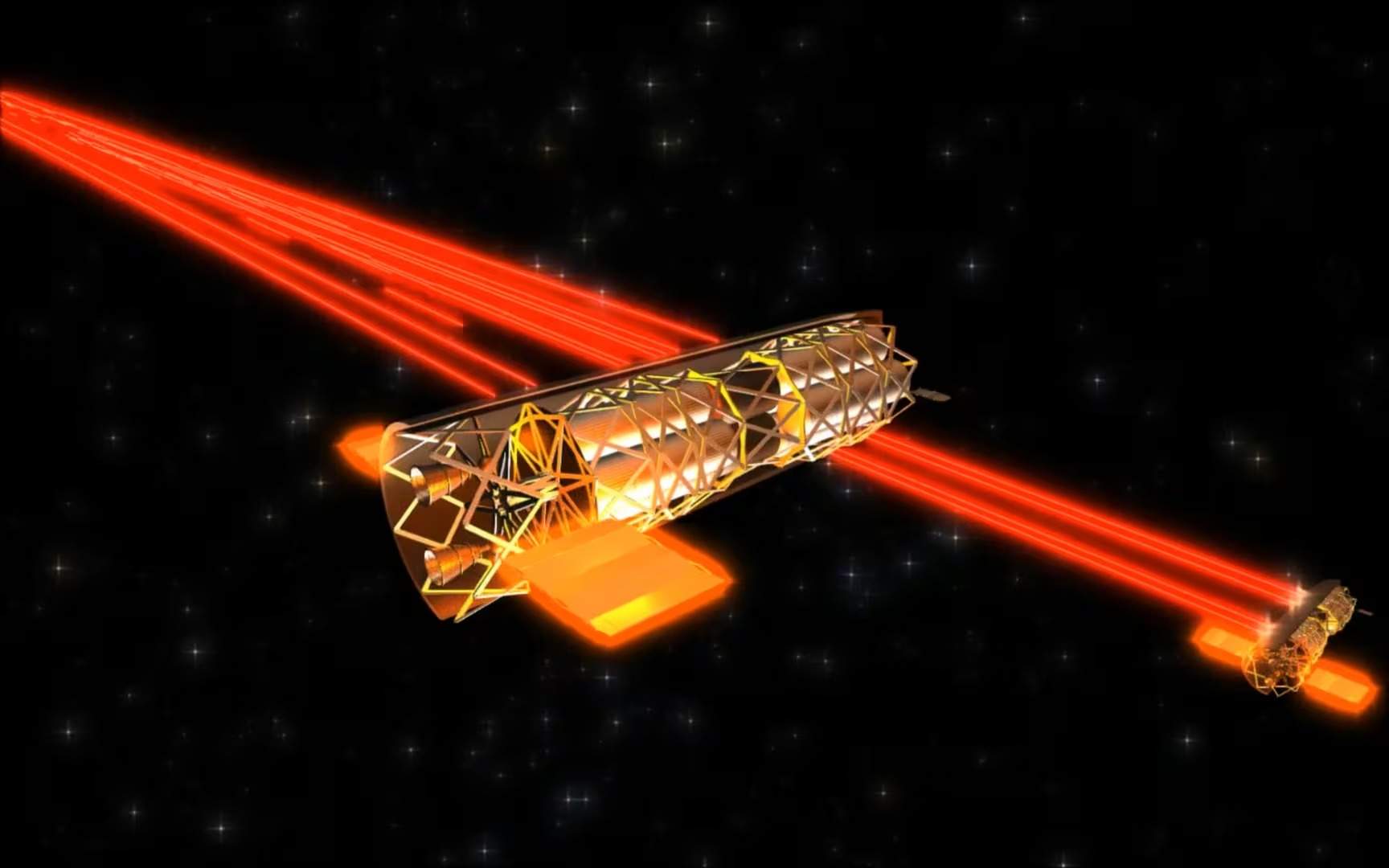
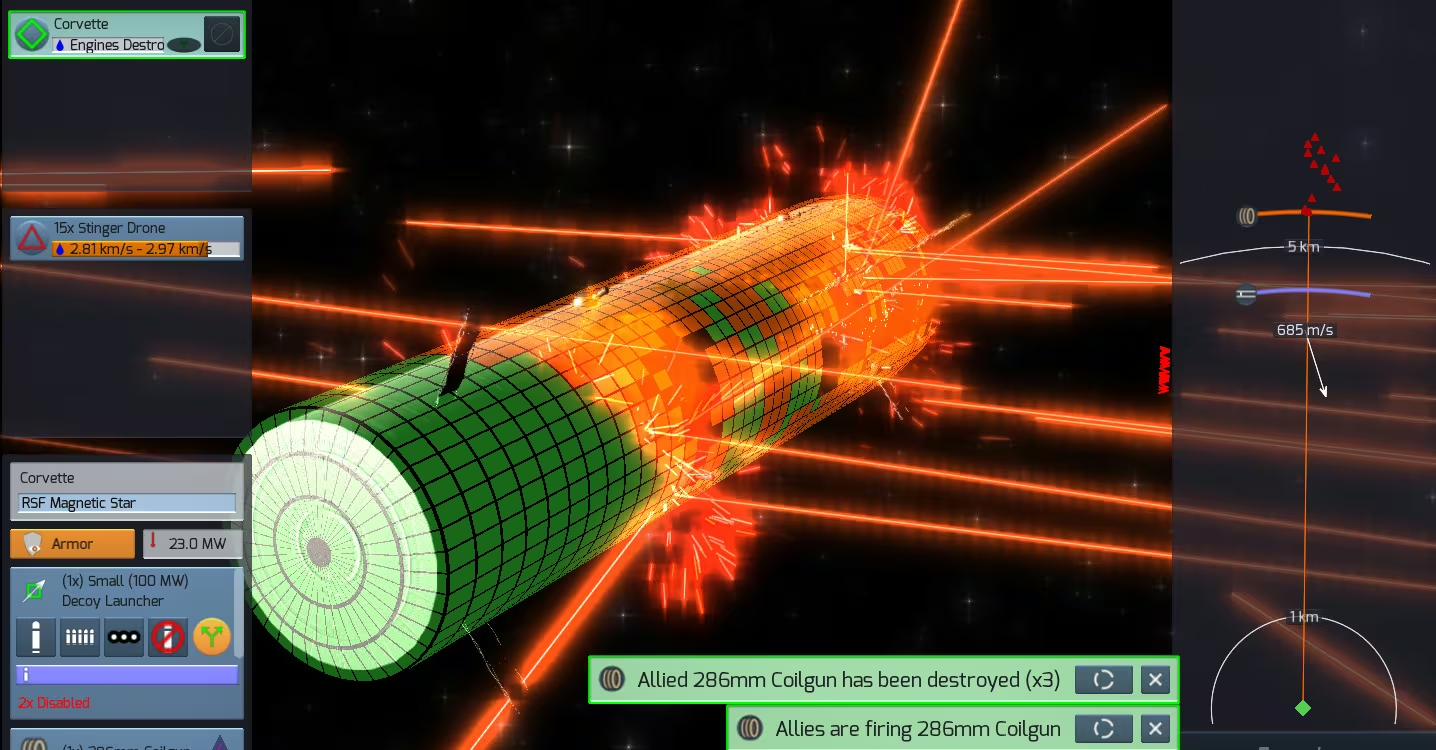
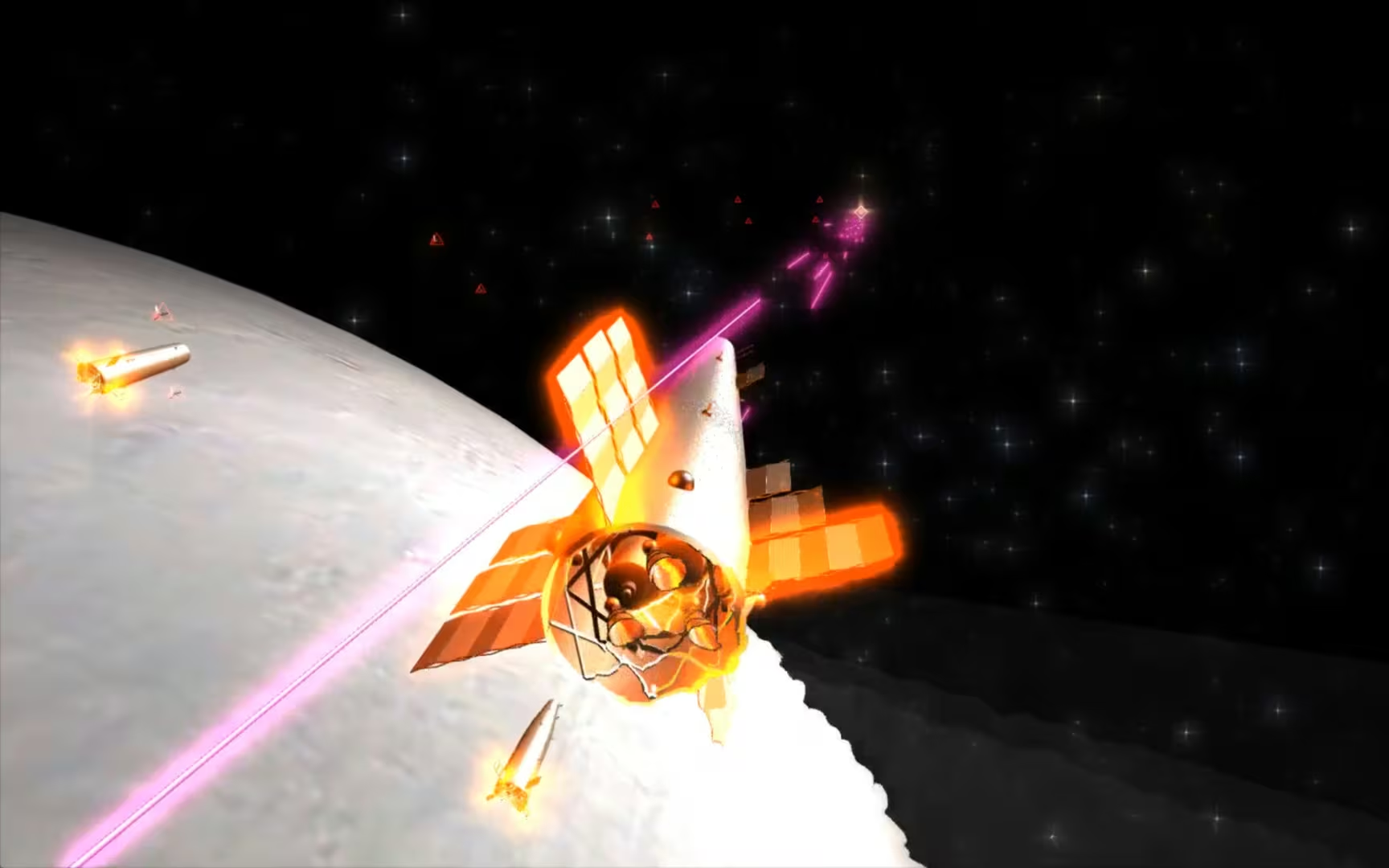
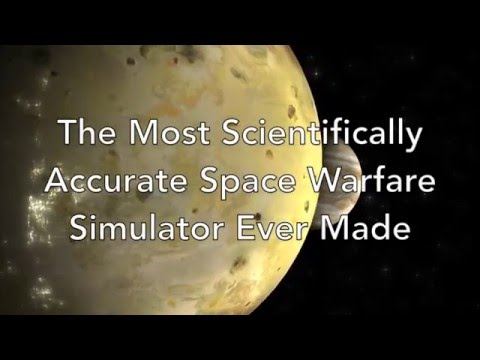
The most scientifically accurate space warfare simulator ever made. Now with Steam Workshop!

Global score

90/100

Genres

Simulator, Strategy, Real Time Strategy (RTS)

Similar games

    Pros

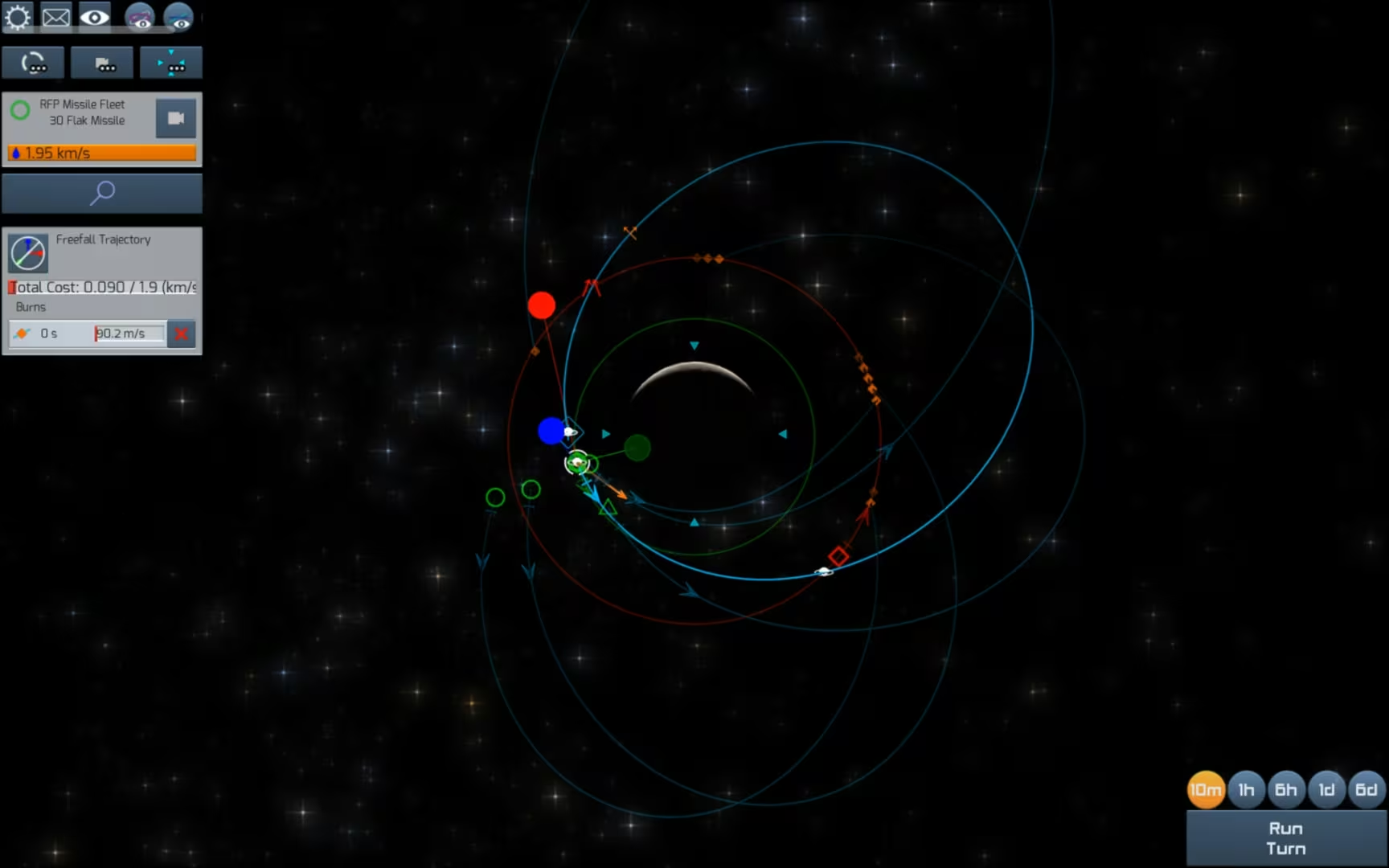
    • Extremely realistic physics and orbital mechanics
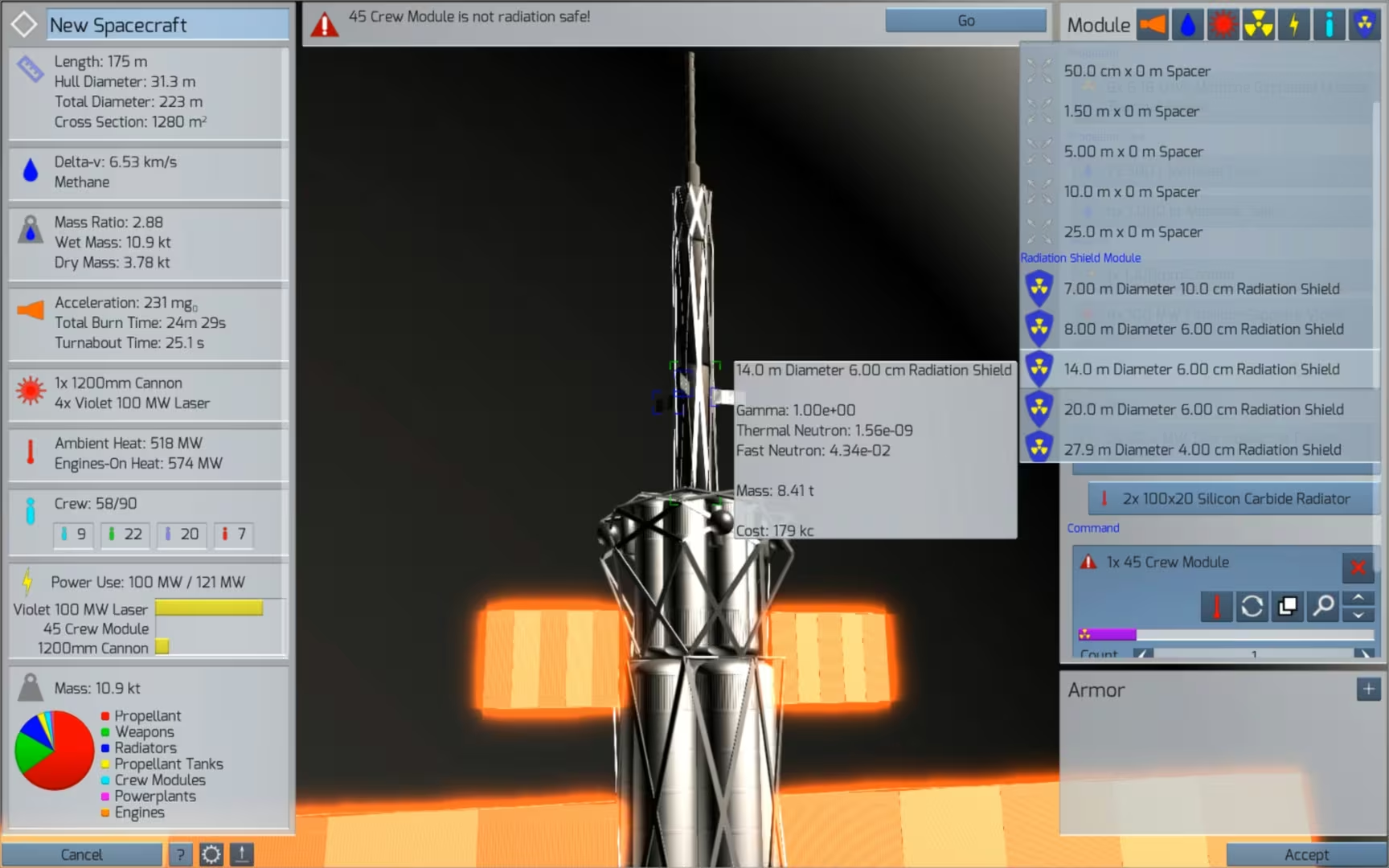
    • Deep and detailed ship and module customization
    • Engaging hard sci-fi simulation
    • Well-written campaign and lore
    • Active modding community and workshop support

    Cons

    • Steep learning curve requiring physics knowledge
    • Clunky ui and controls for orbital maneuvers
    • Performance issues with large fleets and missiles
    • Limited campaign content and no multiplayer
    • Minimal graphics and sound design polish

    Analysis

    Less representative of its motivational profile, with noticeable differences. Motivations that often define this kind of title include Leadership, Survival, Violence, Strategy. Here, the score leans higher than usual among comparable games on Expression. It leans lower than usual among comparable games on Fantasy, Relaxation.

    How to use the graph
    Similar games map

    Each dot is a game. They are arranged from the same motivation profile as in the “Motivations” section below. Closer dots usually mean more similar reasons to play (exploration, competition, relaxation, etc.)—not that one game is “better” than another.

    • Larger dot with a light outline: the game you are viewing.
    • Colour: groups of games with comparable motivation patterns (statistical clusters).
    • Hover a dot to see the game name; click to open its page.
    • Scroll or double-click the chart to zoom out and see more games.

    Why don’t the axes read like a score? This view uses t-SNE: it only keeps who is close to whom. The scales are not “good to bad” or hours played—they separate groups on the map. Read distance between dots, not the axis numbers.

    Motivations

    • Autonomy
      5

      "Players have full control over ship and module design, orbital maneuvers, and tactical decisions, reflecting high personal freedom."

    • Competence
      5

      "The game demands mastering complex physics, engineering, and orbital mechanics with detailed feedback on designs and combat outcomes."

    • Competition
      -3

      "Focus is on individual problem solving and personal mastery rather than player-vs-player ranked competition."

    • Continuation
      4

      "Highly engaging for niche players with long play sessions and deep investment in design and simulation aspects."

    • Cooperation
      -4

      "Gameplay is primarily single-player and individual-focused with no multiplayer or cooperative modes."

    • Creativity
      5

      "Extensive customization and creation of ships, modules, weapons, and scenarios enable high creative expression."

    • Domination
      -4

      "Interactions are balanced and simulation-driven without emphasis on social dominance or trash talk."

    • Escapism
      3

      "Players use the game as an immersive, intellectually engaging escape into hard sci-fi and realistic space warfare."

    • Expectation
      -4

      "Players engage voluntarily driven by intrinsic interest in physics and engineering rather than obligation."

    • Experimenting
      5

      "Strong emphasis on experimentation with physics parameters, materials, and designs to optimize performance."

    • Exploration
      2

      "Exploration is mostly intellectual and mechanical rather than spatial; some discovery in orbital mechanics and design."

    • Expression
      4

      "Players express themselves through detailed ship and module customization, though cosmetic options are minimal."

    • Fantasy
      -5

      "The game is grounded in realistic, near-future technology with no speculative or fantastical elements."

    • Fellowship
      -4

      "Minimal social interaction; community exists but gameplay is solitary and self-directed."

    • Growth
      5

      "Steep learning curve with continuous skill and knowledge development in physics, engineering, and tactics."

    • Health
      -5

      "Sedentary gameplay with no physical activity or health-related features."

    • Idle
      -4

      "Requires sustained attention and focus; not suitable for casual or background play."

    • Intimacy
      -5

      "No emphasis on forming close social relationships or emotional sharing."

    • Leadership
      2

      "Players command fleets and make strategic decisions, but no multiplayer leadership or group management."

    • Progression
      4

      "Progression through unlocking modules, ships, and campaign missions with increasing complexity."

    • Relaxation
      -2

      "Challenging and sometimes frustrating, with sustained tension rather than casual relaxation."

    • Sensation
      1

      "Visual and auditory feedback is functional and immersive but not highly stimulating or flashy."

    • Status
      -4

      "Achievements and recognition are minimal and mostly personal; no social status or popularity focus."

    • Story
      2

      "There is a campaign with narrative elements, but gameplay is not story-driven and story is minimal."

    • Strategy
      5

      "Heavy emphasis on mental challenge, problem solving, and planning orbital maneuvers and combat tactics."

    • Thrill
      2

      "Tense moments in combat and mission success, but overall gameplay is methodical rather than adrenaline-fueled."

    • Value
      4

      "Highly valued by niche audience for unique simulation depth and replayability despite limited mainstream appeal."

    • Violence
      4

      "Combat involves destruction of ships with realistic weapons and damage modeling."

    • Survival
      3

      "Players must manage resources and avoid failure in missions, reflecting survival challenges in space combat."

    Last update: 29/04/2026