The Two of Us similar games & best alternatives
The Two of Us
2021
Related articles
Quick resume
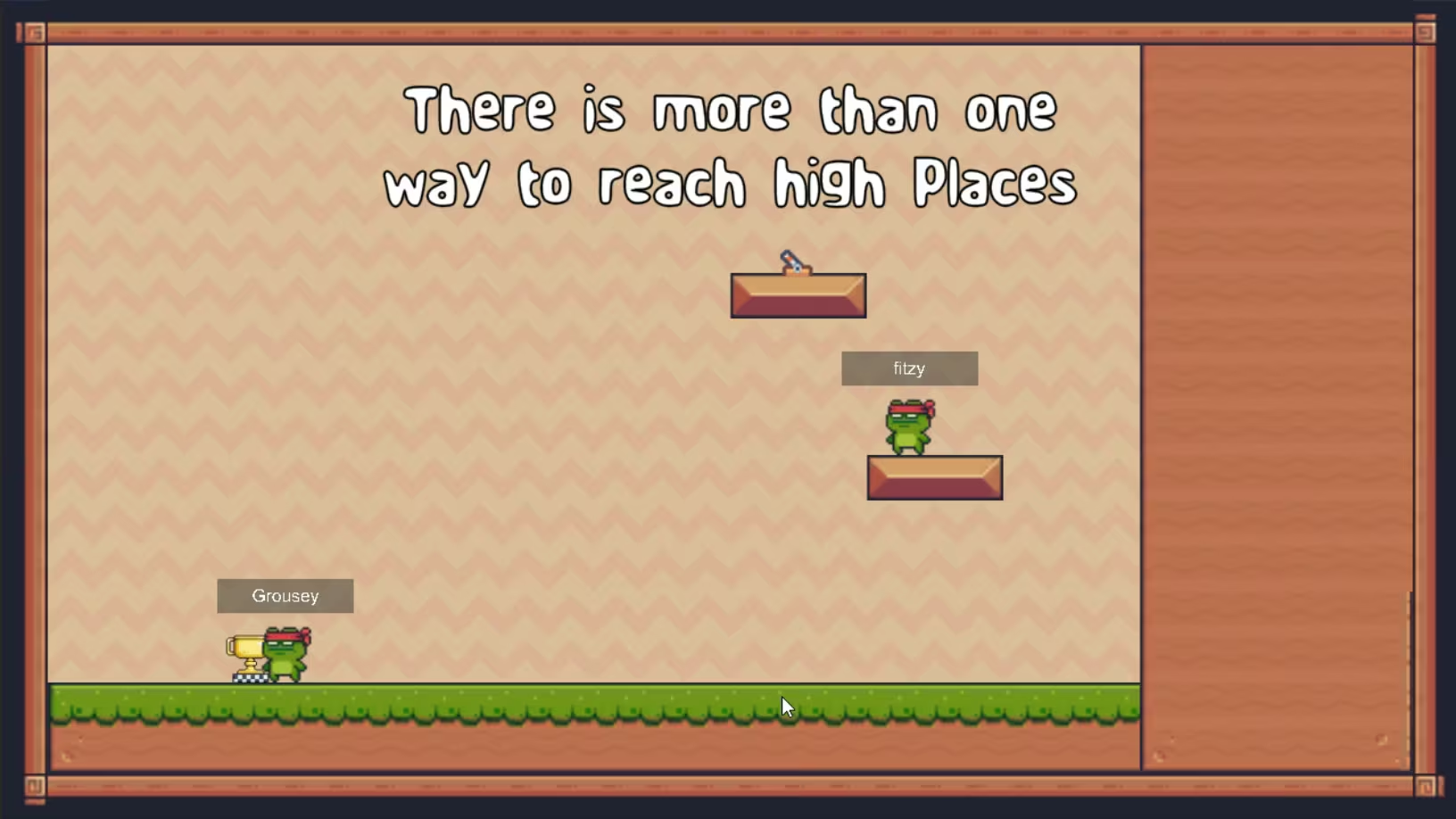
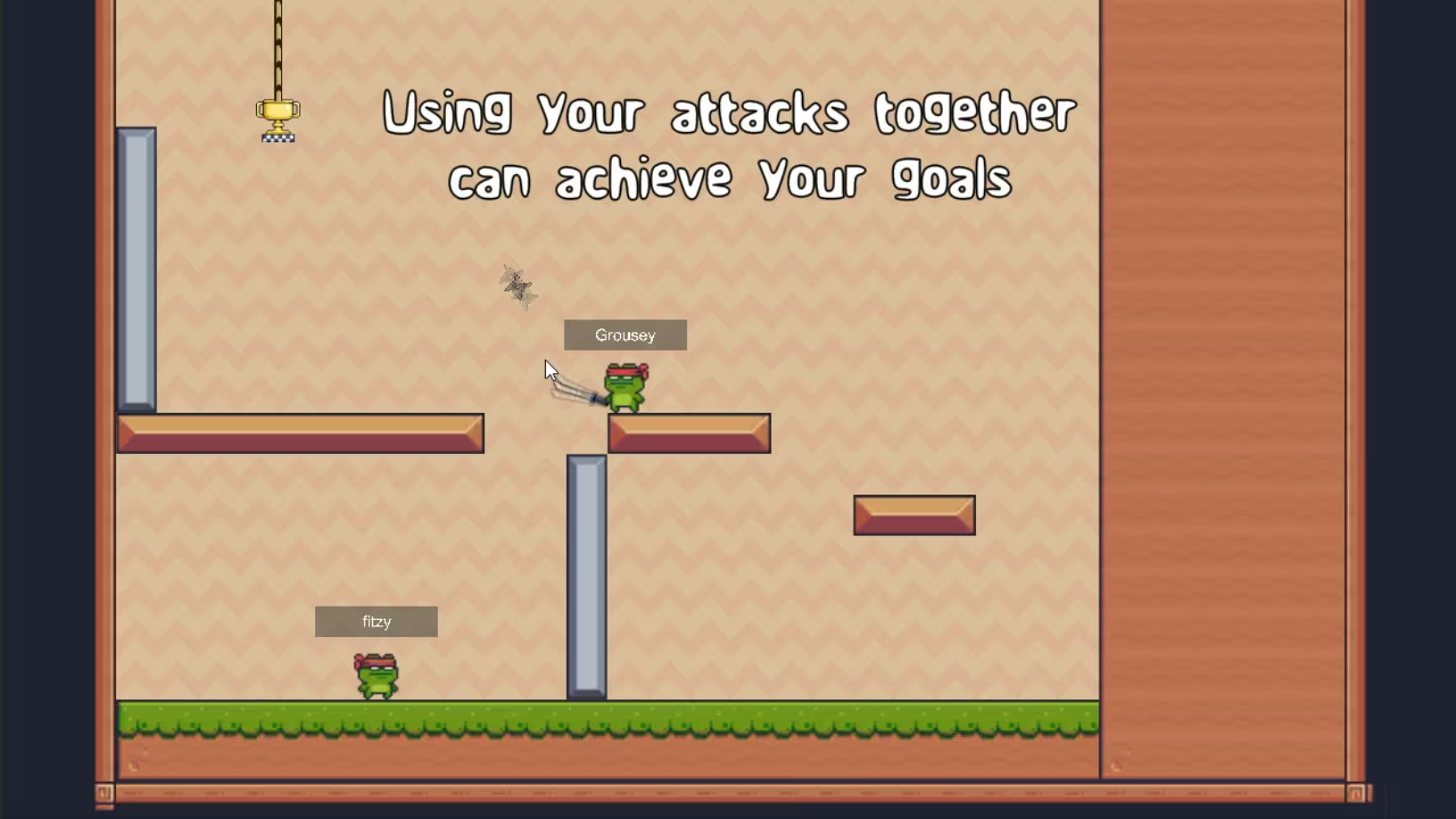
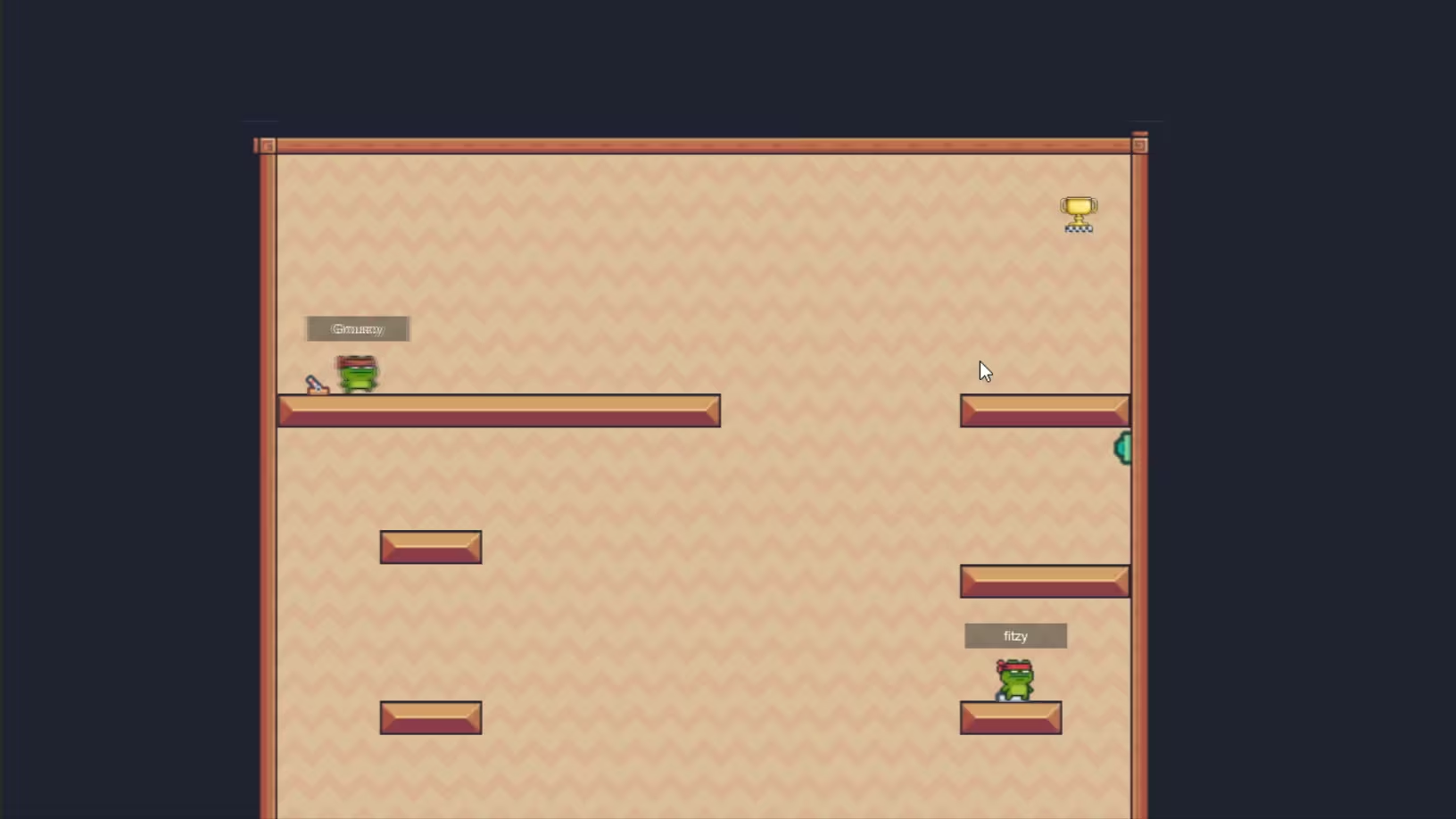
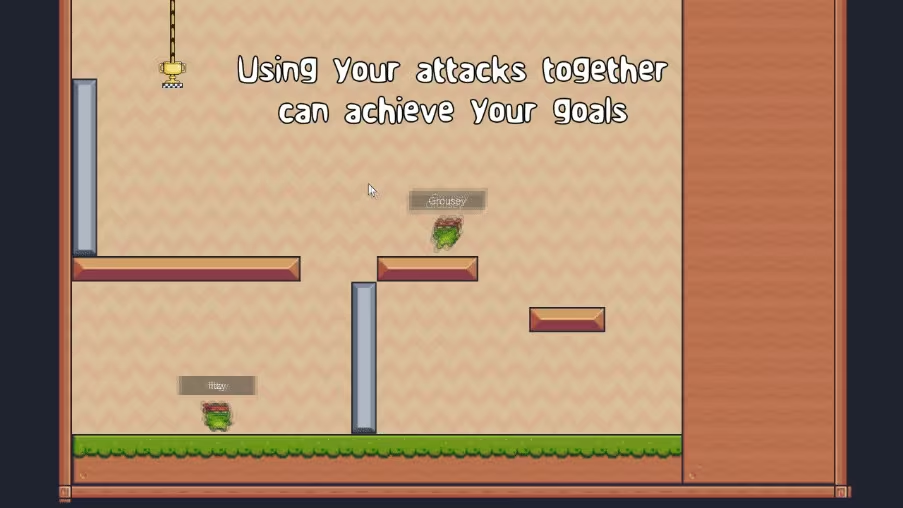
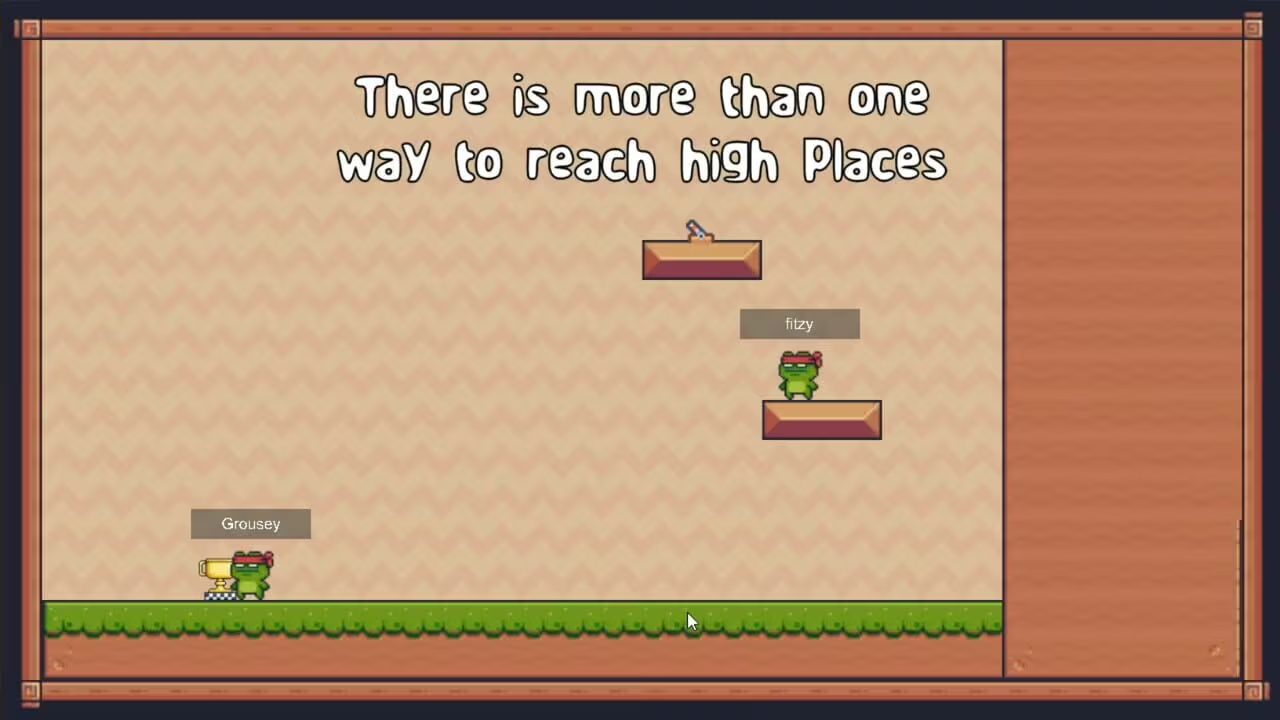
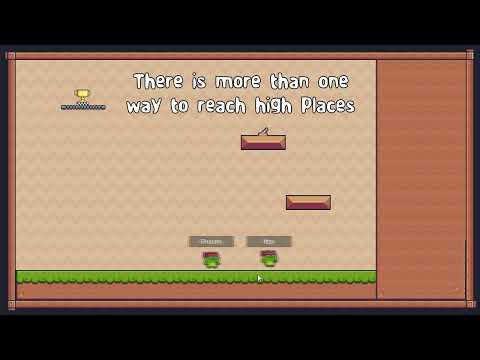
The Two of Us is a 2D Co-op Platformer that has a strong emphasis on working together. You will be greeted with various puzzle levels where you must work in conjunction with your friend to navigate the level.
Global score
85/100
Genres
Casual, Indie, Strategy, Free To Play, Platform, Puzzle
Similar games
Pros
- Fun cooperative gameplay
- Emotional bonding experience
- Free to play
- Simple and accessible mechanics
- Cute art style and music
Cons
- Very short game length
- Network lag and bugs
- Limited content and replay value
- Some control and synchronization issues
- Requires a partner to play
Analysis
Less representative of its motivational profile, with noticeable differences. Motivations that often define this kind of title include Strategy, Survival, Competence, Violence. Here, the score leans higher than usual among comparable games on Cooperation, Fellowship. It leans lower than usual among comparable games on Story.
How to use the graph
Similar games map
Each dot is a game. They are arranged from the same motivation profile as in the “Motivations” section below. Closer dots usually mean more similar reasons to play (exploration, competition, relaxation, etc.)—not that one game is “better” than another.
- Larger dot with a light outline: the game you are viewing.
- Colour: groups of games with comparable motivation patterns (statistical clusters).
- Hover a dot to see the game name; click to open its page.
- Scroll or double-click the chart to zoom out and see more games.
Why don’t the axes read like a score? This view uses t-SNE: it only keeps who is close to whom. The scales are not “good to bad” or hours played—they separate groups on the map. Read distance between dots, not the axis numbers.
Motivations
-
Autonomy3
"Players choose their character (katana or shuriken) and must coordinate actions with a partner, allowing some freedom in approach and decision-making."
-
Competence2
"The game involves puzzle solving and platforming challenges that require skill and coordination, though it is generally easy to learn and not highly complex."
-
Competition-4
"Focus is on cooperative play with a friend rather than competing against others; no mention of leaderboards or ranked modes."
-
Continuation-3
"The game is very short (about 20-40 minutes), with low replay value after completion, leading to limited habitual or long-term play."
-
Cooperation5
"Core gameplay requires working closely with another player to solve puzzles and progress, emphasizing teamwork and communication."
-
Creativity1
"Players experiment with combining abilities and coordinating actions, but the game follows preset level designs and mechanics."
-
Domination-5
"The game promotes equal partnership and mutual support rather than exerting control or superiority over others."
-
Escapism4
"Players report emotional relief, stress reduction, and positive distraction from real-life difficulties through gameplay."
-
Expectation-5
"Players engage voluntarily for fun and bonding, with no indication of obligation or external pressure to play."
-
Experimenting3
"Players try different strategies and coordinate actions to solve puzzles, though within a limited set of mechanics."
-
Exploration-2
"The game has fixed levels with limited content and no open-world exploration or discovery of secrets."
-
Expression-3
"Character options are limited to two preset roles with minimal customization or personalization."
-
Fantasy2
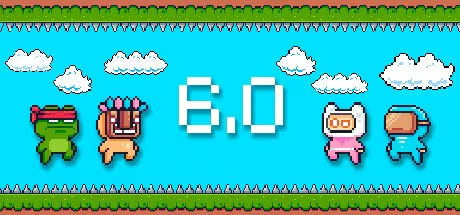
"The game features anthropomorphic frogs with ninja weapons in a fictional setting, providing some imaginative experience."
-
Fellowship5
"Strong sense of community and bonding through shared cooperative gameplay experiences with friends or loved ones."
-
Growth2
"Players develop communication and coordination skills, though the short length limits long-term learning or progression."
-
Health-5
"No physical activity involved; gameplay is sedentary with no health or exercise elements."
-
Idle-4
"Requires focused attention and active cooperation during play; not suited for background or casual idle gaming."
-
Intimacy4
"Encourages close social interaction and emotional bonding between players through cooperative challenges."
-
Leadership-4
"Gameplay emphasizes equal partnership and shared decision-making rather than one player leading or directing."
-
Progression-3
"No item collection or upgrades; progression is limited to completing levels without accumulation of resources."
-
Relaxation3
"Players describe the game as relaxing and stress-relieving despite occasional frustration from bugs or lag."
-
Sensation1
"Simple visuals and music provide moderate sensory enjoyment but not intense stimulation or excitement."
-
Status-5
"No social status or recognition systems; focus is on private cooperative experience without public evaluation."
-
Story-4
"The game has no narrative or lore; gameplay is context-free puzzle platforming."
-
Strategy2
"Requires some planning and problem solving to coordinate actions and solve puzzles, but complexity is moderate."
-
Thrill-2
"Gameplay is low risk and low suspense; some players report frustration but little thrill or excitement."
-
Value5
"The game is free and provides enjoyable cooperative gameplay, seen as a good return for players' time."
-
Violence-3
"Combat is minimal and cartoonish; focus is on cooperation rather than destruction or aggression."
-
Survival-4
"No survival mechanics or resource management; gameplay occurs in stable, low-risk environments."
Last update: 29/04/2026