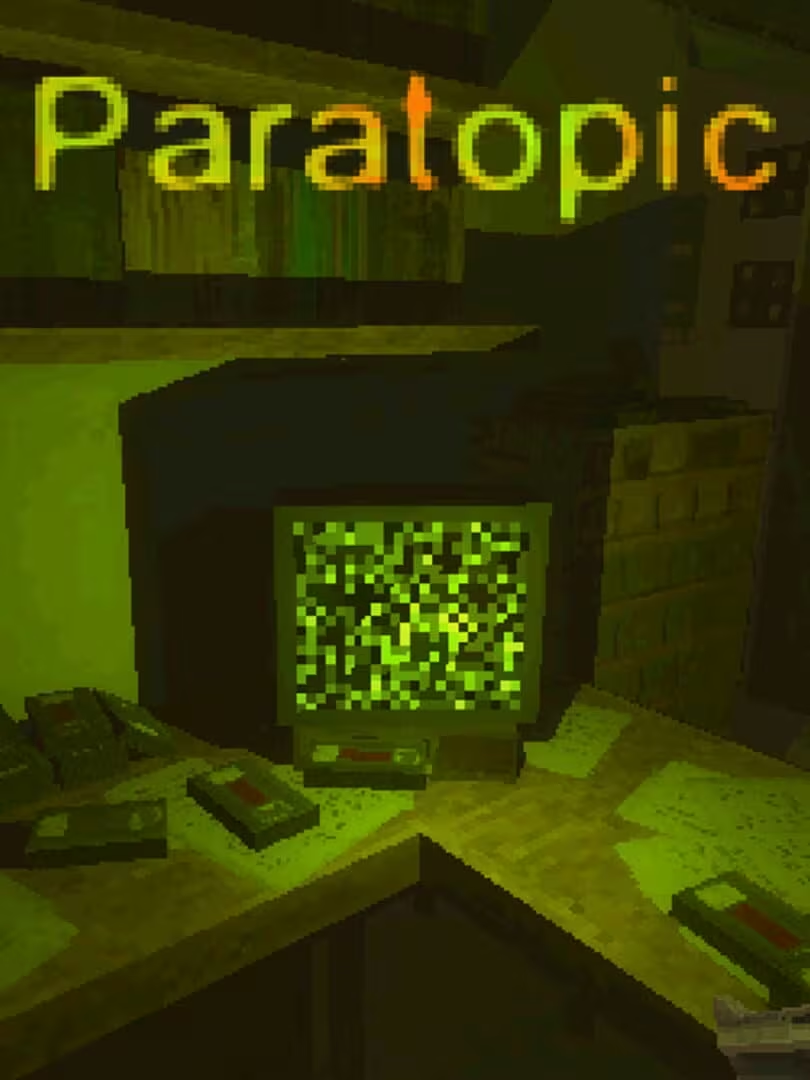
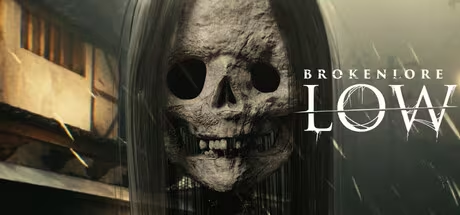
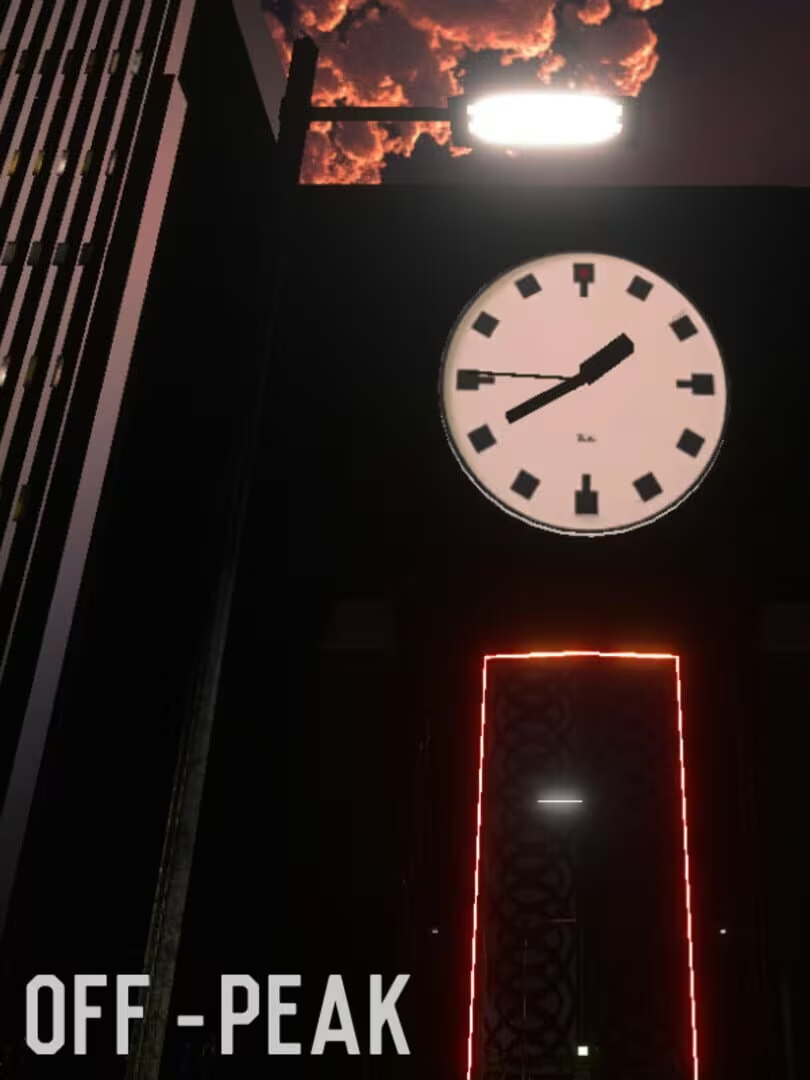
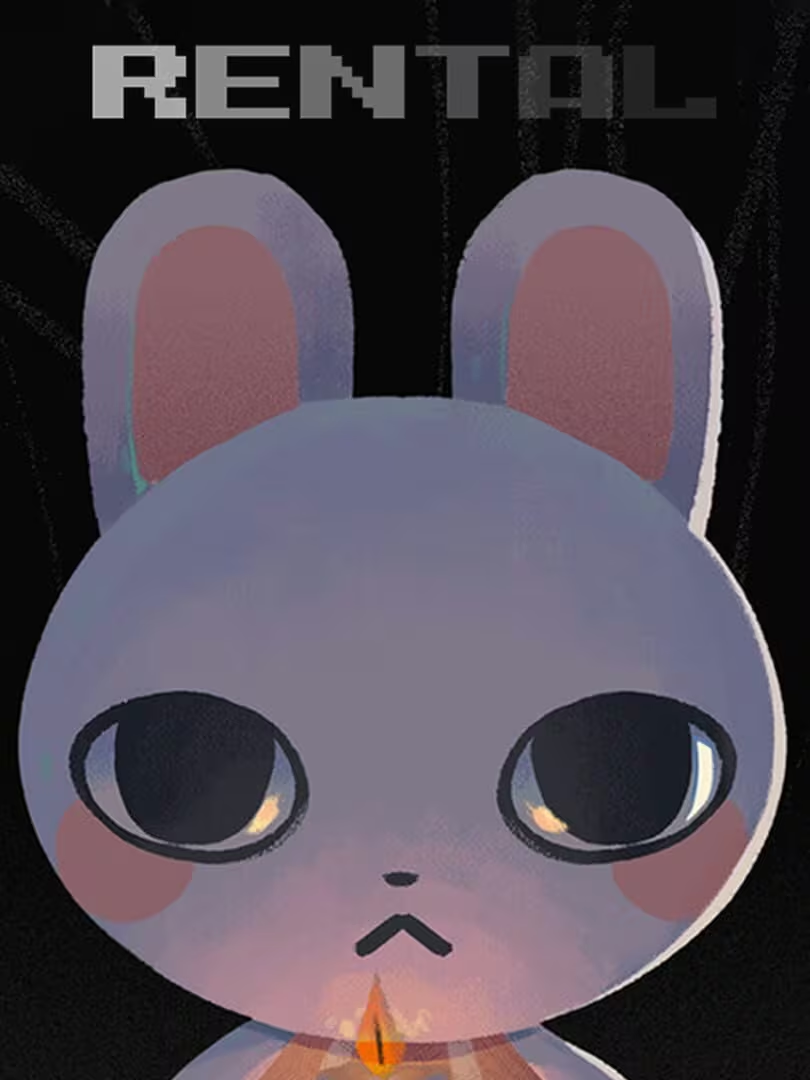
Aurora: A Child's Journey Thumbnail

Aurora: A Child's Journey similar games & best alternatives

Aurora: A Child's Journey

PC (Microsoft Windows) • 2020

Related articles

Quick resume

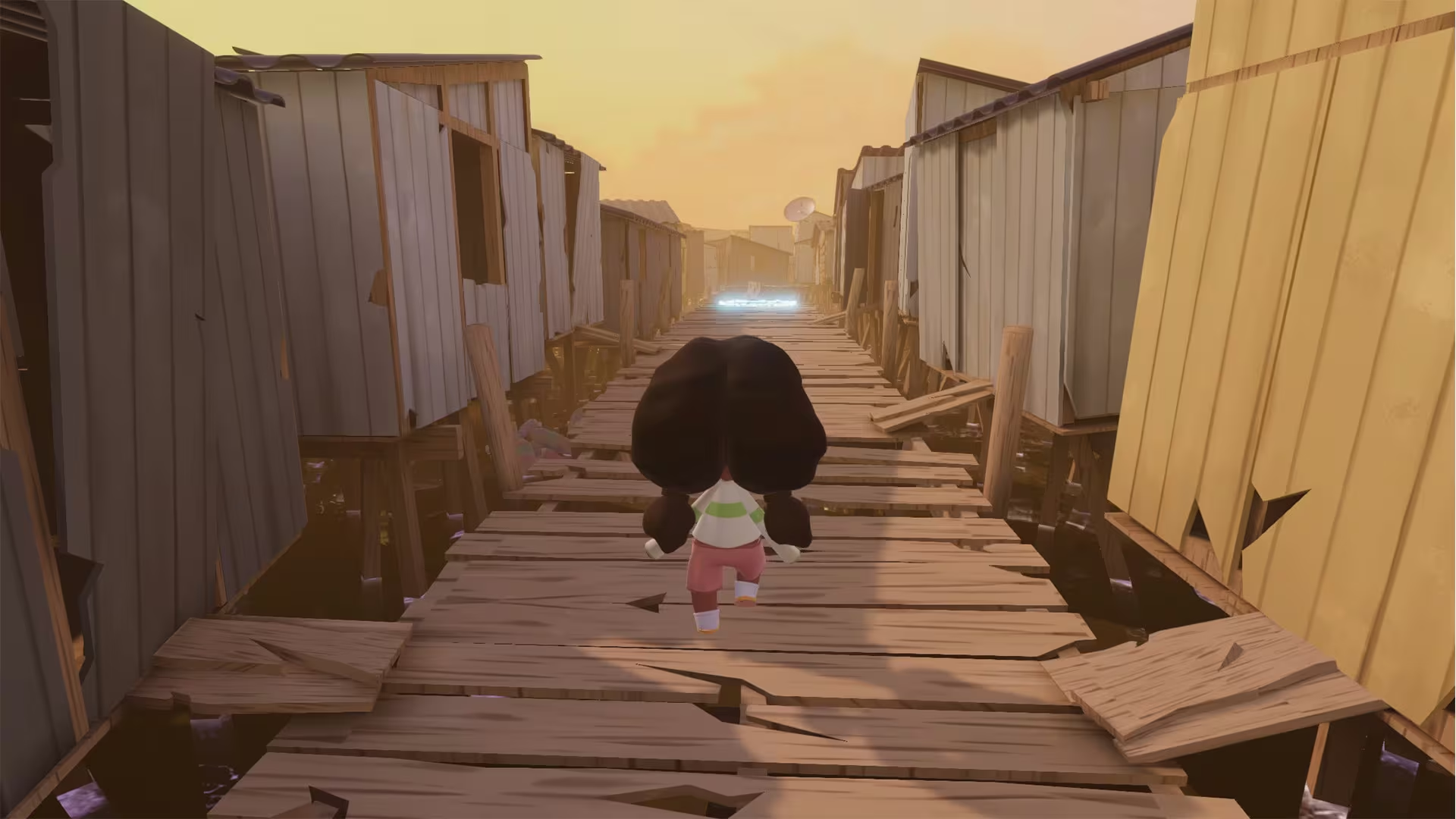
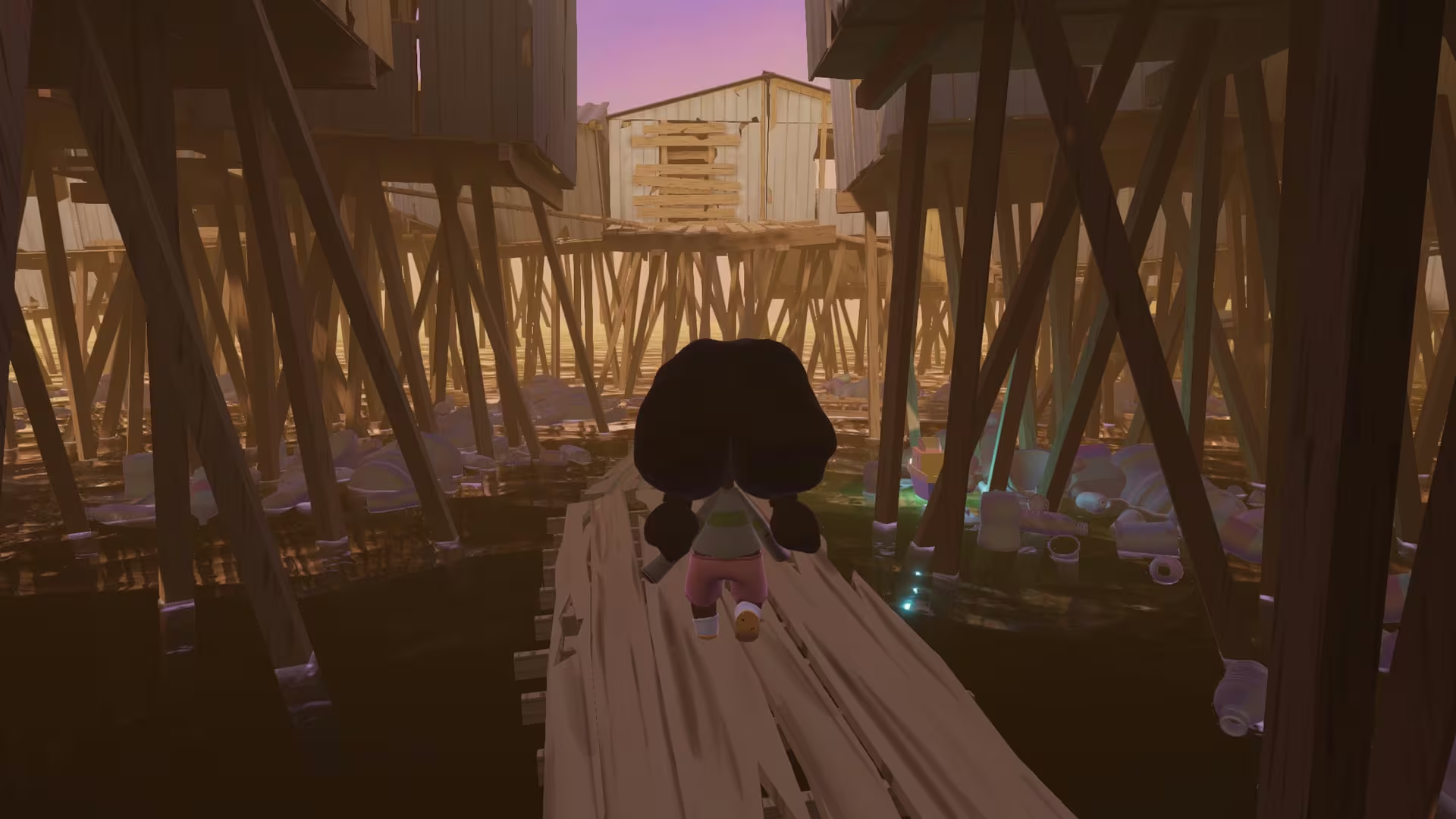
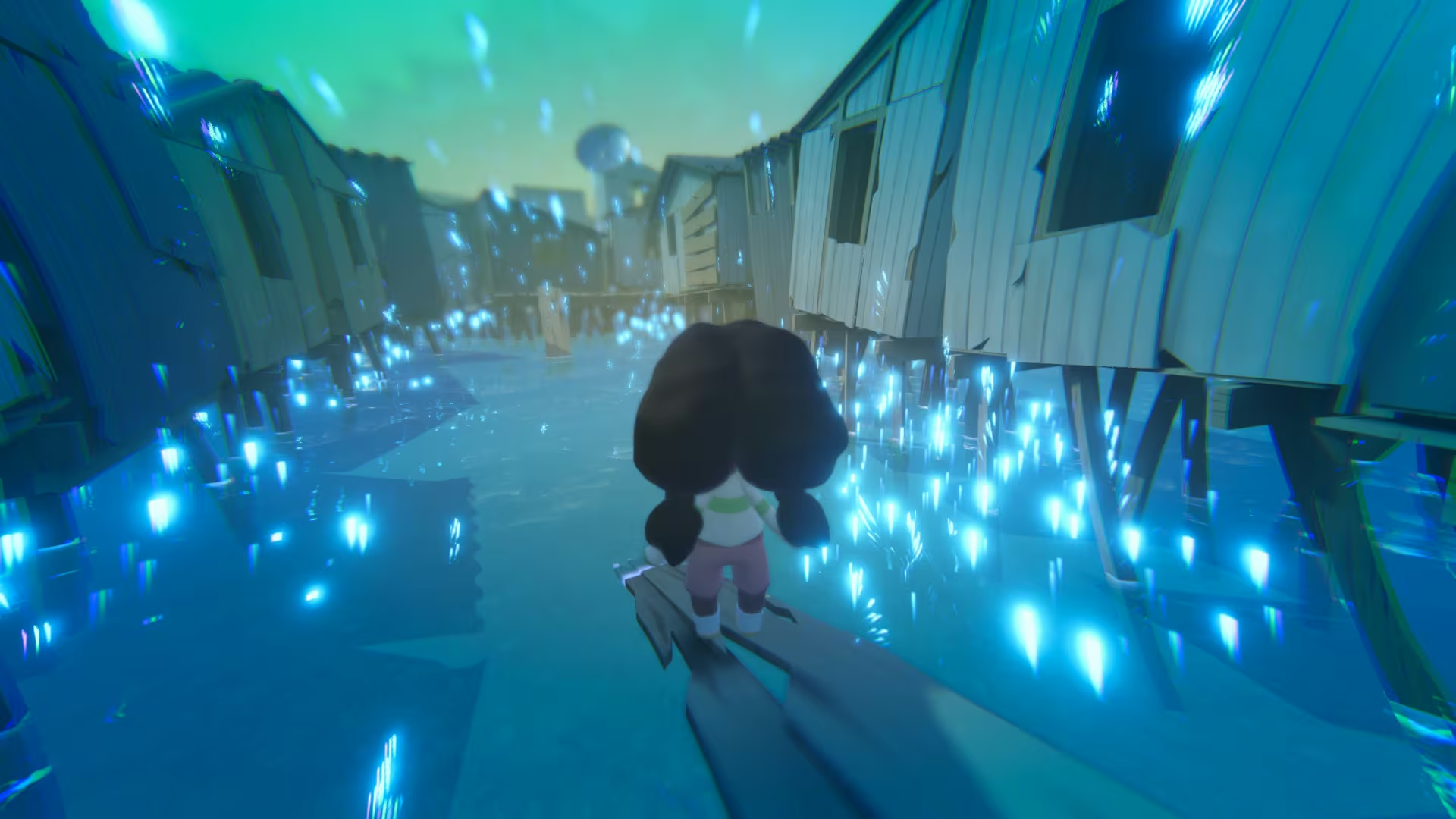
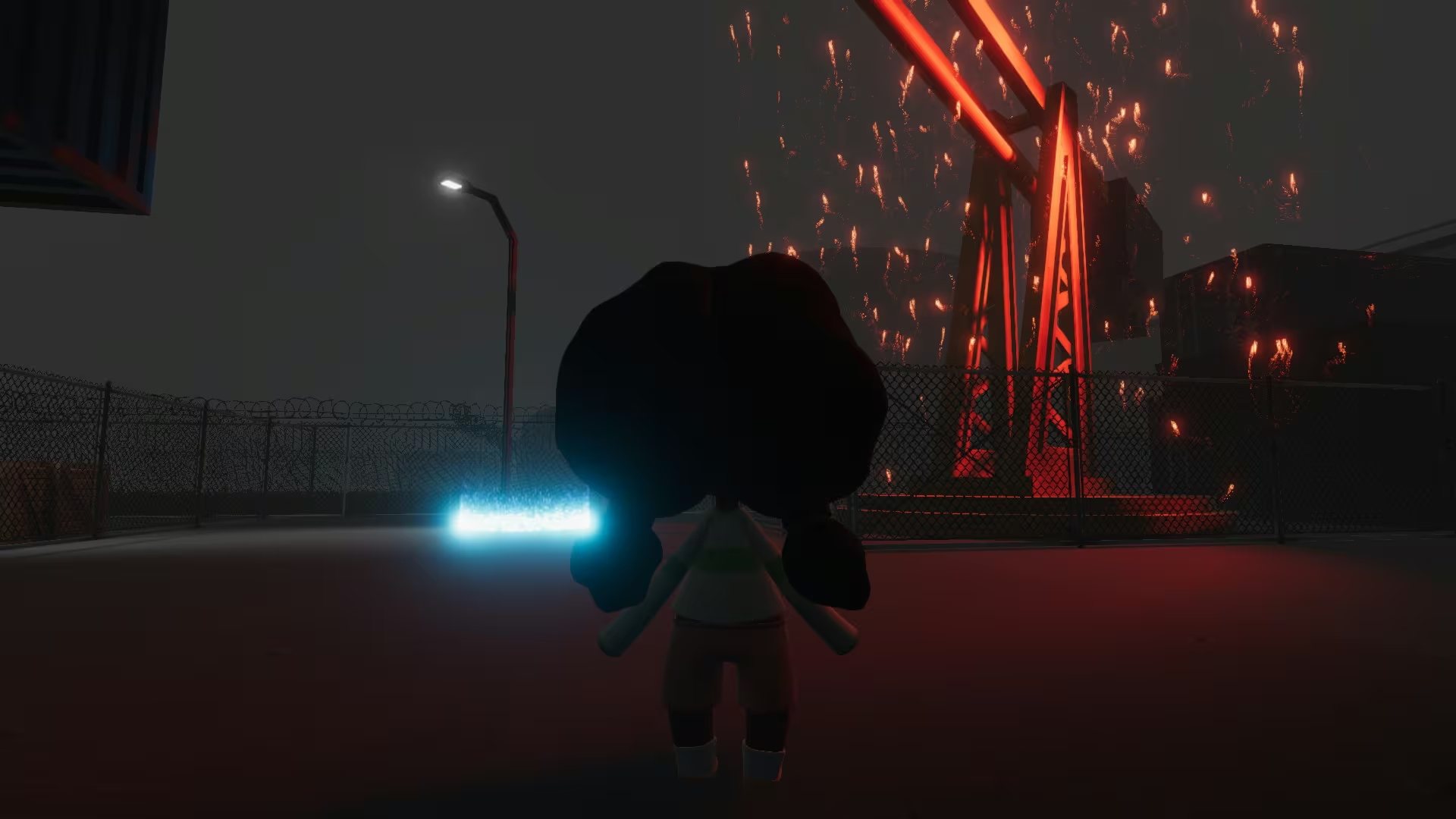
Guide Aurora through this beautiful adventure using her imagination to discover who's responsible for the fire that is ravaging her village and its surroundings.

Global score

93/100

Genres

Action, Adventure, Free To Play, Indie

Similar games

    Pros

    • Beautiful graphics and soundtrack
    • Meaningful environmental message
    • Short and accessible gameplay
    • Free to play
    • Emotional storytelling through a child's perspective

    Cons

    • Very short playtime
    • Simple and minimal gameplay mechanics
    • Some control and camera issues
    • Low replayability
    • Minor bugs and glitches reported

    Analysis

    Broadly representative of its motivational profile, with a few distinct shifts. Motivations that often define this kind of title include Strategy, Survival, Competence, Violence. Here, the score leans higher than usual among comparable games on Story. It leans lower than usual among comparable games on Progression, Idle.

    How to use the graph
    Similar games map

    Each dot is a game. They are arranged from the same motivation profile as in the “Motivations” section below. Closer dots usually mean more similar reasons to play (exploration, competition, relaxation, etc.)—not that one game is “better” than another.

    • Larger dot with a light outline: the game you are viewing.
    • Colour: groups of games with comparable motivation patterns (statistical clusters).
    • Hover a dot to see the game name; click to open its page.
    • Scroll or double-click the chart to zoom out and see more games.

    Why don’t the axes read like a score? This view uses t-SNE: it only keeps who is close to whom. The scales are not “good to bad” or hours played—they separate groups on the map. Read distance between dots, not the axis numbers.

    Motivations

    • Autonomy
      3

      "Players control Aurora's movement and imagination-based interactions freely within a linear path, allowing some personal agency despite a preset narrative."

    • Competence
      -2

      "Gameplay is simple with minimal challenge, easy puzzles, and forgiving mechanics, focusing more on story and message than skill."

    • Competition
      -5

      "No competitive elements or player comparison; experience is solitary and narrative-driven."

    • Continuation
      -3

      "Very short playtime (~15 minutes), low replayability; players generally complete it once for the message."

    • Cooperation
      -5

      "Entirely single-player experience with no cooperative or multiplayer features."

    • Creativity
      2

      "Uses imagination mechanics to alter environment and solve puzzles, encouraging creative thinking within a linear framework."

    • Domination
      -5

      "No elements of exerting control or superiority over others; cooperative and respectful tone."

    • Escapism
      3

      "Offers an emotional, immersive experience through a child's perspective, providing a gentle escape with reflective themes."

    • Expectation
      -4

      "Players engage voluntarily, motivated by interest in the message and story rather than obligation."

    • Experimenting
      -2

      "Gameplay is straightforward with limited mechanics; some minor experimentation with imagination effects but mostly linear."

    • Exploration
      -3

      "Mostly linear progression with limited environmental exploration; players follow a set path."

    • Expression
      -4

      "No character customization or player-driven aesthetic expression; fixed presentation."

    • Fantasy
      3

      "Blends real events with imaginative childlike fantasy elements, using metaphorical monsters and imagination."

    • Fellowship
      -4

      "Single-player experience with minimal social interaction or community involvement."

    • Growth
      1

      "Some learning about environmental issues and empathy through narrative, but minimal skill development."

    • Health
      -5

      "Sedentary gameplay with no physical activity or health-related features."

    • Idle
      -4

      "Requires focused attention during short play sessions; not designed for background or idle play."

    • Intimacy
      -3

      "Emotional connection to story and character but limited social or relational interactions."

    • Leadership
      -5

      "No leadership or group management elements; purely individual experience."

    • Progression
      -4

      "Minimal progression mechanics; no item collection or upgrades, mostly narrative advancement."

    • Relaxation
      3

      "Calm, serene atmosphere with soothing music and gentle pacing, though some tense moments exist."

    • Sensation
      3

      "Appealing visuals and immersive soundtrack provide sensory enjoyment and emotional impact."

    • Status
      -5

      "No social recognition or status systems; experience is personal and private."

    • Story
      5

      "Strong narrative focus with emotional storytelling based on real environmental disaster."

    • Strategy
      -3

      "Simple puzzles and platforming with minimal strategic depth or complex problem solving."

    • Thrill
      1

      "Some suspenseful moments and emotional tension, but overall low risk and mild thrills."

    • Value
      5

      "Free to play with high perceived value due to meaningful message and artistic quality."

    • Violence
      -5

      "No violent gameplay; focuses on constructive themes and emotional storytelling."

    • Survival
      -4

      "No survival mechanics or threat management; stable, low-risk environment."

    Last update: 29/04/2026