Castlevania Anniversary Collection similar games & best alternatives
Castlevania Anniversary Collection
2019
Related articles
Quick resume
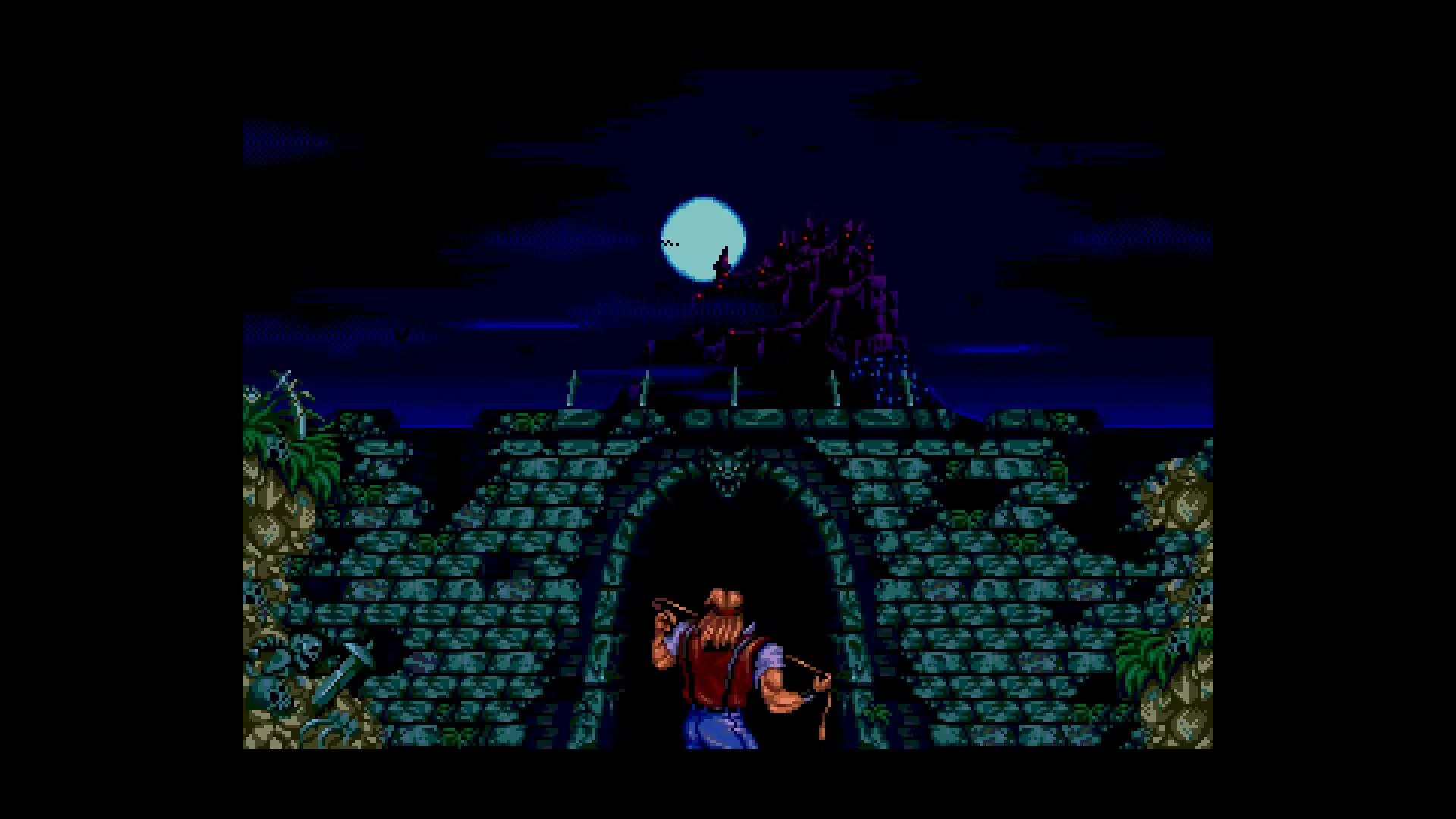
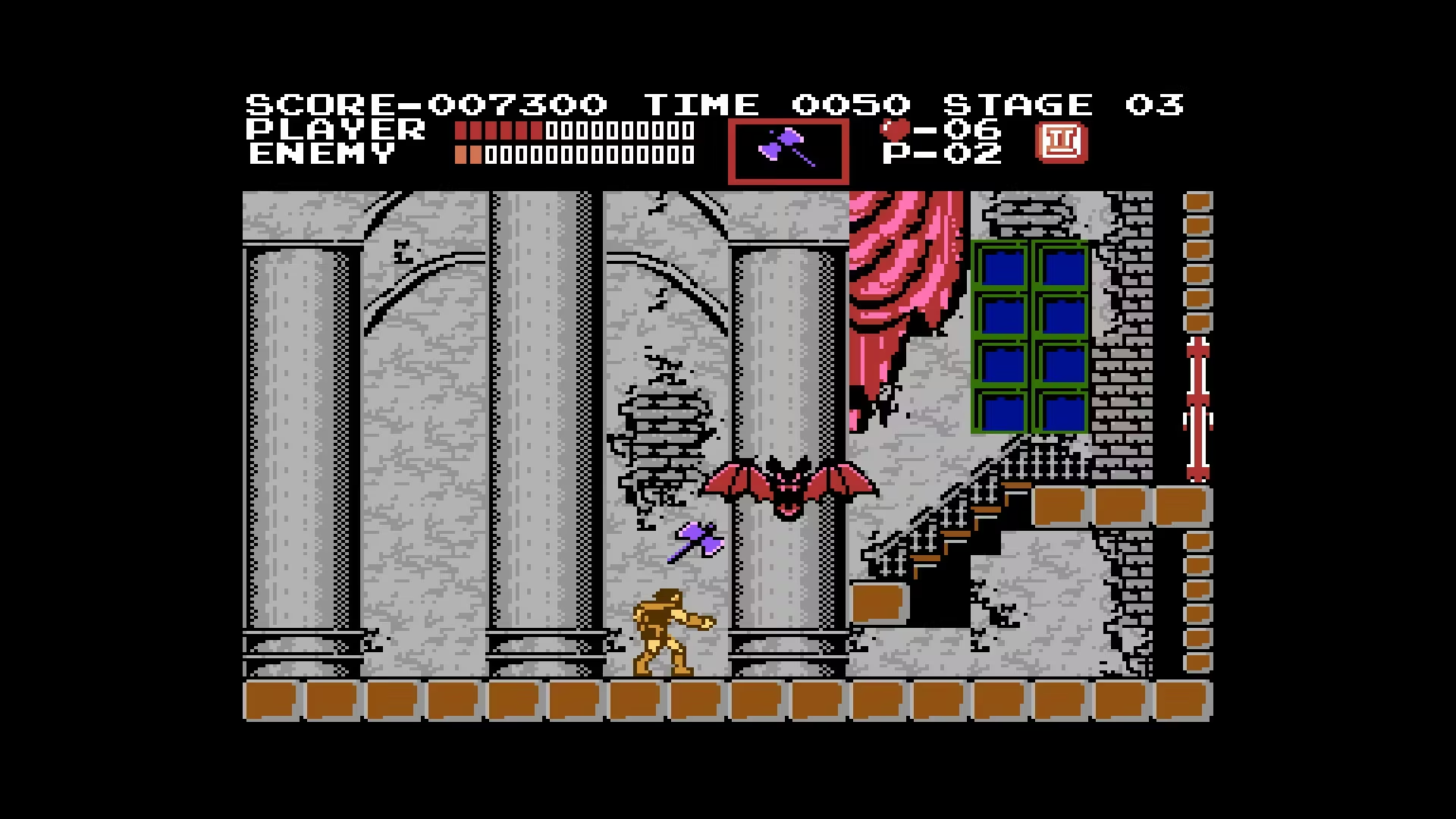
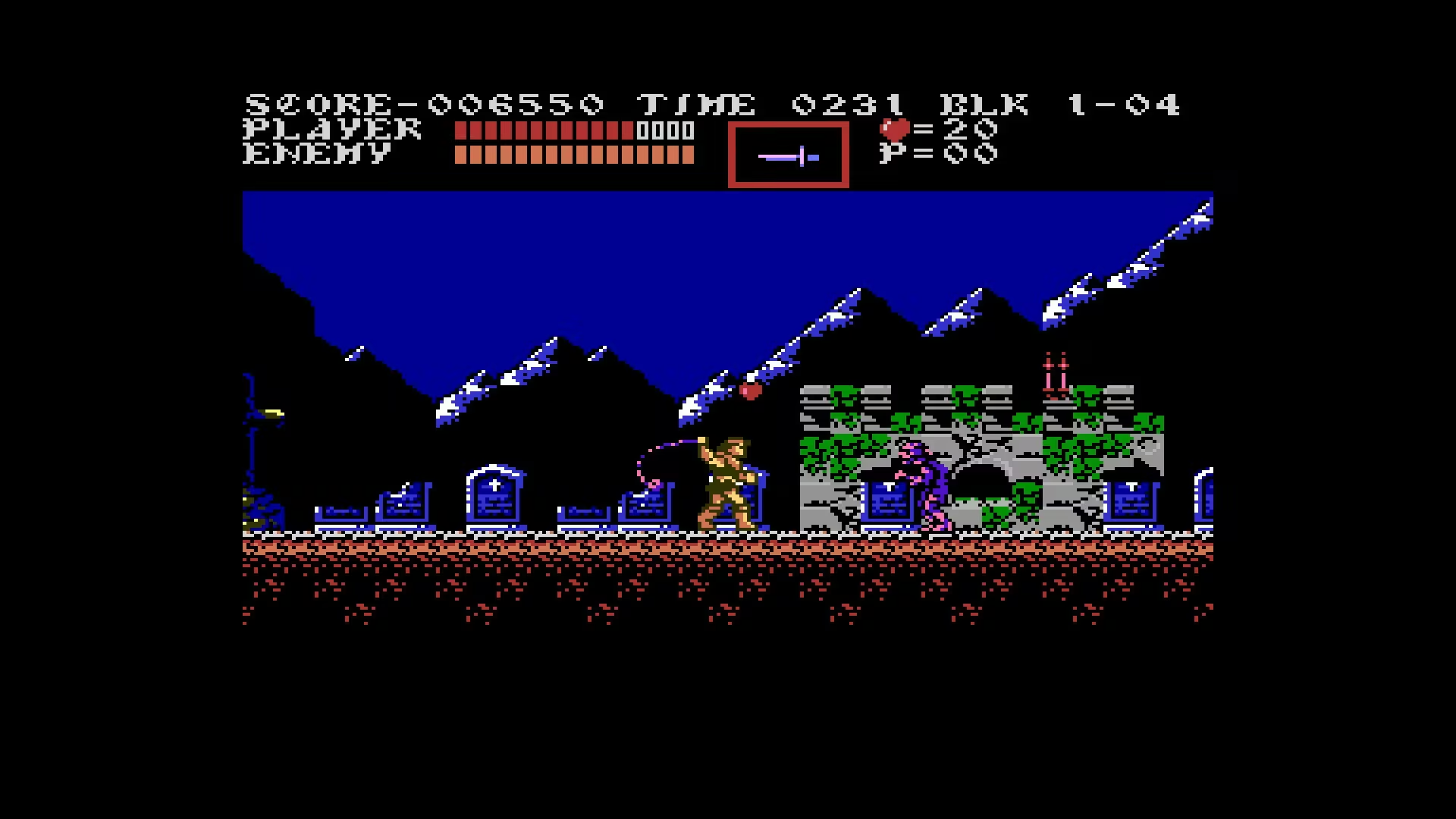
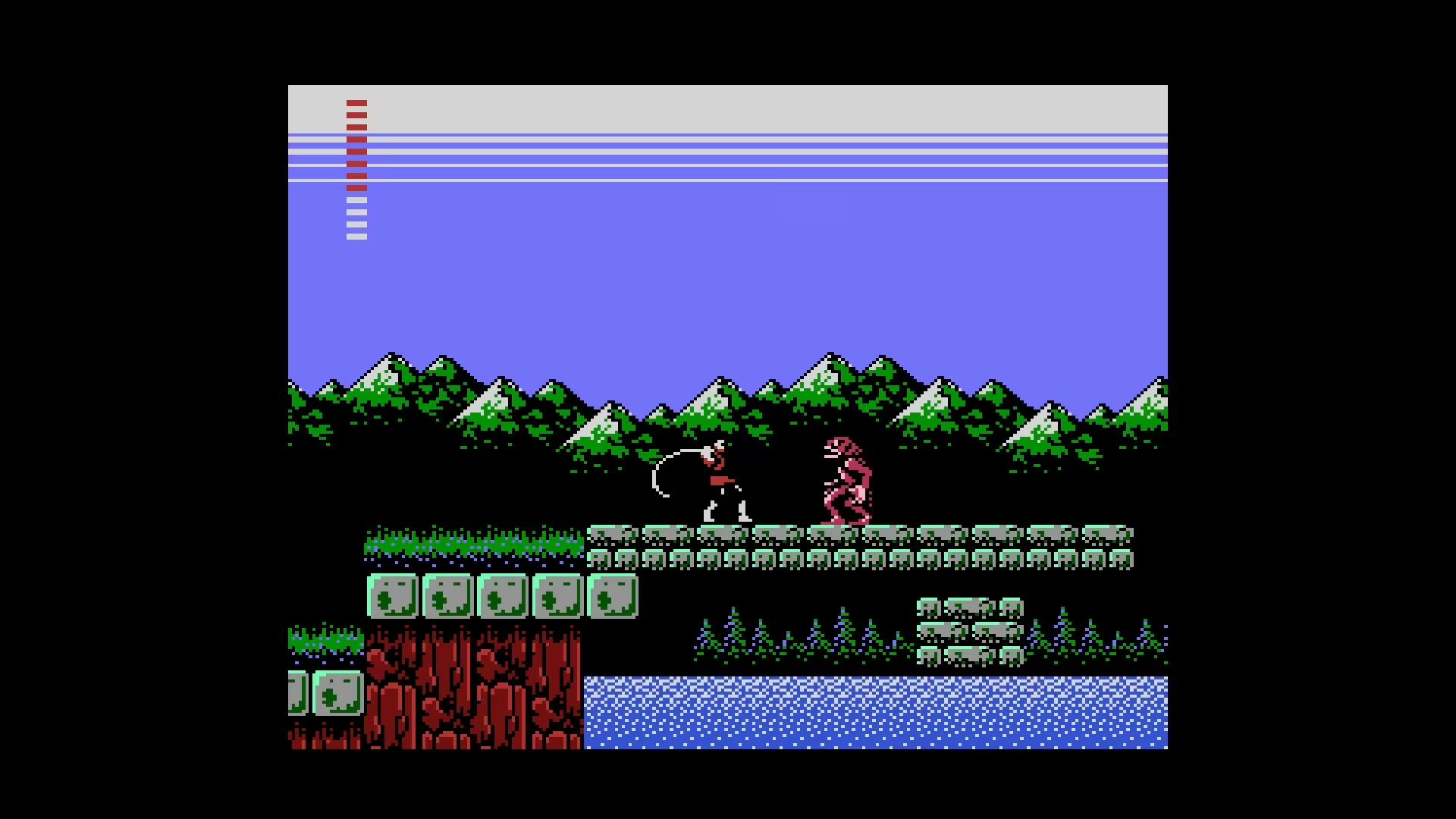
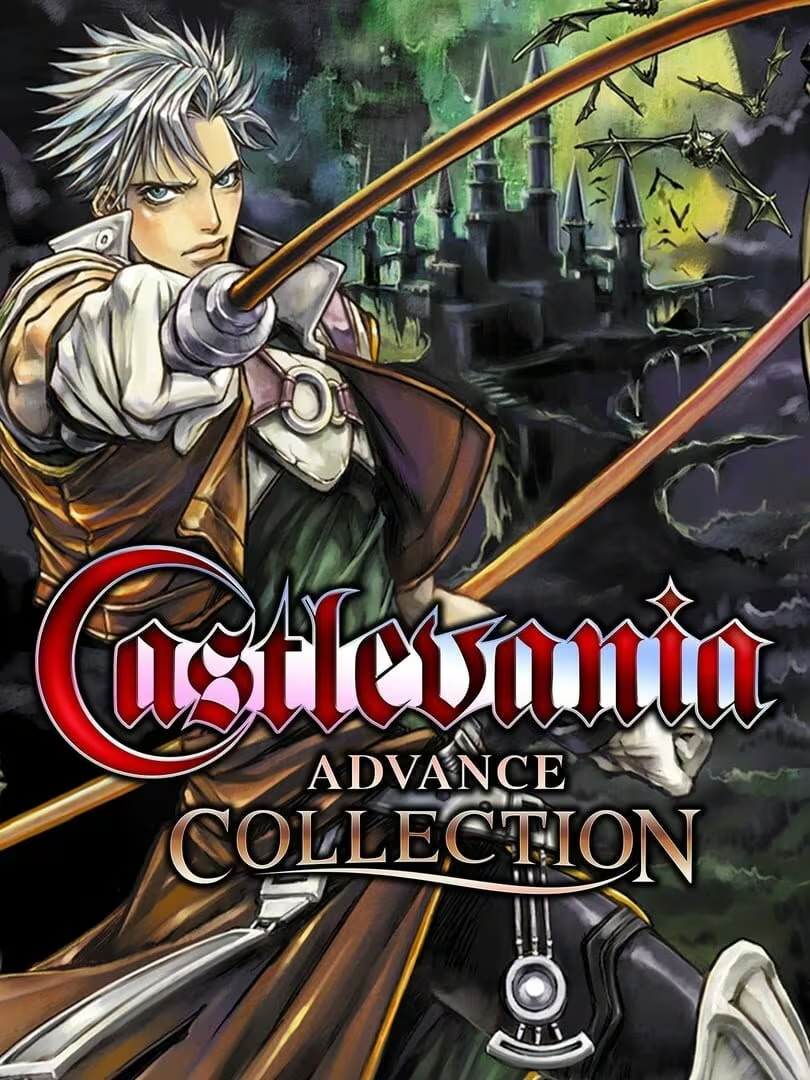
Konami's Castlevania Anniversary Collection traces the origins of the historic vampire franchise. Included is a unique eBook with details provided by developers, artists and others inspired by the Castlevania legacy which sheds a fresh light into the world of Castlevania.
Global score
81/100
Genres
Action, Adventure, Racing, Role-playing (RPG), Simulator, Sport, Platform, Arcade, Fighting
Similar games
Pros
- Includes multiple classic castlevania games with japanese versions
- Faithful emulation with save states and replay features
- Challenging and rewarding gameplay
- Good value especially on sale
- Bonus content like art book and history
Cons
- Lacks key titles like symphony of the night and rondo of blood
- Limited ui and no in-game exit option
- No control remapping in-game (requires steam or external tools)
- Some audio issues and occasional crashes reported
- No multiplayer or social features
Analysis
Less representative of its motivational profile, with noticeable differences. Motivations that often define this kind of title include Relaxation, Survival, Violence, Fellowship. It leans lower than usual among comparable games on Creativity, Expression, Sensation.
How to use the graph
Similar games map
Each dot is a game. They are arranged from the same motivation profile as in the “Motivations” section below. Closer dots usually mean more similar reasons to play (exploration, competition, relaxation, etc.)—not that one game is “better” than another.
- Larger dot with a light outline: the game you are viewing.
- Colour: groups of games with comparable motivation patterns (statistical clusters).
- Hover a dot to see the game name; click to open its page.
- Scroll or double-click the chart to zoom out and see more games.
Why don’t the axes read like a score? This view uses t-SNE: it only keeps who is close to whom. The scales are not “good to bad” or hours played—they separate groups on the map. Read distance between dots, not the axis numbers.
Motivations
-
Autonomy4
"Players can choose different characters, routes, and versions (Japanese or US), with save states allowing control over progress."
-
Competence4
"Games are challenging platformers requiring skill and pattern learning; save states help but do not remove difficulty."
-
Competition-3
"Focus is on personal challenge and mastery rather than competing against others; no multiplayer or leaderboards."
-
Continuation3
"Players engage in long sessions to complete multiple games; some mention replayability and multiple playthroughs."
-
Cooperation-5
"All games are single-player experiences with no cooperative elements."
-
Creativity-2
"Games follow classic linear platformer design with limited player modification; some branching paths and character choices add minor variety."
-
Domination-5
"No evidence of exerting control over others; gameplay is individual and focused on overcoming game challenges."
-
Escapism4
"Players use the games to relive nostalgia and immerse in gothic horror fantasy worlds, escaping real life."
-
Expectation-4
"Players engage voluntarily out of personal interest and nostalgia; no obligation or external pressure noted."
-
Experimenting2
"Some experimentation with different characters, routes, and versions; limited by classic game design."
-
Exploration1
"Some games feature non-linear paths and exploration (e.g. Simon's Quest), but mostly linear level progression."
-
Expression-4
"Minimal customization or self-expression; players use preset characters and game versions."
-
Fantasy5
"Strong gothic horror fantasy theme with vampires, monsters, and supernatural elements."
-
Fellowship-5
"No social or community features; strictly single-player experiences."
-
Growth4
"Players develop skills to master difficult platforming and boss patterns; learning is key to progression."
-
Health-5
"Sedentary gameplay typical of retro platformers; no physical activity involved."
-
Idle-4
"Games require focused attention and precise input; not designed for passive or background play."
-
Intimacy-5
"No social or emotional relationship building; solitary gameplay."
-
Leadership-5
"No leadership or group management roles; purely individual play."
-
Progression3
"Players accumulate power-ups, weapons, and progress through levels; some games have RPG elements."
-
Relaxation-2
"Games are challenging and sometimes frustrating, causing tension rather than relaxation."
-
Sensation2
"Enjoyment from retro pixel art, music, and sound effects; some players note nostalgia and atmosphere."
-
Status-4
"Achievements exist but social recognition is minimal; focus is on personal accomplishment."
-
Story2
"Some narrative elements and lore are present, especially in branching paths and companion characters."
-
Strategy3
"Players must plan movements, attacks, and character choices; some games require puzzle solving."
-
Thrill3
"Challenge and tension from difficult platforming and boss fights provide suspense and excitement."
-
Value4
"Good value for price, especially on sale, with multiple games and bonus content included."
-
Violence3
"Combat involves defeating monsters and bosses with weapons; violence is stylized and fantasy-based."
-
Survival3
"Players must avoid death and manage limited lives or continues; survival is a key gameplay element."
Where to buy
Last update: 29/04/2026