Cobra Kai: The Karate Kid Saga Continues similar games & best alternatives

Cobra Kai: The Karate Kid Saga Continues
2021
Related articles
Quick resume
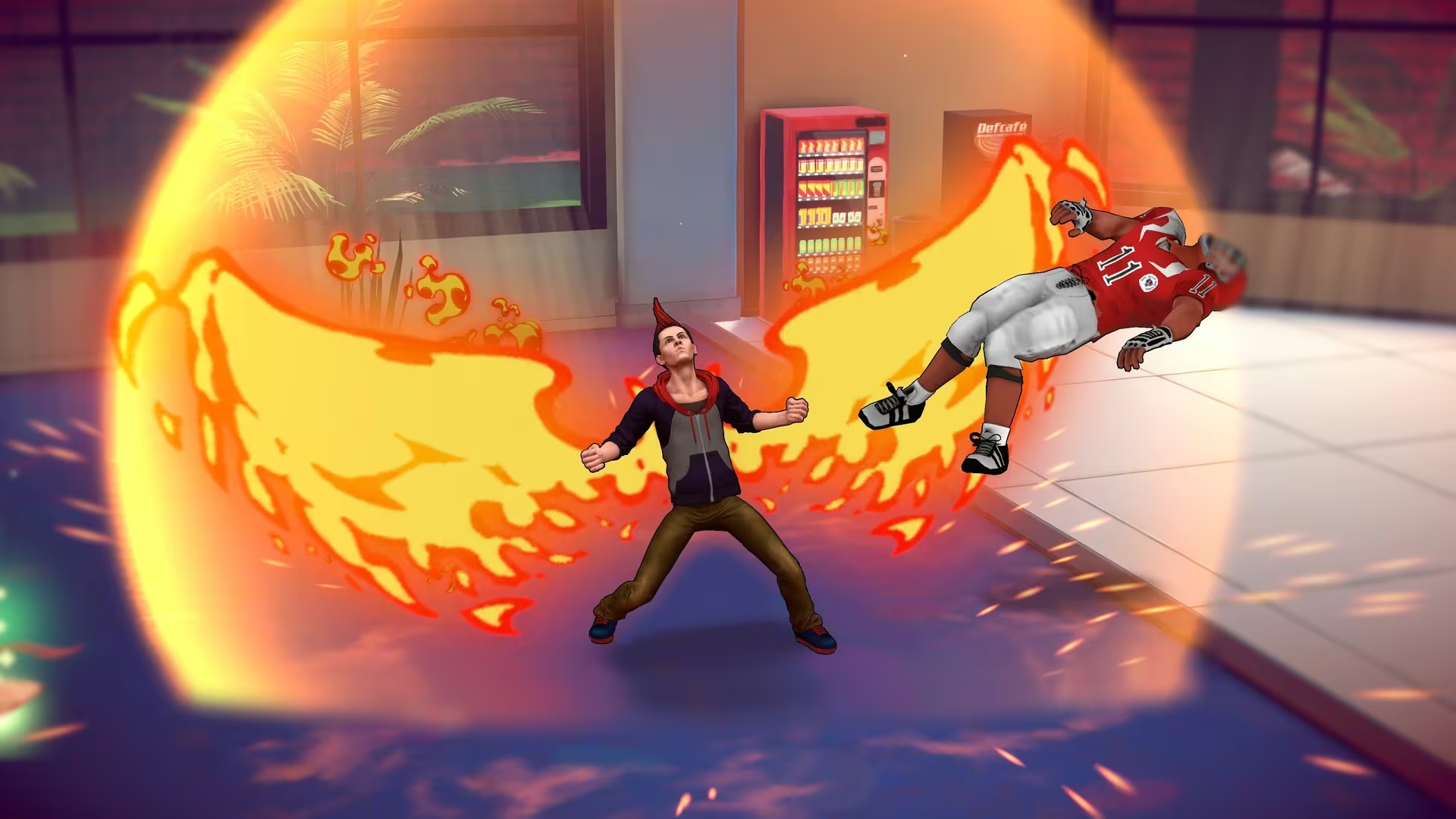
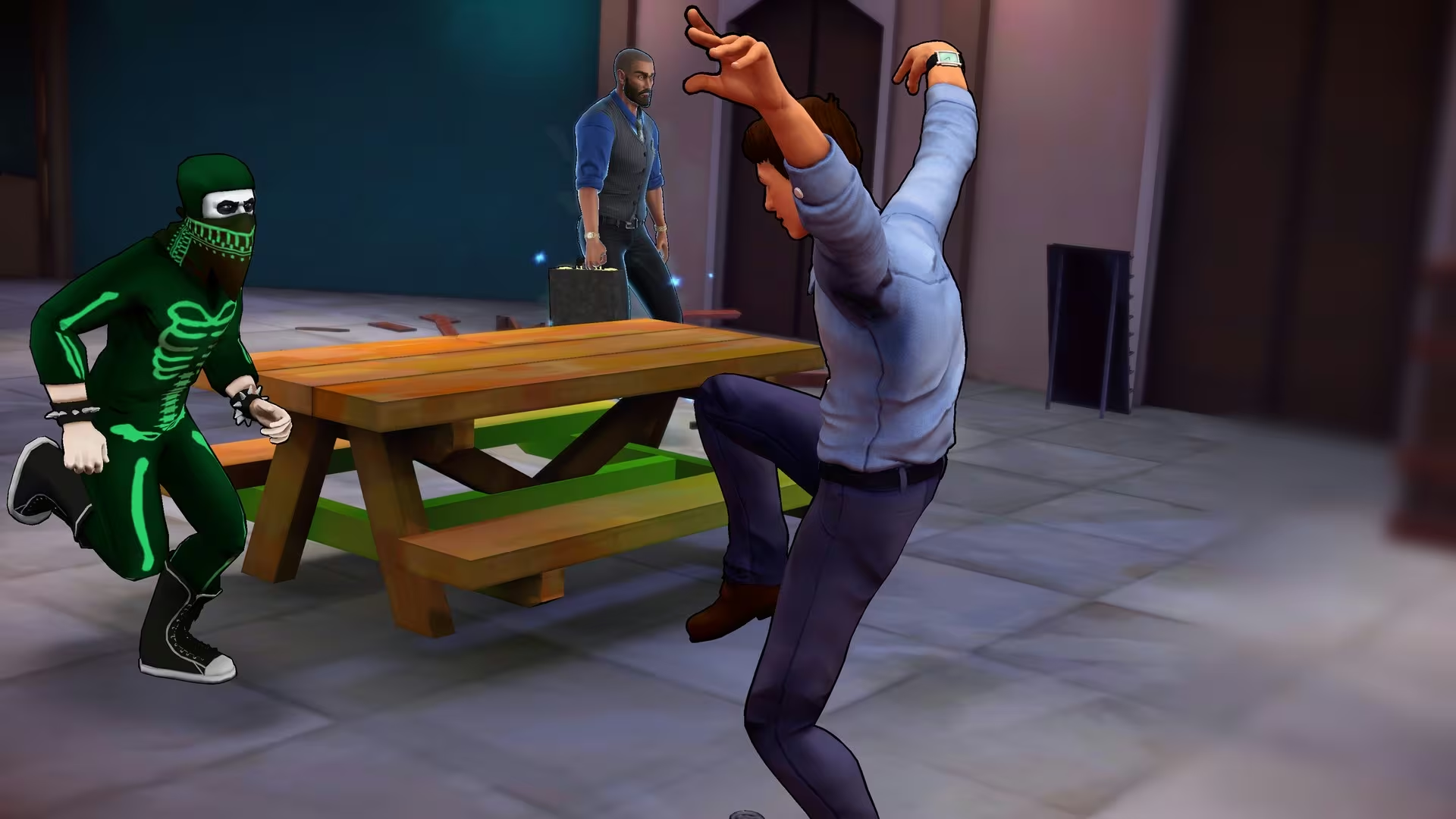
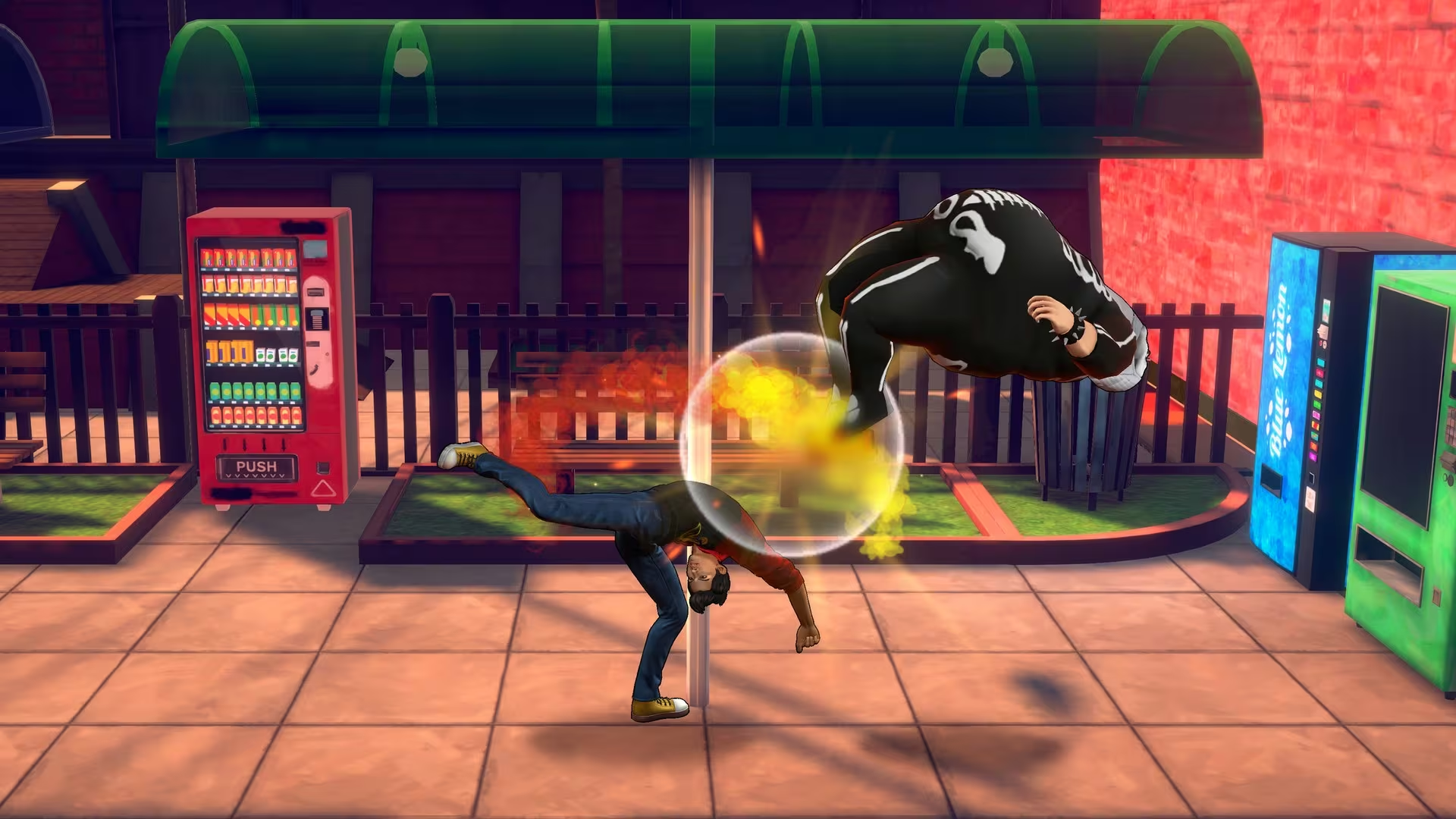
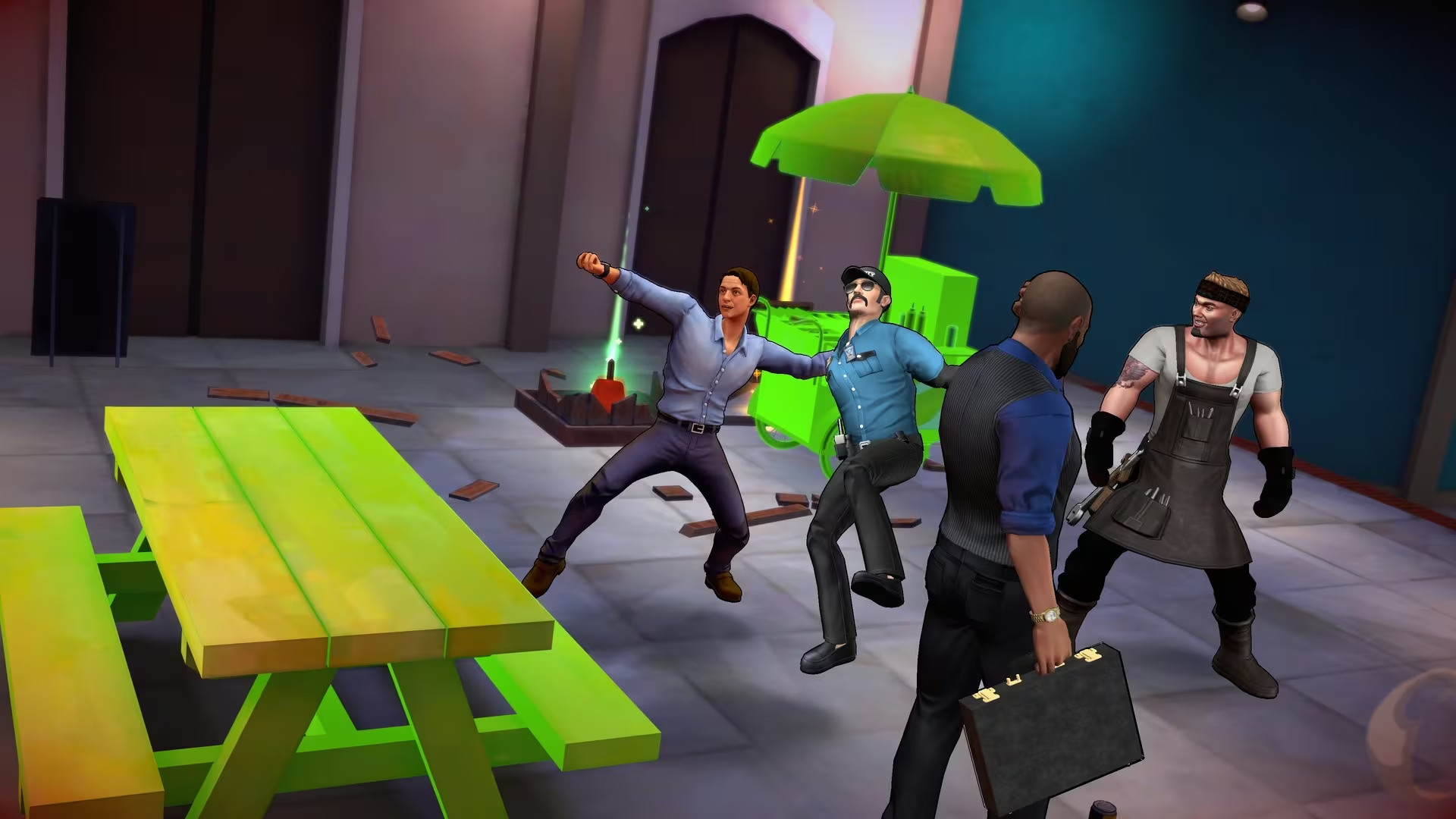
Choose a side, master your moves, and embrace your destiny in an epic beat 'em up adventure inspired by the hit show. Take control of 8 playable characters with deep movesets, combos, progression, real-time character swaps, ultimate attacks, and much more!
Global score
81/100
Genres
Action, Adventure, Casual, Hack and slash/Beat 'em up, Arcade, Fighting
Similar games
Pros
- Faithful voice acting from original cast
- Deep combat and skill progression system
- Local co-op multiplayer
- Nostalgic 80s beat-em-up style
- Good value for price with replayability
Cons
- Some control and hit detection issues
- Graphics and art style not universally liked
- Story is light and sometimes inconsistent with show
- Some repetitive gameplay and grind
- Lack of online multiplayer and cloud saves
Analysis
A very typical example of its motivational profile. Motivations that often define this kind of title include Cooperation, Fellowship, Intimacy, Leadership. Here, the score leans higher than usual among comparable games on Leadership. It leans lower than usual among comparable games on Competition, Status.
How to use the graph
Similar games map
Each dot is a game. They are arranged from the same motivation profile as in the “Motivations” section below. Closer dots usually mean more similar reasons to play (exploration, competition, relaxation, etc.)—not that one game is “better” than another.
- Larger dot with a light outline: the game you are viewing.
- Colour: groups of games with comparable motivation patterns (statistical clusters).
- Hover a dot to see the game name; click to open its page.
- Scroll or double-click the chart to zoom out and see more games.
Why don’t the axes read like a score? This view uses t-SNE: it only keeps who is close to whom. The scales are not “good to bad” or hours played—they separate groups on the map. Read distance between dots, not the axis numbers.
Motivations
-
Autonomy4
"Players can choose between two dojos and freely switch characters mid-combo, customize skill trees, and upgrade characters and dojo skills."
-
Competence3
"The game offers skill-based combat with combos, counters, parries, and a progression system rewarding mastery, though some find it accessible and forgiving."
-
Competition-3
"Focus is on single-player or local co-op play with no mention of ranked or leaderboard competition."
-
Continuation3
"Players report long campaigns, multiple playthroughs for both dojos, and extensive skill trees encouraging habitual play."
-
Cooperation4
"Supports local co-op multiplayer with shared objectives and team-based combat mechanics."
-
Creativity3
"Skill trees and character upgrades allow players to customize fighting styles and abilities."
-
Domination-2
"Interactions emphasize shared team play and cooperative combat rather than exerting control or superiority over others."
-
Escapism4
"Players enjoy the nostalgic 80s vibe, immersive soundtrack, and engaging fantasy combat as a form of stress relief and distraction."
-
Expectation-4
"Players engage voluntarily out of personal interest and fandom for the series, not out of obligation."
-
Experimenting4
"Players experiment with combos, character switching, skill tree builds, and different dojo abilities."
-
Exploration2
"The game features multiple stages with collectibles and hidden items, encouraging some exploration."
-
Expression3
"Players customize characters via skill trees and unlock gear, though no deep avatar personalization is noted."
-
Fantasy3
"The game includes exaggerated combat moves, elemental powers, and a stylized retelling of the TV series, blending fiction and fantasy."
-
Fellowship3
"The game fosters community through shared fandom, local co-op play, and collaborative achievements."
-
Growth4
"Skill acquisition and character progression through upgrade trees provide learning and personal development."
-
Health-5
"Standard sedentary gaming experience with no physical activity or rehab elements."
-
Idle-4
"Requires focused attention on combos, timing, and progression; not suited for idle or background play."
-
Intimacy2
"Local co-op play and shared fandom encourage social interaction, though no deep emotional connections are emphasized."
-
Leadership2
"Players can manage team composition and upgrade paths, but no explicit leadership or authoritative roles."
-
Progression4
"Strong emphasis on accumulating upgrades, unlocking skills, and improving characters and dojo abilities."
-
Relaxation2
"The game balances challenge and flow, though some players find it easy or repetitive, providing moderate relaxation."
-
Sensation3
"Enjoyable soundtrack, voice acting, and visual effects provide sensory stimulation and excitement."
-
Status-3
"Focus is on personal and cooperative achievement rather than social recognition or popularity."
-
Story3
"Narrative immersion with voice acting from original actors and storylines for both dojos, though story is light and campy."
-
Strategy3
"Players plan skill builds, character switching, and combo strategies to optimize combat effectiveness."
-
Thrill2
"Combat includes some suspense and challenge, but overall the game is accessible and forgiving."
-
Value4
"Players find the game a good bargain with many hours of content and replayability for a low price."
-
Violence3
"Enjoyment of combat and fighting is central, with combos, environmental attacks, and beat-em-up action."
-
Survival2
"Players manage health and avoid defeat in combat, though the game is more action-oriented than survival-focused."
Where to buy
Last update: 29/04/2026