Eastside Hockey Manager similar games & best alternatives
Eastside Hockey Manager
2015
Related articles
Quick resume
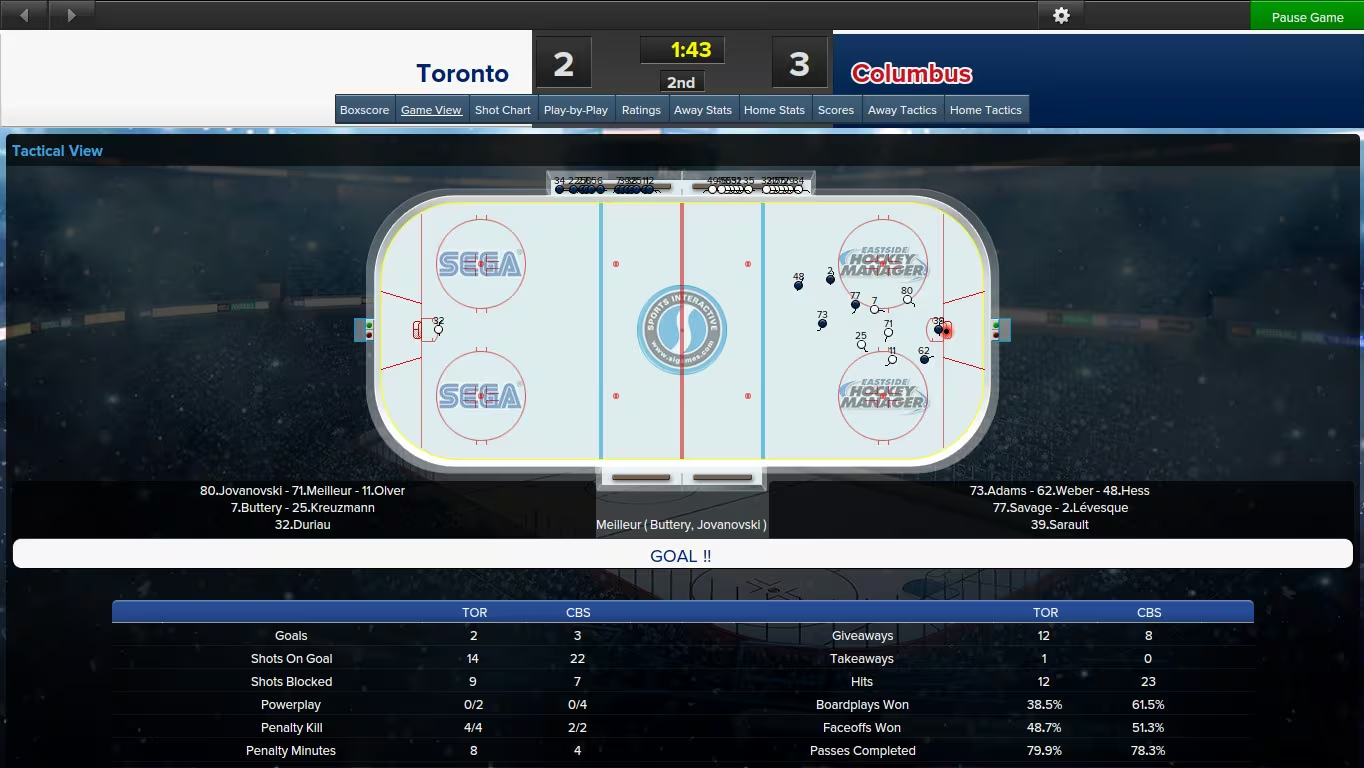
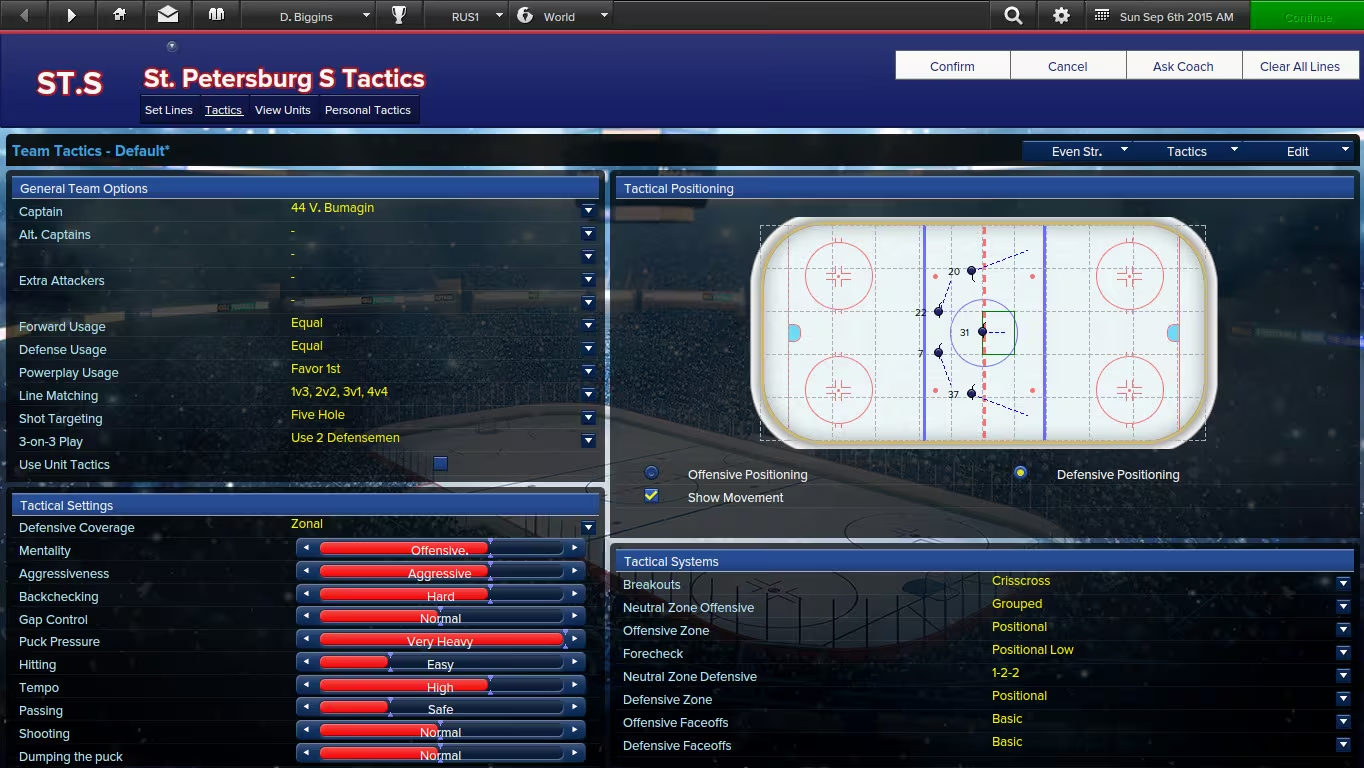
EHM offers fans the most realistic, in-depth and immersive simulation of hockey management available, giving them the chance to manage either club or country in any of the world’s top hockey-playing nations.
Global score
86/100
Genres
Simulator, Sport
Similar games
Pros
- Deep and addictive hockey management simulation
- Extensive customization and mod support
- Realistic player development and tactics
- Active and helpful community
- Frequent updates and improvements
Cons
- Steep learning curve for new players
- Dated interface and limited resolution options
- Some trading and ai quirks
- Lack of official licenses by default
- Limited social and multiplayer features
Analysis
Less representative of its motivational profile, with noticeable differences. Motivations that often define this kind of title include Leadership, Survival, Violence, Strategy. Here, the score leans higher than usual among comparable games on Competition. It leans lower than usual among comparable games on Violence, Fantasy.
How to use the graph
Similar games map
Each dot is a game. They are arranged from the same motivation profile as in the “Motivations” section below. Closer dots usually mean more similar reasons to play (exploration, competition, relaxation, etc.)—not that one game is “better” than another.
- Larger dot with a light outline: the game you are viewing.
- Colour: groups of games with comparable motivation patterns (statistical clusters).
- Hover a dot to see the game name; click to open its page.
- Scroll or double-click the chart to zoom out and see more games.
Why don’t the axes read like a score? This view uses t-SNE: it only keeps who is close to whom. The scales are not “good to bad” or hours played—they separate groups on the map. Read distance between dots, not the axis numbers.
Motivations
-
Autonomy4
"Players have extensive control over team management, tactics, scouting, and player development, allowing personal freedom in decision-making."
-
Competence4
"The game involves complex strategic planning, skillful management of trades, scouting, and tactics, providing challenging and varied gameplay."
-
Competition2
"Players compete against AI teams and can engage in multiplayer leagues, but the focus is more on personal team building than direct competition."
-
Continuation5
"Highly addictive with many players reporting long sessions and habitual play over hundreds or thousands of hours."
-
Cooperation1
"Some multiplayer leagues exist, but the game is primarily a single-player management experience with limited cooperative play."
-
Creativity3
"Players can customize tactics, lineups, and training, and mod the game with custom rosters and graphics, enabling creative team building."
-
Domination-3
"Interactions with other teams are balanced and respectful; no evidence of trash talk or exerting superiority over others."
-
Escapism4
"Players use the game as a deep immersive escape into hockey management, often losing track of time and real-life responsibilities."
-
Expectation-4
"Players engage voluntarily driven by intrinsic interest and passion for hockey and management sims, not obligation or pressure."
-
Experimenting4
"Players experiment with tactics, lineups, scouting strategies, and modding, exploring different approaches to team success."
-
Exploration2
"Exploration is mostly about discovering new players, leagues, and strategies rather than physical world exploration."
-
Expression3
"Customization of teams, players, tactics, and use of mods allows players to express their style and preferences."
-
Fantasy-2
"The game focuses on realistic hockey management simulation with plausible scenarios and real-world leagues."
-
Fellowship1
"There is a community for sharing mods and multiplayer leagues, but social interaction is limited and mostly indirect."
-
Growth4
"Players develop skills in management, strategy, and hockey knowledge, learning complex systems and improving over time."
-
Health-4
"The game involves sedentary play with long sessions and no physical activity."
-
Idle-3
"Requires focused attention and active decision-making rather than passive or background play."
-
Intimacy-4
"Social connections are minimal and surface-level; the game is primarily a solo experience."
-
Leadership4
"Players lead their teams as general managers and coaches, making all key decisions and guiding team direction."
-
Progression5
"Strong emphasis on player development, team building, acquiring upgrades, and progressing through seasons."
-
Relaxation2
"While some find the game relaxing and rewarding, the complexity and learning curve can create tension and challenge."
-
Sensation1
"Visuals are simple and functional; sensory stimulation is moderate and focused on data and stats rather than intense audiovisuals."
-
Status1
"Recognition comes from community respect and achievements within the game, but social status is limited."
-
Story3
"Players create emergent narratives through team management, rivalries, and seasons, though no scripted storylines exist."
-
Strategy5
"Core gameplay centers on deep strategic thinking, problem solving, and tactical planning."
-
Thrill3
"Players experience suspense and excitement from close games, playoff runs, and managing risks."
-
Value4
"Players report high value for money due to deep gameplay, frequent updates, and community content."
-
Violence-4
"Focus is on management and strategy; physical violence is minimal and simulated in a controlled manner."
-
Survival2
"Players manage risks such as injuries, suspensions, and salary cap constraints, requiring strategic survival tactics."
Last update: 29/04/2026