Terraforming Mars Thumbnail

Terraforming Mars similar games & best alternatives

Terraforming Mars

PC (Microsoft Windows), iOS, Mac, Android • 2018

Related articles

Quick resume

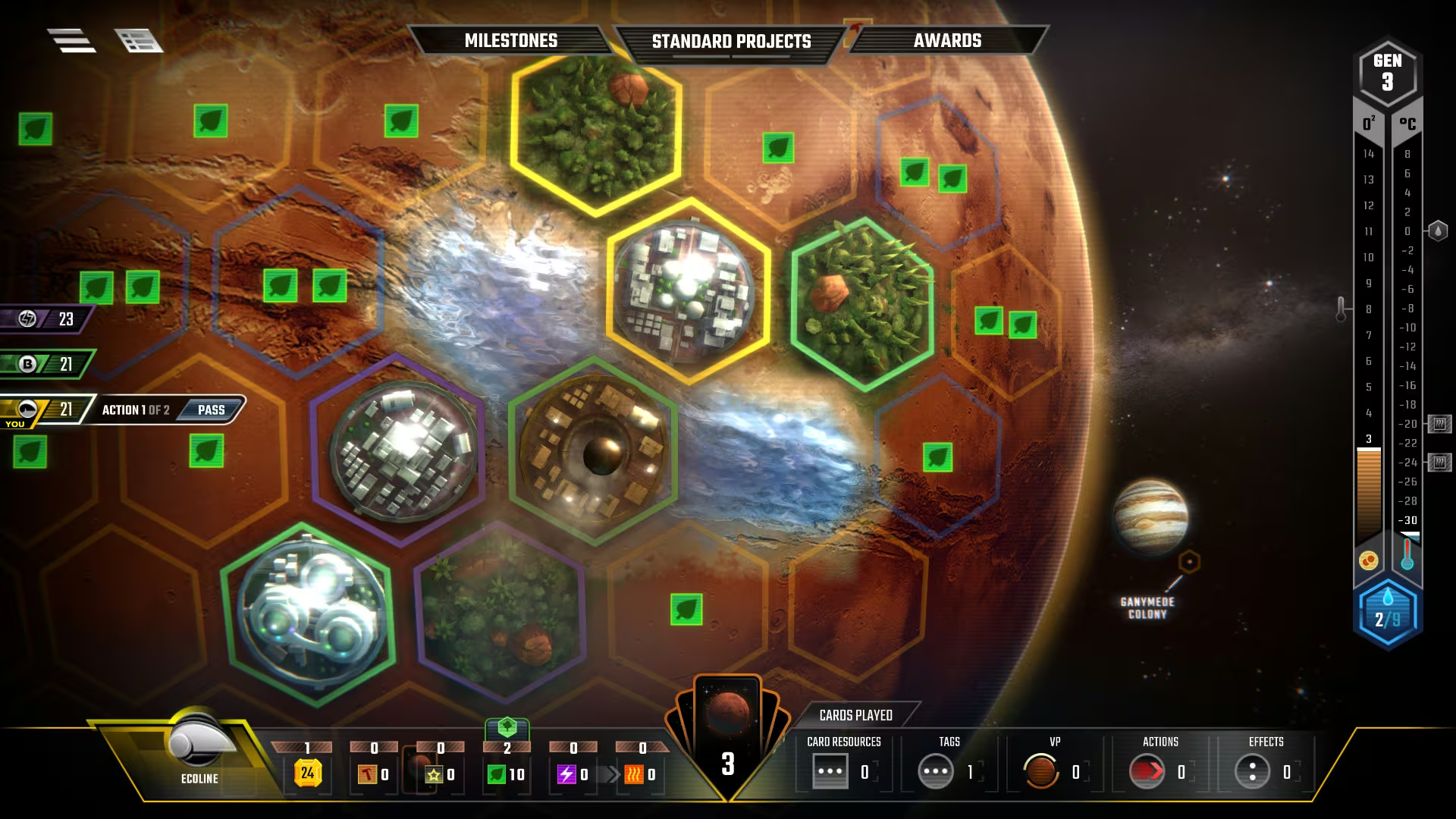
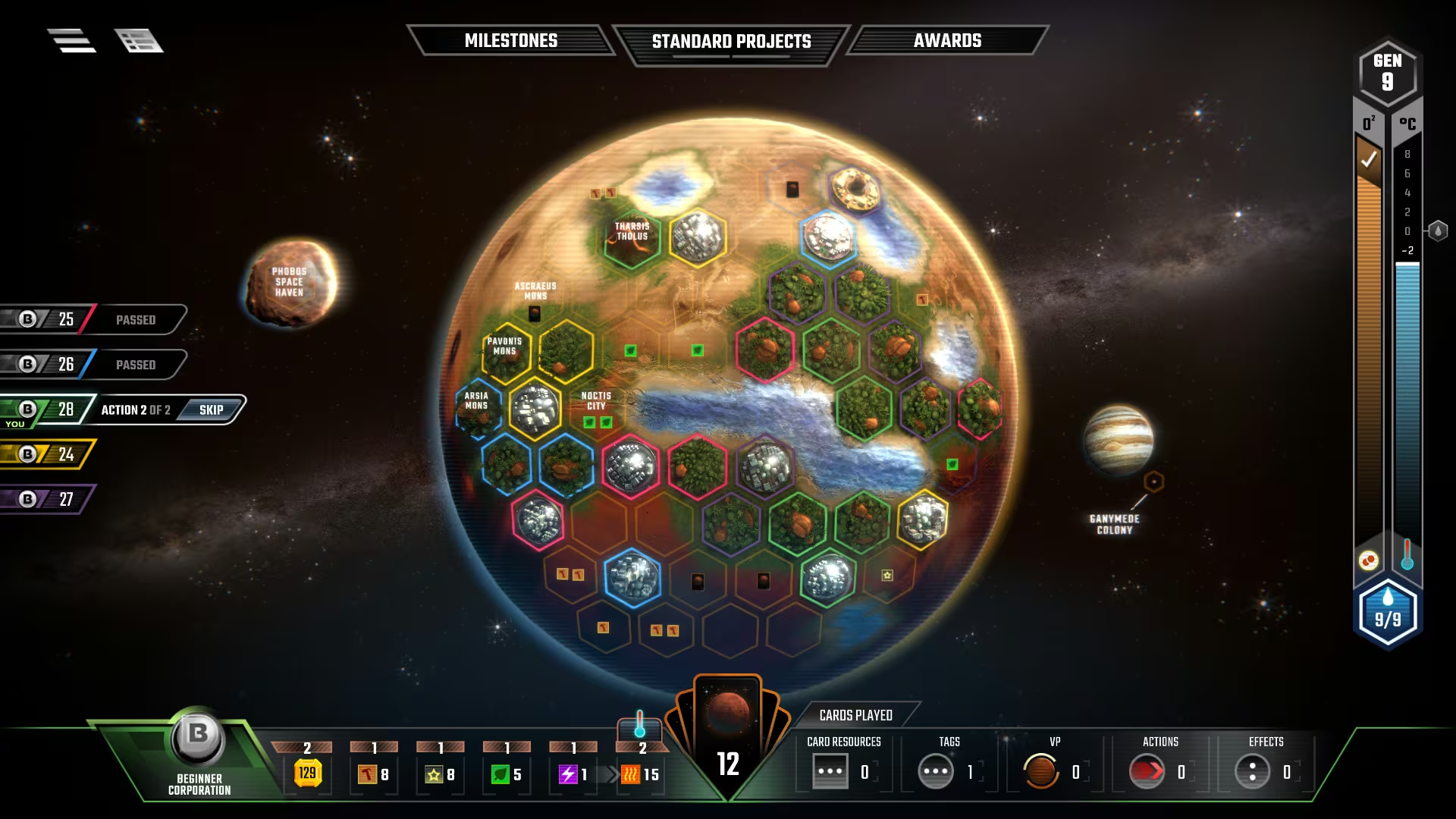
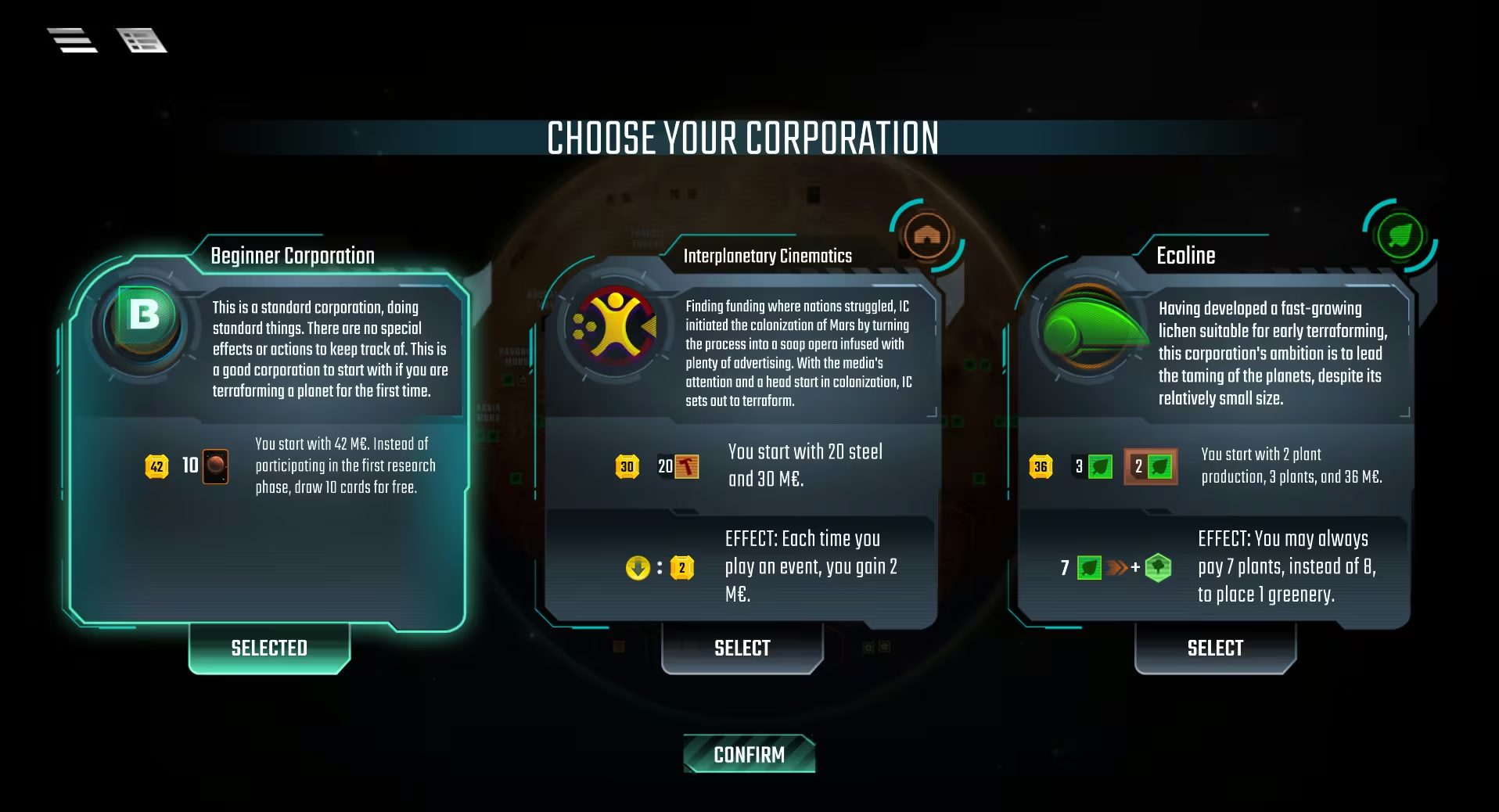
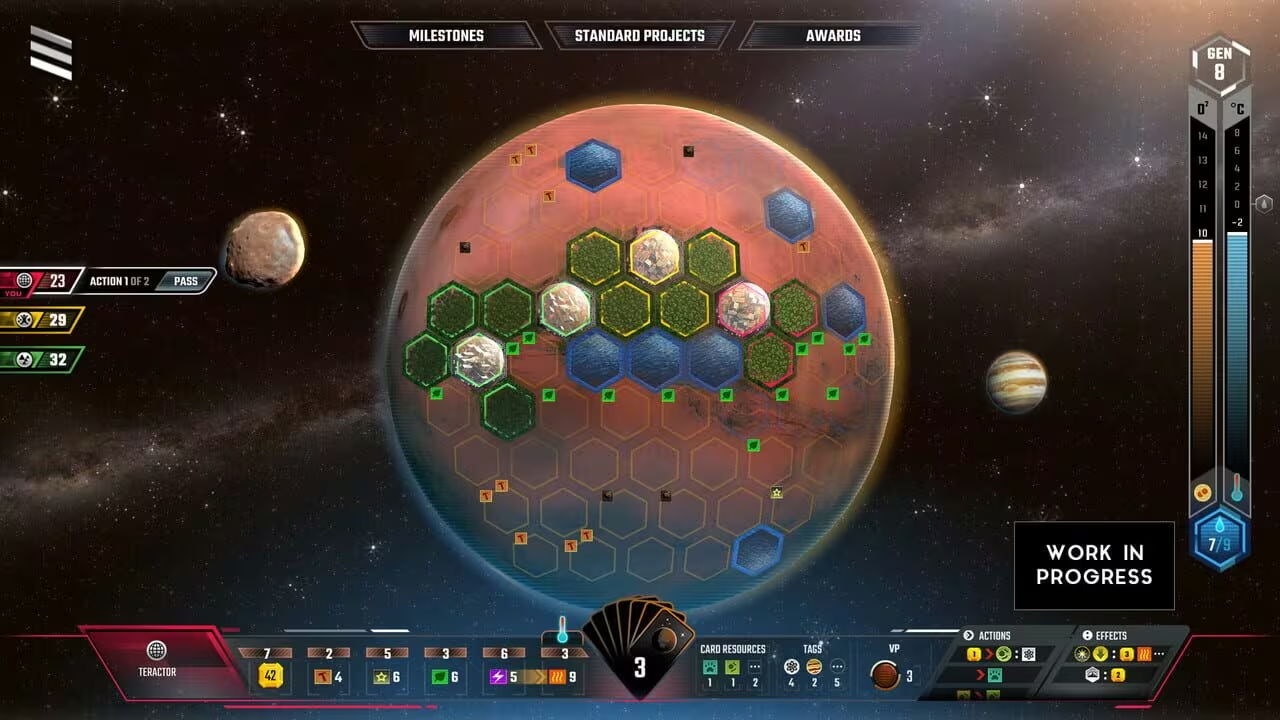
The taming of the Red Planet has begun! Corporations are competing to transform Mars into a habitable planet by spending vast resources and using innovative technology to raise temperature, create a breathable atmosphere, and make oceans of water.

Global score

71/100

Genres

Strategy, Simulator

Similar games

    Pros

    • Faithful adaptation of popular board game
    • Streamlined gameplay and bookkeeping
    • High replayability with strategic depth
    • Active online multiplayer community
    • Regular updates and expansions planned

    Cons

    • Bugs and ui quirks reported
    • Lack of drafting mode at launch
    • Rudimentary matchmaking and ranking
    • Ai opponents often weak or predictable
    • Long waiting times due to afk players

    Analysis

    A very typical example of its motivational profile. Motivations that often define this kind of title include Competition, Status, Story, Expression. Here, the score leans higher than usual among comparable games on Story, Fellowship. It leans lower than usual among comparable games on Violence.

    How to use the graph
    Similar games map

    Each dot is a game. They are arranged from the same motivation profile as in the “Motivations” section below. Closer dots usually mean more similar reasons to play (exploration, competition, relaxation, etc.)—not that one game is “better” than another.

    • Larger dot with a light outline: the game you are viewing.
    • Colour: groups of games with comparable motivation patterns (statistical clusters).
    • Hover a dot to see the game name; click to open its page.
    • Scroll or double-click the chart to zoom out and see more games.

    Why don’t the axes read like a score? This view uses t-SNE: it only keeps who is close to whom. The scales are not “good to bad” or hours played—they separate groups on the map. Read distance between dots, not the axis numbers.

    Motivations

    • Autonomy
      4

      "Players have significant control over their actions and strategies, choosing corporations, cards, and play style freely."

    • Competence
      4

      "The game challenges players with complex strategy and resource management, requiring skill to optimize plays and overcome AI or human opponents."

    • Competition
      3

      "Multiplayer mode involves competing against others for highest terraforming rating and points, though matchmaking and ranking systems are rudimentary."

    • Continuation
      4

      "Players report long play sessions and habitual engagement, with many hours logged and desire to replay with different strategies."

    • Cooperation
      -3

      "Gameplay is primarily individualistic, focusing on personal objectives rather than team goals or cooperative play."

    • Creativity
      3

      "Players create unique engine-building strategies and customize play through card choices and corporation selection."

    • Domination
      -2

      "Interactions are competitive but generally respectful; no reports of trash talk or dominance behaviors."

    • Escapism
      3

      "Players use the game as a relaxing distraction and mental challenge, especially during social distancing or solo play."

    • Expectation
      -4

      "Players engage voluntarily out of intrinsic interest and love for the board game; no pressure or obligation reported."

    • Experimenting
      4

      "High replayability encourages trying new strategies, corporations, and card combinations."

    • Exploration
      2

      "Some exploration through different maps and expansions, but largely familiar game environments."

    • Expression
      2

      "Limited customization mostly through card and corporation choices; no avatar or cosmetic personalization."

    • Fantasy
      1

      "The game has a sci-fi theme of terraforming Mars, but grounded in plausible science and strategy rather than high fantasy."

    • Fellowship
      2

      "Online multiplayer and community engagement exist, but social interaction is limited and often competitive rather than cooperative."

    • Growth
      4

      "Players develop strategic thinking and learn complex game mechanics over time."

    • Health
      -5

      "Sedentary gameplay with no physical activity involved."

    • Idle
      -3

      "Requires focused attention during turns; idle players cause frustration and waiting times."

    • Intimacy
      -3

      "Social interactions are surface-level and competitive; no evidence of close relationships forming through gameplay."

    • Leadership
      -4

      "No leadership roles; players act independently without guiding others."

    • Progression
      4

      "Strong progression through resource accumulation, card acquisition, and terraforming rating increases."

    • Relaxation
      3

      "Many players find the game relaxing and mentally engaging, though some frustration arises from bugs and waiting."

    • Sensation
      2

      "Visuals and music are pleasant but not highly stimulating; some players appreciate the aesthetic improvements over the board game."

    • Status
      1

      "Some social recognition through multiplayer and achievements, but limited ranking or visibility systems."

    • Story
      2

      "The game has a thematic narrative of terraforming Mars, but gameplay is largely abstract and strategic."

    • Strategy
      5

      "Core gameplay revolves around deep strategic planning, resource management, and tactical decision making."

    • Thrill
      2

      "Some tension and excitement from competitive play and close games, but overall a calm strategic experience."

    • Value
      3

      "Players feel the game offers good value for time and money, especially compared to physical board game costs."

    • Violence
      -4

      "Gameplay focuses on constructive terraforming and resource management rather than combat or destruction."

    • Survival
      1

      "Some resource management and risk avoidance, but low threat and failure consequences compared to survival games."

    Last update: 29/04/2026