The Path similar games & best alternatives
The Path
2009
Related articles
Quick resume
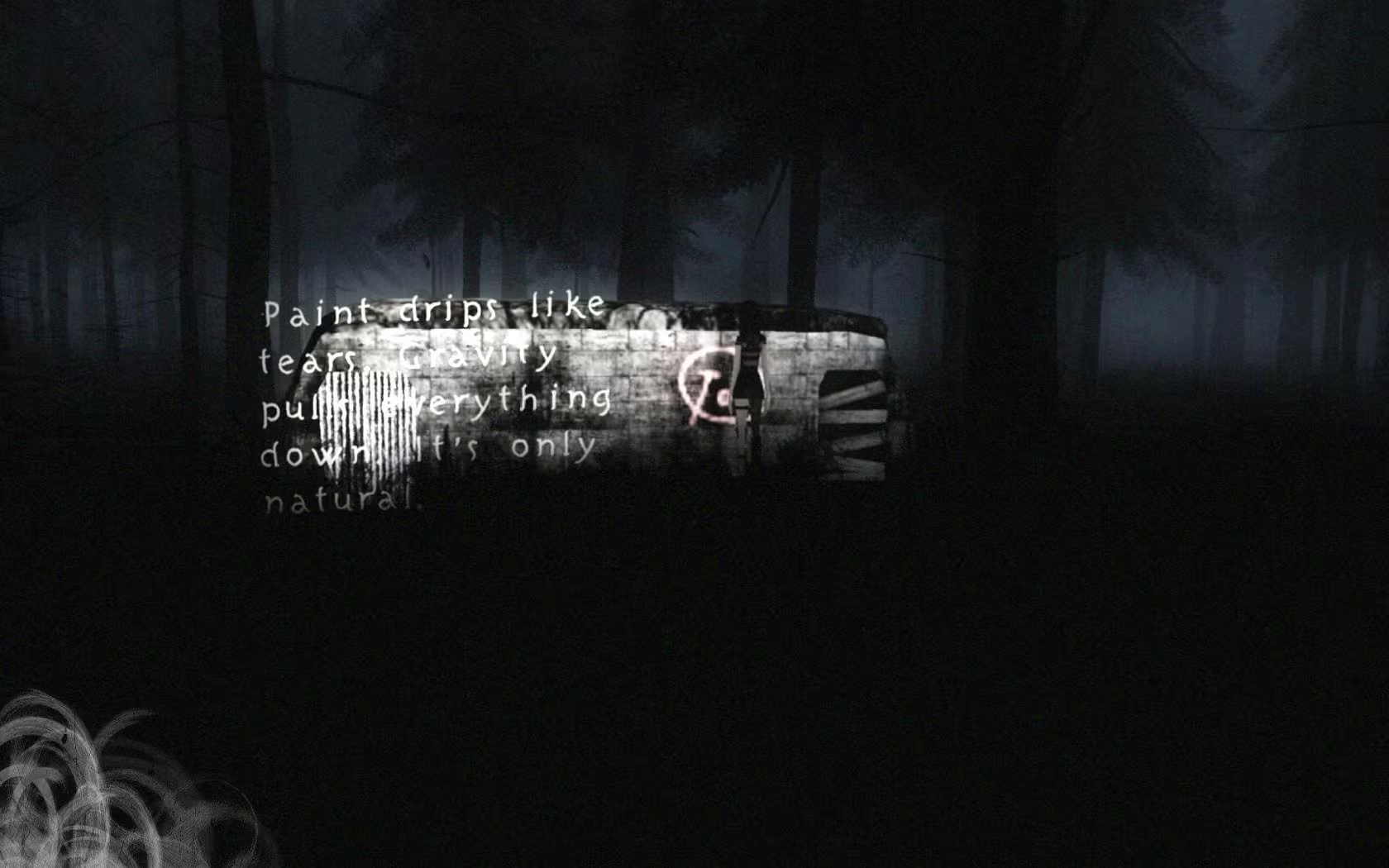
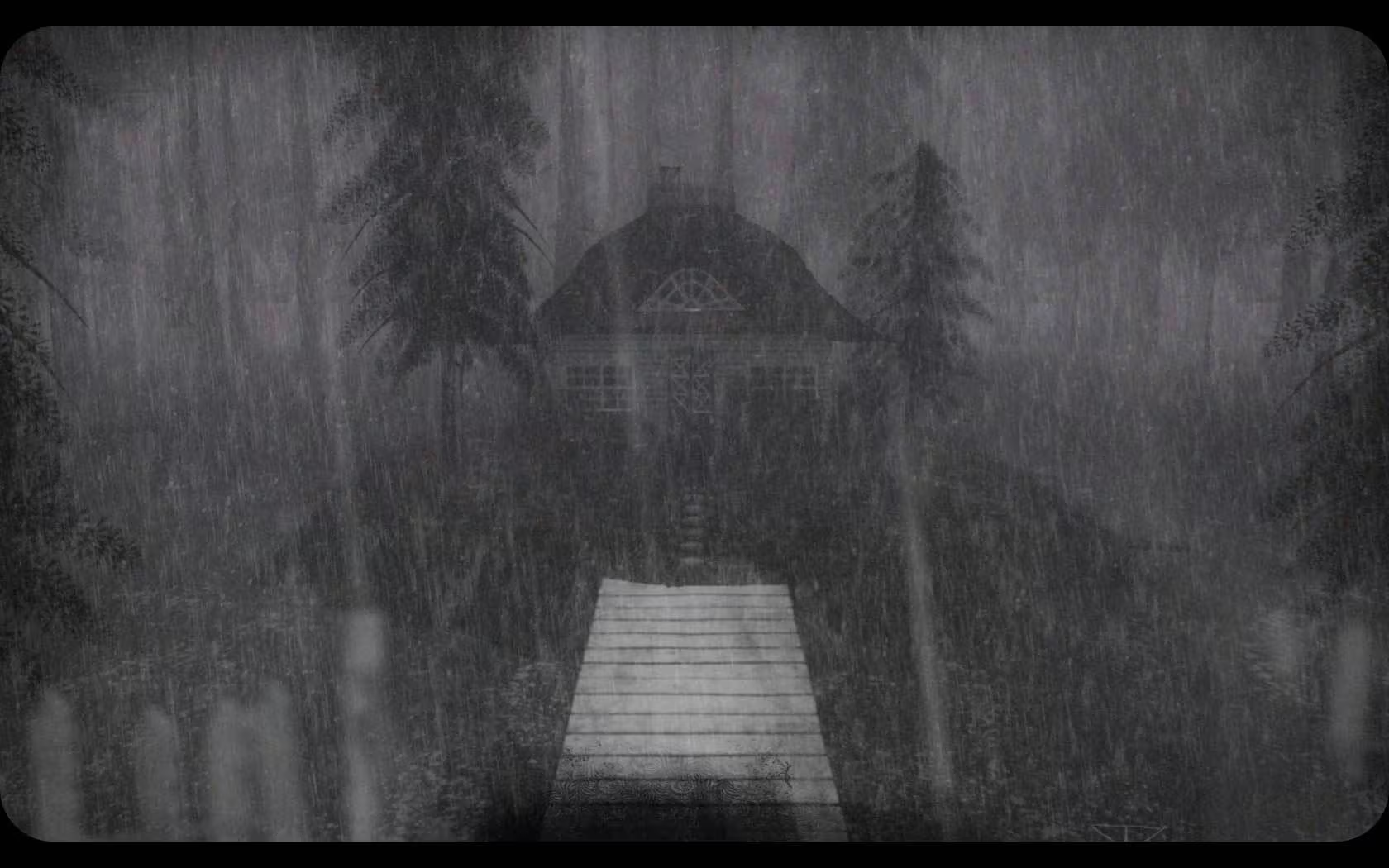
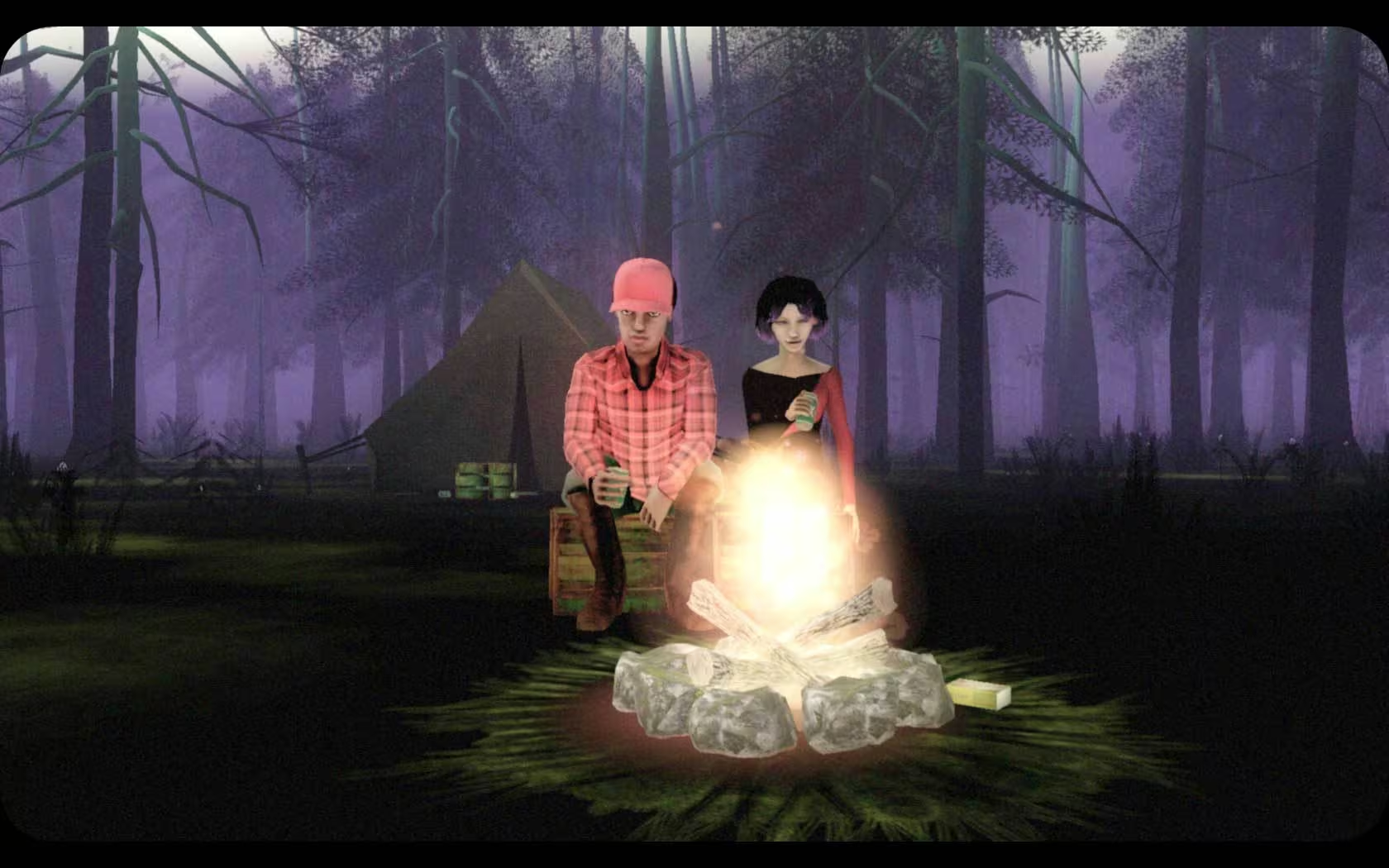
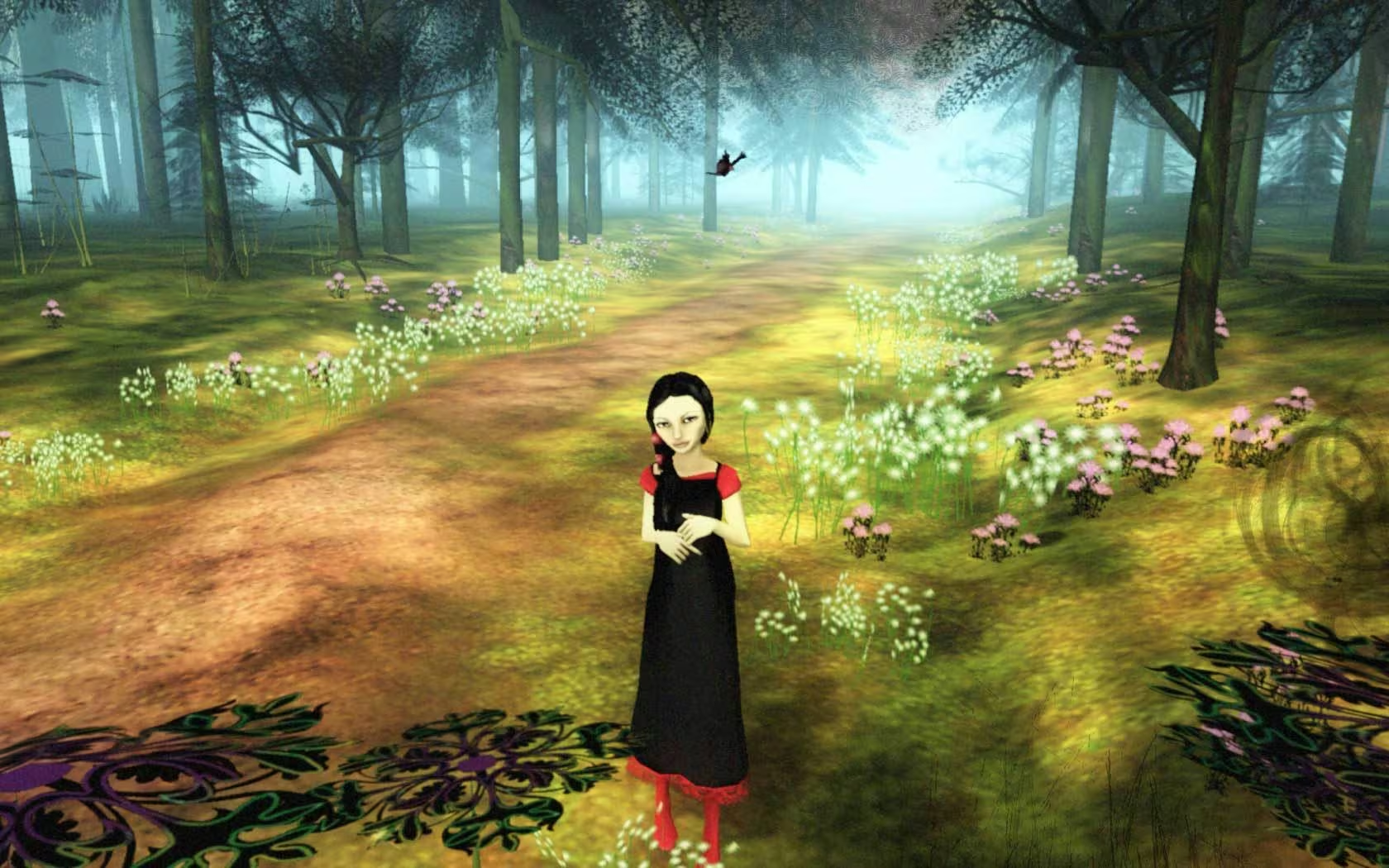
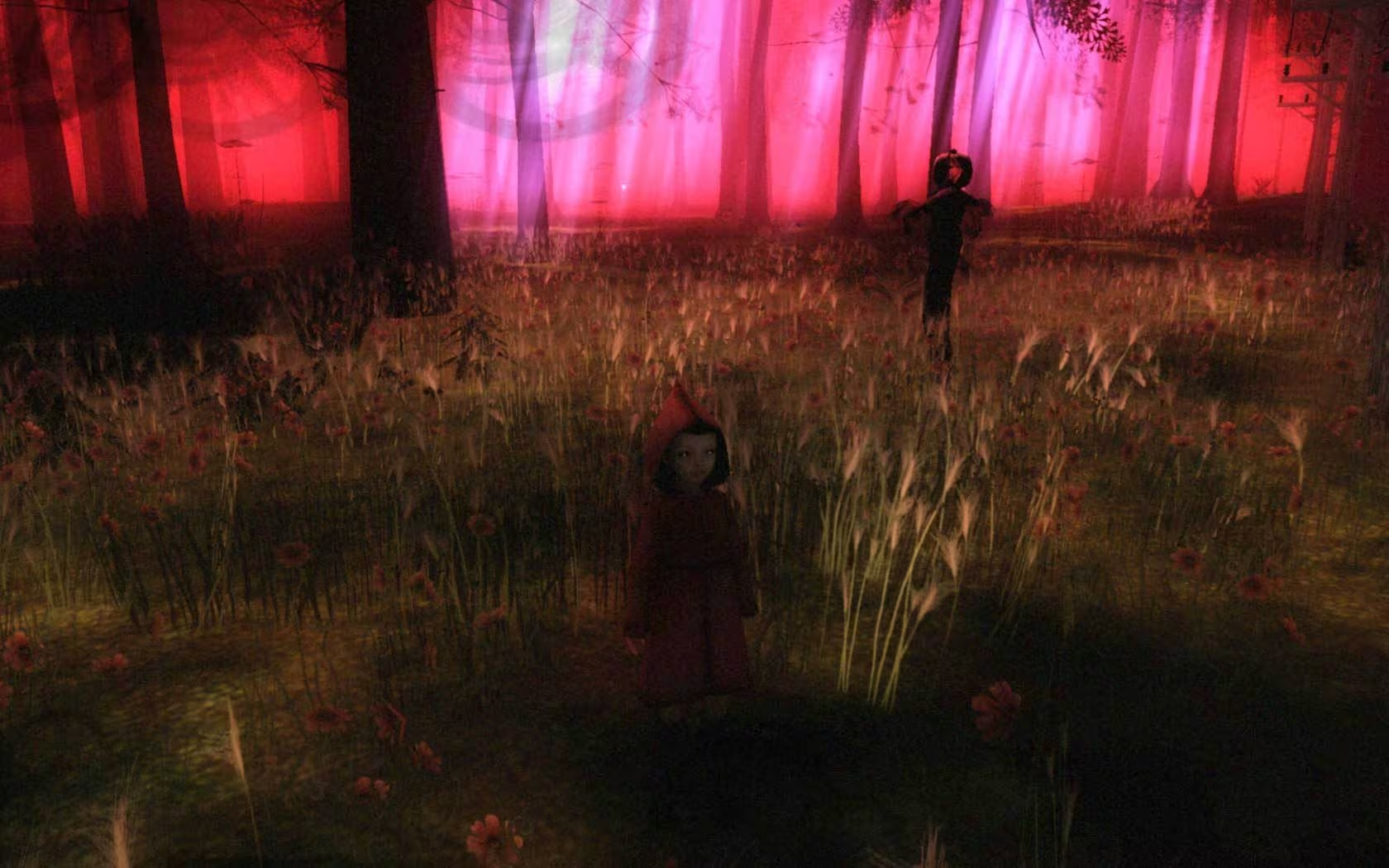
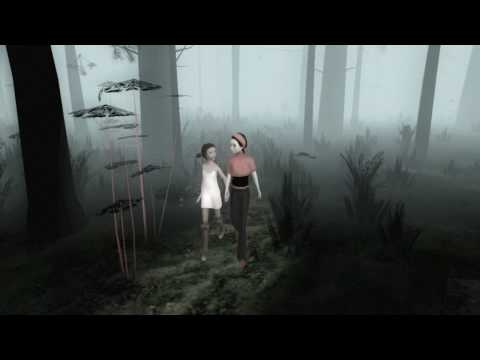
There is one rule in the game. And it needs to be broken. There is one goal. And when you attain it, you die.
Global score
79/100
Genres
Adventure, Indie
Similar games
Pros
- Unique artistic narrative
- Deep psychological themes
- Atmospheric music and sound design
- Multiple character perspectives
- Encourages player interpretation
Cons
- Slow pacing and simple gameplay
- Clunky controls
- Lack of clear objectives
- Limited replay value beyond story
- Dated graphics and technical issues
Analysis
Less representative of its motivational profile, with noticeable differences. Motivations that often define this kind of title include Intimacy, Survival, Violence, Competition. Here, the score leans higher than usual among comparable games on Idle. It leans lower than usual among comparable games on Intimacy, Strategy.
How to use the graph
Similar games map
Each dot is a game. They are arranged from the same motivation profile as in the “Motivations” section below. Closer dots usually mean more similar reasons to play (exploration, competition, relaxation, etc.)—not that one game is “better” than another.
- Larger dot with a light outline: the game you are viewing.
- Colour: groups of games with comparable motivation patterns (statistical clusters).
- Hover a dot to see the game name; click to open its page.
- Scroll or double-click the chart to zoom out and see more games.
Why don’t the axes read like a score? This view uses t-SNE: it only keeps who is close to whom. The scales are not “good to bad” or hours played—they separate groups on the map. Read distance between dots, not the axis numbers.
Motivations
-
Autonomy4
"Players freely choose which sister to play and decide whether to follow or break the path rule, exploring the forest at their own pace."
-
Competence-3
"Gameplay is simple walking and item collection with no real skill challenge or complex mechanics."
-
Competition-5
"No competitive elements or comparison to others; experience is individual and introspective."
-
Continuation3
"Players often replay to explore different sisters and endings, showing attachment and habitual play."
-
Cooperation-5
"Entirely single-player experience focused on personal exploration without collaboration."
-
Creativity4
"Players interpret symbolic story elements and explore nonlinear narrative paths, encouraging creative thought."
-
Domination-5
"No power dynamics or control over others; experience is personal and reflective."
-
Escapism4
"Players use the game to immerse in a surreal, psychological world, escaping real life stresses."
-
Expectation-4
"Engagement is voluntary and driven by personal interest in art games and narrative exploration."
-
Experimenting3
"Players experiment by exploring off the path and discovering different items and story fragments."
-
Exploration5
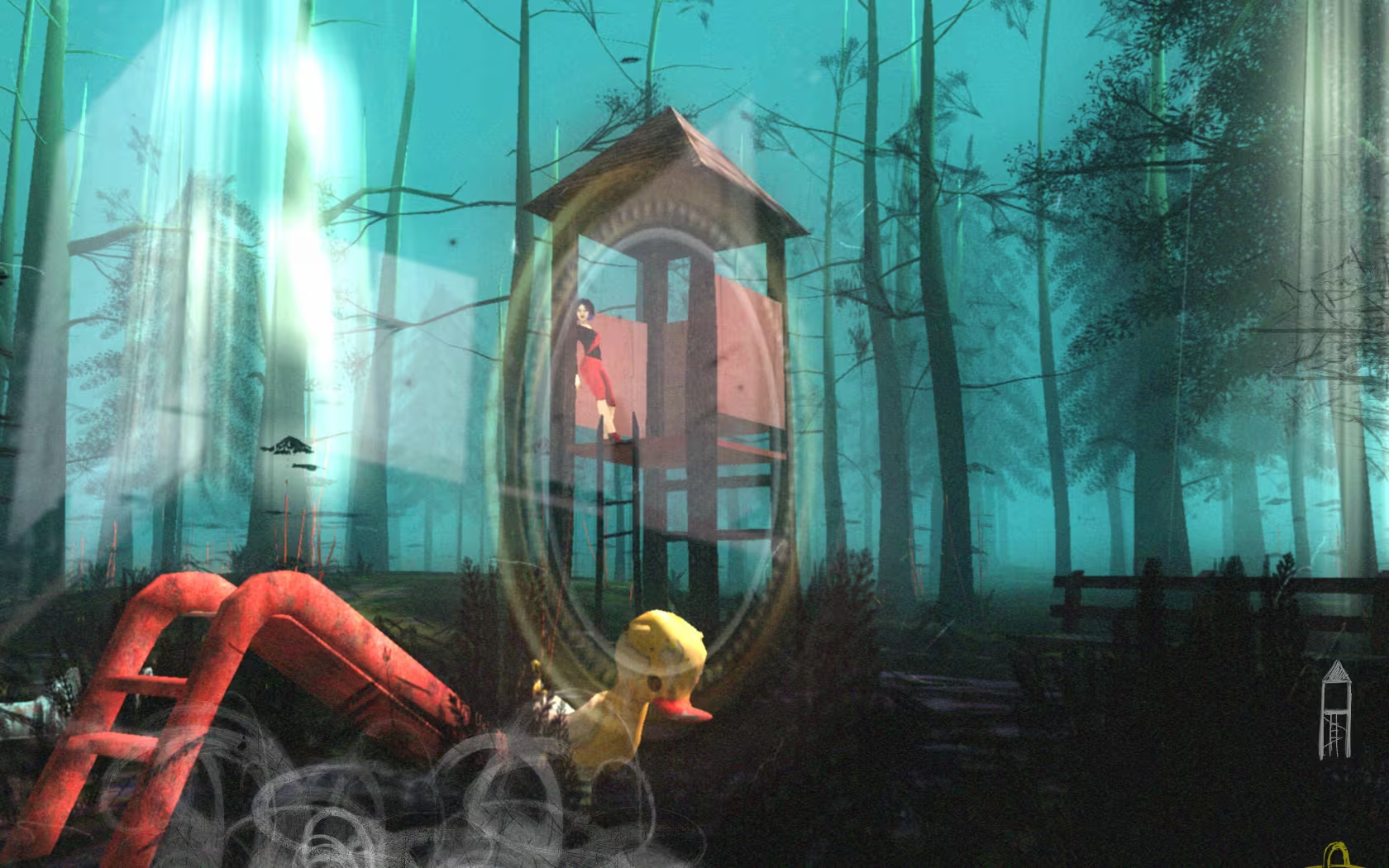
"Core gameplay revolves around exploring the forest and discovering hidden items and symbolic locations."
-
Expression3
"Players express interpretation through choices and uncovering unique storylines for each sister."
-
Fantasy4
"The game is a surreal, symbolic retelling of Little Red Riding Hood with dreamlike and metaphorical elements."
-
Fellowship-5
"No community or social interaction; experience is solitary and introspective."
-
Growth4
"Players learn about each sister’s story and psychological themes through exploration and interpretation."
-
Health-5
"Sedentary gameplay with no physical activity or health-related features."
-
Idle3
"Slow-paced, meditative gameplay allows for relaxed, intermittent engagement."
-
Intimacy-4
"Minimal social connection; emotional engagement is internal and personal rather than relational."
-
Leadership-5
"No leadership or group management elements; purely individual experience."
-
Progression3
"Progression is narrative and symbolic through item collection and story revelations rather than power gain."
-
Relaxation4
"Atmosphere and pacing promote a contemplative, sometimes tense but mostly calm experience."
-
Sensation3
"Strong atmospheric audio and visual design provide emotional and sensory engagement."
-
Status-5
"No social recognition or status mechanics; focus is on private experience."
-
Story5
"Narrative immersion is central, with symbolic storytelling and multiple interpretations."
-
Strategy-4
"No complex problem solving or planning; gameplay is straightforward exploration."
-
Thrill2
"Subtle suspense and psychological tension rather than overt thrills or jump scares."
-
Value3
"Considered worthwhile for its artistic and narrative experience despite simple gameplay."
-
Violence-4
"No explicit violence or combat; themes are psychological and symbolic rather than physical."
-
Survival-5
"No survival mechanics or threats requiring resource management; environment is stable."
Last update: 29/04/2026