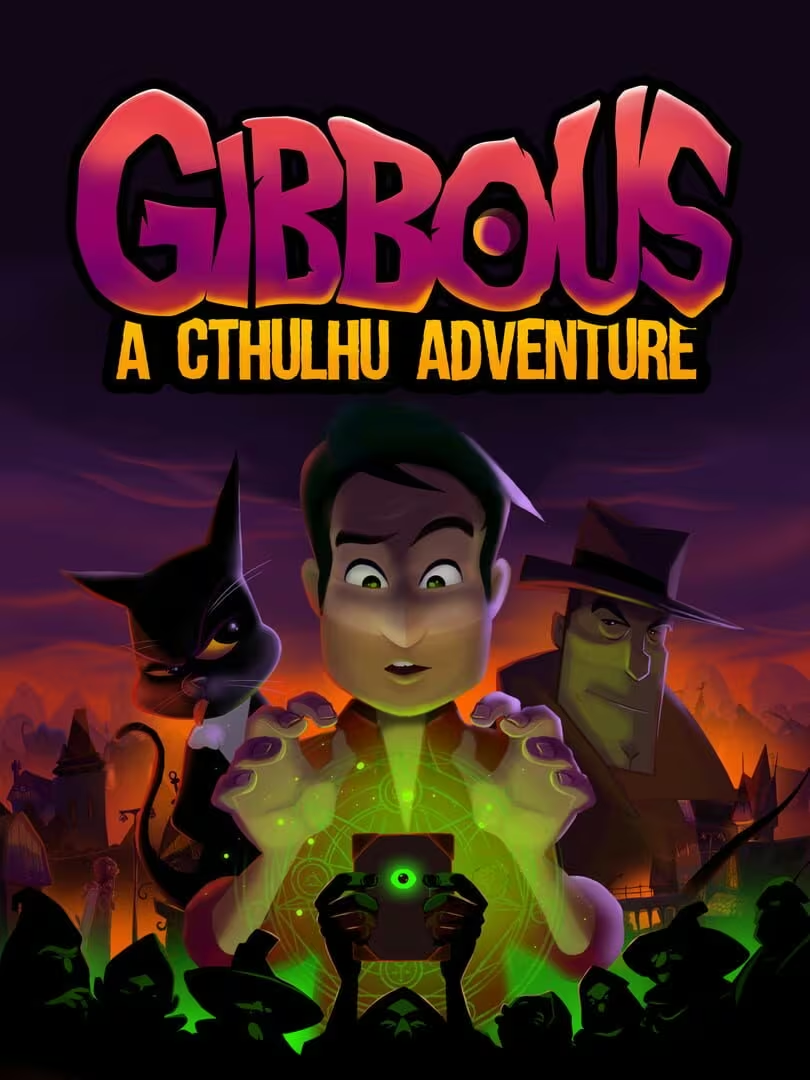
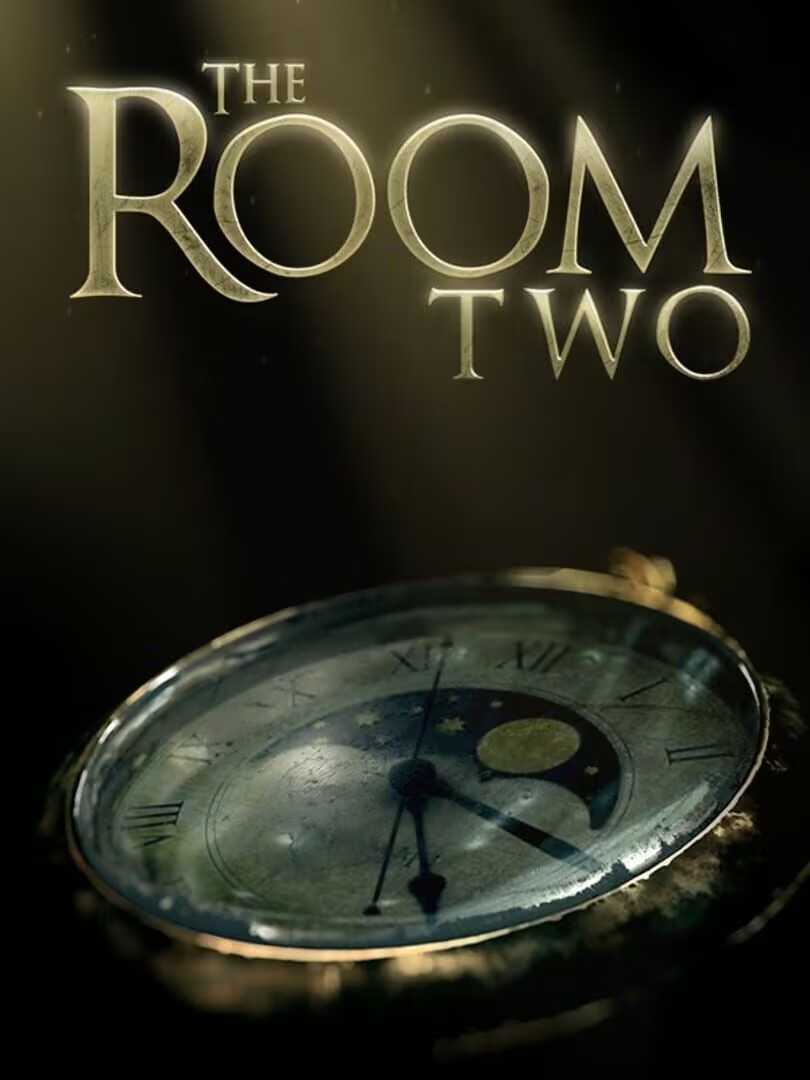
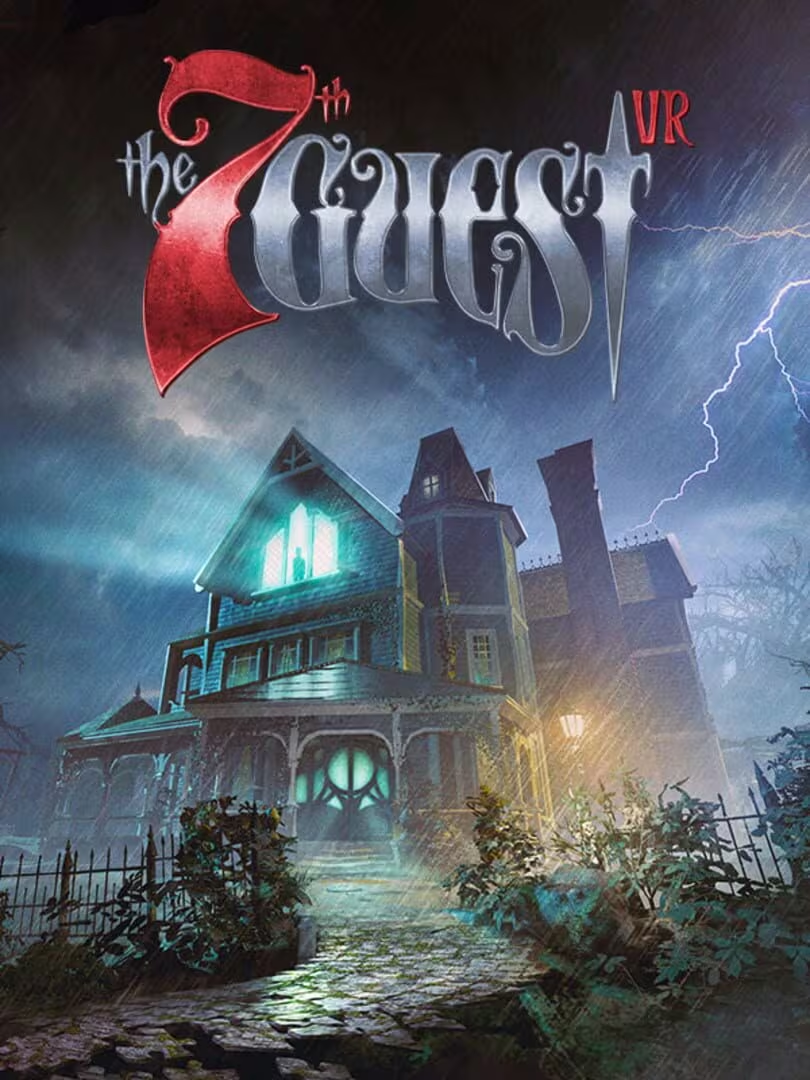
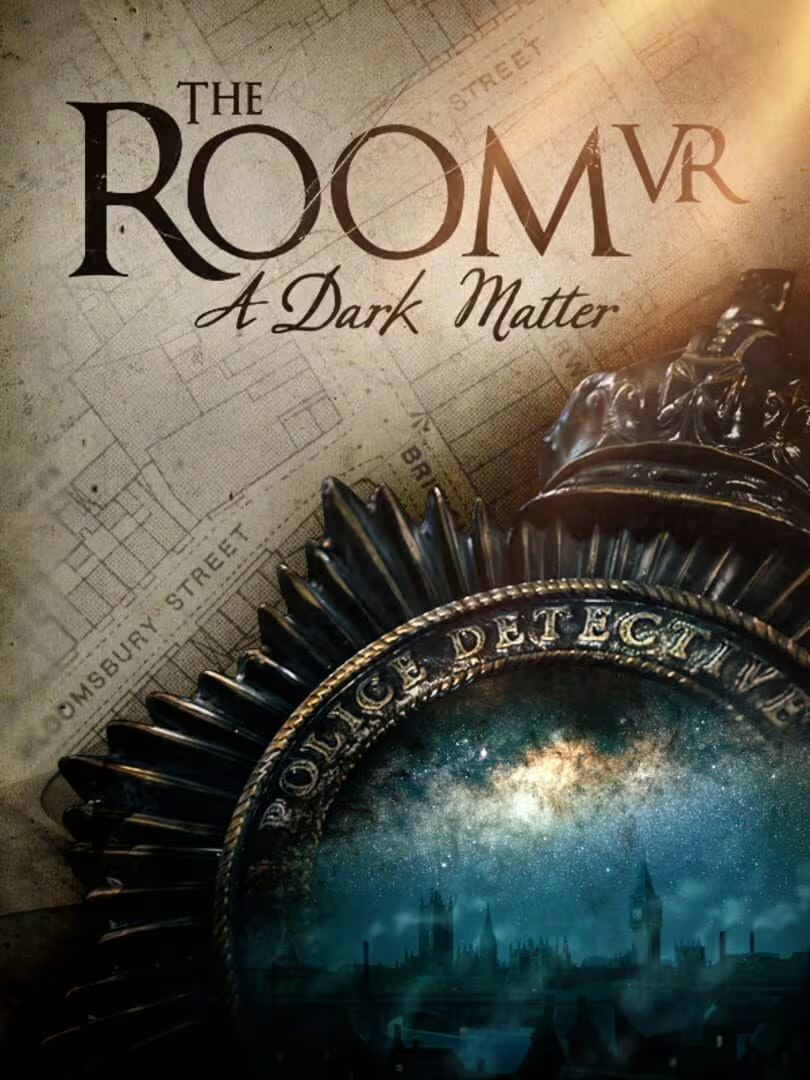
The Room Three similar games & best alternatives
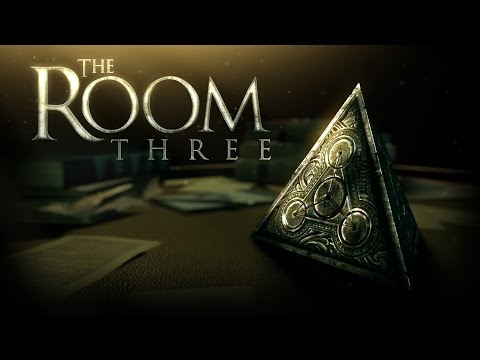
The Room Three
2018
Related articles
Quick resume
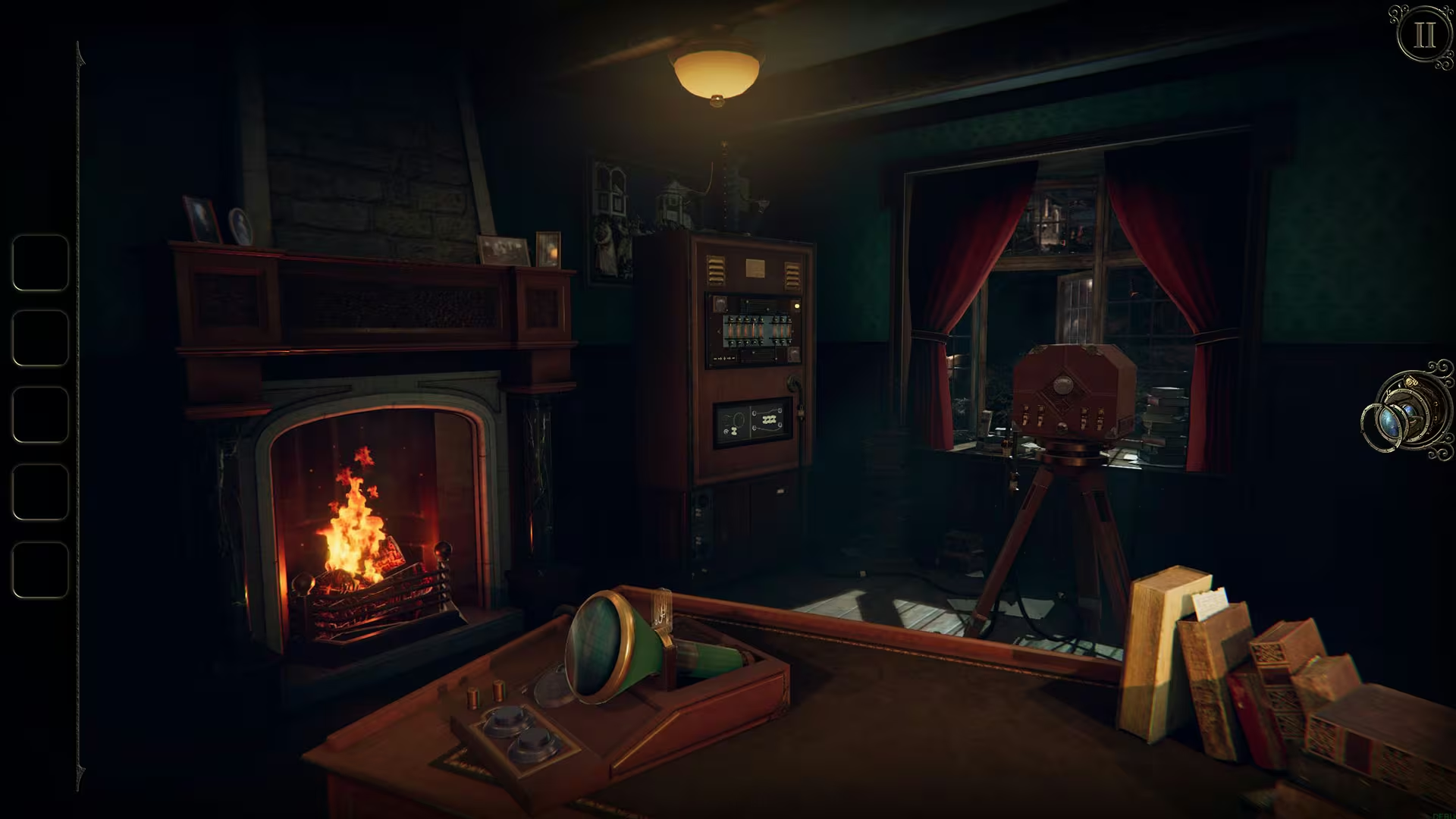
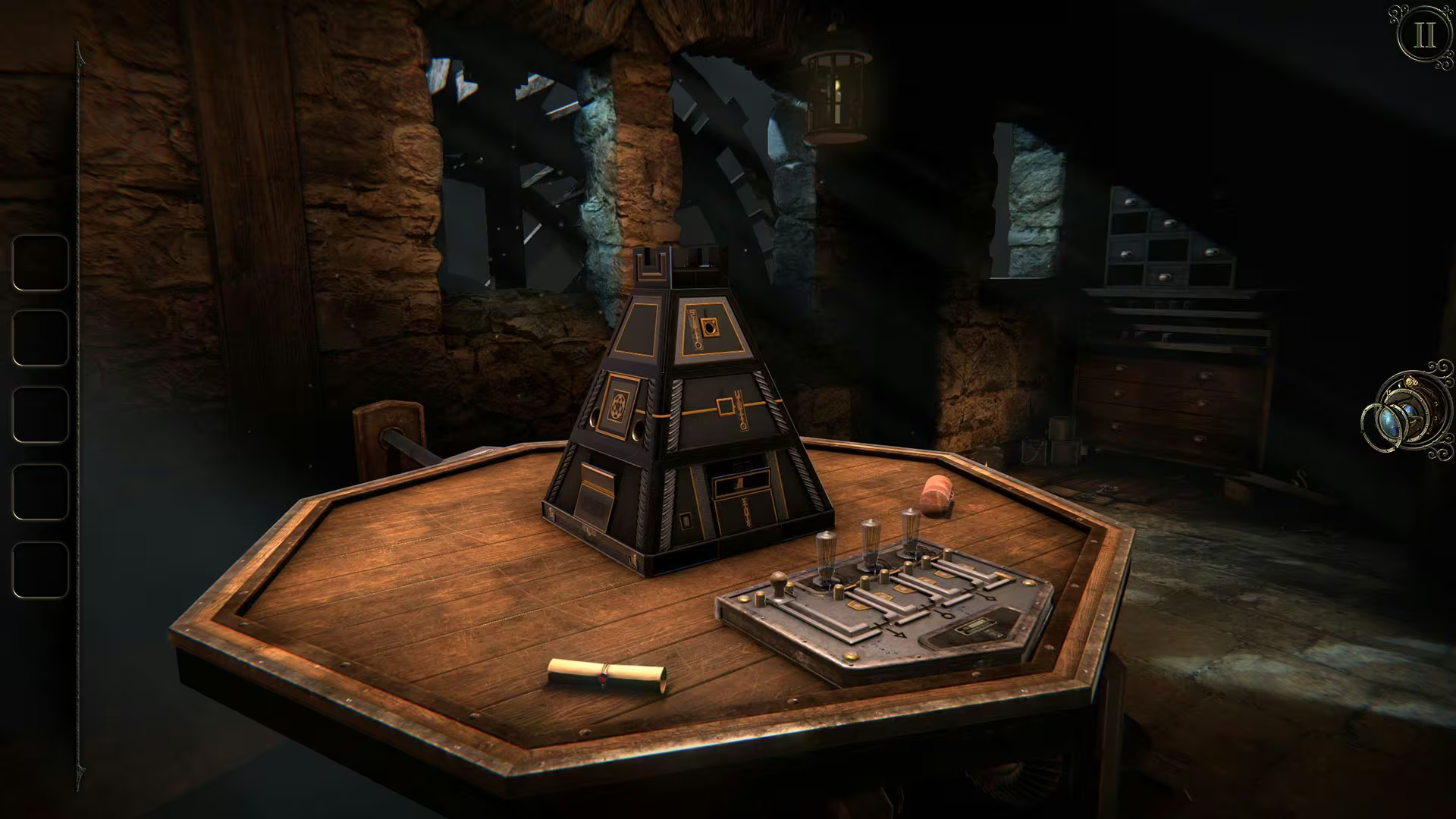
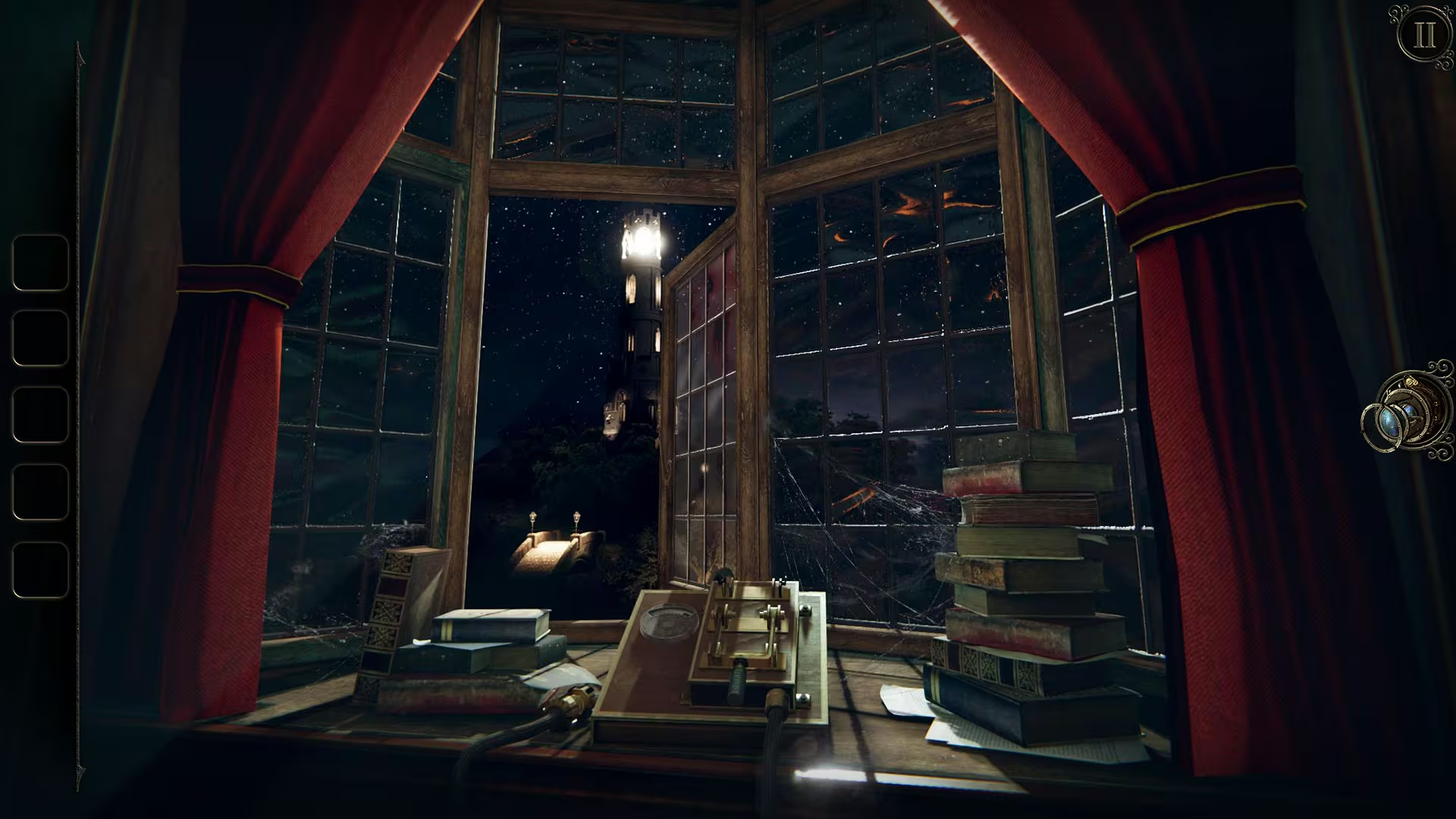
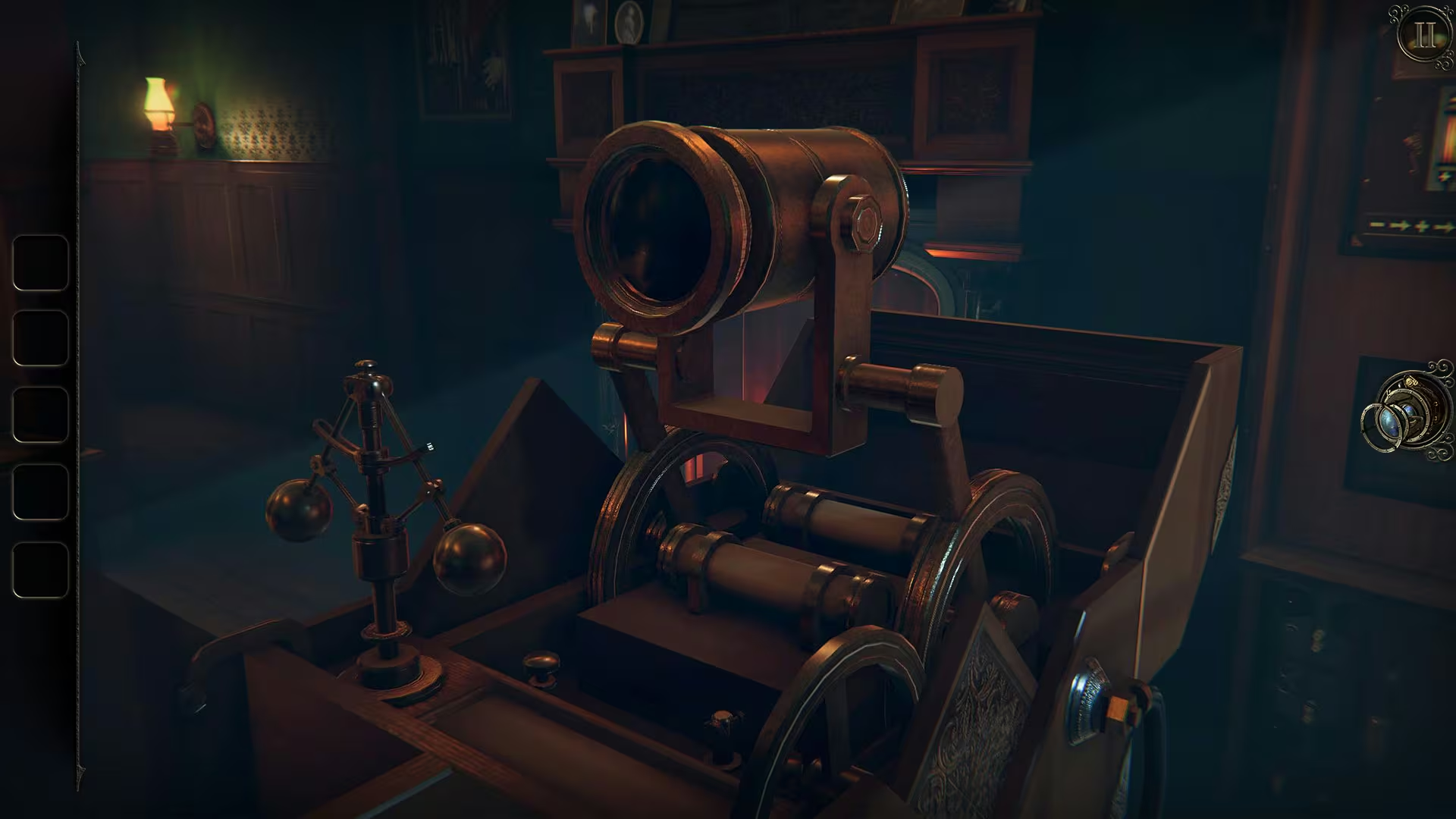
Lured to a remote island, you find yourself confined within the rooms of an ominous mansion. You must draw upon all your puzzle-solving ability to navigate a series of trials devised by a mysterious figure known only as “The Craftsman”. Do you have what it takes to escape?
Global score
96/100
Genres
Adventure, Indie, Puzzle, Point-and-click
Similar games
Pros
- Immersive atmosphere and story
- Unique and challenging puzzles
- High-quality graphics and sound
- Multiple endings and replayability
- Well-polished gameplay mechanics
Cons
- Tedious backtracking between rooms
- Some finicky controls and camera issues
- Repetitive final puzzle for multiple endings
- Lack of customization and social features
- Some puzzles may be too easy or unintuitive
Analysis
A very typical example of its motivational profile. Motivations that often define this kind of title include Survival, Violence, Fellowship, Expression. Here, the score leans higher than usual among comparable games on Thrill, Competence, Continuation.
How to use the graph
Similar games map
Each dot is a game. They are arranged from the same motivation profile as in the “Motivations” section below. Closer dots usually mean more similar reasons to play (exploration, competition, relaxation, etc.)—not that one game is “better” than another.
- Larger dot with a light outline: the game you are viewing.
- Colour: groups of games with comparable motivation patterns (statistical clusters).
- Hover a dot to see the game name; click to open its page.
- Scroll or double-click the chart to zoom out and see more games.
Why don’t the axes read like a score? This view uses t-SNE: it only keeps who is close to whom. The scales are not “good to bad” or hours played—they separate groups on the map. Read distance between dots, not the axis numbers.
Motivations
-
Autonomy4
"Players freely explore multiple rooms and choose the order of puzzle solving, with some non-linearity and multiple endings unlocked by player decisions."
-
Competence4
"Puzzles require observation, logic, and manipulation skills with progressive difficulty and a hint system to support player effectiveness."
-
Competition-4
"Single-player experience focused on personal puzzle solving without competitive or ranked elements."
-
Continuation3
"Players engage in extended play sessions with multiple endings and replayability, though some find backtracking tedious."
-
Cooperation-5
"Entirely single-player with no cooperative gameplay or multiplayer features."
-
Creativity4
"Players creatively solve unique, handcrafted puzzles and explore intricate mechanisms with some customization of approach."
-
Domination-5
"No social dominance or power dynamics; purely individual puzzle solving."
-
Escapism4
"Immersive mysterious atmosphere and story provide strong escape from reality through exploration and puzzle solving."
-
Expectation-4
"Players engage voluntarily driven by intrinsic interest in puzzles and mystery, not external pressure."
-
Experimenting3
"Players experiment with various puzzle mechanisms and explore different rooms to discover solutions."
-
Exploration4
"Game encourages exploration of multiple interconnected rooms and revisiting areas to uncover secrets and puzzles."
-
Expression-3
"Limited player expression; customization is minimal and mostly related to puzzle interaction rather than avatar or environment."
-
Fantasy3
"Game features Lovecraftian and mysterious fictional elements, creating an imaginative and eerie narrative."
-
Fellowship-5
"No social or community features; strictly solo play."
-
Growth3
"Players develop problem-solving skills and learn puzzle mechanics progressively."
-
Health-5
"Sedentary gameplay typical of puzzle adventure games with no physical activity."
-
Idle-3
"Requires focused attention and active problem solving; not designed for idle or background play."
-
Intimacy-5
"No social interaction or relationship building; purely individual experience."
-
Leadership-5
"No leadership or group management elements present."
-
Progression3
"Players progress by collecting items and unlocking new areas and endings, showing clear advancement."
-
Relaxation3
"Balanced challenge and immersive atmosphere provide a relaxing yet engaging experience."
-
Sensation3
"Visuals, sound design, and animations create satisfying sensory feedback and emotional engagement."
-
Status-5
"No social recognition or status systems; focus is on personal achievement."
-
Story3
"Narrative is present with mysterious lore and multiple endings, enhancing immersion beyond isolated puzzles."
-
Strategy3
"Puzzles require logical thinking, planning, and problem solving rather than rote actions."
-
Thrill2
"Some suspense and mystery elements create mild thrill, but overall gameplay is calm and contemplative."
-
Value4
"Highly praised for quality and content relative to price, offering good value for puzzle fans."
-
Violence-5
"No violence; gameplay centers on constructive puzzle solving."
-
Survival-5
"No survival or threat avoidance mechanics; stable puzzle environment."
Last update: 29/04/2026