The Room 4: Old Sins Thumbnail

The Room 4: Old Sins similar games & best alternatives
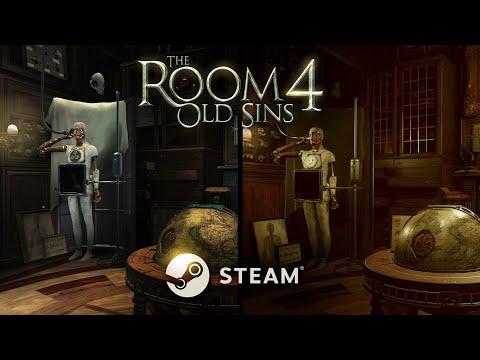
The Room 4: Old Sins

PC (Microsoft Windows), iOS, Android • 2021

Related articles

Quick resume

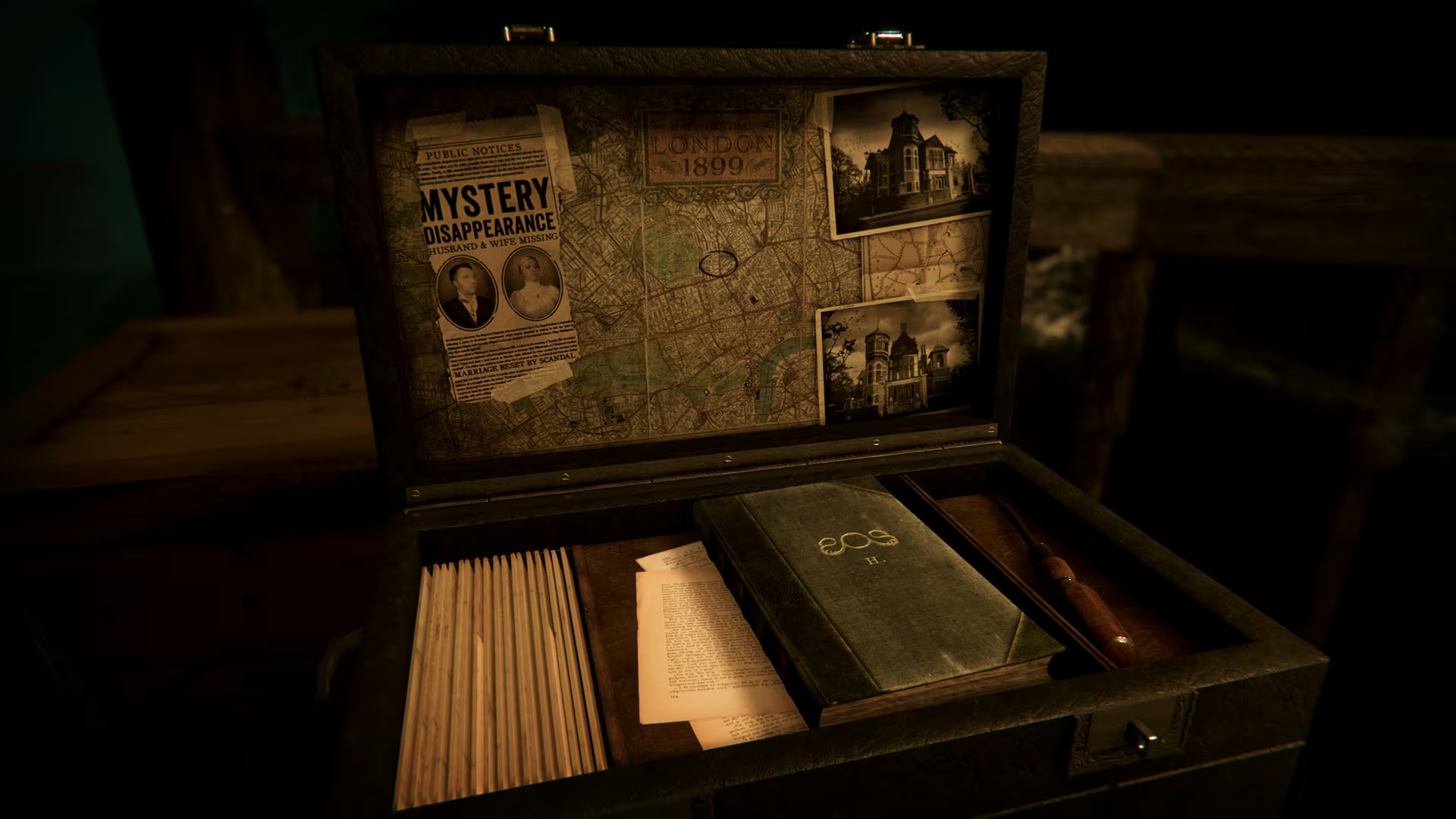
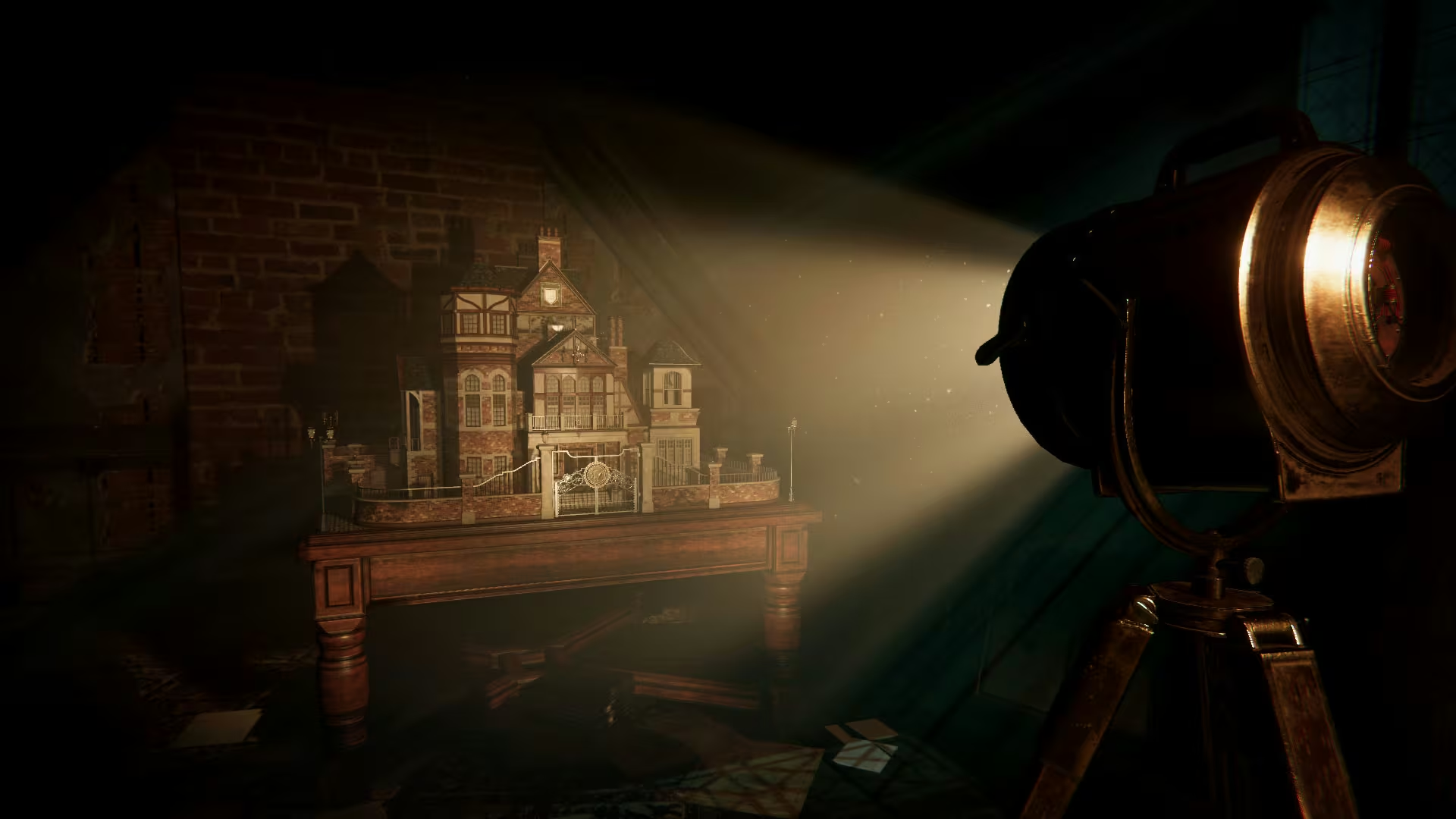
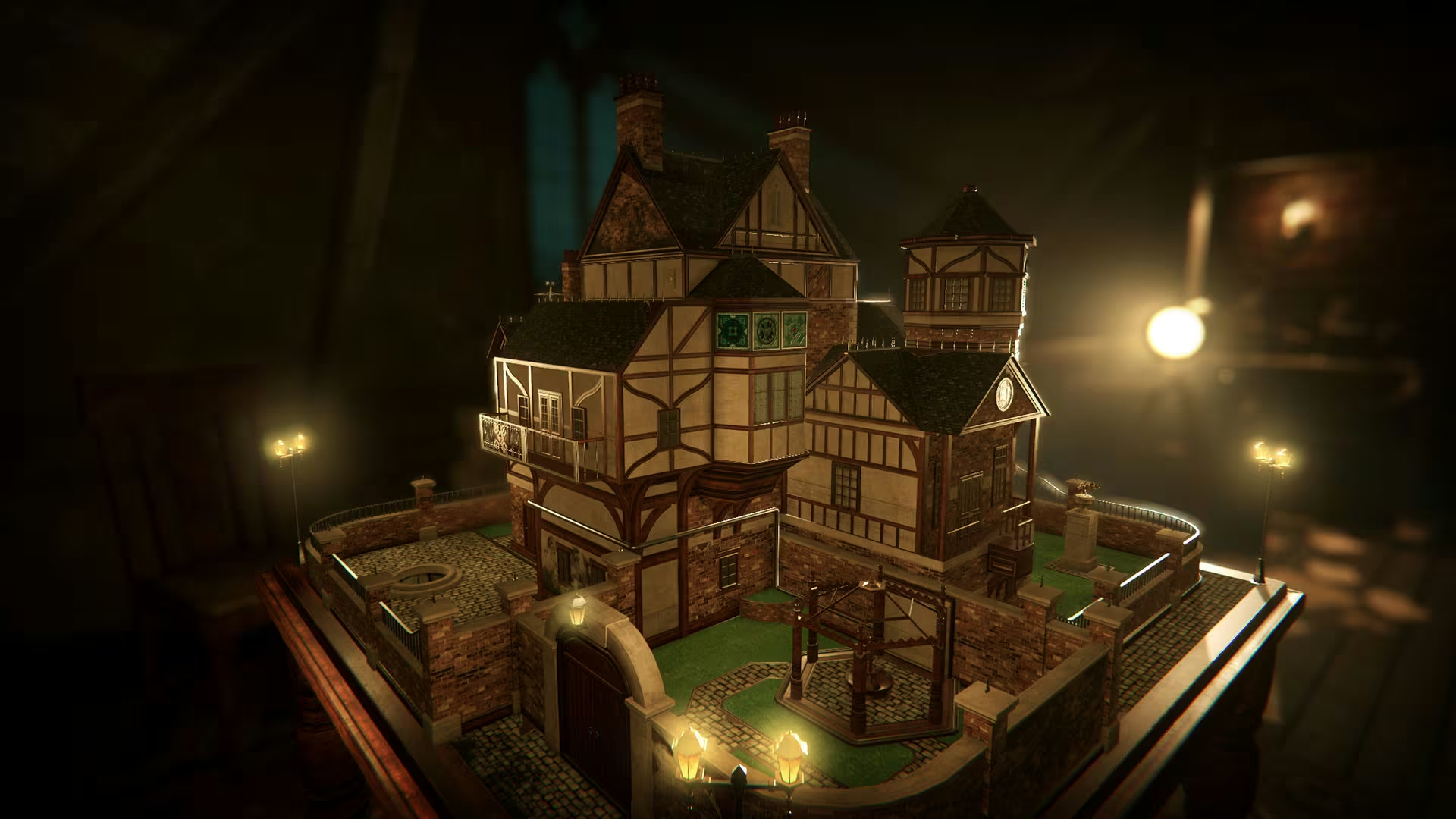
The disappearance of an ambitious engineer and his high-society wife provokes a hunt for a precious artefact. The trail leads you to the attic of their home, and the discovery of an old, peculiar dollhouse. What secrets lie within these walls?

Global score

98/100

Genres

Adventure, Puzzle, Point-and-click

Similar games

    Pros

    • Intricate and rewarding puzzles
    • Immersive lovecraftian atmosphere
    • Beautiful and detailed visuals
    • Engaging and coherent story
    • Smooth and intuitive gameplay

    Cons

    • Some control and interaction clunkiness
    • Shorter length compared to previous entries
    • Minimal customization options
    • Lack of multiplayer or social features
    • Some puzzles may feel easier or less challenging

    Analysis

    A very typical example of its motivational profile. Motivations that often define this kind of title include Survival, Violence, Fellowship, Expression. Here, the score leans higher than usual among comparable games on Thrill, Competence, Growth.

    How to use the graph
    Similar games map

    Each dot is a game. They are arranged from the same motivation profile as in the “Motivations” section below. Closer dots usually mean more similar reasons to play (exploration, competition, relaxation, etc.)—not that one game is “better” than another.

    • Larger dot with a light outline: the game you are viewing.
    • Colour: groups of games with comparable motivation patterns (statistical clusters).
    • Hover a dot to see the game name; click to open its page.
    • Scroll or double-click the chart to zoom out and see more games.

    Why don’t the axes read like a score? This view uses t-SNE: it only keeps who is close to whom. The scales are not “good to bad” or hours played—they separate groups on the map. Read distance between dots, not the axis numbers.

    Motivations

    • Autonomy
      4

      "Players freely explore and interact with puzzles and objects in a non-linear manner, choosing their own approach to solving complex mechanisms."

    • Competence
      4

      "The game offers challenging puzzles that require skillful observation and problem-solving, providing rewarding feedback upon completion."

    • Competition
      -5

      "The game is a solitary puzzle experience with no competitive elements or comparison to other players."

    • Continuation
      3

      "Players often engage in multi-hour sessions and express eagerness for future installments, indicating sustained engagement."

    • Cooperation
      -5

      "The gameplay is designed for solo play with no cooperative or multiplayer features."

    • Creativity
      3

      "Players manipulate and combine objects creatively to solve puzzles, though within the predefined game structure."

    • Domination
      -5

      "Interactions are personal and puzzle-focused without exerting control or superiority over others."

    • Escapism
      4

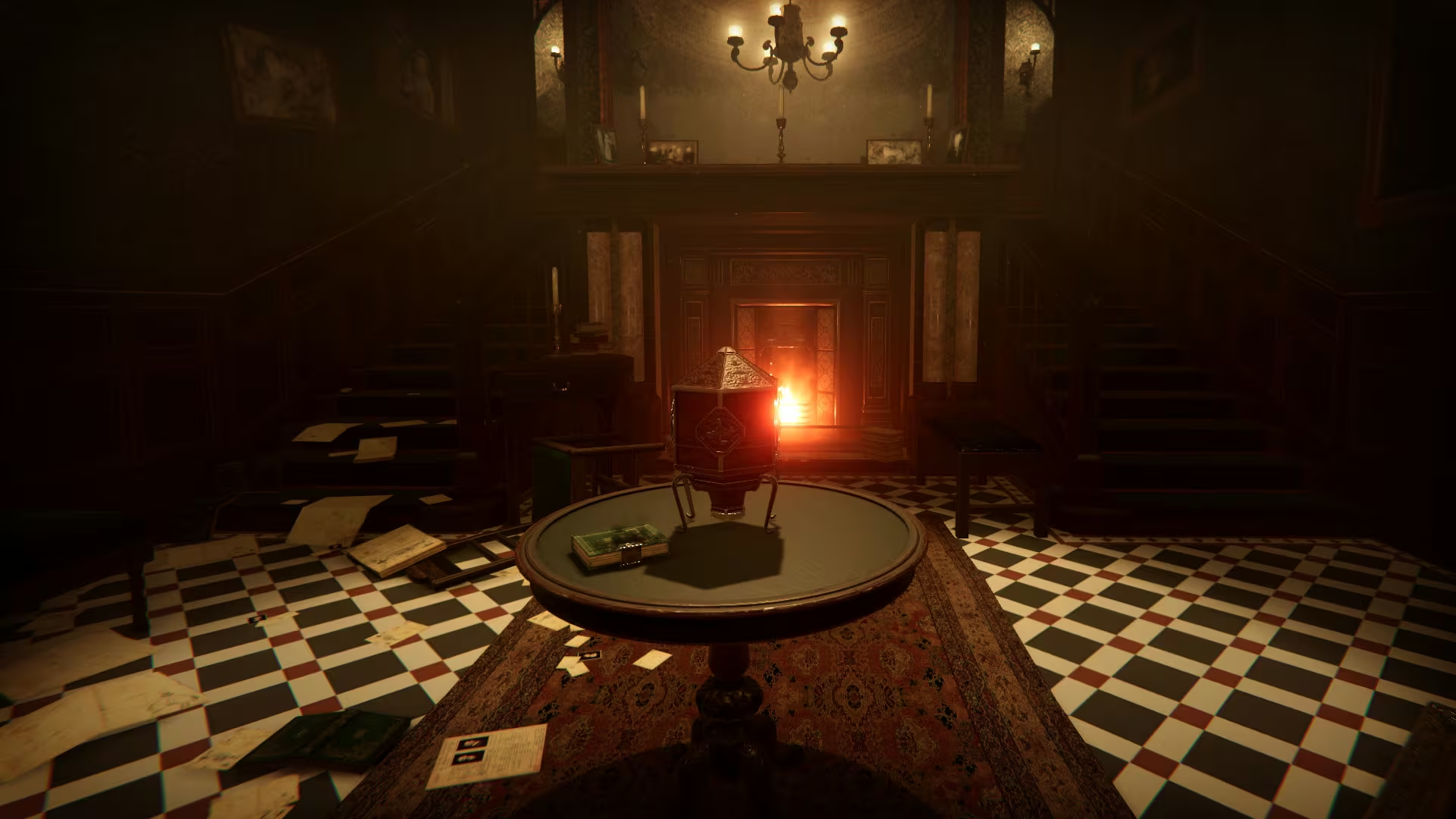
      "The immersive atmosphere, mysterious story, and engaging puzzles provide a strong escape from reality."

    • Expectation
      -4

      "Players engage voluntarily out of intrinsic interest and enjoyment rather than obligation or external pressure."

    • Experimenting
      3

      "The game encourages exploration of puzzle mechanics and testing different interactions to progress."

    • Exploration
      3

      "Players discover new rooms, hidden objects, and secrets within the dollhouse and mansion environments."

    • Expression
      -3

      "Customization is minimal; players interact with fixed environments and objects without personalizing appearance or settings."

    • Fantasy
      3

      "The game features a surreal, Lovecraftian horror atmosphere with imaginative fiction elements and mystical storylines."

    • Fellowship
      -5

      "The experience is solitary with no social or community interaction."

    • Growth
      4

      "Players develop problem-solving skills and learn puzzle mechanics progressively throughout the game."

    • Health
      -5

      "The game involves sedentary play with no physical activity or health-related features."

    • Idle
      -4

      "Requires focused attention and continuous engagement to solve puzzles; not suited for passive or background play."

    • Intimacy
      -5

      "No social or emotional connections are formed; the game is a solo puzzle experience."

    • Leadership
      -5

      "No leadership or group management roles exist; gameplay is individual and self-directed."

    • Progression
      3

      "Players progress by unlocking new rooms and acquiring puzzle pieces, advancing through the story and environment."

    • Relaxation
      3

      "The game provides a balanced challenge with a relaxing atmosphere and satisfying puzzle-solving flow."

    • Sensation
      3

      "High-quality visuals, sound design, and tactile feedback create an engaging sensory experience."

    • Status
      -5

      "Achievements and progress are personal with no social recognition or status elements."

    • Story
      3

      "The game features a mysterious, albeit light, narrative that complements the puzzles and atmosphere."

    • Strategy
      3

      "Solving puzzles requires logical thinking, planning, and problem-solving skills."

    • Thrill
      2

      "The suspenseful and eerie atmosphere provides mild tension and excitement without high-risk elements."

    • Value
      4

      "Players perceive good value for the price with a satisfying length and quality of content."

    • Violence
      -5

      "The game focuses on constructive puzzle-solving with no combat or destructive elements."

    • Survival
      -5

      "There are no survival or threat-avoidance mechanics; the environment is stable and safe."

    Last update: 29/04/2026