Sudden Strike 4 Thumbnail

Sudden Strike 4 similar games & best alternatives
Sudden Strike 4

PC (Microsoft Windows), PlayStation 4, Mac, Linux • 2017

Related articles

Quick resume

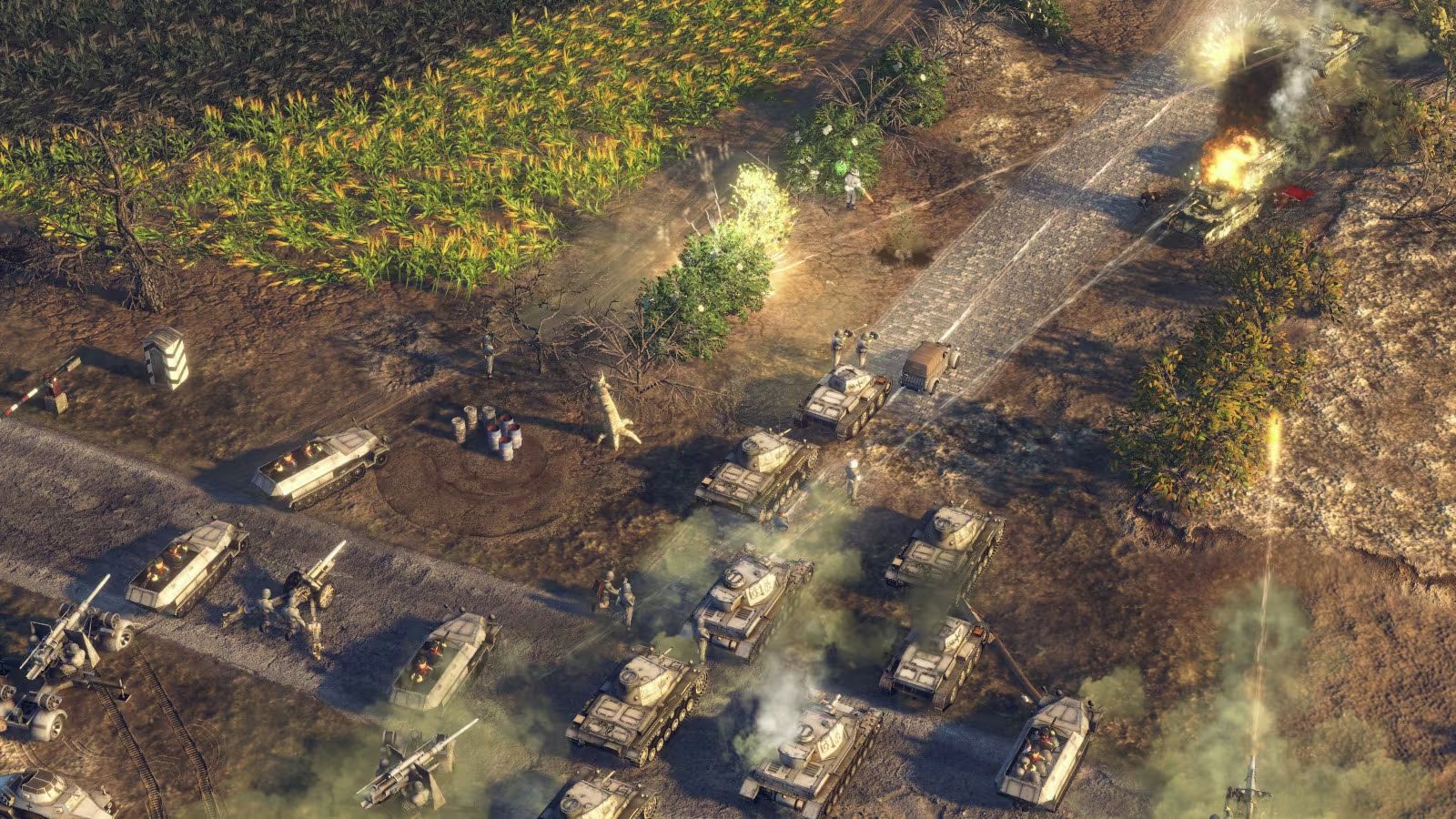
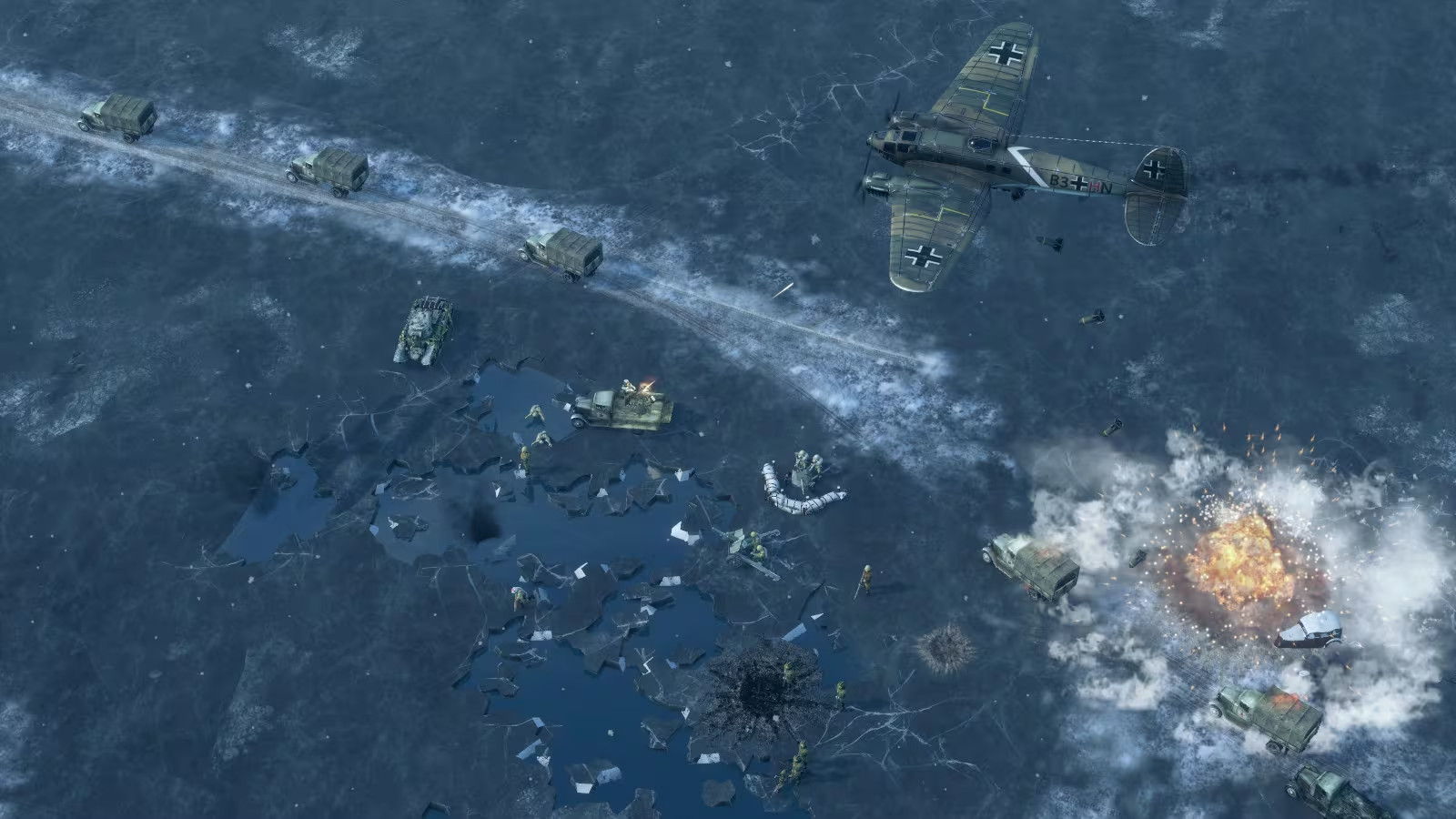
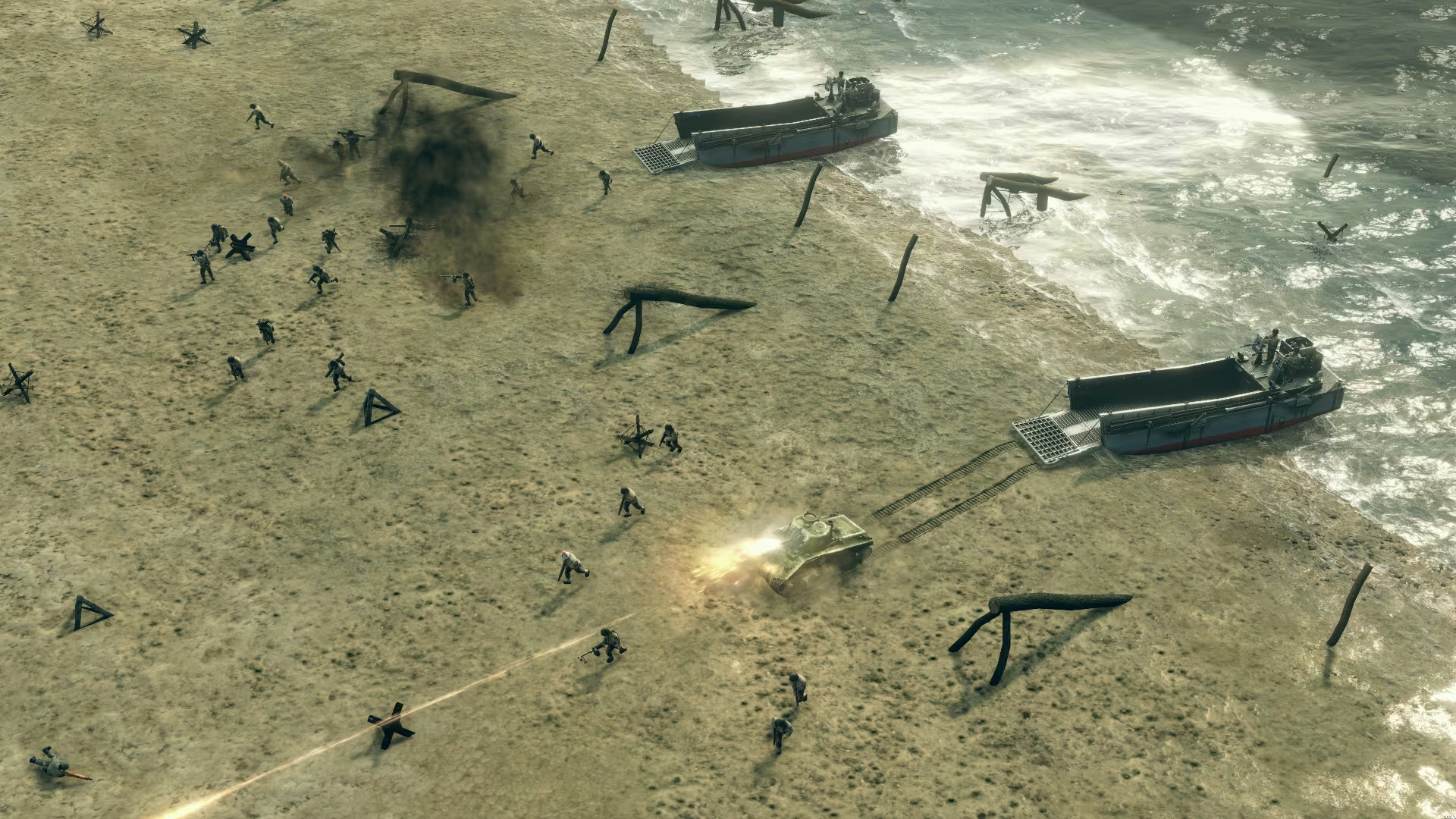
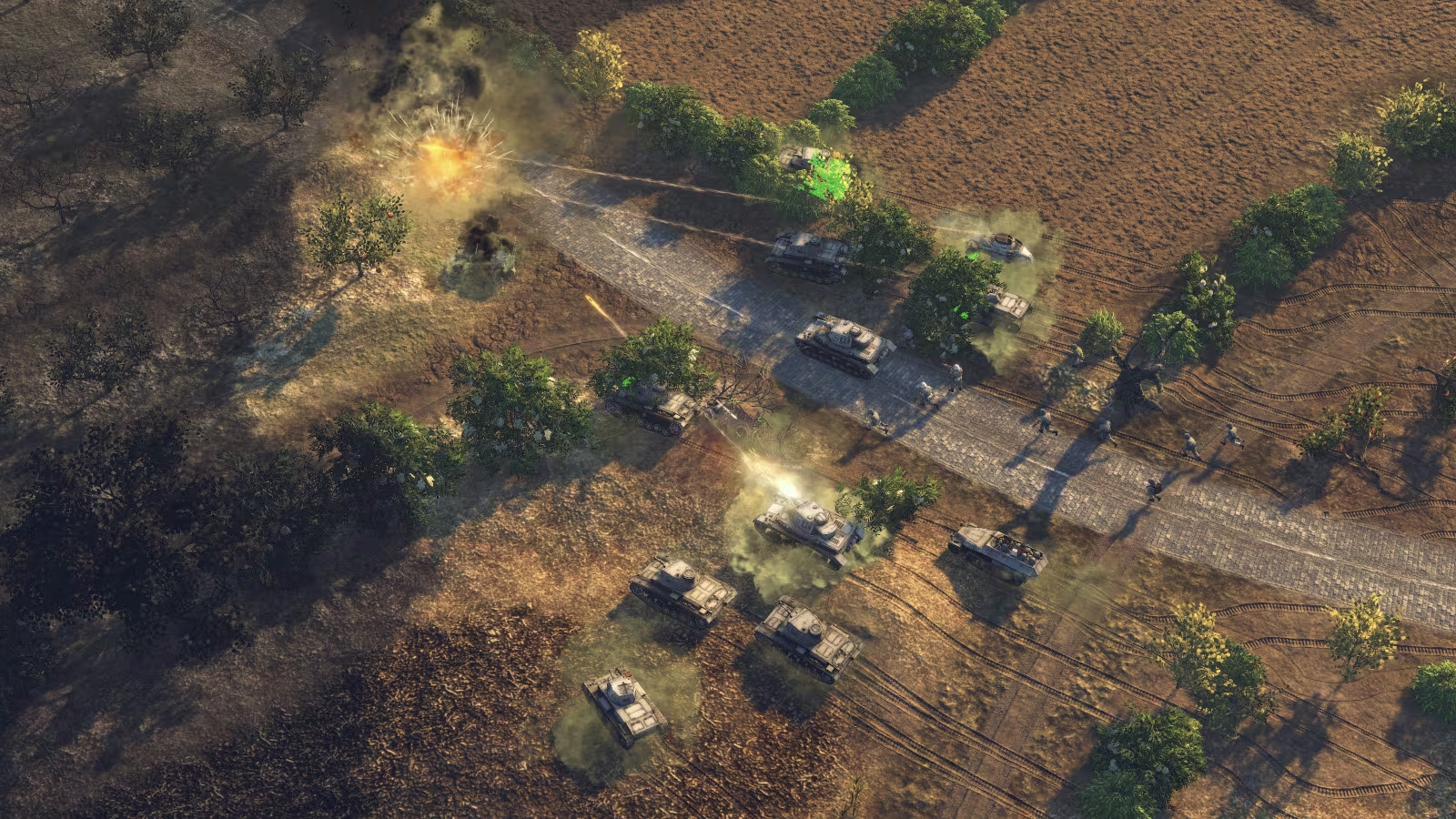
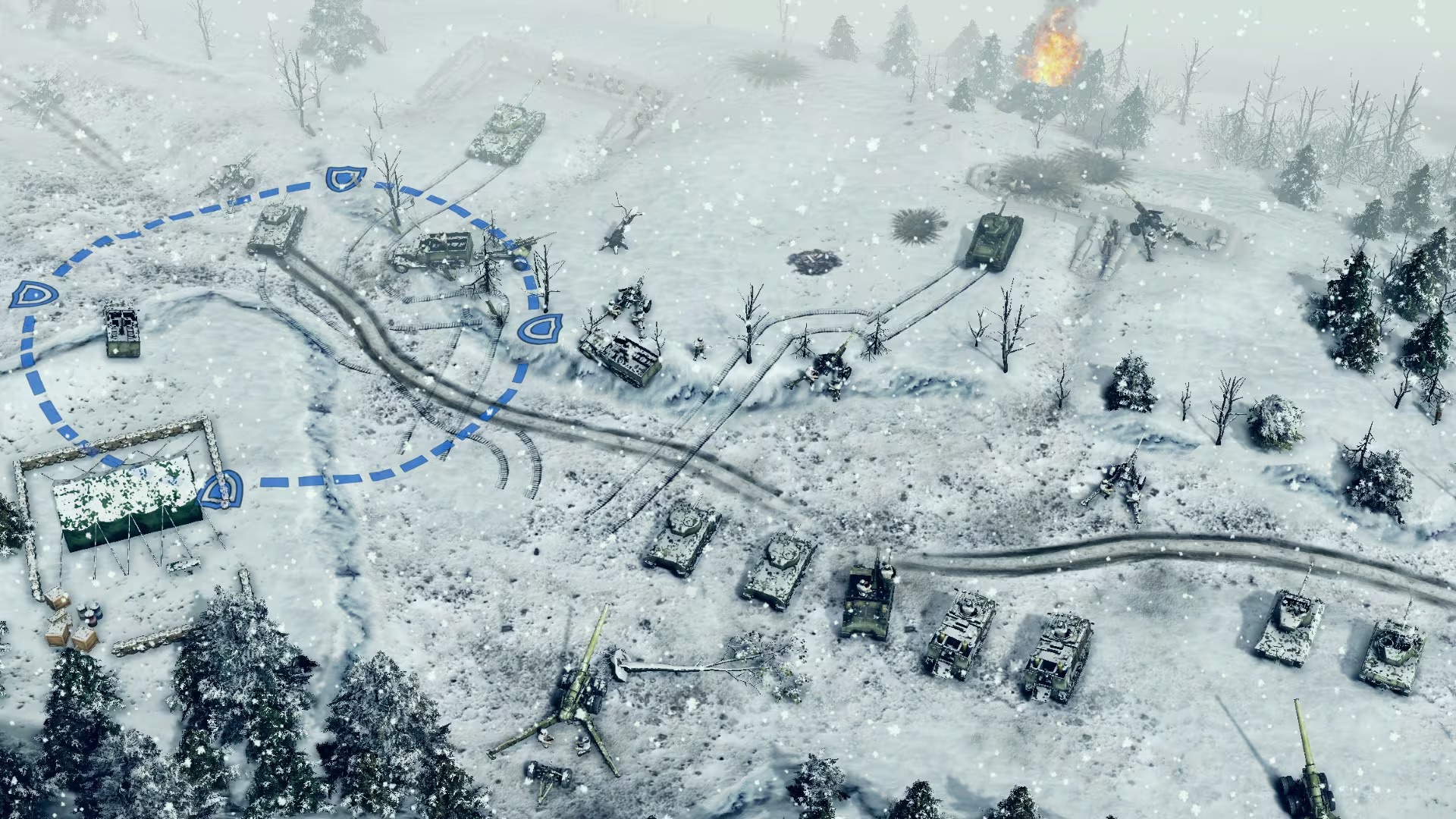
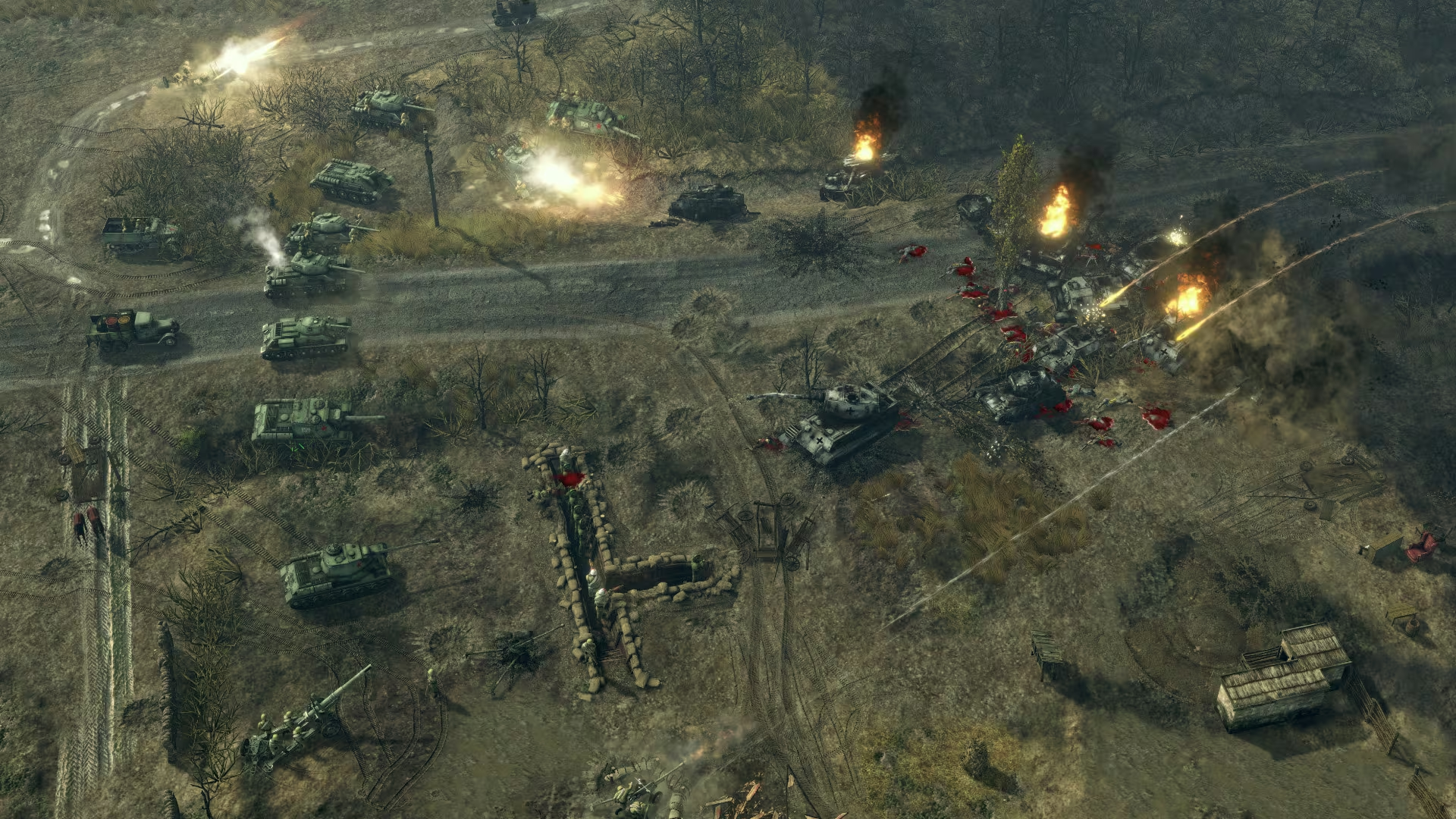
Sudden Strike is back! The beloved Real Time Strategy series returns, this time with bigger battlefields, more units, better graphics, new scenarios and legendary commanders – making Sudden Strike 4 more tactical and realistic than ever before!

Global score

78/100

Genres

Strategy, Real Time Strategy (RTS), Simulator

Similar games

    Pros

    • Historical accuracy and immersive campaigns
    • Detailed graphics and sound effects
    • Tactical depth and micromanagement
    • Multiple doctrines and commanders
    • Good value with dlc on sale

    Cons

    • Limited and weak multiplayer
    • Some tedious supply and pathfinding issues
    • Small maps and limited unit variety
    • Repetitive mission structure
    • Lack of advanced modding and customization

    Analysis

    Less representative of its motivational profile, with noticeable differences. Motivations that often define this kind of title include Leadership, Survival, Violence, Strategy. It leans lower than usual among comparable games on Fantasy, Creativity, Progression.

    How to use the graph
    Similar games map

    Each dot is a game. They are arranged from the same motivation profile as in the “Motivations” section below. Closer dots usually mean more similar reasons to play (exploration, competition, relaxation, etc.)—not that one game is “better” than another.

    • Larger dot with a light outline: the game you are viewing.
    • Colour: groups of games with comparable motivation patterns (statistical clusters).
    • Hover a dot to see the game name; click to open its page.
    • Scroll or double-click the chart to zoom out and see more games.

    Why don’t the axes read like a score? This view uses t-SNE: it only keeps who is close to whom. The scales are not “good to bad” or hours played—they separate groups on the map. Read distance between dots, not the axis numbers.

    Motivations

    • Autonomy
      3

      "Players can choose different commanders and doctrines, plan strategies, and control individual units with some freedom, but missions are somewhat scripted and have limited unit reinforcements."

    • Competence
      3

      "Game requires tactical thinking, micromanagement, and skillful unit control, though some tasks like supply management can be tedious."

    • Competition
      -2

      "Focus is mostly on single-player campaigns and personal challenge; multiplayer exists but is weak and has low player base."

    • Continuation
      2

      "Players report spending many hours in campaigns and DLCs, though some mention losing interest due to repetitive missions or weak multiplayer."

    • Cooperation
      -3

      "Game primarily designed for single-player tactical control; multiplayer is limited and not a major focus."

    • Creativity
      1

      "Players can customize commander perks and choose different doctrines, but mission structure and unit types are fixed with limited modding."

    • Domination
      -4

      "Interactions are balanced and respectful; no evidence of power imposition or trash talk."

    • Escapism
      3

      "Provides historical immersion and tactical challenge, allowing players to escape into WWII battles."

    • Expectation
      -3

      "Players engage voluntarily out of interest and nostalgia; no indication of obligation or pressure."

    • Experimenting
      2

      "Some experimentation with different doctrines and tactics is encouraged, but mission optimal strategies can be repetitive."

    • Exploration
      1

      "Maps have some hidden areas and tactical opportunities, but largely scripted and familiar environments."

    • Expression
      1

      "Limited customization via commander perks and unit skins; no avatar personalization."

    • Fantasy
      -4

      "Strong focus on historical realism and plausible WWII scenarios."

    • Fellowship
      -3

      "Community exists but small; gameplay mainly solo with limited social interaction."

    • Growth
      3

      "Players learn unit tactics, micromanagement, and strategic planning; some skill progression via perks."

    • Health
      -4

      "Sedentary gameplay typical of RTS; no physical activity involved."

    • Idle
      -3

      "Requires focused attention and micromanagement during missions."

    • Intimacy
      -4

      "Minimal social or emotional connections; interactions are surface-level."

    • Leadership
      3

      "Players lead units and choose commanders with unique perks, guiding tactical decisions."

    • Progression
      2

      "Players unlock perks and gain stars for missions, but unit upgrades and reinforcements are limited."

    • Relaxation
      0

      "Mixed experience; some find tactical gameplay satisfying and immersive, others find it slow or tedious."

    • Sensation
      2

      "Visual and sound effects are praised for immersion and excitement."

    • Status
      -3

      "Little emphasis on social recognition or ranking; multiplayer is minor and inactive."

    • Story
      3

      "Campaigns have historical narrative, mission briefings, and cinematic elements enhancing immersion."

    • Strategy
      4

      "Strong emphasis on tactical planning, unit positioning, and resource management."

    • Thrill
      2

      "Tactical tension and challenge provide moments of suspense and excitement."

    • Value
      3

      "Players feel good value especially when purchased with DLC on sale; content is substantial."

    • Violence
      4

      "Combat and destruction are central gameplay elements with detailed damage and effects."

    • Survival
      3

      "Players must manage limited resources and avoid unit losses to succeed."

    Last update: 29/04/2026