Feign similar games & best alternatives
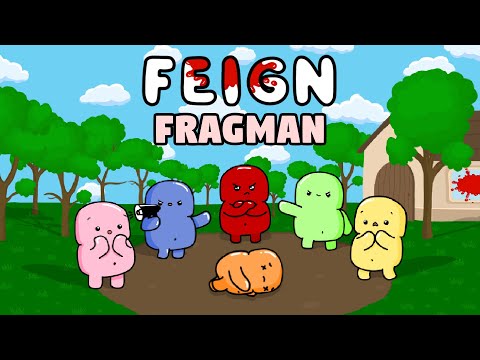
Feign
2025
Related articles
Quick resume
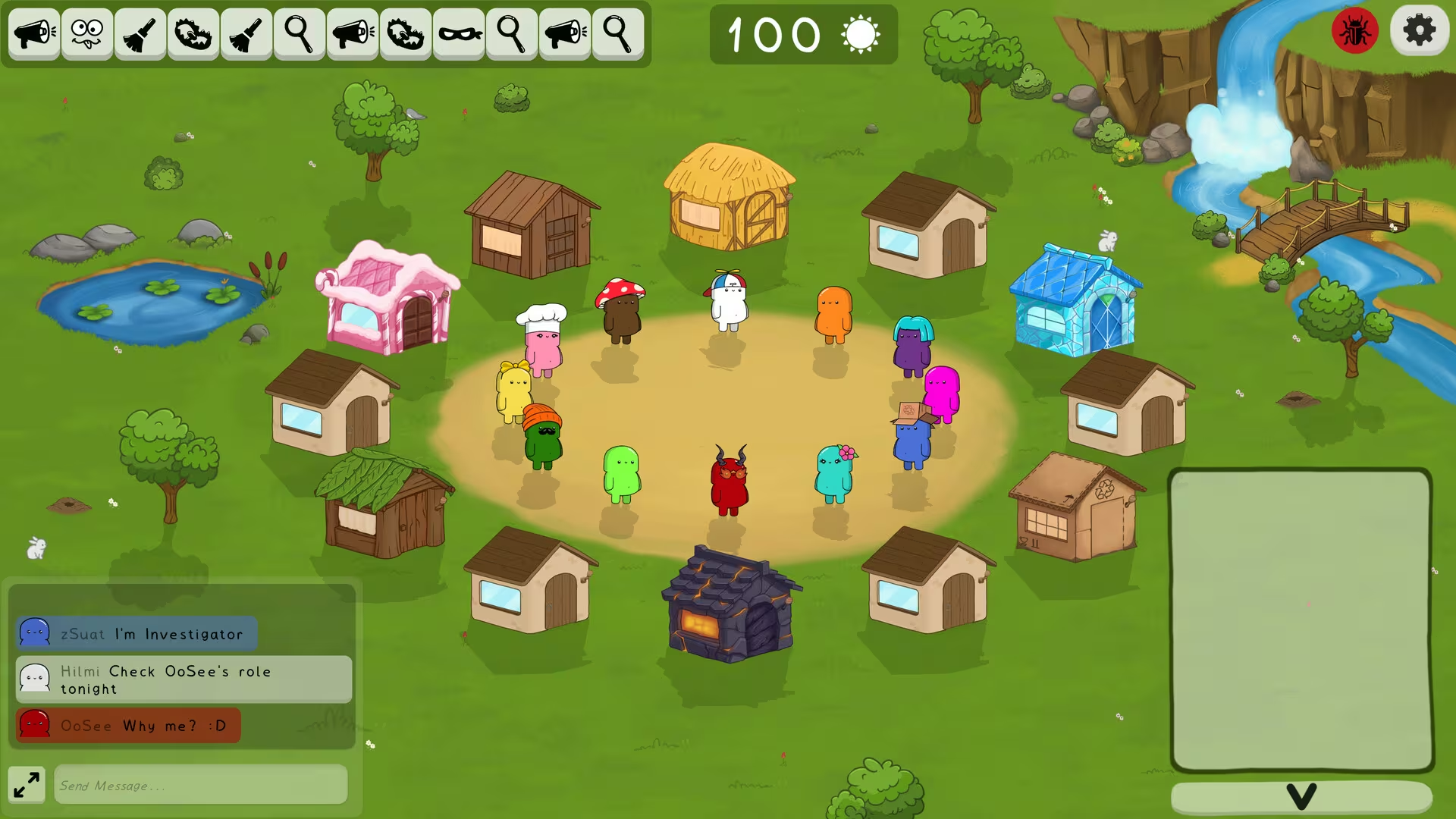
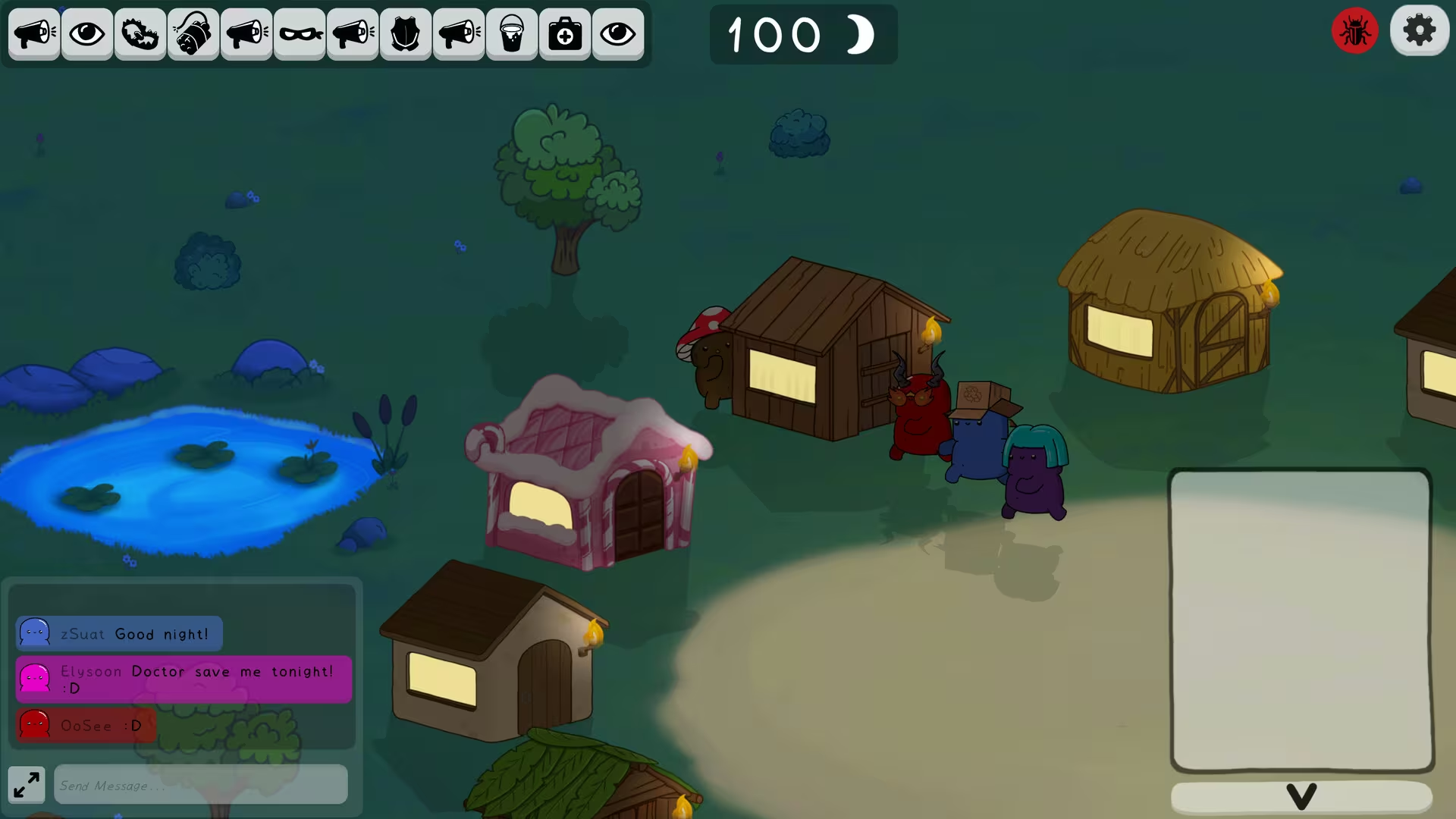
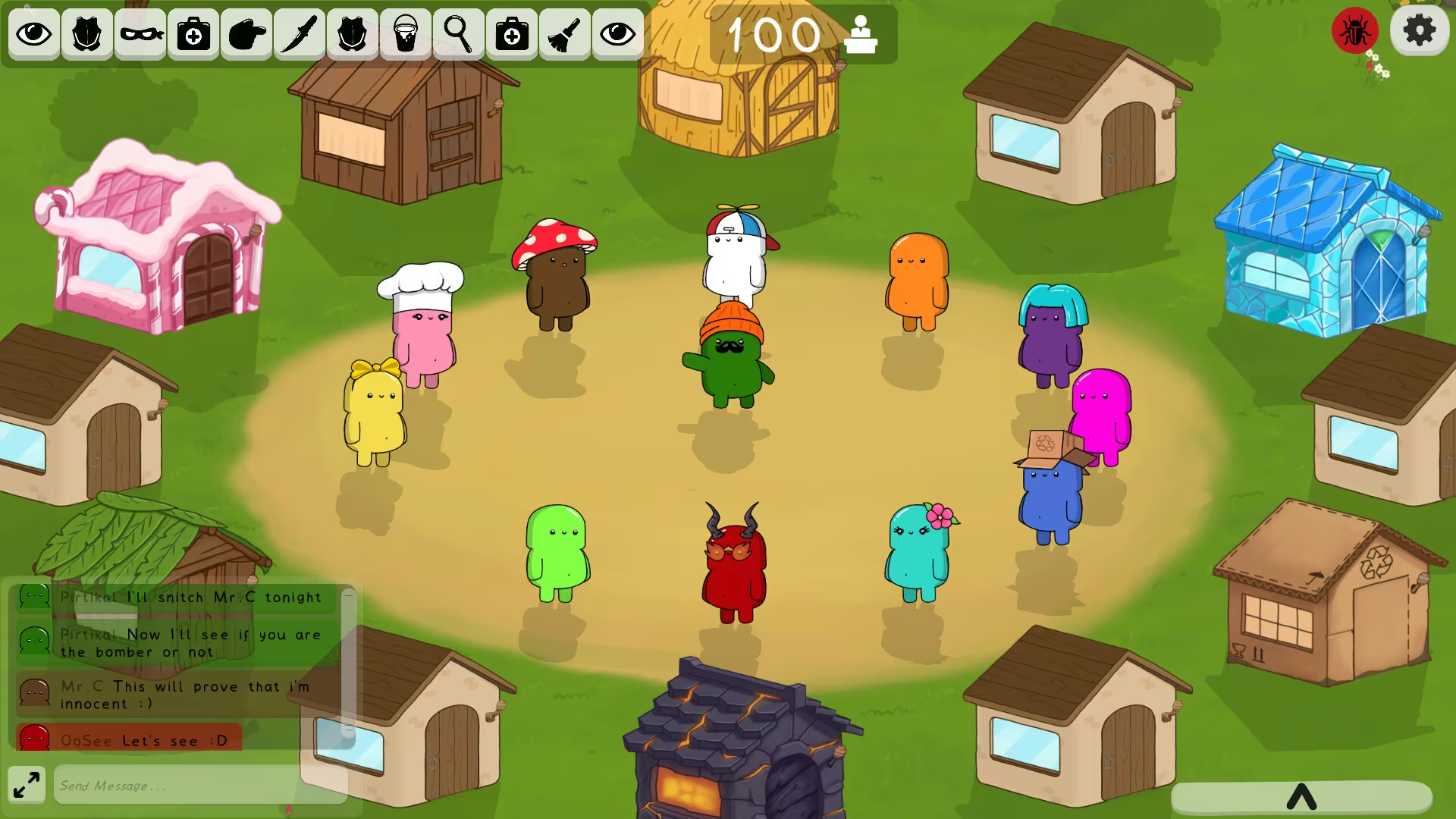
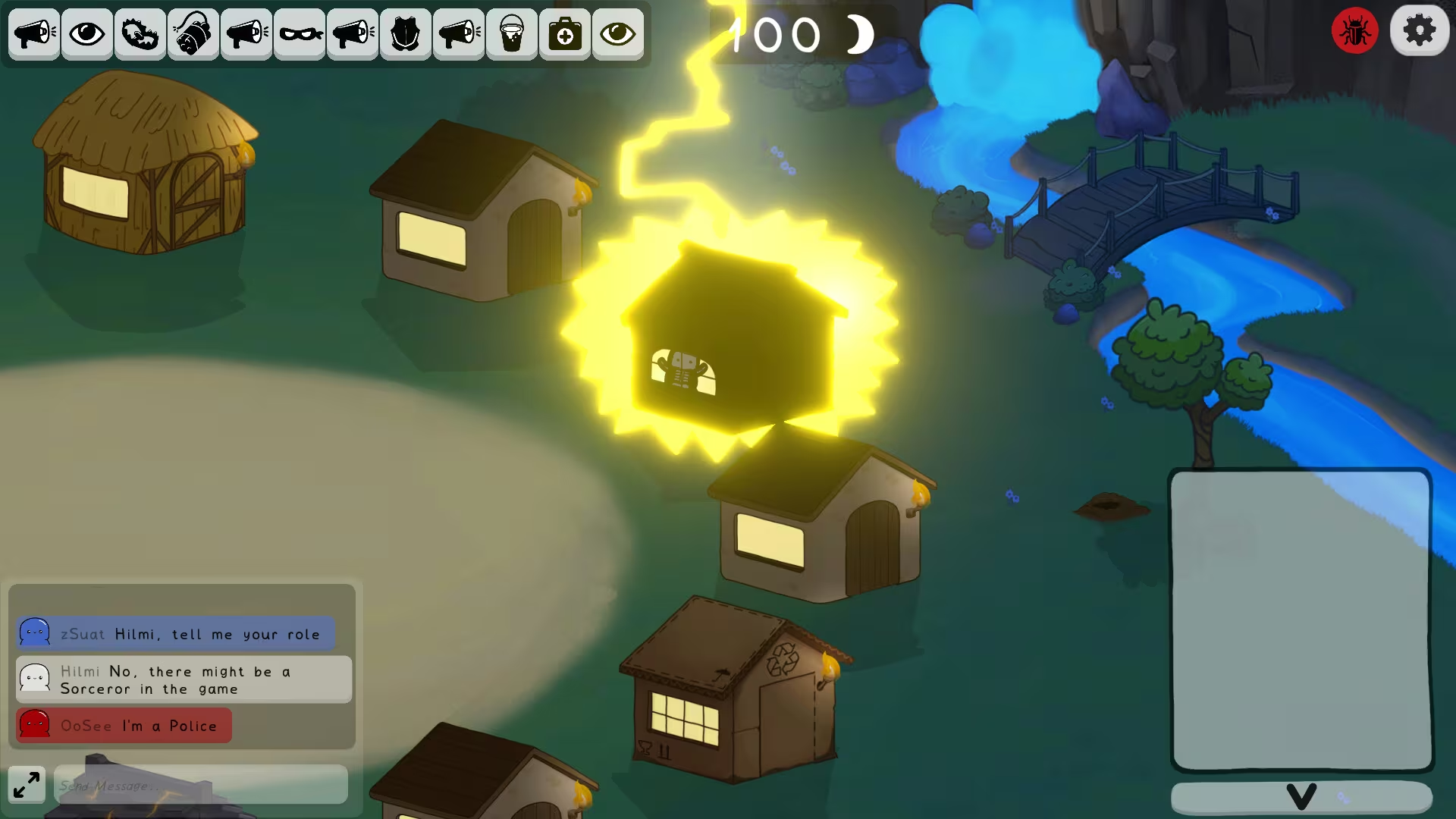
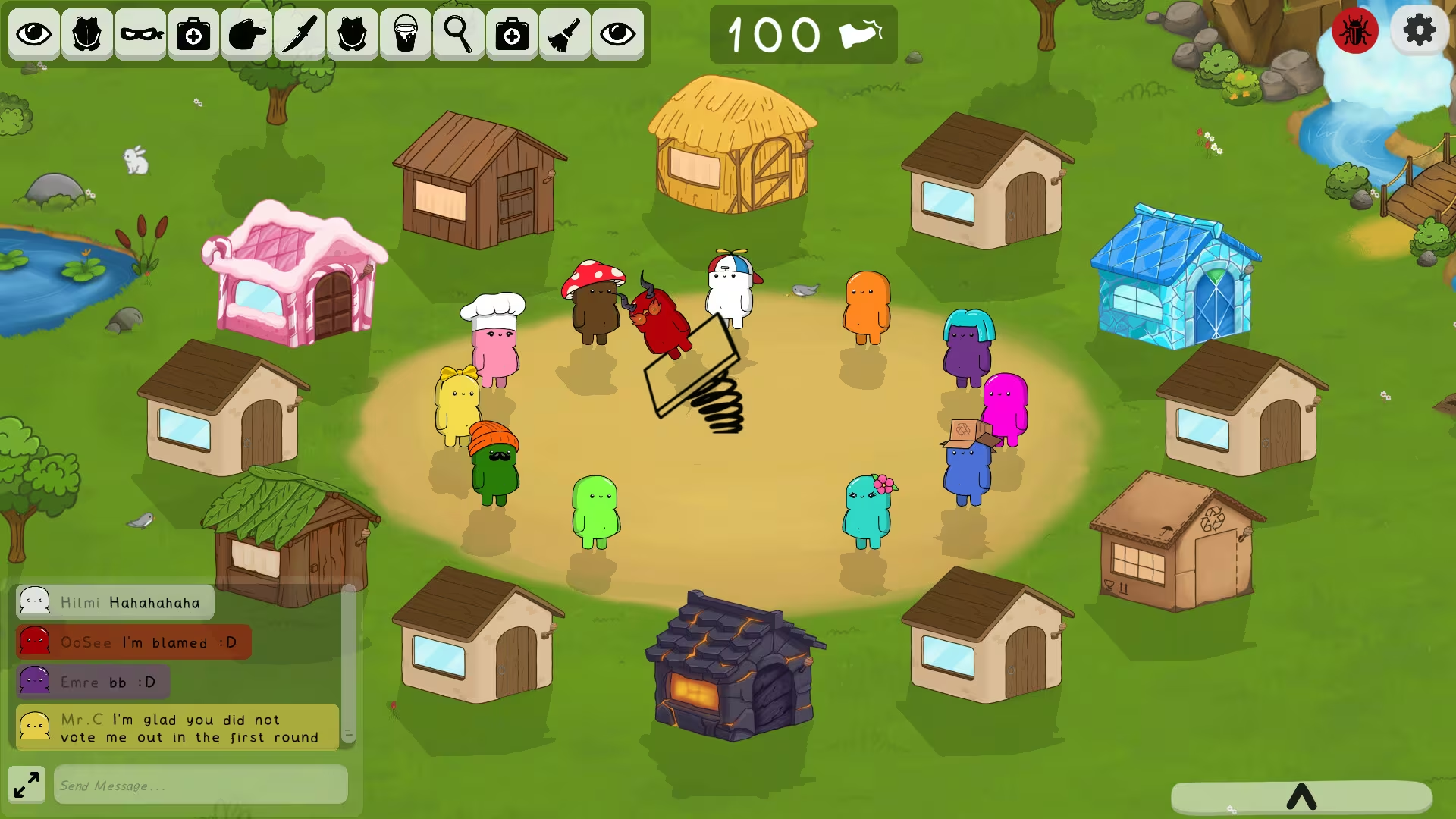
Feign is a role-playing game with a maximum of 12 players that takes place in a small town where innocents, imposters, and neutrals live together. You use your role at night and send a person from the village in the morning. 🤪
Global score
91/100
Genres
Casual, Indie, Role-playing (RPG), Strategy
Similar games
Pros
- Engaging social deduction gameplay with unique roles
- Fun and chaotic experience especially with friends
- Affordable price and low system requirements
- Good cross-platform support including linux and steam deck
- Active and positive community in some regions
Cons
- Very limited english-speaking player base and lobbies
- Frequent language barriers and regional segregation
- No built-in voice chat, reliance on external apps
- Lack of progression system and persistent rewards
- Occasional toxic or immature player behavior in public lobbies
Analysis
Less representative of its motivational profile, with noticeable differences. Motivations that often define this kind of title include Competition, Fellowship, Domination, Status. It leans lower than usual among comparable games on Progression, Status, Story.
How to use the graph
Similar games map
Each dot is a game. They are arranged from the same motivation profile as in the “Motivations” section below. Closer dots usually mean more similar reasons to play (exploration, competition, relaxation, etc.)—not that one game is “better” than another.
- Larger dot with a light outline: the game you are viewing.
- Colour: groups of games with comparable motivation patterns (statistical clusters).
- Hover a dot to see the game name; click to open its page.
- Scroll or double-click the chart to zoom out and see more games.
Why don’t the axes read like a score? This view uses t-SNE: it only keeps who is close to whom. The scales are not “good to bad” or hours played—they separate groups on the map. Read distance between dots, not the axis numbers.
Motivations
-
Autonomy4
"Players have freedom to choose roles and make strategic decisions during discussions and voting phases."
-
Competence3
"Game requires skill in deception, deduction, and social manipulation, though roles are simpler than similar games."
-
Competition4
"Players compete to survive and achieve unique role objectives, often involving outwitting others."
-
Continuation2
"Players enjoy repeated sessions especially with friends, but limited player base and language barriers reduce habitual play."
-
Cooperation3
"Cooperation is essential among innocents to identify traitors, though betrayal and deception are core mechanics."
-
Creativity2
"Some creativity in role strategies and social manipulation, but limited customization beyond role selection."
-
Domination2
"Players seek to dominate by deceiving or eliminating others, though interactions are balanced by social deduction."
-
Escapism3
"Players use the game as a social and mental escape, enjoying bluffing and paranoia away from real life."
-
Expectation-4
"Players engage voluntarily for fun and social interaction, not out of obligation or pressure."
-
Experimenting3
"Varied roles and unpredictable social dynamics encourage trying new strategies and approaches."
-
Exploration-2
"Game is set in a fixed village environment with no physical exploration, focus is on social and role dynamics."
-
Expression2
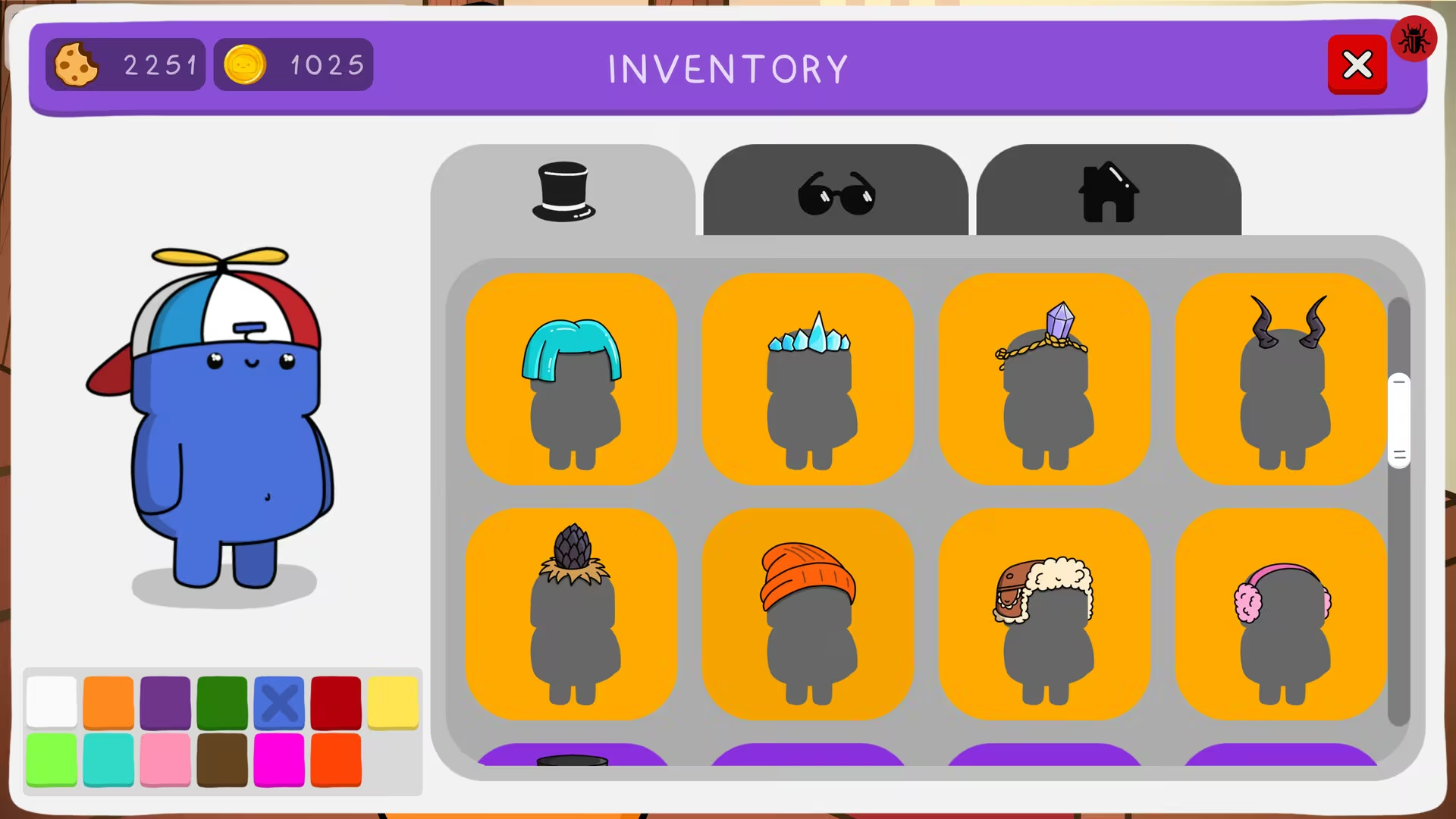
"Some avatar and costume customization available, allowing modest self-expression."
-
Fantasy3
"Game involves fictional roles and scenarios with imaginative social deception themes."
-
Fellowship4
"Strong emphasis on community and social interaction, especially playing with friends or known groups."
-
Growth2
"Players develop social and strategic skills, such as lying, deduction, and communication."
-
Health-5
"Game is sedentary with no physical activity involved."
-
Idle-3
"Requires focused attention during rounds and discussions, not suitable for passive or background play."
-
Intimacy3
"Players form close social bonds and emotional engagement through trust and betrayal dynamics."
-
Leadership1
"Some players may take informal leadership in guiding discussions or influencing votes, but no formal roles."
-
Progression-2
"No persistent item or upgrade progression; gameplay resets each round with new roles."
-
Relaxation-2
"Game creates tension and paranoia rather than relaxation or flow states."
-
Sensation1
"Visuals and audio are simple and functional, providing moderate sensory stimulation."
-
Status-3
"Little emphasis on social status or recognition; focus is on gameplay and social interaction."
-
Story-4
"No overarching narrative; gameplay is context-free social deduction rounds."
-
Strategy4
"High strategic depth in social manipulation, role abilities, and voting tactics."
-
Thrill4
"Strong suspense and tension from deception, accusations, and uncertain outcomes."
-
Value3
"Affordable price and enjoyable gameplay especially with friends, though limited player base affects value."
-
Violence3
"Gameplay involves elimination and 'killing' roles, fitting the social deduction combat metaphor."
-
Survival4
"Core gameplay revolves around avoiding elimination and surviving rounds through social strategy."
Last update: 29/04/2026