Kill or Love Thumbnail

Kill or Love similar games & best alternatives

Kill or Love

PC (Microsoft Windows), Mac, Android, Linux • 2020

Related articles

Quick resume

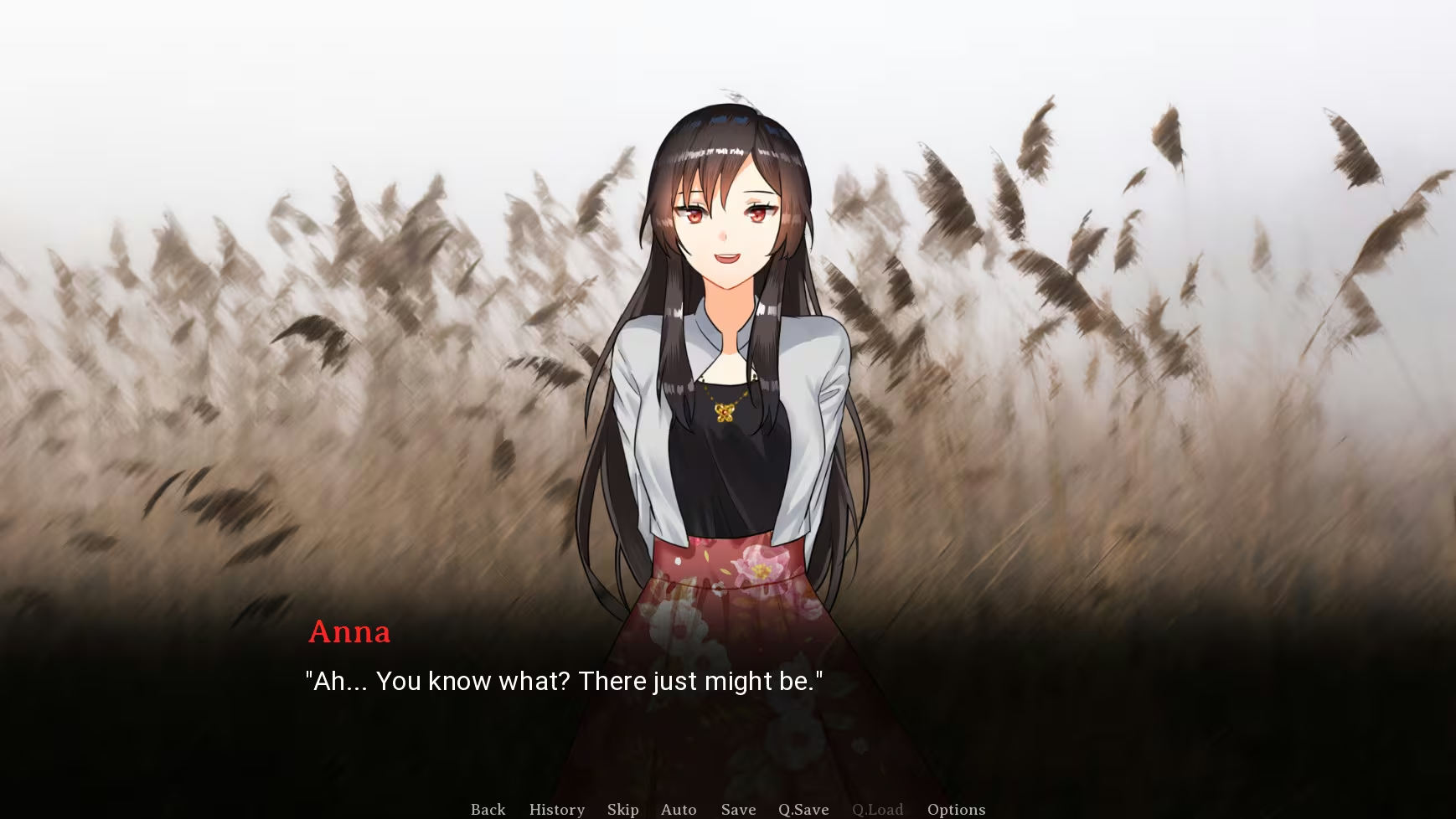
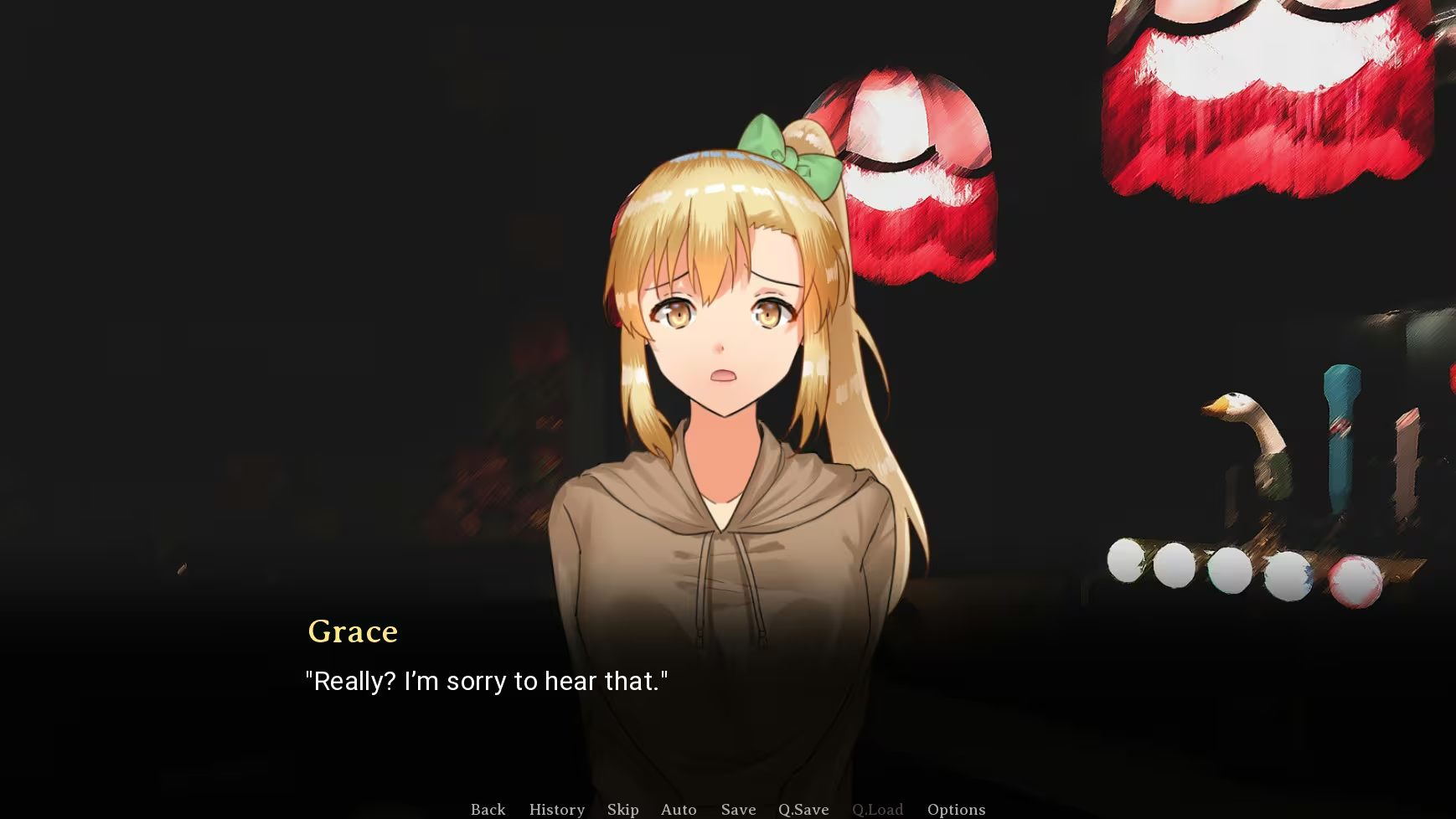
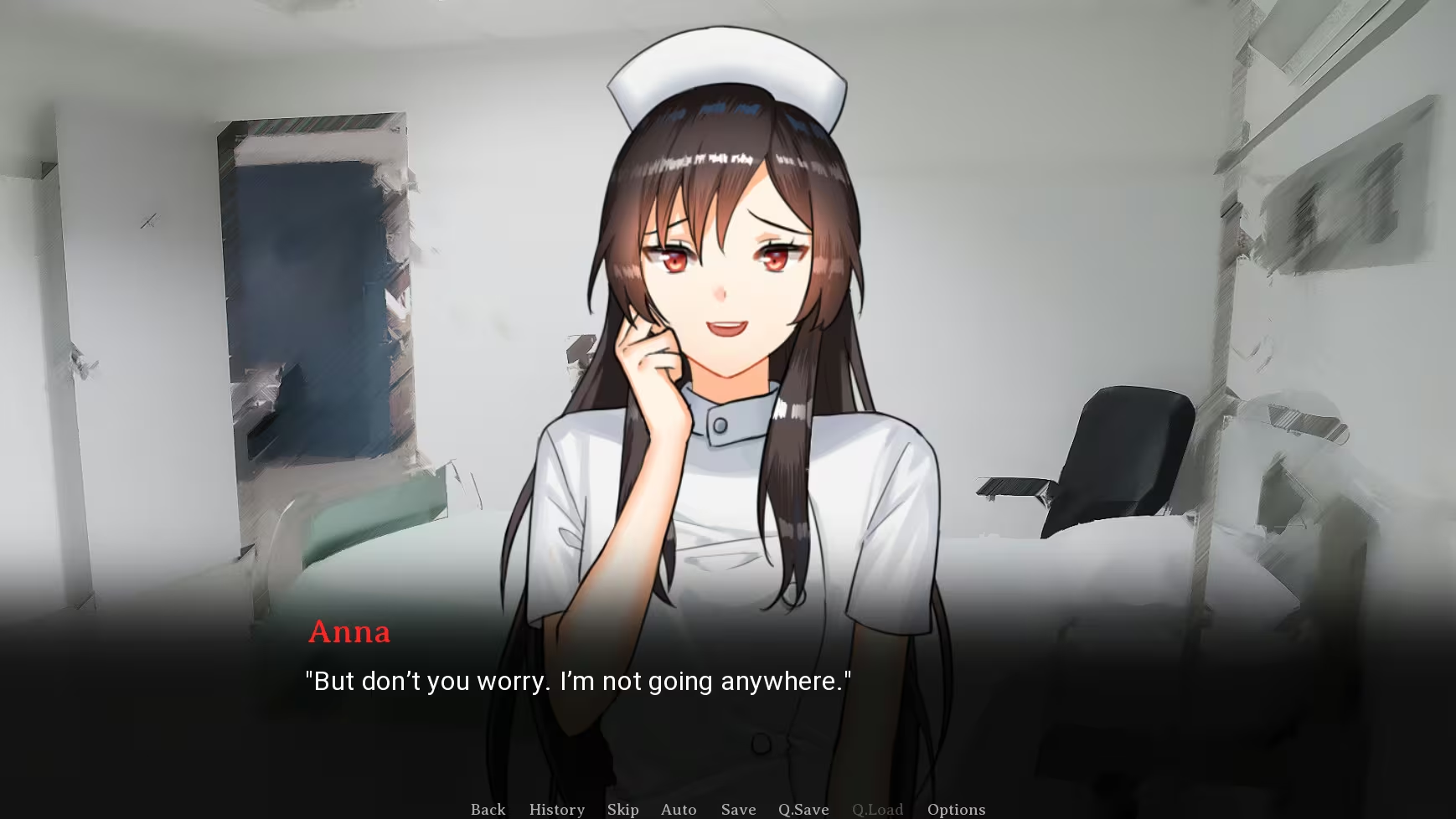
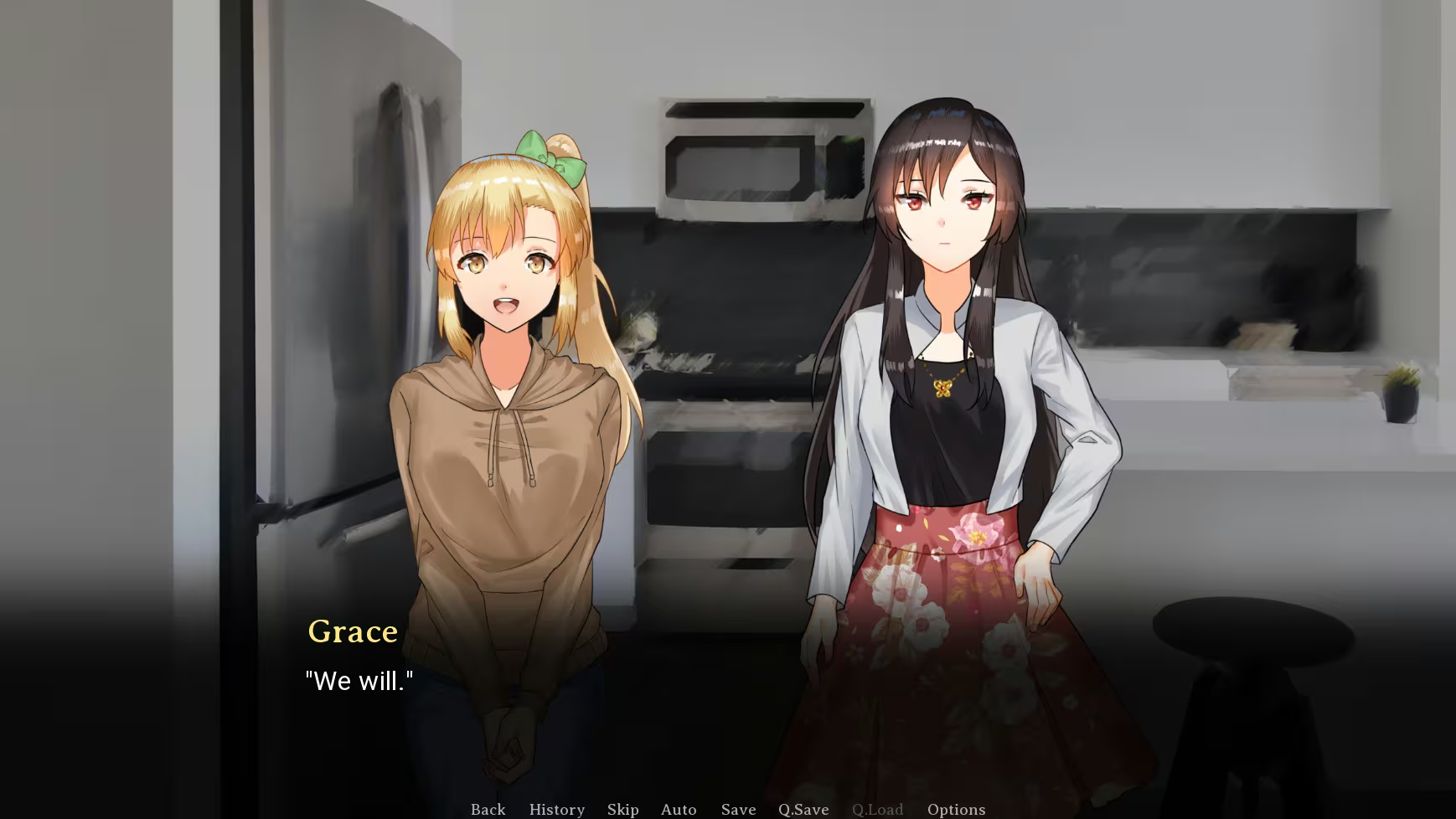
A visual novel about obsession, loneliness, and, based on your choices, varying amounts of murder.

Global score

89/100

Genres

Casual, Free To Play, Indie, Visual Novel

Similar games

    Pros

    • Free to play
    • Engaging psychological story
    • Multiple endings
    • Well-written characters
    • Good art and atmosphere

    Cons

    • Limited player choices
    • Slow pacing at start
    • Lack of voice acting
    • Some endings feel abrupt or less satisfying
    • Minimal gameplay interaction

    Analysis

    Less representative of its motivational profile, with noticeable differences. Motivations that often define this kind of title include Strategy, Survival, Competence, Violence. Here, the score leans higher than usual among comparable games on Violence, Thrill. It leans lower than usual among comparable games on Progression.

    How to use the graph
    Similar games map

    Each dot is a game. They are arranged from the same motivation profile as in the “Motivations” section below. Closer dots usually mean more similar reasons to play (exploration, competition, relaxation, etc.)—not that one game is “better” than another.

    • Larger dot with a light outline: the game you are viewing.
    • Colour: groups of games with comparable motivation patterns (statistical clusters).
    • Hover a dot to see the game name; click to open its page.
    • Scroll or double-click the chart to zoom out and see more games.

    Why don’t the axes read like a score? This view uses t-SNE: it only keeps who is close to whom. The scales are not “good to bad” or hours played—they separate groups on the map. Read distance between dots, not the axis numbers.

    Motivations

    • Autonomy
      4

      "Players mainly follow a linear story with only two critical choices at the very end that determine the ending, indicating limited autonomy but some meaningful decision control."

    • Competence
      -3

      "The game is primarily a visual novel with no skill-based challenges or gameplay mechanics, focusing on reading and narrative rather than tests of skill."

    • Competition
      -5

      "No competitive elements or comparison to others; the experience is solitary and story-driven."

    • Continuation
      2

      "Some players report being drawn to finish the story despite slow pacing, indicating moderate attachment and desire to see the conclusion."

    • Cooperation
      -5

      "Entirely single-player narrative experience with no cooperative or multiplayer elements."

    • Creativity
      -4

      "Players do not create or modify content; the story and visuals are fixed with minimal interaction beyond ending choices."

    • Domination
      -5

      "No social dominance or power over others; interactions are narrative and personal."

    • Escapism
      4

      "The dark, psychological story and immersive narrative provide a strong escape from real life for players."

    • Expectation
      -4

      "Players engage voluntarily out of interest in the story and genre, with no obligation or external pressure."

    • Experimenting
      -3

      "Limited choices reduce experimentation; players mainly follow a set narrative with only ending variations."

    • Exploration
      -4

      "The game does not involve exploring new areas; it is a linear narrative with fixed scenes."

    • Expression
      -5

      "No character customization or personalization; visuals and story are standardized."

    • Fantasy
      3

      "The story involves psychological horror and yandere tropes, fictional characters and events, providing an imaginative experience."

    • Fellowship
      -5

      "No community or social features; the experience is solitary."

    • Growth
      3

      "Players gain insight into characters and story themes, reflecting on psychological and emotional growth."

    • Health
      -5

      "Sedentary gameplay with no physical activity involved."

    • Idle
      3

      "Short sessions and ability to pause or stop easily, but some players engage for extended periods to complete all endings."

    • Intimacy
      2

      "Emotional engagement with characters and story creates a sense of closeness, though no direct social interaction."

    • Leadership
      -5

      "No leadership or group management elements."

    • Progression
      -4

      "No accumulation of items or upgrades; progression is narrative-based without resource collection."

    • Relaxation
      -2

      "The story creates tension and suspense rather than relaxation or flow."

    • Sensation
      2

      "Visuals and music contribute to emotional stimulation and atmosphere, though sensory input is moderate."

    • Status
      -5

      "No social recognition or status systems."

    • Story
      5

      "The game is heavily narrative-driven with a strong focus on plot, characters, and multiple endings."

    • Strategy
      -4

      "Minimal strategic decision-making; choices are limited and occur only at the end."

    • Thrill
      4

      "Psychological suspense and plot twists create tension and emotional thrill."

    • Value
      4

      "Free to play with substantial story content and multiple endings, providing good value for time invested."

    • Violence
      3

      "The story involves murder and dark themes, with violent narrative elements."

    • Survival
      -4

      "No gameplay mechanics involving survival or threat avoidance; story focuses on psychological conflict."

    Last update: 29/04/2026