Little Mouse's Encyclopedia Thumbnail

Little Mouse's Encyclopedia similar games & best alternatives

Little Mouse's Encyclopedia

PC (Microsoft Windows), Mac, iOS, PlayStation 4, Xbox One, Android, Nintendo Switch, Linux • 2019

Related articles

Quick resume

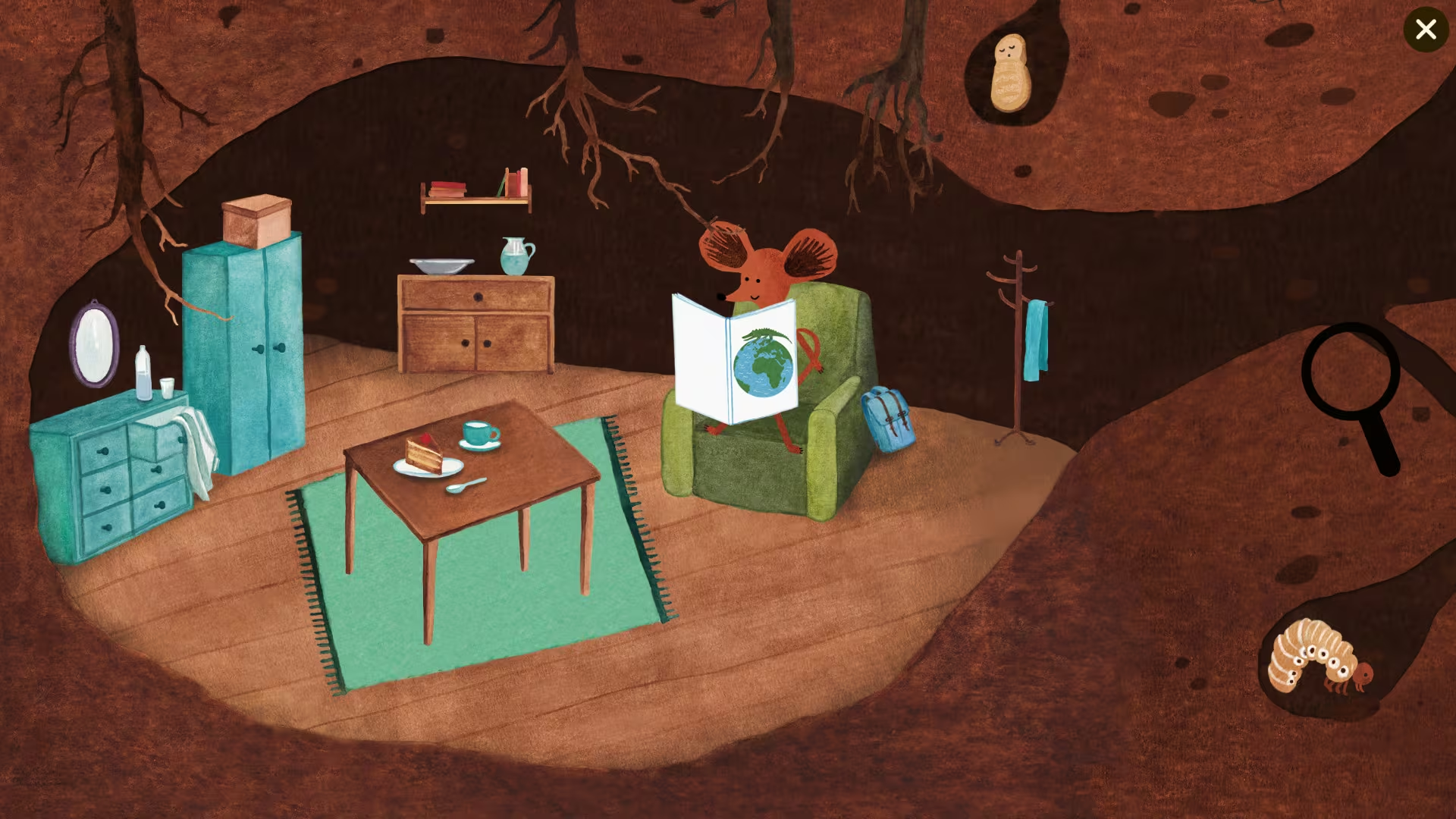
An interactive encyclopedia for kids and their parents.

Global score

96/100

Genres

Casual, Indie, Adventure, Puzzle

Similar games

    Pros

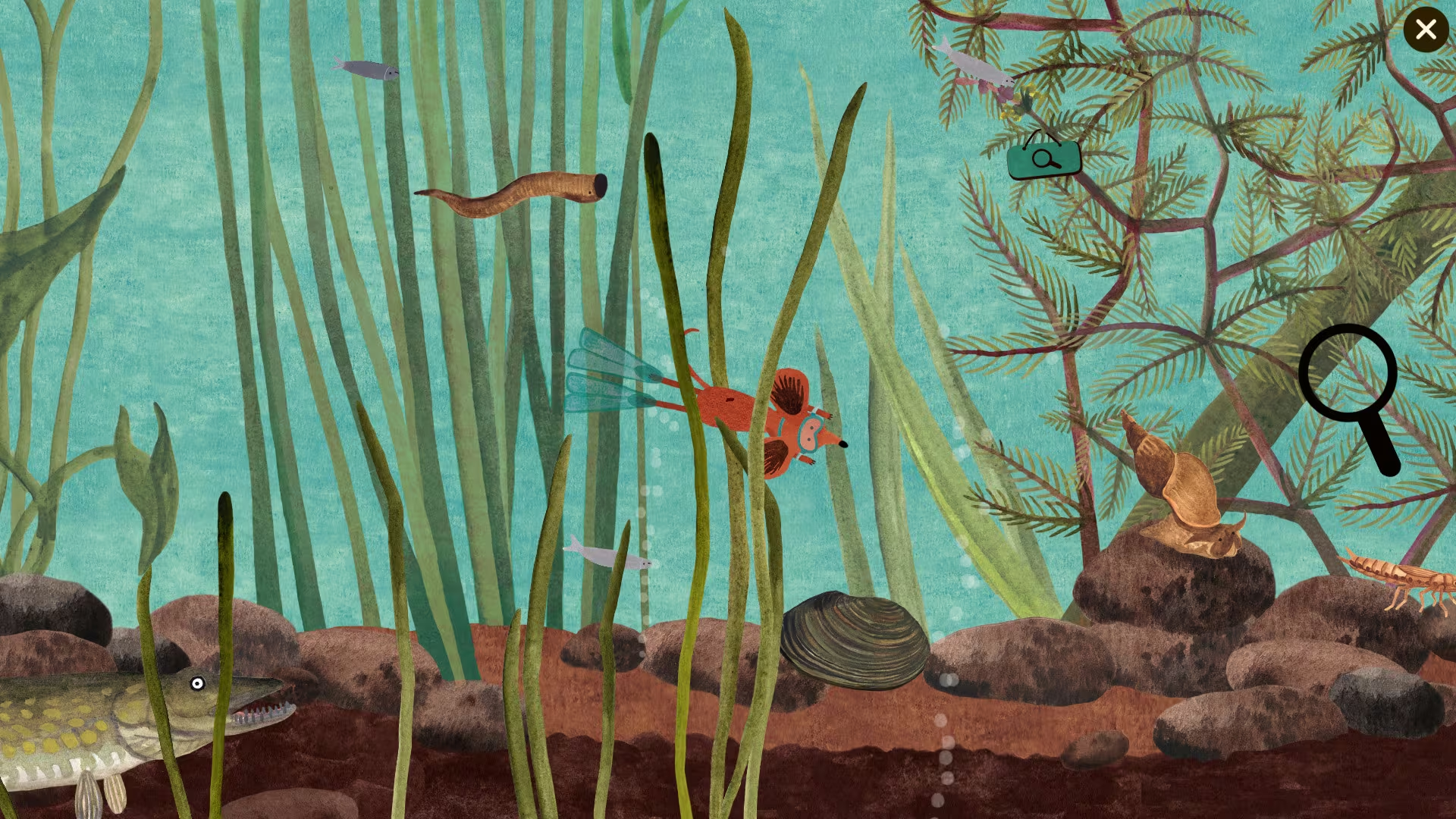
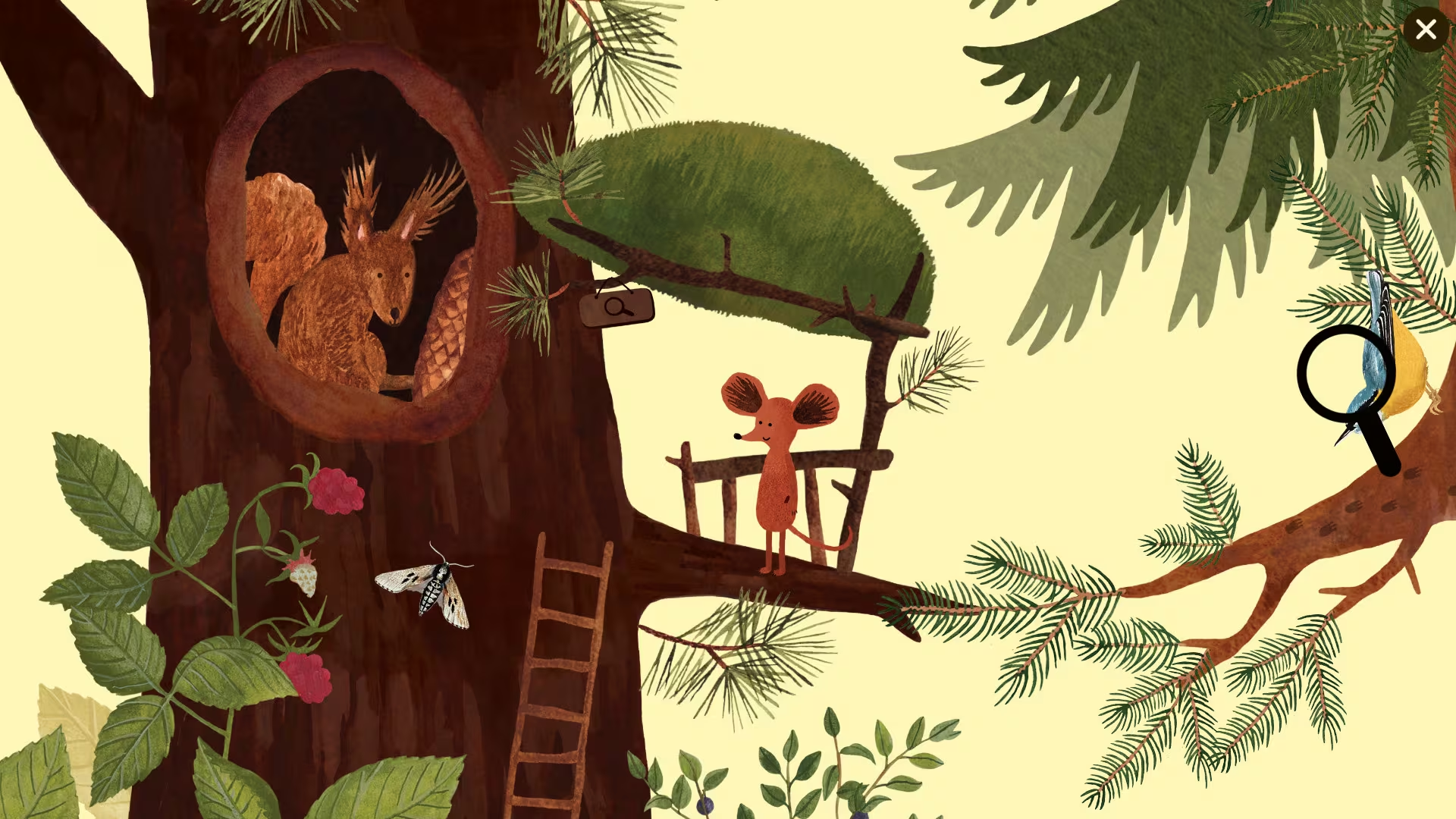
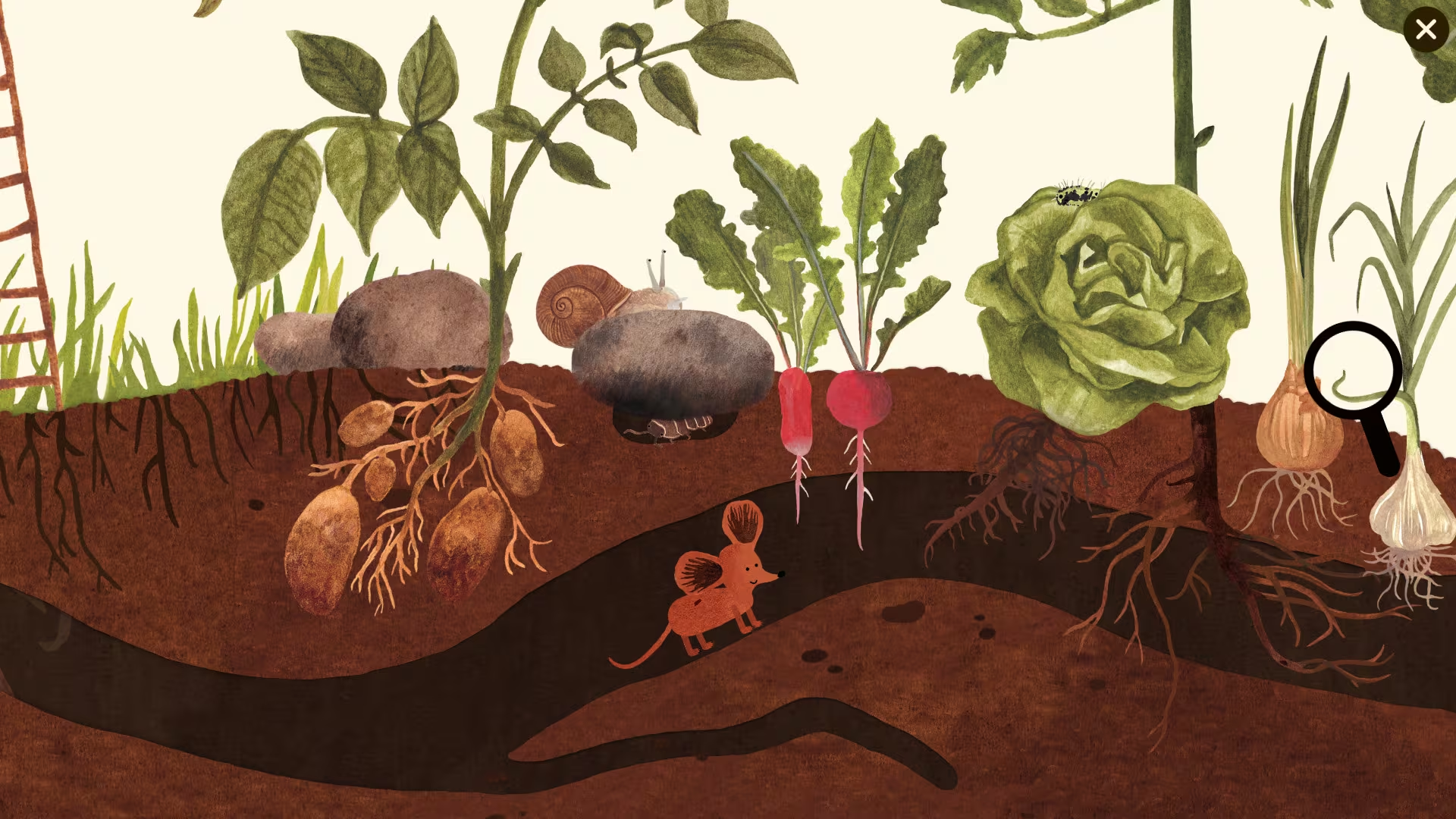
    • Charming hand-drawn art style
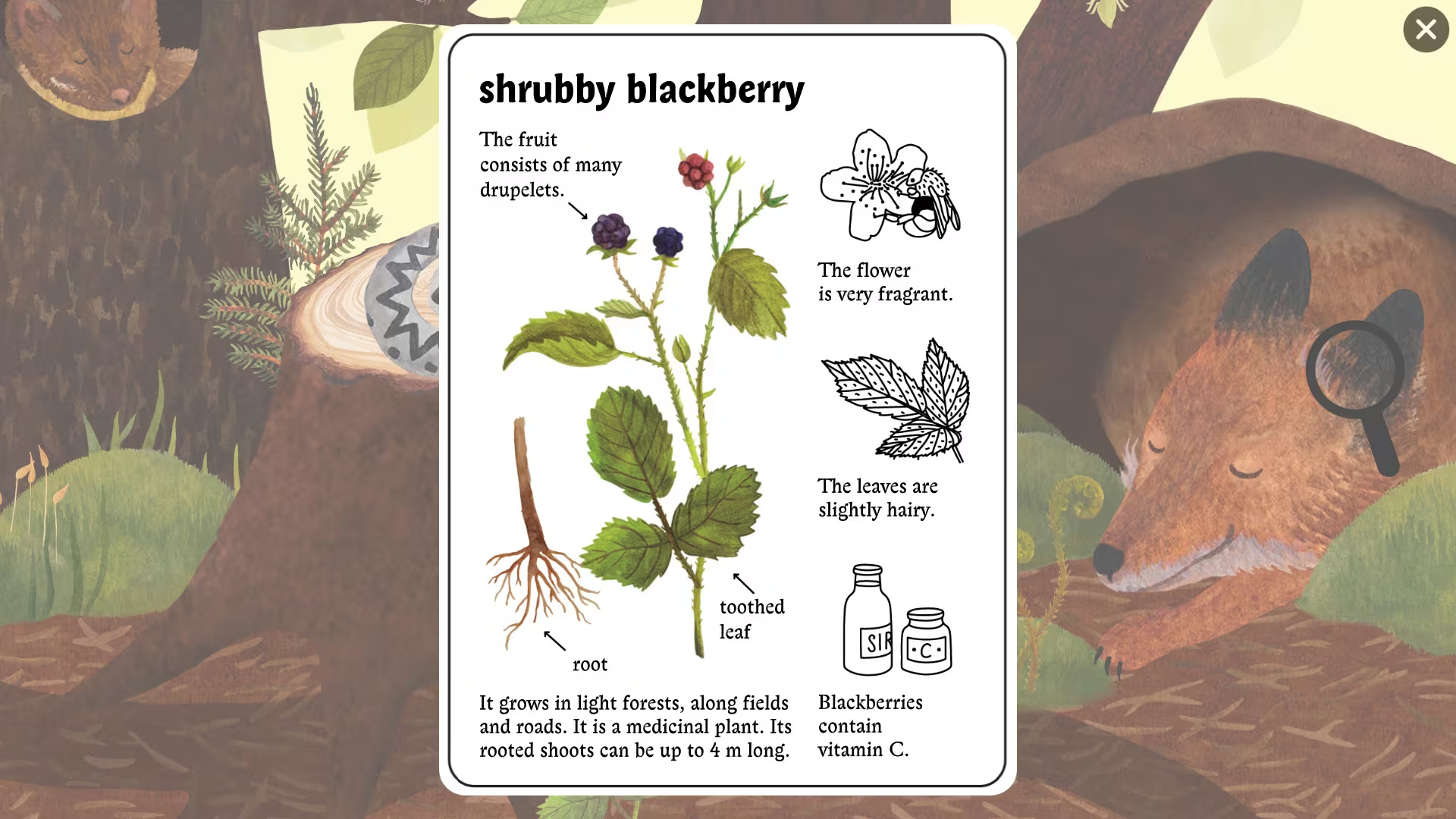
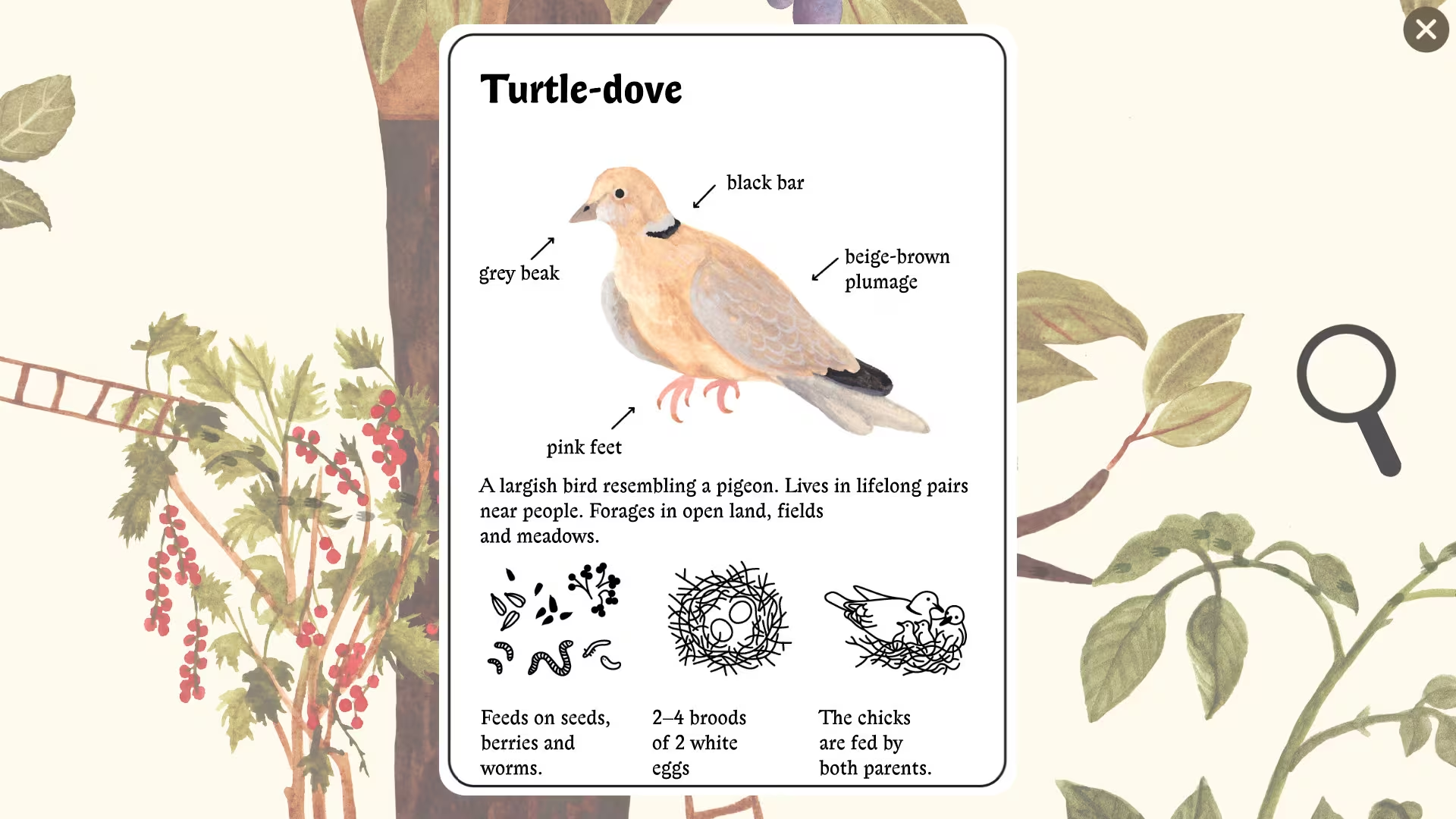
    • Educational content suitable for children and adults
    • Calming music and nature sounds
    • Multi-language support
    • Simple and accessible gameplay

    Cons

    • Short game length
    • Lack of narration limits accessibility for pre-readers
    • Bugged achievements requiring single-session completion
    • Minimal interactivity and no story
    • Ui and controls not optimized for pc

    Analysis

    Less representative of its motivational profile, with noticeable differences. Motivations that often define this kind of title include Strategy, Survival, Competence, Violence. Here, the score leans higher than usual among comparable games on Cooperation. It leans lower than usual among comparable games on Fantasy, Story.

    How to use the graph
    Similar games map

    Each dot is a game. They are arranged from the same motivation profile as in the “Motivations” section below. Closer dots usually mean more similar reasons to play (exploration, competition, relaxation, etc.)—not that one game is “better” than another.

    • Larger dot with a light outline: the game you are viewing.
    • Colour: groups of games with comparable motivation patterns (statistical clusters).
    • Hover a dot to see the game name; click to open its page.
    • Scroll or double-click the chart to zoom out and see more games.

    Why don’t the axes read like a score? This view uses t-SNE: it only keeps who is close to whom. The scales are not “good to bad” or hours played—they separate groups on the map. Read distance between dots, not the axis numbers.

    Motivations

    • Autonomy
      3

      "Players freely explore four different natural environments at their own pace, choosing what to investigate without fixed paths or strict objectives."

    • Competence
      -3

      "Gameplay is simple and non-challenging, focused on clicking and reading rather than skillful or technical challenges."

    • Competition
      -5

      "No competitive elements or comparison with others; experience is solitary and self-paced."

    • Continuation
      2

      "Some players, especially children, enjoy repeated exploration and learning, though the short length limits long-term habitual play."

    • Cooperation
      1

      "While primarily single-player, parents often play alongside children, facilitating cooperative learning and shared experience."

    • Creativity
      -4

      "Content is predefined encyclopedia entries and illustrations with minimal player modification or creation."

    • Domination
      -5

      "No elements of exerting control or superiority over others; interactions are gentle and exploratory."

    • Escapism
      3

      "Provides a relaxing, stress-relieving experience with immersion in nature-themed environments, offering a gentle escape."

    • Expectation
      -4

      "Players engage voluntarily out of interest or educational desire, not out of obligation or external pressure."

    • Experimenting
      2

      "Players can explore different areas and interact with various objects, encouraging curiosity and discovery within a limited scope."

    • Exploration
      4

      "Core gameplay revolves around discovering and learning about flora and fauna in four distinct biomes."

    • Expression
      -5

      "No character customization or personal expression; presentation is fixed and standardized."

    • Fantasy
      -4

      "Focuses on realistic natural environments and factual information rather than imaginative or fictional elements."

    • Fellowship
      1

      "Some social interaction occurs when parents and children play together, but the game is primarily a solo experience."

    • Growth
      4

      "Strong educational focus with learning about nature, plants, and animals, suitable for children and adults."

    • Health
      -5

      "Sedentary gameplay without physical activity or health-related mechanics."

    • Idle
      -3

      "Requires active attention to explore and read; not designed for background or idle play."

    • Intimacy
      1

      "Encourages bonding moments between parents and children through shared educational play."

    • Leadership
      -5

      "No leadership or management roles; gameplay is exploratory and individual."

    • Progression
      2

      "Progression is through unlocking encyclopedia entries and achievements by exploring and interacting."

    • Relaxation
      5

      "Highly praised for its calming atmosphere, soothing music, and gentle pace, ideal for relaxation."

    • Sensation
      2

      "Pleasant visual and auditory stimuli with hand-drawn art and nature sounds, but minimal intense sensory excitement."

    • Status
      -5

      "No social recognition or status systems; achievements exist but are personal and low-profile."

    • Story
      -4

      "No narrative or plot; the experience is informational and exploratory without story elements."

    • Strategy
      -5

      "No strategic or problem-solving gameplay; interactions are straightforward and simple."

    • Thrill
      -5

      "No suspense or risk; gameplay is calm and predictable."

    • Value
      3

      "Considered good value for educational content and charming presentation, especially at discounted prices."

    • Violence
      -5

      "No violence; focus is on peaceful exploration and learning."

    • Survival
      -5

      "No survival mechanics or threats; environment is safe and stable."

    Last update: 29/04/2026