Never Return Thumbnail

Never Return similar games & best alternatives

Never Return

PC (Microsoft Windows) • 2021

Related articles

Quick resume

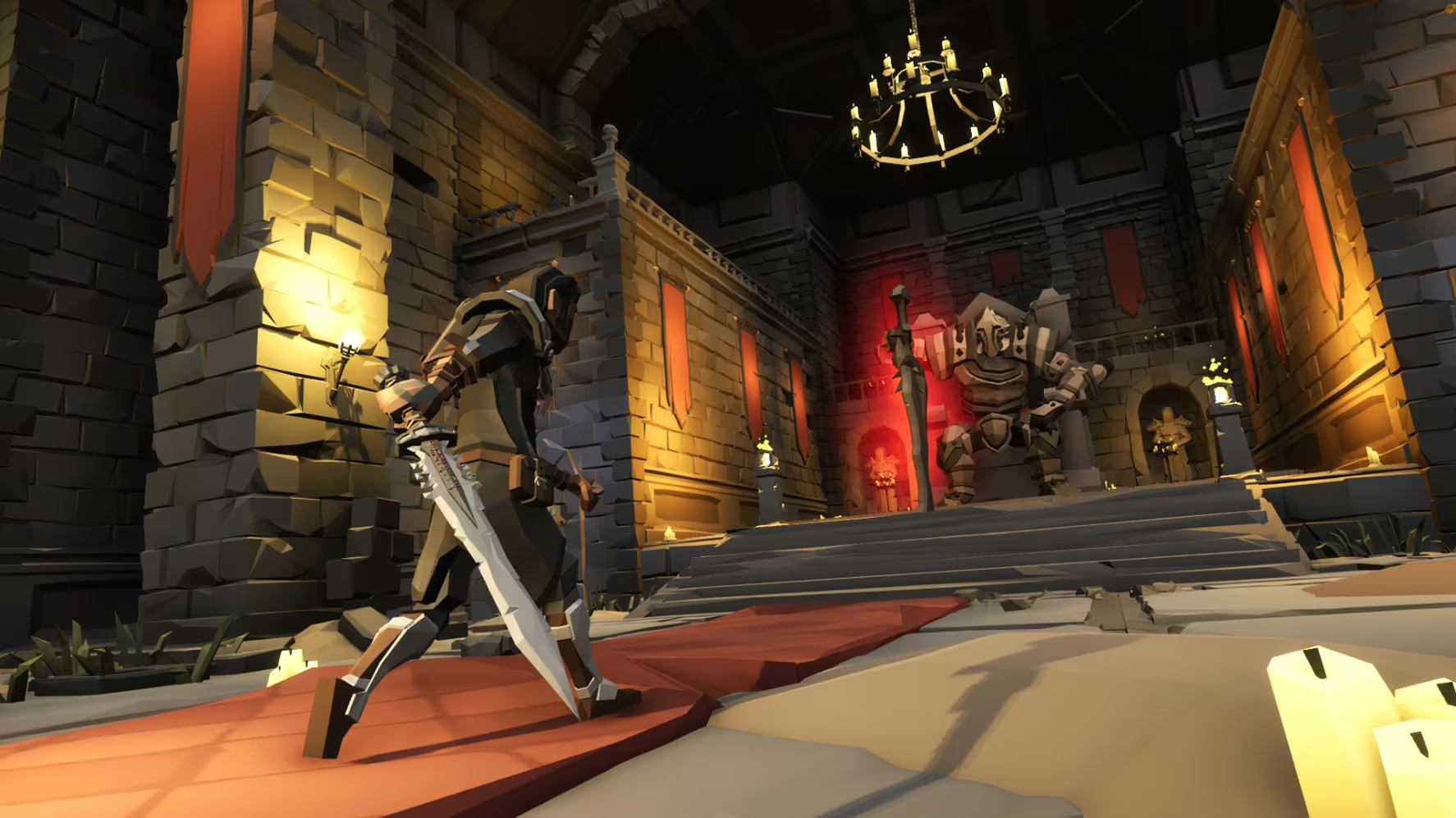
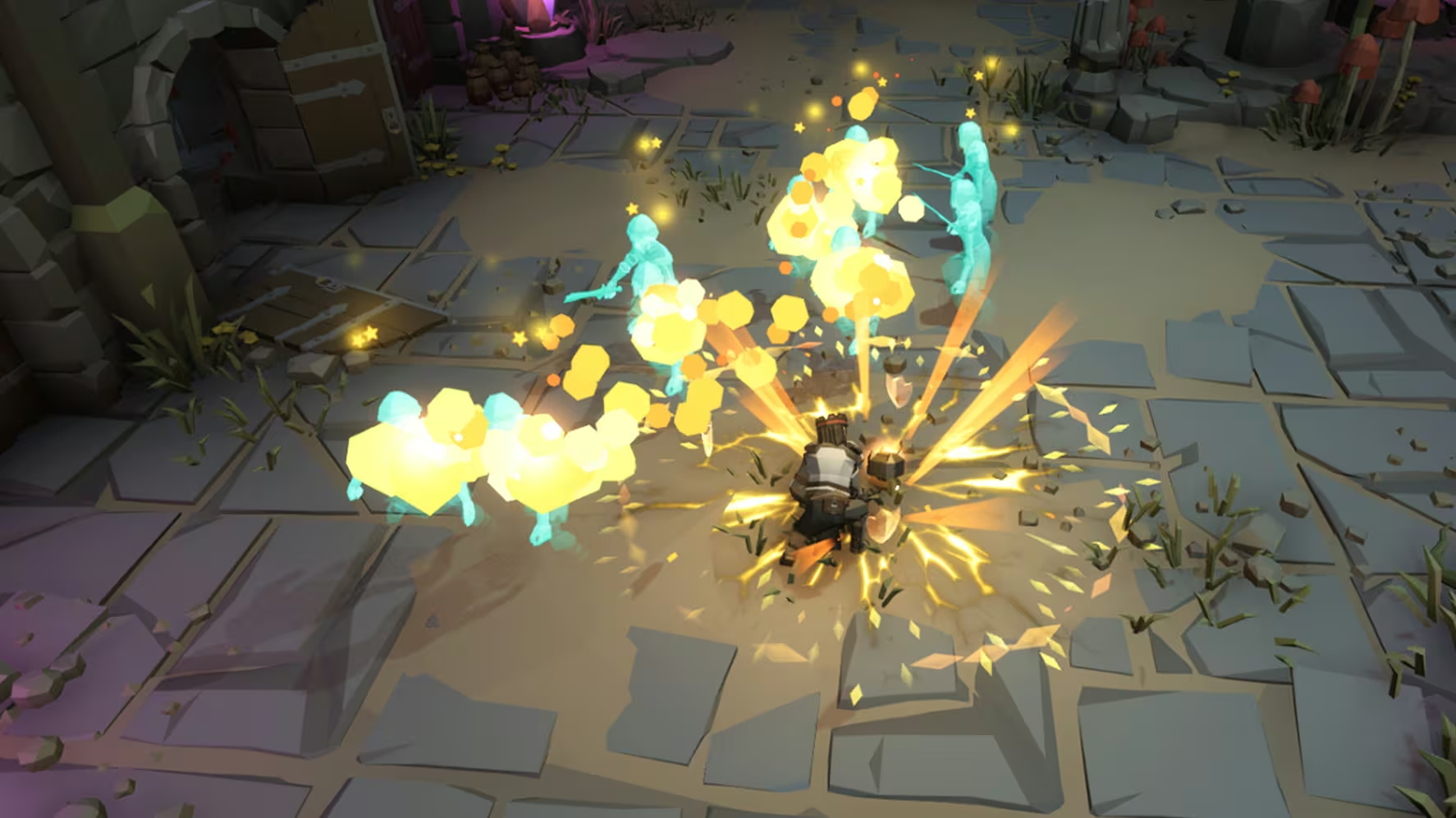
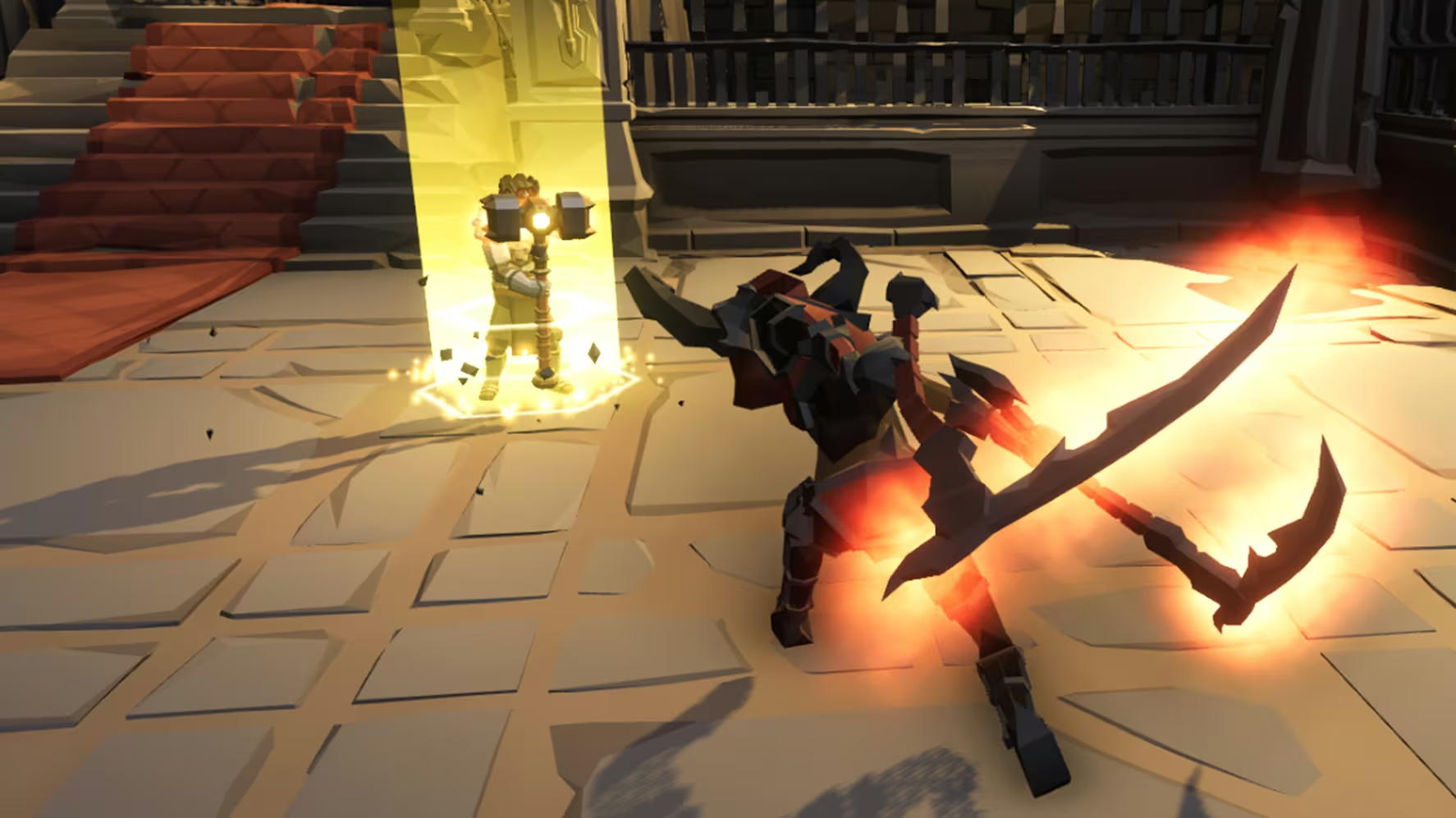
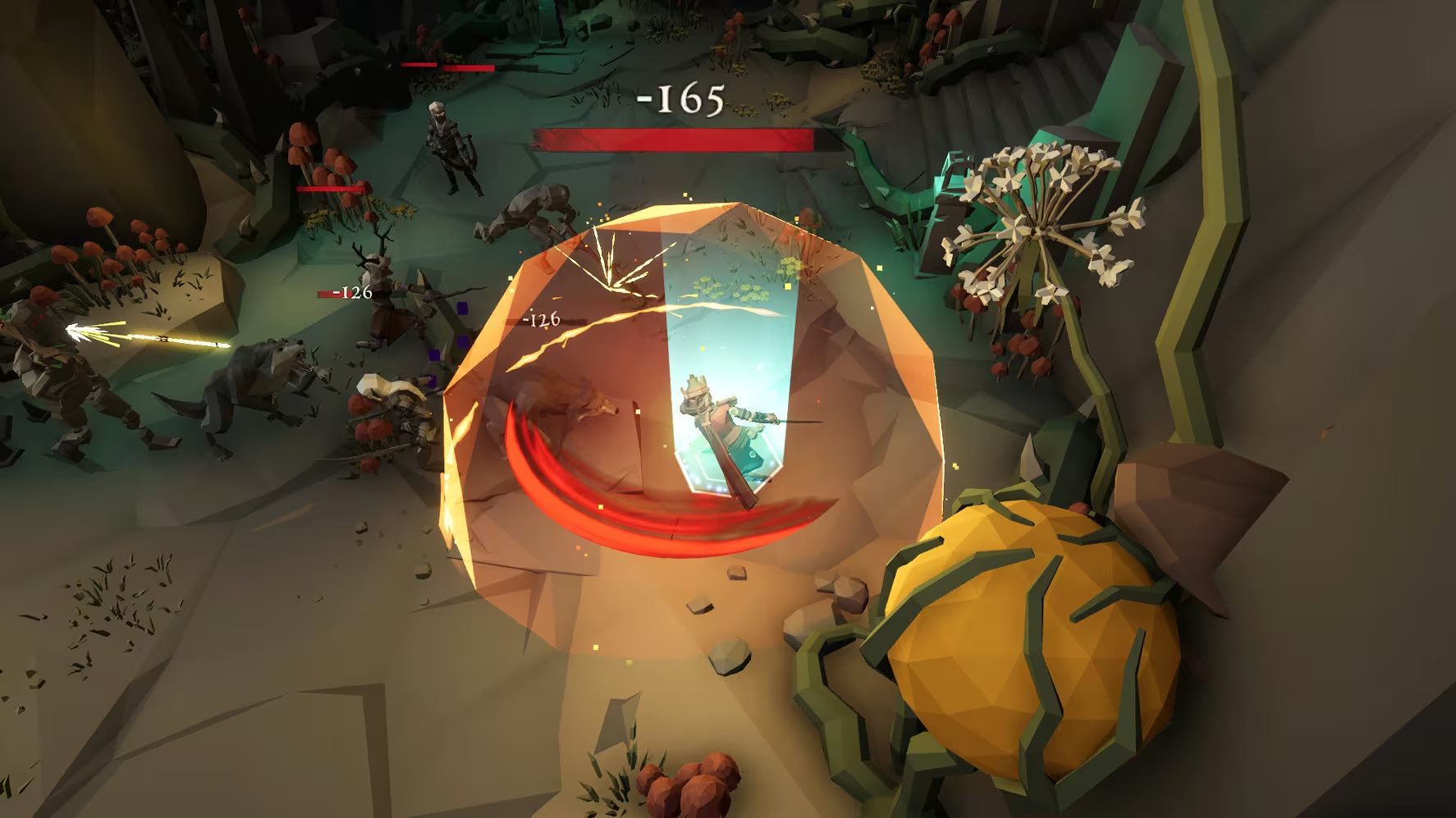
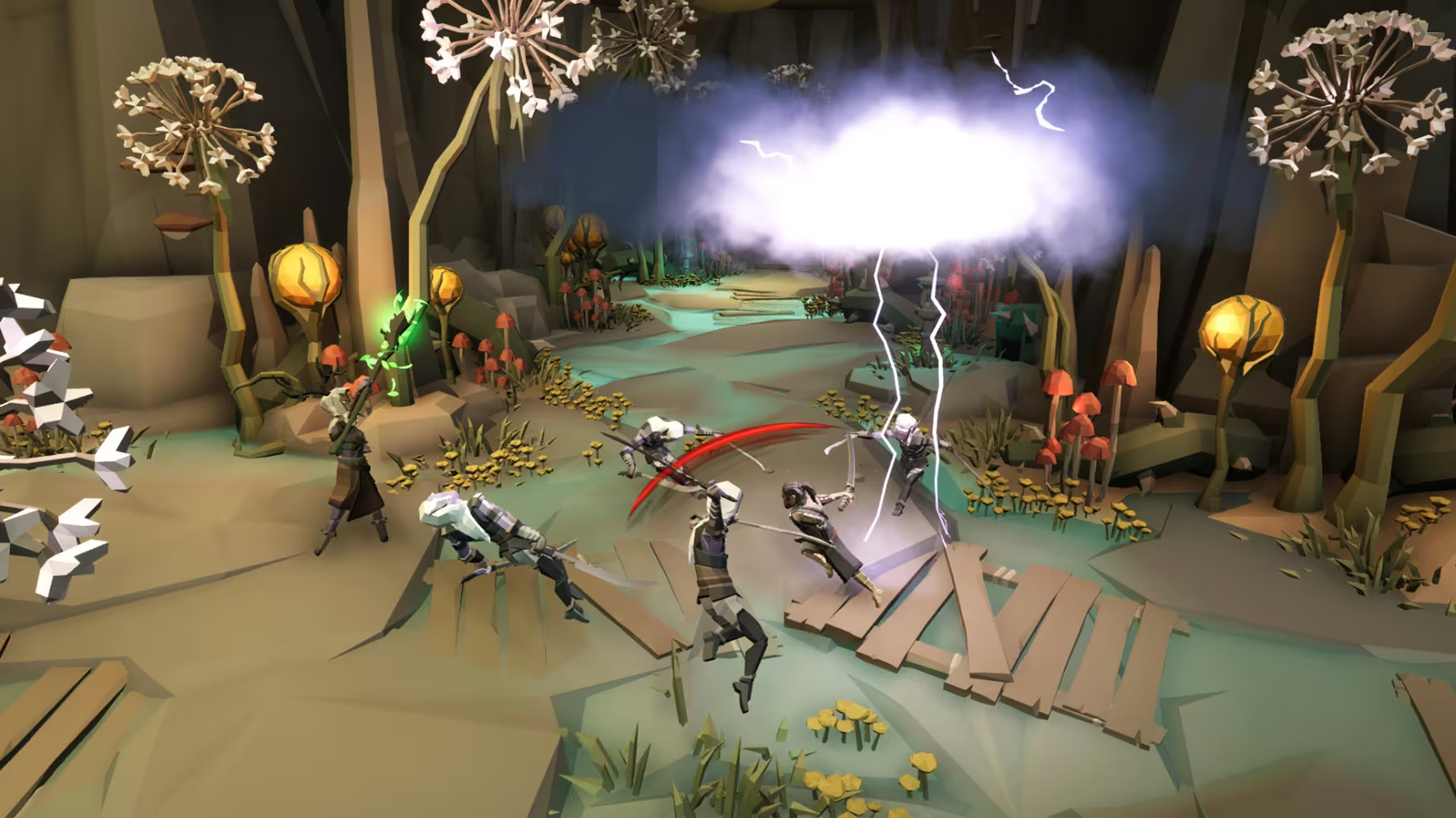
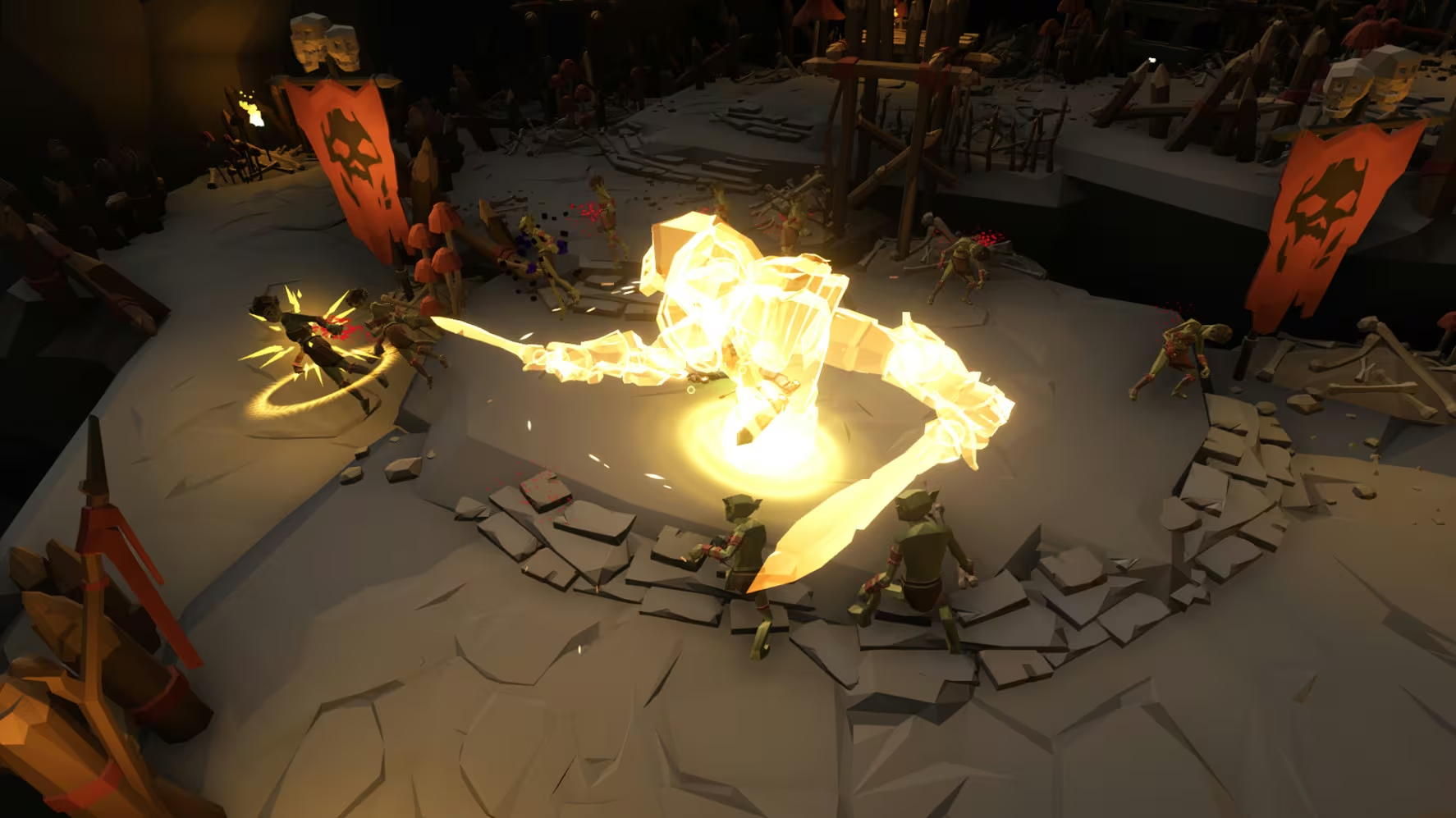
"Never Return" is a 3D action adventure game with roguelike elements. There are various weapon types to choose from. Each Type has its own play style. With thousands of creative prefixes and a huge amount of skills, every player can easily create their own build.

Global score

73/100

Genres

Action, Adventure, Indie, Early Access, Fighting

Similar games

    Pros

    • Deep and flexible talent tree
    • Varied and extensive loot system
    • Engaging combat and build experimentation
    • Active developer support and frequent updates
    • Addictive gameplay loop with long play sessions

    Cons

    • Clunky movement and combat controls
    • Repetitive environments and enemies
    • Limited multiplayer (only local co-op currently)
    • Ui and translation issues
    • Some balance and polish needed

    Analysis

    Broadly representative of its motivational profile, with a few distinct shifts. Motivations that often define this kind of title include Fellowship, Cooperation, Leadership, Violence. Here, the score leans higher than usual among comparable games on Cooperation, Fellowship. It leans lower than usual among comparable games on Story.

    How to use the graph
    Similar games map

    Each dot is a game. They are arranged from the same motivation profile as in the “Motivations” section below. Closer dots usually mean more similar reasons to play (exploration, competition, relaxation, etc.)—not that one game is “better” than another.

    • Larger dot with a light outline: the game you are viewing.
    • Colour: groups of games with comparable motivation patterns (statistical clusters).
    • Hover a dot to see the game name; click to open its page.
    • Scroll or double-click the chart to zoom out and see more games.

    Why don’t the axes read like a score? This view uses t-SNE: it only keeps who is close to whom. The scales are not “good to bad” or hours played—they separate groups on the map. Read distance between dots, not the axis numbers.

    Motivations

    • Autonomy
      4

      "Players have extensive freedom to build and customize characters with a large talent tree and many weapon/skill options, including free respecs."

    • Competence
      3

      "Game offers skill-based combat with progression and challenges increasing at deeper dungeon levels, though early game is easier and some combat feels clunky."

    • Competition
      -2

      "Focus is primarily on individual progression and build experimentation; leaderboards exist but no strong emphasis on competitive modes."

    • Continuation
      4

      "Many reviews mention long play sessions, addictive gameplay loop, and potential for hundreds of hours."

    • Cooperation
      0

      "Currently only local co-op is available; online co-op is planned but not yet implemented."

    • Creativity
      5

      "Extensive character customization, build variety, and talent tree allow for creative playstyles and experimentation."

    • Domination
      -3

      "No evidence of power over others or toxic interactions; multiplayer is limited and cooperative rather than dominating."

    • Escapism
      4

      "Players use the game as a fun distraction with immersive dungeon crawling and loot progression."

    • Expectation
      -4

      "Players engage voluntarily out of personal interest and enjoyment, not obligation."

    • Experimenting
      5

      "Free respecs and diverse skill trees encourage trying new builds and strategies."

    • Exploration
      2

      "Players explore procedurally generated dungeons with some variety, though environments and enemies can feel repetitive."

    • Expression
      3

      "Character appearance changes with gear; some customization possible though not heavily emphasized."

    • Fantasy
      4

      "Fantasy setting with roguelike and RPG elements, magic, summons, and mythical weapons."

    • Fellowship
      0

      "Limited social features currently; local co-op exists but online community features are minimal."

    • Growth
      4

      "Strong sense of progression through leveling, skill trees, and gear acquisition."

    • Health
      -5

      "No physical activity or health-related gameplay elements."

    • Idle
      -3

      "Requires focused attention and active combat; not designed for idle or background play."

    • Intimacy
      -4

      "Minimal social interaction; no evidence of close relationships forming in-game."

    • Leadership
      -4

      "No leadership or authoritative roles; gameplay is individual or cooperative without hierarchy."

    • Progression
      5

      "Core gameplay revolves around accumulating loot, upgrading gear, and advancing through talent trees."

    • Relaxation
      2

      "Gameplay can be engaging and fun but also involves tension and challenge, especially at higher levels."

    • Sensation
      3

      "Visual and auditory feedback is enjoyable though some reviews mention sound and graphics could improve."

    • Status
      -3

      "Limited social recognition; leaderboards exist but social status is not a major focus."

    • Story
      -2

      "Minimal narrative or lore; focus is on gameplay loop rather than story immersion."

    • Strategy
      4

      "Players engage in build planning, gear optimization, and tactical combat decisions."

    • Thrill
      3

      "Combat and dungeon crawling provide moments of tension and excitement, especially in boss fights."

    • Value
      4

      "Players feel the game offers good content and replayability for its price."

    • Violence
      4

      "Combat involves defeating enemies with weapons and spells; violence is central to gameplay."

    • Survival
      3

      "Players must avoid death and manage resources to progress through increasingly difficult dungeons."

    Last update: 29/04/2026