Q.U.B.E: Director's Cut Thumbnail

Q.U.B.E: Director's Cut similar games & best alternatives
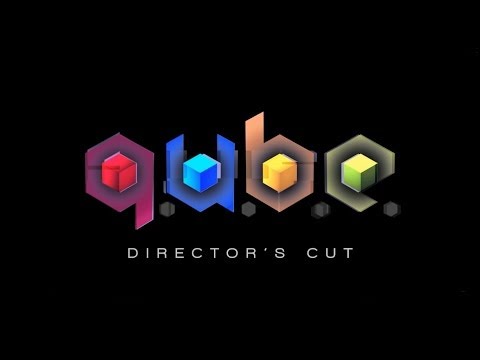
Q.U.B.E: Director's Cut

PC (Microsoft Windows), Mac, Wii U, PlayStation 4, Xbox One, PlayStation 3, Linux • 2014

Related articles

Quick resume

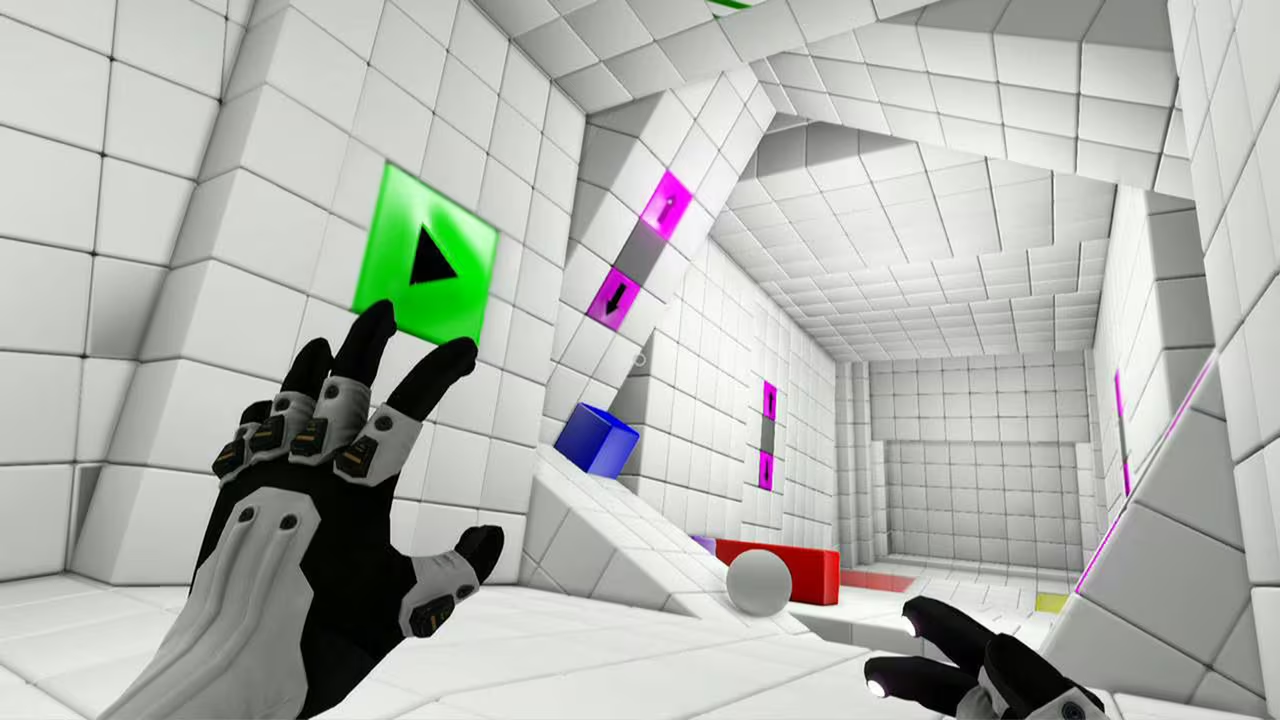
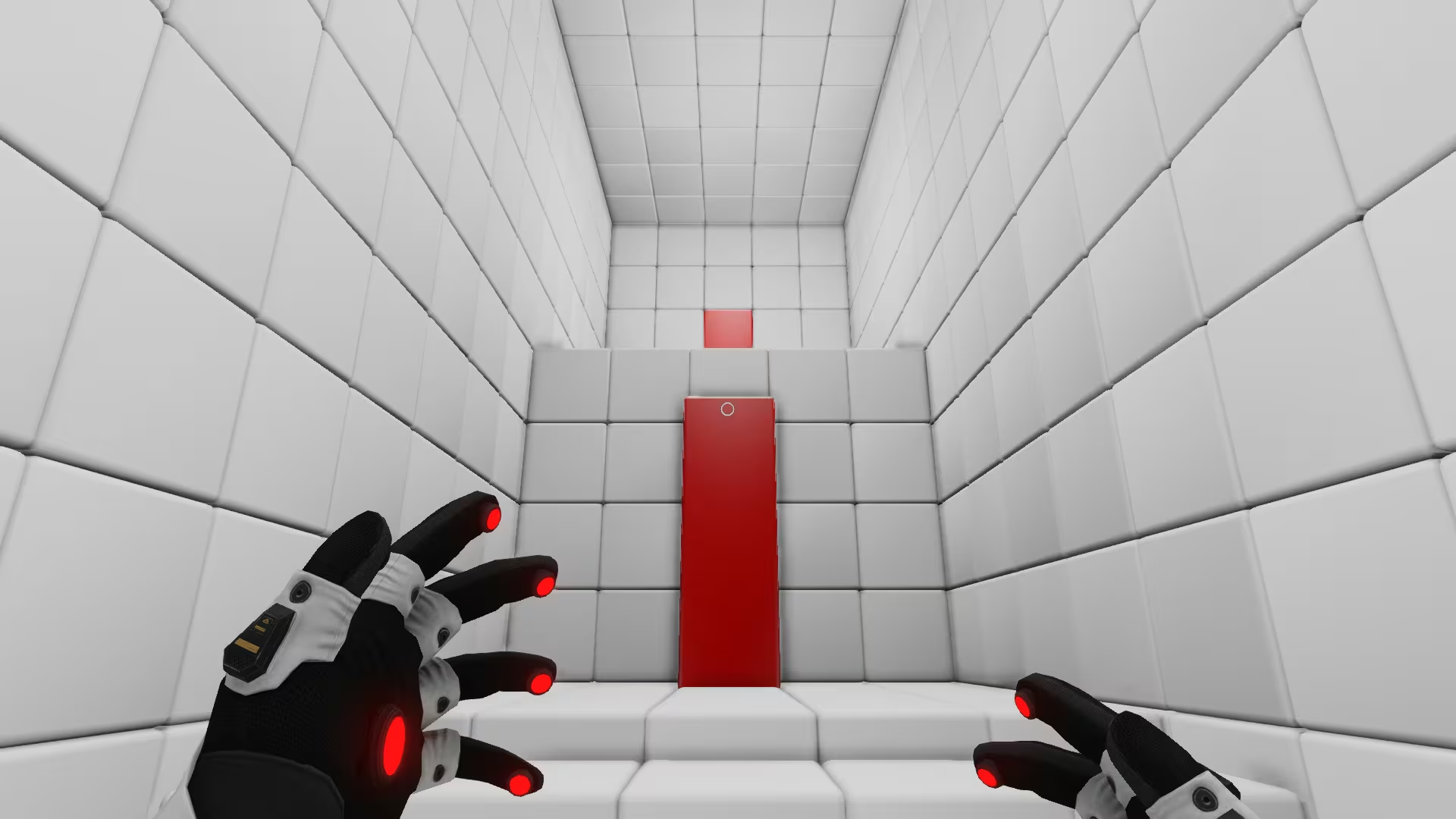
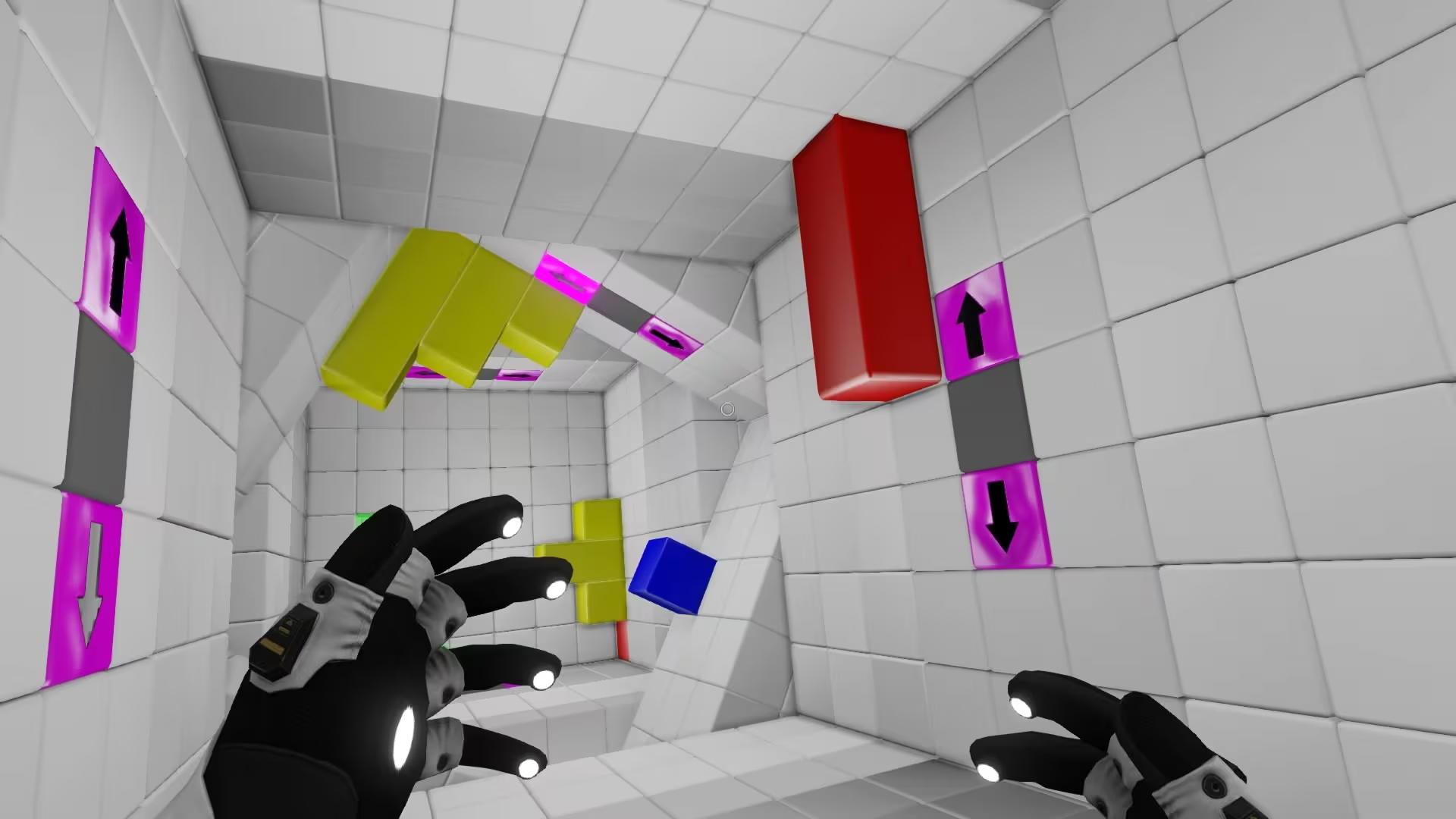
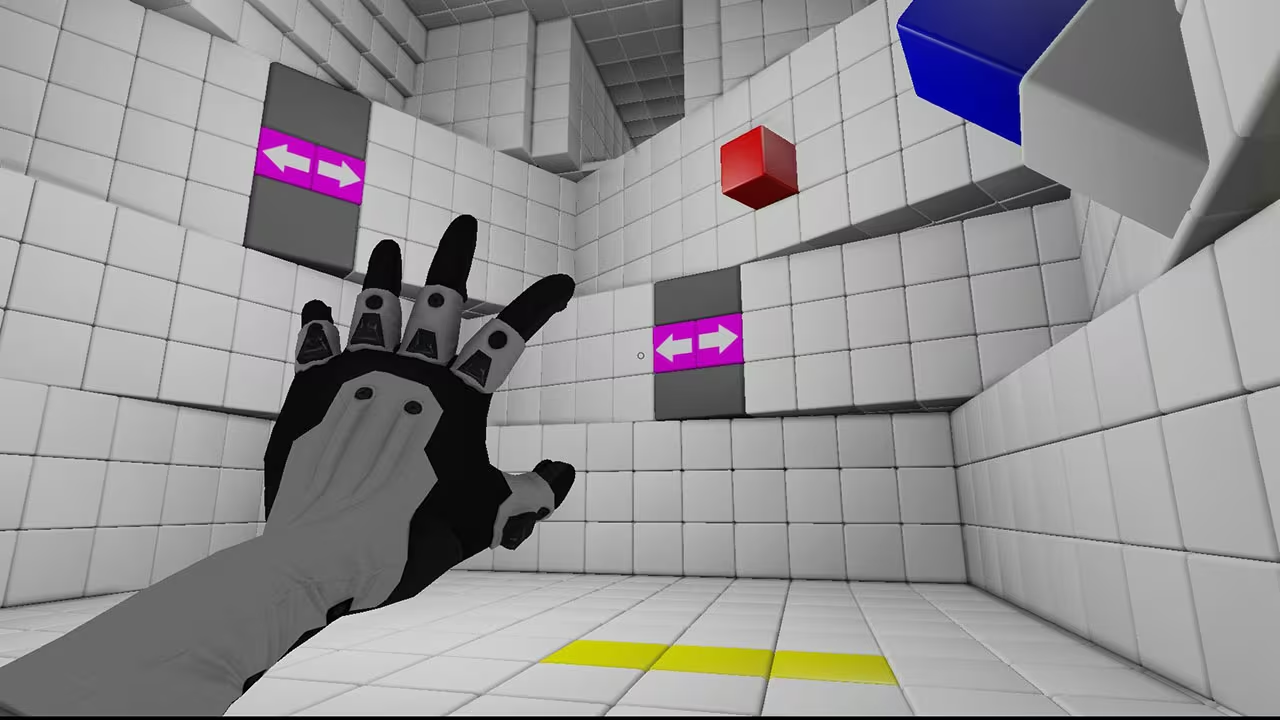
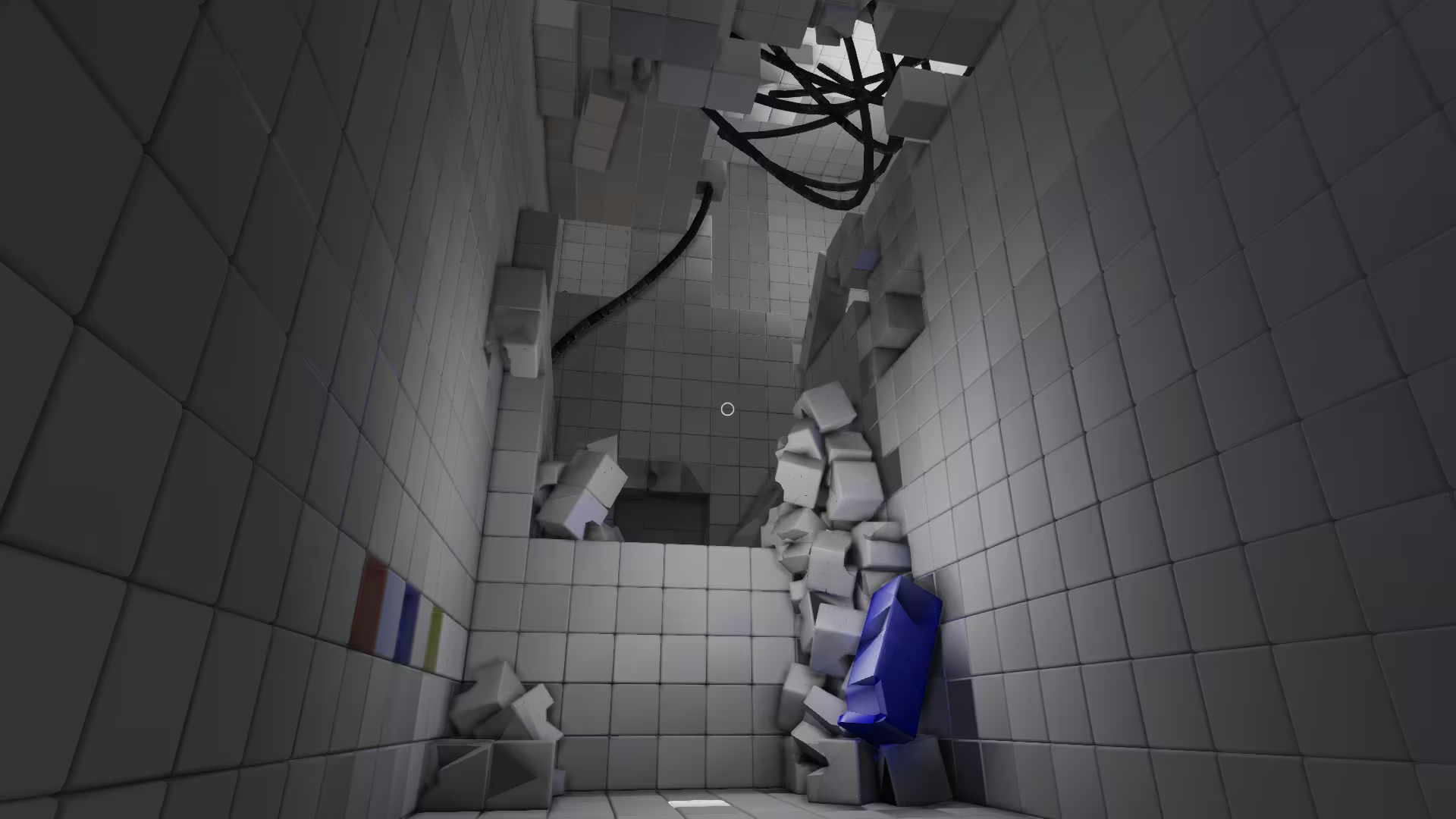
Q.U.B.E: Director's Cut is the definitive version of the brain-twisting first-person puzzler. Using special high-tech gloves to manipulate cubes in the environment, the player solves an array of conundrums - from physics-based challenges; to 3D jigsaws; to platform-based trials.

Global score

82/100

Genres

Action, Adventure, Indie, Platform, Strategy, Puzzle

Similar games

    Pros

    • Engaging and challenging puzzles
    • Atmospheric minimalist design
    • Added narrative and voice acting in director's cut
    • Included dlc and secret puzzles
    • Good value for price

    Cons

    • Short main campaign
    • Some physics bugs and occasional frustration
    • Lack of subtitles for story
    • Linear story with no player choice
    • Slow pacing in transitions and elevator sequences

    Analysis

    A very typical example of its motivational profile. Motivations that often define this kind of title include Survival, Violence, Fellowship, Expression. Here, the score leans higher than usual among comparable games on Competence, Thrill. It leans lower than usual among comparable games on Expression.

    How to use the graph
    Similar games map

    Each dot is a game. They are arranged from the same motivation profile as in the “Motivations” section below. Closer dots usually mean more similar reasons to play (exploration, competition, relaxation, etc.)—not that one game is “better” than another.

    • Larger dot with a light outline: the game you are viewing.
    • Colour: groups of games with comparable motivation patterns (statistical clusters).
    • Hover a dot to see the game name; click to open its page.
    • Scroll or double-click the chart to zoom out and see more games.

    Why don’t the axes read like a score? This view uses t-SNE: it only keeps who is close to whom. The scales are not “good to bad” or hours played—they separate groups on the map. Read distance between dots, not the axis numbers.

    Motivations

    • Autonomy
      4

      "Players manipulate colored cubes with gloves to solve puzzles, allowing freedom in approach within puzzle constraints."

    • Competence
      4

      "Puzzles require logical thinking and skillful manipulation; difficulty ramps up and some puzzles are challenging."

    • Competition
      -3

      "Focus is on individual puzzle solving and personal progress; timed DLC challenges add optional competitive elements."

    • Continuation
      2

      "Short main campaign but additional DLC and secret puzzles encourage extended play for enthusiasts."

    • Cooperation
      -5

      "Entirely single-player experience with no multiplayer or cooperative elements."

    • Creativity
      3

      "Players creatively solve puzzles using different cube mechanics and colors; limited environment customization."

    • Domination
      -5

      "No social dominance or power over others; purely individual puzzle experience."

    • Escapism
      3

      "Immersive atmosphere and mysterious story provide escape from reality through engaging puzzles."

    • Expectation
      -4

      "Players engage voluntarily for enjoyment and mental challenge without external pressure or obligation."

    • Experimenting
      3

      "Players experiment with cube interactions and puzzle solutions; some puzzles require novel approaches."

    • Exploration
      2

      "Players explore puzzle rooms and secret areas, though environments are mostly sterile and minimalistic."

    • Expression
      -4

      "Minimal character or environment customization; focus is on puzzle mechanics rather than self-expression."

    • Fantasy
      2

      "Game features a sci-fi setting with mysterious story elements, but grounded in puzzle-solving mechanics."

    • Fellowship
      -5

      "No community or social features; strictly solo play."

    • Growth
      3

      "Players develop problem-solving skills and learn new mechanics progressively through puzzles."

    • Health
      -5

      "Sedentary gameplay with no physical activity involved."

    • Idle
      -3

      "Requires focused attention and active problem solving; not suited for casual background play."

    • Intimacy
      -5

      "No social or emotional bonding features; purely individual experience."

    • Leadership
      -5

      "No leadership or group management elements; single-player only."

    • Progression
      3

      "Players progress through levels and unlock new puzzles and DLC content, gaining mastery over mechanics."

    • Relaxation
      2

      "Atmospheric music and visuals create a calm mood, though some puzzles induce mild tension."

    • Sensation
      2

      "Visual and auditory design is minimalistic but effective, providing moderate sensory stimulation."

    • Status
      -5

      "No social recognition or status systems present."

    • Story
      2

      "Director's Cut adds a narrative with voice acting, enhancing immersion though story is simple and linear."

    • Strategy
      3

      "Puzzles require logical reasoning, planning, and problem solving with increasing complexity."

    • Thrill
      1

      "Some suspense from challenging puzzles and timed DLC modes, but overall low risk and tension."

    • Value
      3

      "Good value for price especially with included DLC and improvements over original version."

    • Violence
      -5

      "No violence; gameplay centers on constructive puzzle solving."

    • Survival
      -5

      "No survival elements; stable, low-risk environment."

    Last update: 29/04/2026