Resonite similar games & best alternatives
Resonite
2023
Related articles
Quick resume
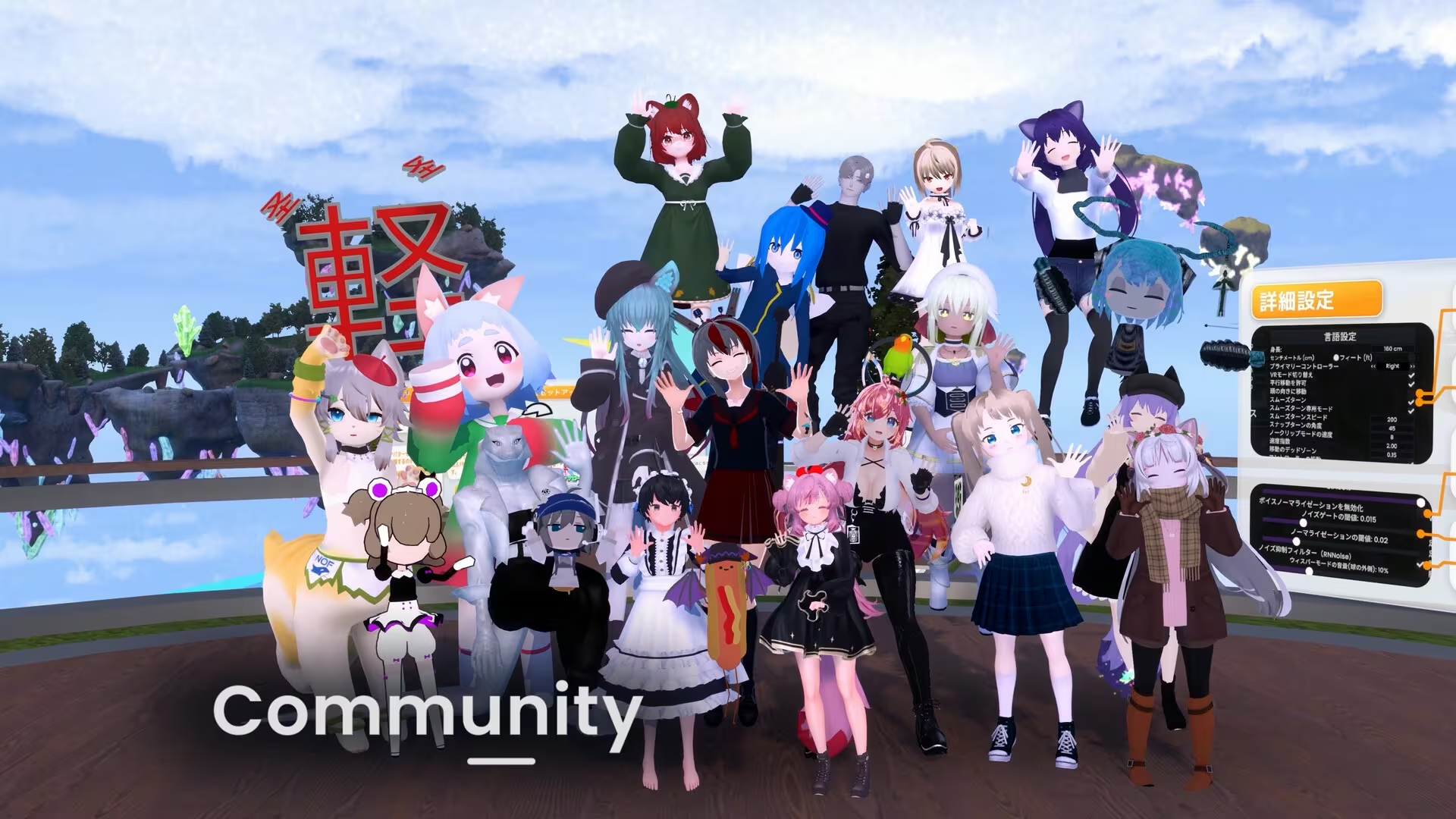
Enter a novel digital universe with infinite possibilities. Whether you resonate with people around the world in a casual conversation, playing games and socializing or you riff off each other when creating anything from art to programming complex games, you'll find your place here.
Global score
81/100
Genres
Casual, Indie, Free To Play, Early Access
Similar games
Pros
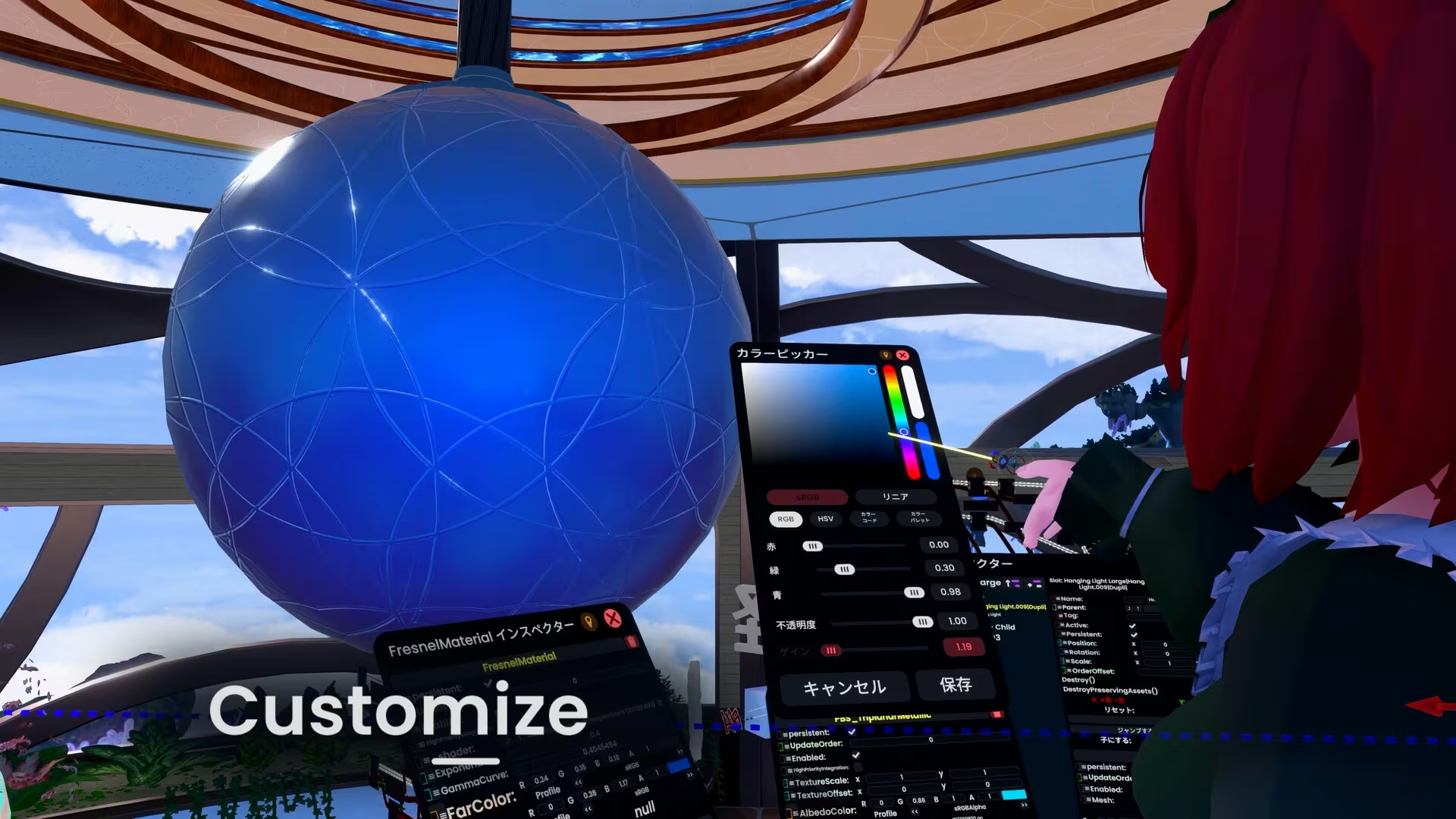
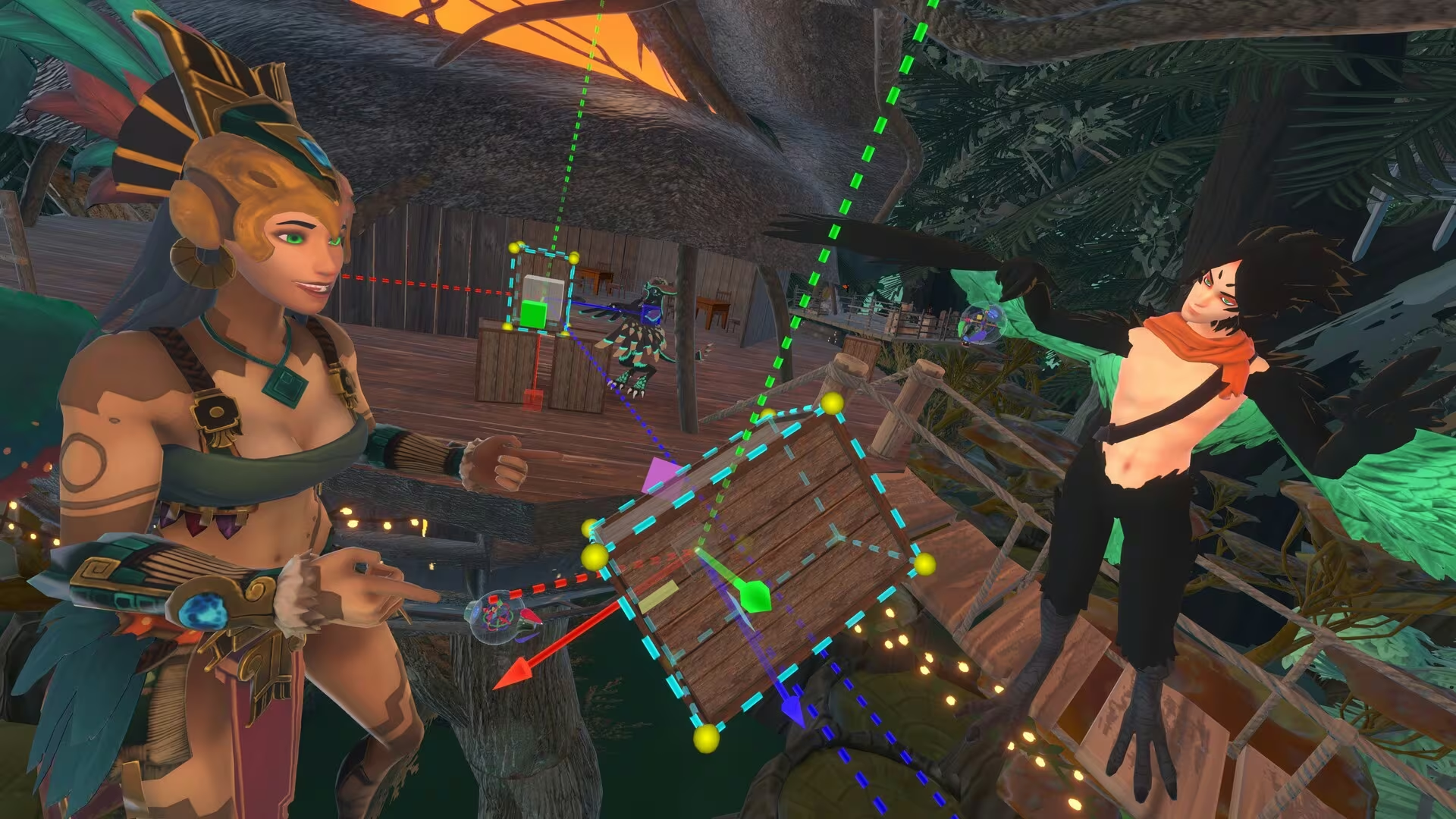
- Extensive creative freedom and in-game building tools
- Supportive and welcoming community with active mentors
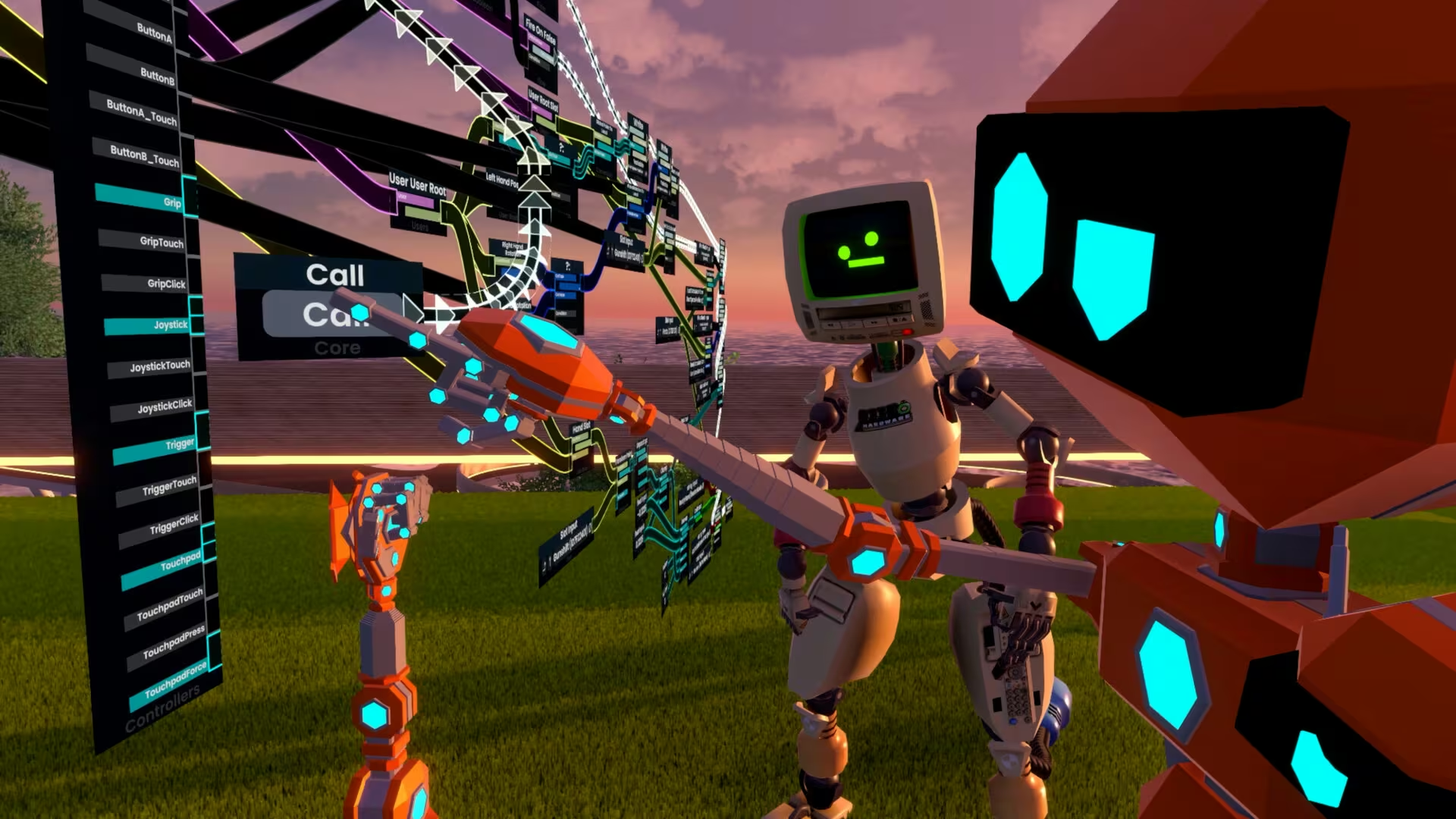
- Powerful visual scripting system (protoflux)
- Frequent developer updates and community involvement
- Cross-platform vr and desktop support
Cons
- Steep learning curve for new users
- Performance issues and high hardware requirements
- Small player base limiting social variety
- Complex ui and lack of comprehensive tutorials
- Some community toxicity and moderation concerns
Analysis
Less representative of its motivational profile, with noticeable differences. Motivations that often define this kind of title include Cooperation, Fellowship, Intimacy, Leadership. Here, the score leans higher than usual among comparable games on Expression. It leans lower than usual among comparable games on Survival, Violence.
How to use the graph
Similar games map
Each dot is a game. They are arranged from the same motivation profile as in the “Motivations” section below. Closer dots usually mean more similar reasons to play (exploration, competition, relaxation, etc.)—not that one game is “better” than another.
- Larger dot with a light outline: the game you are viewing.
- Colour: groups of games with comparable motivation patterns (statistical clusters).
- Hover a dot to see the game name; click to open its page.
- Scroll or double-click the chart to zoom out and see more games.
Why don’t the axes read like a score? This view uses t-SNE: it only keeps who is close to whom. The scales are not “good to bad” or hours played—they separate groups on the map. Read distance between dots, not the axis numbers.
Motivations
-
Autonomy5
"Players have extensive freedom to create, modify, and control their environment, avatars, and objects entirely in-game with powerful tools like ProtoFlux."
-
Competence4
"The game demands and fosters skill development in programming, 3D modeling, and creative problem solving, with feedback through creation and collaboration."
-
Competition-3
"Focus is on personal creativity and collaboration rather than competitive ranked modes or leaderboards."
-
Continuation4
"Many users report long sessions and habitual play driven by creative projects and social interaction."
-
Cooperation4
"Strong emphasis on collaboration in avatar and world creation, with community mentors and group events."
-
Creativity5
"Core motivation is creative freedom to build, script, and customize virtually anything in the platform."
-
Domination-4
"Community values shared creation and mutual respect; some issues with mentor superiority but overall cooperative."
-
Escapism4
"Users use the platform to escape real life through immersive social and creative experiences."
-
Expectation-4
"Engagement is driven by intrinsic interest and personal desire rather than obligation or external pressure."
-
Experimenting5
"Players frequently explore new mechanics, test scripting, and experiment with creative possibilities."
-
Exploration3
"Exploration of new worlds and user-generated content is common, though playerbase size limits variety."
-
Expression5
"High degree of avatar and environment customization enables strong self-expression."
-
Fantasy4
"The platform supports imaginative and fantastical experiences beyond realistic scenarios."
-
Fellowship4
"Community is described as welcoming, supportive, and collaborative, fostering a sense of belonging."
-
Growth4
"Players develop technical and creative skills, supported by mentors and community resources."
-
Health-3
"Primarily sedentary VR and desktop play with no emphasis on physical activity or rehab."
-
Idle-4
"Requires sustained attention and active engagement due to complexity and creative demands."
-
Intimacy3
"Community interactions are friendly and supportive, though mostly social rather than deeply intimate."
-
Leadership1
"Mentor roles exist but have mixed effectiveness; leadership is present but not dominant."
-
Progression3
"Players accumulate avatars, items, and upgrades, though progression is more creative than linear."
-
Relaxation2
"Some players find relaxation in creative flow, but complexity and performance issues can cause tension."
-
Sensation3
"Visual and auditory stimuli are engaging but not the primary focus; creativity and interaction dominate."
-
Status1
"Some social recognition through mentor badges and community roles, but limited emphasis on status."
-
Story2
"Some narrative and roleplaying elements exist, but the platform is mostly user-driven without fixed stories."
-
Strategy3
"Creative problem solving and scripting require mental challenge and planning."
-
Thrill0
"Not a primary motivation; experiences are more about creativity and socializing than suspense or risk."
-
Value4
"Players perceive high value in creative freedom, community, and ongoing development despite performance issues."
-
Violence-4
"Focus is on constructive creation and collaboration rather than combat or destruction."
-
Survival-5
"No survival or threat mechanics; environment is stable and low-risk."
Last update: 29/04/2026