SCP: Secret Laboratory similar games & best alternatives
SCP: Secret Laboratory
2017
Related articles
Quick resume
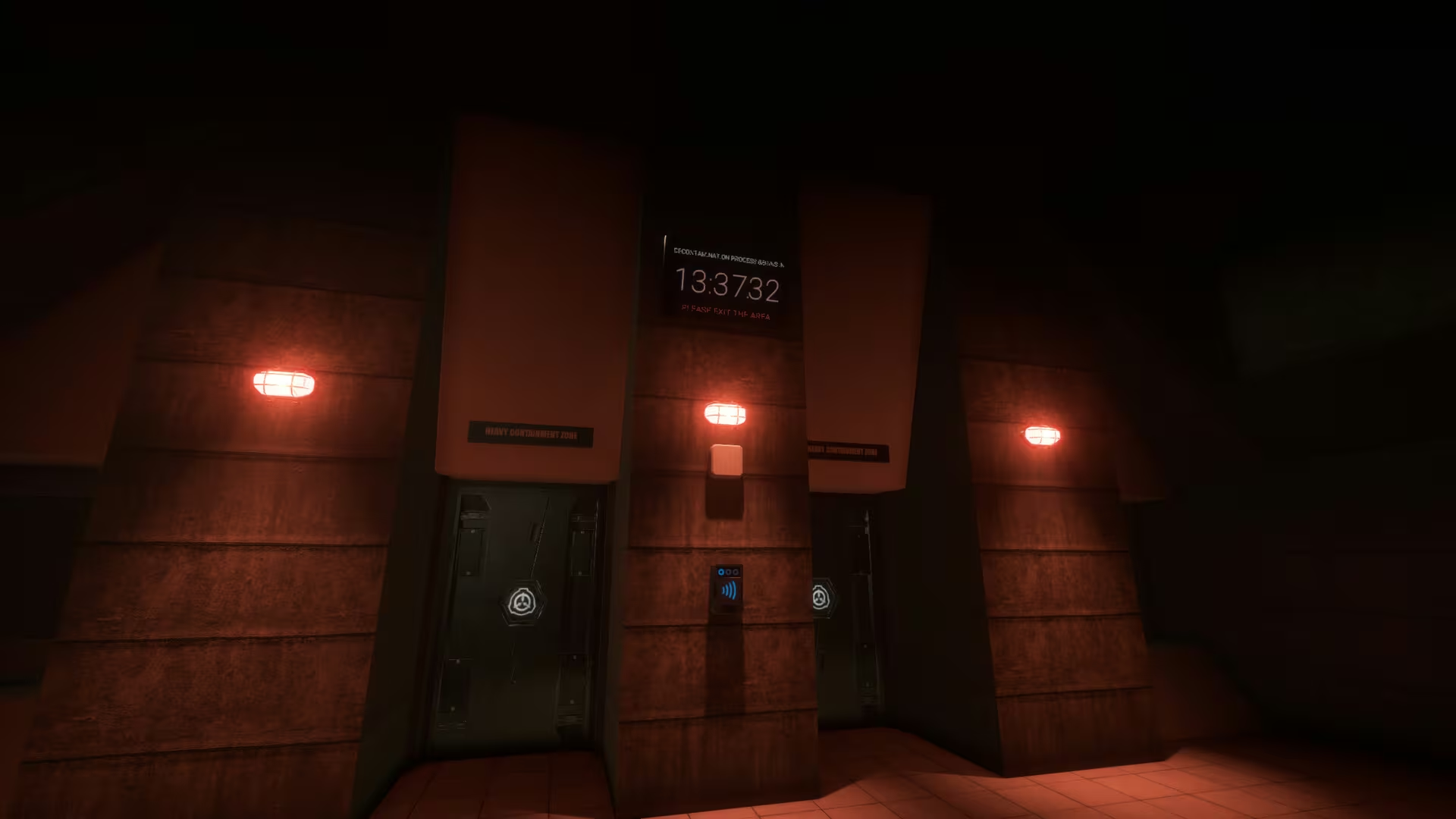
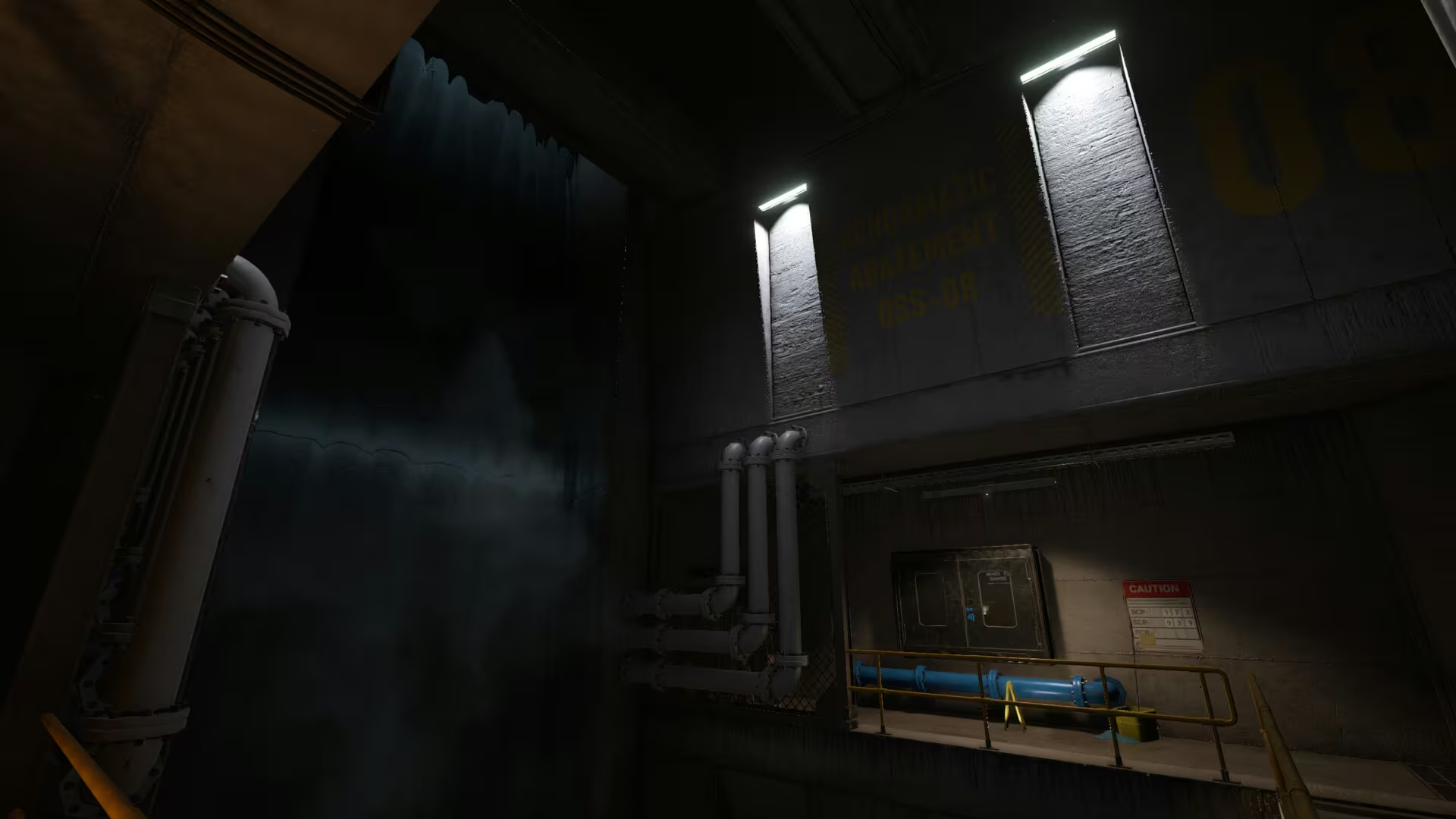
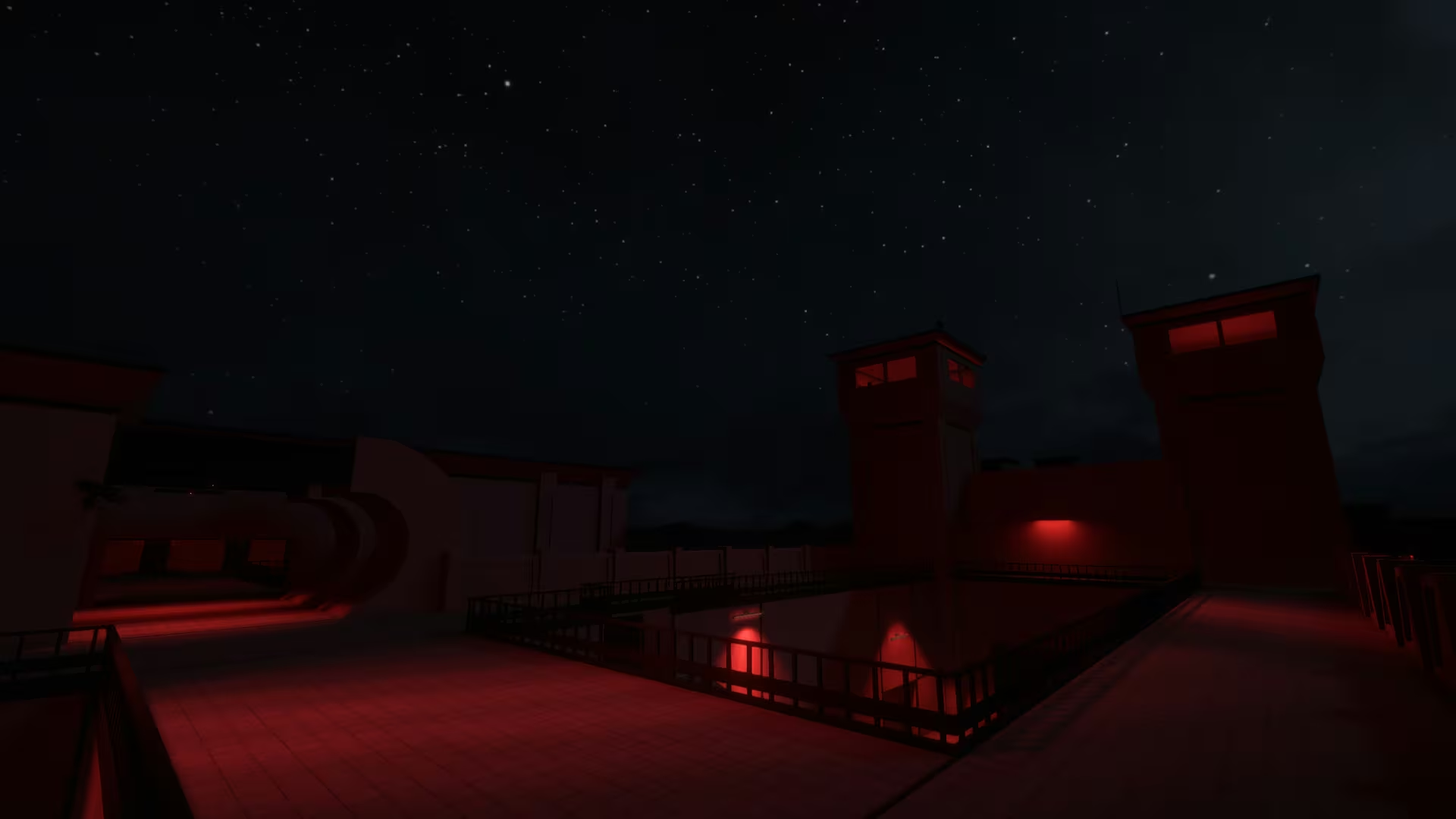
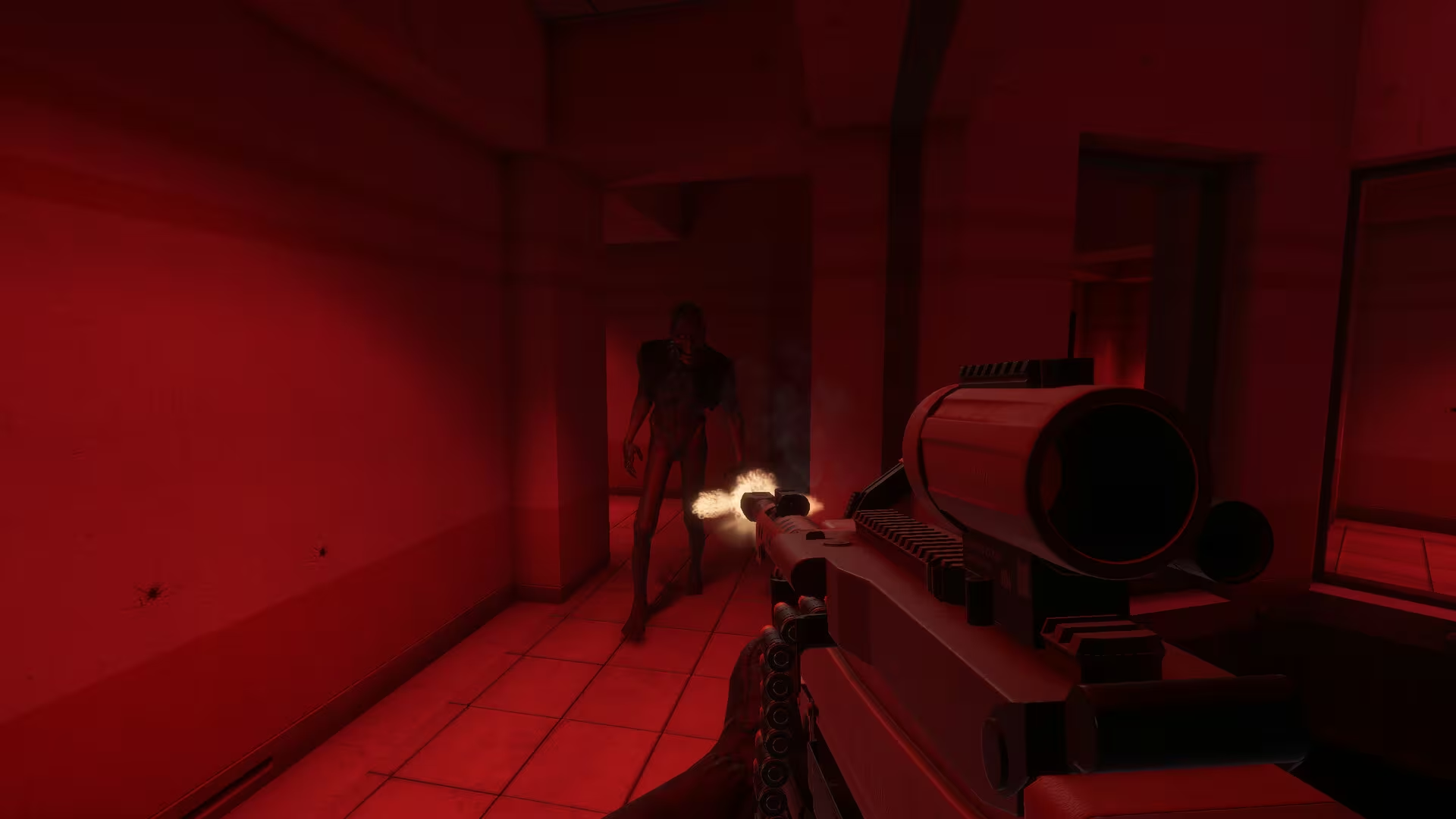
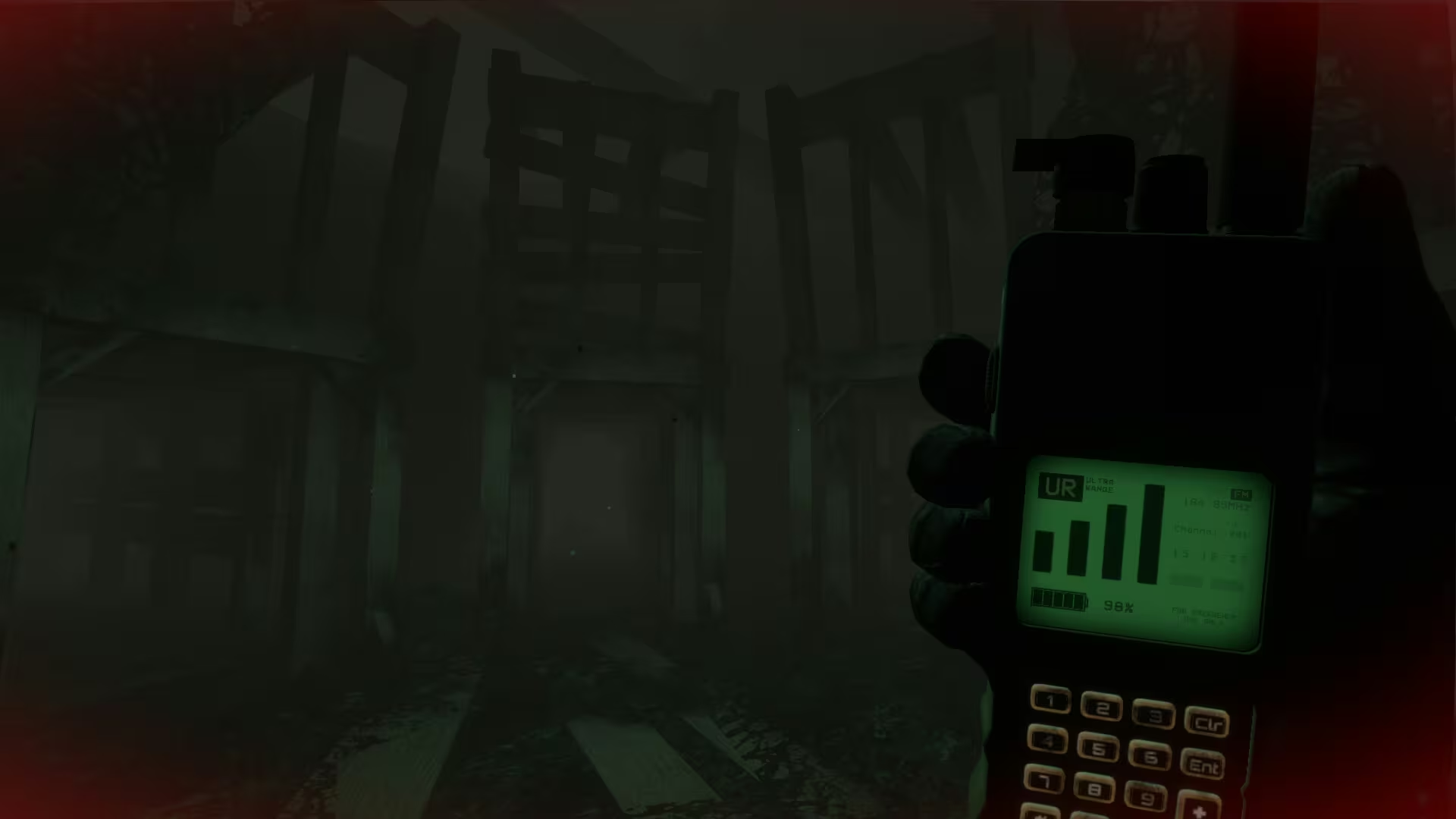
Deep within a secure underground facility, a sudden containment breach allows many of the secured anomalies to escape from their chambers. Assist the Foundation in re-securing the facility, help the Insurgency in their goal to capture it, or wreak havoc as an SCP in a frantic bid to escape.
Global score
91/100
Genres
Action, Casual, Indie, Role-playing (RPG), Free To Play, Strategy, Shooter
Similar games
Pros
- Free to play with no microtransactions
- High replayability with chaotic, unpredictable matches
- Strong community and voice chat integration
- Frequent updates and developer support
- Engaging mix of horror, action, and social gameplay
Cons
- Toxic and offensive community behavior reported
- Steep learning curve for new players
- Occasional bugs and performance issues
- Some imbalance and frustration in gameplay
- Limited visual customization and progression
Analysis
Broadly representative of its motivational profile, with a few distinct shifts. Motivations that often define this kind of title include Competition, Fellowship, Domination, Status. Here, the score leans higher than usual among comparable games on Fantasy. It leans lower than usual among comparable games on Relaxation, Progression.
How to use the graph
Similar games map
Each dot is a game. They are arranged from the same motivation profile as in the “Motivations” section below. Closer dots usually mean more similar reasons to play (exploration, competition, relaxation, etc.)—not that one game is “better” than another.
- Larger dot with a light outline: the game you are viewing.
- Colour: groups of games with comparable motivation patterns (statistical clusters).
- Hover a dot to see the game name; click to open its page.
- Scroll or double-click the chart to zoom out and see more games.
Why don’t the axes read like a score? This view uses t-SNE: it only keeps who is close to whom. The scales are not “good to bad” or hours played—they separate groups on the map. Read distance between dots, not the axis numbers.
Motivations
-
Autonomy4
"Players choose different roles (Class-D, SCPs, MTF, Chaos Insurgency) and have freedom in how to act within chaotic, unpredictable matches."
-
Competence3
"Game features skill-based elements like aiming, juking SCPs, managing resources, and mastering different roles with a learning curve."
-
Competition3
"Competitive elements exist in PvP combat and team objectives, though chaos and cooperation also play strong roles."
-
Continuation4
"Many players report long-term engagement with hundreds of hours played and habitual return despite frustration."
-
Cooperation3
"Teamwork and voice chat are important for success, though betrayal and chaotic interactions also occur."
-
Creativity2
"Some creativity in player interactions, roleplay, and emergent gameplay, but mostly within predefined roles and maps."
-
Domination2
"Players often seek to dominate others through combat and trolling, though shared chaotic experiences temper pure domination."
-
Escapism4
"Players use the game to escape reality, enjoy chaotic horror scenarios, and experience stress relief through gameplay."
-
Expectation-3
"Players engage voluntarily for fun and social reasons rather than obligation or pressure."
-
Experimenting3
"Players experiment with different roles, strategies, and chaotic interactions each match."
-
Exploration2
"Some exploration of maps and secrets, but mostly familiar environments with procedural elements."
-
Expression1
"Limited customization mentioned; expression mainly through voice chat and roleplay rather than visual customization."
-
Fantasy5
"Strong fantasy element with SCP lore, monsters, and supernatural scenarios."
-
Fellowship3
"Community and social interaction are important, with voice chat and friendships formed, despite some toxicity."
-
Growth3
"Players develop skills over time, learning mechanics, roles, and strategies."
-
Health-4
"Typical sedentary gameplay with no physical activity involved."
-
Idle-3
"Requires active attention and focus during matches; downtime in spectator mode is disliked."
-
Intimacy1
"Some social bonding and friendships form, but interactions are mostly casual and chaotic rather than deeply intimate."
-
Leadership1
"Some players take leadership roles (e.g. squad captains), but overall gameplay is chaotic and shared."
-
Progression1
"Minimal progression systems; gameplay focuses on round-based objectives rather than long-term item accumulation."
-
Relaxation-2
"Gameplay is tense, chaotic, and often stressful rather than relaxing."
-
Sensation3
"Sensory stimulation from fast-paced action, horror elements, and chaotic voice chat."
-
Status1
"Some recognition through skill and community standing, but no formal ranking or leaderboard system."
-
Story2
"Some lore and narrative context from SCP universe, but gameplay is mostly emergent and multiplayer focused."
-
Strategy3
"Requires tactical thinking, resource management, and team coordination."
-
Thrill4
"High suspense and thrill from horror elements, unpredictability, and tense encounters."
-
Value5
"Free-to-play with frequent updates and high replayability offers excellent value."
-
Violence4
"Combat, killing, and destruction are core gameplay elements."
-
Survival4
"Strong survival focus in escaping, avoiding threats, and managing resources."
Last update: 29/04/2026