The Beast Within: A Gabriel Knight® Mystery Thumbnail

The Beast Within: A Gabriel Knight® Mystery similar games & best alternatives

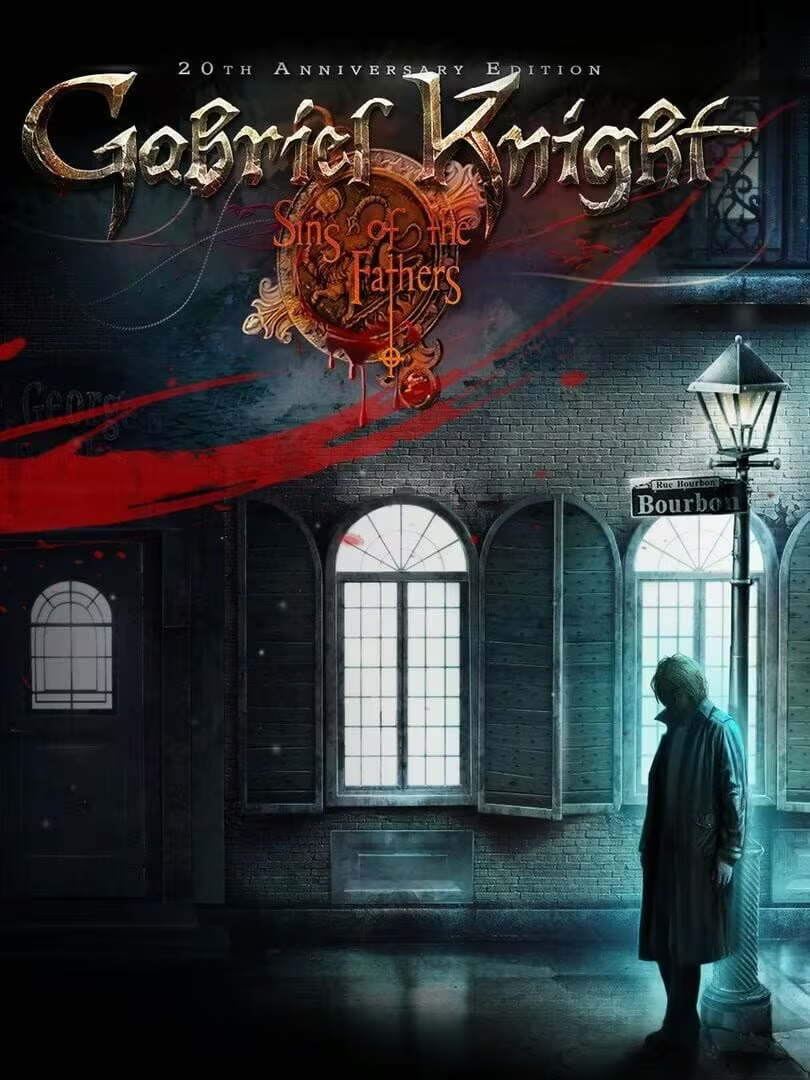
The Beast Within: A Gabriel Knight® Mystery

PC (Microsoft Windows), DOS, Mac • 2016

Related articles

Quick resume

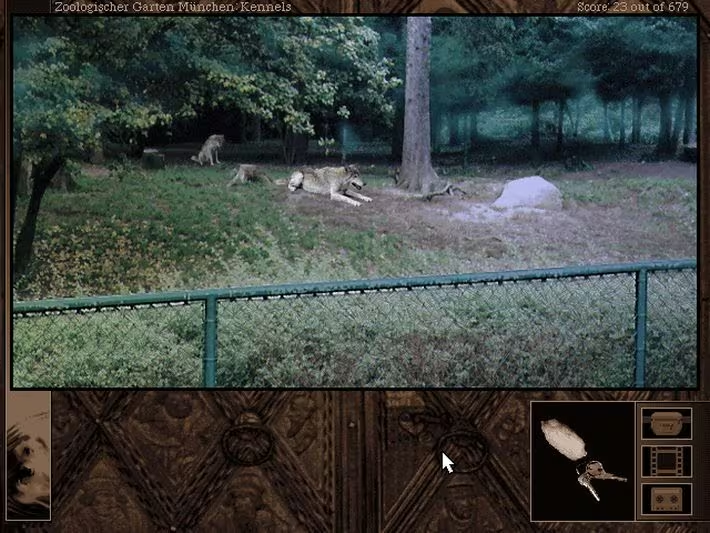
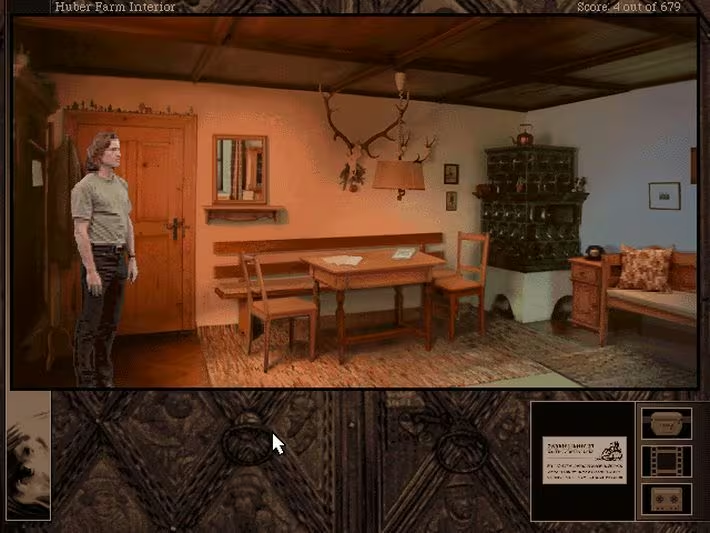
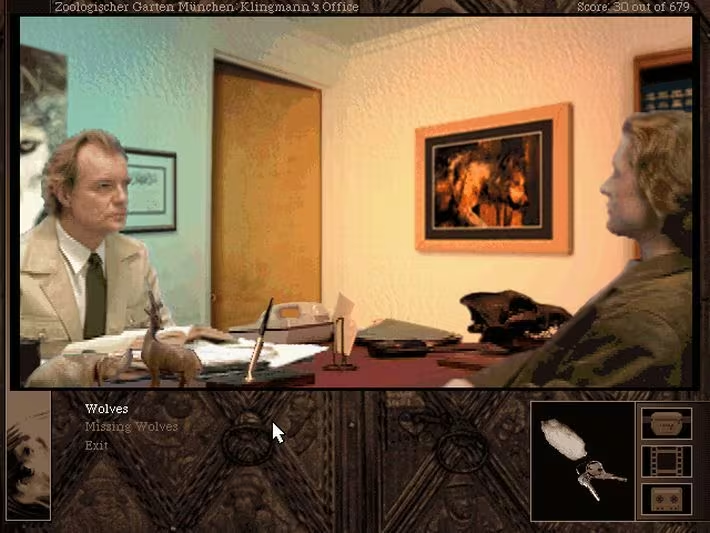
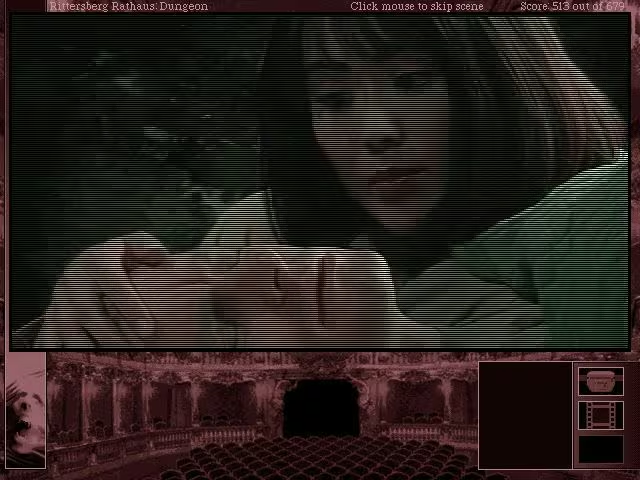
Play as both Gabriel and Grace as they are dispatched to Munich to solve a series of mutilation murders thought to be the work of werewolves.

Global score

92/100

Genres

Adventure, Point-and-click

Similar games

    Pros

    • Engaging and immersive story
    • Strong character development
    • Historical and cultural depth
    • Challenging and logical puzzles
    • Unique fmv presentation

    Cons

    • Dated graphics and video quality
    • Some puzzles are obscure or unintuitive
    • Slow pacing and occasional frustration
    • Lack of subtitles in original version
    • Linear gameplay with limited player freedom

    Analysis

    Broadly representative of its motivational profile, with a few distinct shifts. Motivations that often define this kind of title include Expression, Fellowship, Cooperation, Competition. Here, the score leans higher than usual among comparable games on Value. It leans lower than usual among comparable games on Experimenting, Expression.

    How to use the graph
    Similar games map

    Each dot is a game. They are arranged from the same motivation profile as in the “Motivations” section below. Closer dots usually mean more similar reasons to play (exploration, competition, relaxation, etc.)—not that one game is “better” than another.

    • Larger dot with a light outline: the game you are viewing.
    • Colour: groups of games with comparable motivation patterns (statistical clusters).
    • Hover a dot to see the game name; click to open its page.
    • Scroll or double-click the chart to zoom out and see more games.

    Why don’t the axes read like a score? This view uses t-SNE: it only keeps who is close to whom. The scales are not “good to bad” or hours played—they separate groups on the map. Read distance between dots, not the axis numbers.

    Motivations

    • Autonomy
      3

      "Players control two characters and make decisions to solve puzzles and progress the story, indicating a degree of personal agency."

    • Competence
      2

      "The game involves puzzle solving and investigation requiring skill and logical thinking, though some puzzles are noted as difficult or obscure."

    • Competition
      -5

      "The game is a single-player narrative adventure with no competitive elements or player comparison."

    • Continuation
      3

      "Many players report long playtimes and repeated playthroughs, indicating sustained engagement and attachment."

    • Cooperation
      -5

      "The game is single-player with no multiplayer or cooperative gameplay."

    • Creativity
      1

      "Players solve puzzles and explore, but there is limited creation or modification of game elements."

    • Domination
      -5

      "No evidence of exerting control or superiority over others; gameplay is individual and narrative-focused."

    • Escapism
      4

      "Players use the game to immerse in a rich fictional mystery and historical setting, escaping real life."

    • Expectation
      -4

      "Players engage voluntarily out of interest in story and adventure, with no obligation or external pressure."

    • Experimenting
      -2

      "Gameplay follows established point-and-click adventure conventions with limited novelty or mechanic experimentation."

    • Exploration
      3

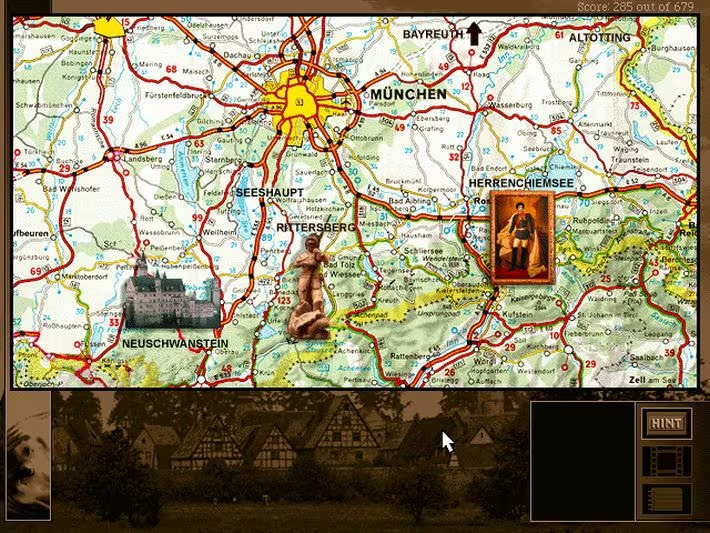
      "Players explore various real and fictional locations, including castles and museums, discovering story elements."

    • Expression
      -5

      "No customization or personalization options; presentation is fixed through FMV and scripted scenes."

    • Fantasy
      3

      "The game blends historical facts with supernatural fiction including werewolves and occult themes."

    • Fellowship
      -5

      "Single-player experience with minimal social interaction or community involvement."

    • Growth
      3

      "Players develop problem-solving skills and learn about history and mythology through gameplay."

    • Health
      -5

      "Sedentary gameplay typical of point-and-click adventures with no physical activity."

    • Idle
      -3

      "Requires focused attention to solve puzzles and follow story; not suitable for casual or background play."

    • Intimacy
      -4

      "Limited to scripted character relationships; no player-driven social or emotional connections."

    • Leadership
      -5

      "No leadership or group management elements; player controls only individual characters."

    • Progression
      3

      "Players collect items and unlock story chapters, showing clear progression through the narrative."

    • Relaxation
      2

      "Some players find the game immersive and engaging, though puzzles can cause frustration and tension."

    • Sensation
      1

      "The FMV and music provide sensory stimulation, but visuals are dated and sometimes distracting."

    • Status
      -5

      "No social recognition or status systems present; gameplay is individual and narrative-driven."

    • Story
      5

      "Highly praised for its deep, immersive narrative, character development, and integration of history and fiction."

    • Strategy
      2

      "Requires logical thinking and puzzle solving, but gameplay is mostly linear and scripted."

    • Thrill
      3

      "Mystery and suspense elements create tension and emotional engagement during the story."

    • Value
      4

      "Players feel the game offers excellent value for its price due to story depth and length."

    • Violence
      1

      "Contains themes of murder and werewolves, but violence is not the focus and is presented in a narrative context."

    • Survival
      1

      "The story involves avoiding threats and solving murders, but gameplay is not focused on survival mechanics."

    Last update: 29/04/2026