the static speaks my name Thumbnail

the static speaks my name similar games & best alternatives
the static speaks my name

PC (Microsoft Windows), Windows Phone, Mac, Linux • 2015

Related articles

Quick resume

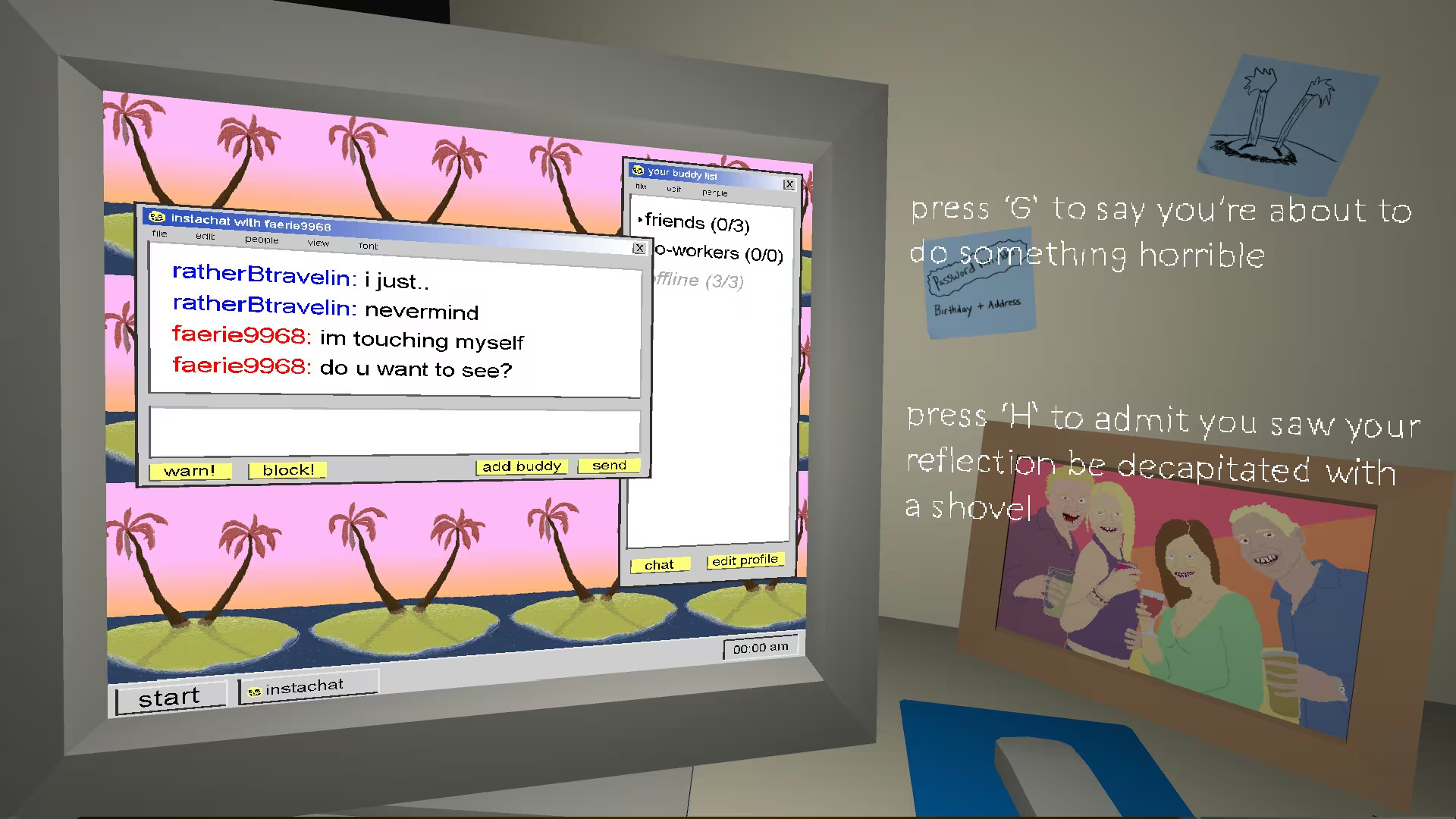
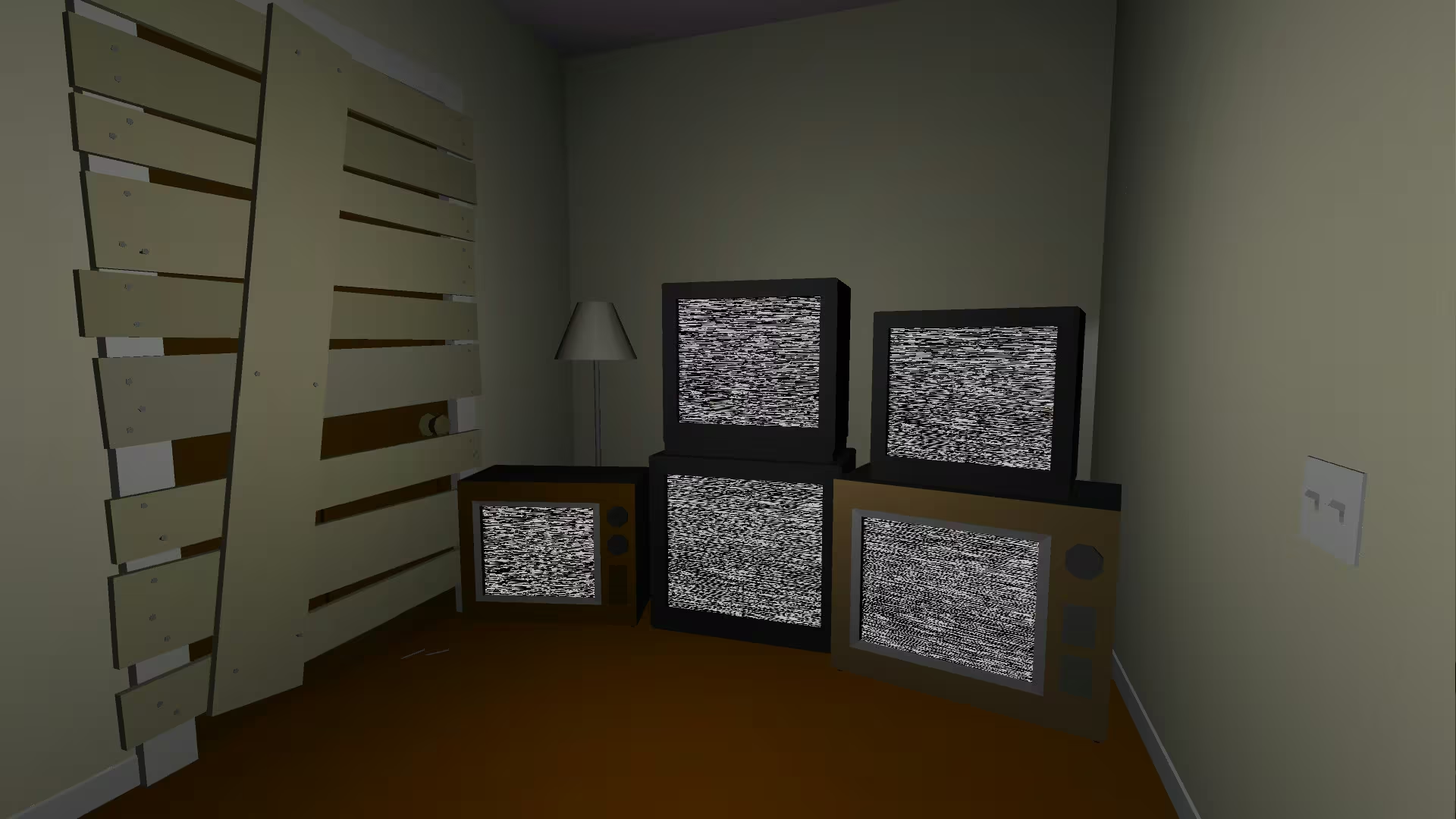
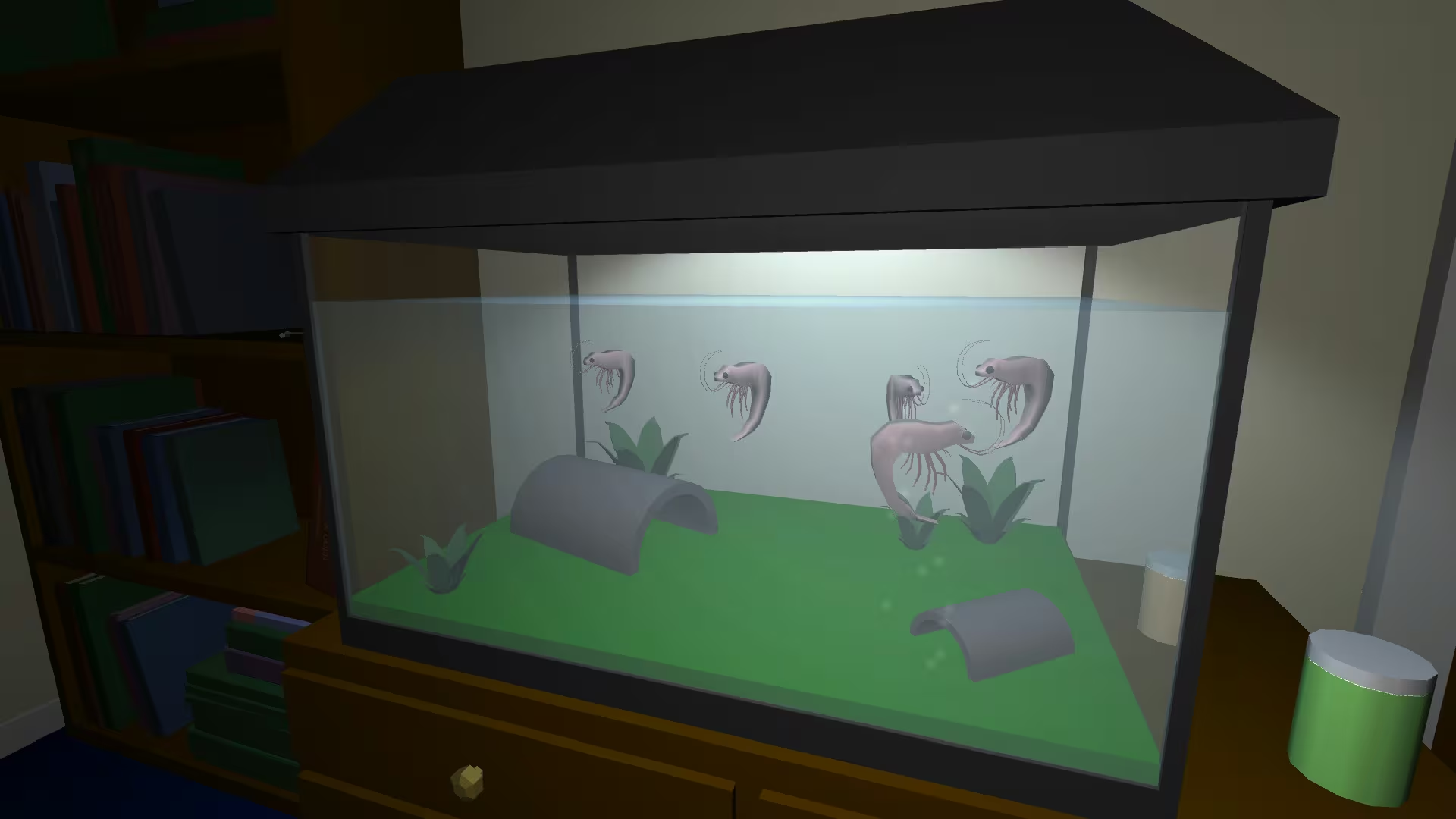
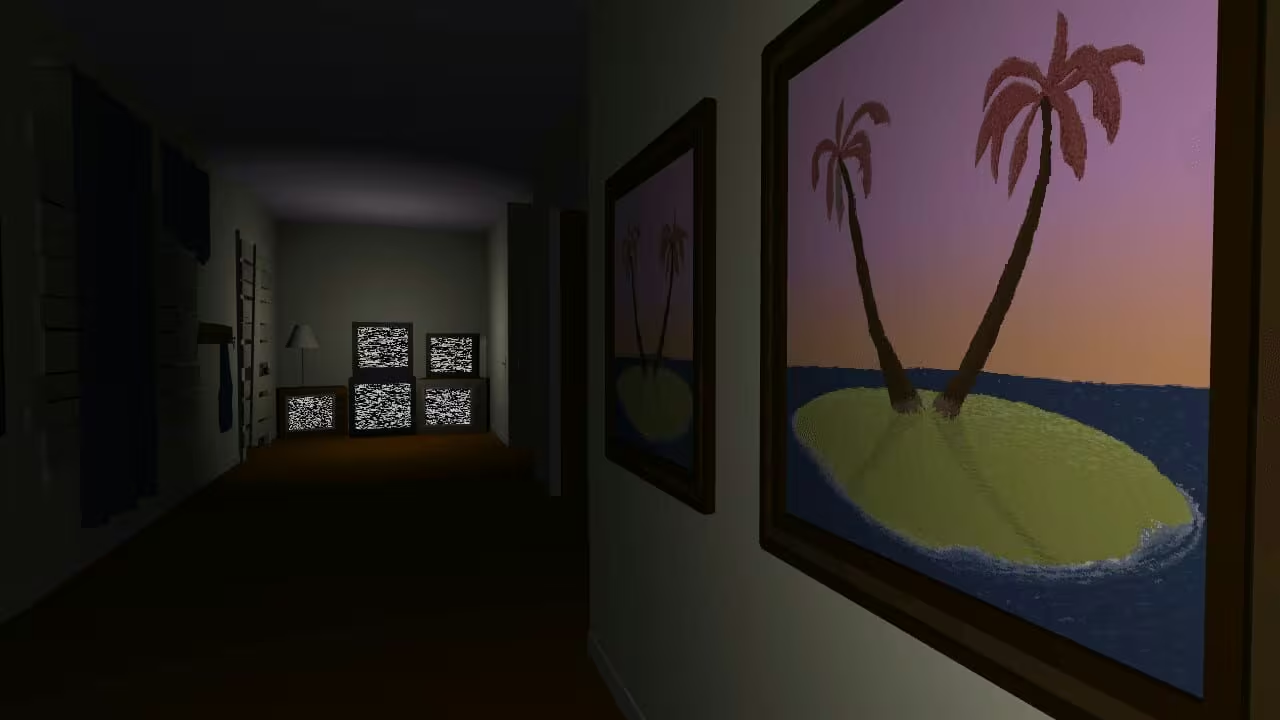
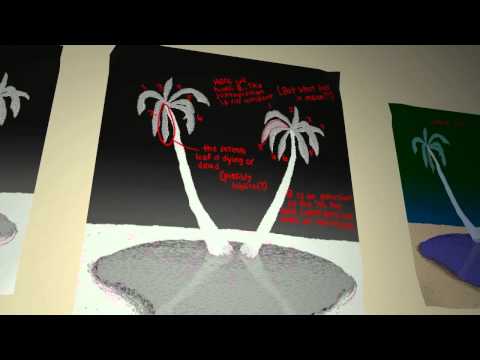
A dark/sad/weird/funny first person exploration game. You play a man on his last night alive as he obsesses over a mysterious painting. More of a story game in that it emphasizes mood and character over gameplay. Takes ten minutes to play and has "next-gen" features like a shrimp tank.

Global score

82/100

Genres

Adventure, Indie, Role-playing (RPG), Free To Play

Similar games

    Pros

    • Powerful psychological narrative
    • Strong atmospheric audio and visuals
    • Free and very short experience
    • Thought-provoking and symbolic
    • Engages players emotionally

    Cons

    • Very short gameplay
    • Minimal interactivity and challenge
    • May be triggering for sensitive players
    • Lack of expanded content or multiple stories
    • Some ui and presentation issues

    Analysis

    Less representative of its motivational profile, with noticeable differences. Motivations that often define this kind of title include Strategy, Survival, Competence, Violence. Here, the score leans higher than usual among comparable games on Violence. It leans lower than usual among comparable games on Relaxation, Progression.

    How to use the graph
    Similar games map

    Each dot is a game. They are arranged from the same motivation profile as in the “Motivations” section below. Closer dots usually mean more similar reasons to play (exploration, competition, relaxation, etc.)—not that one game is “better” than another.

    • Larger dot with a light outline: the game you are viewing.
    • Colour: groups of games with comparable motivation patterns (statistical clusters).
    • Hover a dot to see the game name; click to open its page.
    • Scroll or double-click the chart to zoom out and see more games.

    Why don’t the axes read like a score? This view uses t-SNE: it only keeps who is close to whom. The scales are not “good to bad” or hours played—they separate groups on the map. Read distance between dots, not the axis numbers.

    Motivations

    • Autonomy
      2

      "Players follow a linear sequence of menial tasks with limited choices, but have some freedom to explore the house and make one key moral decision."

    • Competence
      -3

      "Gameplay consists mainly of simple, predictable interactions with minimal skill or challenge."

    • Competition
      -5

      "No competitive elements; focus is on personal experience without comparison to others."

    • Continuation
      3

      "Some players report repeated playthroughs and obsession with the game despite its short length."

    • Cooperation
      -5

      "Single-player experience with no cooperative or multiplayer features."

    • Creativity
      1

      "Players can explore and interpret symbolic elements, but no creation or modification of content."

    • Domination
      -5

      "No social dominance or power dynamics; interactions are solitary and introspective."

    • Escapism
      4

      "Players use the game to immerse in a dark fictional narrative, often as a form of psychological exploration or distraction."

    • Expectation
      -4

      "Players engage voluntarily out of curiosity or interest in the theme, not obligation."

    • Experimenting
      2

      "Some exploration and theory crafting about hidden meanings, but gameplay is mostly fixed."

    • Exploration
      3

      "Players explore the environment to uncover story details and symbolism."

    • Expression
      -4

      "No character customization or cosmetic expression; presentation is fixed."

    • Fantasy
      -2

      "The game depicts a realistic, psychological scenario rather than imaginative fiction."

    • Fellowship
      -5

      "Experience is solitary with minimal social interaction or community involvement."

    • Growth
      2

      "Players learn about the protagonist's psychology and piece together narrative clues."

    • Health
      -5

      "Sedentary gameplay with themes of depression and suicide; no physical activity involved."

    • Idle
      -3

      "Requires focused attention during the short playthrough; not a background or idle game."

    • Intimacy
      -4

      "Limited social connection; interactions are mostly internal and solitary."

    • Leadership
      -5

      "No leadership or group management elements present."

    • Progression
      -4

      "No item collection or upgrades; static narrative progression."

    • Relaxation
      -3

      "Atmosphere is tense, unsettling, and emotionally heavy rather than relaxing."

    • Sensation
      2

      "The game uses eerie audio and visuals to create emotional impact and unease."

    • Status
      -5

      "No social recognition or status systems involved."

    • Story
      5

      "Strong narrative immersion focused on psychological themes and storytelling through environment."

    • Strategy
      -4

      "Gameplay involves following straightforward tasks with minimal problem solving."

    • Thrill
      3

      "Creates suspense and emotional tension through dark themes and atmosphere."

    • Value
      4

      "Highly praised for its impactful experience despite being free and very short."

    • Violence
      3

      "Includes disturbing violent acts as part of the narrative, such as electrocution and suicide."

    • Survival
      -4

      "No survival mechanics; environment is static and low risk."

    Last update: 29/04/2026