Wagotabi: A Japanese Journey similar games & best alternatives
Wagotabi: A Japanese Journey
2025
Related articles
Quick resume
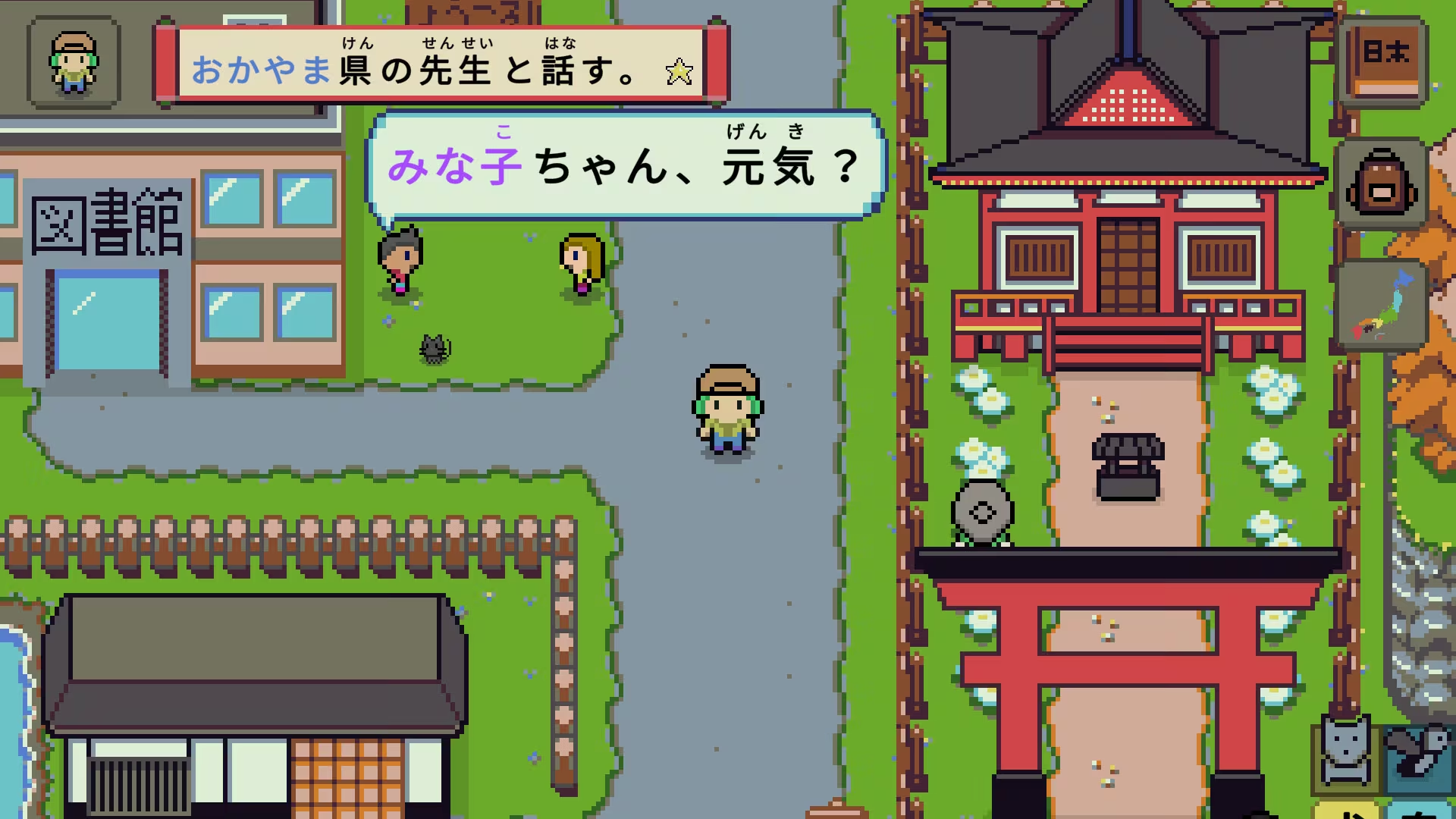
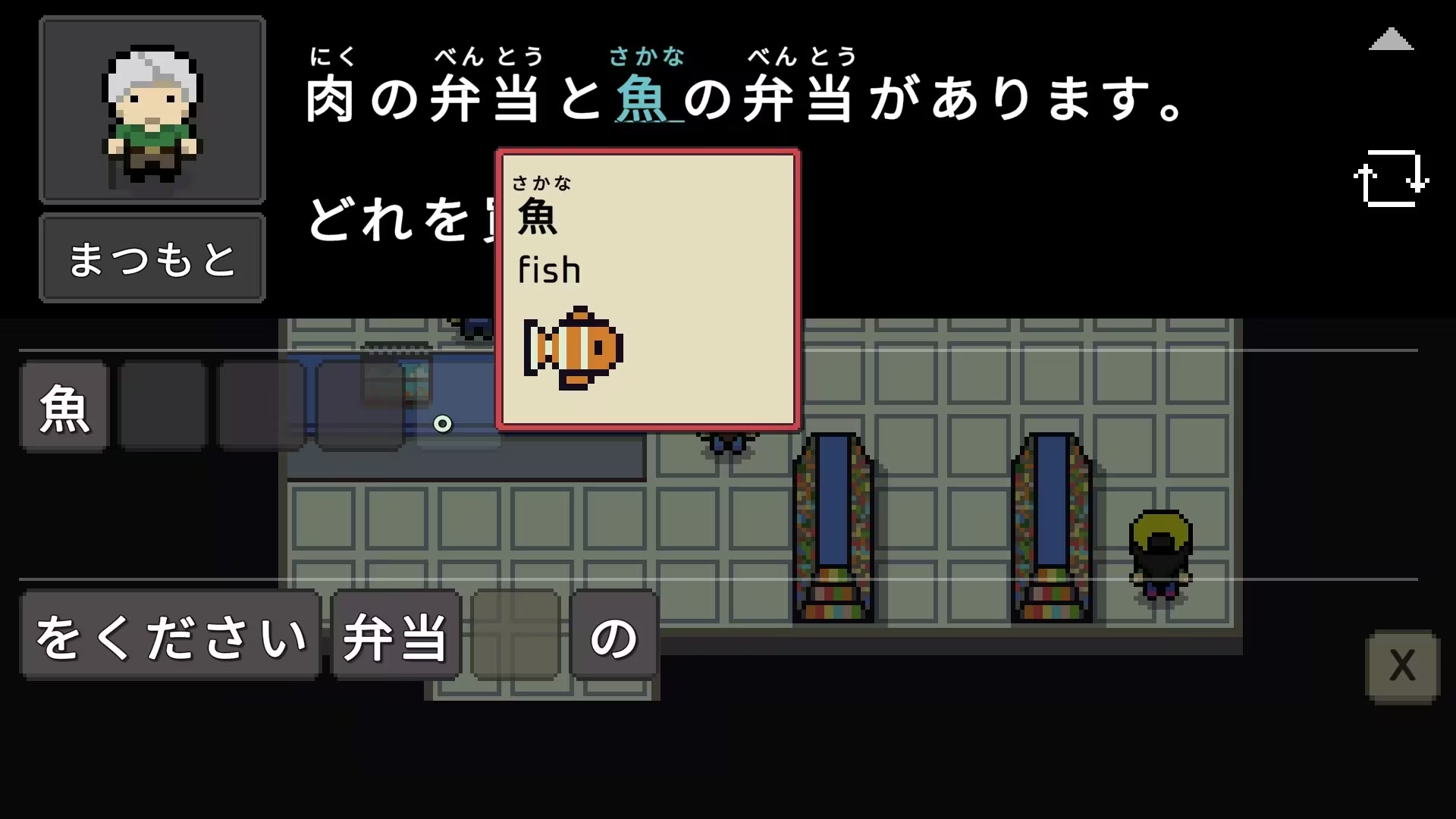
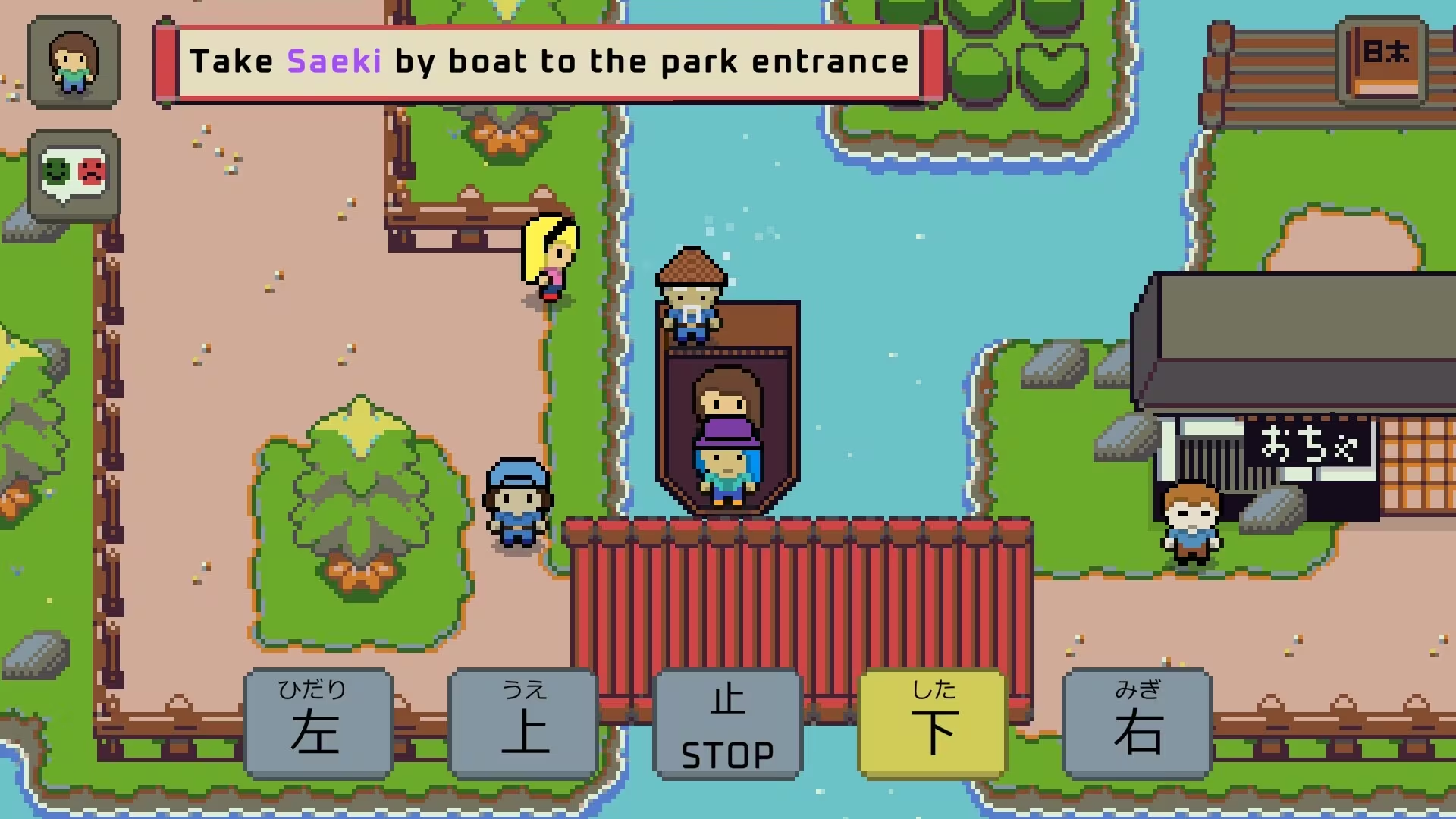
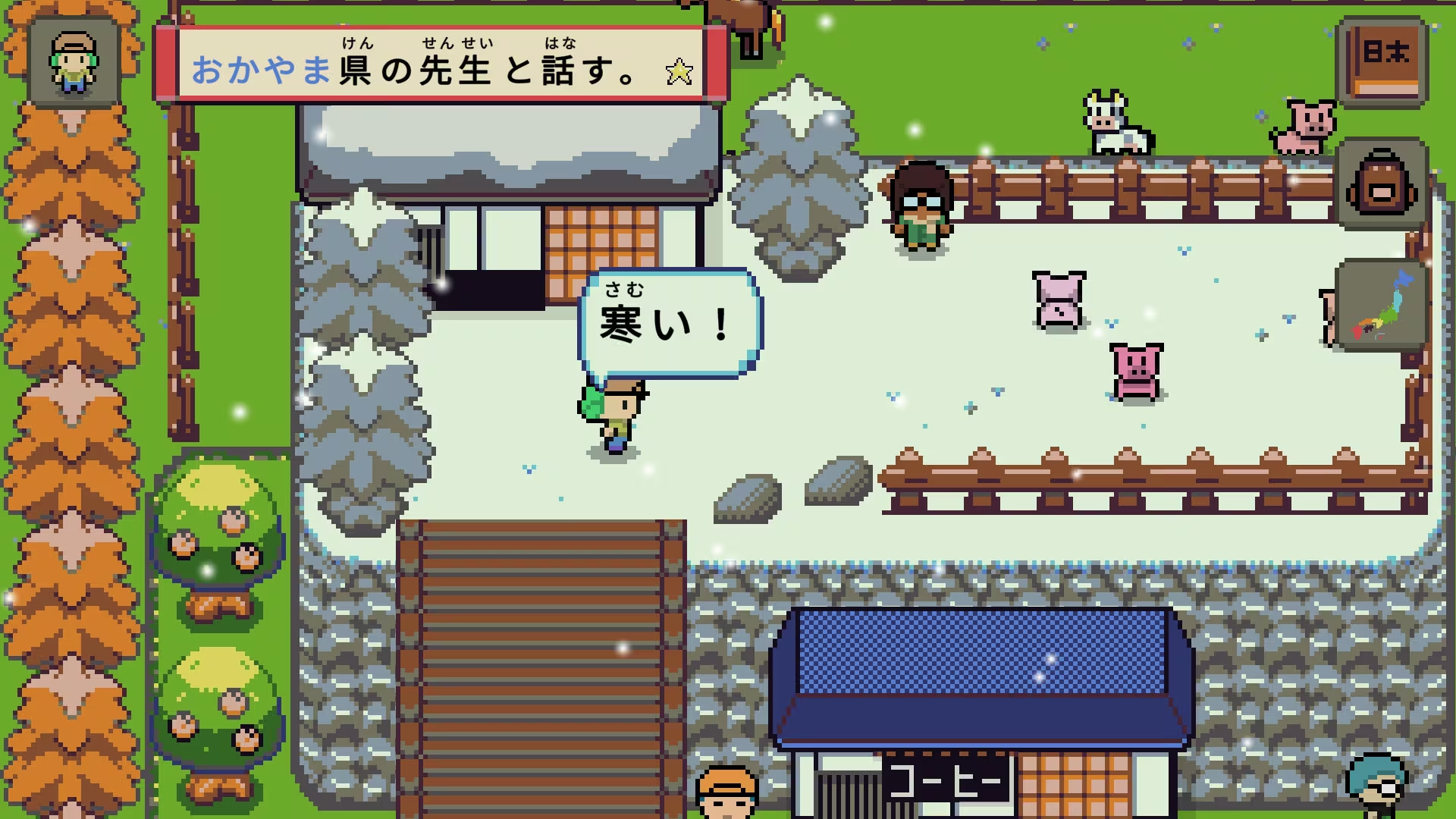
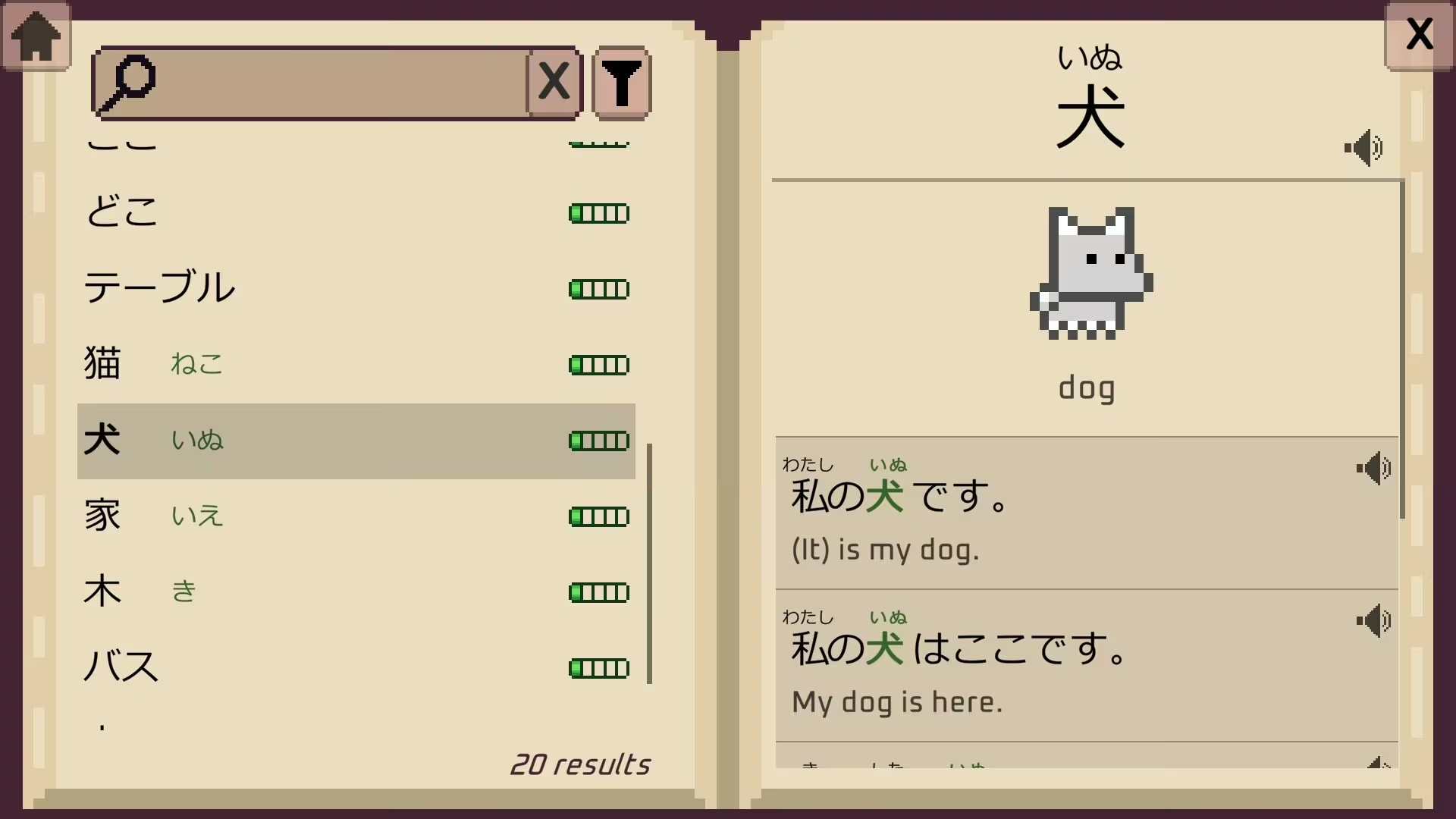
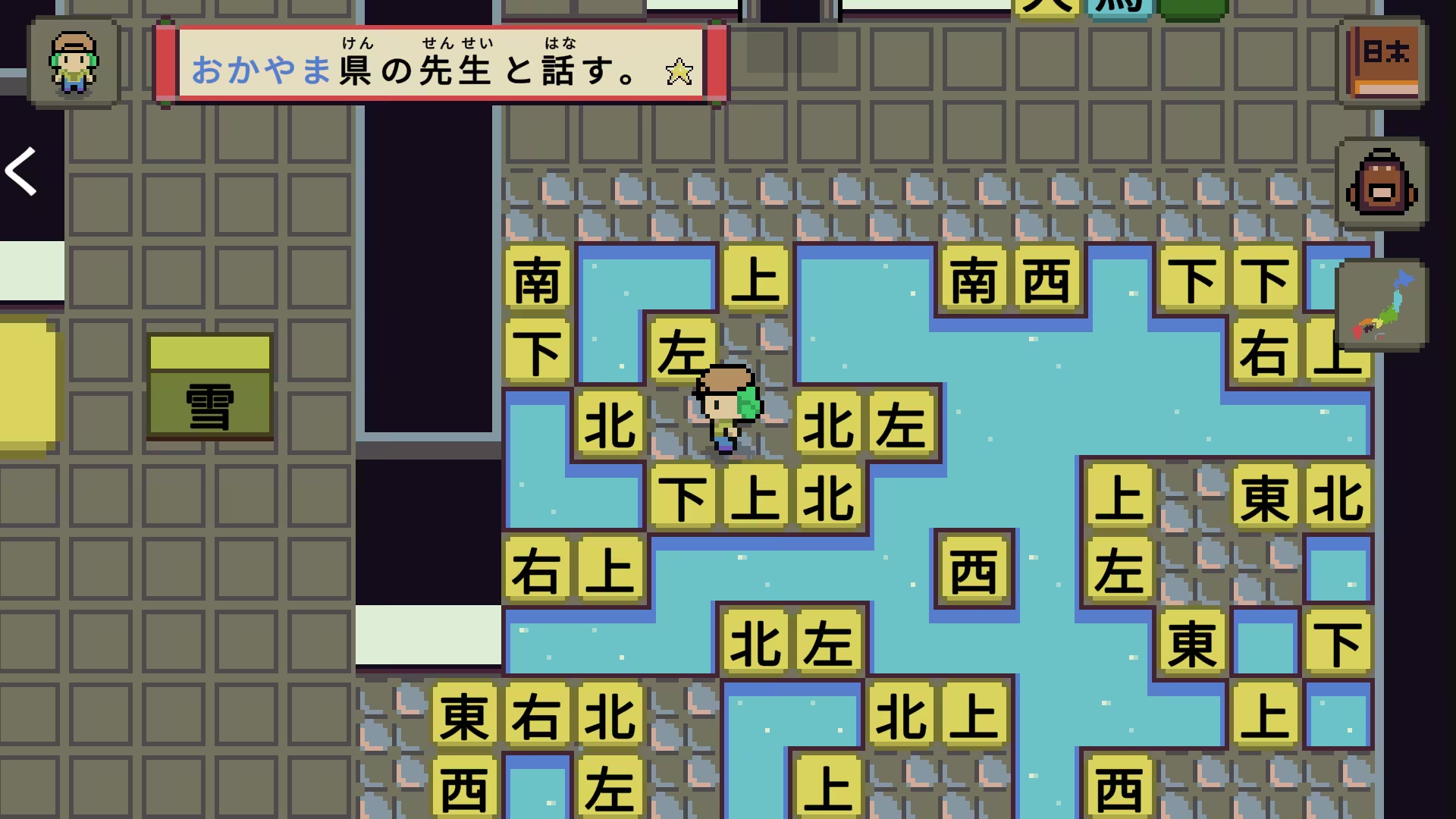
Wagotabi is an educational RPG teaching Japanese from the ground up. Immerse yourself in the language through interactive dialogues, quest-solving, and puzzles, all while exploring Japan and its rich culture. Will you become a Japanese master?
Global score
99/100
Genres
Casual, Indie, Role-playing (RPG), Simulator
Similar games
Pros
- Effective and engaging language learning
- Immersive exploration of japanese culture and geography
- Well-designed spaced repetition and minigames
- Cross-save between mobile and pc
- Friendly and responsive developers
Cons
- Limited content currently (only 2 prefectures)
- Some ui and control issues especially on pc
- Voice acting can be robotic or annoying
- Not ideal for absolute beginners without prior kana knowledge
- Lack of multiplayer or social features
Analysis
A very typical example of its motivational profile. Motivations that often define this kind of title include Fantasy, Violence, Story, Thrill. Here, the score leans higher than usual among comparable games on Story, Exploration. It leans lower than usual among comparable games on Survival.
How to use the graph
Similar games map
Each dot is a game. They are arranged from the same motivation profile as in the “Motivations” section below. Closer dots usually mean more similar reasons to play (exploration, competition, relaxation, etc.)—not that one game is “better” than another.
- Larger dot with a light outline: the game you are viewing.
- Colour: groups of games with comparable motivation patterns (statistical clusters).
- Hover a dot to see the game name; click to open its page.
- Scroll or double-click the chart to zoom out and see more games.
Why don’t the axes read like a score? This view uses t-SNE: it only keeps who is close to whom. The scales are not “good to bad” or hours played—they separate groups on the map. Read distance between dots, not the axis numbers.
Motivations
-
Autonomy4
"Players have control over pacing, study focus, and can choose how to engage with lessons and minigames."
-
Competence4
"The game offers skill challenges in language learning, including tests, minigames, and gradual mastery of vocabulary and grammar."
-
Competition-4
"Focus is on personal learning progress without comparison to others; no competitive or ranked modes."
-
Continuation4
"Many players report habitual play and long sessions, motivated by engaging content and steady progression."
-
Cooperation-5
"The game is a single-player experience focused on individual learning without multiplayer or teamwork."
-
Creativity2
"Some customization options and creative learning methods, but mostly structured lessons and predefined content."
-
Domination-5
"No elements of exerting control or superiority over others; interactions are educational and cooperative in spirit."
-
Escapism3
"Players use the game as a fun and immersive way to escape and engage with Japanese language and culture."
-
Expectation-4
"Players engage voluntarily out of personal desire to learn Japanese, not due to obligation or external pressure."
-
Experimenting3
"The game encourages trying new language concepts and exploring different learning modes and contexts."
-
Exploration4
"Players explore virtual Japanese prefectures and cultural environments, discovering new vocabulary and contexts."
-
Expression1
"Some character customization and self-expression, but limited compared to core learning focus."
-
Fantasy-2
"The game is grounded in realistic language learning and real Japanese locations, with light RPG elements."
-
Fellowship-4
"Primarily a solo learning experience with minimal social or community interaction within the game."
-
Growth5
"Strong focus on learning, skill acquisition, and personal development in Japanese language proficiency."
-
Health-5
"Sedentary gameplay typical of language learning games; no physical activity involved."
-
Idle-3
"Requires focused attention and active engagement rather than passive or background play."
-
Intimacy-4
"Limited social interaction; connections are mostly with NPCs in educational context, not close relationships."
-
Leadership-5
"No leadership or group management roles; entirely individual learning experience."
-
Progression5
"Clear progression through vocabulary, grammar, kanji, and prefectures with mastery tracking and upgrades."
-
Relaxation3
"Many players find the game relaxing and enjoyable, balancing challenge with fun and flow."
-
Sensation2
"Pleasant pixel art and audio enhance enjoyment, though sensory stimulation is moderate and functional."
-
Status-5
"No social status or recognition systems; focus is on personal learning rather than social evaluation."
-
Story3
"Includes a light narrative and quests that contextualize language learning in a story-like progression."
-
Strategy3
"Players use mental challenge and problem solving in language tests and applying grammar in context."
-
Thrill-3
"Low risk, low suspense environment focused on steady learning rather than excitement or tension."
-
Value4
"Players perceive strong value in learning effectiveness and engaging content for the price."
-
Violence-5
"No combat or destructive elements; gameplay centers on constructive language acquisition."
-
Survival-5
"Stable, low-risk learning environment without threats or survival challenges."
Last update: 29/04/2026