Another World – 20th Anniversary Edition Thumbnail

Another World – 20th Anniversary Edition similar games & best alternatives
Another World – 20th Anniversary Edition

PC (Microsoft Windows), Mac, Nintendo 3DS, Wii U, PlayStation 4, Xbox One, Android, iOS, PlayStation Vita, Ouya, Nintendo Switch, PlayStation 3, Linux • 2013

Related articles

Quick resume

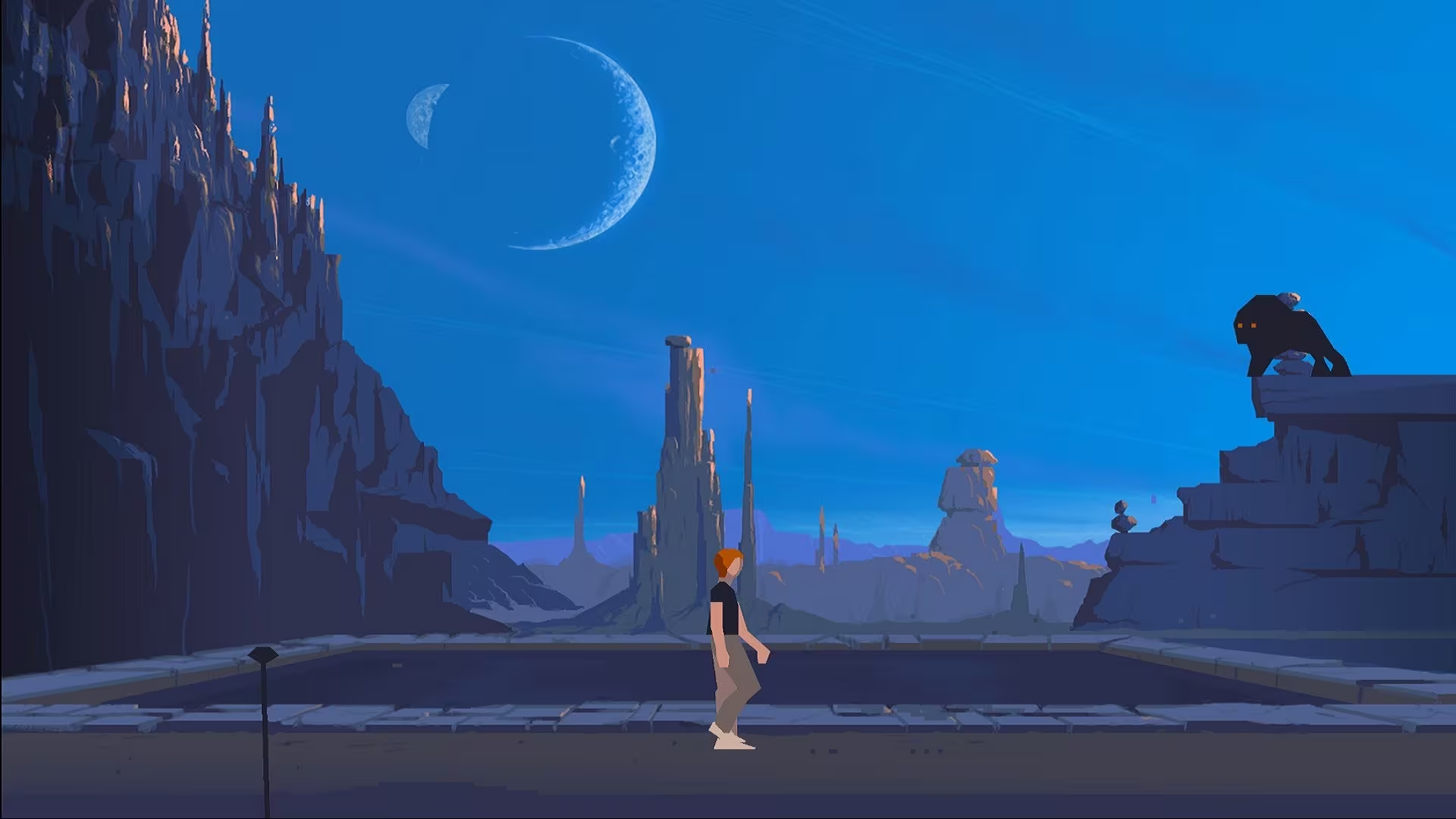
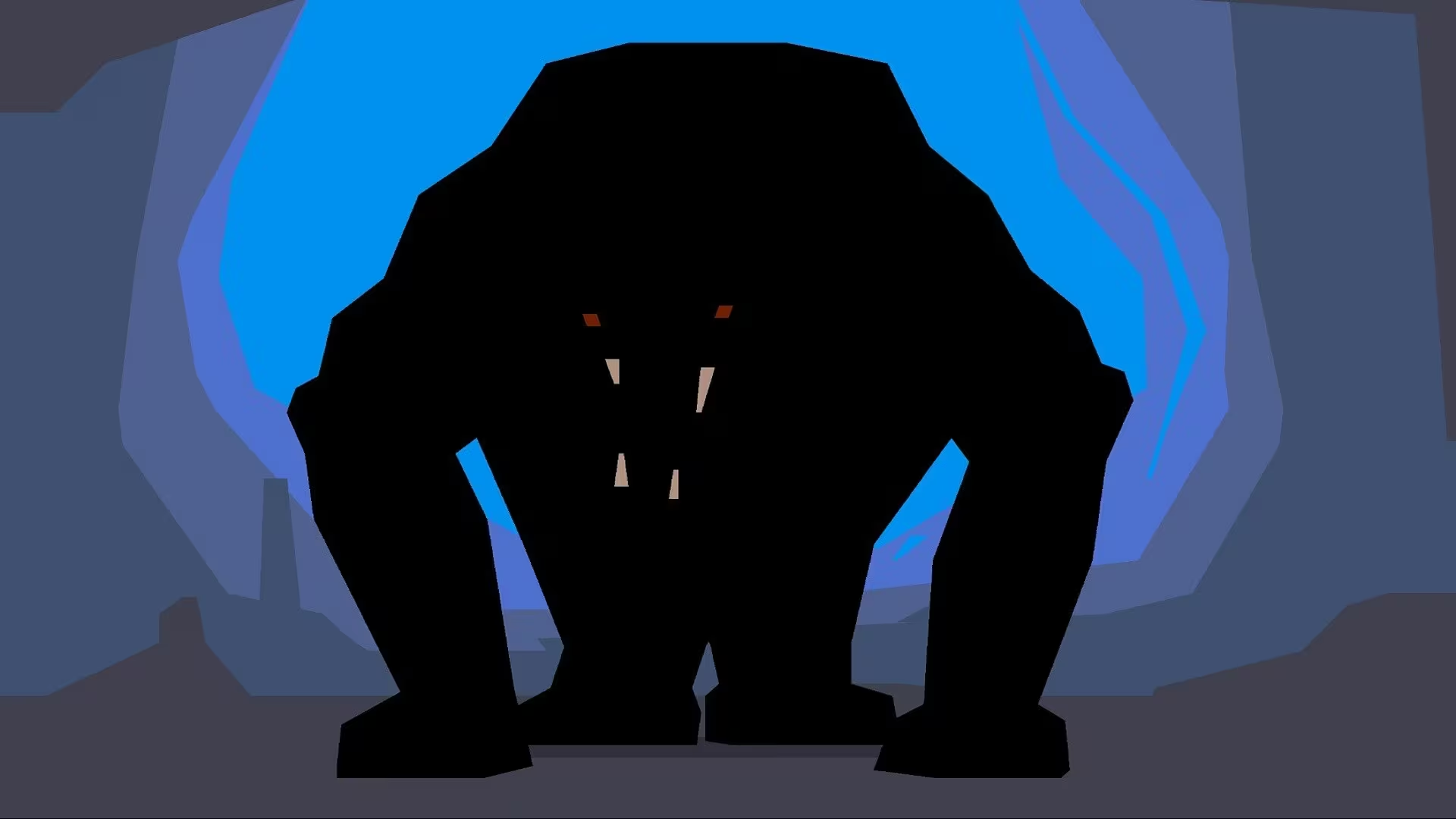
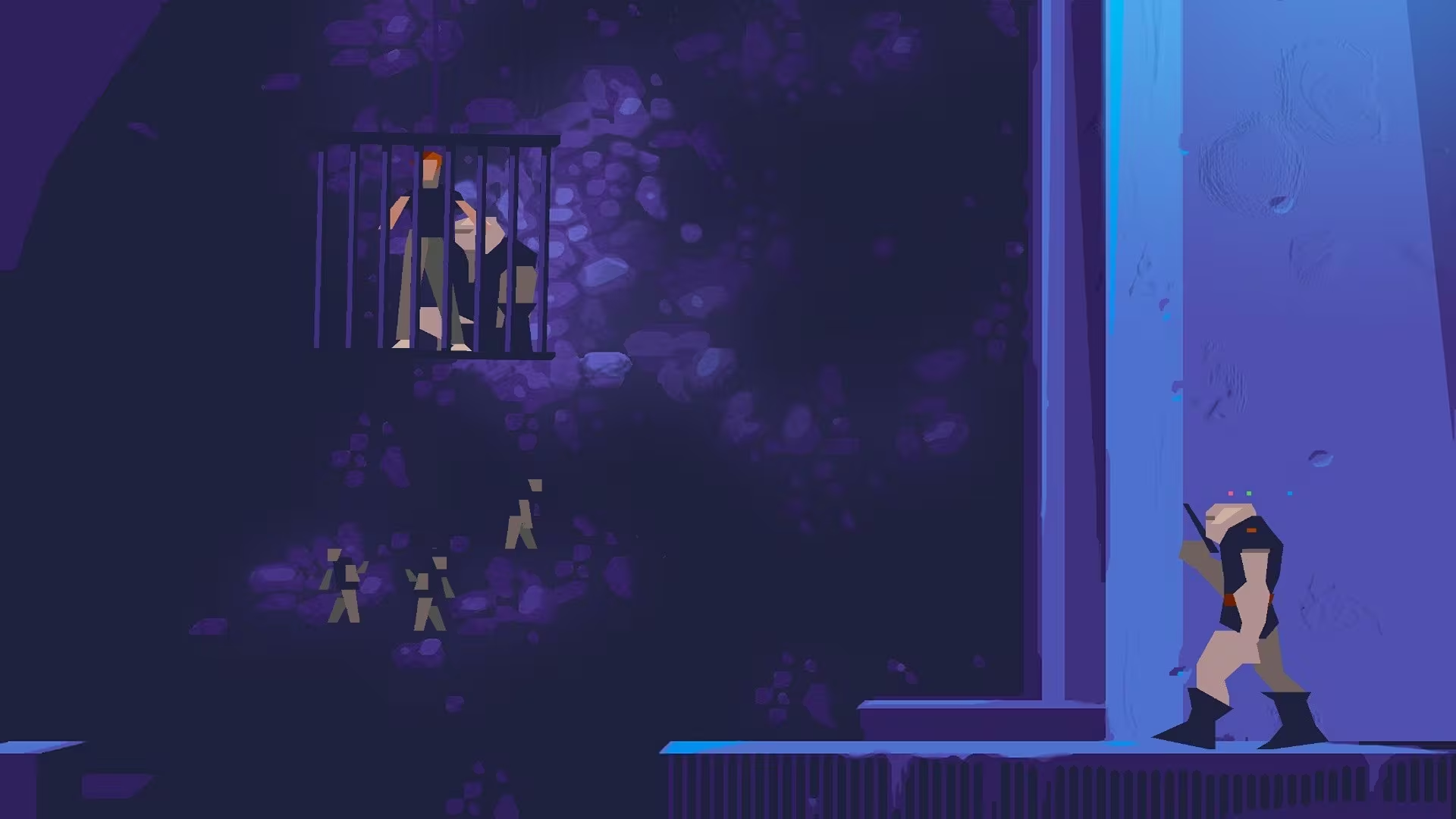
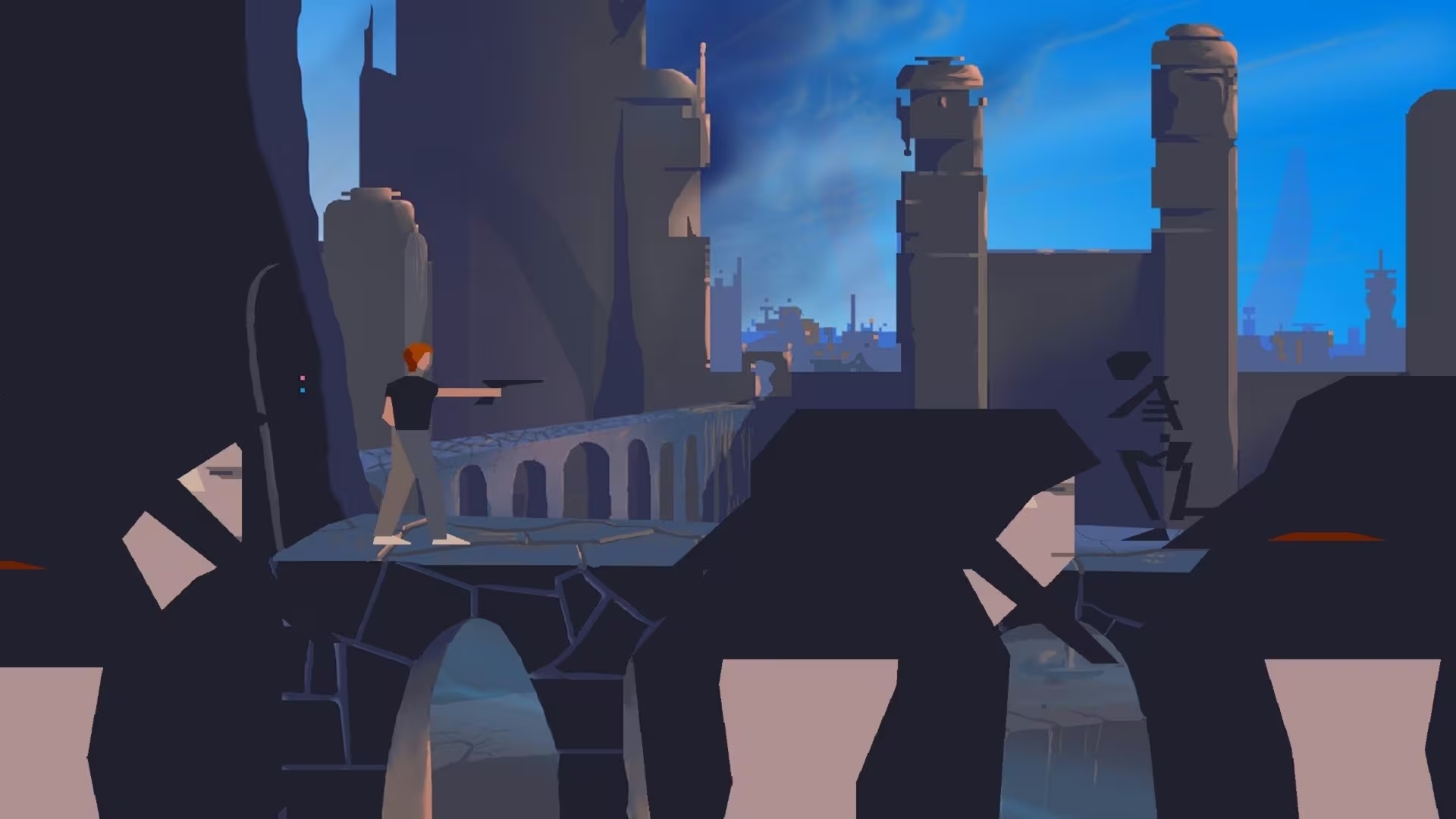
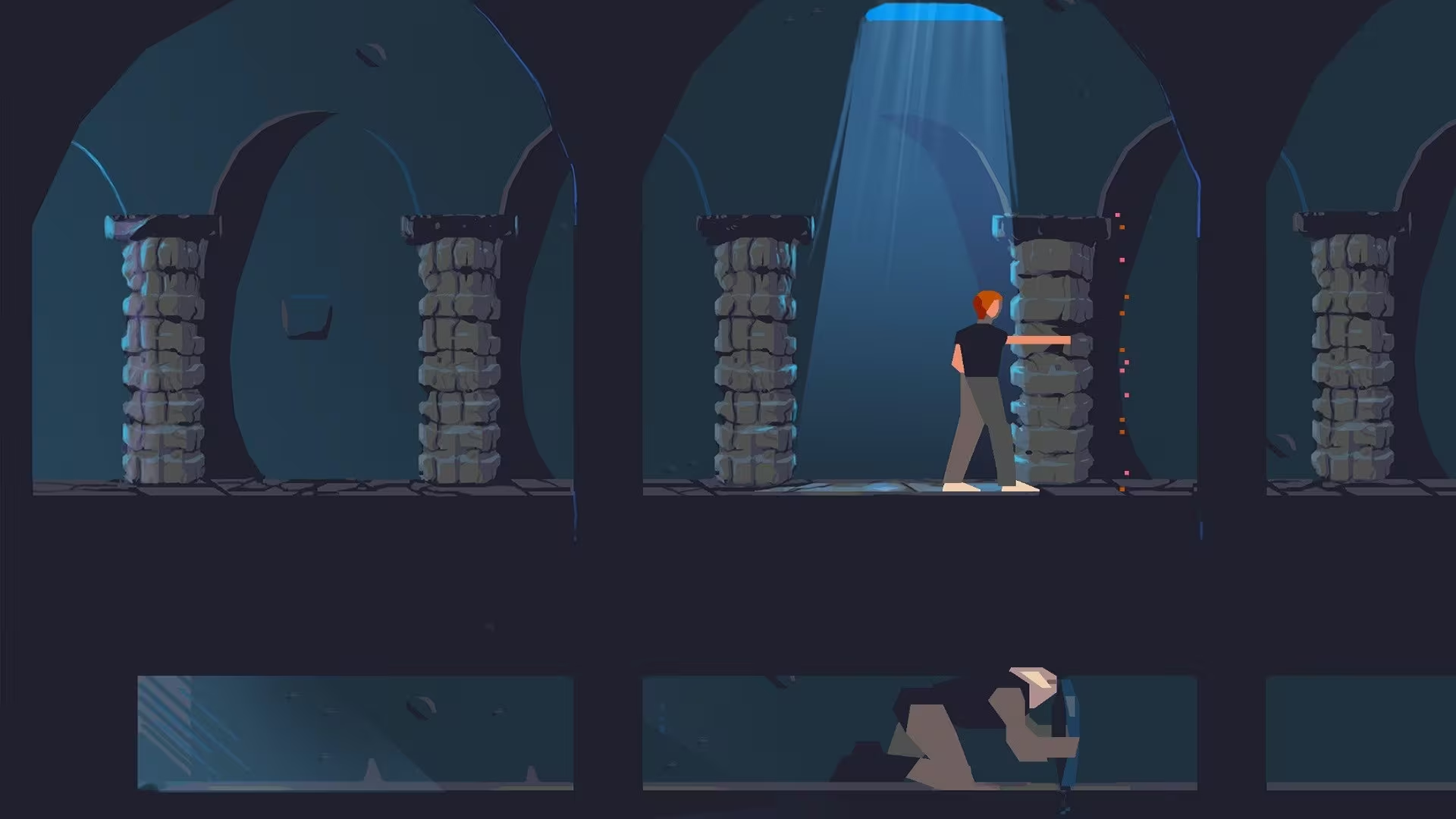
Also known as Out Of This World™, Another World is a pioneer action/platformer that released across more than a dozen platforms since its debut in 1991. Along the years, Another World™ has attained cult status among critics and sophisticated gamers alike.

Global score

83/100

Genres

Action, Adventure, Arcade, Platform

Similar games

    Pros

    • Timeless artistic design and atmosphere
    • Challenging and rewarding gameplay
    • Innovative cinematic storytelling without words
    • Remastered graphics with option to switch to original
    • Historical significance in gaming

    Cons

    • Short game length
    • Clunky and sometimes frustrating controls
    • High difficulty may deter casual players
    • Limited freedom due to scripted sequences
    • Some technical issues and crashes reported

    Analysis

    Broadly representative of its motivational profile, with a few distinct shifts. Motivations that often define this kind of title include Relaxation, Survival, Violence, Fellowship. It leans lower than usual among comparable games on Expression, Value, Status.

    How to use the graph
    Similar games map

    Each dot is a game. They are arranged from the same motivation profile as in the “Motivations” section below. Closer dots usually mean more similar reasons to play (exploration, competition, relaxation, etc.)—not that one game is “better” than another.

    • Larger dot with a light outline: the game you are viewing.
    • Colour: groups of games with comparable motivation patterns (statistical clusters).
    • Hover a dot to see the game name; click to open its page.
    • Scroll or double-click the chart to zoom out and see more games.

    Why don’t the axes read like a score? This view uses t-SNE: it only keeps who is close to whom. The scales are not “good to bad” or hours played—they separate groups on the map. Read distance between dots, not the axis numbers.

    Motivations

    • Autonomy
      4

      "Players must figure out puzzles and actions on their own without guidance, allowing freedom in problem solving despite linear progression."

    • Competence
      4

      "The game is challenging with precise timing and trial-and-error gameplay, requiring skill and mastery to progress."

    • Competition
      -4

      "Focus is on individual progression and overcoming challenges without comparison or competition with others."

    • Continuation
      2

      "Short game length but players often engage in repeated attempts and retries, showing some habitual play despite brevity."

    • Cooperation
      -5

      "Single-player experience with no multiplayer or cooperative elements."

    • Creativity
      3

      "Players experiment with environmental interactions and puzzle solutions, though within scripted sequences."

    • Domination
      -5

      "No social dominance or power over others; purely individual experience."

    • Escapism
      4

      "Immersive alien world and atmospheric storytelling provide strong escapism from reality."

    • Expectation
      -4

      "Players engage voluntarily out of interest or nostalgia, not due to obligation or external pressure."

    • Experimenting
      3

      "Trial-and-error and puzzle solving encourage players to try different approaches and learn from failure."

    • Exploration
      2

      "Exploration of alien environments occurs but is limited by linear level design and scripted events."

    • Expression
      -3

      "Minimal character customization or self-expression; presentation is fixed and stylized."

    • Fantasy
      5

      "Set in a surreal alien world with science fiction elements and imaginative scenarios."

    • Fellowship
      -5

      "No social or community features; strictly solo play."

    • Growth
      3

      "Players develop skills through learning game mechanics and mastering difficult sequences."

    • Health
      -5

      "Sedentary gameplay with no physical activity or health-related features."

    • Idle
      -4

      "Requires focused attention and precise input; not suitable for casual or background play."

    • Intimacy
      -5

      "No social interaction or relationship building; purely individual experience."

    • Leadership
      -5

      "No leadership or group management elements."

    • Progression
      3

      "Progression through levels and puzzle completion, but no item collection or upgrades."

    • Relaxation
      -3

      "High difficulty and tension from trial-and-error gameplay create sustained challenge rather than relaxation."

    • Sensation
      3

      "Stylized visuals and atmospheric sound design provide engaging sensory experience."

    • Status
      -5

      "No social recognition or status systems present."

    • Story
      4

      "Narrative told through cinematic sequences and environmental storytelling without text or dialogue."

    • Strategy
      3

      "Players must plan precise movements and puzzle solutions, requiring analytical thinking."

    • Thrill
      4

      "Tense moments and risk of death create suspense and excitement."

    • Value
      1

      "Short game length limits value, but historical significance and quality justify purchase especially on sale."

    • Violence
      2

      "Includes combat and death animations, but violence is stylized and not gratuitous."

    • Survival
      4

      "Core gameplay involves avoiding death and overcoming environmental threats."

    Last update: 29/04/2026