Buzz Aldrin's Space Program Manager similar games & best alternatives
Buzz Aldrin's Space Program Manager
2014
Related articles
Quick resume
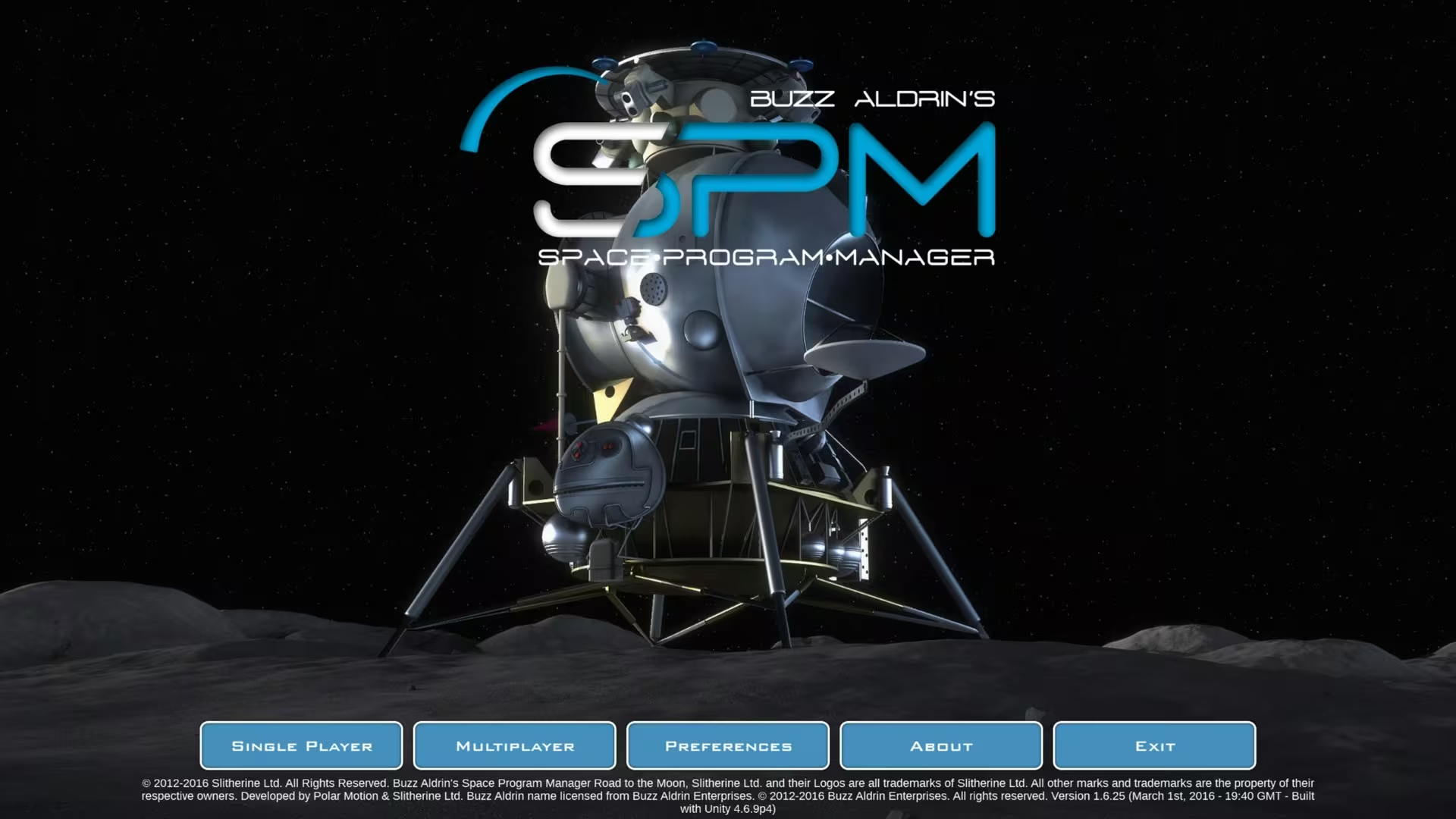
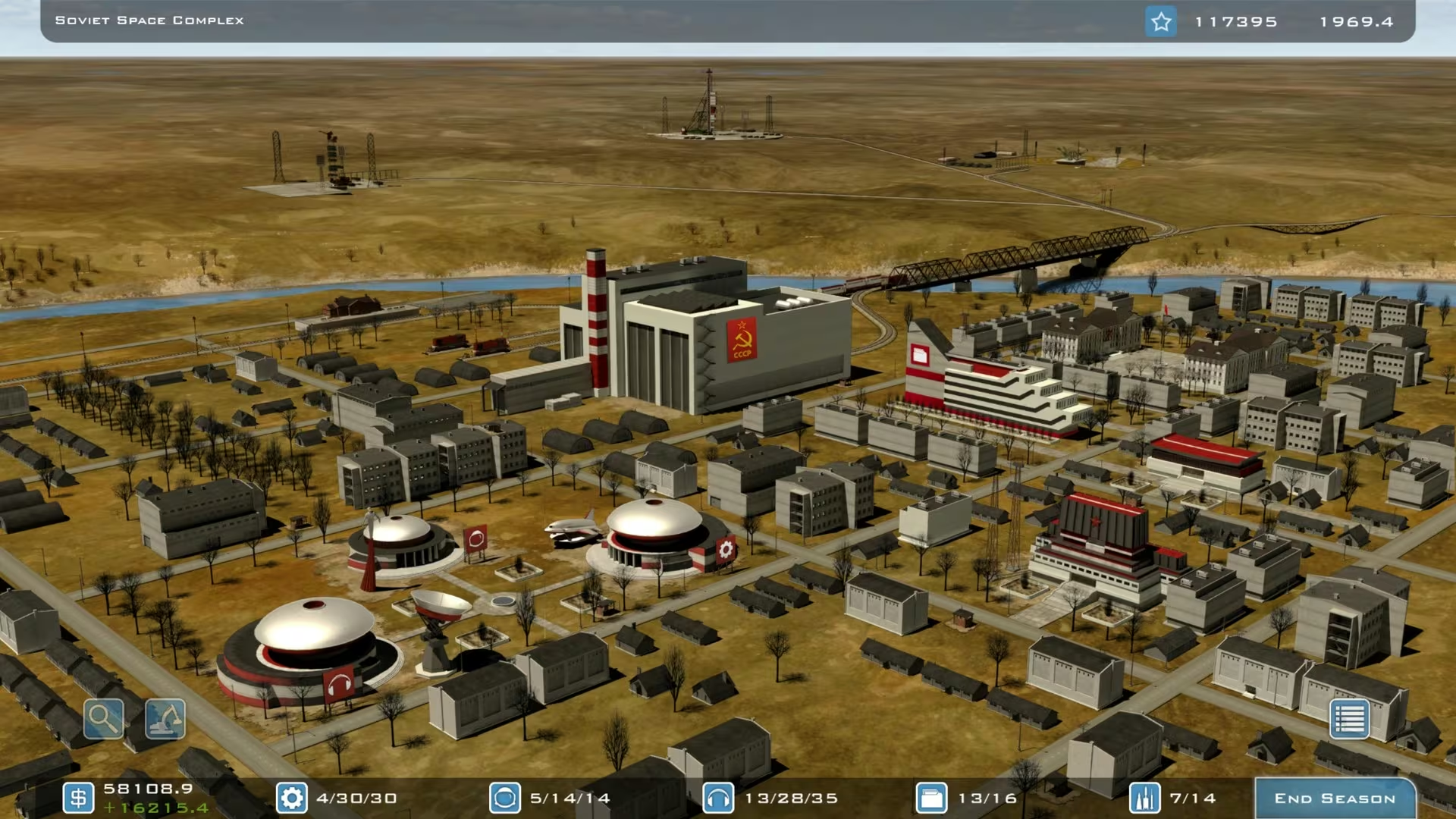
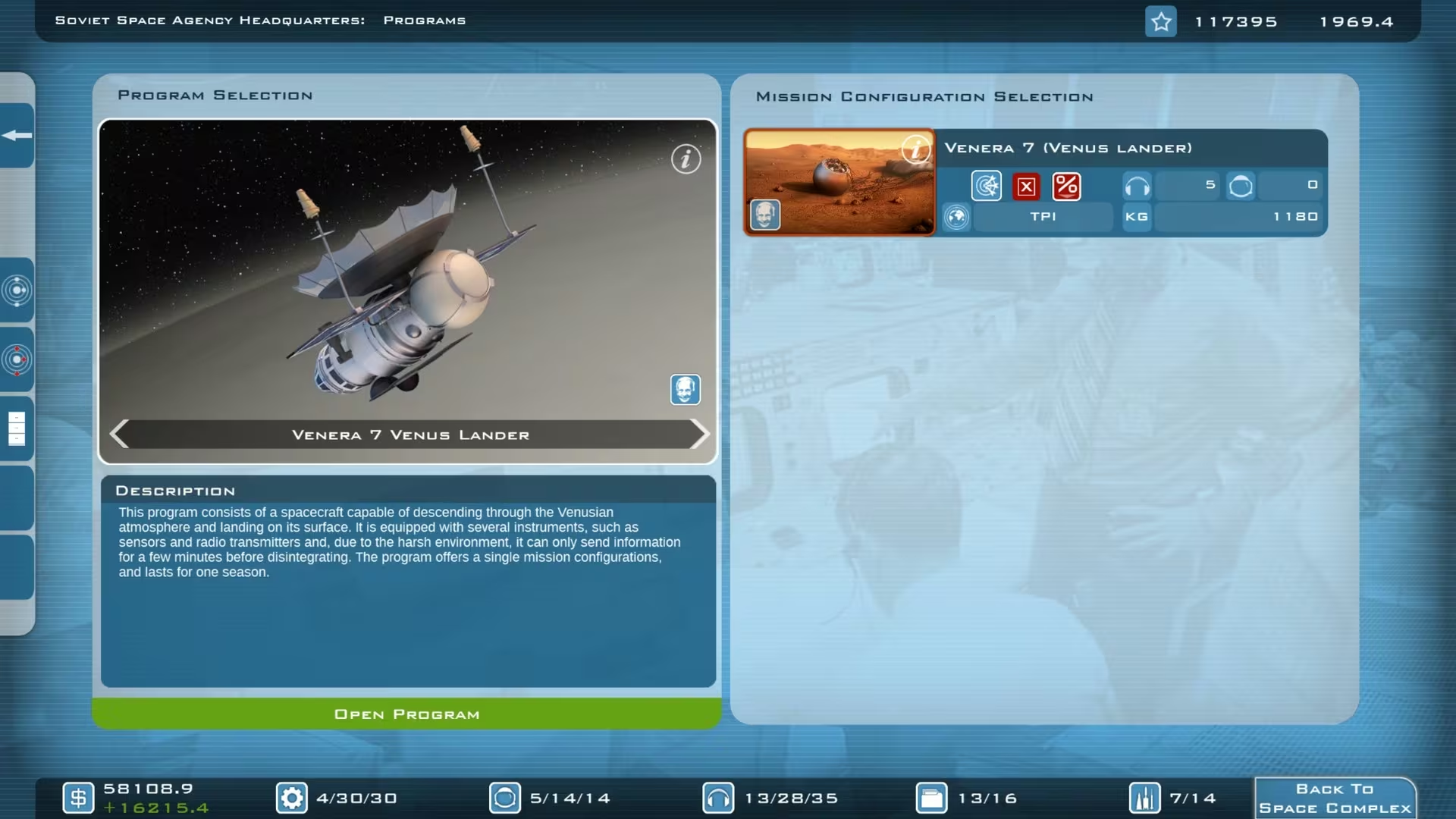
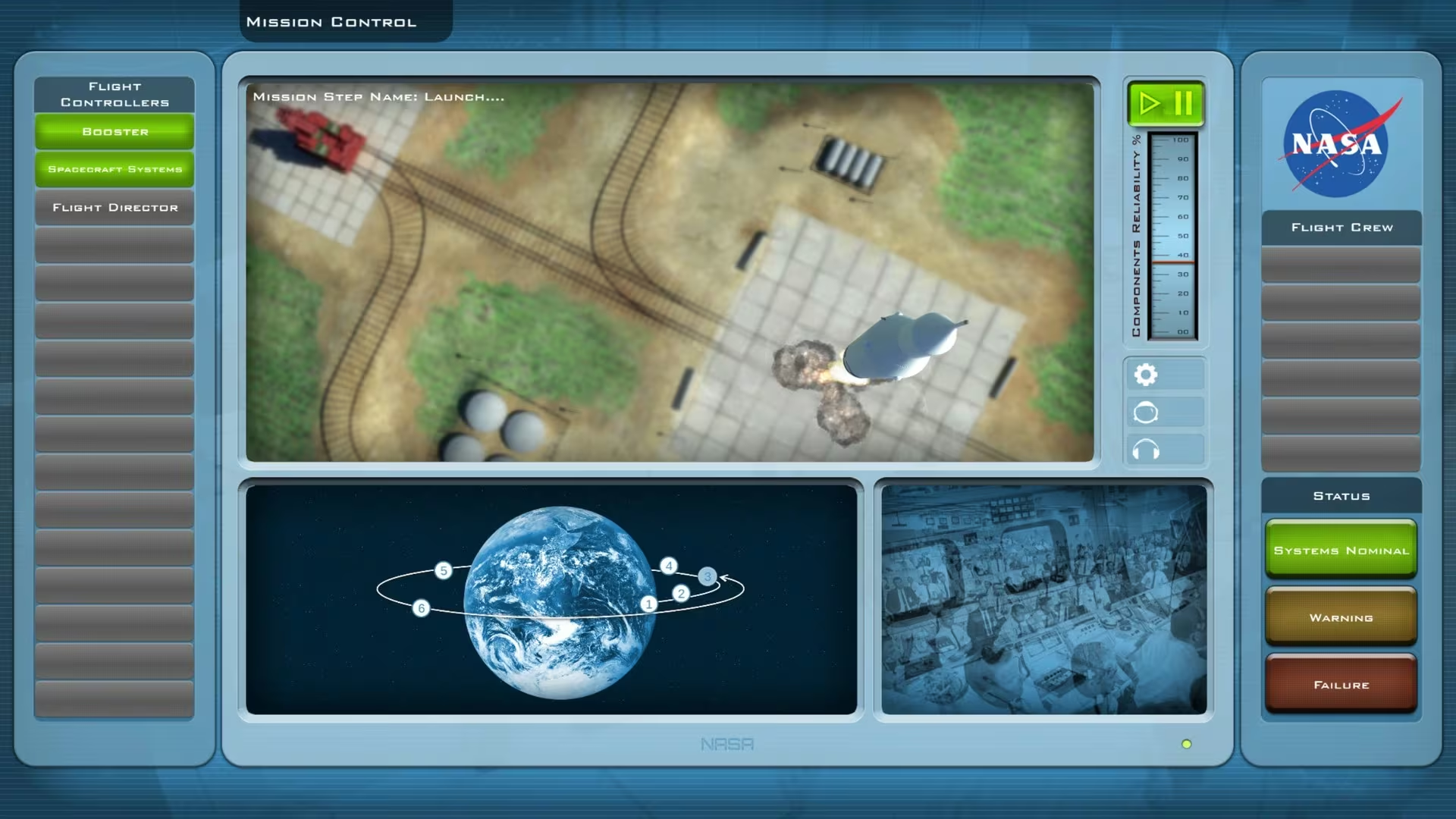
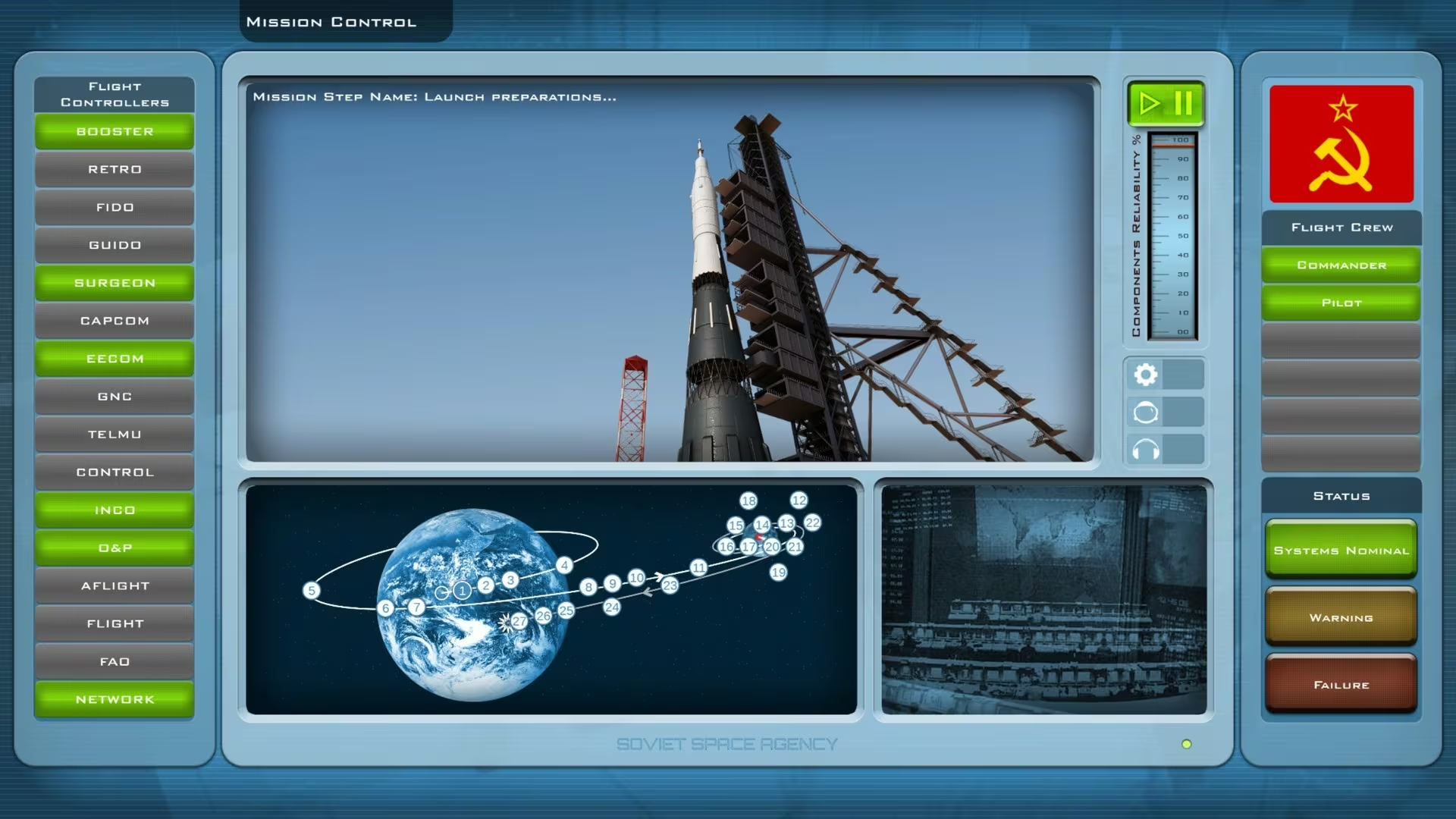
Space Program Manager (SPM) is the ultimate game of space exploration. It is the mid 1950s and the race for dominance between the US and the Soviet Union is about to move into a new dimension: space.
Global score
77/100
Genres
Simulator, Strategy
Similar games
Pros
- Historical and educational content
- Challenging and strategic gameplay
- Immersive space race atmosphere
- Multiple agencies and campaigns
- Multiplayer option available
Cons
- Clunky and unintuitive interface
- Limited post-moon landing content
- Some frustrating rng elements
- Lack of detailed mission failure feedback
- Price considered high by some users
Analysis
Less representative of its motivational profile, with noticeable differences. Motivations that often define this kind of title include Competition, Fellowship, Domination, Status. Here, the score leans higher than usual among comparable games on Story. It leans lower than usual among comparable games on Violence, Expression.
How to use the graph
Similar games map
Each dot is a game. They are arranged from the same motivation profile as in the “Motivations” section below. Closer dots usually mean more similar reasons to play (exploration, competition, relaxation, etc.)—not that one game is “better” than another.
- Larger dot with a light outline: the game you are viewing.
- Colour: groups of games with comparable motivation patterns (statistical clusters).
- Hover a dot to see the game name; click to open its page.
- Scroll or double-click the chart to zoom out and see more games.
Why don’t the axes read like a score? This view uses t-SNE: it only keeps who is close to whom. The scales are not “good to bad” or hours played—they separate groups on the map. Read distance between dots, not the axis numbers.
Motivations
-
Autonomy4
"Players manage their own space agency, making strategic decisions on research, personnel, and missions with freedom to choose approaches."
-
Competence4
"Game involves managing complex systems, balancing budgets, training staff, and planning missions requiring skill and strategic thinking."
-
Competition4
"Core gameplay centers on competing against AI or other players to be first to the moon, with multiplayer and race elements."
-
Continuation2
"Players engage in multi-turn campaigns and sandbox modes with some replayability, though content ends after moon landing."
-
Cooperation1
"Some multiplayer options exist but mostly focused on individual management; limited evidence of teamwork or collaboration."
-
Creativity2
"Players can choose different mission paths and manage personnel assignments, but within historically constrained frameworks."
-
Domination-2
"Interactions emphasize competition but with mutual respect; no evidence of trash talk or power imposition."
-
Escapism3
"Players immerse in historical space race scenarios, escaping real life through strategic simulation and alternate history."
-
Expectation-3
"Players engage voluntarily out of interest and intrinsic motivation; no evidence of external pressure or obligation."
-
Experimenting3
"Players try different mission strategies, research paths, and personnel assignments to optimize outcomes."
-
Exploration2
"Game involves discovering new missions and technologies, though within a known historical context."
-
Expression-2
"Limited customization; players manage personnel and missions but little avatar or environment personalization."
-
Fantasy-1
"Focus on realistic historical space programs and plausible alternate history rather than imaginative fiction."
-
Fellowship1
"Some community and multiplayer engagement but primarily a solo management experience."
-
Growth4
"Players develop skills in managing complex systems and learn about space history and technology progression."
-
Health-5
"Purely sedentary gameplay with no physical activity involved."
-
Idle-3
"Requires focused attention and strategic planning; not designed for casual or background play."
-
Intimacy-4
"Minimal social interaction; no evidence of close relationships or emotional sharing."
-
Leadership4
"Players lead their space agency, making decisions on personnel, research, and missions."
-
Progression4
"Players accumulate upgrades, improve technology reliability, and advance through mission milestones."
-
Relaxation1
"Game offers some flow and satisfaction but also involves tension and risk management."
-
Sensation1
"Visuals and audio are modest but provide some excitement during mission launches."
-
Status2
"Players gain prestige and recognition within the game world for mission successes."
-
Story4
"Strong narrative immersion in the historical space race and mission progression."
-
Strategy5
"Core gameplay involves strategic planning, resource management, and problem solving."
-
Thrill3
"Players experience suspense and tension from risky missions and uncertain outcomes."
-
Value1
"Generally positive value noted, especially on sale; some complaints about price relative to content."
-
Violence-3
"Focus on constructive management and exploration rather than combat or destruction."
-
Survival3
"Players manage risks to avoid mission failure and loss of personnel, balancing safety and progress."
Last update: 29/04/2026