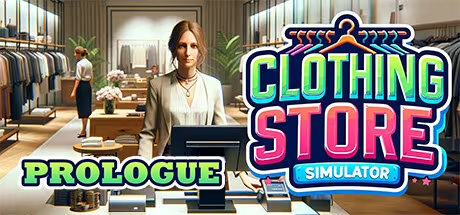
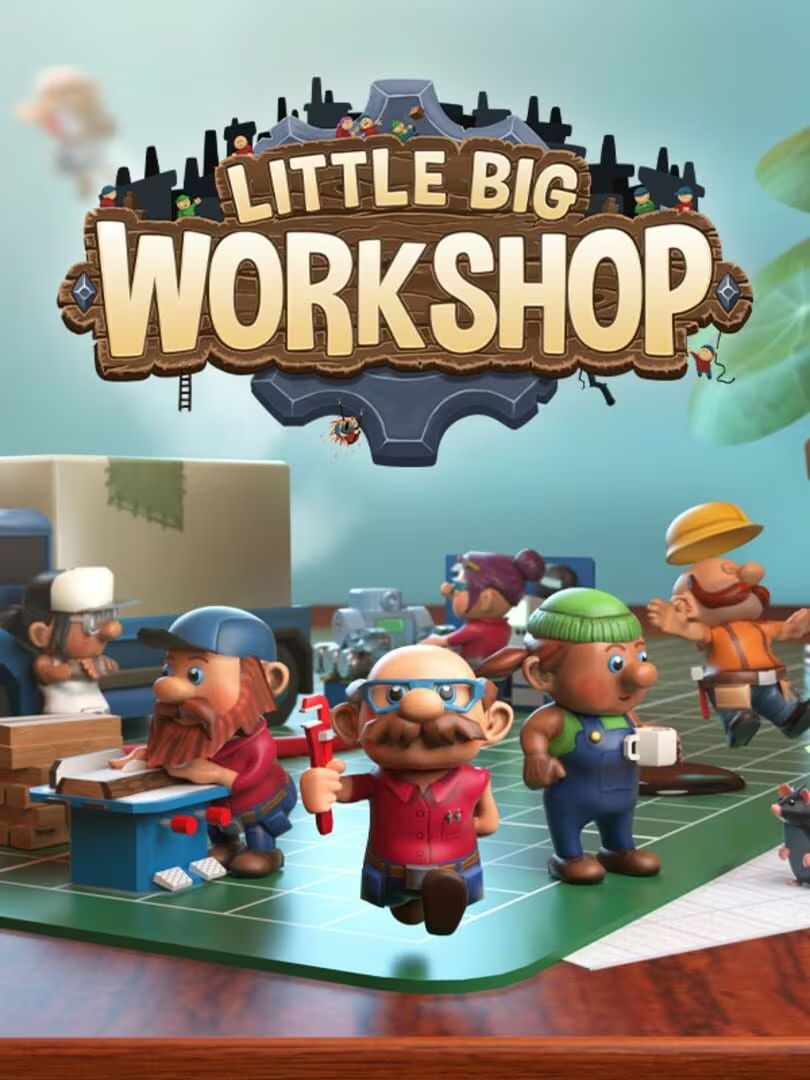
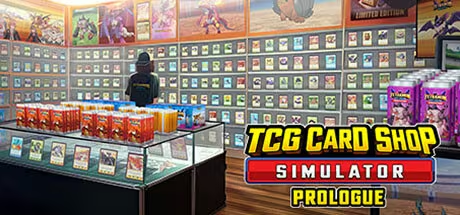
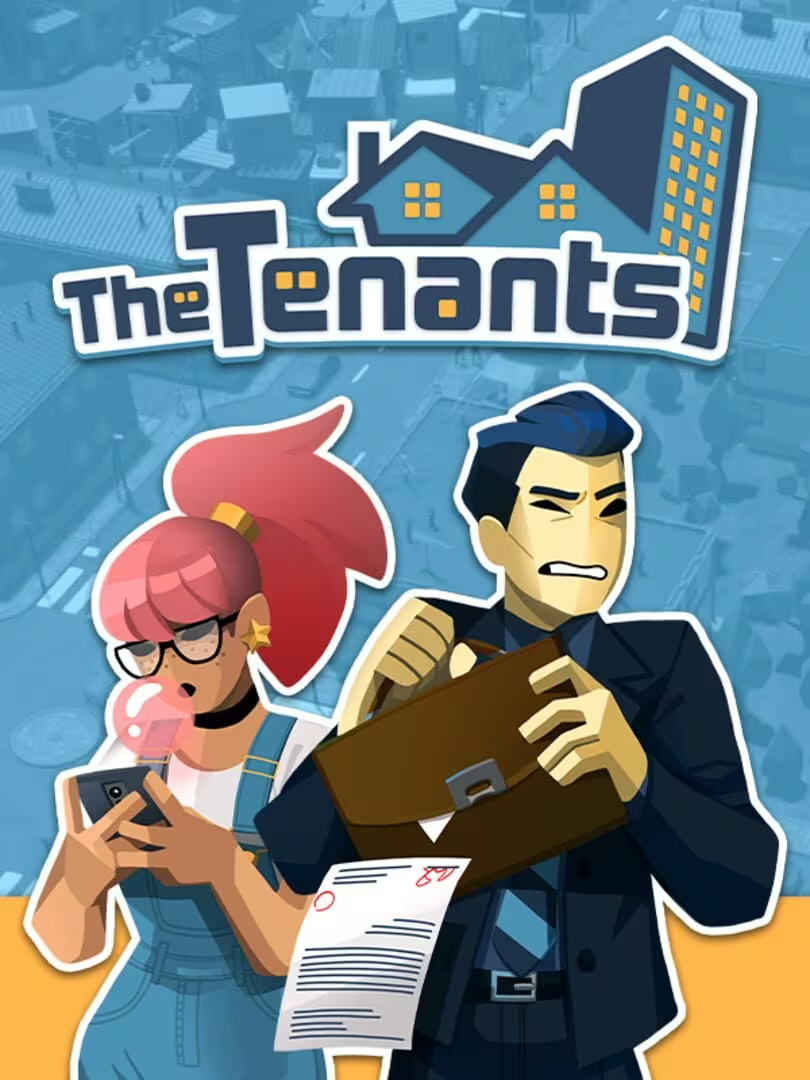
King of Retail similar games & best alternatives
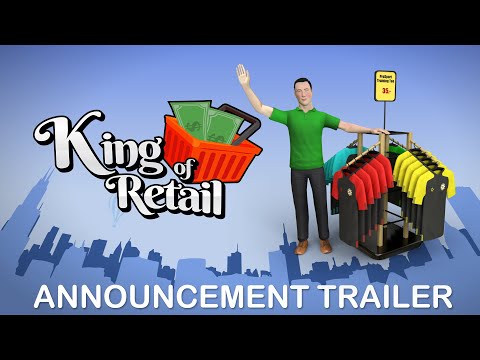
King of Retail
2022
Related articles
Quick resume
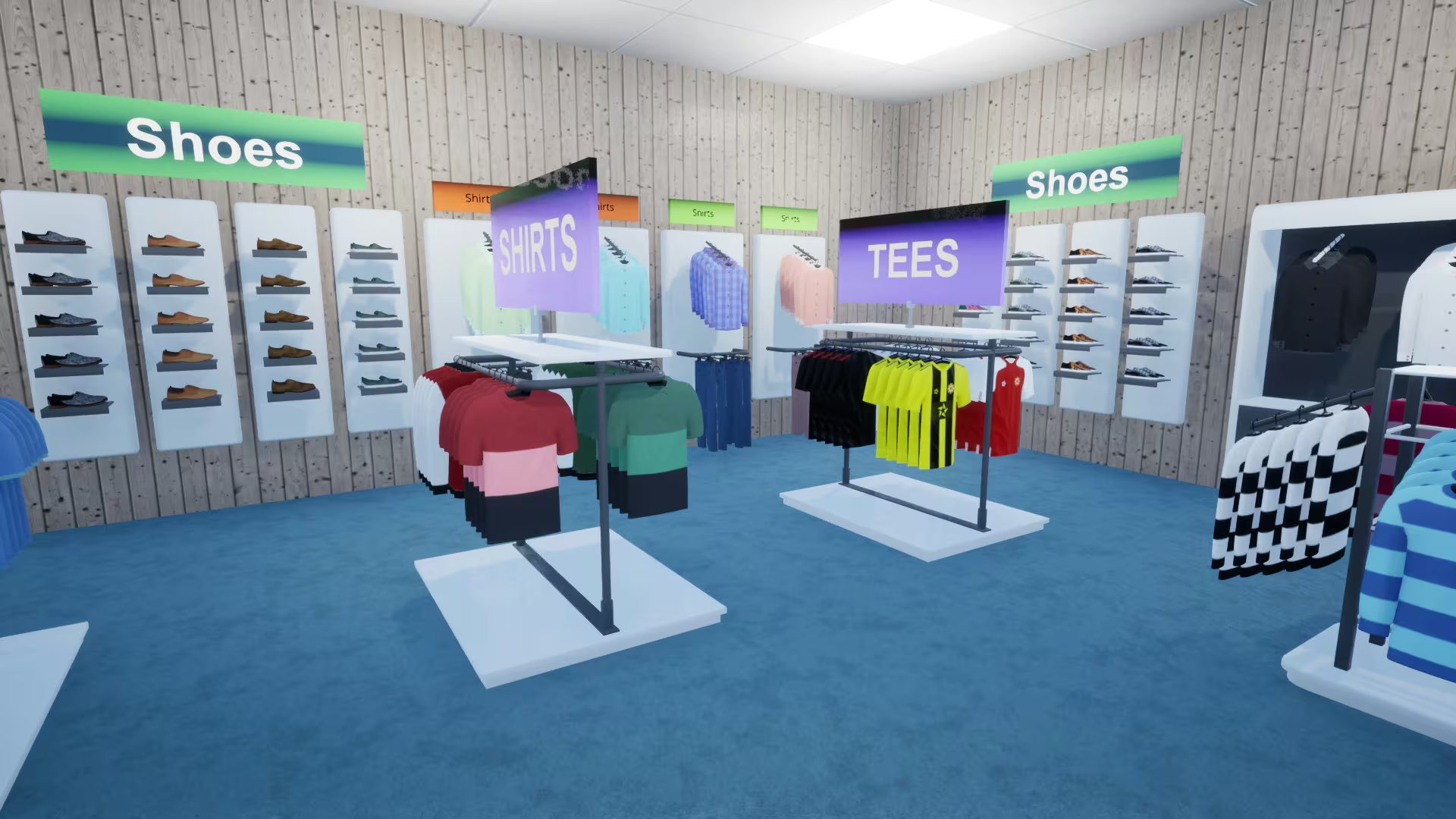
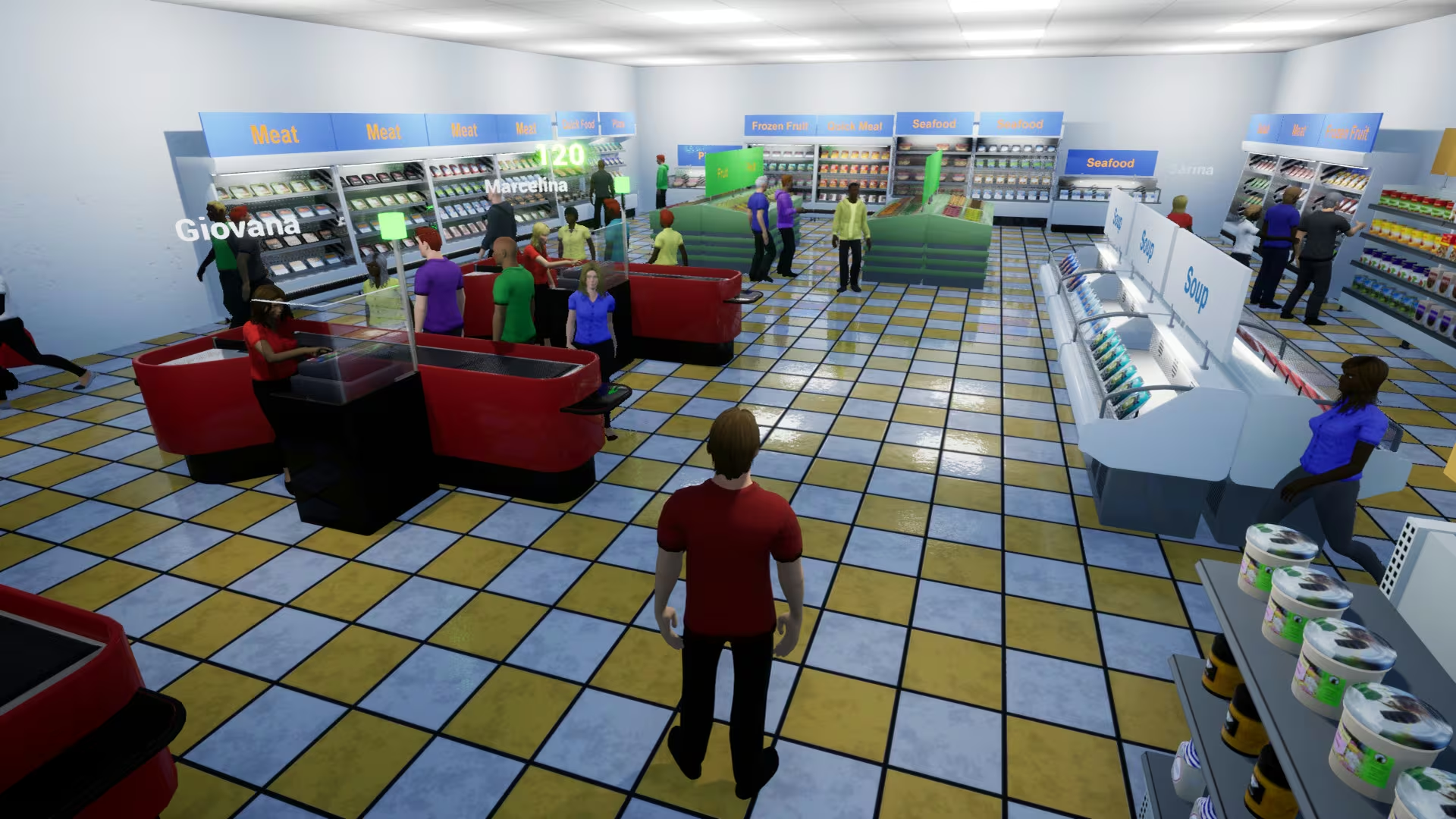
The store is your kingdom! Expand your humble boutique into a thriving business: hire the right staff, decorate your displays, and lure in customers. Even your wildest ideas can turn a profit. Why not start a business that sells only white T-shirts and ketchup? PCs and beans? Your rule, your rules!
Global score
88/100
Genres
Casual, Indie, Simulator
Similar games
Pros
- Deep and addictive gameplay
- High player autonomy and creativity
- Realistic and detailed business simulation
- Active developer support and updates
- Good value for price
Cons
- Limited product variety and store customization
- Some ui and pathfinding issues
- Lack of multiplayer or cooperative modes
- No narrative or story elements
- Graphics and animations are basic
Analysis
Broadly representative of its motivational profile, with a few distinct shifts. Motivations that often define this kind of title include Fantasy, Violence, Story, Thrill. Here, the score leans higher than usual among comparable games on Leadership, Survival, Expression.
How to use the graph
Similar games map
Each dot is a game. They are arranged from the same motivation profile as in the “Motivations” section below. Closer dots usually mean more similar reasons to play (exploration, competition, relaxation, etc.)—not that one game is “better” than another.
- Larger dot with a light outline: the game you are viewing.
- Colour: groups of games with comparable motivation patterns (statistical clusters).
- Hover a dot to see the game name; click to open its page.
- Scroll or double-click the chart to zoom out and see more games.
Why don’t the axes read like a score? This view uses t-SNE: it only keeps who is close to whom. The scales are not “good to bad” or hours played—they separate groups on the map. Read distance between dots, not the axis numbers.
Motivations
-
Autonomy4
"Players have control over store layout, product selection, staff hiring/firing, wage negotiation, and business strategy, showing high autonomy."
-
Competence4
"The game involves managing complex systems like inventory, staff skills, scheduling, and marketing, providing skill challenges and feedback."
-
Competition-3
"Focus is on personal business growth and management without evidence of direct player-vs-player competition or leaderboards."
-
Continuation5
"Many reviews mention addictive gameplay, long play sessions, and habitual engagement with the game."
-
Cooperation-4
"Gameplay centers on individual store or corporation management with limited or no multiplayer cooperation."
-
Creativity4
"Players customize store layouts, product assortments, branding, and staff roles, enabling creative expression."
-
Domination-4
"Interactions with employees and customers are managerial but lack evidence of exerting superiority or dominance over others."
-
Escapism4
"Players use the game as a relaxing distraction and immersive simulation away from real life stress."
-
Expectation-4
"Players engage voluntarily out of intrinsic interest and enjoyment rather than obligation or external pressure."
-
Experimenting3
"Players try different store concepts, layouts, product mixes, and staff configurations to optimize performance."
-
Exploration-2
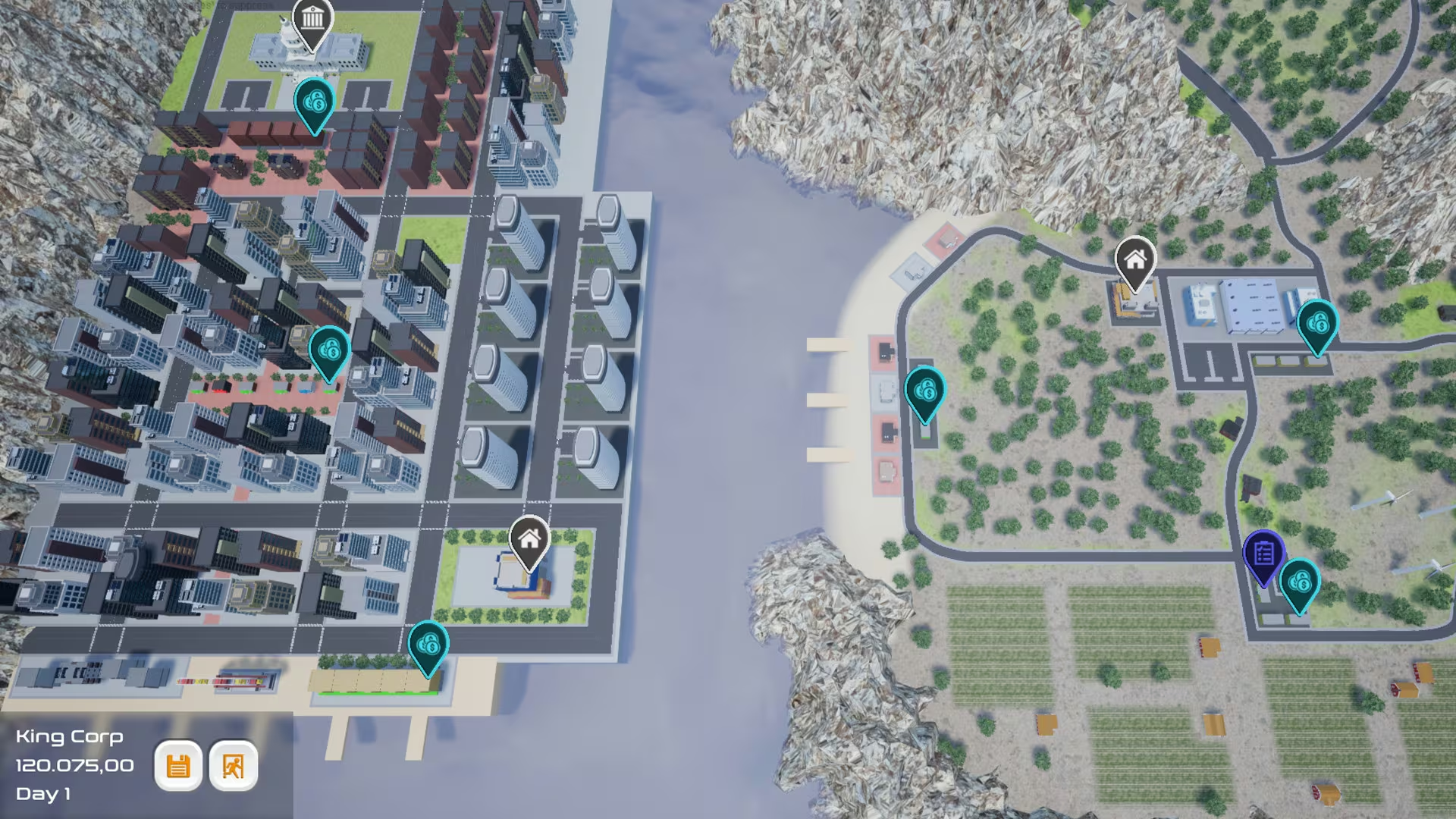
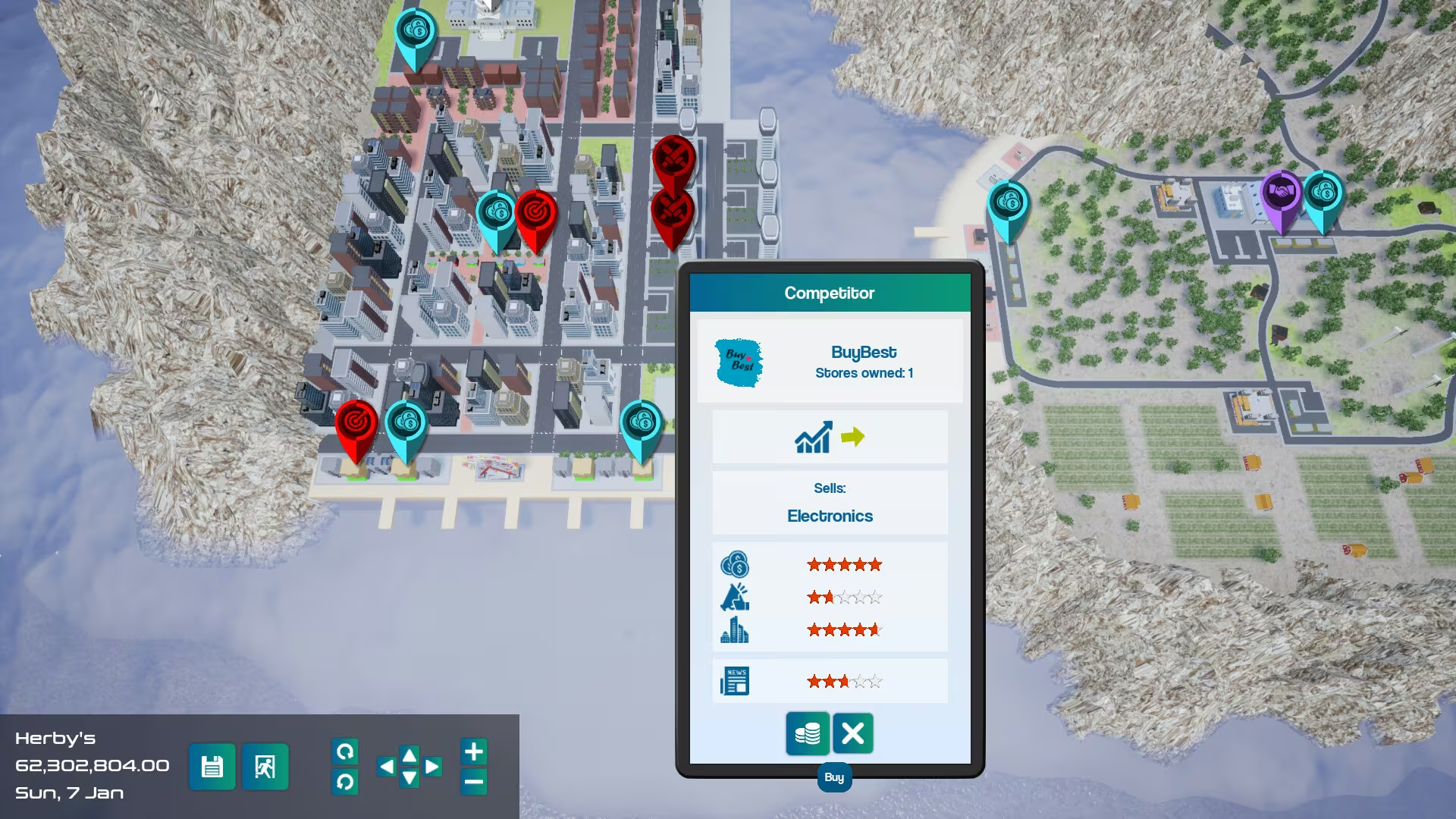
"Game environments are limited to store interiors and city maps with little emphasis on discovering new areas."
-
Expression4
"Players personalize stores with custom logos, color schemes, and decorations, expressing individual style."
-
Fantasy-3
"The game simulates realistic retail business scenarios rather than imaginative or fictional fantasy."
-
Fellowship-4
"Social interaction is minimal; players primarily engage in solo management without community focus."
-
Growth4
"Players develop skills in business management and progress through unlocking new products and store expansions."
-
Health-5
"The game is sedentary with no physical activity or health-related features."
-
Idle-4
"Requires active management and attention; players must micromanage staff, inventory, and customers."
-
Intimacy-5
"No evidence of close social relationships or emotional sharing; interactions are transactional and managerial."
-
Leadership3
"Players lead and manage employees, assign tasks, and make strategic decisions for their stores or corporations."
-
Progression5
"Strong emphasis on accumulating upgrades, expanding stores, unlocking products, and growing business empire."
-
Relaxation3
"Many players find the game relaxing and enjoyable, balancing challenge with flow."
-
Sensation1
"Visuals and audio are functional but not highly stimulating; focus is on gameplay rather than sensory excitement."
-
Status-3
"No social recognition or popularity mechanics; achievements are personal and not publicly ranked."
-
Story-4
"No narrative or plot; gameplay is context-free management without story immersion."
-
Strategy4
"Players engage in planning, problem solving, and optimizing business operations requiring strategic thinking."
-
Thrill-2
"Gameplay is low risk and controlled; lacks suspense or high-stakes excitement."
-
Value4
"Players perceive good value for time and money, especially given the depth and replayability."
-
Violence-5
"No combat or destructive elements; gameplay focuses on constructive business management."
-
Survival3
"Players manage risks like bankruptcy, staff issues, and customer satisfaction to keep business afloat."
Last update: 29/04/2026