Cognition: An Erica Reed Thriller similar games & best alternatives

Cognition: An Erica Reed Thriller
2013
Related articles
Quick resume
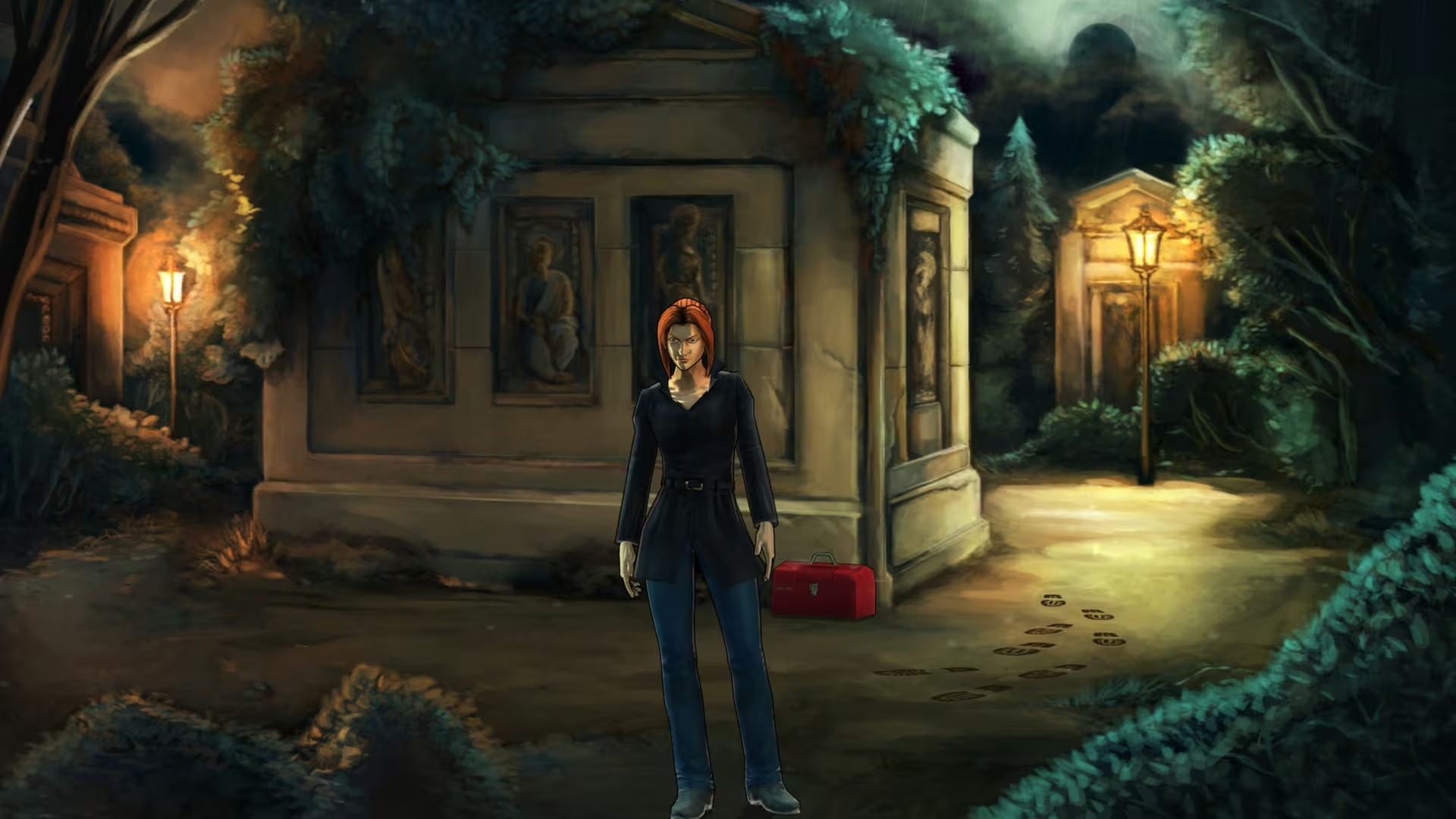
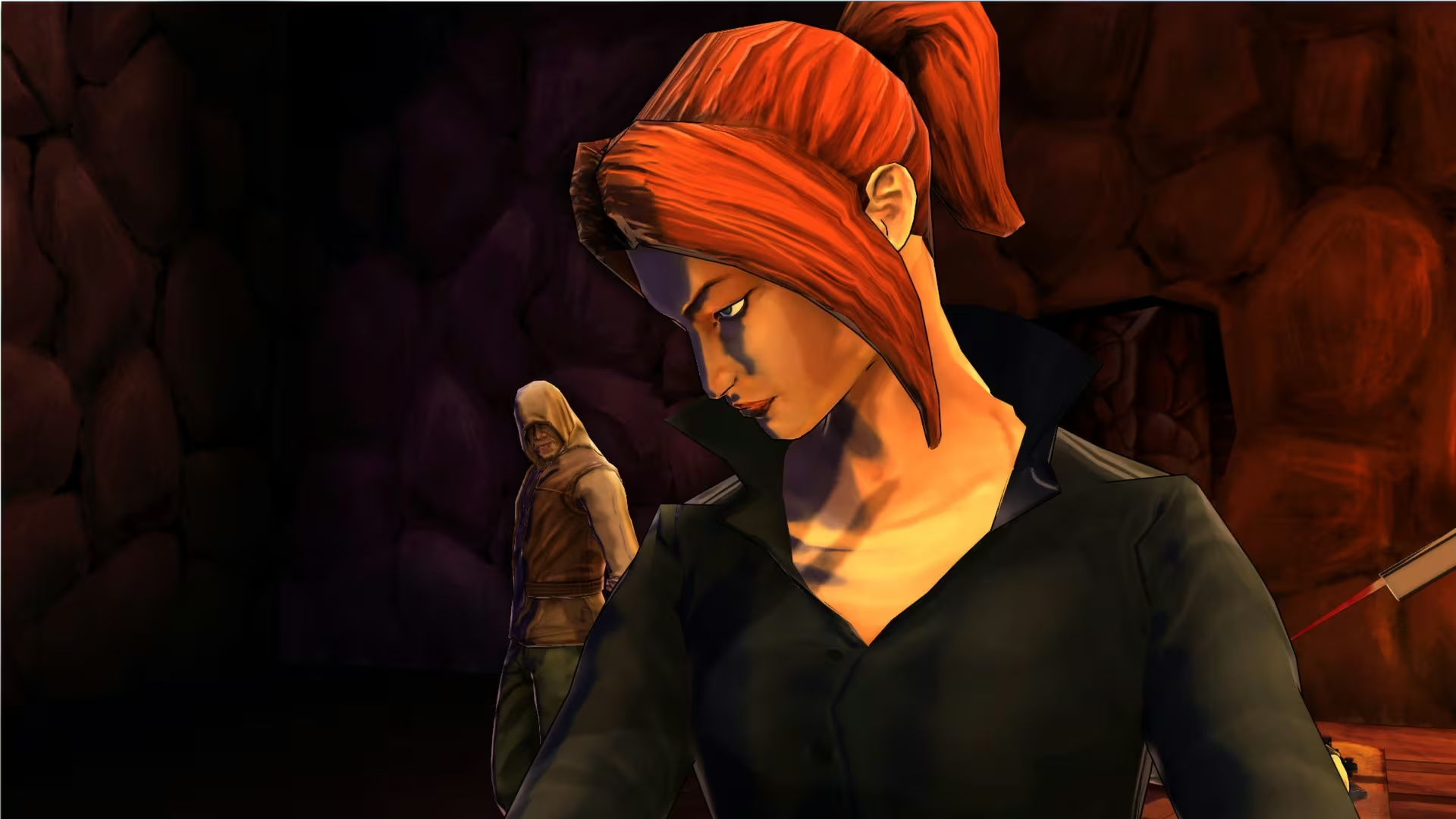
FBI agent Erica Reed has an uncanny talent: she can see the past and piece together how a crime unfolded. But not even this sixth sense could save her younger brother, Scott, from a brutal serial killer. Three years later, the investigation into Scott’s murder has gone cold -- but Erica’s work has only just begun.
Global score
82/100
Genres
Adventure, Indie, Point-and-click
Similar games
Pros
- Engaging and complex story
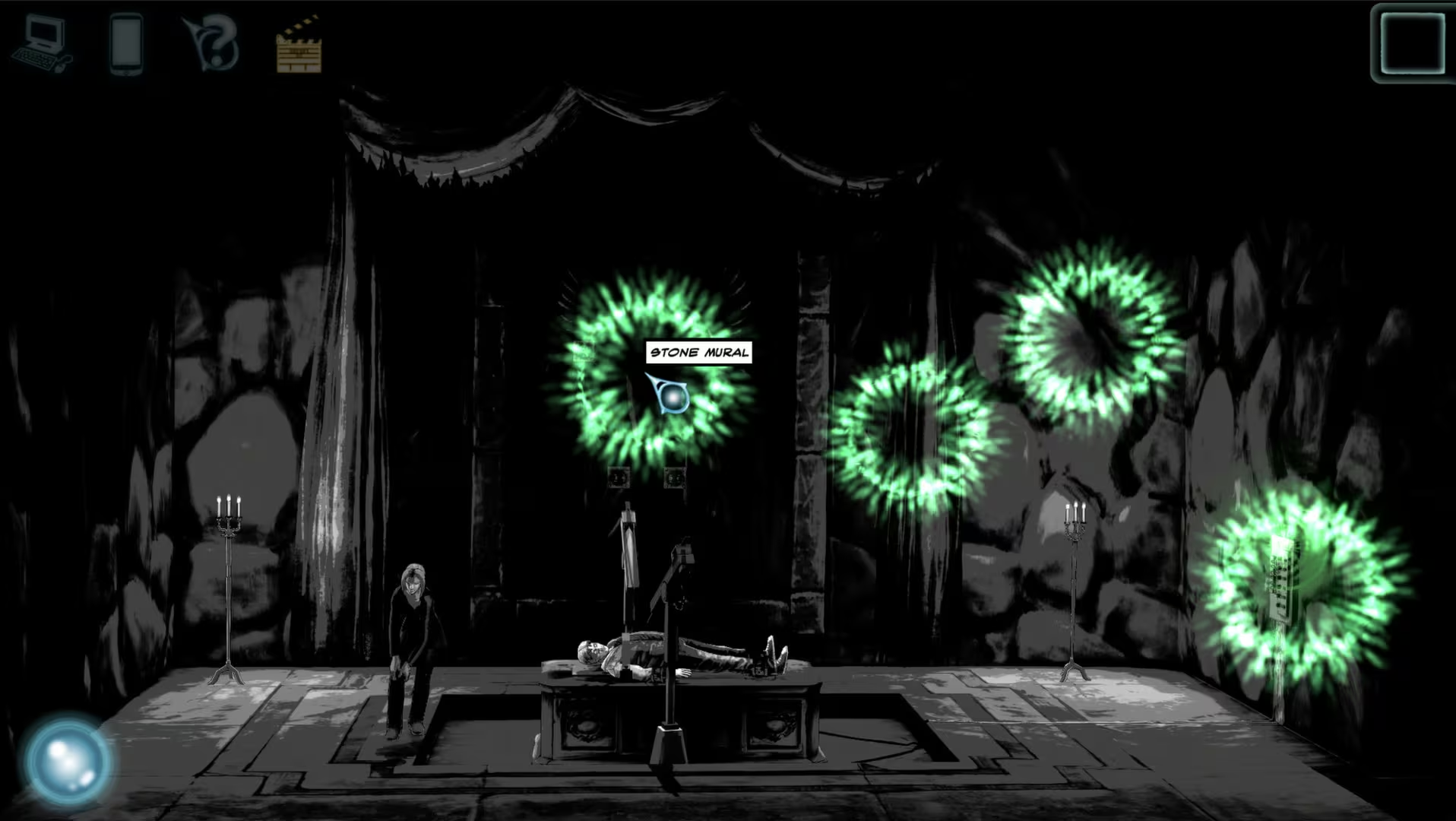
- Unique psychic abilities gameplay
- Long playtime with multiple episodes
- Atmospheric soundtrack and voice acting
- Logical and challenging puzzles
Cons
- Clunky character animations and graphics
- Some bugs and glitches reported
- Slow character movement
- Some puzzles and story elements confusing or illogical
- Limited player choice impact on story
Analysis
Broadly representative of its motivational profile, with a few distinct shifts. Motivations that often define this kind of title include Fellowship, Cooperation, Leadership, Violence. Here, the score leans higher than usual among comparable games on Story, Violence. It leans lower than usual among comparable games on Expression.
How to use the graph
Similar games map
Each dot is a game. They are arranged from the same motivation profile as in the “Motivations” section below. Closer dots usually mean more similar reasons to play (exploration, competition, relaxation, etc.)—not that one game is “better” than another.
- Larger dot with a light outline: the game you are viewing.
- Colour: groups of games with comparable motivation patterns (statistical clusters).
- Hover a dot to see the game name; click to open its page.
- Scroll or double-click the chart to zoom out and see more games.
Why don’t the axes read like a score? This view uses t-SNE: it only keeps who is close to whom. The scales are not “good to bad” or hours played—they separate groups on the map. Read distance between dots, not the axis numbers.
Motivations
-
Autonomy3
"Players direct investigation, choose dialogue options, and use psychic abilities to solve puzzles, indicating moderate player control."
-
Competence4
"Challenging puzzles and progressive mechanics provide skill tests and feedback, requiring logical thinking and problem solving."
-
Competition-4
"Focus is on individual detective work and story progression without player-vs-player or leaderboard elements."
-
Continuation4
"Players report long play sessions, strong engagement with story and characters, and desire to complete all episodes."
-
Cooperation-5
"Single-player experience focused on personal investigation, no multiplayer or cooperative gameplay."
-
Creativity3
"Players creatively use psychic powers and inventory items to solve puzzles, though within a structured narrative."
-
Domination-5
"No evidence of exerting control or superiority over others; interactions are narrative-driven and cooperative in story only."
-
Escapism4
"Players use the game to immerse in a dark, thrilling story world, escaping real life through narrative and atmosphere."
-
Expectation-4
"Players engage voluntarily out of interest and enjoyment; no indication of obligation or external pressure."
-
Experimenting3
"Game introduces new mechanics and powers across episodes, encouraging players to explore new gameplay elements."
-
Exploration2
"Players explore multiple crime scenes and locations in Boston, though within a mostly linear narrative."
-
Expression-3
"Limited customization; players experience a fixed protagonist and story presentation without avatar personalization."
-
Fantasy4
"Strong supernatural elements with psychic powers and paranormal investigation integrated into a fictional thriller."
-
Fellowship-4
"Primarily a solo experience with limited social interaction or community involvement described."
-
Growth3
"Players develop skills in puzzle solving and gain new psychic abilities as the story progresses."
-
Health-5
"Sedentary gameplay with no physical activity or health-related features."
-
Idle-4
"Requires focused attention on puzzles and story; not designed for background or casual intermittent play."
-
Intimacy-3
"Some emotional connection to characters, but limited evidence of close social relationships or emotional sharing."
-
Leadership-5
"No leadership or group management roles; player follows narrative and solves puzzles individually."
-
Progression4
"Players accumulate new psychic powers, solve cases, and progress through episodes with increasing complexity."
-
Relaxation1
"Game balances tension and flow with suspenseful story and puzzle-solving, though some find it intense and stressful."
-
Sensation3
"Atmospheric music, comic art style, and dramatic story provide sensory and emotional stimulation."
-
Status-4
"No social recognition or competitive ranking; focus is on personal story experience."
-
Story5
"Highly praised narrative immersion with complex plot, character development, and emotional engagement."
-
Strategy3
"Players engage in logical reasoning and problem solving through puzzles and investigation mechanics."
-
Thrill4
"Suspenseful and intense thriller atmosphere with horror elements and emotional highs and lows."
-
Value4
"Players report good value for time invested with long playtime and satisfying story payoff."
-
Violence4
"Game contains graphic violence, gore, and serial killer themes as core narrative elements."
-
Survival2
"Some puzzle sequences involve avoiding failure or death, adding mild survival tension."
Last update: 29/04/2026