Zero Escape: Zero Time Dilemma similar games & best alternatives

Zero Escape: Zero Time Dilemma
2016
Related articles
Quick resume
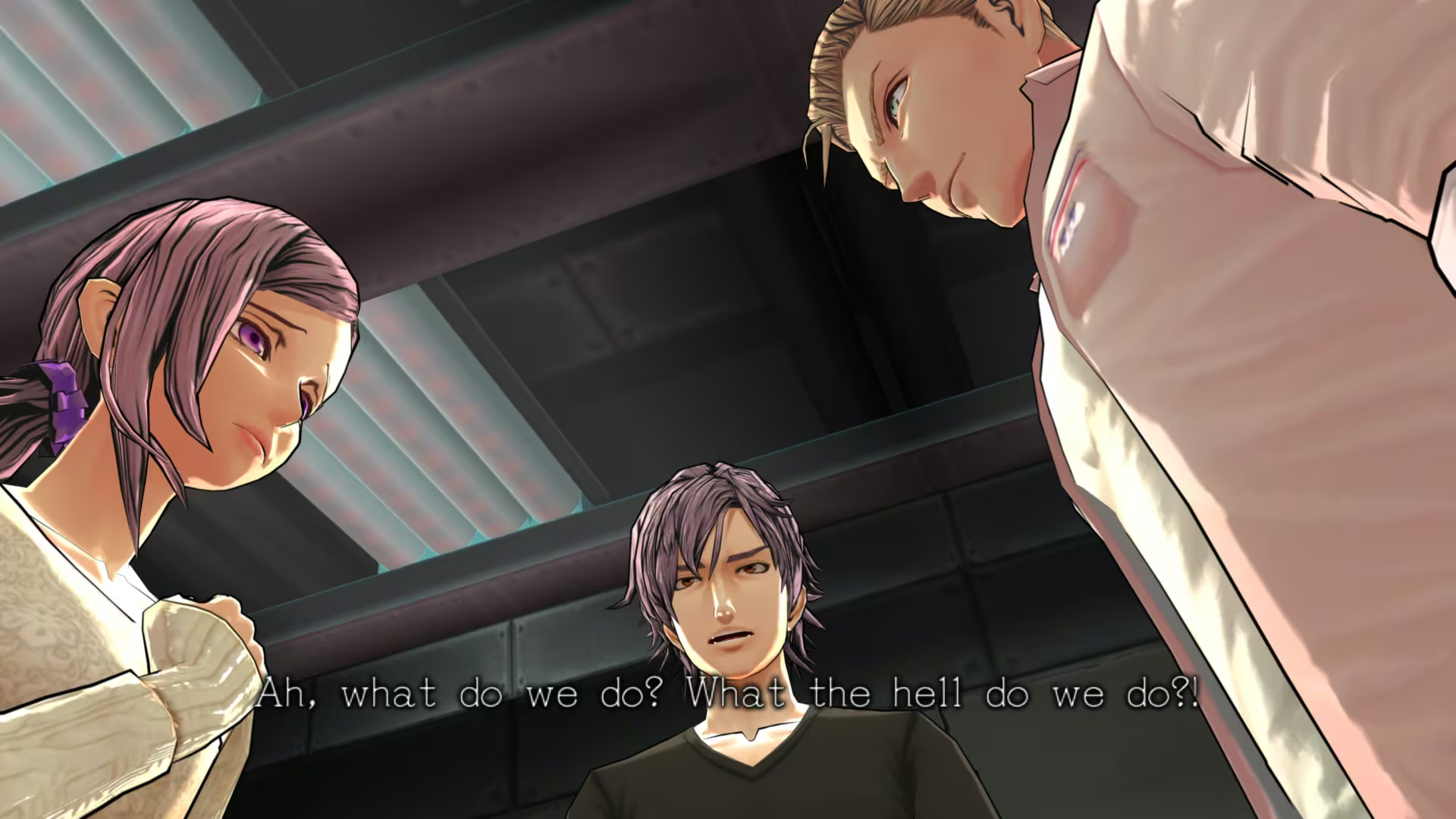
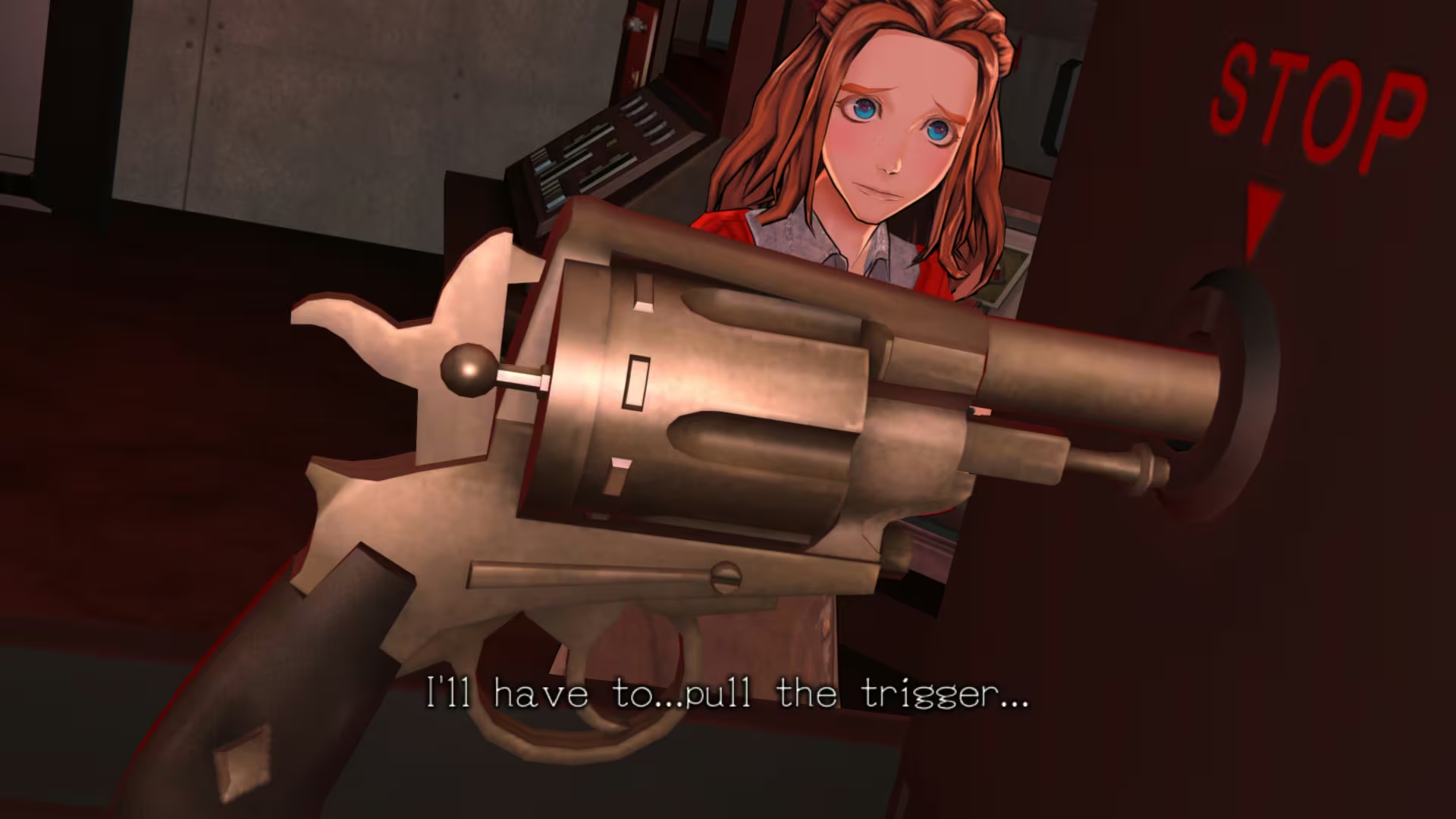
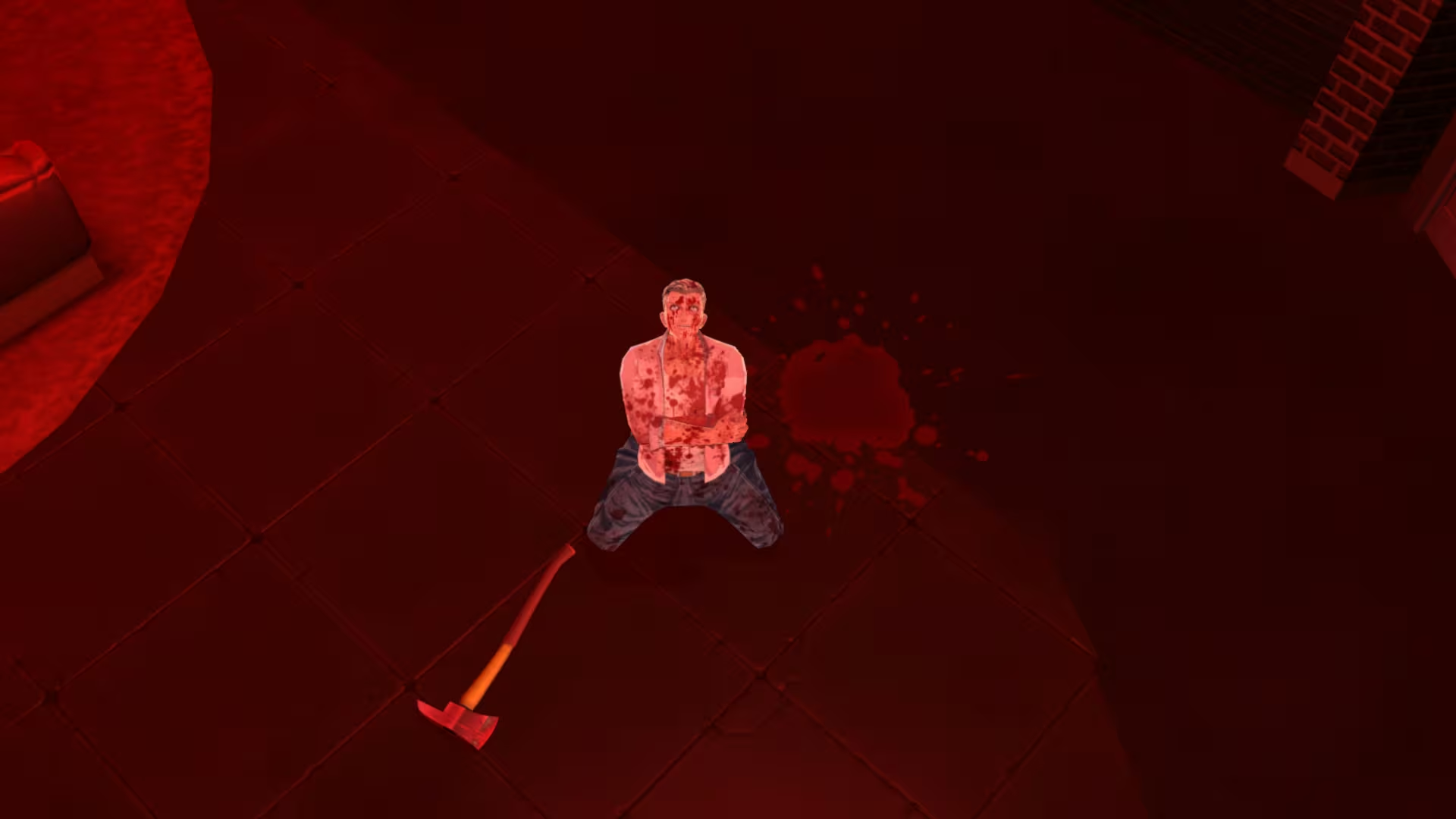
Nine participants awaken, trapped in an underground facility. To escape, they must play a game with deadly consequences. Who will live, and who will die? The choice is yours. Let the Decision Game begin…
Global score
82/100
Genres
Adventure, Visual Novel, Strategy, Role-playing (RPG), Puzzle
Similar games
Pros
- Complex and engaging story
- Innovative non-linear narrative structure
- Thought-provoking puzzles
- Strong suspense and atmosphere
- Multiple endings and replayability
Cons
- Poor character animation and graphics
- Some plot elements confusing or underdeveloped
- Limited character customization
- Some puzzles repetitive or easy
- Steep learning curve for new players
Analysis
A very typical example of its motivational profile. Motivations that often define this kind of title include Expression, Fellowship, Cooperation, Competition. Here, the score leans higher than usual among comparable games on Continuation, Experimenting, Story.
How to use the graph
Similar games map
Each dot is a game. They are arranged from the same motivation profile as in the “Motivations” section below. Closer dots usually mean more similar reasons to play (exploration, competition, relaxation, etc.)—not that one game is “better” than another.
- Larger dot with a light outline: the game you are viewing.
- Colour: groups of games with comparable motivation patterns (statistical clusters).
- Hover a dot to see the game name; click to open its page.
- Scroll or double-click the chart to zoom out and see more games.
Why don’t the axes read like a score? This view uses t-SNE: it only keeps who is close to whom. The scales are not “good to bad” or hours played—they separate groups on the map. Read distance between dots, not the axis numbers.
Motivations
-
Autonomy3
"Players make meaningful decisions affecting story branches, but some choices are predetermined or forced by characters, blending player control with narrative constraints."
-
Competence2
"Escape room puzzles require logical thinking and problem solving, though some puzzles are easier or repetitive; overall moderate skill challenge."
-
Competition-4
"Focus is on personal story progression and puzzle solving without competitive elements or player comparison."
-
Continuation4
"Players engage in long sessions to explore multiple story fragments and endings, showing strong attachment and habitual play."
-
Cooperation-3
"Gameplay centers on individual decision making and puzzle solving; limited or no multiplayer cooperation."
-
Creativity3
"Players creatively solve puzzles and piece together story fragments; narrative structure is non-linear and innovative."
-
Domination-5
"Interactions are narrative-driven with no player dominance or power over others."
-
Escapism4
"Players immerse in a complex fictional world with suspense and mystery, providing distraction from real life."
-
Expectation-4
"Players engage voluntarily out of intrinsic interest in story and puzzles, not due to obligation or external pressure."
-
Experimenting4
"Game encourages exploring multiple story branches and puzzle solutions, rewarding experimentation with different outcomes."
-
Exploration3
"Players discover new story fragments and puzzle rooms in a non-linear fashion, promoting curiosity-driven discovery."
-
Expression-3
"Limited character customization or self-expression; players experience predefined characters and story."
-
Fantasy4
"Strong science fiction and speculative elements with time travel, parallel worlds, and fictional viruses."
-
Fellowship-4
"Experience is primarily solitary with minimal social interaction or community involvement."
-
Growth3
"Players develop problem-solving skills and understanding of complex story concepts through gameplay."
-
Health-5
"Sedentary gameplay with no physical activity or health-related features."
-
Idle-4
"Requires sustained attention and focus; not designed for casual or background play."
-
Intimacy-4
"Limited social or emotional connection beyond narrative; no real player-to-player intimacy."
-
Leadership-3
"Players follow narrative roles without leading or managing others."
-
Progression3
"Players unlock story fragments, endings, and puzzle solutions progressively."
-
Relaxation1
"Game balances tension and puzzle challenge with moments of narrative flow, but some frustration reported."
-
Sensation2
"Atmospheric music and suspenseful storytelling provide moderate sensory and emotional stimulation."
-
Status-4
"Achievements and recognition are personal; no social status or popularity elements."
-
Story5
"Narrative immersion is central, with complex plot, character development, and multiple endings."
-
Strategy3
"Players use reasoning and planning to solve puzzles and make impactful story decisions."
-
Thrill4
"Suspenseful and tense moments create emotional excitement and relief."
-
Value3
"Players perceive good value through rich story content and puzzle gameplay, though some note price concerns."
-
Violence2
"Violence is present in narrative and some puzzle consequences, but not gratuitous or central gameplay."
-
Survival3
"Themes of survival and avoiding death are integral to story and decisions."
Where to buy
Last update: 29/04/2026