FATE: The Traitor Soul Thumbnail

FATE: The Traitor Soul similar games & best alternatives

FATE: The Traitor Soul

PC (Microsoft Windows) • 2014

Related articles

Quick resume

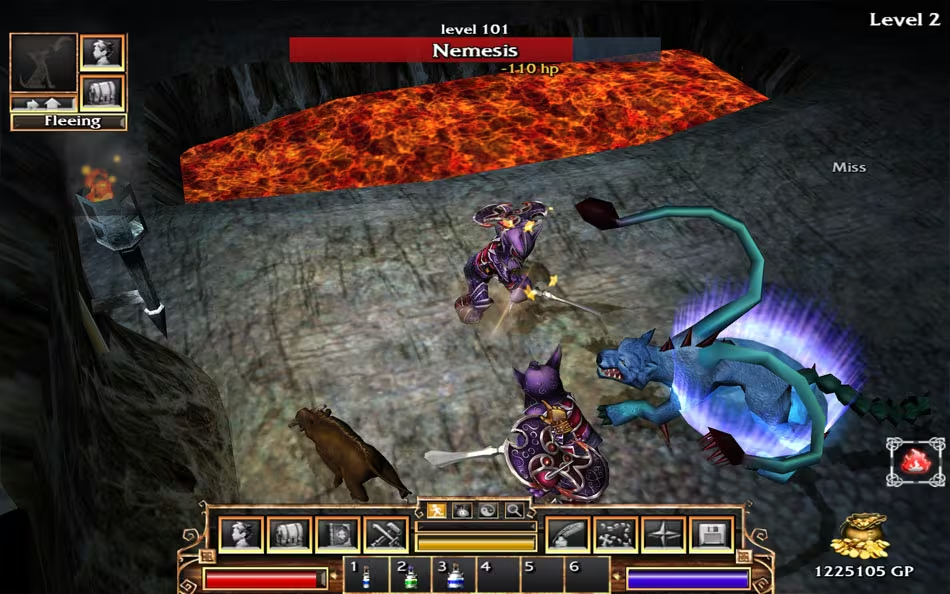
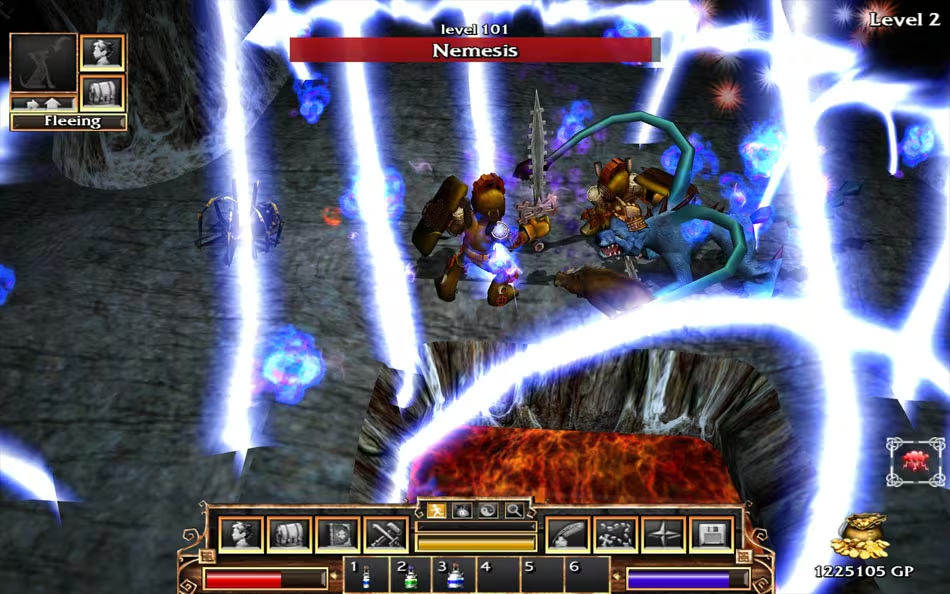
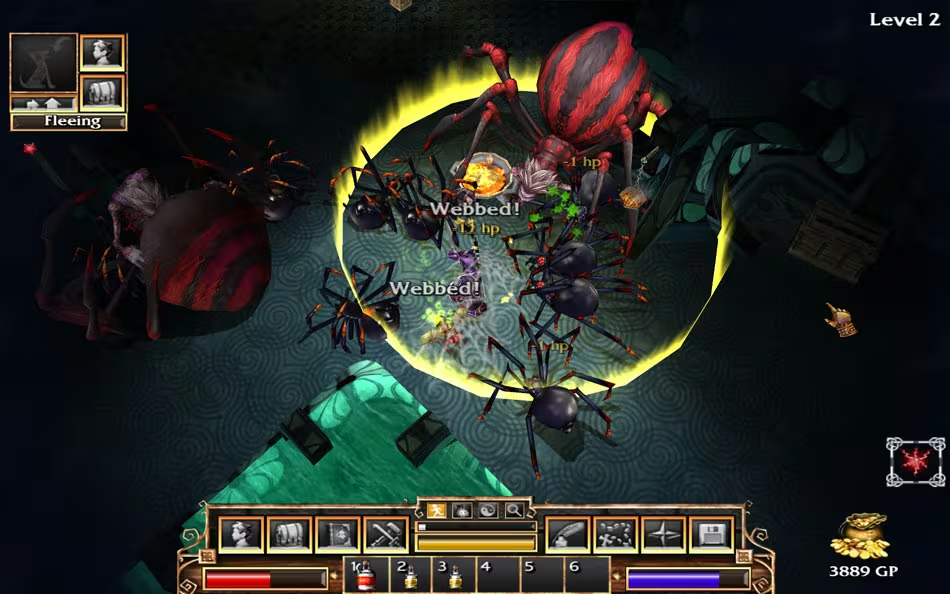
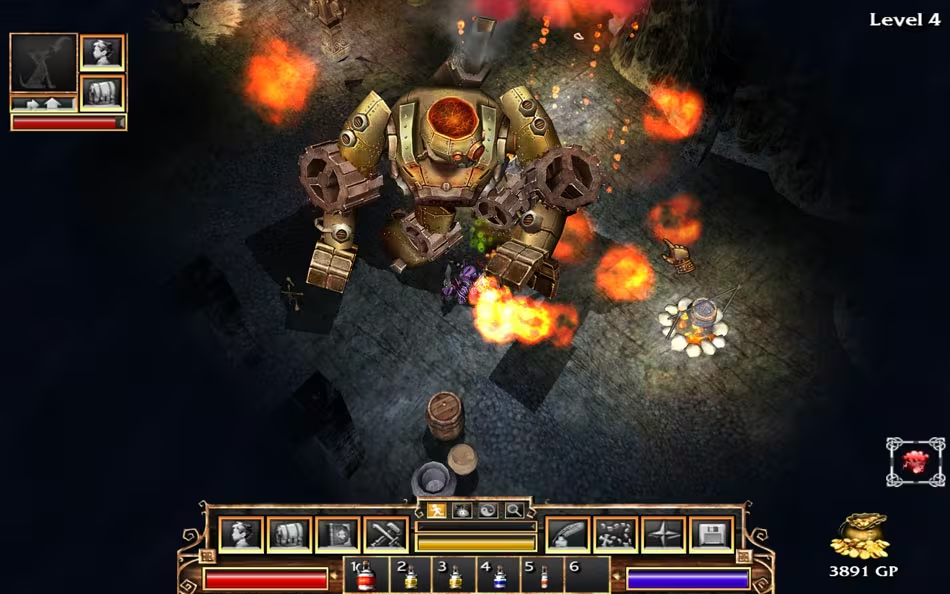
IT’S HERE, FATE FANS! FATE - The Traitor Soul has arrived on Steam! This third game has more loot, more spells, more heroes and, most importantly, more pets. Hit “add to cart” already! Or read on for more details on this classic game.

Global score

92/100

Genres

Action, Adventure, Role-playing (RPG)

Similar games

    Pros

    • Includes multiple fate games in one
    • Highly replayable with procedural dungeons
    • Accessible and casual-friendly gameplay
    • Strong nostalgia and charm
    • Good value for price

    Cons

    • Dated graphics and sound
    • Minimal story and narrative depth
    • No multiplayer or social features
    • Some bugs and technical issues reported
    • Repetitive quest and dungeon design

    Analysis

    Less representative of its motivational profile, with noticeable differences. Motivations that often define this kind of title include Fellowship, Cooperation, Leadership, Violence. Here, the score leans higher than usual among comparable games on Relaxation. It leans lower than usual among comparable games on Story, Thrill.

    How to use the graph
    Similar games map

    Each dot is a game. They are arranged from the same motivation profile as in the “Motivations” section below. Closer dots usually mean more similar reasons to play (exploration, competition, relaxation, etc.)—not that one game is “better” than another.

    • Larger dot with a light outline: the game you are viewing.
    • Colour: groups of games with comparable motivation patterns (statistical clusters).
    • Hover a dot to see the game name; click to open its page.
    • Scroll or double-click the chart to zoom out and see more games.

    Why don’t the axes read like a score? This view uses t-SNE: it only keeps who is close to whom. The scales are not “good to bad” or hours played—they separate groups on the map. Read distance between dots, not the axis numbers.

    Motivations

    • Autonomy
      4

      "Players have freedom to build characters classless, choose races, pets, and play at their own pace with multiple ways to approach gameplay."

    • Competence
      3

      "Game offers skill development through character building, equipment optimization, and challenging dungeon crawling with some difficulty scaling."

    • Competition
      -4

      "Focus is on solo play and personal progression without ranked modes or direct player competition."

    • Continuation
      5

      "Highly replayable with procedurally generated dungeons, character retirement system, and long play sessions noted by users."

    • Cooperation
      -5

      "Primarily a single-player experience with no multiplayer or cooperative gameplay features."

    • Creativity
      3

      "Players can customize characters, pets, and experiment with enchantments and builds, though within predefined systems."

    • Domination
      -5

      "No evidence of power over others or social dominance; interactions are individual and non-competitive."

    • Escapism
      5

      "Strong escapism appeal with immersive dungeon crawling, nostalgia, and relaxing gameplay loop."

    • Expectation
      -5

      "Players engage voluntarily out of personal desire and nostalgia, no obligation or external pressure reported."

    • Experimenting
      4

      "Encourages trying new builds, pet transformations, enchantments, and exploring randomized dungeons."

    • Exploration
      4

      "Procedurally generated dungeons and multiple realms encourage discovery and curiosity-driven play."

    • Expression
      2

      "Character and pet customization allows some self-expression, though limited to game assets."

    • Fantasy
      5

      "Strong fantasy setting with magic, mythical creatures, and imaginative dungeon environments."

    • Fellowship
      -5

      "Minimal social connection; game is designed for solo play without community or social features."

    • Growth
      4

      "Players develop skills, knowledge of game mechanics, and character progression over time."

    • Health
      -5

      "Typical sedentary gameplay with no physical activity or health-related features."

    • Idle
      -3

      "Requires focused attention during dungeon crawling, though can be played in short sessions."

    • Intimacy
      -5

      "No evidence of forming close relationships or emotional sharing within the game."

    • Leadership
      -5

      "No leadership or group management roles; solo gameplay focus."

    • Progression
      5

      "Strong emphasis on item collection, character upgrades, and accumulating power."

    • Relaxation
      4

      "Described as a relaxing, mindless dungeon crawler suitable for casual play and stress relief."

    • Sensation
      2

      "Enjoyable visuals and sounds with nostalgic charm, but graphics are dated and simple."

    • Status
      -5

      "No social recognition or popularity systems; achievements exist but limited social impact."

    • Story
      -2

      "Minimal story and lore; gameplay focused on dungeon crawling rather than narrative immersion."

    • Strategy
      2

      "Some strategic elements in character builds and combat, but overall straightforward gameplay."

    • Thrill
      1

      "Some challenge and suspense in higher dungeon levels, but generally a controlled experience."

    • Value
      5

      "Highly praised for value, combining multiple games and extensive content at low price."

    • Violence
      3

      "Combat and monster slaying are core gameplay elements, though cartoonish and kid-friendly."

    • Survival
      2

      "Players manage health and resources to survive dungeons, but difficulty is adjustable and forgiving."

    Last update: 29/04/2026