Half Minute Hero: The Second Coming similar games & best alternatives
Half Minute Hero: The Second Coming
2014
Related articles
Quick resume
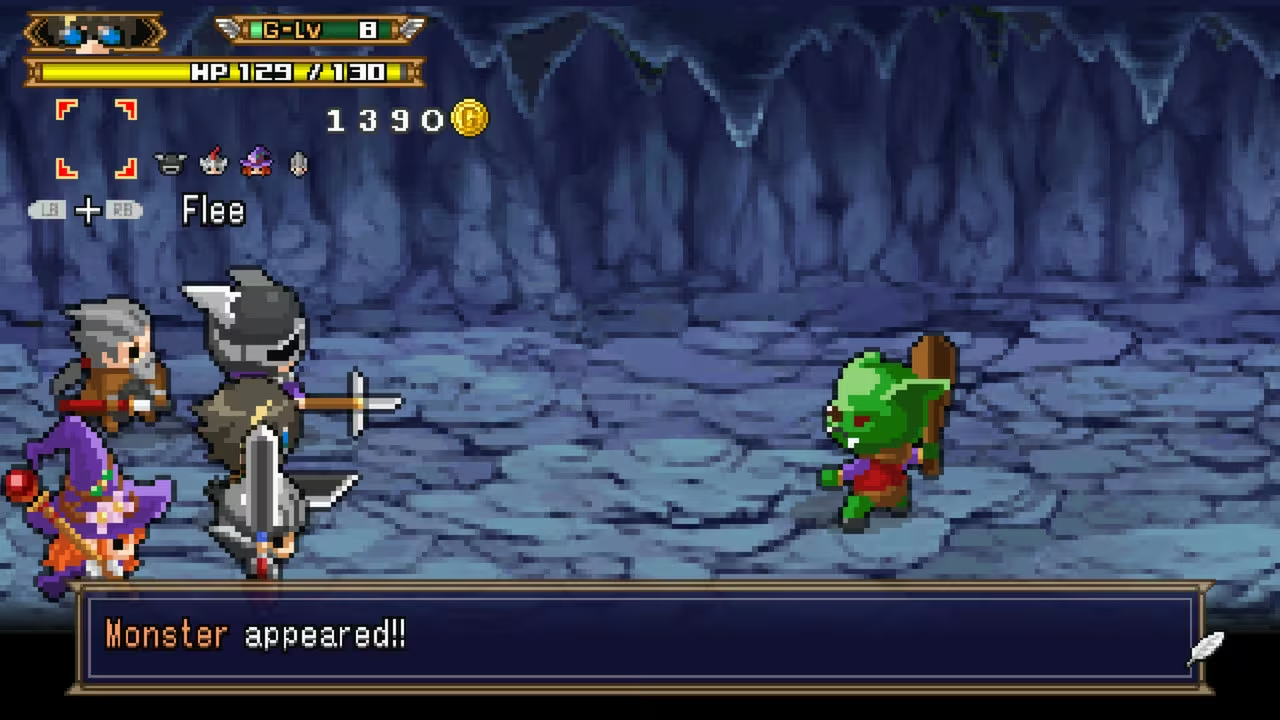
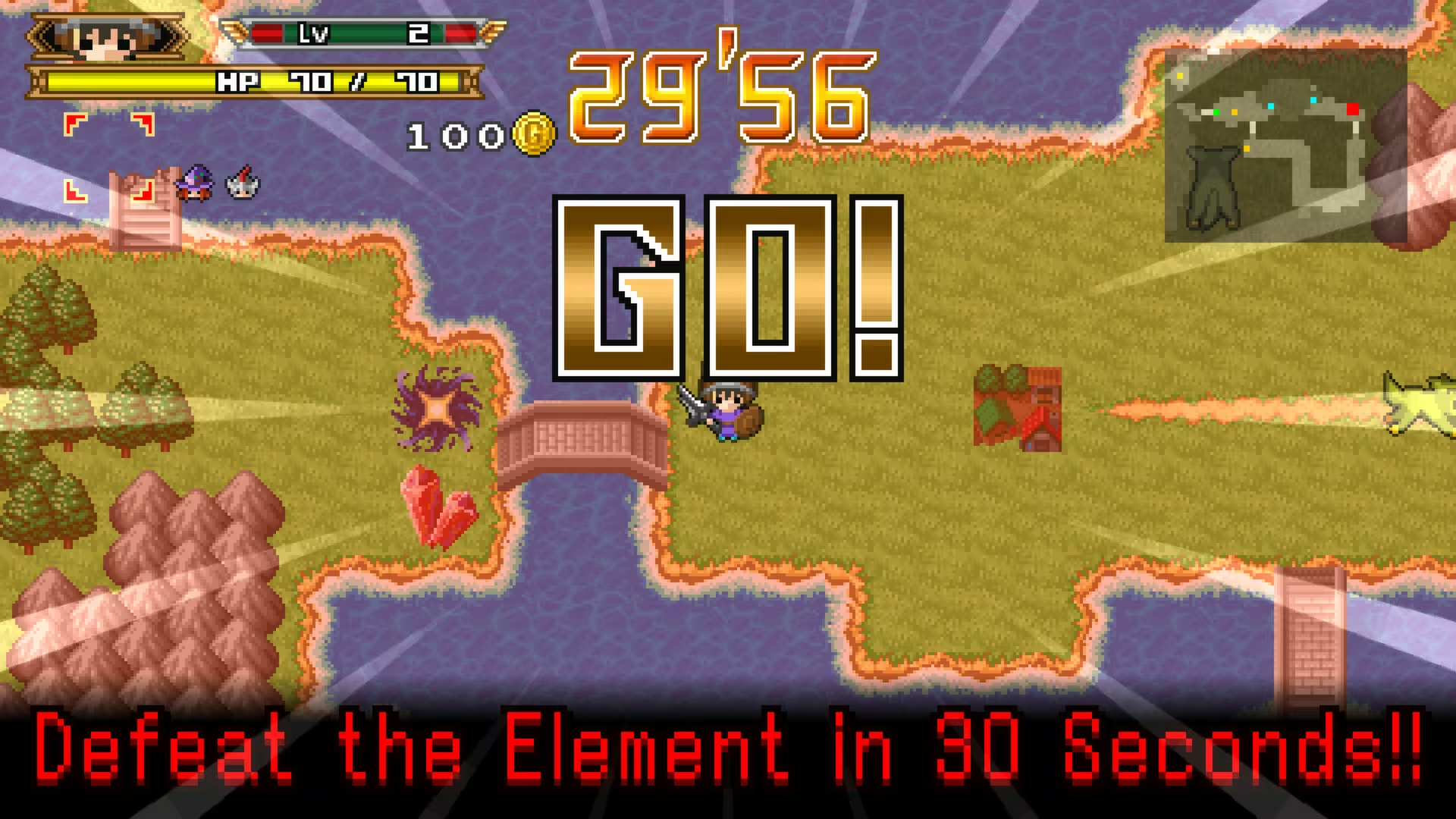
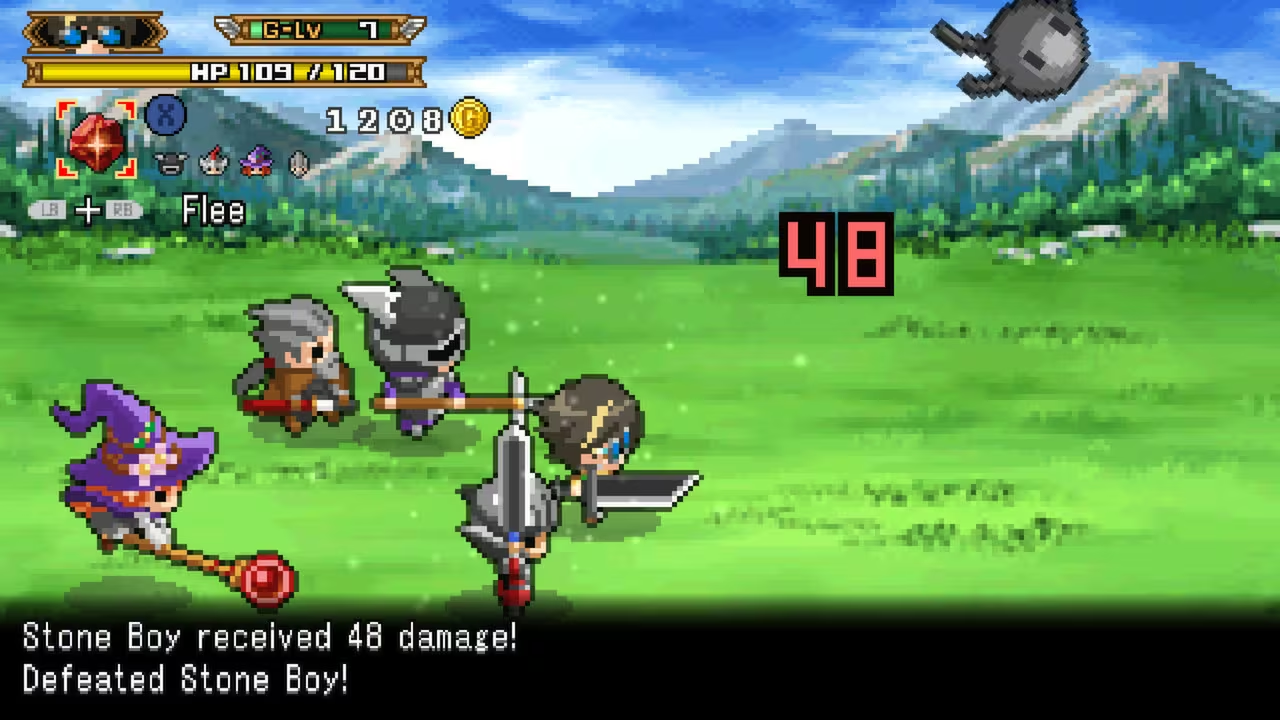
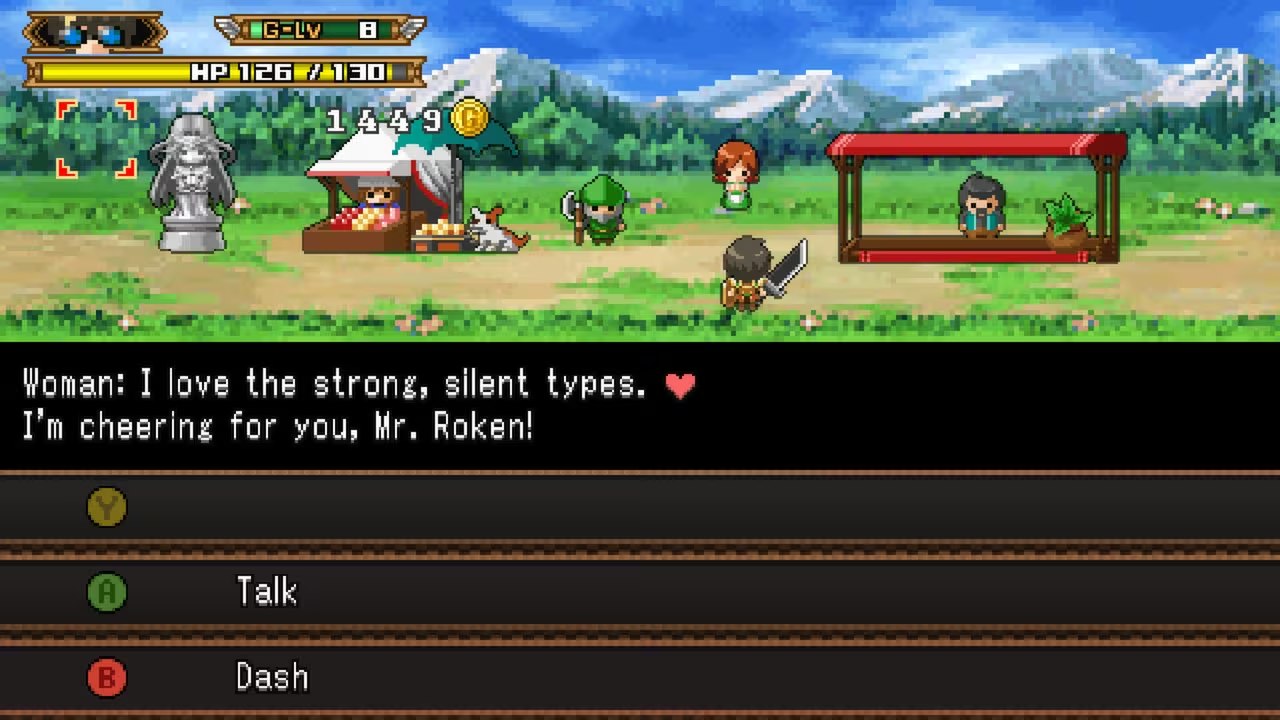
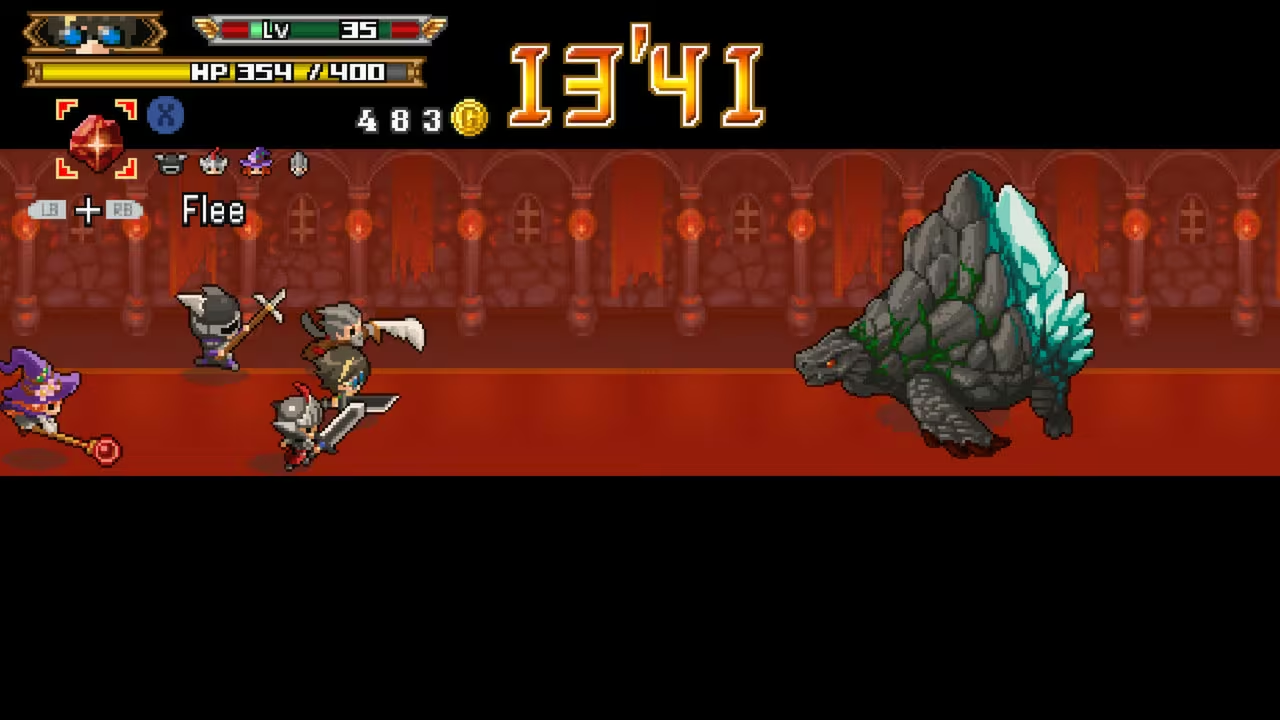
The world's speediest homage/roast to JRPGs! Can you save the world in 30 seconds? Get a quest, find those in need, fight through dungeons, earn cash, get cool loot and level up until YOU>EVIL. Don't have enough time? Pay the Goddess to reset the clock and try again! Over 100 mini-JRPGs for you to test your might with!
Global score
92/100
Genres
Action, Indie, Role-playing (RPG)
Similar games
Pros
- Fast-paced and engaging gameplay
- Deep and humorous story with character development
- Extensive content and replayability
- Strong soundtrack and art style
- Map editor and multiplayer features
Cons
- Story dialogue can be lengthy and repetitive
- Some grinding required which may reduce challenge
- Lack of gameplay variety compared to first game
- Some players find pacing slow due to story emphasis
- Multiplayer community is small
Analysis
Broadly representative of its motivational profile, with a few distinct shifts. Motivations that often define this kind of title include Cooperation, Fellowship, Intimacy, Leadership. Here, the score leans higher than usual among comparable games on Status, Competition. It leans lower than usual among comparable games on Intimacy.
How to use the graph
Similar games map
Each dot is a game. They are arranged from the same motivation profile as in the “Motivations” section below. Closer dots usually mean more similar reasons to play (exploration, competition, relaxation, etc.)—not that one game is “better” than another.
- Larger dot with a light outline: the game you are viewing.
- Colour: groups of games with comparable motivation patterns (statistical clusters).
- Hover a dot to see the game name; click to open its page.
- Scroll or double-click the chart to zoom out and see more games.
Why don’t the axes read like a score? This view uses t-SNE: it only keeps who is close to whom. The scales are not “good to bad” or hours played—they separate groups on the map. Read distance between dots, not the axis numbers.
Motivations
-
Autonomy3
"Players have freedom to explore the overworld, choose party members, customize formations, and decide grinding strategies, though quests have fixed objectives."
-
Competence4
"Players engage in skillful time management, fast-paced combat, and strategic leveling to overcome challenging 30-second quests."
-
Competition2
"Includes leaderboards and multiplayer modes for comparing performance with others, though much gameplay is single-player focused."
-
Continuation4
"Long story campaign, many side quests, achievements, and map editor encourage extended play and replayability."
-
Cooperation1
"Party system and multiplayer modes encourage some cooperation, but much gameplay is solo and individual."
-
Creativity3
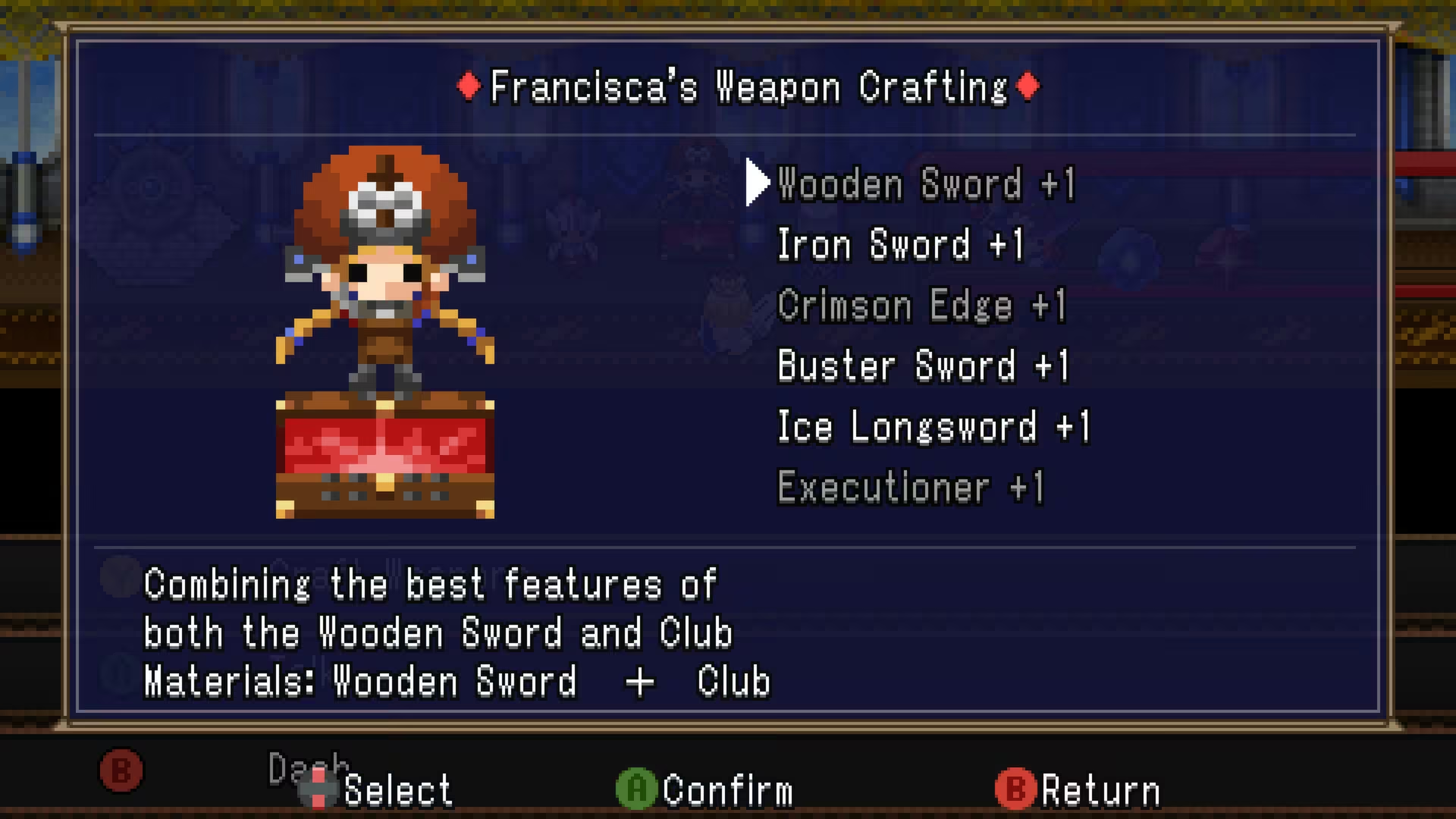
"Map editor and customization of party and equipment allow creative expression beyond core gameplay."
-
Domination-3
"Interactions emphasize shared experiences and mutual respect rather than exerting control or superiority over others."
-
Escapism4
"Players use the game as a fast-paced, humorous escape with engaging story and fantasy elements."
-
Expectation-4
"Players engage voluntarily out of intrinsic interest and enjoyment, with no indication of obligation or pressure."
-
Experimenting3
"Players try different party formations, skills, and strategies, and explore user-created maps."
-
Exploration3
"Overworld exploration, hidden items, and secrets encourage discovery beyond linear quests."
-
Expression3
"Customization of characters, costumes, and equipment supports player self-expression."
-
Fantasy4
"Strong fantasy setting with heroic quests, gods, and parody of JRPG tropes."
-
Fellowship1
"Some community features like multiplayer and map sharing foster group identity, but much play is solo."
-
Growth4
"Players learn game mechanics, optimize strategies, and develop skills to complete challenging quests."
-
Health-4
"Primarily sedentary gameplay with no physical activity elements."
-
Idle-3
"Requires focused attention due to fast-paced time limits and strategic decisions."
-
Intimacy-4
"Social interactions are limited to surface-level multiplayer and community sharing."
-
Leadership2
"Players lead party formations and manage team strategies, though no large-scale leadership roles."
-
Progression5
"Strong emphasis on leveling up, acquiring items, and unlocking titles and achievements."
-
Relaxation-2
"Fast-paced gameplay and time pressure create tension rather than relaxation."
-
Sensation3
"Engaging soundtrack and fast action provide stimulating sensory and emotional experiences."
-
Status2
"Leaderboards and multiplayer offer recognition and social status opportunities."
-
Story4
"Expanded, engaging narrative with character development and continuity from the first game."
-
Strategy4
"Players must plan time management, party composition, and resource use to succeed."
-
Thrill4
"Time limits and fast-paced challenges create suspense and excitement."
-
Value4
"Offers extensive content, including the first game and soundtrack, providing strong value for price."
-
Violence3
"Combat and defeating enemies are core gameplay elements involving destruction."
-
Survival3
"Players must avoid failure by managing time, resources, and threats to progress."
Last update: 29/04/2026