Impostor Factory Thumbnail

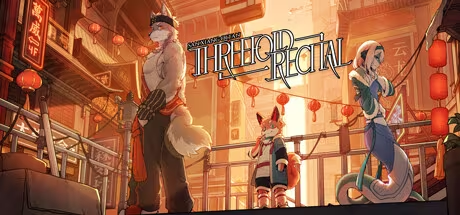
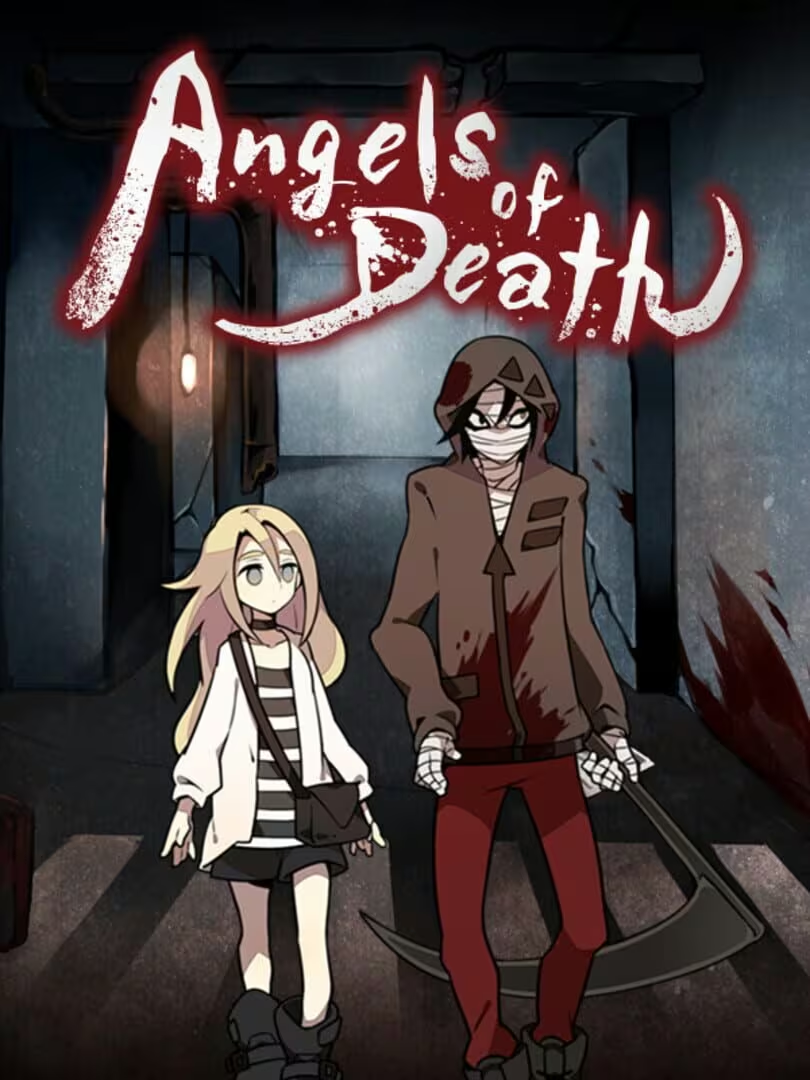
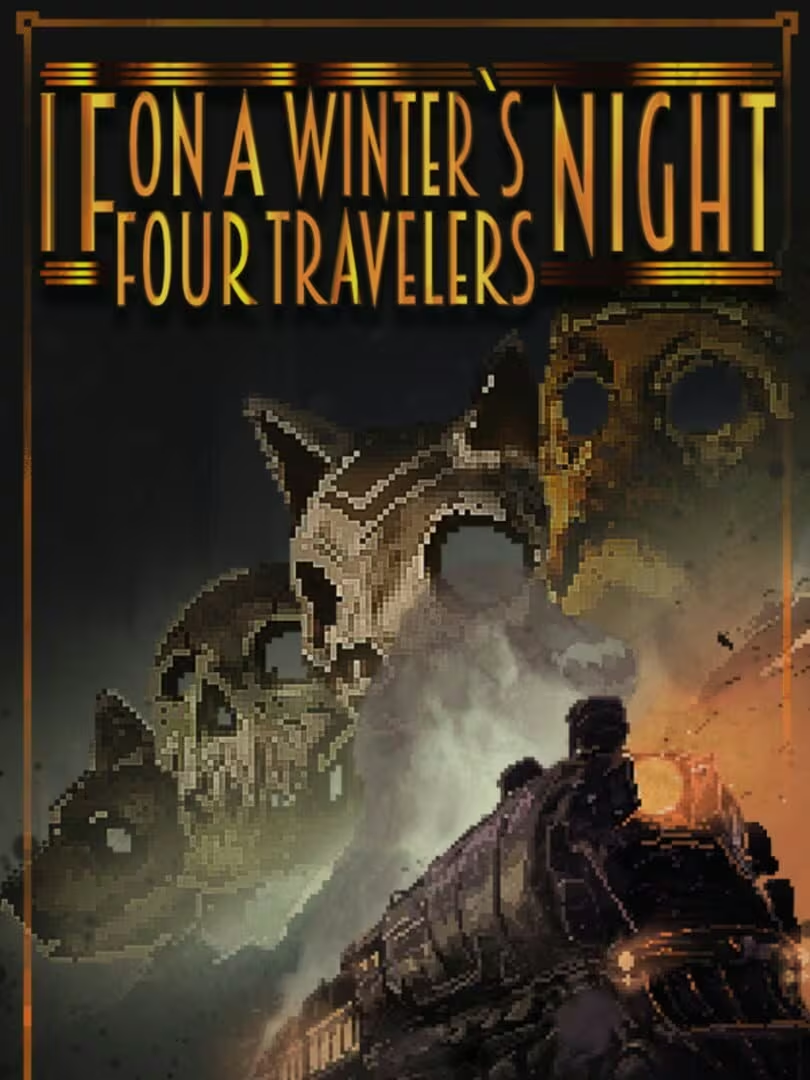
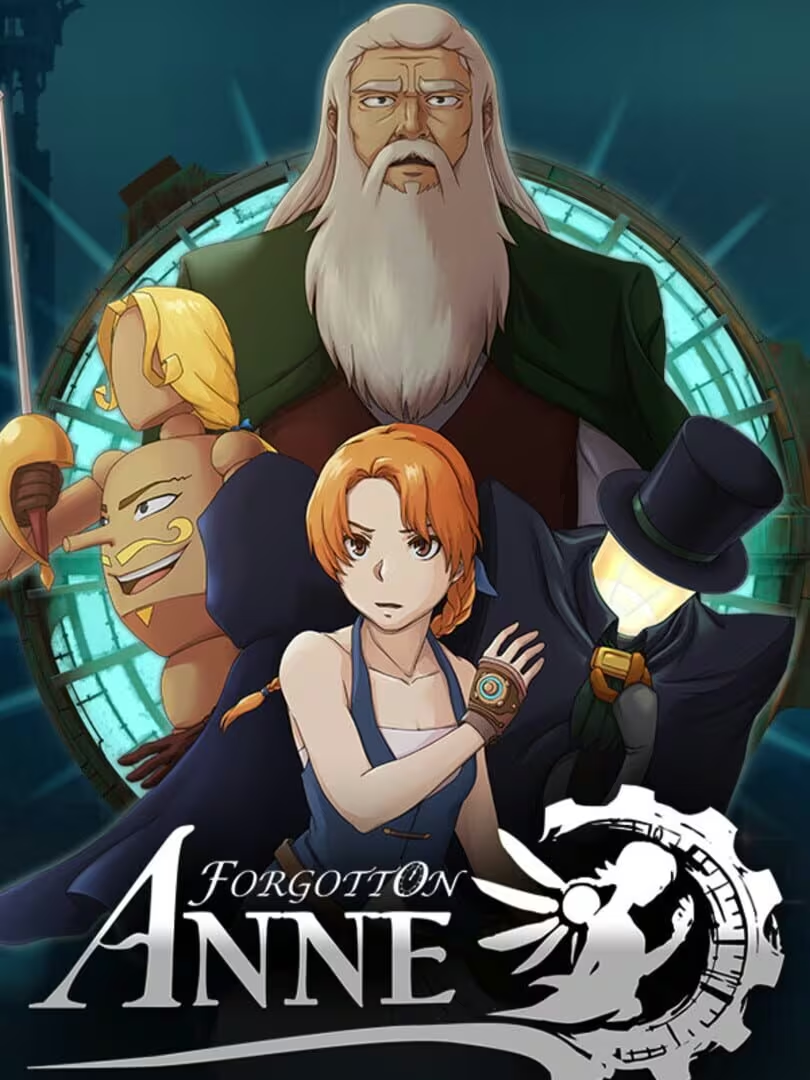
Impostor Factory similar games & best alternatives

Impostor Factory

PC (Microsoft Windows), Mac, Linux • 2021

Related articles

Quick resume

A bonkers time-loop tragicomedy murder mystery thriller featuring multiple casualties and a suspicious cat, from the creator of To the Moon & Finding Paradise.

Global score

96/100

Genres

Adventure, Casual, Indie, Role-playing (RPG)

Similar games

    Pros

    • Emotional and thought-provoking story
    • Beautiful music and art
    • Strong narrative immersion
    • Meaningful character development
    • Accessible gameplay

    Cons

    • Minimal gameplay interaction
    • Short playtime
    • Linear progression
    • Less impactful than previous titles for some
    • Lack of puzzles or challenges

    Analysis

    Broadly representative of its motivational profile, with a few distinct shifts. Motivations that often define this kind of title include Autonomy, Strategy, Experimenting, Competence. Here, the score leans higher than usual among comparable games on Fellowship, Intimacy. It leans lower than usual among comparable games on Idle.

    How to use the graph
    Similar games map

    Each dot is a game. They are arranged from the same motivation profile as in the “Motivations” section below. Closer dots usually mean more similar reasons to play (exploration, competition, relaxation, etc.)—not that one game is “better” than another.

    • Larger dot with a light outline: the game you are viewing.
    • Colour: groups of games with comparable motivation patterns (statistical clusters).
    • Hover a dot to see the game name; click to open its page.
    • Scroll or double-click the chart to zoom out and see more games.

    Why don’t the axes read like a score? This view uses t-SNE: it only keeps who is close to whom. The scales are not “good to bad” or hours played—they separate groups on the map. Read distance between dots, not the axis numbers.

    Motivations

    • Autonomy
      -3

      "Gameplay is mostly linear with limited player interaction and choices mainly to progress the story, reflecting following established routines rather than full control."

    • Competence
      -4

      "Minimal gameplay challenge, mostly walking and interacting with objects, no puzzles or skill tests, predictable progression."

    • Competition
      -5

      "No competitive elements or comparison to others; focus is on personal narrative experience."

    • Continuation
      3

      "Players often play in one sitting and express strong emotional attachment, though some mention short playtime and less replay desire."

    • Cooperation
      -5

      "Single-player experience with no multiplayer or cooperative gameplay."

    • Creativity
      1

      "Some player creativity in interpreting story and emotions, but gameplay follows predefined narrative paths with no creation or modification."

    • Domination
      -5

      "No elements of exerting control or superiority over others; cooperative and respectful tone."

    • Escapism
      5

      "Strong emotional and philosophical themes provide players with escape from real-life problems and deep reflection."

    • Expectation
      -4

      "Players engage voluntarily out of personal desire and emotional interest, no obligation or pressure noted."

    • Experimenting
      -3

      "Gameplay is linear and narrative-driven with little novelty exploration or mechanic experimentation."

    • Exploration
      -3

      "Limited exploration of environments; mostly guided through known story locations."

    • Expression
      -4

      "No character customization or avatar personalization; standard presentation throughout."

    • Fantasy
      3

      "Story involves imaginative fiction, time loops, and sci-fi elements, though grounded in emotional realism."

    • Fellowship
      2

      "Strong community appreciation and shared emotional experience, though gameplay is single-player."

    • Growth
      4

      "Players report personal development, emotional growth, and reflection inspired by the story."

    • Health
      -5

      "Sedentary gameplay with no physical activity involved."

    • Idle
      -4

      "Requires focused attention during playthrough; not designed for background or idle play."

    • Intimacy
      4

      "Emotional closeness and meaningful relationships are central themes, fostering deep player connection."

    • Leadership
      -5

      "No leadership or group management roles; purely narrative-driven single-player experience."

    • Progression
      2

      "Narrative progression through story acts and character development rather than item or upgrade accumulation."

    • Relaxation
      3

      "Generally a calm, emotional flow with moments of tension and release, balancing challenge and catharsis."

    • Sensation
      3

      "Enjoyable pixel art, music, and emotional storytelling provide sensory and emotional stimulation."

    • Status
      -4

      "Focus on personal emotional experience rather than social recognition or popularity."

    • Story
      5

      "Strong narrative immersion with deep plot, character interaction, and emotional engagement."

    • Strategy
      -4

      "Minimal strategic or problem-solving elements; story-driven with straightforward progression."

    • Thrill
      2

      "Some suspense and mystery elements present, but overall controlled emotional experience."

    • Value
      4

      "Players perceive high emotional and artistic value for the price and time invested."

    • Violence
      -3

      "While murder mystery elements exist, gameplay focuses on story and emotional content rather than combat or destruction."

    • Survival
      -4

      "No survival or threat avoidance mechanics; stable narrative environment."

    Last update: 29/04/2026