Influent Language Learning Game Thumbnail

Influent Language Learning Game similar games & best alternatives

Influent Language Learning Game

PC (Microsoft Windows), iOS, Mac, Linux • 2014

Related articles

Quick resume

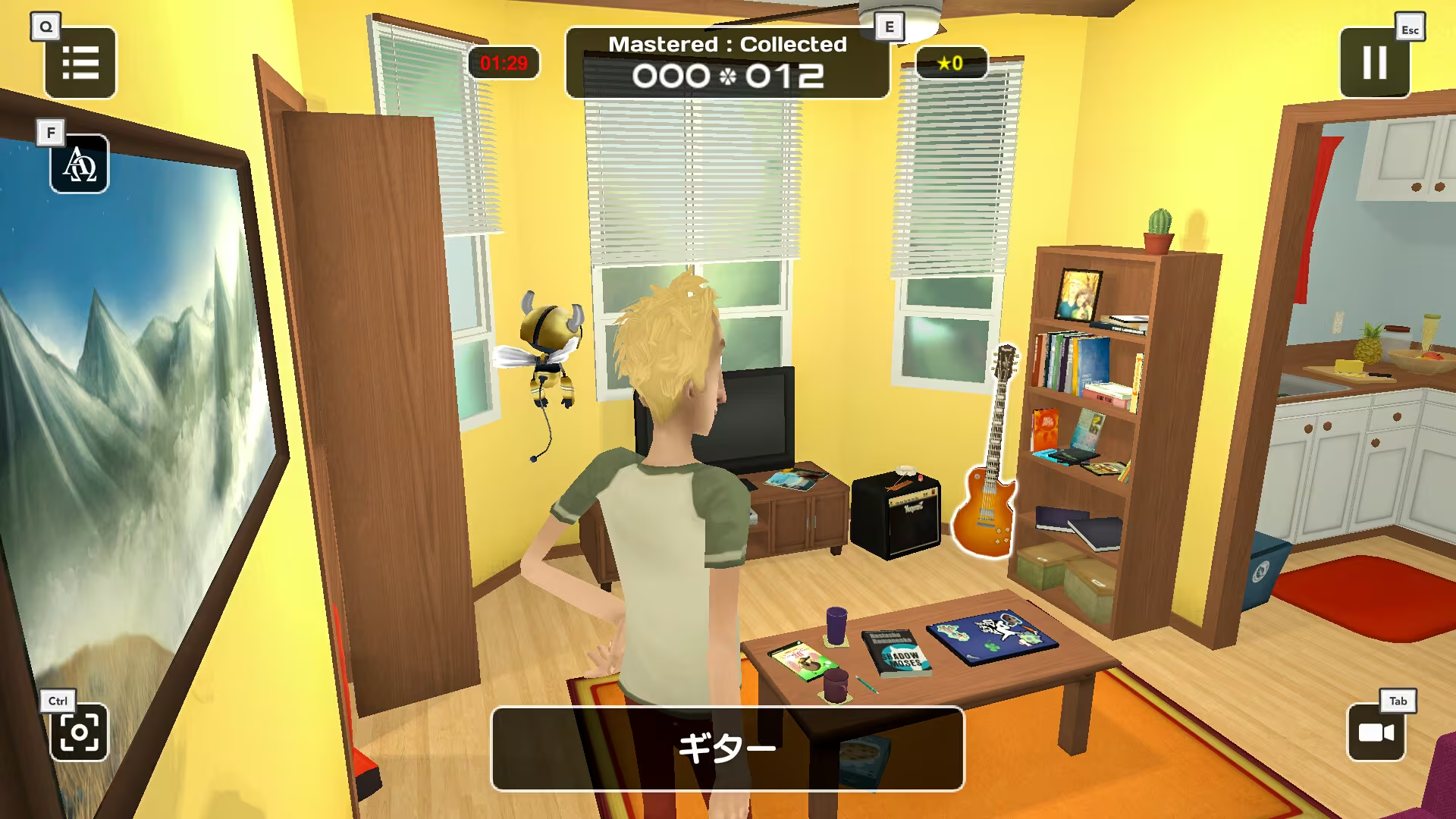
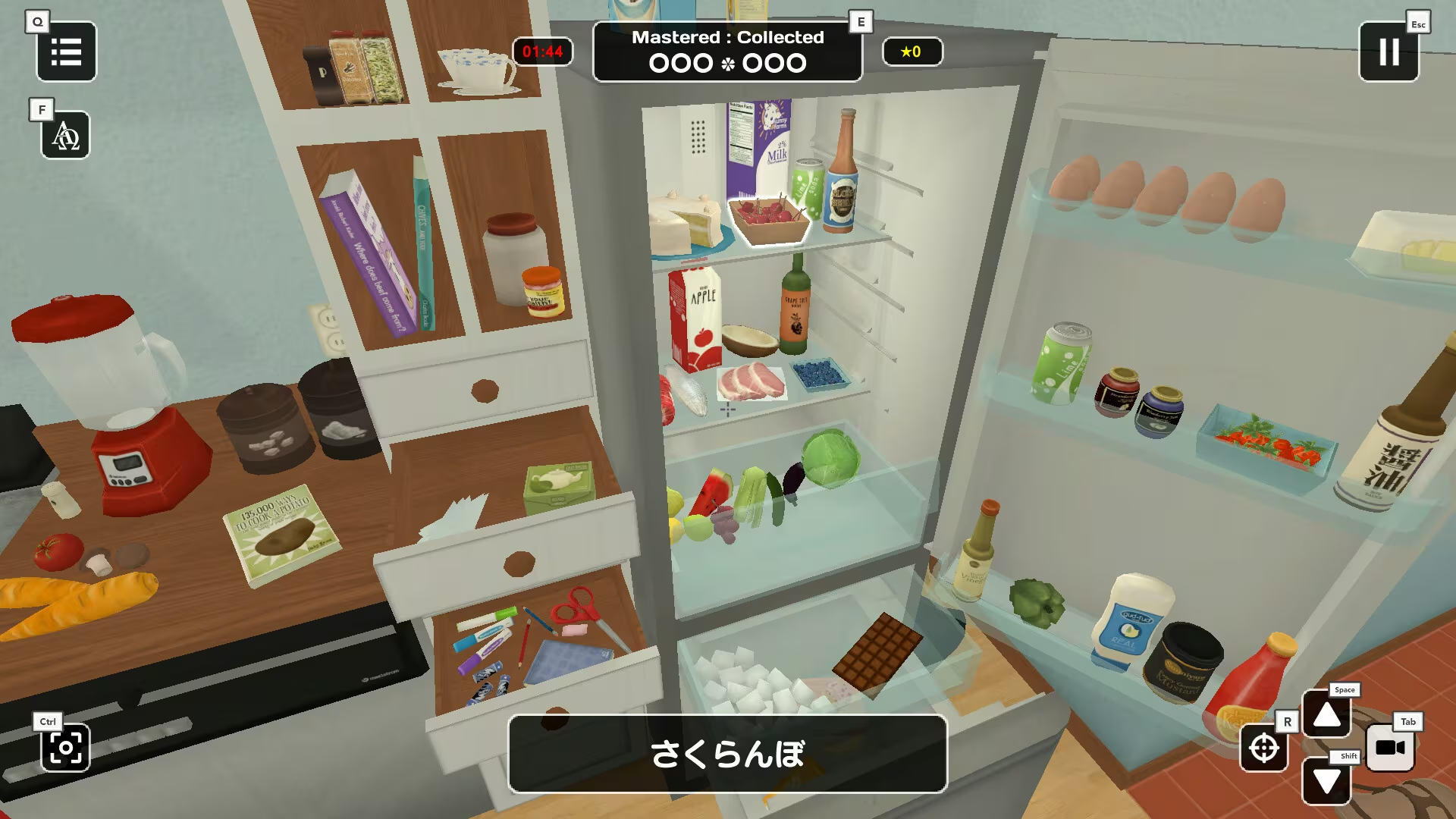
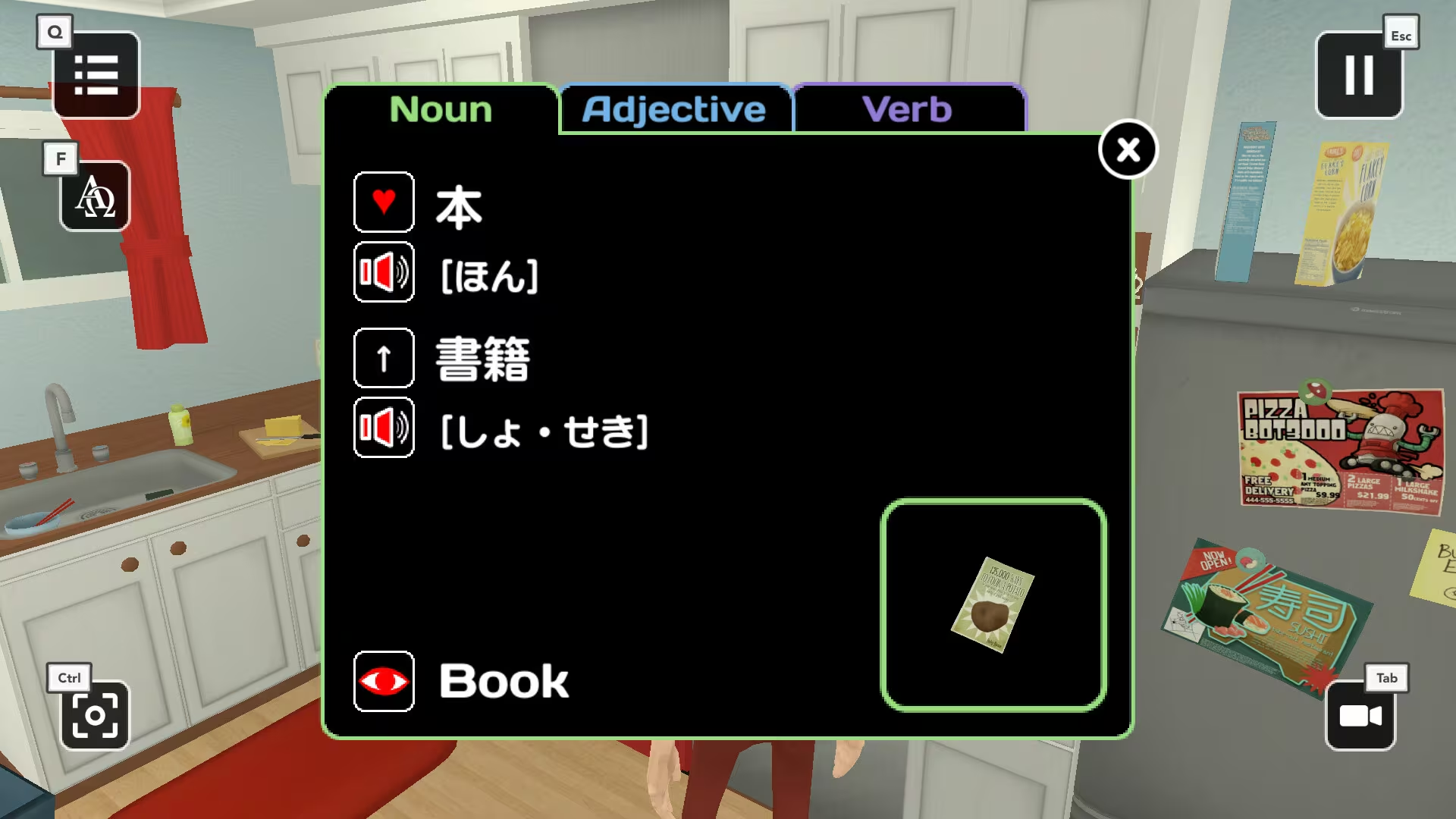
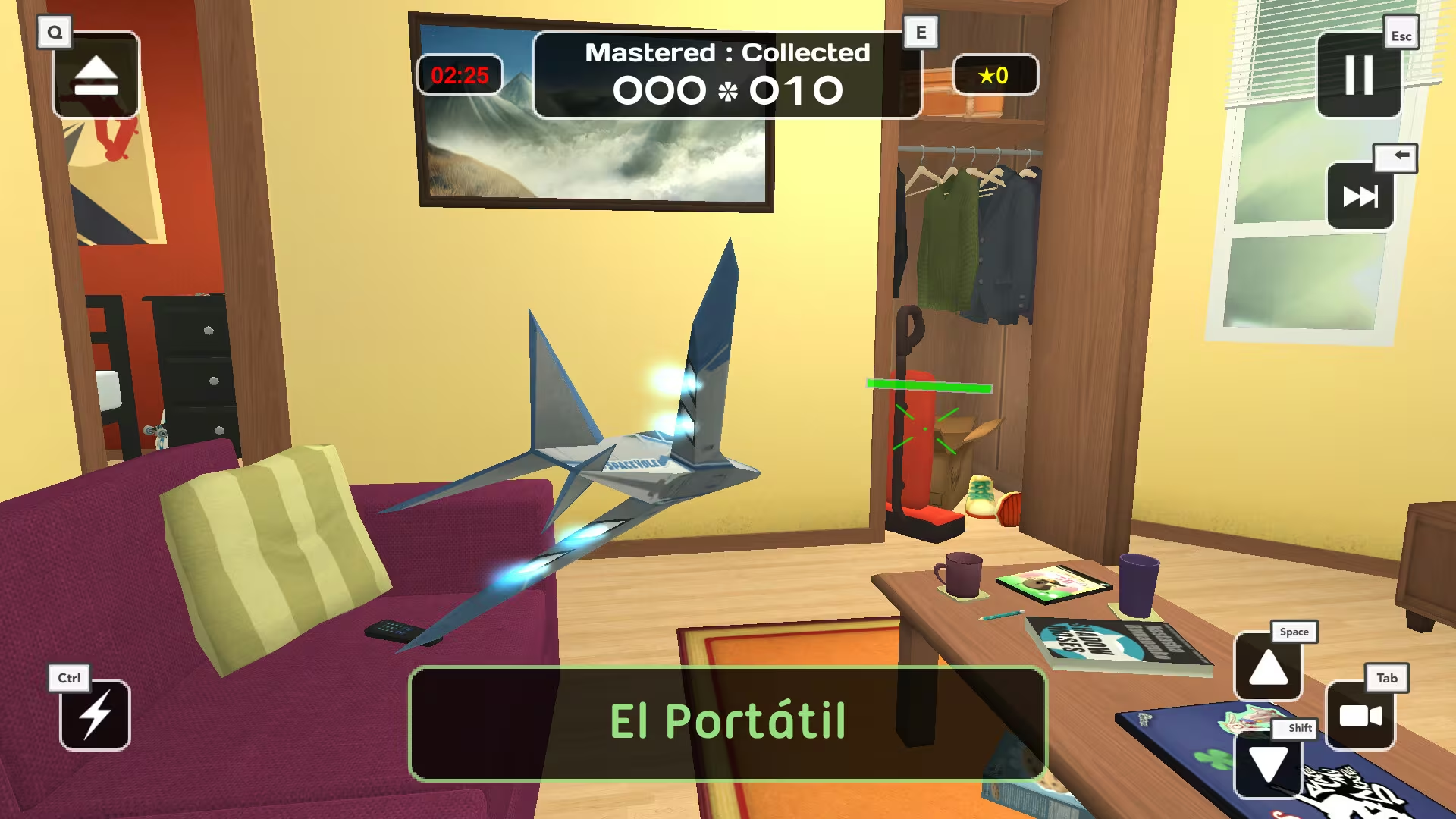
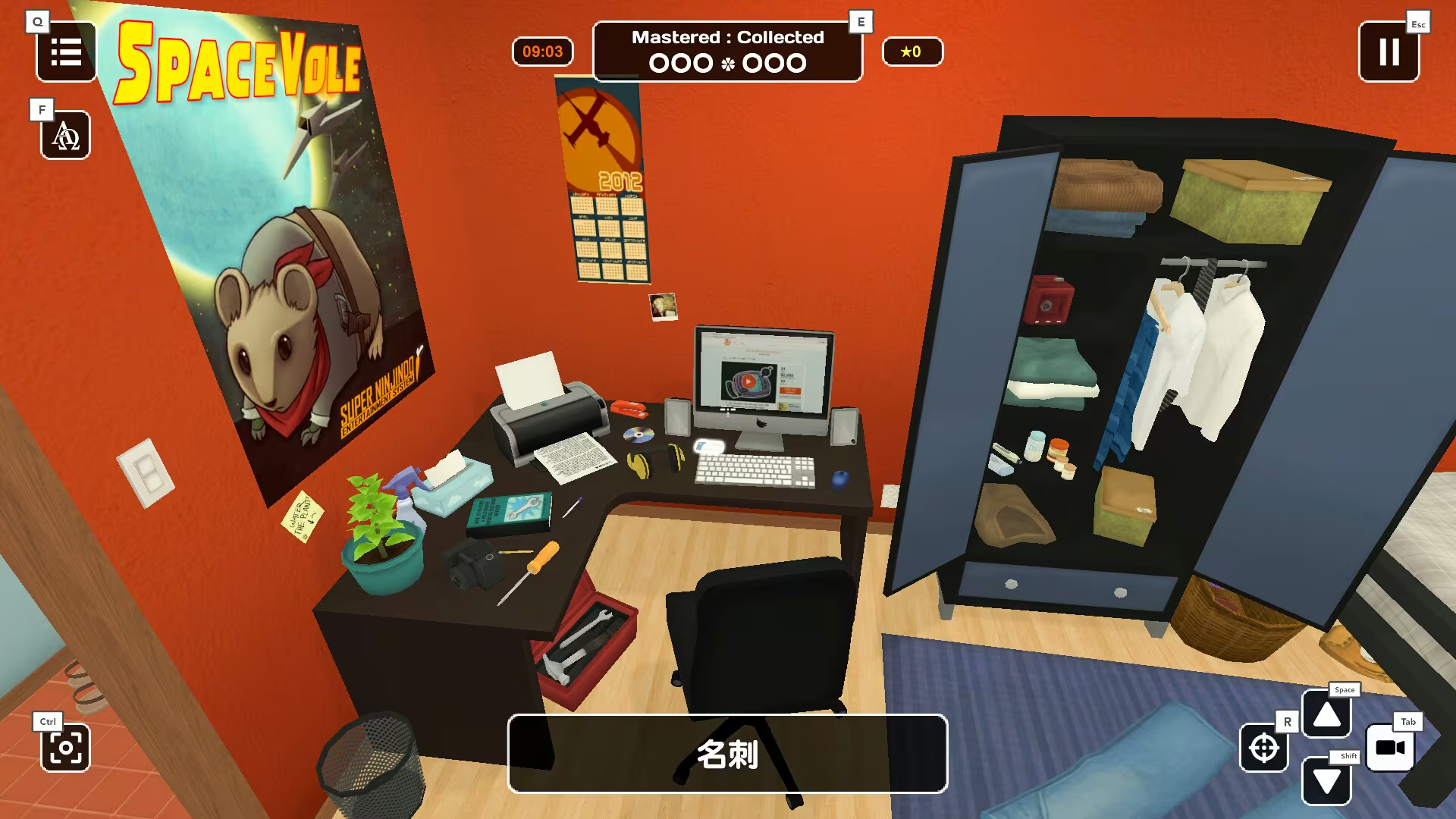
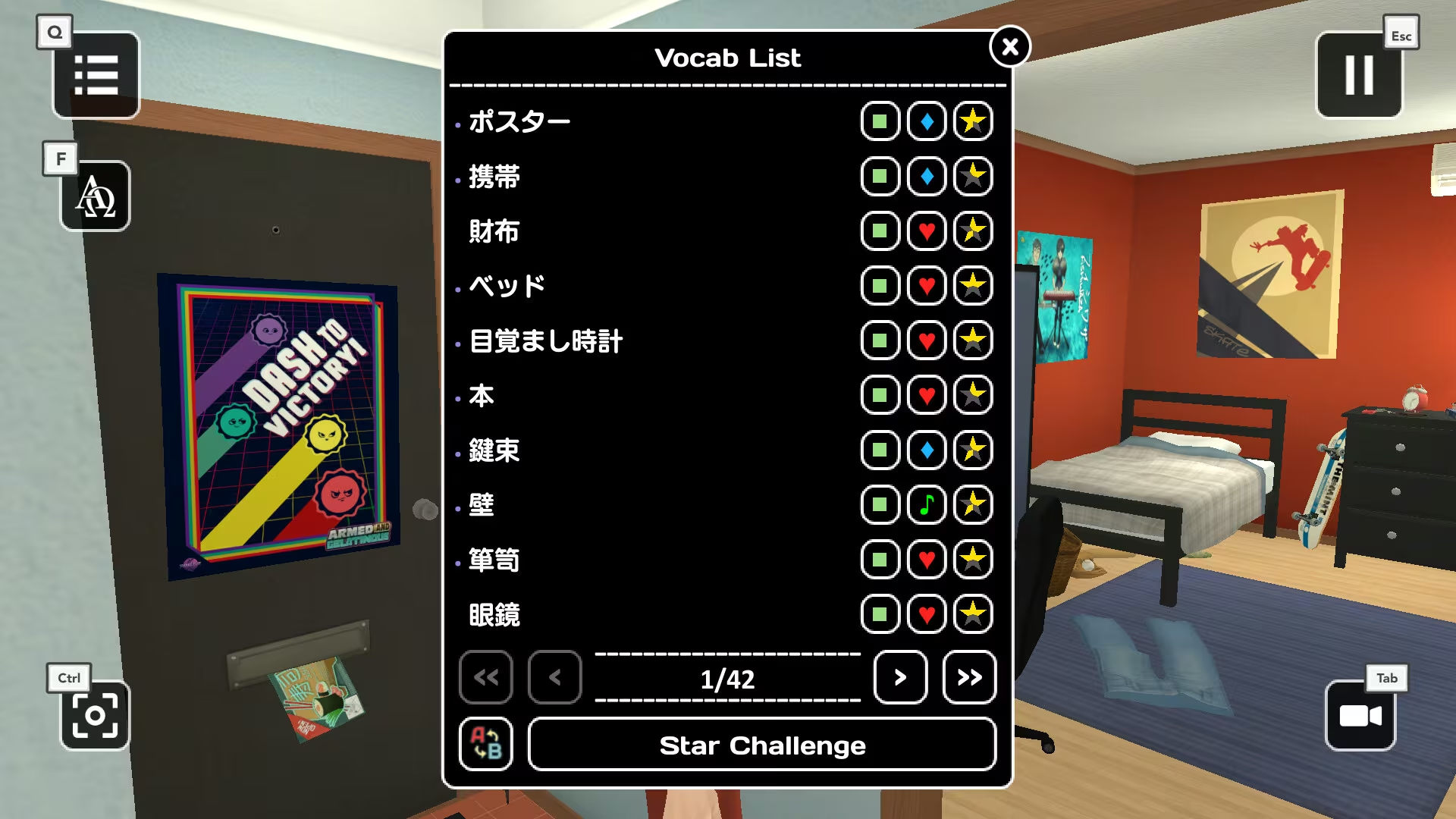
Influent is a Language Learning Game focused on rapid vocabulary acquisition in a 3D world featuring over 400 nouns, adjectives, and verbs all with native pronunciations in 23 languages! Players have complete freedom to choose which words they want to learn without any need for pencils or books!

Global score

73/100

Genres

Casual, Indie, Simulator, Strategy

Similar games

    Pros

    • Effective vocabulary acquisition
    • Affordable price
    • Supports many languages
    • Interactive and immersive learning
    • Customizable quiz options

    Cons

    • Limited to small apartment environment
    • No grammar or sentence structure teaching
    • Lack of content expansion
    • Minimal gameplay variety
    • No social or multiplayer features

    Analysis

    Less representative of its motivational profile, with noticeable differences. Motivations that often define this kind of title include Fantasy, Violence, Story, Thrill. It leans lower than usual among comparable games on Expression, Creativity, Exploration.

    How to use the graph
    Similar games map

    Each dot is a game. They are arranged from the same motivation profile as in the “Motivations” section below. Closer dots usually mean more similar reasons to play (exploration, competition, relaxation, etc.)—not that one game is “better” than another.

    • Larger dot with a light outline: the game you are viewing.
    • Colour: groups of games with comparable motivation patterns (statistical clusters).
    • Hover a dot to see the game name; click to open its page.
    • Scroll or double-click the chart to zoom out and see more games.

    Why don’t the axes read like a score? This view uses t-SNE: it only keeps who is close to whom. The scales are not “good to bad” or hours played—they separate groups on the map. Read distance between dots, not the axis numbers.

    Motivations

    • Autonomy
      4

      "Players freely explore the apartment and choose which words to learn and test, allowing control over learning pace and content."

    • Competence
      3

      "Players receive feedback through quizzes and mastery stars, engaging in vocabulary acquisition challenges."

    • Competition
      -3

      "Focus is on personal vocabulary learning without comparison or ranked modes against others."

    • Continuation
      2

      "Some players report long play sessions and habitual use for language practice, though others note limited content may reduce engagement."

    • Cooperation
      -4

      "The game is a solo vocabulary learning tool with no multiplayer or cooperative features."

    • Creativity
      -2

      "Players interact with predefined objects and vocabulary lists; no creation or modification of content is available."

    • Domination
      -5

      "No elements of dominance or power over others; purely individual learning experience."

    • Escapism
      2

      "Players use the game as a distraction and immersive way to focus on language learning, sometimes as a break from real life."

    • Expectation
      -4

      "Players engage voluntarily out of personal interest in language learning, not due to obligation or external pressure."

    • Experimenting
      2

      "Players try different words, languages, and quiz modes, exploring vocabulary in various ways within the apartment."

    • Exploration
      -3

      "Exploration is limited to a small apartment environment; players navigate familiar, confined spaces."

    • Expression
      -4

      "No character or environment customization; presentation is standardized and fixed."

    • Fantasy
      -5

      "The game simulates realistic environments and vocabulary learning without fictional or imaginative elements."

    • Fellowship
      -5

      "No social or community features; players engage individually."

    • Growth
      4

      "Strong focus on learning and personal development through vocabulary acquisition and repeated testing."

    • Health
      -5

      "Sedentary gameplay with no physical activity or health-related features."

    • Idle
      -3

      "Requires focused attention to find and select objects and complete quizzes; not designed for passive or background play."

    • Intimacy
      -5

      "No social or emotional relationship building; purely individual learning."

    • Leadership
      -5

      "No leadership or group management elements."

    • Progression
      3

      "Players accumulate vocabulary words and unlock related adjectives and verbs, showing measurable progress."

    • Relaxation
      2

      "Some players find the game relaxing and a pleasant way to learn, though others find it repetitive or tedious."

    • Sensation
      1

      "Moderate sensory stimulation through audio pronunciation and 3D visuals, but overall calm and steady."

    • Status
      -5

      "No social recognition or status systems present."

    • Story
      -4

      "Minimal narrative; the game is focused on vocabulary learning without plot or character development."

    • Strategy
      1

      "Some planning involved in selecting words and managing vocabulary lists, but gameplay is straightforward."

    • Thrill
      -4

      "Low risk and tension; the game is calm and educational rather than suspenseful or thrilling."

    • Value
      4

      "Many players find the game affordable and a good value for vocabulary learning compared to other language tools."

    • Violence
      -5

      "No violence or destructive gameplay elements."

    • Survival
      -5

      "No survival or threat avoidance mechanics; stable and safe environment."

    Last update: 29/04/2026