TasteMaker similar games & best alternatives
TasteMaker
2023
Related articles
Quick resume
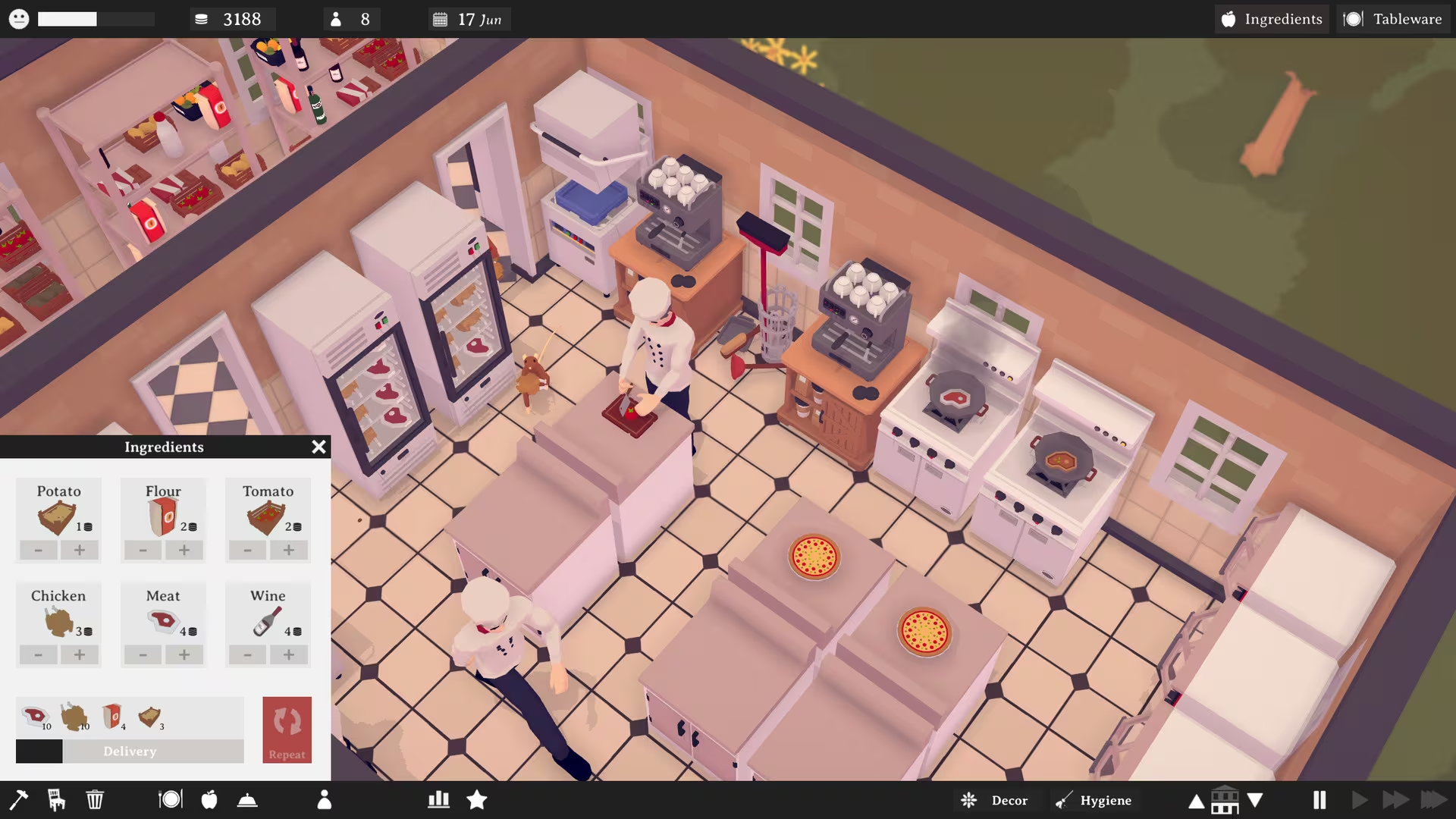
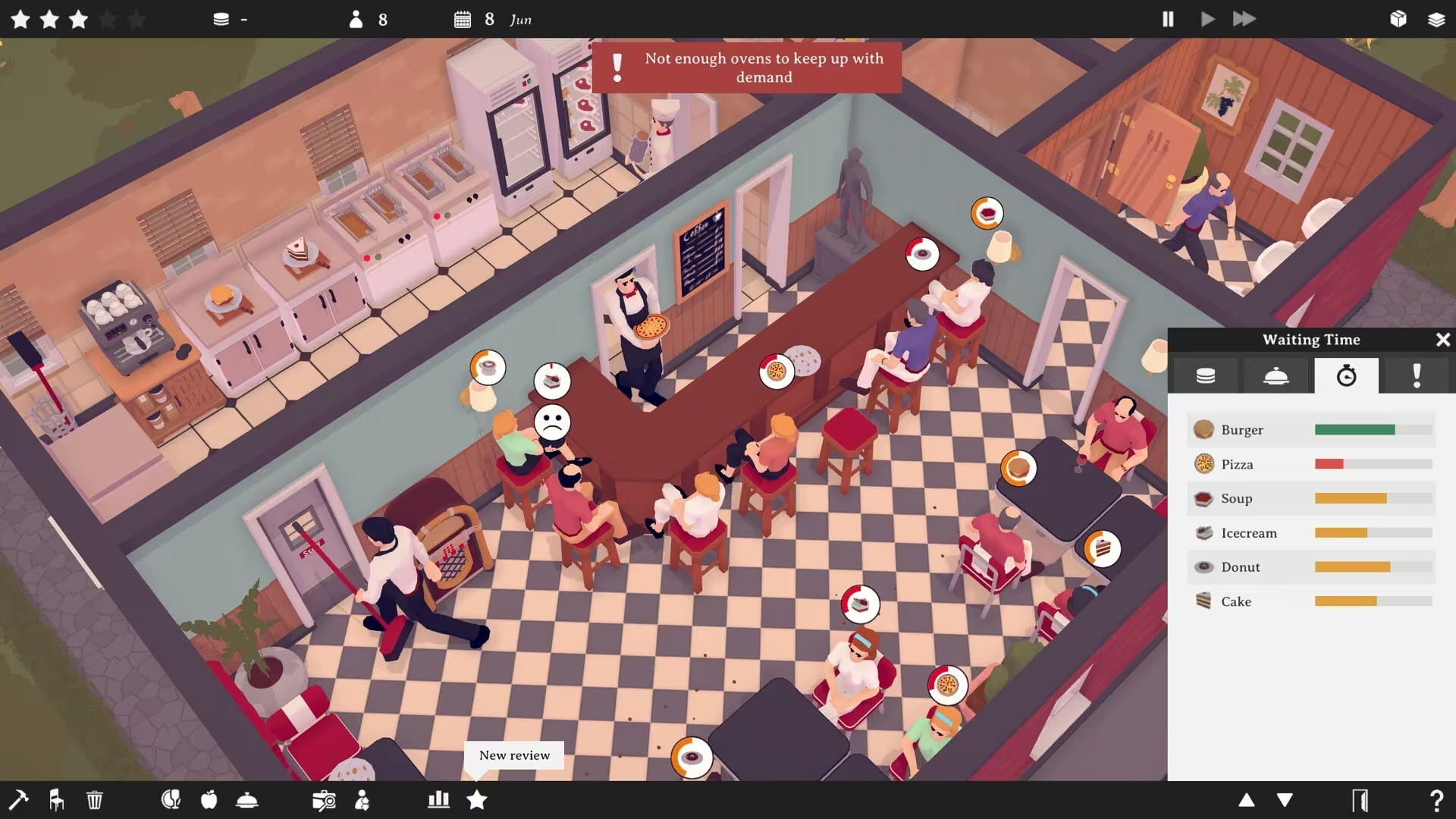
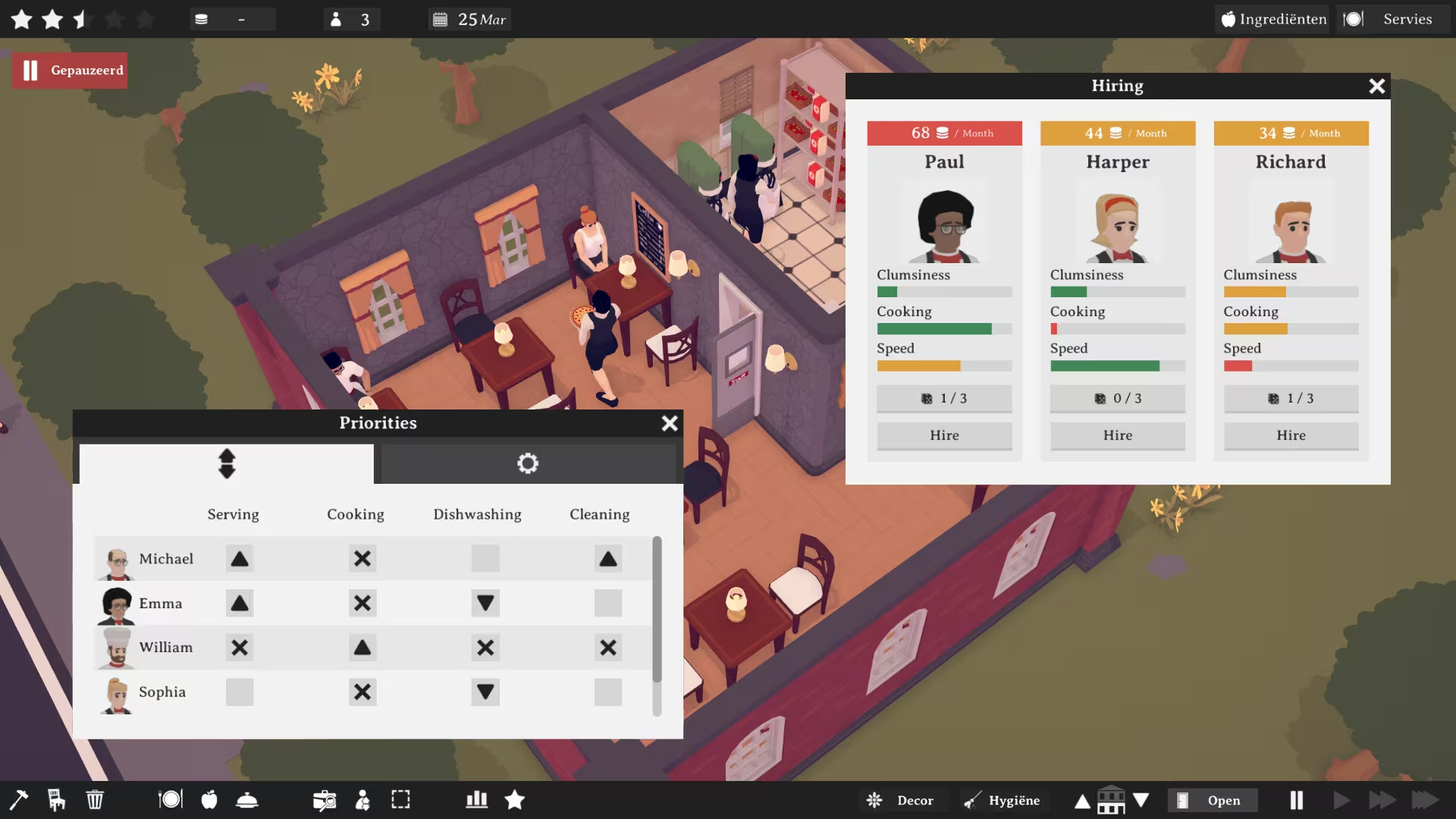
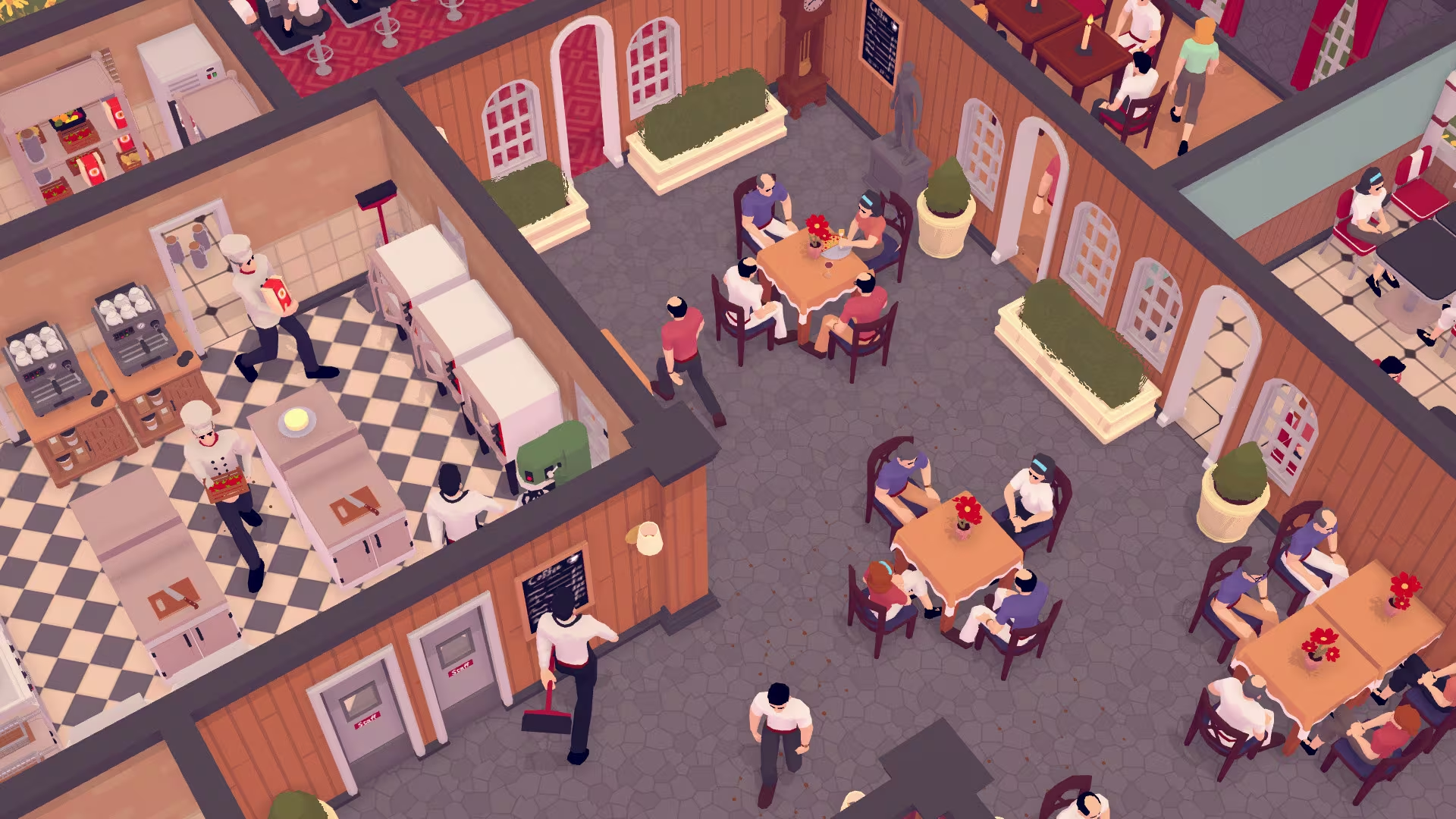
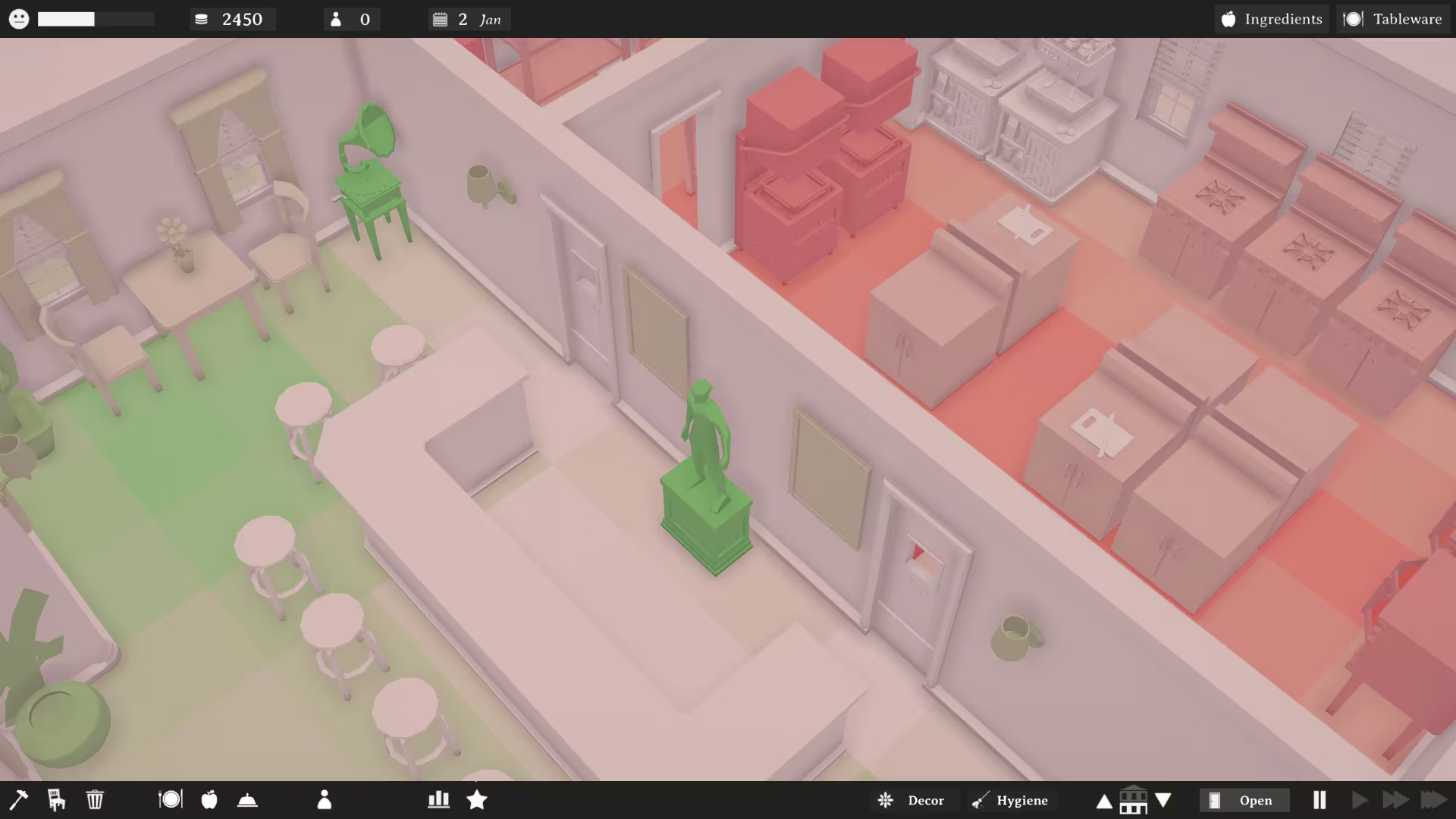
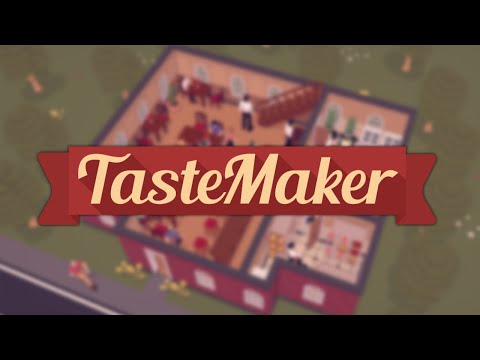
TasteMaker is a restaurant tycoon game. Design your own restaurant from the ground up, decorate, create a menu, hire and manage staff, and much more. Keep your customers happy and make a profit to keep the restaurant of your dreams from turning into a nightmare.
Global score
83/100
Genres
Casual, Indie, Simulator, Strategy
Similar games
Pros
- Engaging and relaxing restaurant management
- Good core mechanics with potential for growth
- Active developer with frequent updates
- Intuitive ui and controls
- Pleasant graphics and audio
Cons
- Limited content and customization options
- Some bugs and pathfinding issues
- Lack of social or multiplayer features
- Repetitive gameplay after extended play
- Minimal narrative or story elements
Analysis
A very typical example of its motivational profile. Motivations that often define this kind of title include Fantasy, Violence, Story, Thrill. Here, the score leans higher than usual among comparable games on Leadership, Survival. It leans lower than usual among comparable games on Exploration.
How to use the graph
Similar games map
Each dot is a game. They are arranged from the same motivation profile as in the “Motivations” section below. Closer dots usually mean more similar reasons to play (exploration, competition, relaxation, etc.)—not that one game is “better” than another.
- Larger dot with a light outline: the game you are viewing.
- Colour: groups of games with comparable motivation patterns (statistical clusters).
- Hover a dot to see the game name; click to open its page.
- Scroll or double-click the chart to zoom out and see more games.
Why don’t the axes read like a score? This view uses t-SNE: it only keeps who is close to whom. The scales are not “good to bad” or hours played—they separate groups on the map. Read distance between dots, not the axis numbers.
Motivations
-
Autonomy4
"Players have significant control over restaurant design, menu pricing, staff assignments, and expansion decisions, allowing personal freedom in managing the restaurant."
-
Competence3
"Players engage in managing multiple interrelated systems (staff, inventory, hygiene, finances) with skill and strategy, though some mechanics are simple and early access limits depth."
-
Competition-3
"Focus is on personal management and progression without ranked modes or direct comparison to others."
-
Continuation3
"Many players report long play sessions and habitual engagement, though some find content limited leading to eventual disengagement."
-
Cooperation-4
"Gameplay centers on individual management tasks with no multiplayer or cooperative elements."
-
Creativity3
"Players can customize restaurant layout, decor, menu, and staff priorities, though options are currently limited."
-
Domination-5
"No evidence of exerting control over others; interactions are individual and non-competitive."
-
Escapism4
"Players use the game as a relaxing, immersive distraction from real life, enjoying the simulation and management experience."
-
Expectation-4
"Players engage voluntarily for fun and personal interest, with no obligation or external pressure reported."
-
Experimenting3
"Players try different layouts, menu pricing, staff assignments, and strategies to optimize their restaurant."
-
Exploration-2
"Limited discovery elements; players mostly work within known scenarios and sandbox without new area exploration."
-
Expression2
"Some customization of restaurant appearance and staff uniforms is desired but currently limited."
-
Fantasy-3
"Game simulates realistic restaurant management scenarios without fantasy or fictional elements."
-
Fellowship-4
"No social or community features; players engage individually."
-
Growth3
"Players learn management skills and improve strategies through gameplay and scenario challenges."
-
Health-5
"Game is sedentary with no physical activity or health-related features."
-
Idle-3
"Requires active management and attention; not designed for passive or background play."
-
Intimacy-5
"No social or emotional relationship building; interactions are functional and task-oriented."
-
Leadership2
"Players direct staff priorities and assignments, exercising leadership within the restaurant management context."
-
Progression3
"Players accumulate upgrades, expand restaurant space, unlock menu items, and improve operations over time."
-
Relaxation4
"Many players find the game relaxing and enjoyable, balancing challenge with flow."
-
Sensation2
"Visuals and audio are pleasant but minimal; some players desire more sensory variety and music options."
-
Status-4
"No social recognition or status systems present."
-
Story-4
"No narrative or plot; gameplay is context-free management and simulation."
-
Strategy3
"Players engage in planning and problem solving to optimize restaurant efficiency and profitability."
-
Thrill-2
"Game is low risk and low suspense; challenge is present but not thrilling or tense."
-
Value4
"Players generally perceive good value for time and money, especially given ongoing updates and content."
-
Violence-5
"No combat or destructive gameplay; focus is on constructive management."
-
Survival2
"Players manage risks like debt and hygiene problems, requiring strategic resource management to avoid failure."
Last update: 29/04/2026