Killer Frequency Thumbnail

Killer Frequency similar games & best alternatives
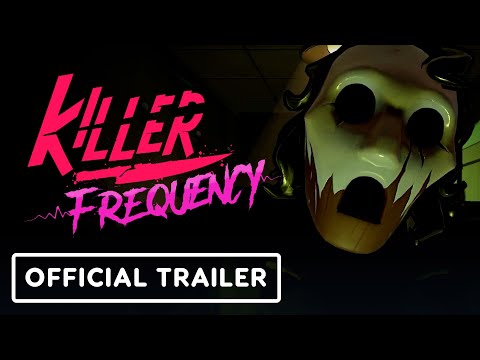
Killer Frequency

PC (Microsoft Windows), PlayStation 4, Xbox One, Xbox Series X|S, Nintendo Switch, PlayStation 5, Meta Quest 2 • 2023

Related articles

Quick resume

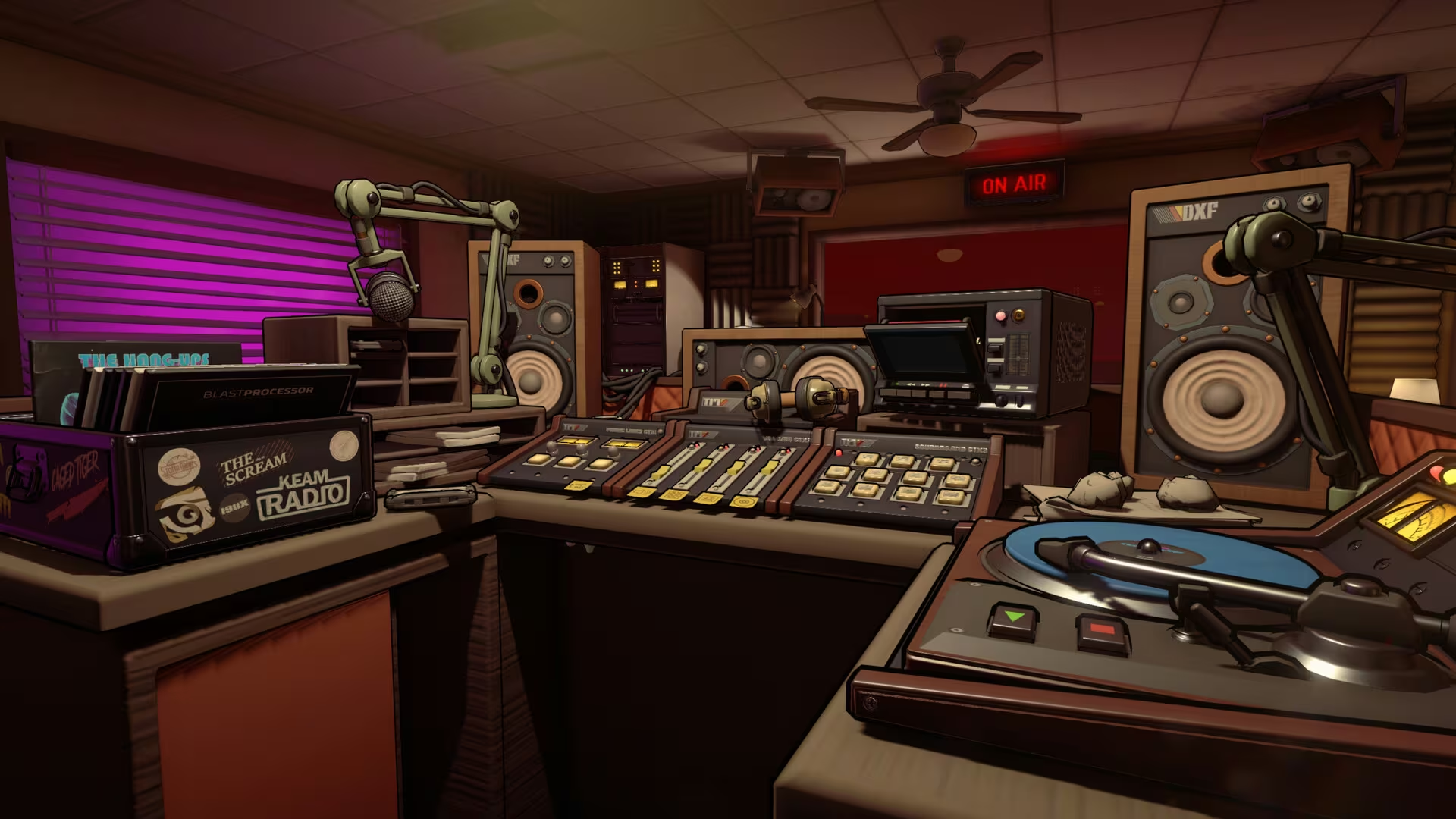
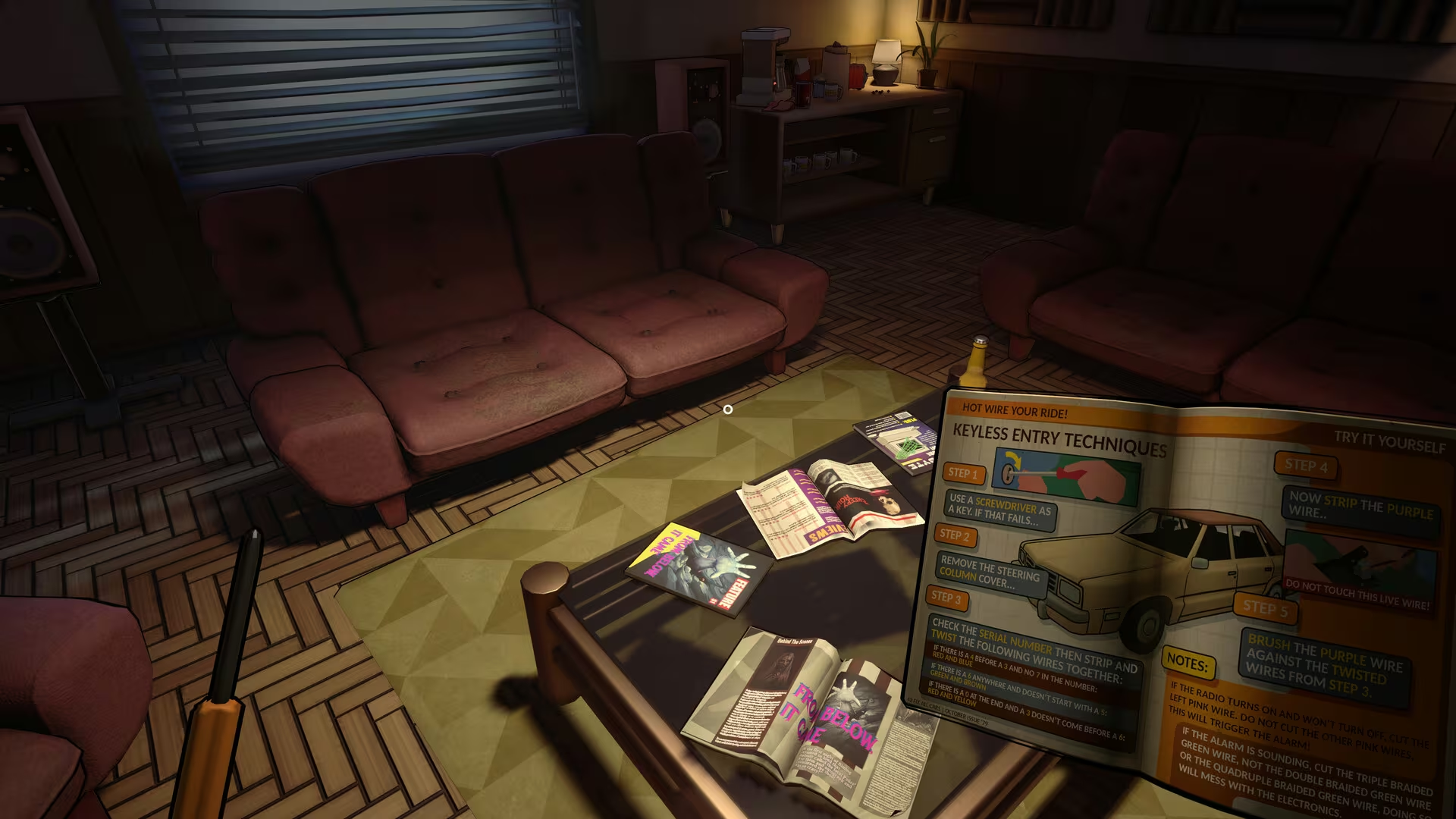
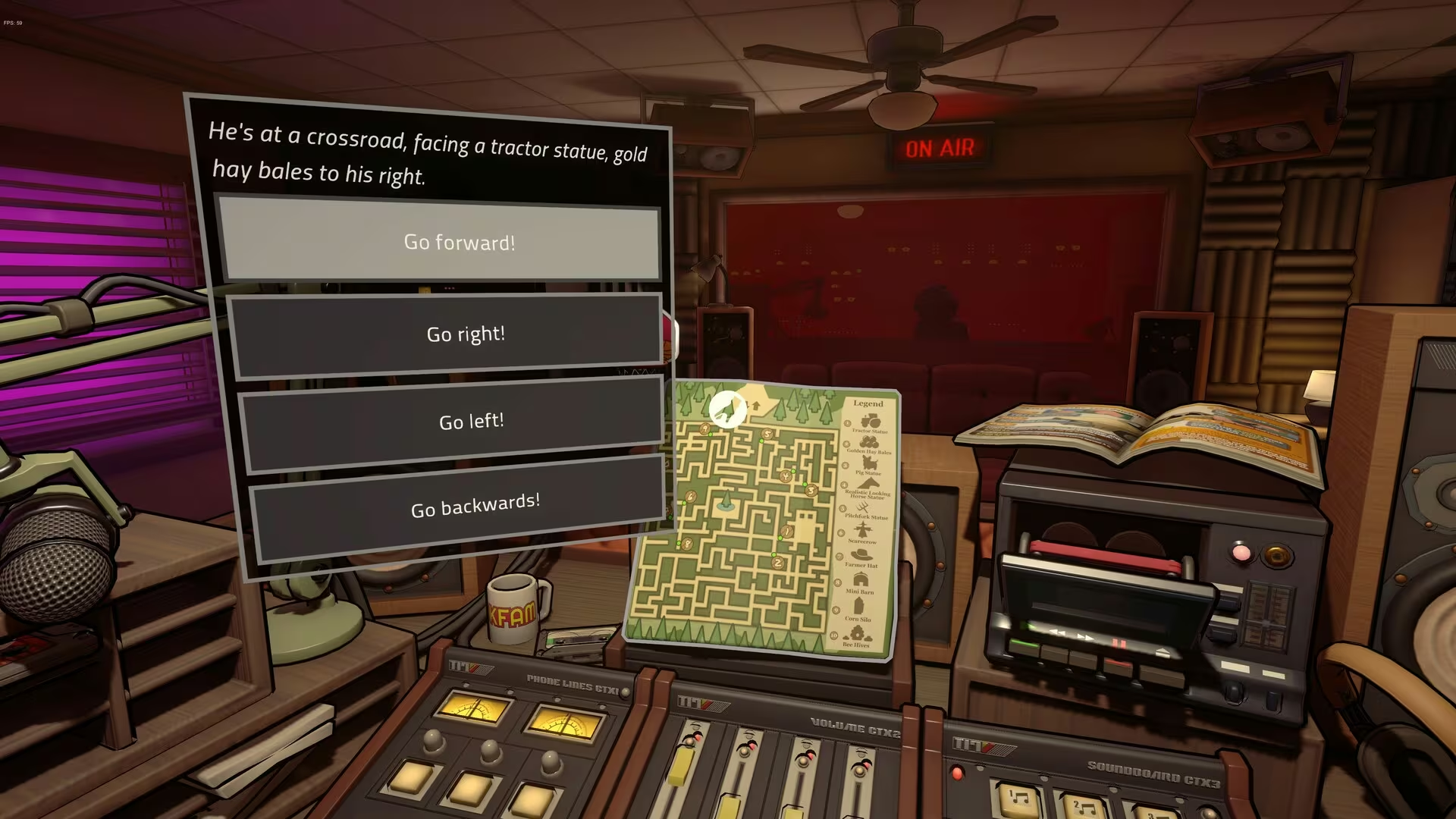
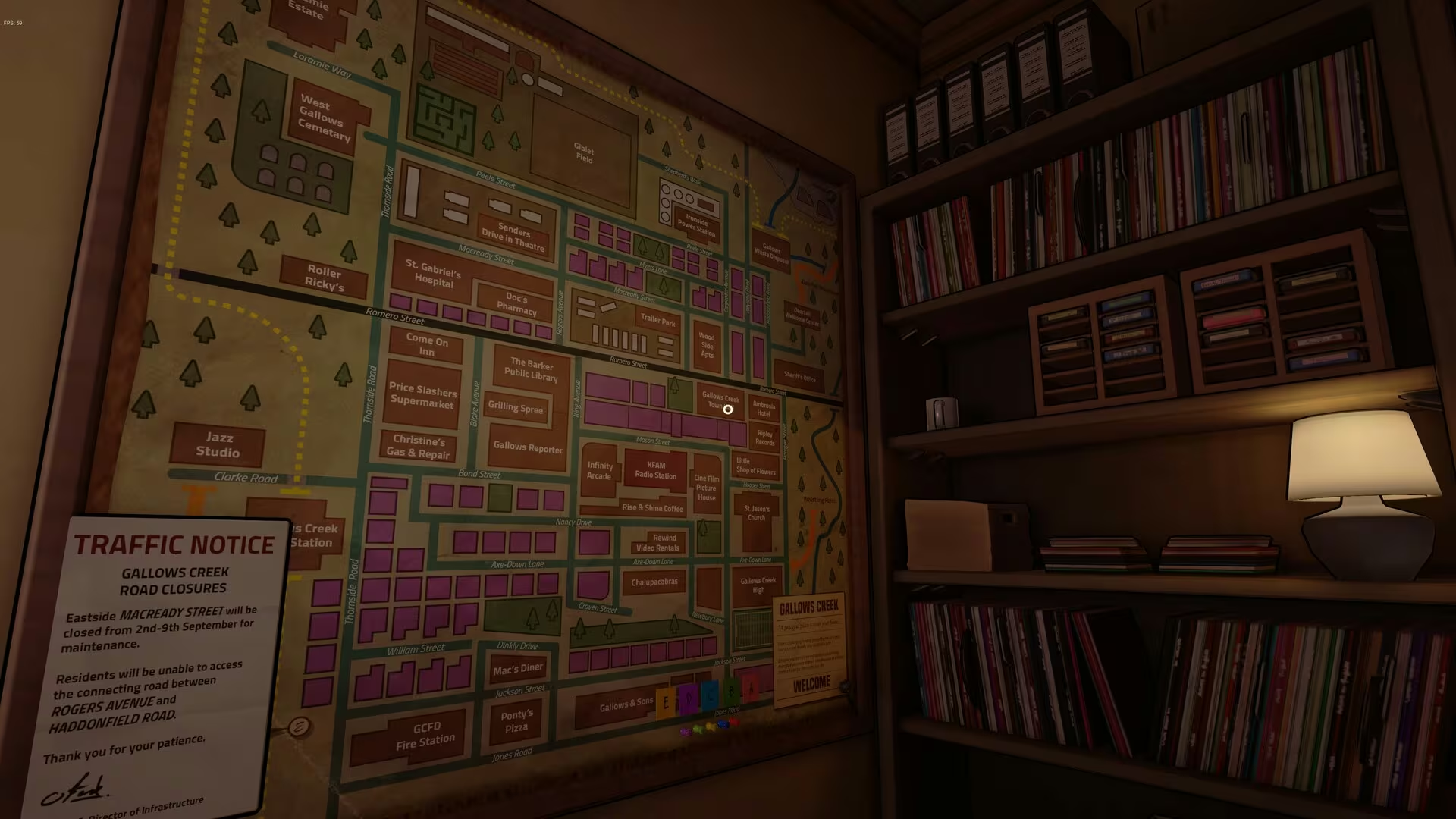
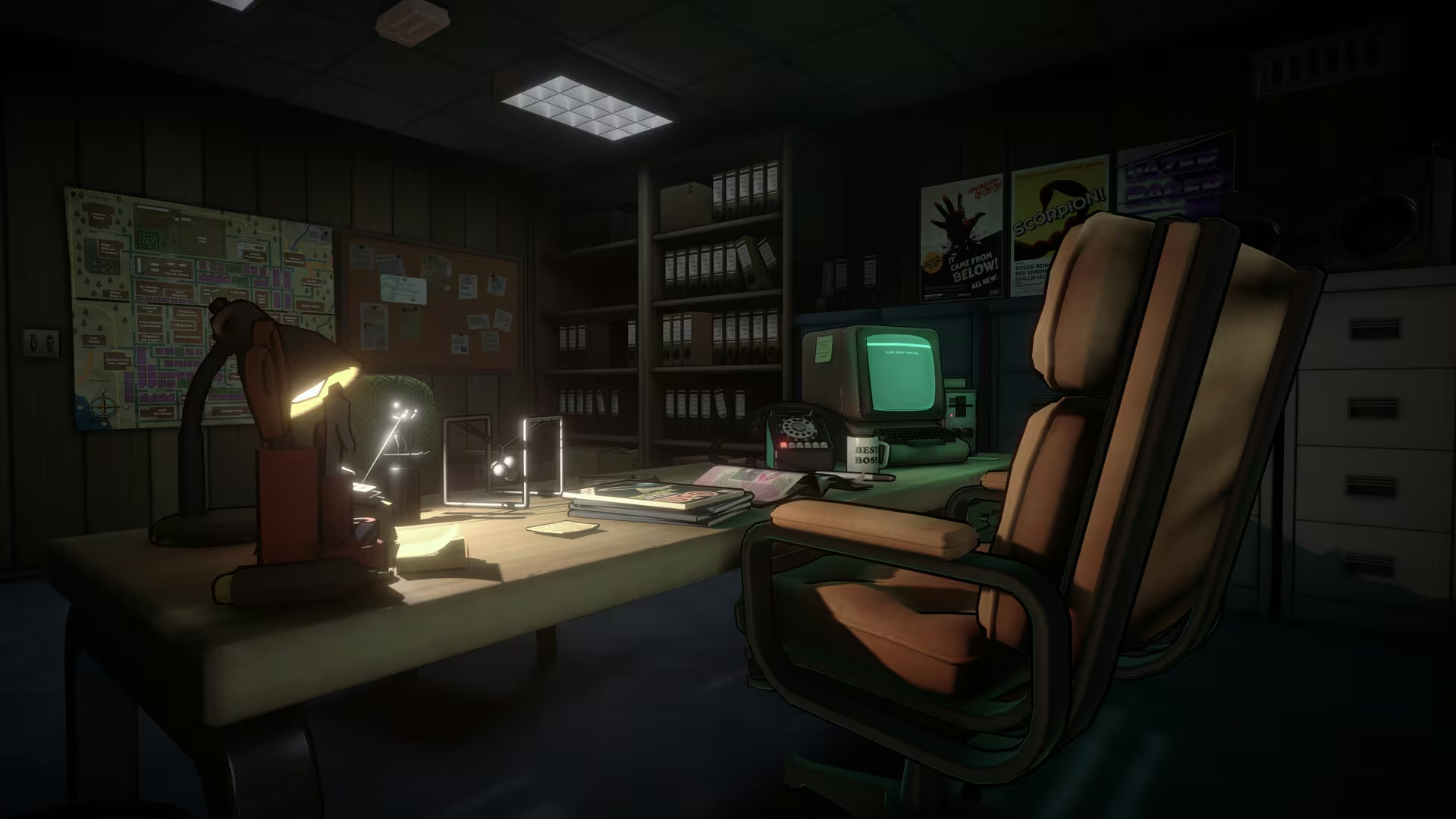
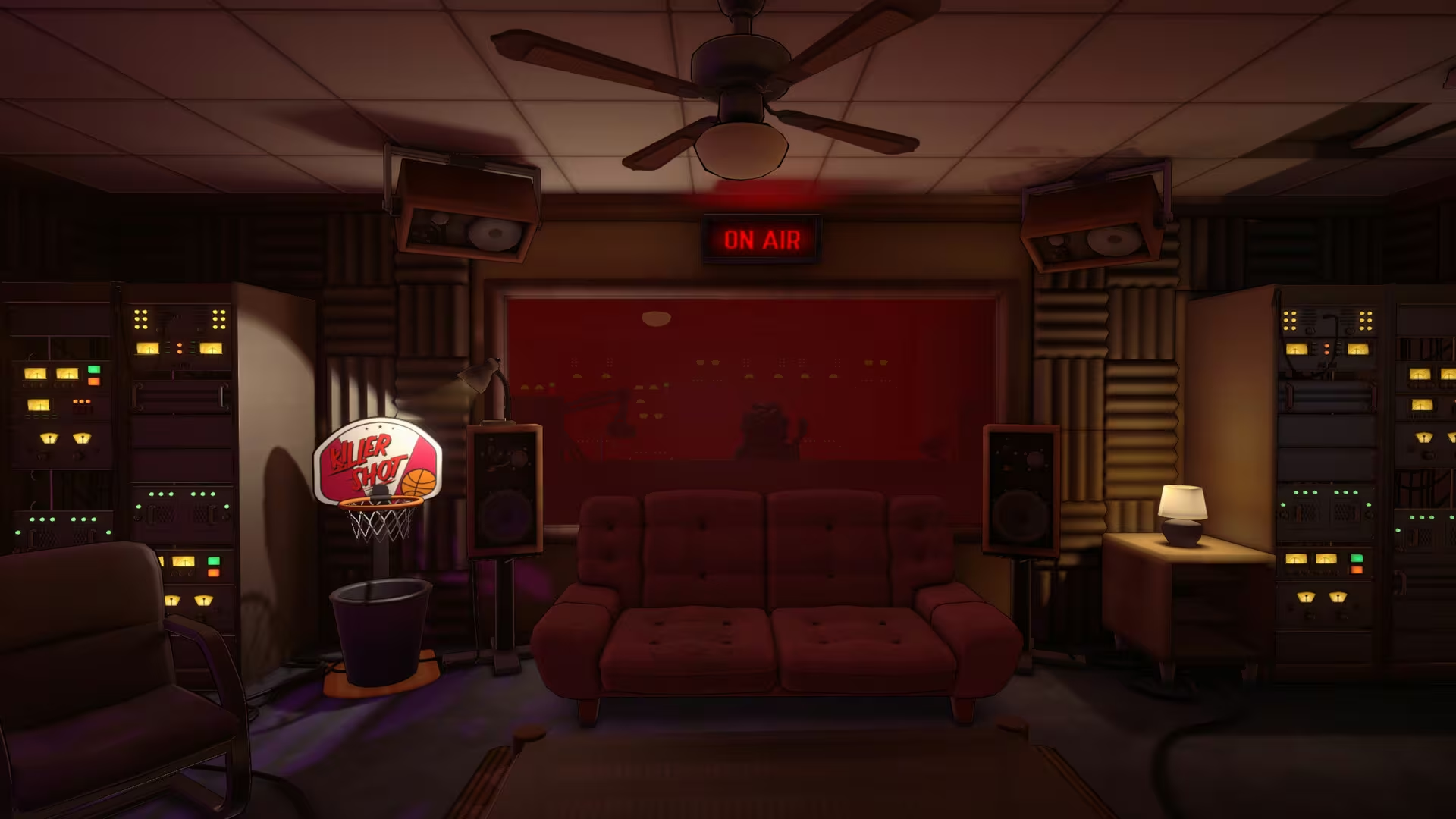
Killer Frequency is a first-person horror puzzle game set in 1987, that puts you in the role of a late-night radio talk show host in small town America whose callers are being stalked by a mysterious killer.

Global score

93/100

Genres

Adventure, Indie, Simulator, Puzzle

Similar games

    Pros

    • Engaging narrative and characters
    • Unique 1980s horror radio dj setting
    • Well-designed puzzles and decision making
    • Excellent voice acting and atmosphere
    • Multiple endings and replay value

    Cons

    • Limited gameplay variety beyond puzzles and dialogue
    • Short overall length for some players
    • Some pacing issues and linearity
    • Minimal social or multiplayer features
    • Lack of deeper radio simulation mechanics

    Analysis

    Broadly representative of its motivational profile, with a few distinct shifts. Motivations that often define this kind of title include Fellowship, Cooperation, Leadership, Violence. Here, the score leans higher than usual among comparable games on Intimacy, Story. It leans lower than usual among comparable games on Progression.

    How to use the graph
    Similar games map

    Each dot is a game. They are arranged from the same motivation profile as in the “Motivations” section below. Closer dots usually mean more similar reasons to play (exploration, competition, relaxation, etc.)—not that one game is “better” than another.

    • Larger dot with a light outline: the game you are viewing.
    • Colour: groups of games with comparable motivation patterns (statistical clusters).
    • Hover a dot to see the game name; click to open its page.
    • Scroll or double-click the chart to zoom out and see more games.

    Why don’t the axes read like a score? This view uses t-SNE: it only keeps who is close to whom. The scales are not “good to bad” or hours played—they separate groups on the map. Read distance between dots, not the axis numbers.

    Motivations

    • Autonomy
      4

      "Players make meaningful decisions in dialogue and puzzle solving, directing the story and outcomes."

    • Competence
      3

      "Puzzles require attention to detail and logical thinking, providing satisfying skill challenges."

    • Competition
      -4

      "Focus is on individual narrative experience and puzzle solving without player-vs-player elements."

    • Continuation
      3

      "Players report engaging story and atmosphere encouraging multiple playthroughs and long sessions."

    • Cooperation
      -5

      "Single-player experience focused on individual problem solving and narrative progression."

    • Creativity
      3

      "Players creatively solve puzzles and make dialogue choices affecting outcomes, with some freedom in approach."

    • Domination
      -5

      "No evidence of exerting control or superiority over others; cooperative and narrative-driven."

    • Escapism
      4

      "Strong immersion in a fictional 1980s horror setting providing distraction and stress relief."

    • Expectation
      -4

      "Players engage voluntarily out of interest and enjoyment, not obligation or external pressure."

    • Experimenting
      3

      "Encourages trying different dialogue options and puzzle approaches to explore story branches."

    • Exploration
      2

      "Exploring the radio station environment and uncovering clues is part of gameplay, though limited."

    • Expression
      1

      "Some player expression through dialogue choices and soundboard use, but limited character customization."

    • Fantasy
      4

      "Set in a fictional 1980s horror slasher world with imaginative narrative and characters."

    • Fellowship
      -4

      "Primarily a solitary experience with minimal social or community interaction."

    • Growth
      3

      "Players develop puzzle-solving skills and narrative understanding through gameplay."

    • Health
      -5

      "Sedentary gameplay with no physical activity or health-related mechanics."

    • Idle
      -3

      "Requires focused attention on puzzles and dialogue; not designed for casual or background play."

    • Intimacy
      1

      "Some emotional connection to characters through story and voice acting, but limited social bonding."

    • Leadership
      -5

      "No leadership or group management elements; player acts independently."

    • Progression
      2

      "Progression through story and puzzle completion, but no item collection or upgrades."

    • Relaxation
      2

      "Atmosphere balances tension and levity, providing a flow state without excessive stress."

    • Sensation
      3

      "Enjoyable 80s synth soundtrack and atmospheric audio contribute to sensory engagement."

    • Status
      -5

      "No social recognition or ranking systems; focus is on personal narrative experience."

    • Story
      5

      "Strong narrative immersion with engaging characters, plot twists, and multiple endings."

    • Strategy
      3

      "Requires logical reasoning and planning to solve puzzles and make impactful decisions."

    • Thrill
      3

      "Creates suspense and tension through narrative and puzzle stakes, with minimal jump scares."

    • Value
      3

      "Players generally feel the game offers good value for price and playtime, especially on sale."

    • Violence
      2

      "Violence is thematic and narrative-driven, not player-controlled; focus on saving lives rather than combat."

    • Survival
      4

      "Core gameplay revolves around preventing deaths and managing threats through puzzle solving."

    Where to buy

    Last update: 29/04/2026