Orb of Creation Thumbnail

Orb of Creation similar games & best alternatives

Orb of Creation

PC (Microsoft Windows) • 2022

Related articles

Quick resume

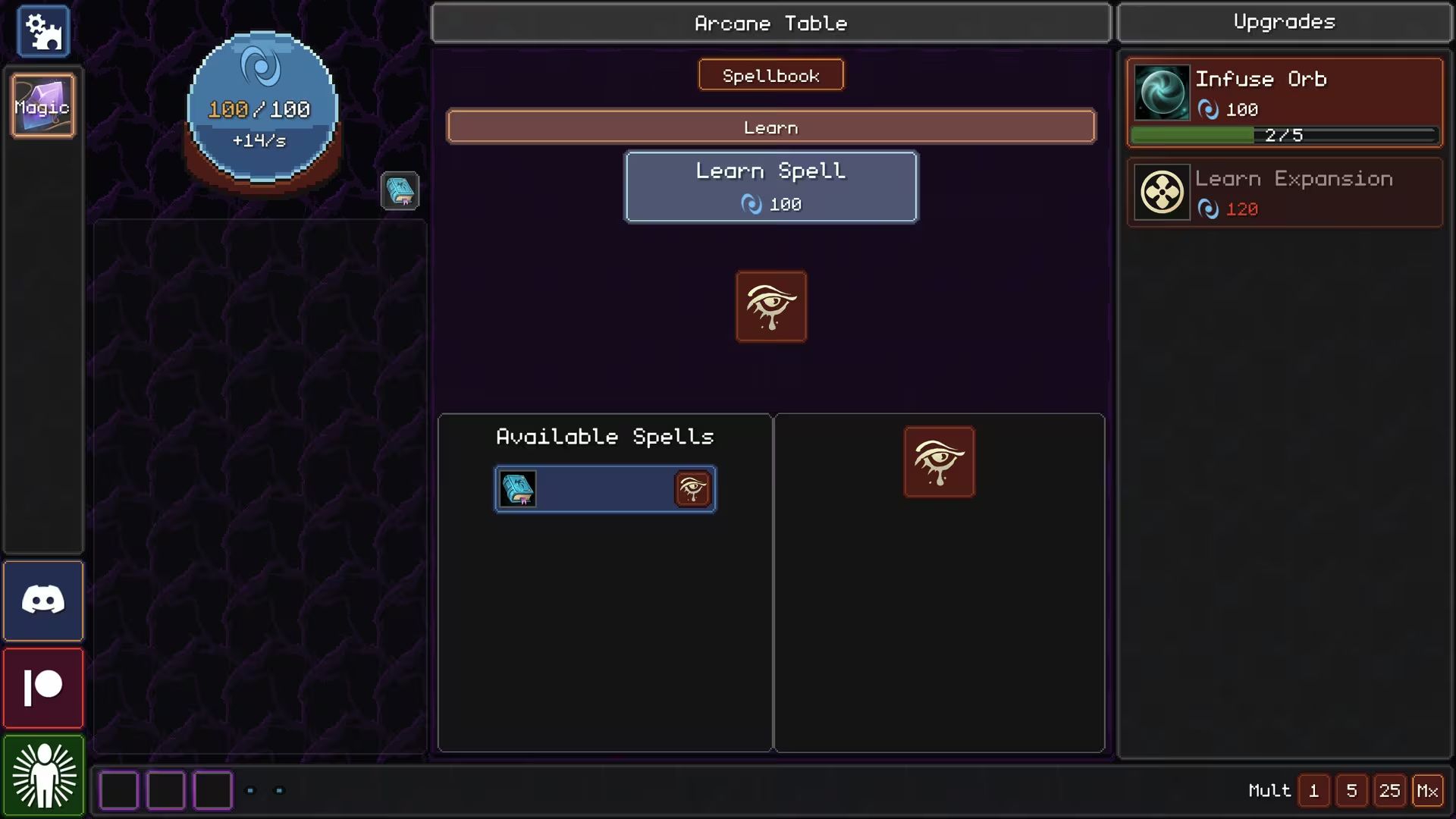
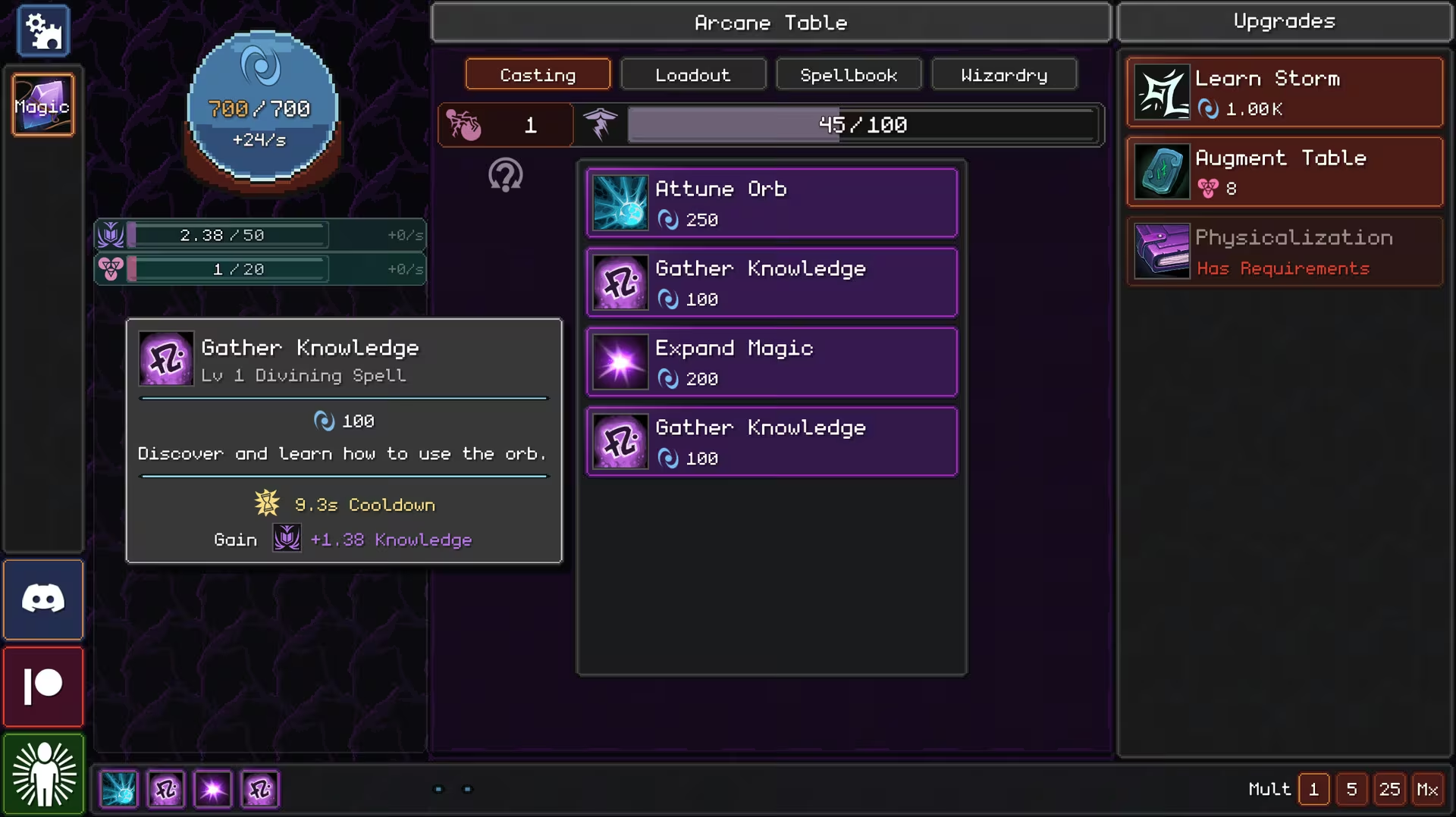
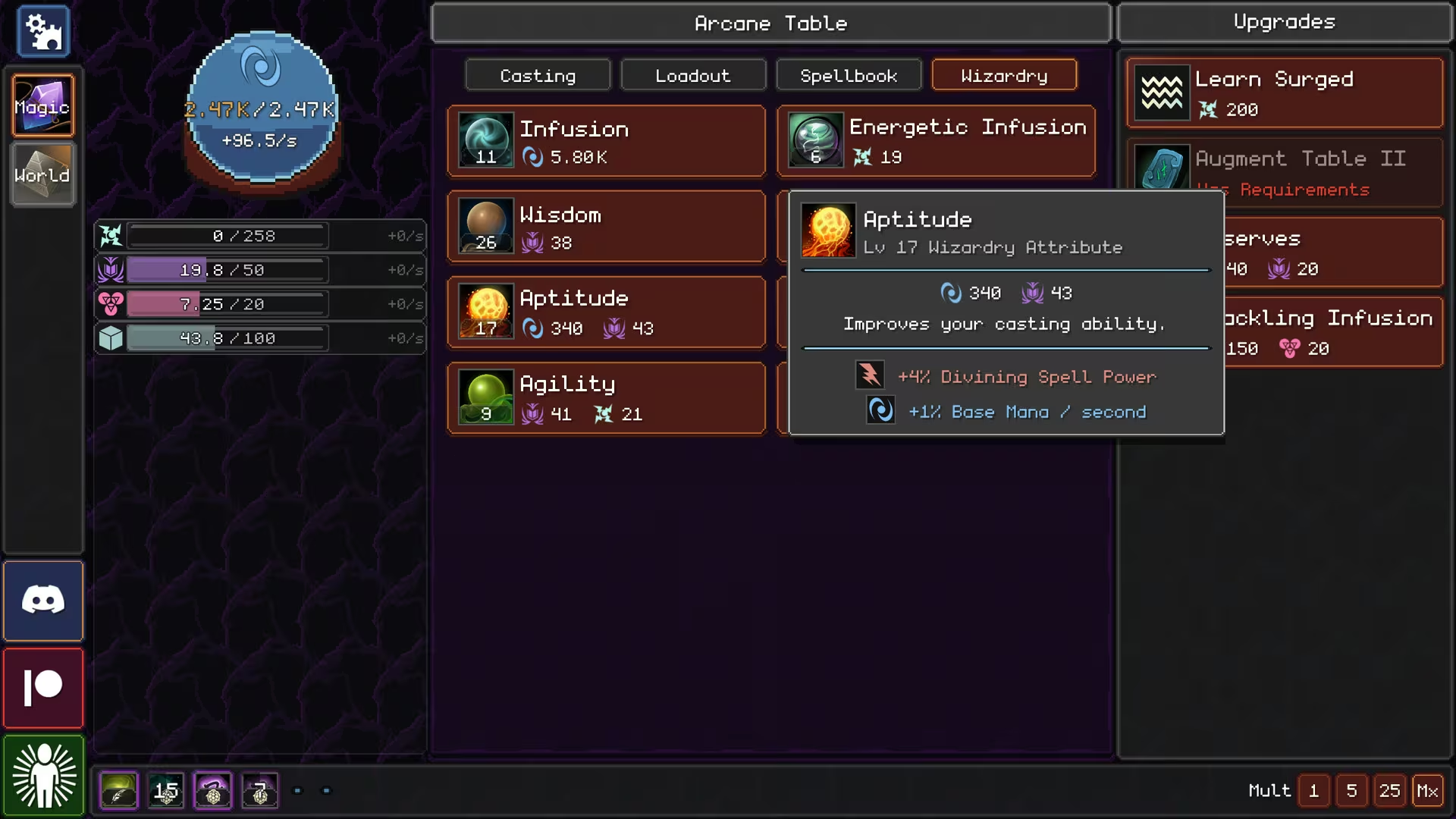
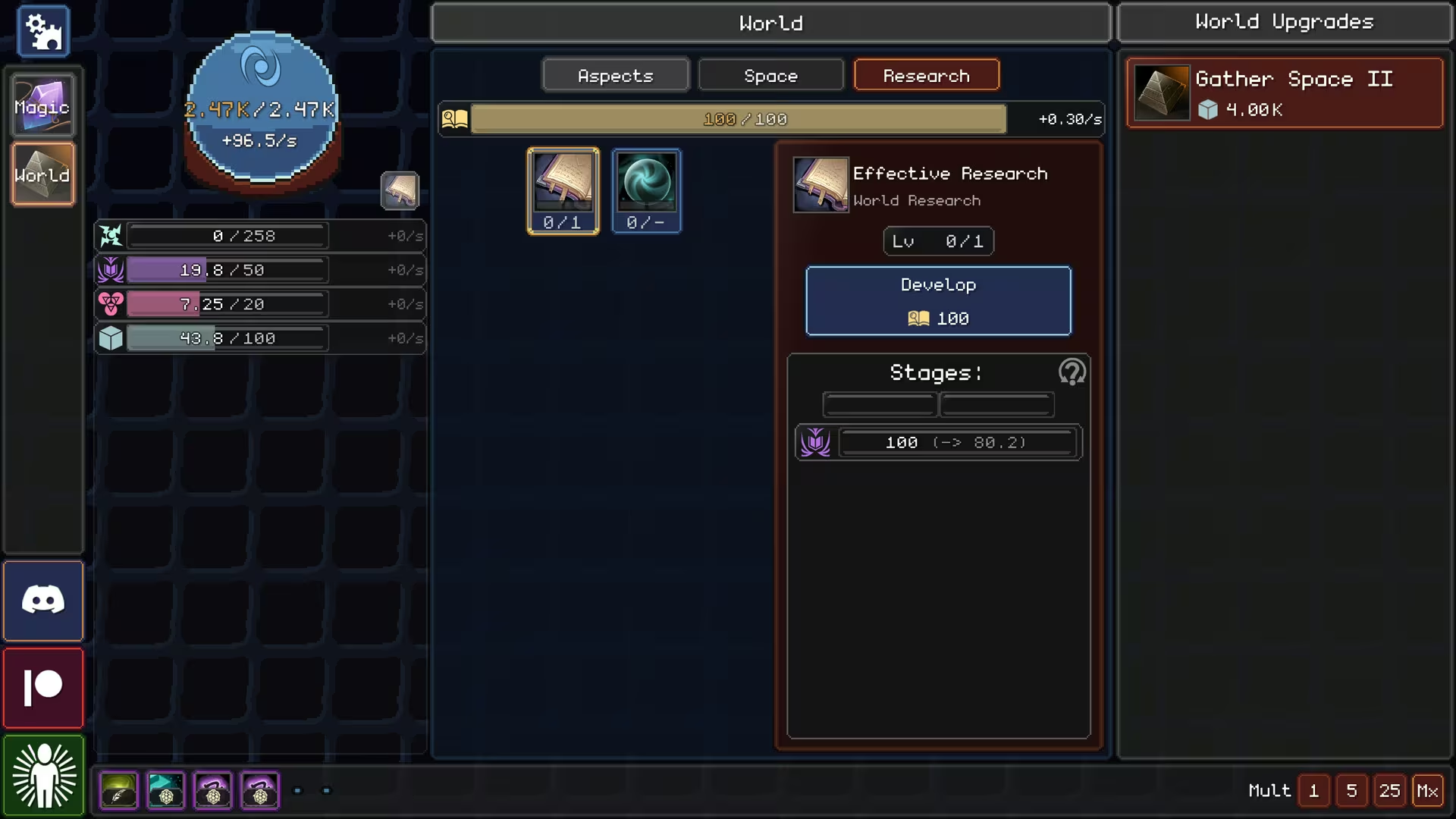
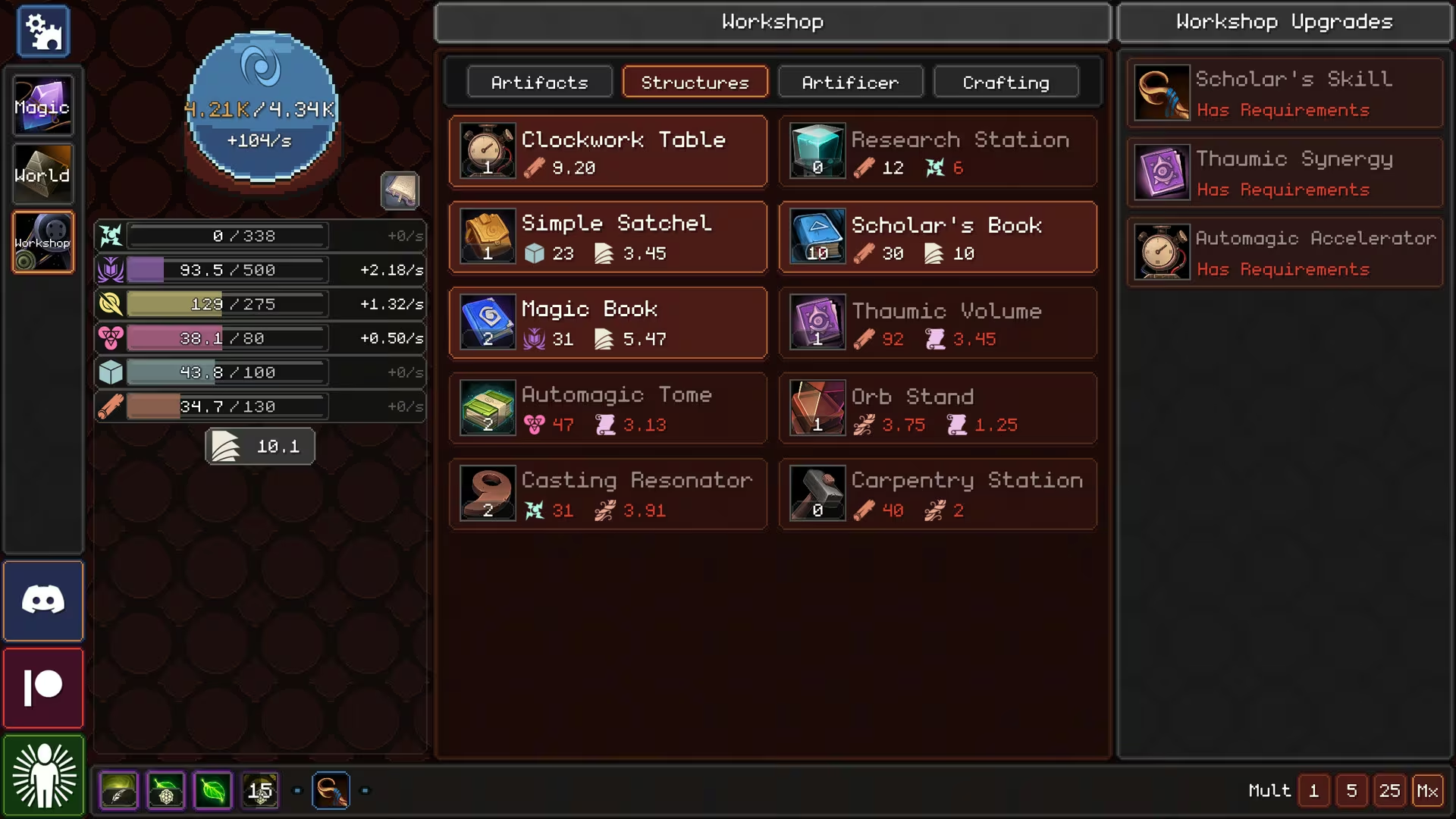
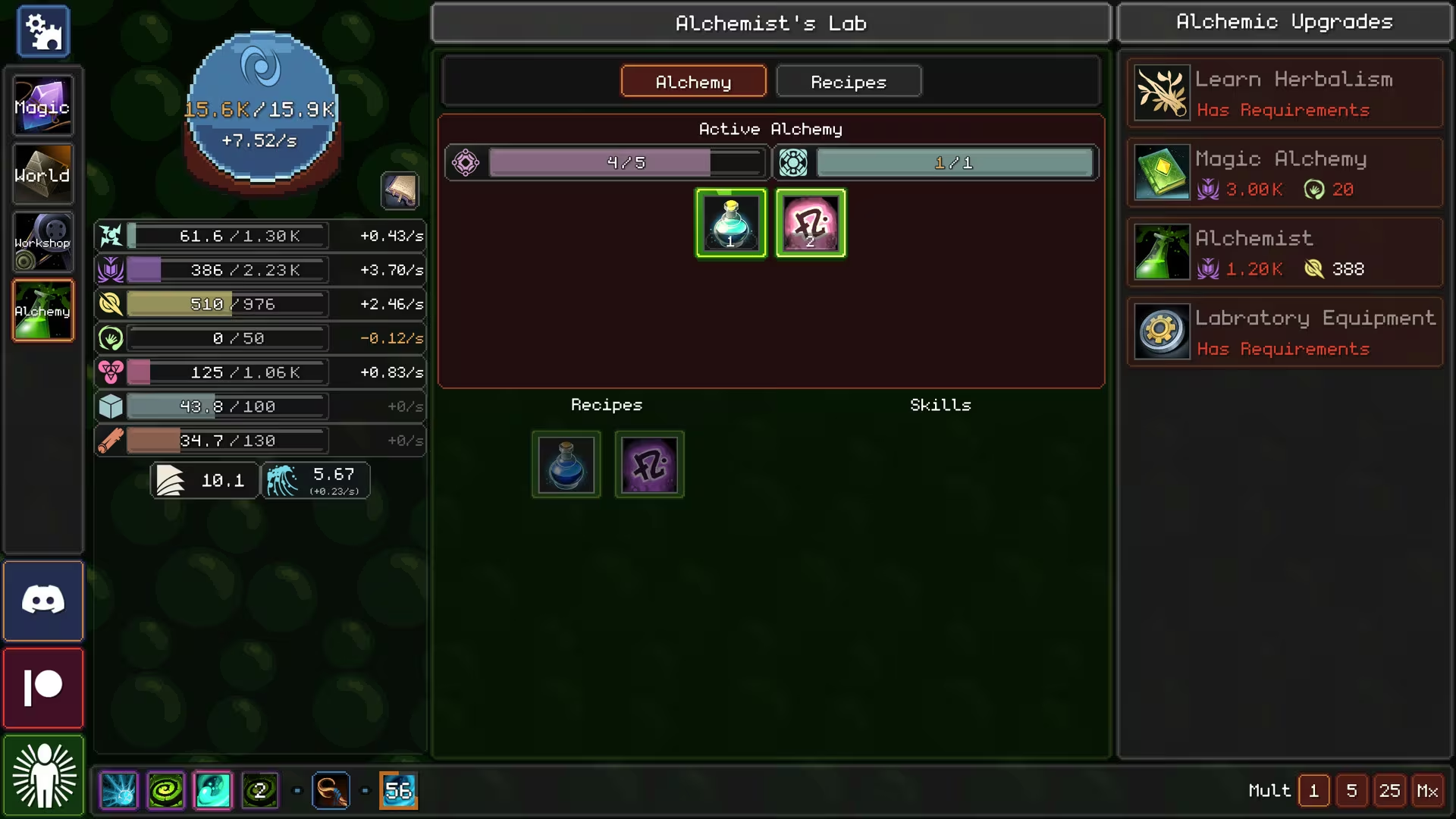
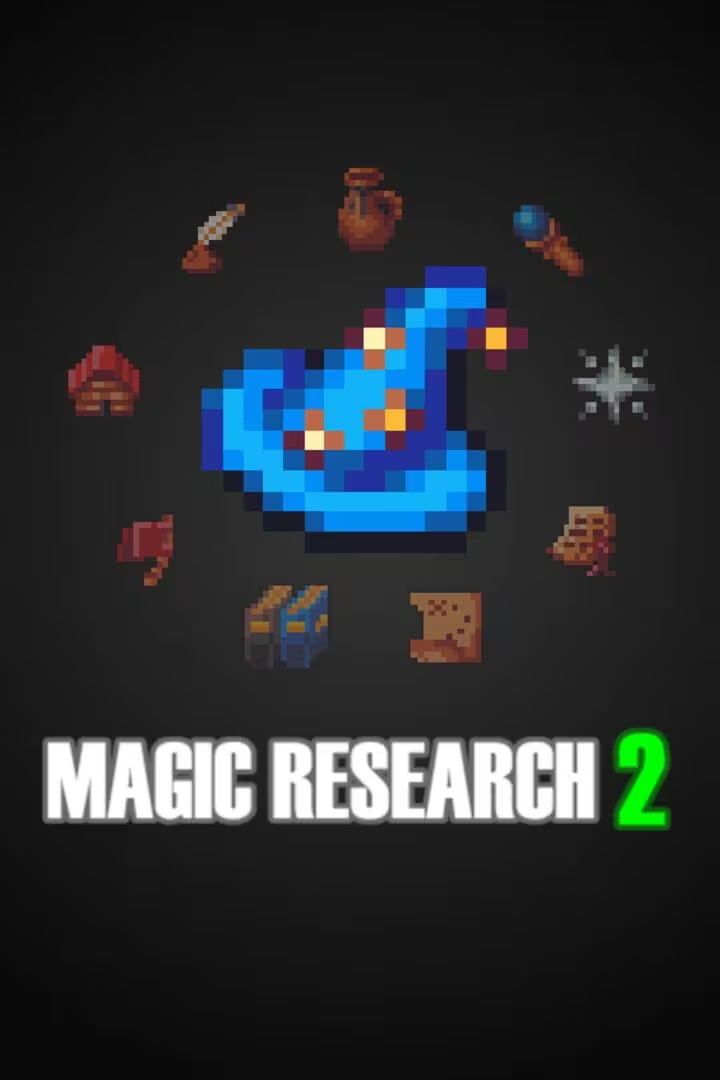
Orb of Creation is an active incremental-puzzle game in which you recreate the world with nothing but magic and ingenuity. Conjure resources, buy upgrades, and become an all-powerful wizard!

Global score

90/100

Genres

Casual, Indie, Strategy, Early Access, Simulator

Similar games

    Pros

    • Deep and engaging incremental gameplay
    • Active and creative spellcasting mechanics
    • Well-designed ui and sound
    • High replayability and long play sessions
    • Excellent value for price

    Cons

    • Early access with incomplete content
    • Complex ui can be overwhelming
    • Lack of social or cooperative features
    • No offline progression
    • Some balance and pacing issues late game

    Analysis

    Less representative of its motivational profile, with noticeable differences. Motivations that often define this kind of title include Fellowship, Cooperation, Leadership, Violence. Here, the score leans higher than usual among comparable games on Strategy. It leans lower than usual among comparable games on Survival, Violence.

    How to use the graph
    Similar games map

    Each dot is a game. They are arranged from the same motivation profile as in the “Motivations” section below. Closer dots usually mean more similar reasons to play (exploration, competition, relaxation, etc.)—not that one game is “better” than another.

    • Larger dot with a light outline: the game you are viewing.
    • Colour: groups of games with comparable motivation patterns (statistical clusters).
    • Hover a dot to see the game name; click to open its page.
    • Scroll or double-click the chart to zoom out and see more games.

    Why don’t the axes read like a score? This view uses t-SNE: it only keeps who is close to whom. The scales are not “good to bad” or hours played—they separate groups on the map. Read distance between dots, not the axis numbers.

    Motivations

    • Autonomy
      4

      "Players actively choose spells, upgrades, and strategies, with freedom to explore different resource chains and playstyles."

    • Competence
      4

      "The game requires skillful management of many interlocking systems and optimization of spell combos, providing meaningful challenges and feedback."

    • Competition
      -4

      "Focus is on personal progression and puzzle-solving rather than competing against others; no mention of leaderboards or PvP."

    • Continuation
      5

      "Highly addictive with players reporting long sessions and habitual play, often losing track of time due to engaging mechanics."

    • Cooperation
      -5

      "Gameplay is primarily single-player with no cooperative elements described."

    • Creativity
      5

      "Players create and customize spell loadouts and experiment with many combinations to optimize resource production."

    • Domination
      -5

      "No evidence of exerting control over others; interactions are individual and self-directed."

    • Escapism
      4

      "Players use the game as a deep distraction and stress relief, often losing track of real-world time."

    • Expectation
      -4

      "Players engage voluntarily out of intrinsic interest and enjoyment rather than obligation or external pressure."

    • Experimenting
      5

      "Strong emphasis on exploring new mechanics, testing spell synergies, and discovering optimal strategies."

    • Exploration
      4

      "Players discover new resources, spells, and mechanics progressively, fostering curiosity-driven exploration."

    • Expression
      3

      "Customization mainly through spell loadouts and resource management; limited cosmetic personalization."

    • Fantasy
      4

      "Set in a magical world with spellcasting and lore, evoking a fantasy experience."

    • Fellowship
      -5

      "No social or community features emphasized; play is solitary."

    • Growth
      5

      "Continuous learning and mastery of complex systems and mechanics is central to progression."

    • Health
      -4

      "Primarily sedentary gameplay with no physical activity involved; some warnings about addictive play."

    • Idle
      -4

      "Gameplay is mostly active with constant engagement required; minimal idle or passive progression."

    • Intimacy
      -5

      "No evidence of close social relationships or emotional sharing in gameplay."

    • Leadership
      -5

      "No leadership or group management roles described."

    • Progression
      5

      "Strong focus on accumulating resources, upgrades, and unlocking new mechanics."

    • Relaxation
      3

      "Players find a flow state and relaxation in the game's pacing and progression, though some find it intense."

    • Sensation
      3

      "Enjoyable sound design and visuals contribute to sensory pleasure, though not highly stimulating."

    • Status
      -5

      "No social recognition or status systems present."

    • Story
      2

      "Some emergent lore and thematic elements, but no strong narrative or plot-driven gameplay."

    • Strategy
      5

      "Heavy emphasis on planning, problem solving, and optimizing complex resource and spell interactions."

    • Thrill
      1

      "Mild excitement from discovery and optimization, but no high-risk or suspenseful elements."

    • Value
      5

      "Players report excellent value for money with many hours of engaging gameplay for a low price."

    • Violence
      -3

      "Minimal combat elements mentioned; game focuses on creation and resource management rather than destruction."

    • Survival
      -4

      "No survival or threat avoidance mechanics; stable resource management environment."

    Last update: 29/04/2026