Ostriv Thumbnail

Ostriv similar games & best alternatives

Ostriv

PC (Microsoft Windows) • 2020

Related articles

Quick resume

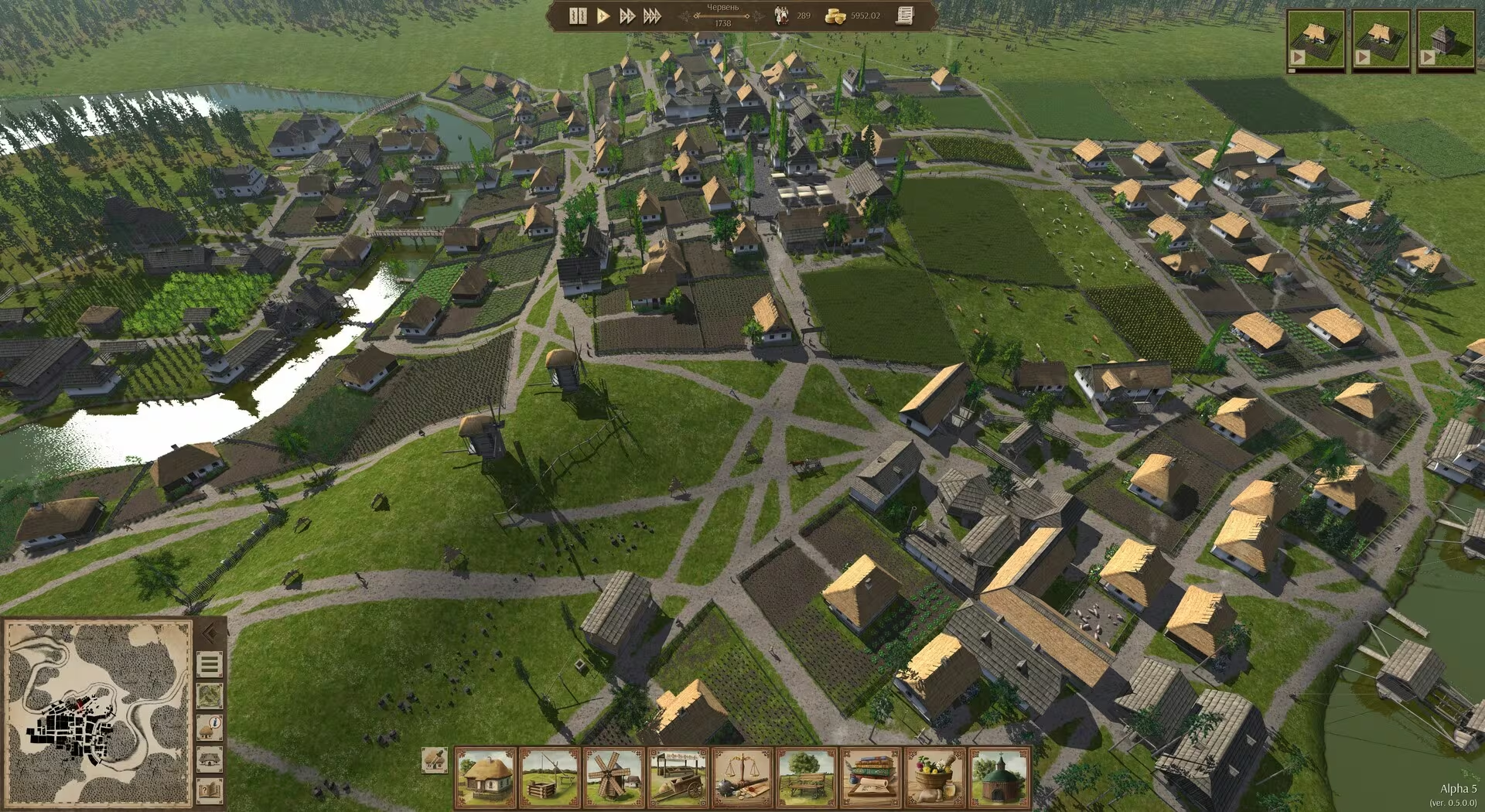
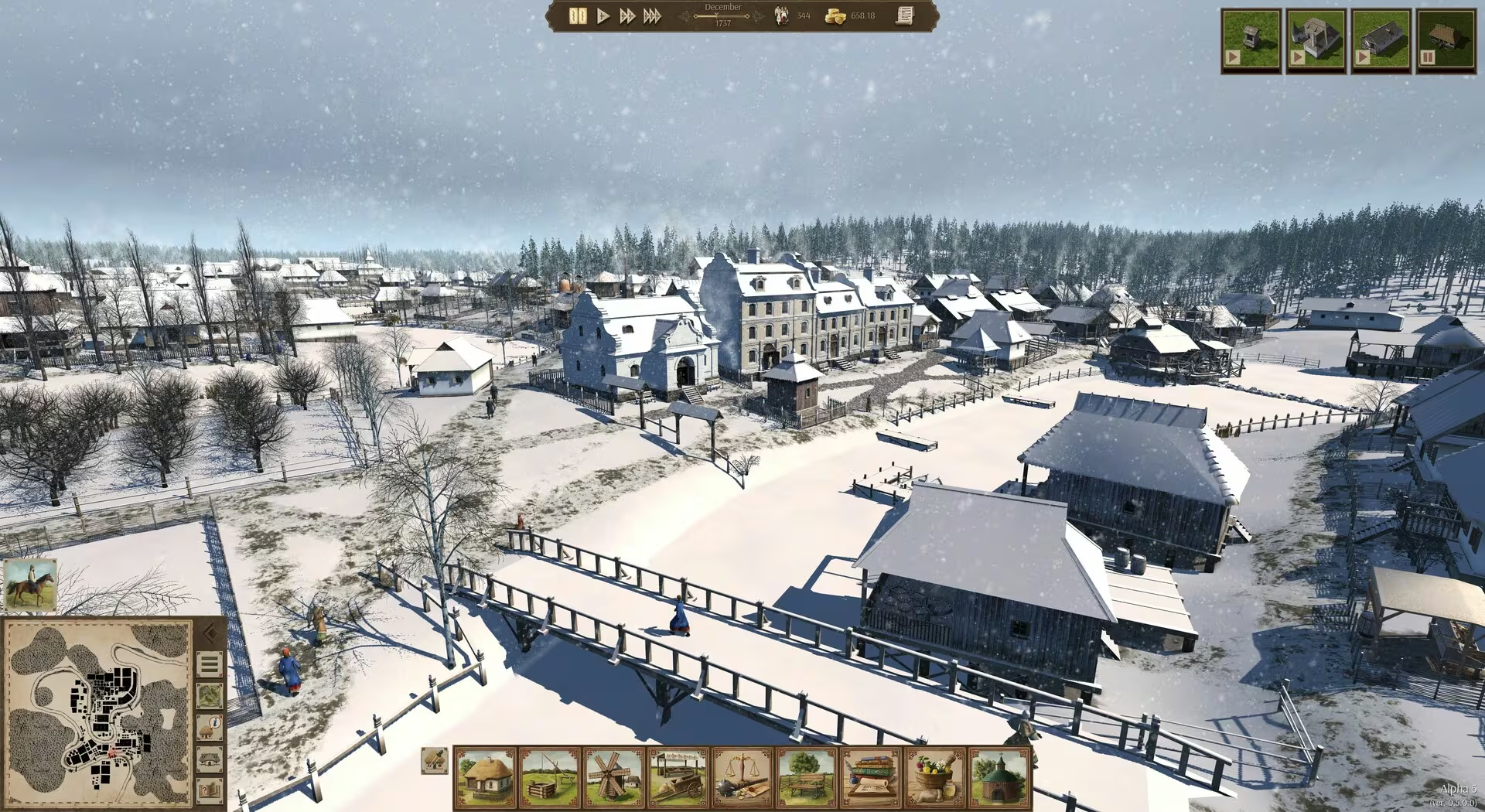
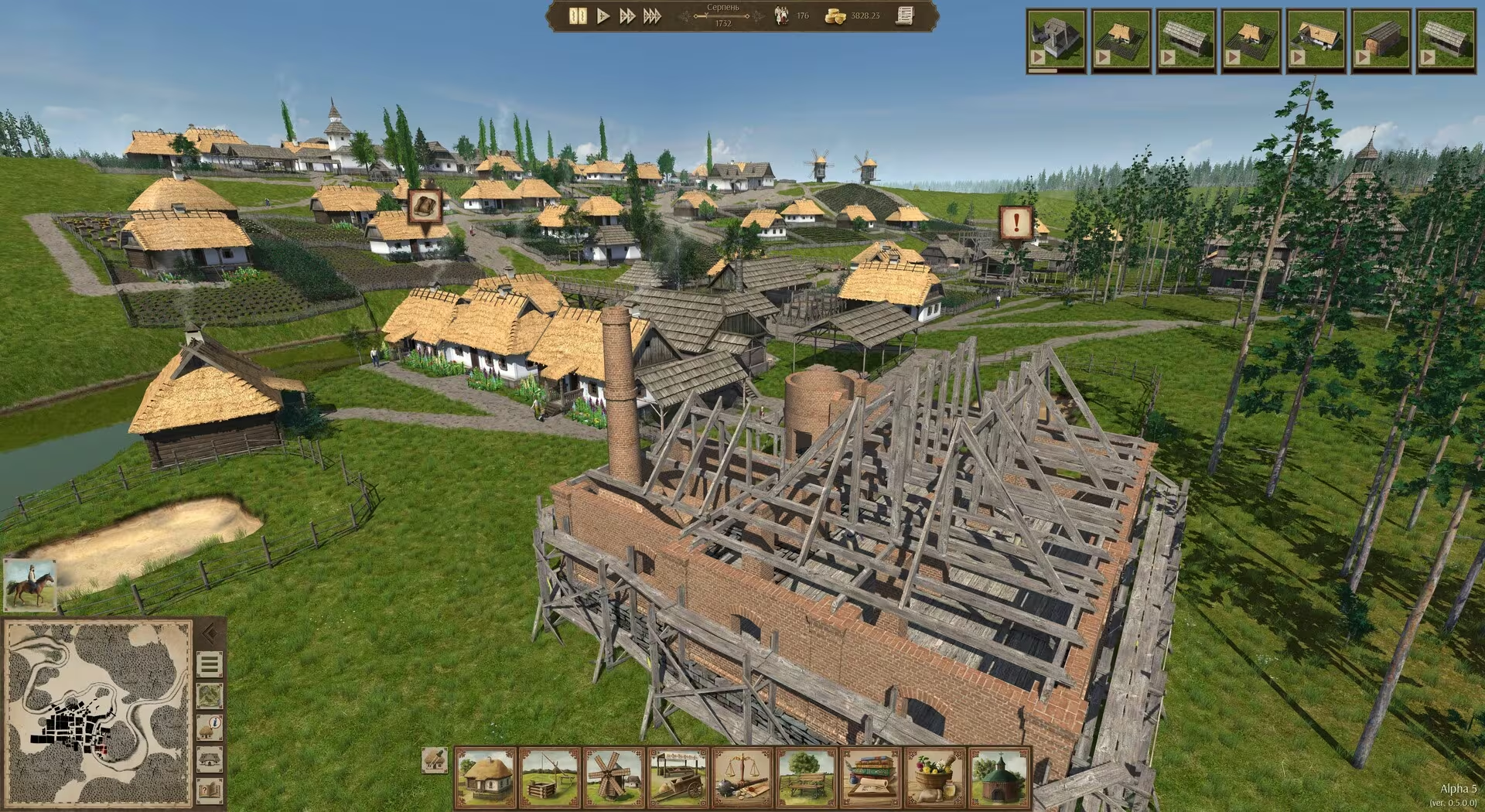
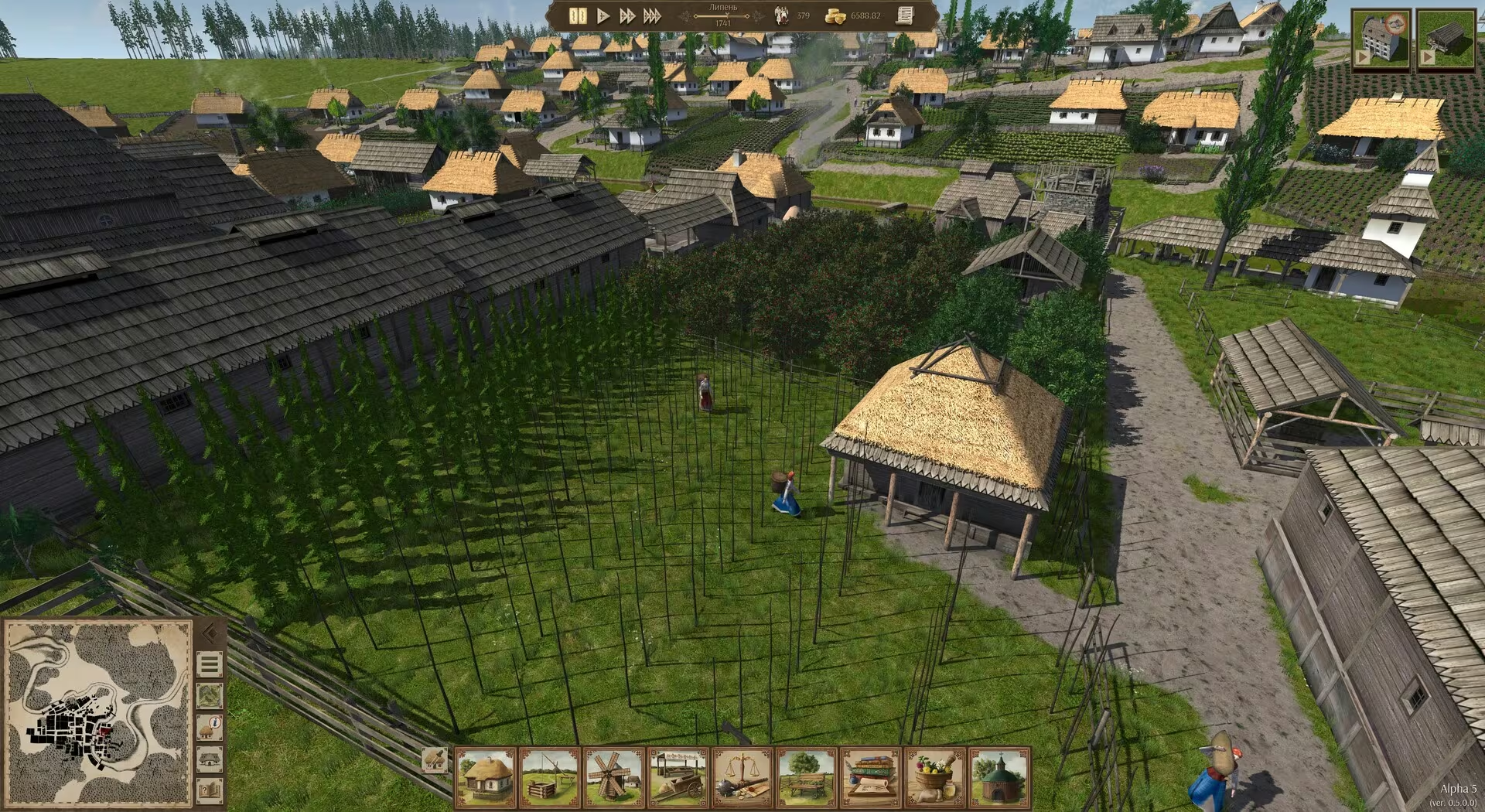
Ostriv is a city-building game that puts you in a role of a governor of an 18th century Ukrainian town to challenge your creative skills and management abilities.

Global score

95/100

Genres

Indie, Simulator, Strategy, Early Access

Similar games

    Pros

    • Deep and realistic economic simulation
    • Organic, gridless building placement
    • High attention to historical and cultural detail
    • Relaxing atmosphere and soundtrack
    • Active development despite challenging circumstances

    Cons

    • Slow development pace due to solo dev in war zone
    • Steep learning curve for new players
    • Limited endgame progression and repetitive late game
    • Lack of multiplayer or social features
    • Some ui and quality of life improvements needed

    Analysis

    Less representative of its motivational profile, with noticeable differences. Motivations that often define this kind of title include Idle, Thrill, Violence, Survival. Here, the score leans higher than usual among comparable games on Leadership, Survival. It leans lower than usual among comparable games on Fantasy.

    How to use the graph
    Similar games map

    Each dot is a game. They are arranged from the same motivation profile as in the “Motivations” section below. Closer dots usually mean more similar reasons to play (exploration, competition, relaxation, etc.)—not that one game is “better” than another.

    • Larger dot with a light outline: the game you are viewing.
    • Colour: groups of games with comparable motivation patterns (statistical clusters).
    • Hover a dot to see the game name; click to open its page.
    • Scroll or double-click the chart to zoom out and see more games.

    Why don’t the axes read like a score? This view uses t-SNE: it only keeps who is close to whom. The scales are not “good to bad” or hours played—they separate groups on the map. Read distance between dots, not the axis numbers.

    Motivations

    • Autonomy
      4

      "Players have freedom to build and manage their town organically without grid constraints, with flexible building placement and self-directed economic decisions."

    • Competence
      4

      "The game offers a challenging economic and resource management system requiring skillful balancing and strategic planning."

    • Competition
      -4

      "Focuses on personal pace and individual town development without competitive or ranked modes."

    • Continuation
      4

      "Many players report long playtimes and habitual return to the game, enjoying repeated town building and management."

    • Cooperation
      -4

      "Primarily a single-player experience with limited multiplayer or cooperative elements."

    • Creativity
      5

      "High creativity in town design with gridless building placement and organic growth of settlements."

    • Domination
      -5

      "No elements of exerting control over others; gameplay is peaceful and cooperative with NPC villagers."

    • Escapism
      4

      "Players use the game as a relaxing, immersive escape with calming music and detailed environment."

    • Expectation
      -5

      "Players engage voluntarily out of intrinsic interest and passion for city building and historical simulation."

    • Experimenting
      4

      "Players experiment with economic strategies, building layouts, and resource management to optimize their towns."

    • Exploration
      2

      "Some exploration of different maps and layouts, though maps are fixed and not procedurally generated."

    • Expression
      4

      "Allows self-expression through unique town designs, organic layouts, and decorative choices."

    • Fantasy
      -4

      "Strong focus on realistic 18th century Ukrainian village life and historical accuracy."

    • Fellowship
      -4

      "Minimal social or community features; mostly a solo experience."

    • Growth
      4

      "Players develop skills in managing complex economic systems and town growth over time."

    • Health
      -5

      "Sedentary gameplay typical of city builders with no physical activity elements."

    • Idle
      3

      "Can be played at slow pace with some multitasking; some players use it as background relaxation."

    • Intimacy
      -4

      "Limited social interaction; focus on individual gameplay rather than forming close relationships."

    • Leadership
      3

      "Players lead and manage their town and citizens but no multiplayer leadership roles."

    • Progression
      4

      "Progression through unlocking and managing production chains, town expansion, and economic growth."

    • Relaxation
      5

      "Highly relaxing with calming music, slow pace, and satisfying animations."

    • Sensation
      3

      "Pleasant visual and auditory stimuli with detailed animations and immersive soundtrack."

    • Status
      -5

      "No social status or recognition systems; focus is on personal achievement."

    • Story
      3

      "Emergent narrative through generational family histories and village development, though no scripted plot."

    • Strategy
      4

      "Requires strategic planning in resource management, economy, and town layout."

    • Thrill
      -3

      "Gameplay is calm and predictable without suspense or risk elements."

    • Value
      4

      "Players perceive good value for time spent due to depth and replayability."

    • Violence
      -5

      "No violence or combat; peaceful city building focus."

    • Survival
      2

      "Some survival elements like managing food and resources but no direct threats or combat."

    Last update: 29/04/2026