Sapiens Thumbnail

Sapiens similar games & best alternatives

Sapiens

PC (Microsoft Windows) • 2022

Related articles

Quick resume

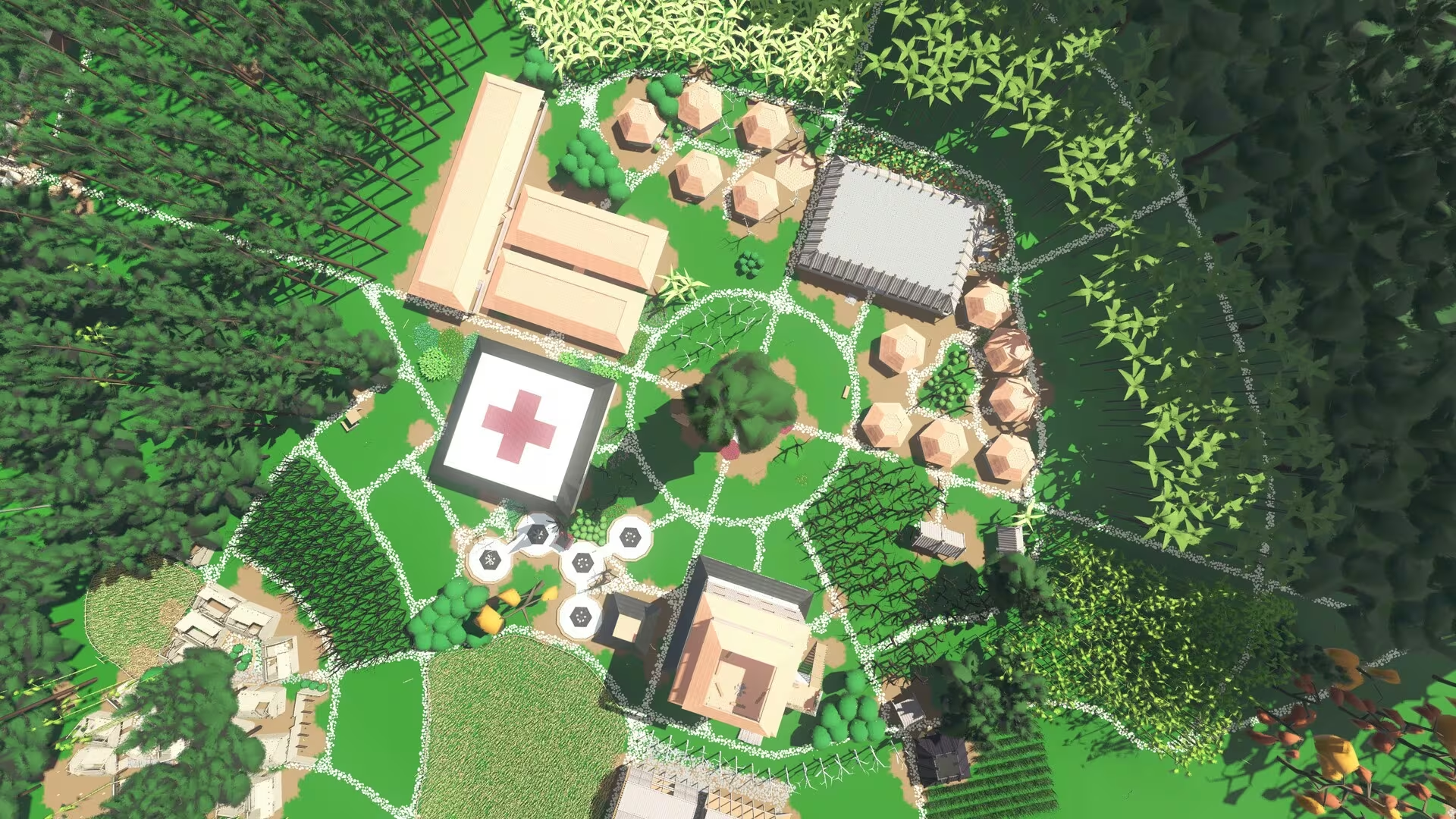
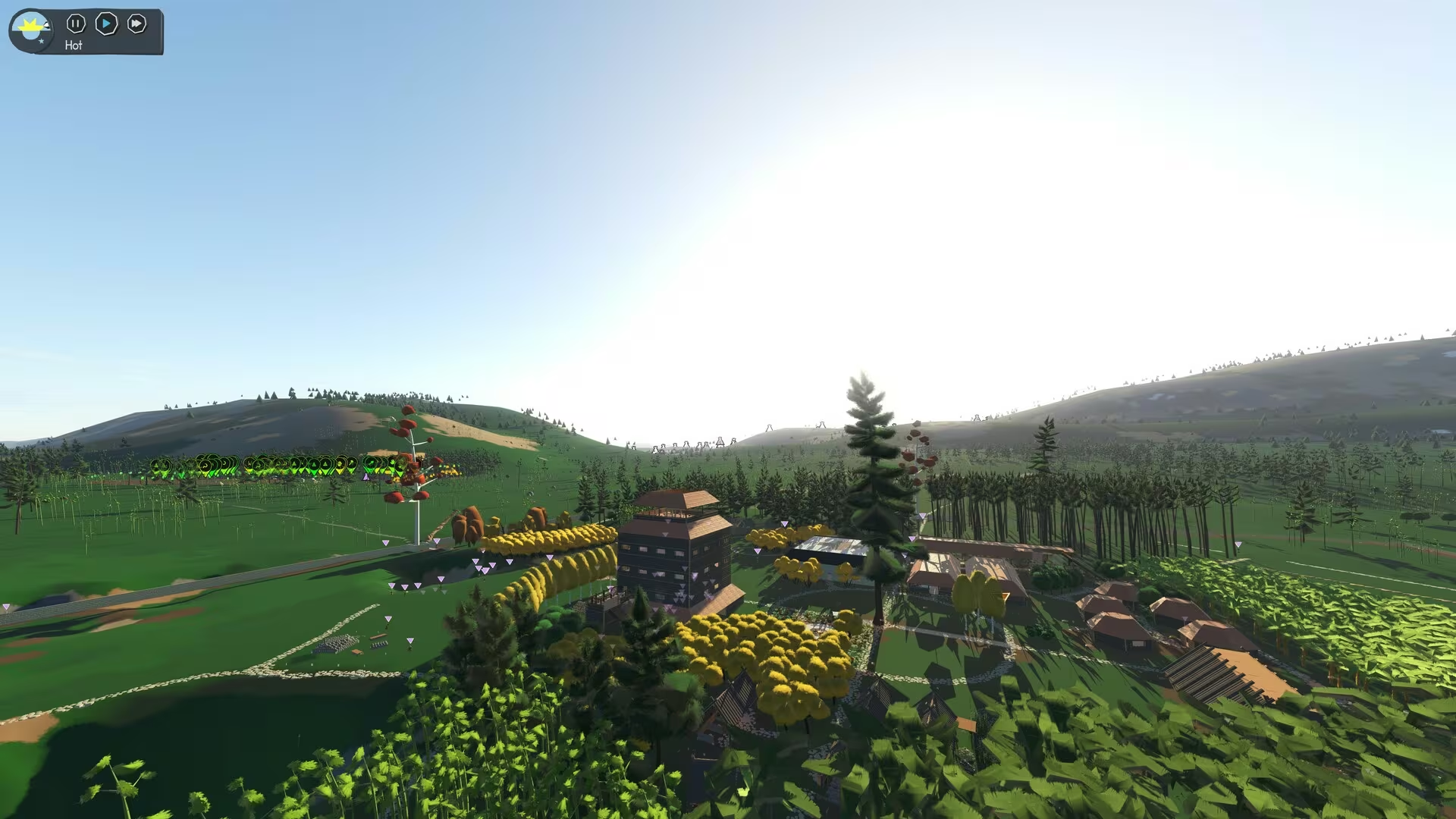
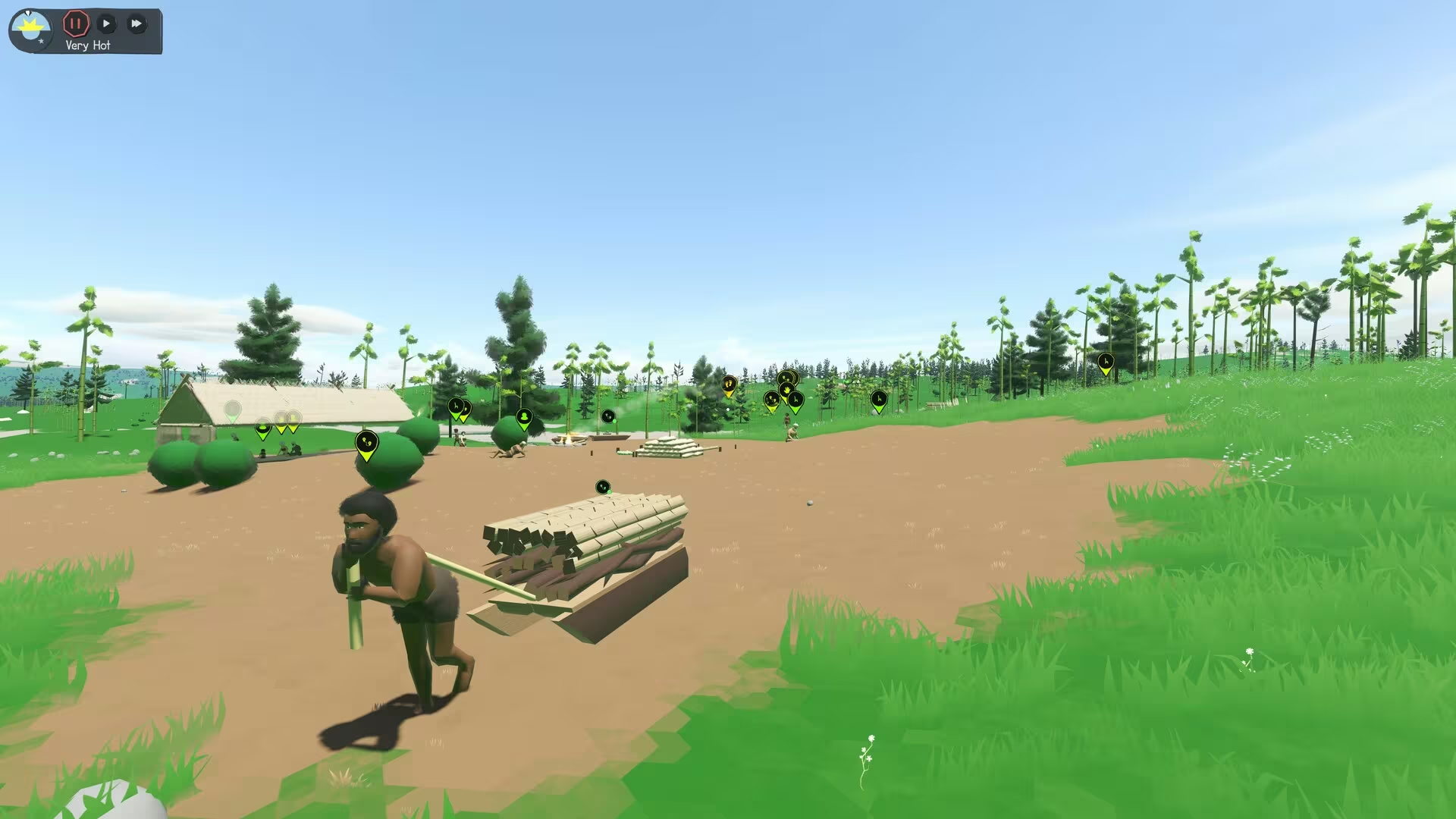
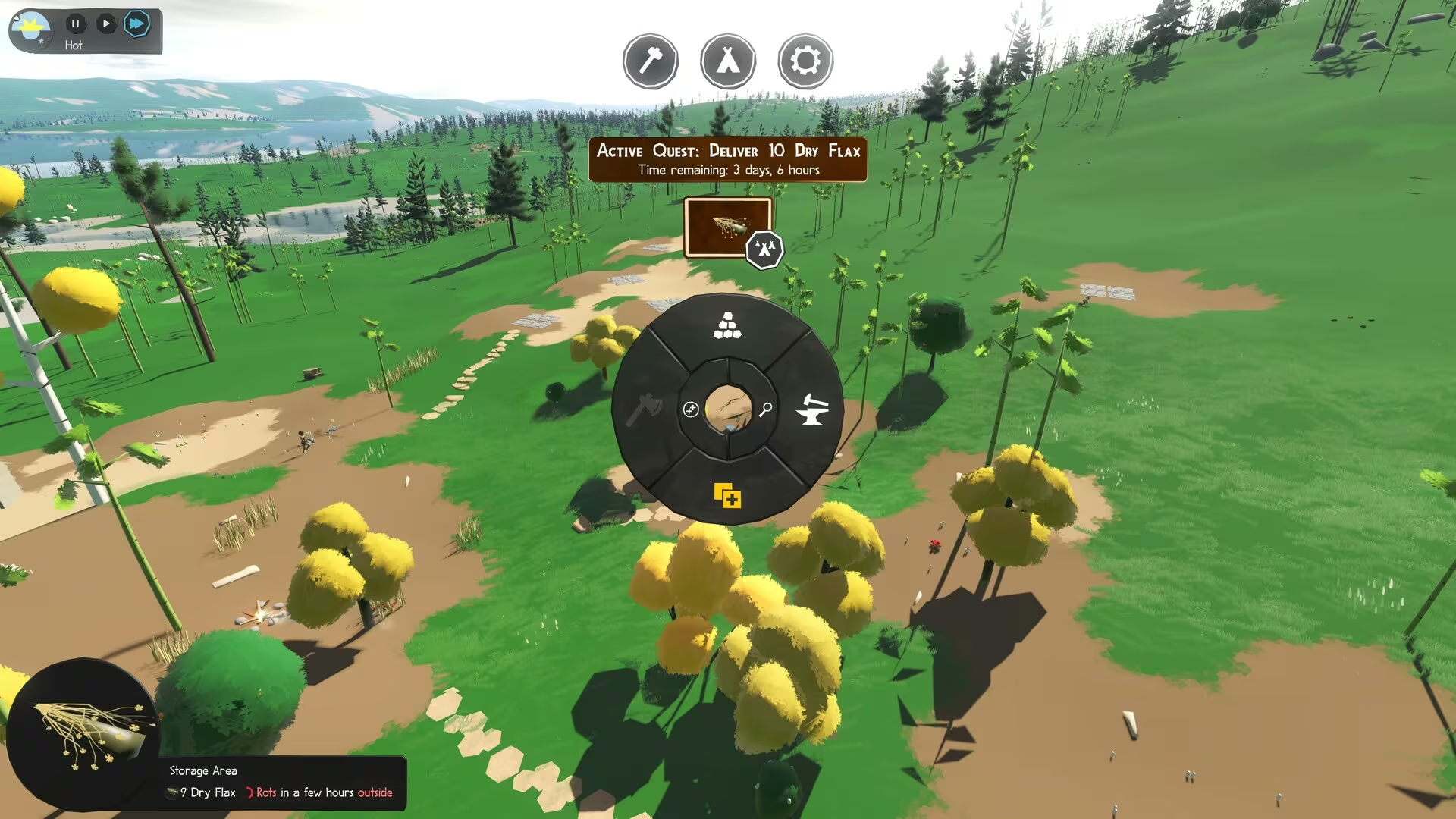
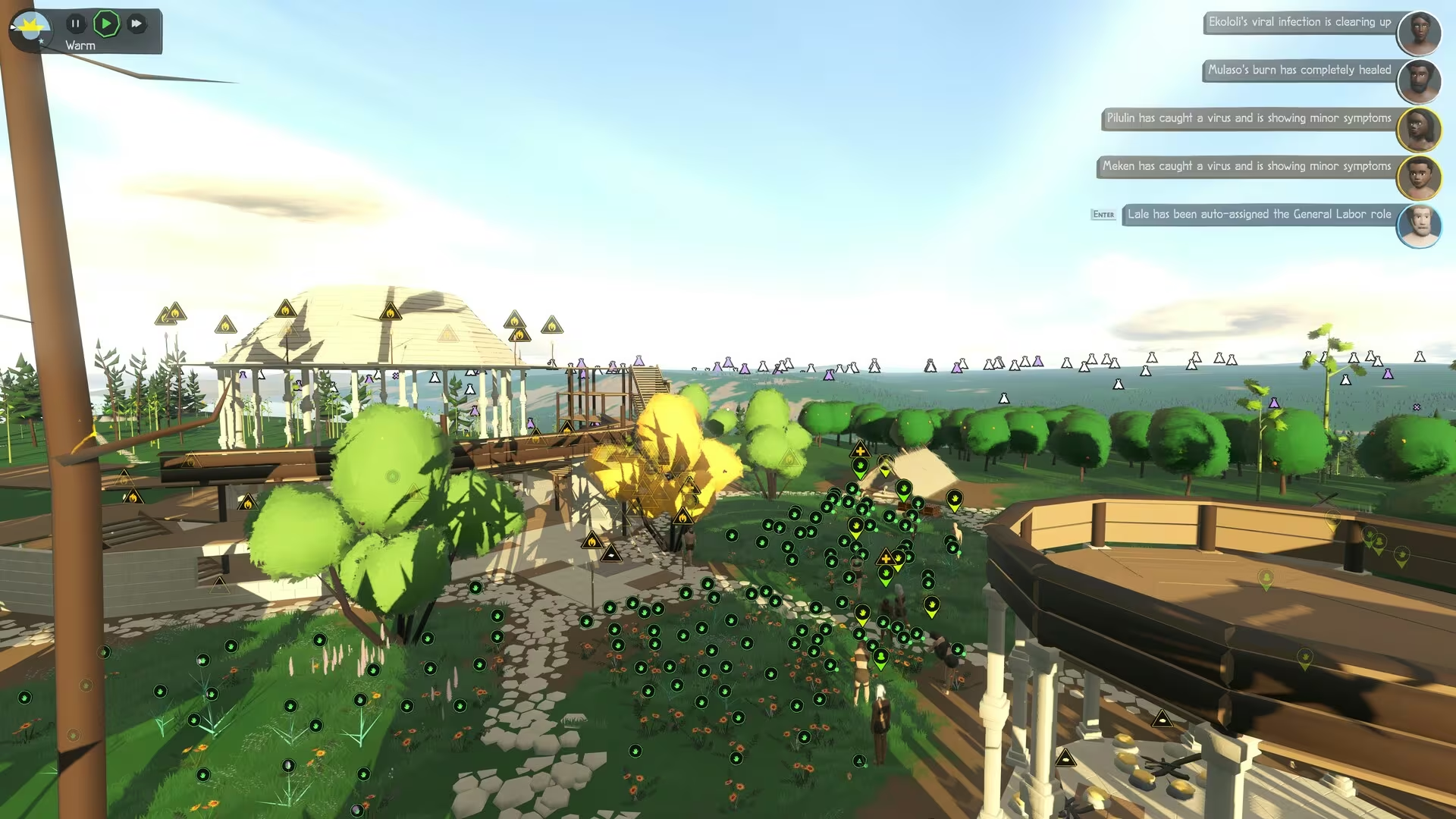
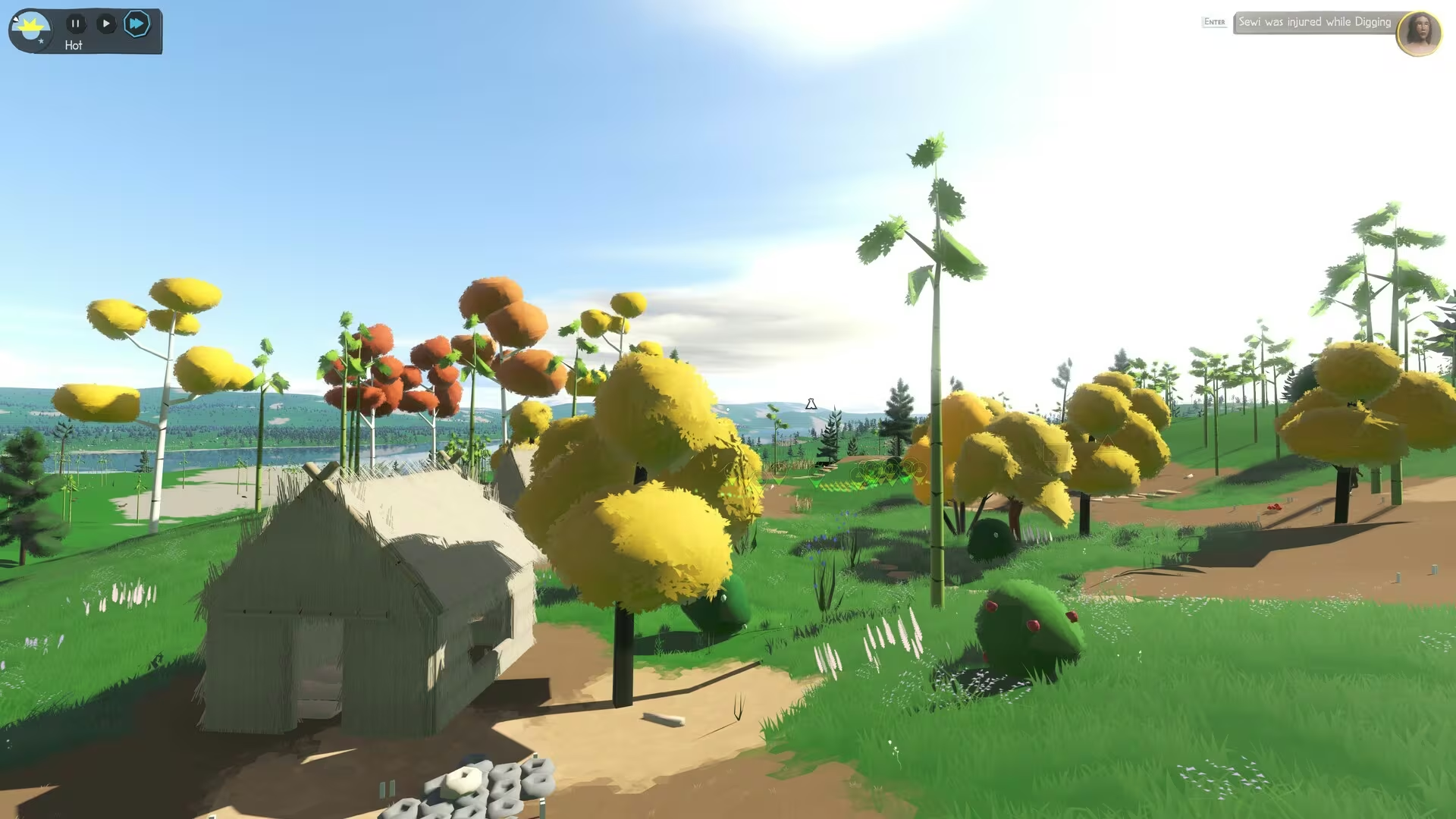
Create your own prehistoric civilization and lead your tribe in a world you shape. Start with nothing, build towns and industry, and advance through thousands of years of technological breakthroughs in this intimate yet expansive colony sim.

Global score

83/100

Genres

Indie, Simulator, Strategy, Early Access

Similar games

    Pros

    • Massive open world and exploration
    • High creative freedom in building
    • Immersive prehistoric survival experience
    • Deep micromanagement and strategy
    • Active developer and community engagement

    Cons

    • Slow pacing and grind
    • High micromanagement burden
    • Limited content and progression currently
    • Lack of automation and quality of life features
    • Minimal multiplayer and social interaction

    Analysis

    Broadly representative of its motivational profile, with a few distinct shifts. Motivations that often define this kind of title include Fantasy, Violence, Story, Thrill. Here, the score leans higher than usual among comparable games on Survival, Leadership, Exploration.

    How to use the graph
    Similar games map

    Each dot is a game. They are arranged from the same motivation profile as in the “Motivations” section below. Closer dots usually mean more similar reasons to play (exploration, competition, relaxation, etc.)—not that one game is “better” than another.

    • Larger dot with a light outline: the game you are viewing.
    • Colour: groups of games with comparable motivation patterns (statistical clusters).
    • Hover a dot to see the game name; click to open its page.
    • Scroll or double-click the chart to zoom out and see more games.

    Why don’t the axes read like a score? This view uses t-SNE: it only keeps who is close to whom. The scales are not “good to bad” or hours played—they separate groups on the map. Read distance between dots, not the axis numbers.

    Motivations

    • Autonomy
      4

      "Players have high freedom to design buildings piece by piece, choose how to play their tribe, and direct individual sapiens' actions manually."

    • Competence
      3

      "Game involves overcoming micromanagement challenges and learning complex systems like resource gathering, research, and survival."

    • Competition
      -4

      "Focus is on personal tribe development and survival without competitive or ranked modes."

    • Continuation
      4

      "Many players report long play sessions and habitual engagement despite some grind and slow pacing."

    • Cooperation
      -3

      "Gameplay centers on managing own tribe independently with limited multiplayer currently and no strong teamwork mechanics."

    • Creativity
      5

      "Strong creative freedom in building design and world shaping; players can customize structures extensively."

    • Domination
      -5

      "No evidence of exerting control over other players; interactions are cooperative or independent."

    • Escapism
      4

      "Players use the game as a relaxing, immersive escape into a prehistoric world."

    • Expectation
      -4

      "Players engage voluntarily out of intrinsic interest and enjoyment rather than obligation."

    • Experimenting
      4

      "Players explore new mechanics, experiment with building and research, and try different strategies."

    • Exploration
      5

      "Massive procedurally generated world encourages discovery and exploration."

    • Expression
      5

      "Players express themselves through detailed building customization and village design."

    • Fantasy
      -3

      "Game focuses on realistic prehistoric survival and development rather than imaginative fiction."

    • Fellowship
      -3

      "Mostly solo play with minimal social interaction; multiplayer planned but limited currently."

    • Growth
      4

      "Players learn new skills, manage research, and develop their tribe's capabilities over time."

    • Health
      -5

      "Game is sedentary with no physical activity component."

    • Idle
      -3

      "Requires active micromanagement and attention; not suited for idle or background play."

    • Intimacy
      -4

      "Limited social connections; interactions are mostly functional and surface-level."

    • Leadership
      3

      "Player leads and manages the tribe, assigning roles and directing actions."

    • Progression
      4

      "Players accumulate resources, unlock technologies, and expand their tribe's capabilities."

    • Relaxation
      3

      "Game provides a relaxing experience despite some micromanagement and grind."

    • Sensation
      2

      "Visuals and audio are simple but pleasant, providing moderate sensory stimulation."

    • Status
      -4

      "Achievements and social recognition are minimal; focus is on individual gameplay."

    • Story
      -3

      "No strong narrative or plot; gameplay is emergent and player-driven."

    • Strategy
      3

      "Players engage in planning, resource management, and problem solving."

    • Thrill
      -2

      "Game is low risk and calm; lacks suspense or high-stakes tension."

    • Value
      2

      "Players feel the game offers good value for time and money given its depth and potential."

    • Violence
      -3

      "Combat is minimal and limited to hunting; focus is on constructive building and survival."

    • Survival
      4

      "Core gameplay involves managing resources and avoiding starvation, cold, and injury."

    Last update: 29/04/2026