Rusty Lake: Roots similar games & best alternatives
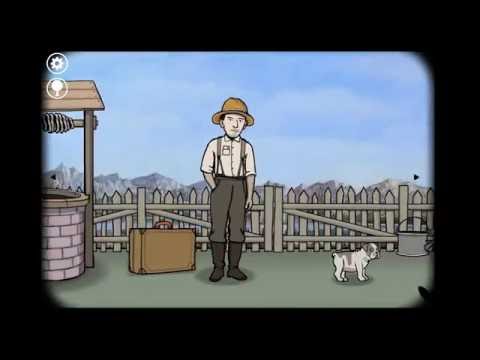
Rusty Lake: Roots
2016
Related articles
Quick resume
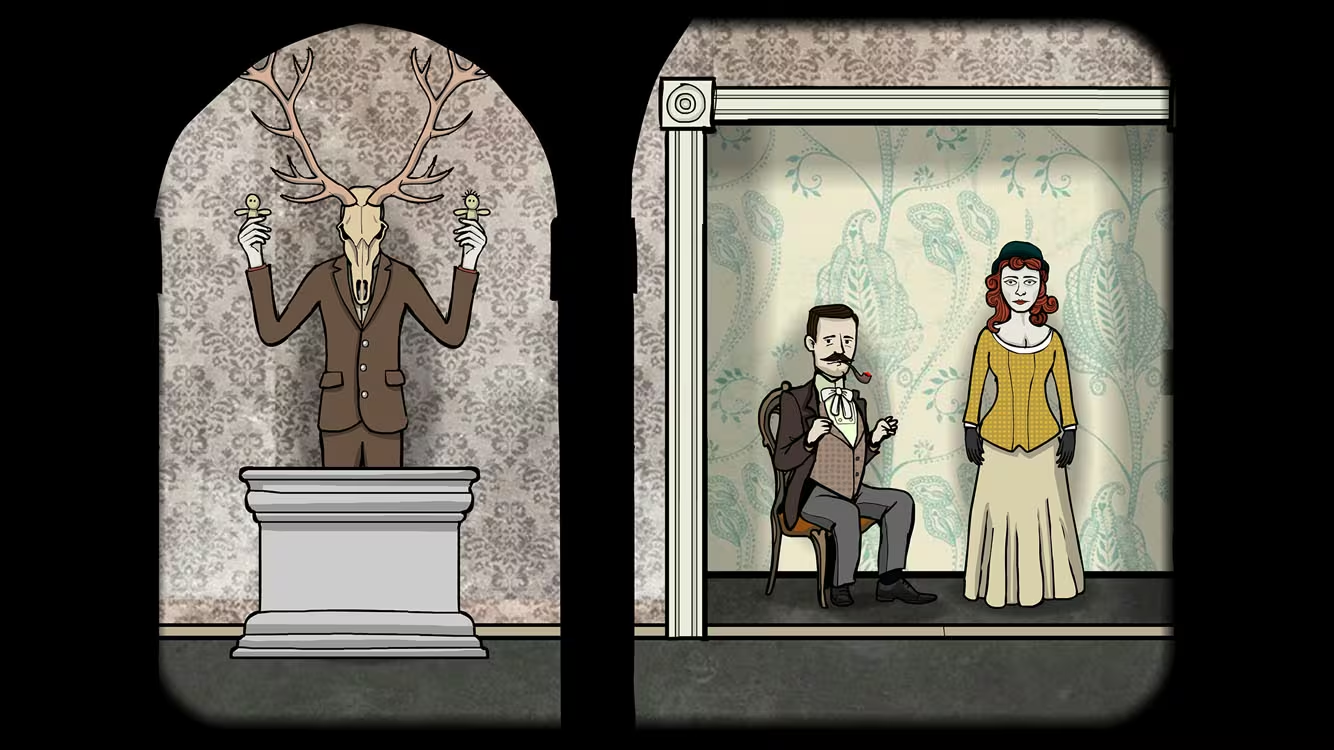
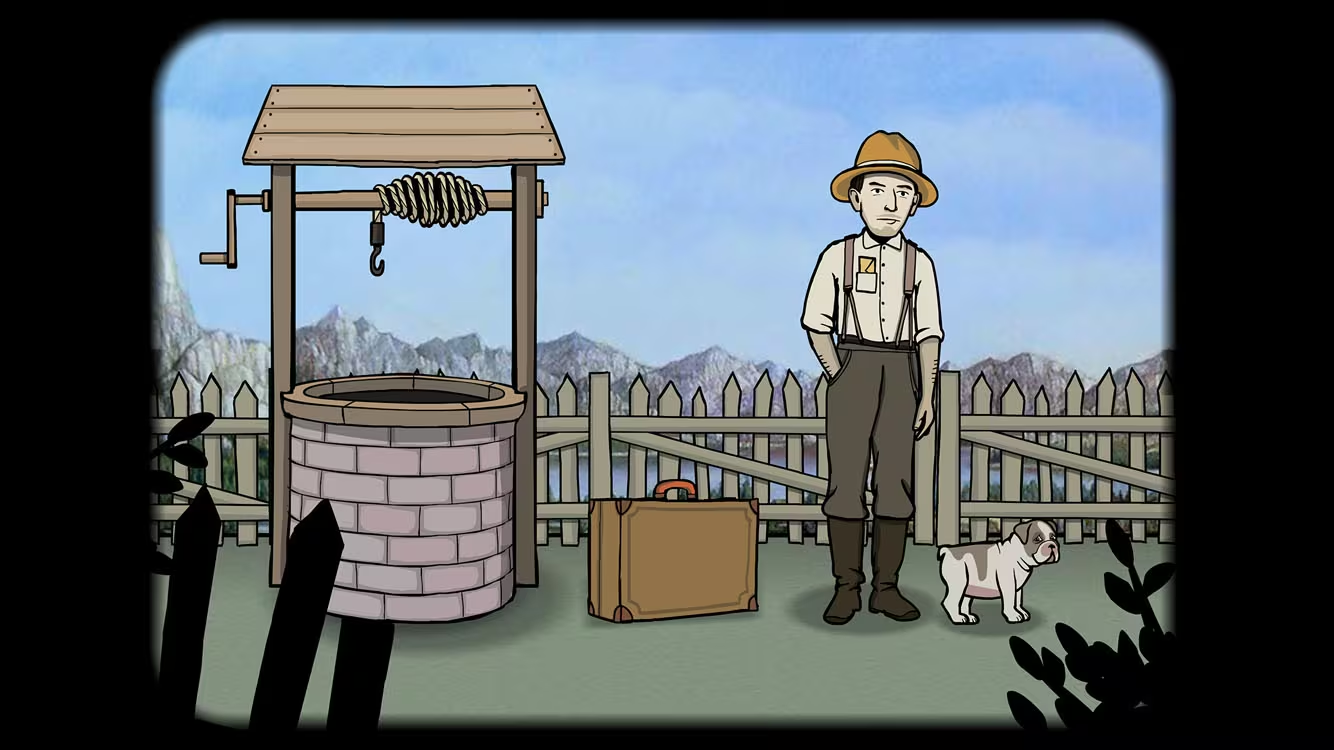
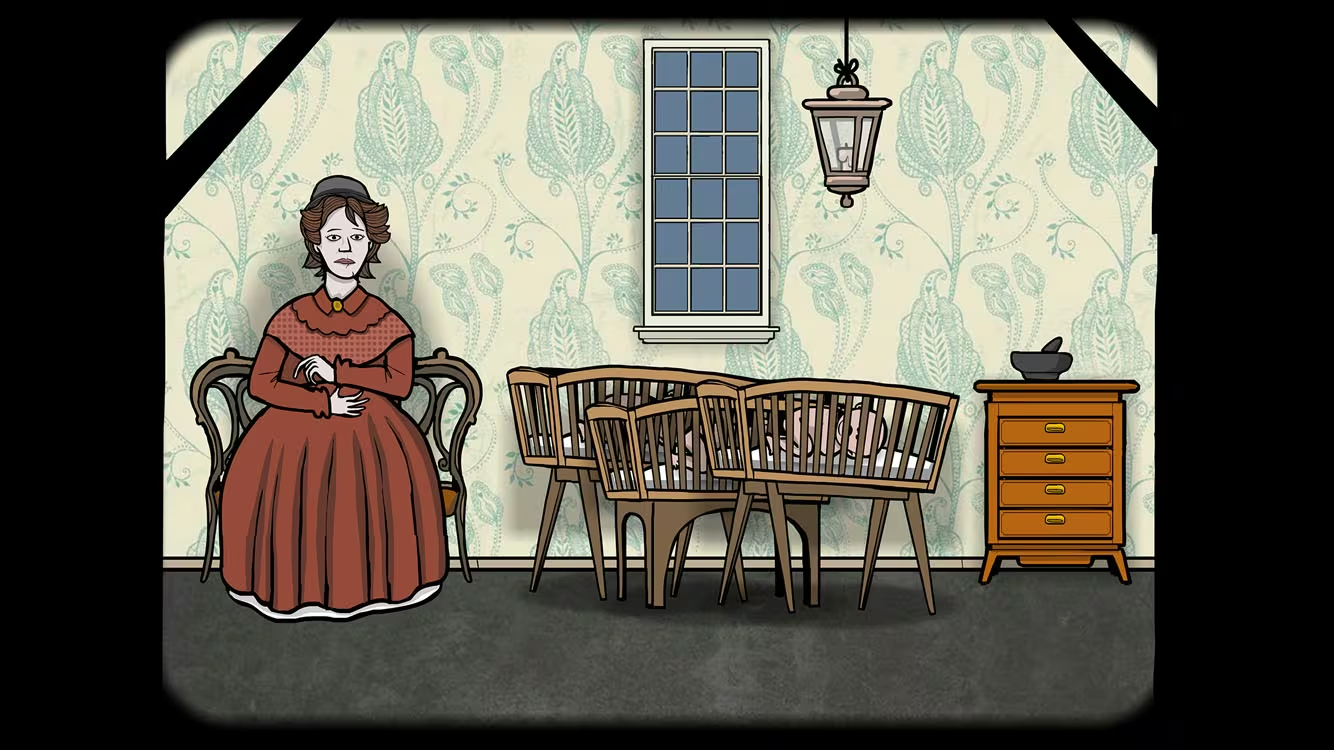
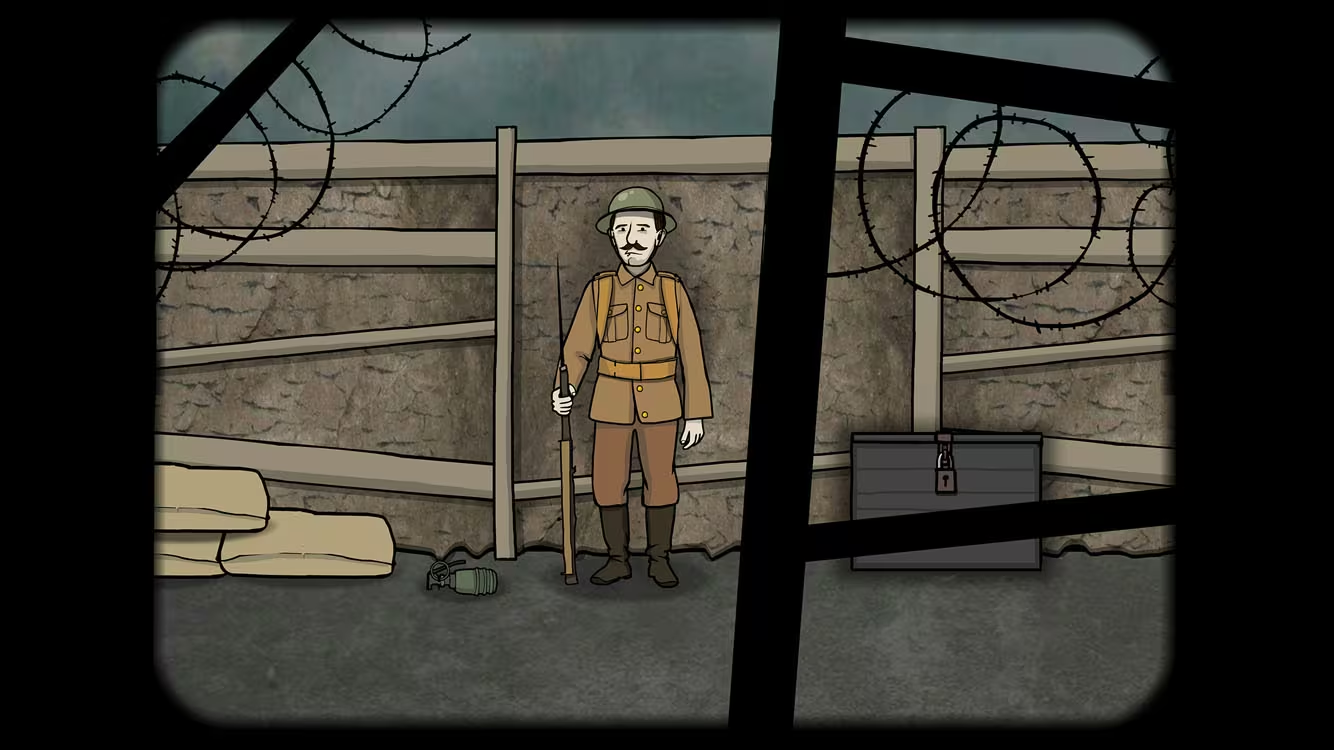
Experience the beginning and end of characters' lives and build your own family tree! Rusty Lake: Roots is the second premium point-and-click adventure by the creators of the Cube Escape series and Rusty Lake Hotel.
Global score
97/100
Genres
Adventure, Indie, Puzzle, Point-and-click
Similar games
Pros
- Engaging and immersive narrative
- Well-designed and varied puzzles
- Unique surreal art style and atmosphere
- Good value for price and length
- Non-linear progression with replayability
Cons
- Some puzzles can be obtuse or frustrating
- Lack of fullscreen support on some platforms
- Minor bugs and finicky controls reported
- Short individual levels may feel less challenging
- No multiplayer or social features
Analysis
Broadly representative of its motivational profile, with a few distinct shifts. Motivations that often define this kind of title include Survival, Violence, Fellowship, Expression. Here, the score leans higher than usual among comparable games on Violence, Thrill. It leans lower than usual among comparable games on Expression.
How to use the graph
Similar games map
Each dot is a game. They are arranged from the same motivation profile as in the “Motivations” section below. Closer dots usually mean more similar reasons to play (exploration, competition, relaxation, etc.)—not that one game is “better” than another.
- Larger dot with a light outline: the game you are viewing.
- Colour: groups of games with comparable motivation patterns (statistical clusters).
- Hover a dot to see the game name; click to open its page.
- Scroll or double-click the chart to zoom out and see more games.
Why don’t the axes read like a score? This view uses t-SNE: it only keeps who is close to whom. The scales are not “good to bad” or hours played—they separate groups on the map. Read distance between dots, not the axis numbers.
Motivations
-
Autonomy4
"Players choose which vignette or branch of the family tree to explore next, allowing non-linear progression and personal pacing."
-
Competence3
"Puzzles require problem solving and logic, with some challenging brain teasers, though generally accessible and not overly difficult."
-
Competition-5
"No competitive elements; gameplay is solitary and focused on personal puzzle solving and story discovery."
-
Continuation3
"Players often engage in multiple sessions to explore different story branches and achievements, showing attachment and replay interest."
-
Cooperation-5
"Entirely single-player experience with no cooperative or multiplayer features."
-
Creativity3
"Players creatively solve puzzles and piece together story elements, though within predefined puzzle structures."
-
Domination-5
"No elements of exerting control or superiority over others; gameplay is individual and narrative-driven."
-
Escapism4
"Strong immersive atmosphere and narrative provide a psychological escape from reality, often cited as therapeutic or mood-lifting."
-
Expectation-4
"Players engage voluntarily out of intrinsic interest in puzzles and story; no external pressure or obligation noted."
-
Experimenting2
"Players explore different puzzle solutions and story branches, though within a structured narrative framework."
-
Exploration3
"Exploration of new story vignettes and family branches encourages discovery and curiosity."
-
Expression-5
"No character customization or player expression; visuals and story are fixed and artist-driven."
-
Fantasy4
"Strong surreal and macabre fictional narrative with occult and supernatural themes."
-
Fellowship-5
"No social or community features; experience is solitary."
-
Growth3
"Players develop puzzle-solving skills and gain narrative understanding as they progress."
-
Health-5
"Sedentary gameplay with no physical activity or health-related features."
-
Idle-3
"Requires focused attention to solve puzzles; not suited for passive or background play."
-
Intimacy-5
"No social or emotional relationship-building features; solitary experience."
-
Leadership-5
"No leadership or group management elements; single-player puzzle adventure."
-
Progression4
"Players progress through family tree branches, unlocking new puzzles and story segments."
-
Relaxation3
"Atmosphere and pacing provide a balance of challenge and flow, with some players finding it relaxing and mood-enhancing."
-
Sensation2
"Artistic visuals and eerie music provide sensory engagement, though not intense stimulation."
-
Status-5
"No social recognition or status systems; achievements are personal milestones."
-
Story5
"Strong narrative immersion with interconnected stories across generations and rich lore."
-
Strategy2
"Puzzles require logical thinking and planning, but are generally straightforward rather than deeply strategic."
-
Thrill2
"Some suspense and eerie tension from story and atmosphere, but no high-risk or adrenaline gameplay."
-
Value4
"Players report high value for price due to length, quality, and replayability."
-
Violence3
"Contains dark themes including death and body horror, but violence is stylized and narrative-driven rather than gratuitous."
-
Survival-5
"No survival or resource management mechanics; stable puzzle environment."
Last update: 29/04/2026