Ultimate General: Gettysburg similar games & best alternatives

Ultimate General: Gettysburg
2014
Related articles
Quick resume
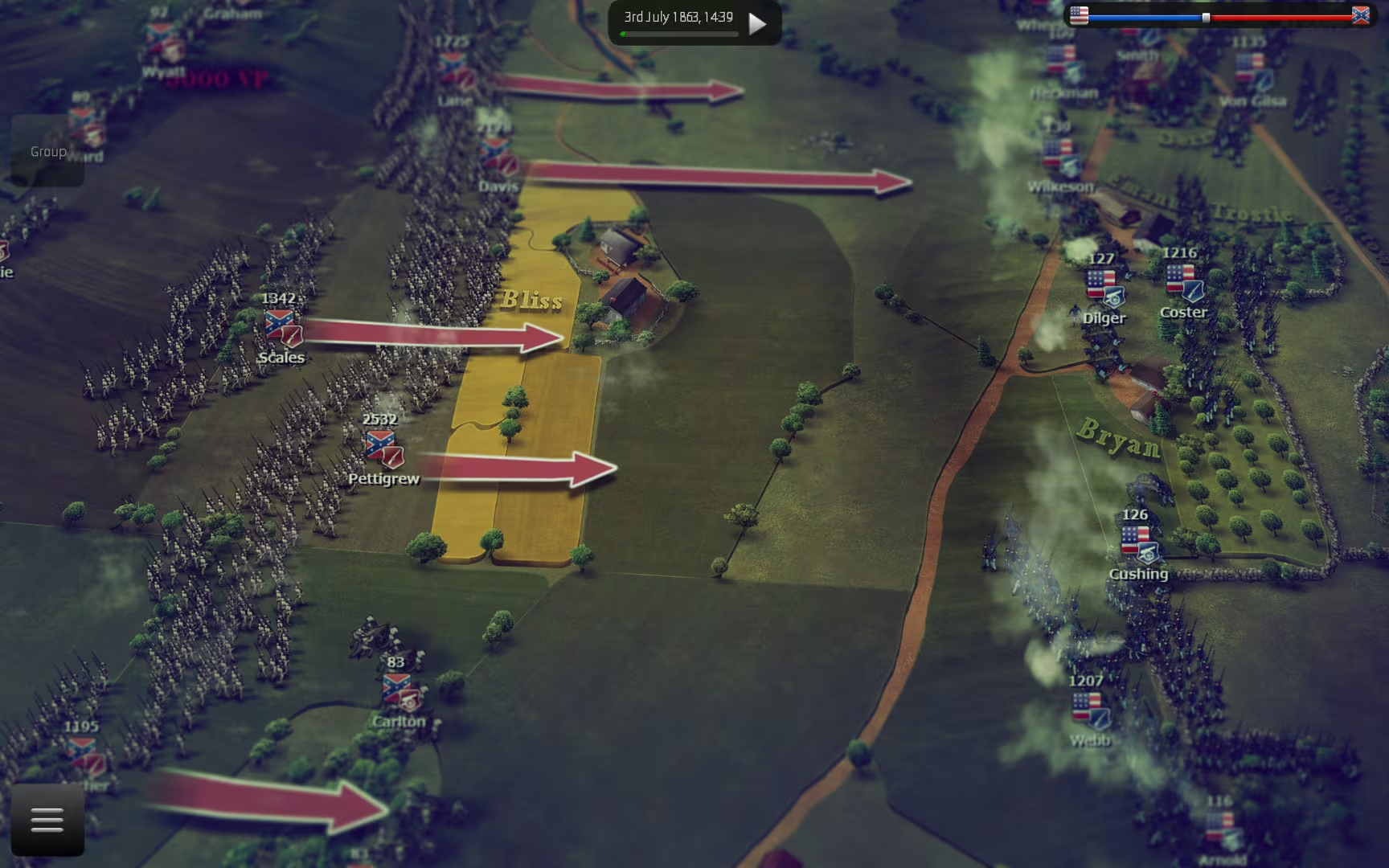
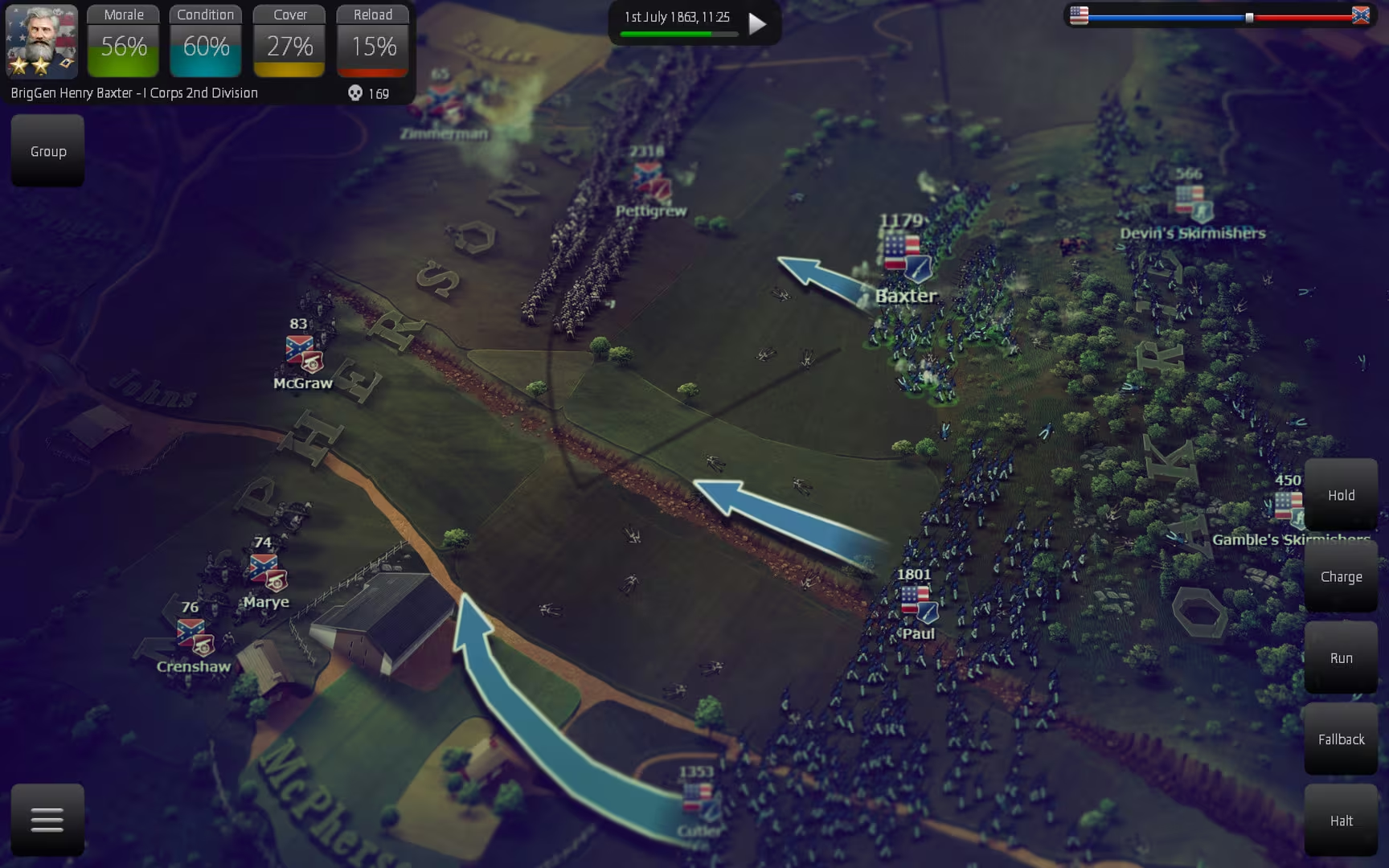
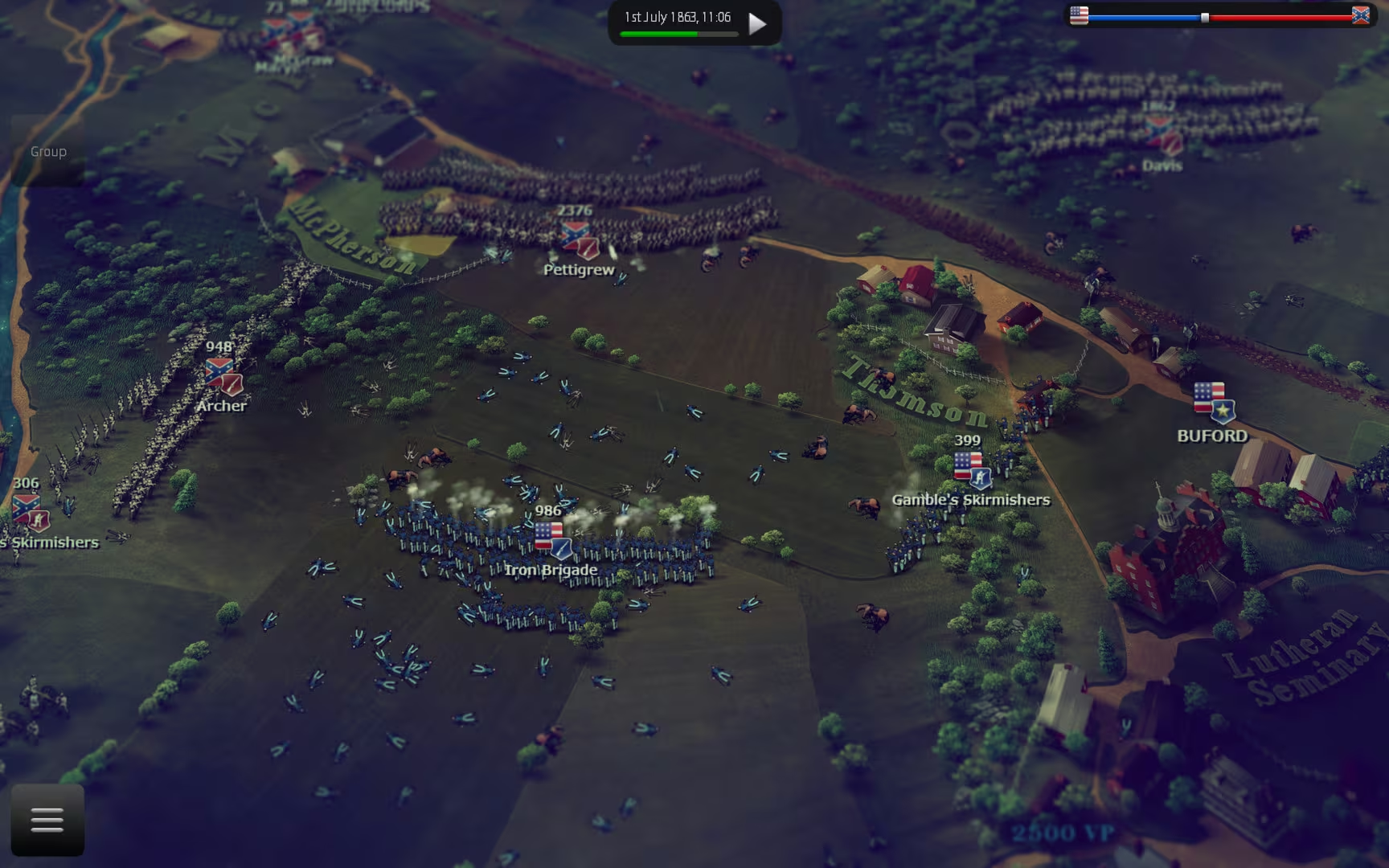
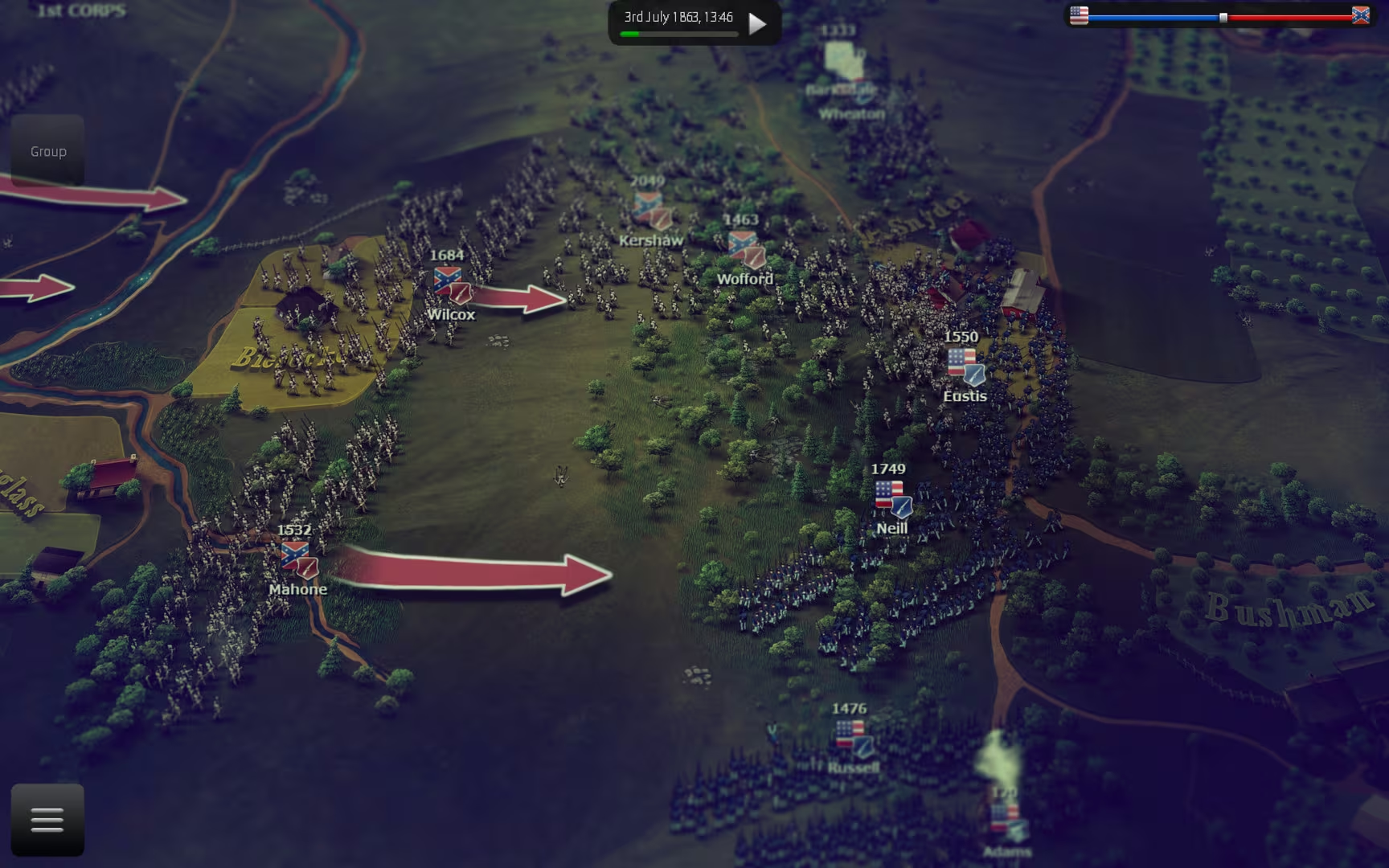
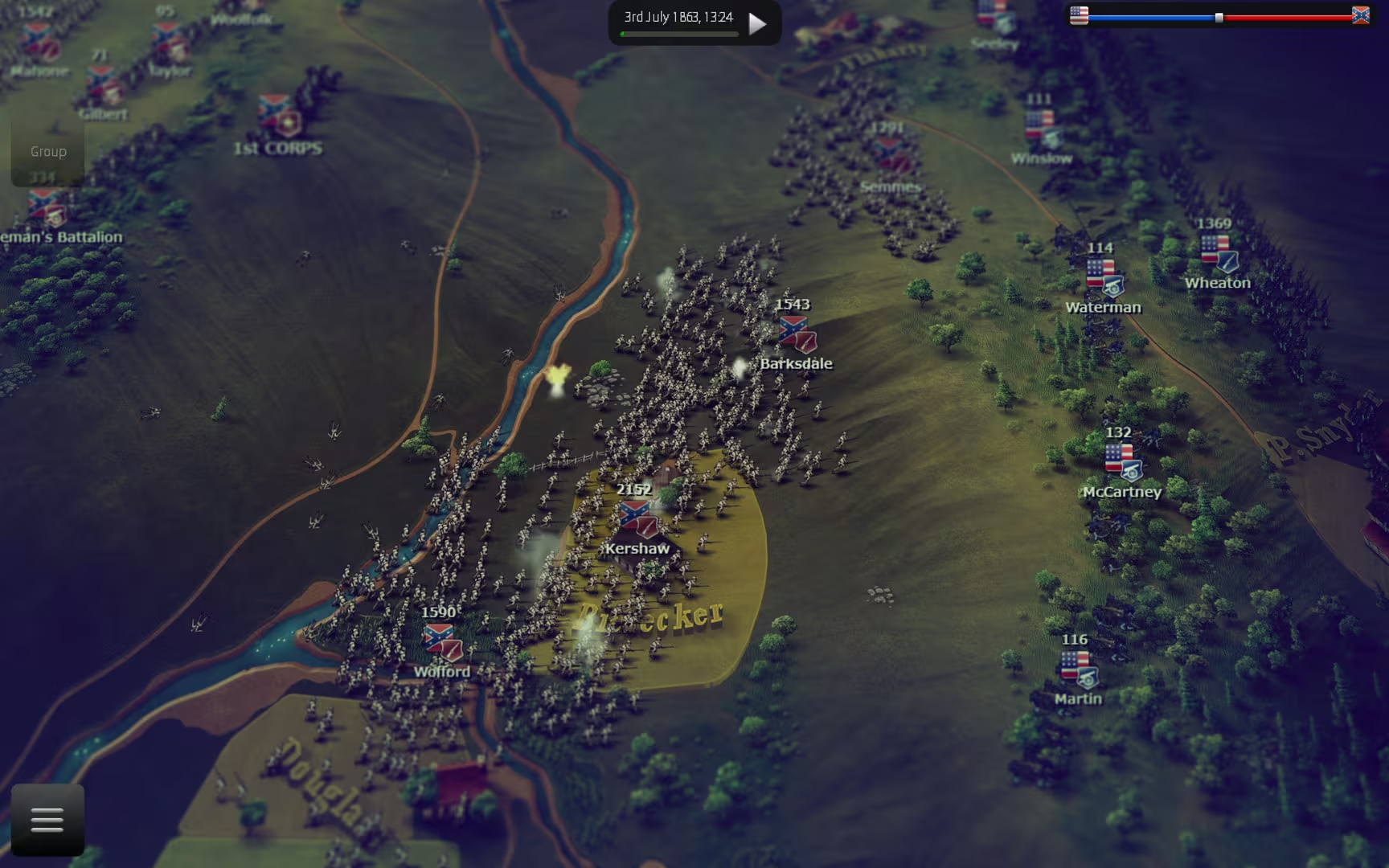
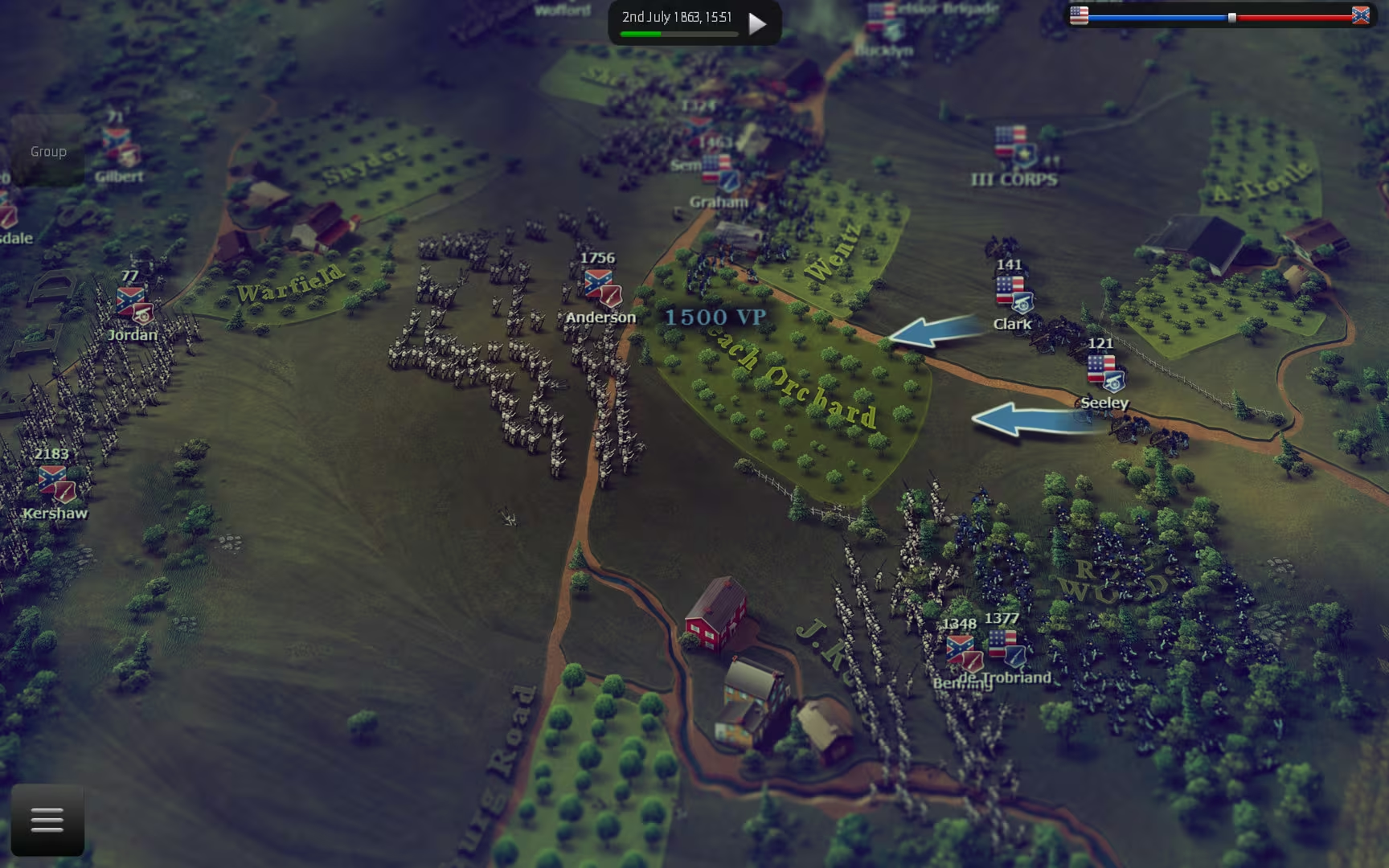
A Tactical Battle Simulator that allows you to command thousands of soldiers as a Union or Confederate General. The game features the most accurately created map, a non-linear battle campaign, complex morale, innovative control mechanics and smart AI.
Global score
81/100
Genres
Indie, Simulator, Strategy, Real Time Strategy (RTS)
Similar games
Pros
- Challenging and smart ai
- Historically accurate and immersive
- Intuitive controls and tactical depth
- Branching campaign with replayability
- Active developer support
Cons
- Limited to gettysburg battlefield
- Multiplayer limited to 1v1 with small community
- Some ui and line-of-sight issues
- Lack of unit formation customization
- Short battle durations and scenario length
Analysis
Less representative of its motivational profile, with noticeable differences. Motivations that often define this kind of title include Leadership, Survival, Violence, Strategy. Here, the score leans higher than usual among comparable games on Competition. It leans lower than usual among comparable games on Fantasy, Expression.
How to use the graph
Similar games map
Each dot is a game. They are arranged from the same motivation profile as in the “Motivations” section below. Closer dots usually mean more similar reasons to play (exploration, competition, relaxation, etc.)—not that one game is “better” than another.
- Larger dot with a light outline: the game you are viewing.
- Colour: groups of games with comparable motivation patterns (statistical clusters).
- Hover a dot to see the game name; click to open its page.
- Scroll or double-click the chart to zoom out and see more games.
Why don’t the axes read like a score? This view uses t-SNE: it only keeps who is close to whom. The scales are not “good to bad” or hours played—they separate groups on the map. Read distance between dots, not the axis numbers.
Motivations
-
Autonomy4
"Players have control over tactical decisions, unit movements, and strategic choices between battle phases, allowing personal freedom in directing actions."
-
Competence4
"The game challenges players with smart AI and requires skillful tactical maneuvers and strategic planning to succeed."
-
Competition2
"Includes multiplayer 1v1 mode and AI difficulty settings for competitive play, but multiplayer community is small and limited."
-
Continuation3
"High replayability due to branching scenarios, AI variety, and strategic choices encourage repeated play sessions."
-
Cooperation-3
"Focus is primarily on single-player or 1v1 multiplayer; no team or cooperative modes reported."
-
Creativity2
"Players can choose different strategies and AI personalities, but unit commands are limited to predefined tactical orders."
-
Domination-4
"Interactions emphasize balanced tactical engagements and mutual respect; no evidence of trash talk or power imposition."
-
Escapism3
"Players use the game as a historical immersive experience and distraction, engaging deeply with the battle scenarios."
-
Expectation-4
"Players engage voluntarily out of interest and enjoyment, with no indication of obligation or external pressure."
-
Experimenting3
"Players try different AI behaviors, strategies, and branching scenarios, exploring various tactical options."
-
Exploration-2
"The game is limited to the Gettysburg battlefield with no new areas, but offers scenario variations within this map."
-
Expression-3
"Limited customization; units and visuals are standardized with no player-driven cosmetic modifications."
-
Fantasy-4
"Strong focus on historical accuracy and realistic tactics; no fantasy or fictional elements."
-
Fellowship-3
"Primarily single-player experience with minimal social interaction; multiplayer is limited to 1v1 matches."
-
Growth3
"Players learn historical tactics, improve strategic skills, and adapt to AI behaviors over time."
-
Health-5
"No physical activity involved; typical sedentary gameplay."
-
Idle-3
"Requires focused attention during battles; not designed for casual or background play."
-
Intimacy-4
"Social interactions are minimal and surface-level, limited to multiplayer matchmaking."
-
Leadership4
"Players lead armies and make strategic decisions commanding multiple units and managing battle outcomes."
-
Progression3
"Progression through campaign scenarios with unit casualties and morale carrying over, affecting future battles."
-
Relaxation1
"Gameplay balances challenge and flow but can be tense due to strategic demands and AI difficulty."
-
Sensation2
"Visual and auditory effects like gunfire and explosions provide sensory stimulation enhancing immersion."
-
Status-3
"No social status or recognition systems; focus is on individual gameplay without social evaluation."
-
Story4
"Strong narrative immersion through historical battle scenarios and branching campaign outcomes."
-
Strategy5
"Core gameplay centers on mental challenge, tactical planning, and problem solving in realistic battle conditions."
-
Thrill3
"Players experience suspense and tension from dynamic battles and uncertain outcomes."
-
Value4
"Players perceive good value for money due to quality AI, replayability, and historical depth."
-
Violence4
"Combat and destruction are central, with realistic depictions of battle casualties and artillery fire."
-
Survival3
"Players must manage troop morale and condition to avoid defeat and maintain control of strategic positions."
Last update: 29/04/2026