Sunderfolk Thumbnail

Sunderfolk similar games & best alternatives
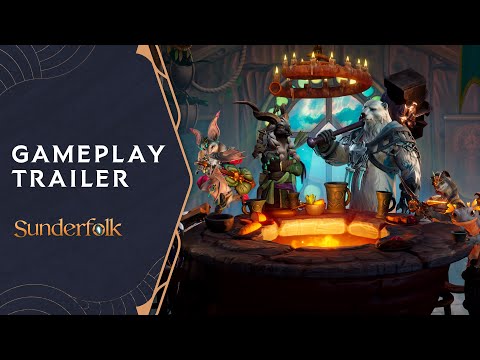
Sunderfolk

PC (Microsoft Windows), Nintendo Switch, Xbox Series X|S, PlayStation 5 • 2025

Related articles

Quick resume

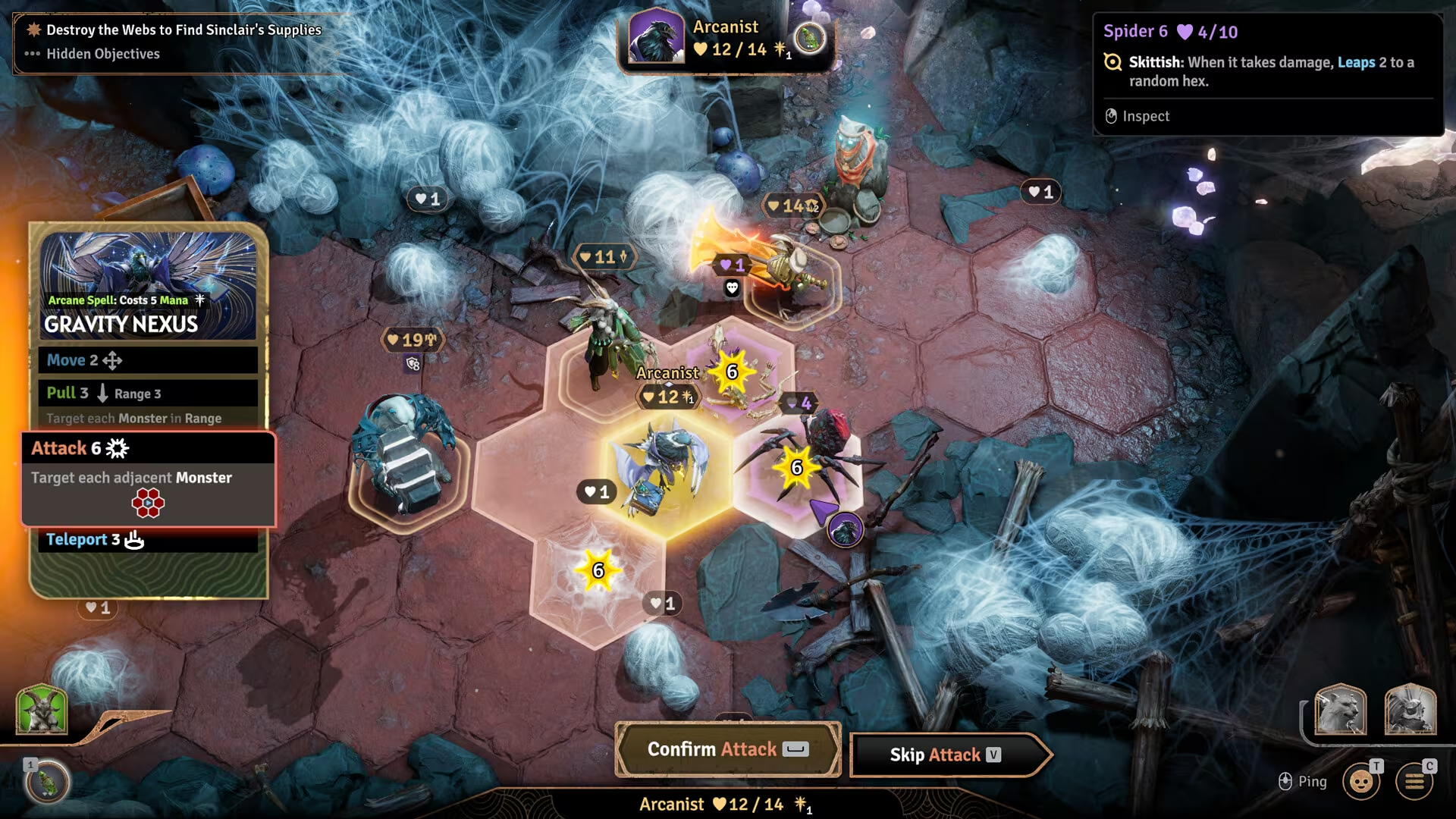
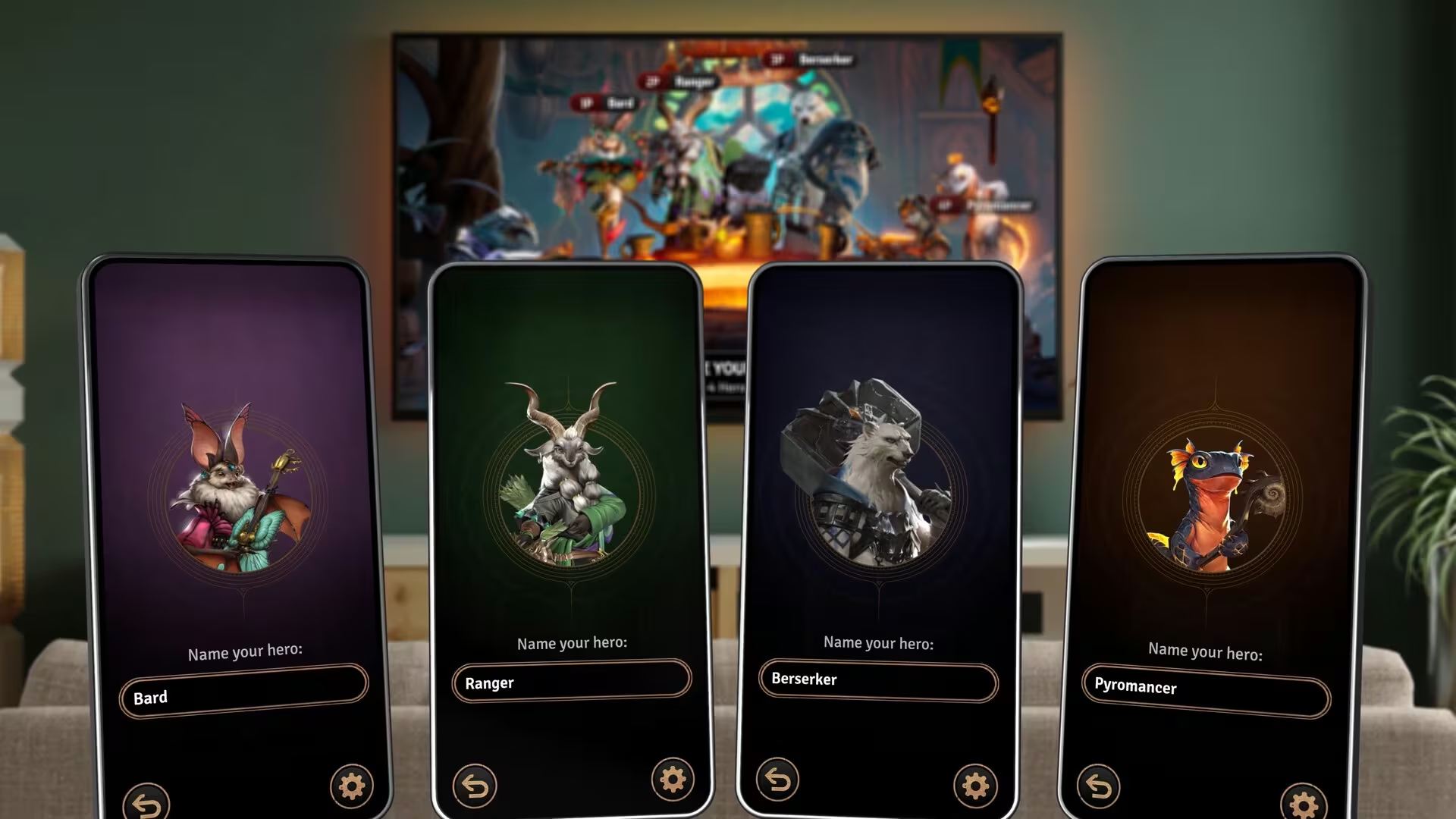
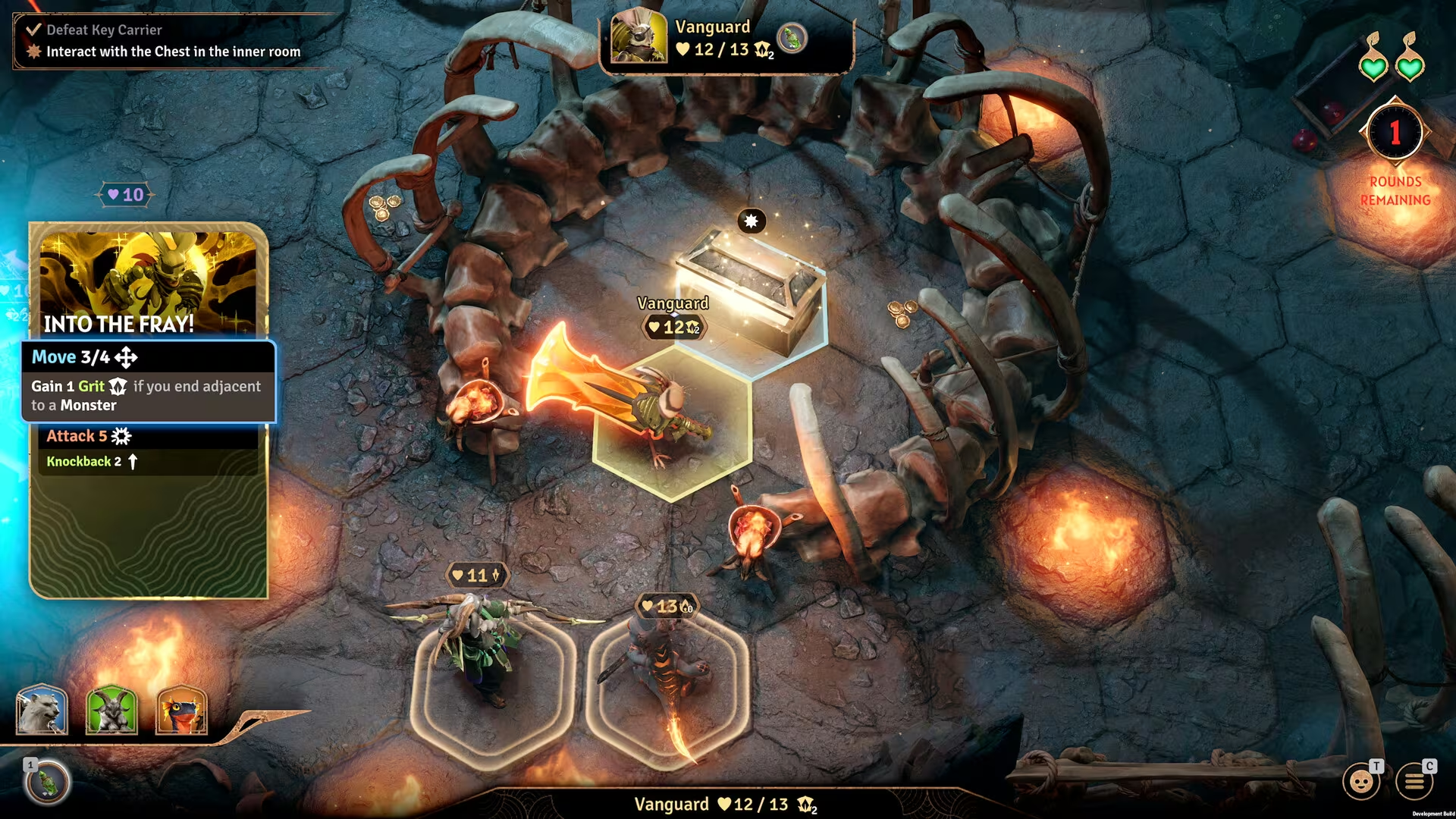
Rediscover game night in this tactical RPG where clever teamwork and shared strategy shape every turn and build lasting memories. One copy is all you need. Friends join using their phones, which become their character sheet, guidebook, and controller. Play the first 4 missions for free.

Global score

92/100

Genres

Role-playing (RPG), Strategy, Adventure, Turn-based strategy (TBS), Tactical, Card & Board Game

Similar games

    Pros

    • Innovative phone-as-controller design
    • Strong cooperative multiplayer experience
    • Accessible yet strategic tactical combat
    • One purchase supports up to four players
    • Charming art, voice acting, and narrative

    Cons

    • Price may seem high compared to typical video games
    • Limited to four players max
    • Phone app required for all players
    • Story is light and may feel simplistic to some
    • Some minor ui and control quirks reported

    Analysis

    A very typical example of its motivational profile. Motivations that often define this kind of title include Cooperation, Fellowship, Intimacy, Leadership. Here, the score leans higher than usual among comparable games on Intimacy, Fellowship. It leans lower than usual among comparable games on Competition.

    How to use the graph
    Similar games map

    Each dot is a game. They are arranged from the same motivation profile as in the “Motivations” section below. Closer dots usually mean more similar reasons to play (exploration, competition, relaxation, etc.)—not that one game is “better” than another.

    • Larger dot with a light outline: the game you are viewing.
    • Colour: groups of games with comparable motivation patterns (statistical clusters).
    • Hover a dot to see the game name; click to open its page.
    • Scroll or double-click the chart to zoom out and see more games.

    Why don’t the axes read like a score? This view uses t-SNE: it only keeps who is close to whom. The scales are not “good to bad” or hours played—they separate groups on the map. Read distance between dots, not the axis numbers.

    Motivations

    • Autonomy
      4

      "Players have freedom to choose characters, strategies, and make decisions including naming elements and voting on group choices."

    • Competence
      3

      "Combat requires tactical thinking and skillful card play; difficulty levels allow for challenge and mastery."

    • Competition
      -4

      "Focus is on cooperative play and personal/team progress rather than competing against others."

    • Continuation
      4

      "Players report long sessions, habitual play, and desire to replay with different characters and groups."

    • Cooperation
      5

      "Game is designed for cooperative multiplayer with shared goals, teamwork, and resource sharing."

    • Creativity
      3

      "Players can rename NPCs, items, and places, adding personal expression and humor to the game world."

    • Domination
      -5

      "Interactions emphasize equal participation, shared decision-making, and mutual respect."

    • Escapism
      4

      "Players use the game as a cozy, immersive escape with engaging story and social play."

    • Expectation
      -4

      "Players engage voluntarily out of intrinsic interest and enjoyment, not obligation."

    • Experimenting
      3

      "Players try different characters, strategies, and explore game mechanics and combos."

    • Exploration
      2

      "Players discover new missions, town upgrades, and story elements but within a structured campaign."

    • Expression
      3

      "Customization through naming and character choices allows self-expression within the game."

    • Fantasy
      4

      "Anthropomorphic characters and fantasy setting provide imaginative fiction experience."

    • Fellowship
      5

      "Strong sense of community and shared experience through cooperative play and social interaction."

    • Growth
      4

      "Players develop skills, learn strategies, and progress characters and town over time."

    • Health
      -4

      "Game is sedentary with no physical activity involved."

    • Idle
      -3

      "Requires focused attention and continuous engagement during play sessions."

    • Intimacy
      3

      "Social interactions and shared humor foster closer connections among players."

    • Leadership
      1

      "Players can influence turn order and group decisions but leadership is shared and flexible."

    • Progression
      4

      "Character leveling, item acquisition, and town upgrades provide clear progression."

    • Relaxation
      3

      "Game balances challenge with flow, creating enjoyable and engaging sessions."

    • Sensation
      3

      "Appealing art, animations, and audio provide pleasant sensory stimulation."

    • Status
      -3

      "Focus is on cooperative play rather than social recognition or ranking."

    • Story
      3

      "Narrative and character interactions enrich the experience but story is light and family-friendly."

    • Strategy
      4

      "Tactical combat and team coordination require planning and problem solving."

    • Thrill
      2

      "Some suspense and challenge in combat but overall controlled and accessible experience."

    • Value
      4

      "High perceived value due to one purchase enabling multiplayer and quality gameplay."

    • Violence
      2

      "Combat involves attacks and damage but is presented in a family-friendly, non-gratuitous manner."

    • Survival
      2

      "Players must manage resources and avoid failure in combat, though not extreme survival mechanics."

    Last update: 29/04/2026