Tails Noir: Prologue Thumbnail

Tails Noir: Prologue similar games & best alternatives

Tails Noir: Prologue

PC (Microsoft Windows) • 2019

Related articles

Quick resume

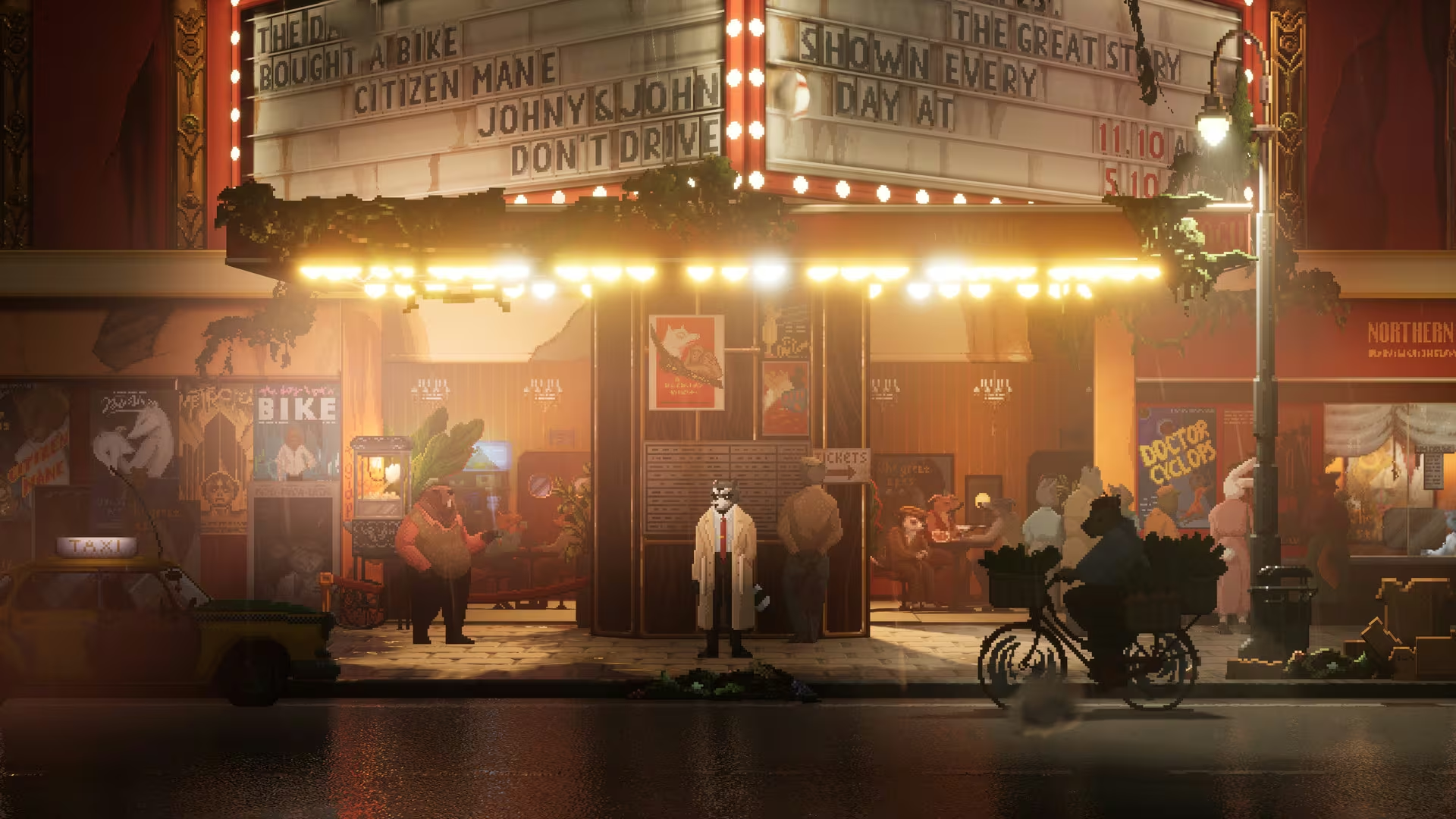
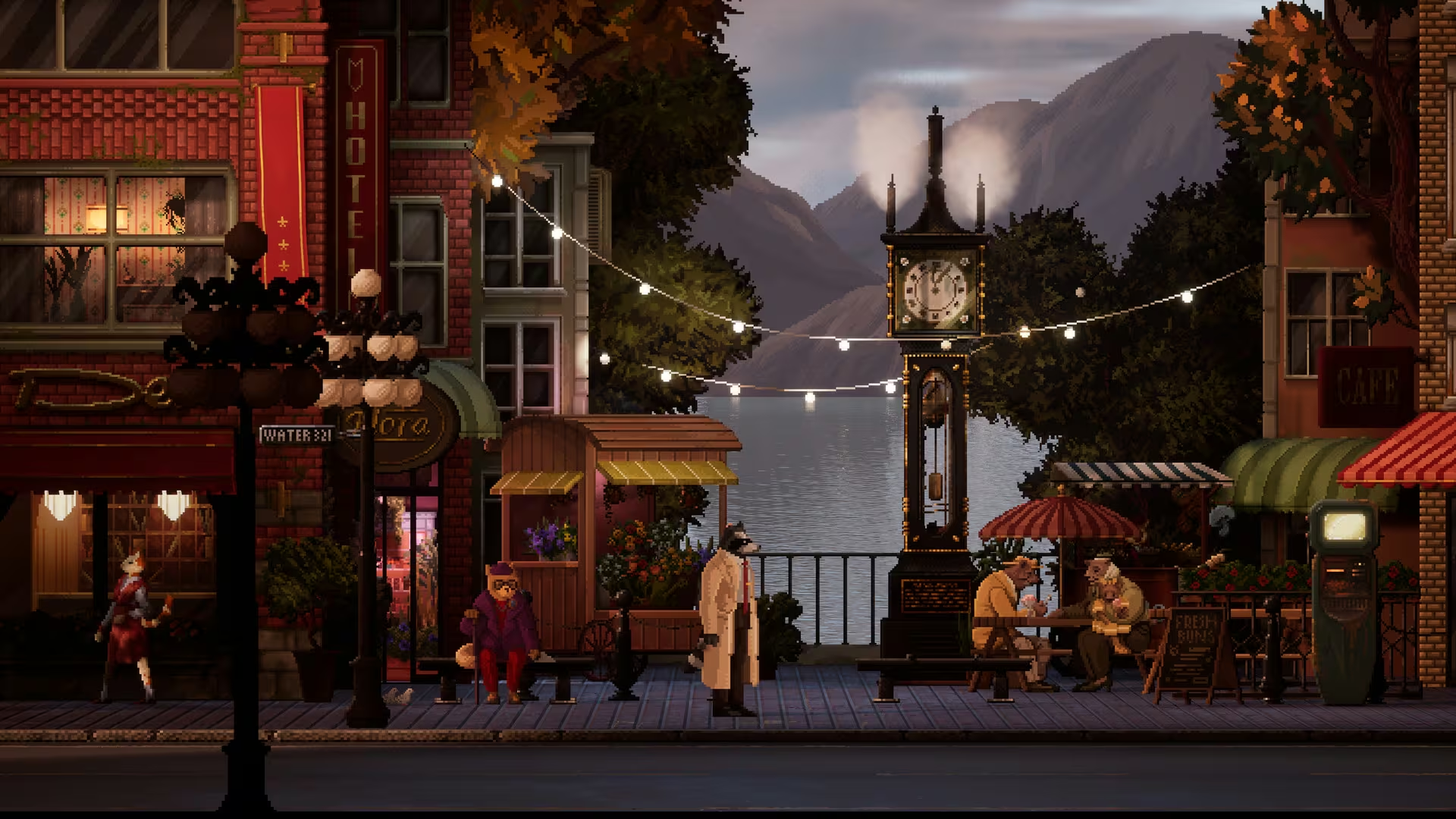
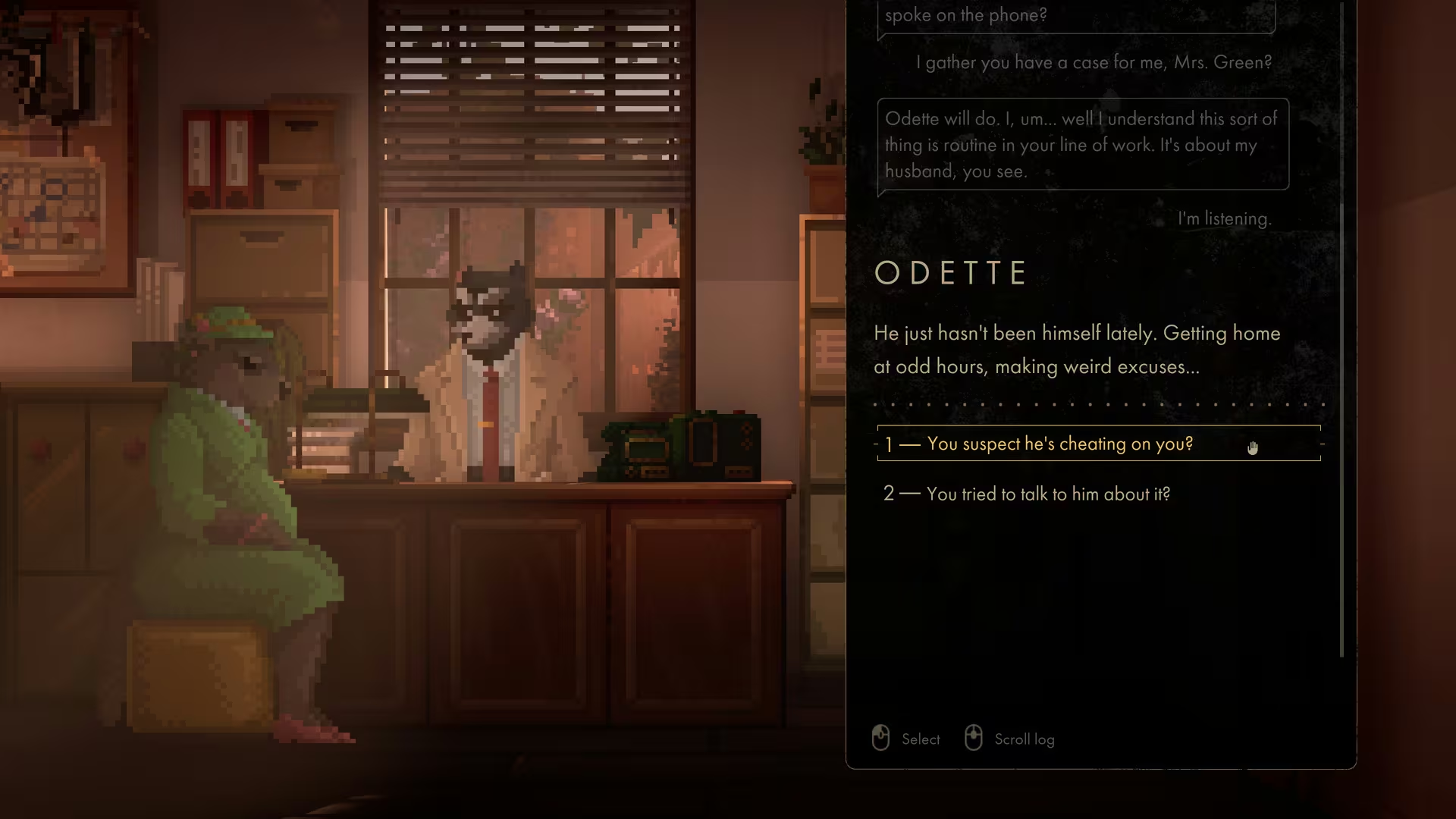
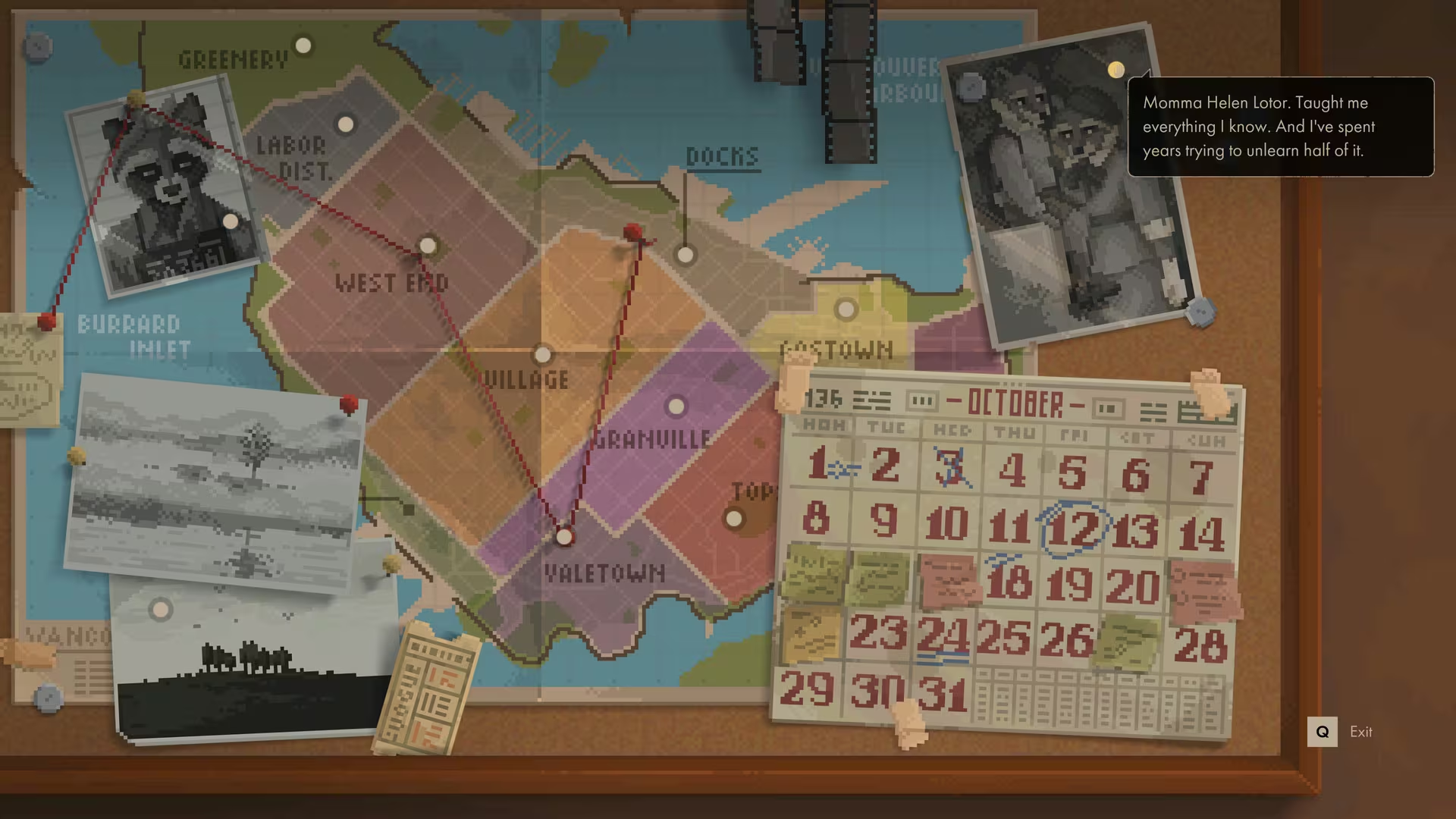
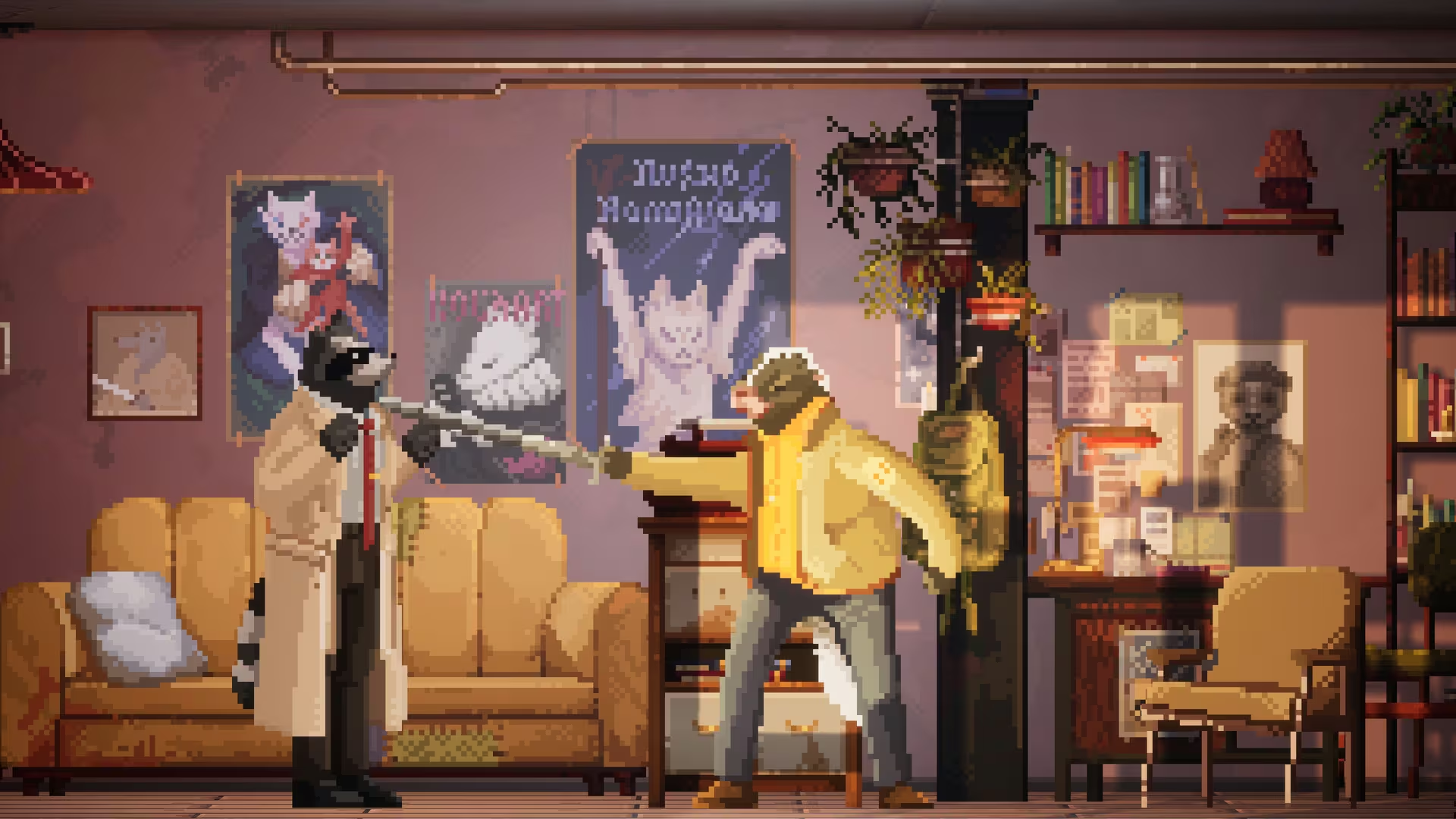
Tails Noir: Prologue is the first act of a post-noir narrative adventure. Become raccoon private eye Howard Lotor and explore dystopian Vancouver inhabited by animals as you uncover a deeply personal story of change and transformation.

Global score

97/100

Genres

Adventure, Indie, Role-playing (RPG), Free To Play

Similar games

    Pros

    • Stunning pixel art and lighting effects
    • Engaging noir story and characters
    • Atmospheric jazz soundtrack
    • Intriguing puzzles and stealth mechanics
    • Free prologue with high production value

    Cons

    • Limited gameplay depth beyond prologue
    • Some bugs and technical issues reported
    • Lack of voice acting
    • Linear narrative with limited player impact
    • Full game reportedly less compelling than prologue

    Analysis

    Broadly representative of its motivational profile, with a few distinct shifts. Motivations that often define this kind of title include Intimacy, Survival, Violence, Competition. Here, the score leans higher than usual among comparable games on Survival. It leans lower than usual among comparable games on Fellowship, Cooperation.

    How to use the graph
    Similar games map

    Each dot is a game. They are arranged from the same motivation profile as in the “Motivations” section below. Closer dots usually mean more similar reasons to play (exploration, competition, relaxation, etc.)—not that one game is “better” than another.

    • Larger dot with a light outline: the game you are viewing.
    • Colour: groups of games with comparable motivation patterns (statistical clusters).
    • Hover a dot to see the game name; click to open its page.
    • Scroll or double-click the chart to zoom out and see more games.

    Why don’t the axes read like a score? This view uses t-SNE: it only keeps who is close to whom. The scales are not “good to bad” or hours played—they separate groups on the map. Read distance between dots, not the axis numbers.

    Motivations

    • Autonomy
      3

      "Players can explore environments, make dialogue choices affecting interactions, and approach objectives with some freedom."

    • Competence
      3

      "Includes puzzle solving and stealth mechanics that require skill and problem solving, though not highly challenging."

    • Competition
      -5

      "No evidence of competitive elements; gameplay is single-player and story-driven without player comparison."

    • Continuation
      4

      "Many players report being hooked by the prologue and wanting to continue playing the full game."

    • Cooperation
      -5

      "Gameplay is focused on individual investigation and exploration with no multiplayer or cooperative features."

    • Creativity
      2

      "Players can choose dialogue options and explore environments, but limited creation or modification of game elements."

    • Domination
      -5

      "No indications of exerting control or superiority over others; interactions are balanced and narrative-driven."

    • Escapism
      4

      "Strong atmospheric immersion and noir setting provide an escape from reality for players."

    • Expectation
      -4

      "Players engage voluntarily out of interest and intrinsic motivation, with no pressure or obligation noted."

    • Experimenting
      2

      "Some exploration of dialogue choices and puzzle solving, but mostly within established narrative routines."

    • Exploration
      3

      "Players explore detailed environments and uncover clues, though locations are limited in the prologue."

    • Expression
      1

      "Limited character customization; some self-expression through dialogue choices but no avatar personalization."

    • Fantasy
      3

      "Anthropomorphic animal characters and dystopian noir setting create an imaginative fictional world."

    • Fellowship
      -4

      "Gameplay is solitary with minimal social interaction or community involvement."

    • Growth
      3

      "Players develop investigative skills and learn story details through puzzles and dialogue."

    • Health
      -5

      "Standard sedentary gameplay with no physical activity or health-related features."

    • Idle
      -3

      "Requires focused attention on puzzles and story; not designed for background or idle play."

    • Intimacy
      1

      "Dialogue choices allow some emotional engagement with characters, but limited depth of relationships."

    • Leadership
      -5

      "No leadership or management roles; player follows narrative and solves puzzles independently."

    • Progression
      2

      "Progression through story advancement and puzzle completion, but no item collection or upgrades."

    • Relaxation
      3

      "Atmospheric music and visuals create a relaxing mood, balancing tension with calm exploration."

    • Sensation
      4

      "Strong sensory stimulation from detailed pixel art, lighting effects, rain visuals, and jazz soundtrack."

    • Status
      -5

      "No social recognition or status systems; focus is on personal narrative experience."

    • Story
      5

      "Narrative immersion is central, with engaging plot, characters, and dialogue choices."

    • Strategy
      3

      "Requires problem solving and planning to solve puzzles and navigate stealth sections."

    • Thrill
      2

      "Some suspense and tension from stealth and mystery elements, but overall controlled experience."

    • Value
      5

      "Free prologue with high-quality art, music, and story provides excellent value for players' time."

    • Violence
      -5

      "No combat or destructive gameplay; focus is on investigation and exploration."

    • Survival
      1

      "Some stealth elements require avoiding detection, but no high-risk survival mechanics."

    Last update: 29/04/2026