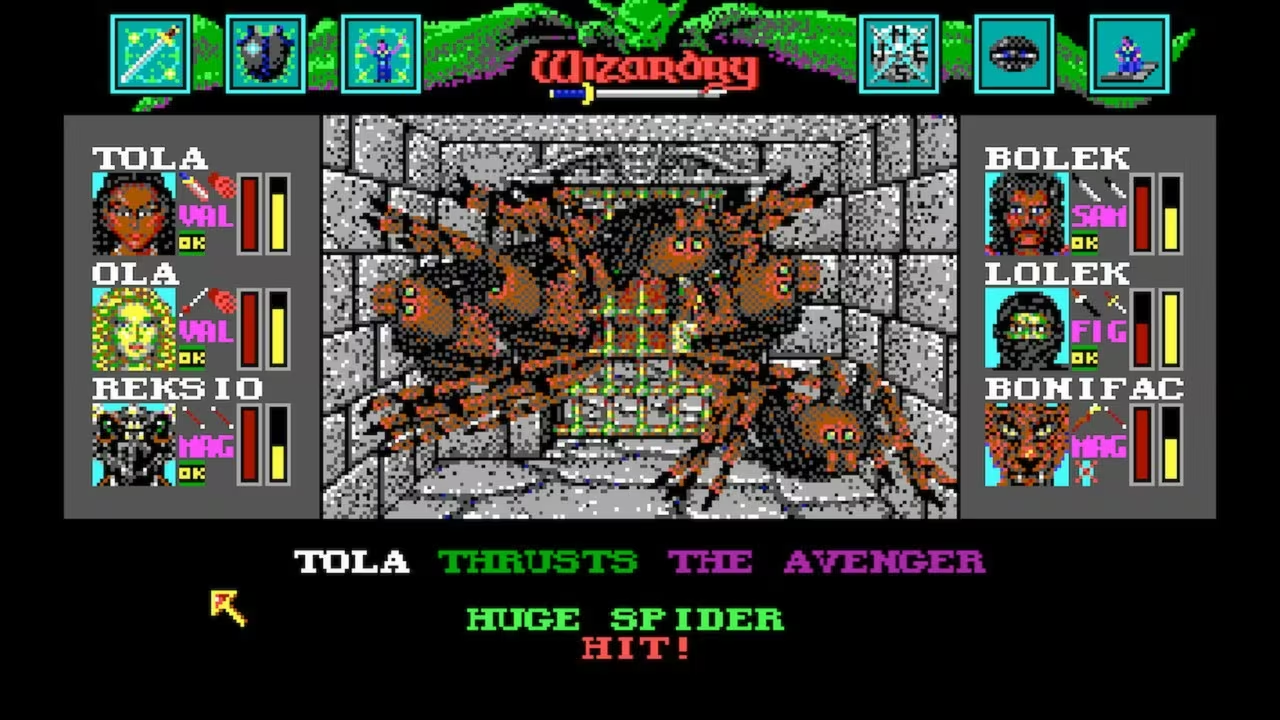
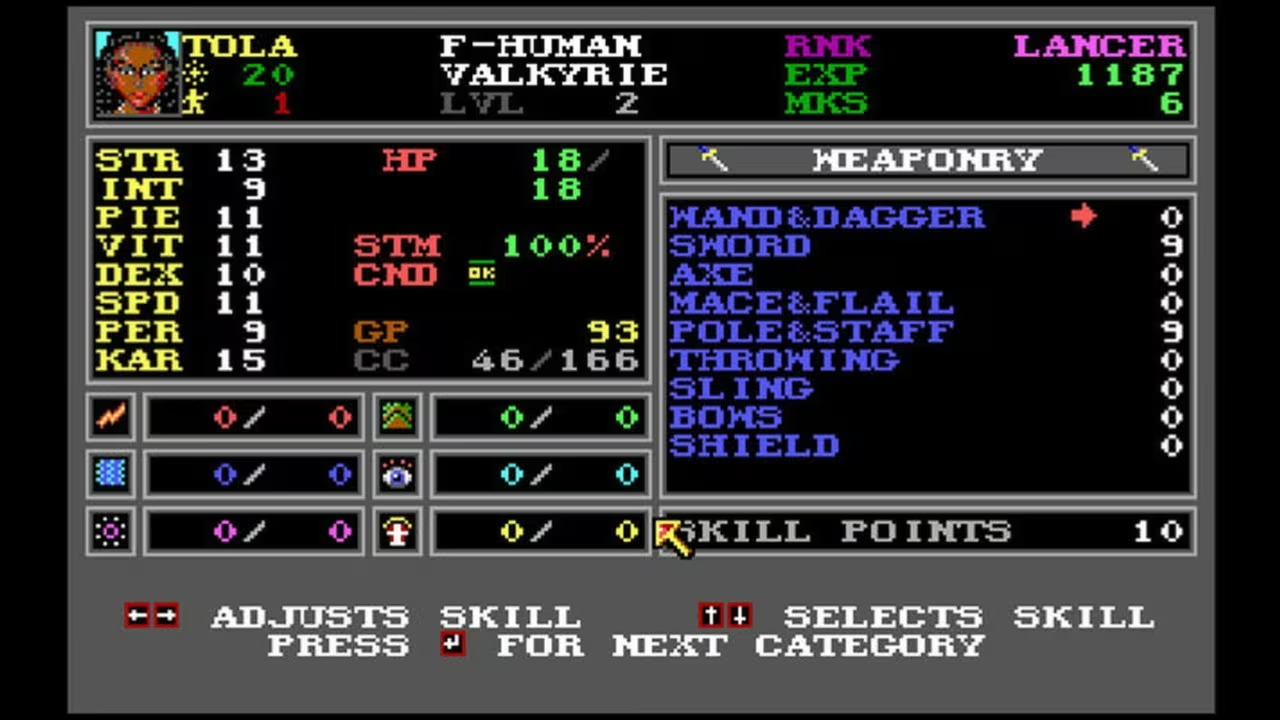
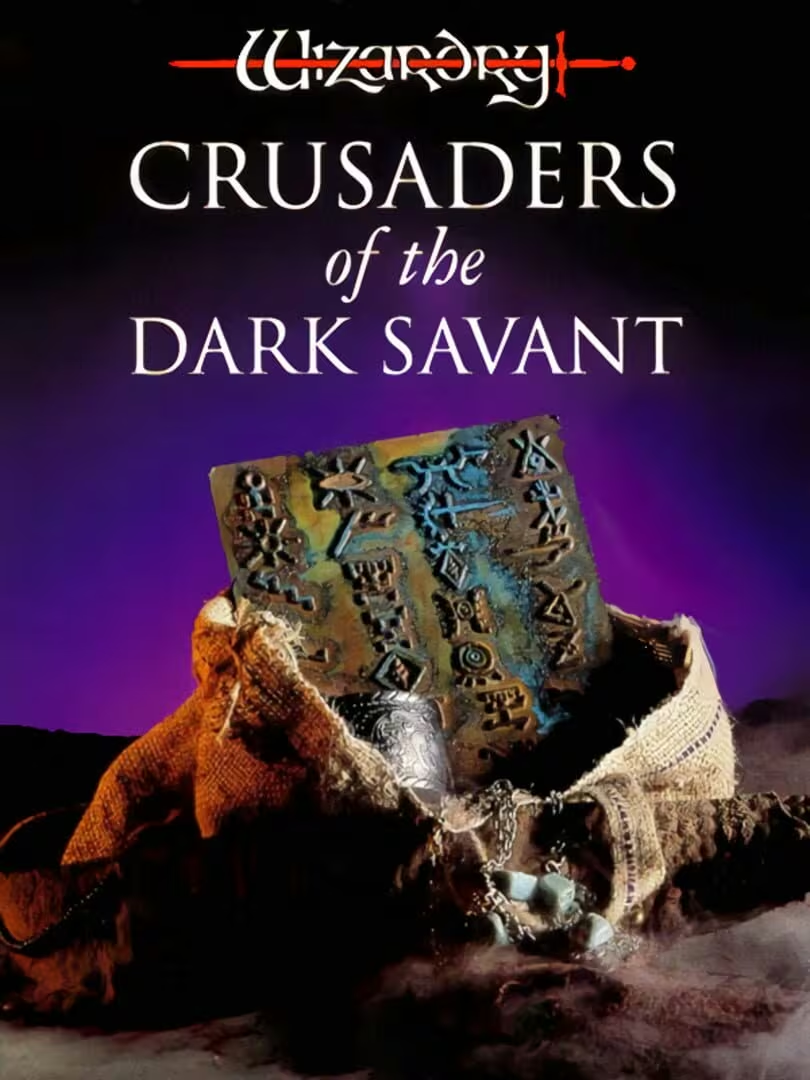
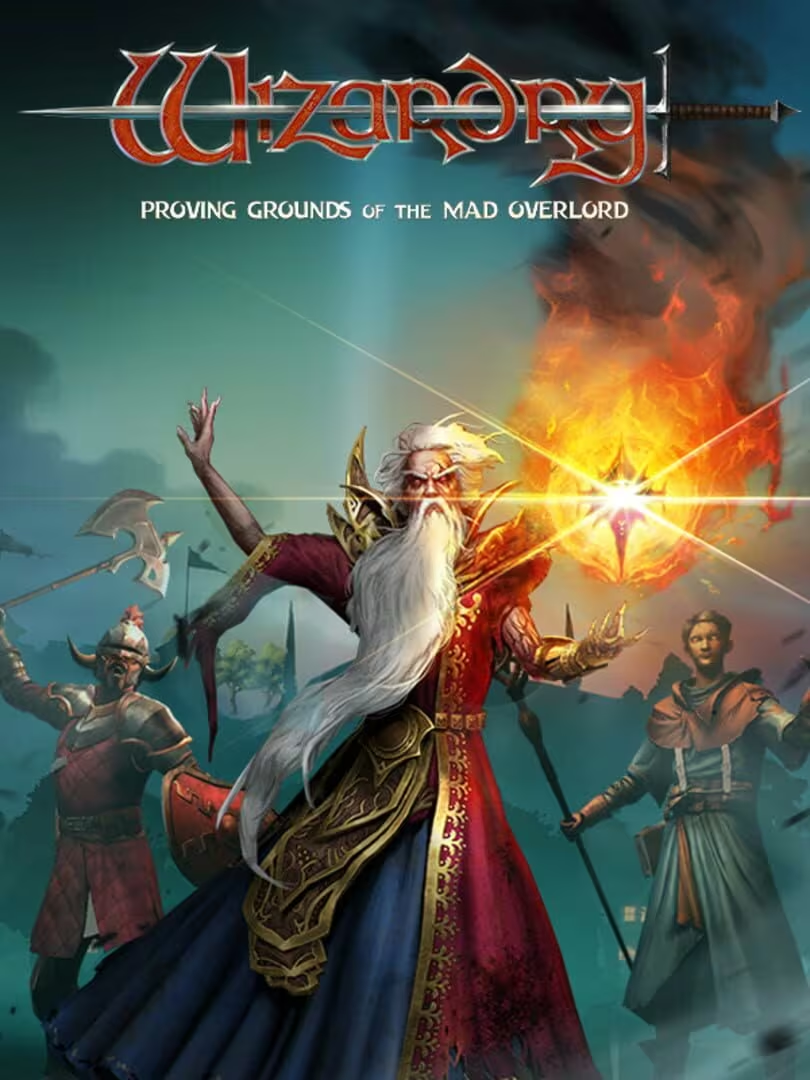
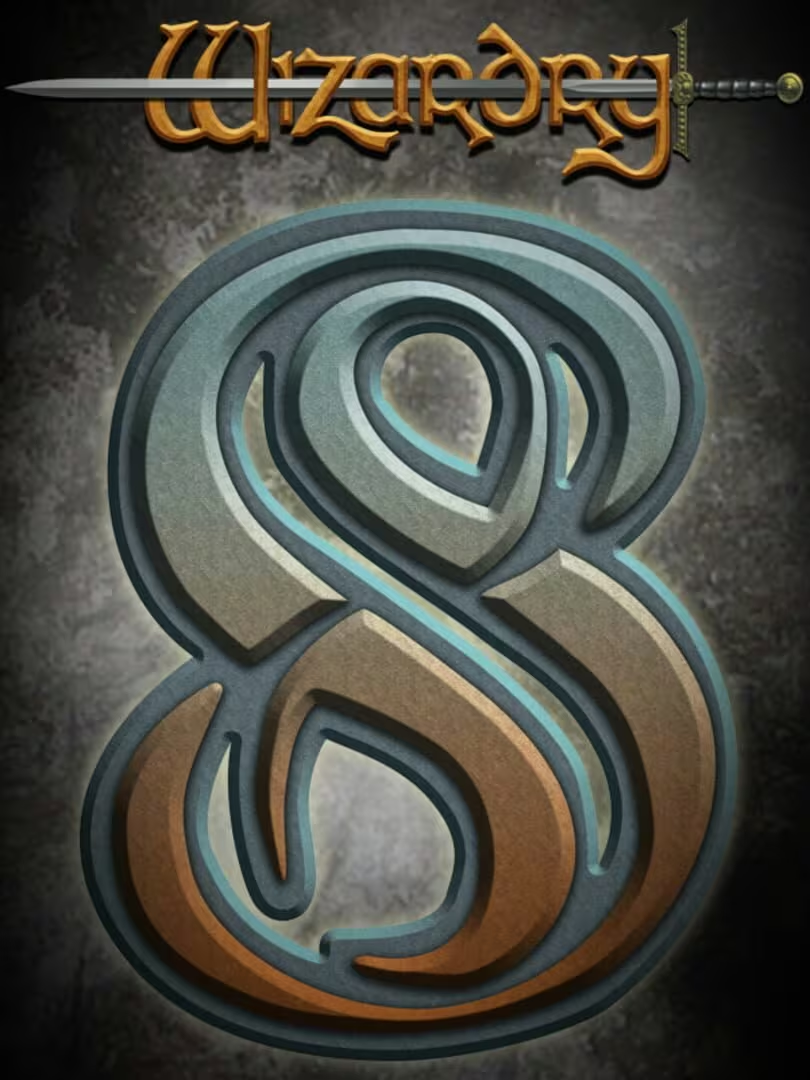
Wizardry 6: Bane of the Cosmic Forge Thumbnail

Wizardry 6: Bane of the Cosmic Forge similar games & best alternatives

Wizardry 6: Bane of the Cosmic Forge

PC (Microsoft Windows), Mac, Satellaview, Amiga, FM Towns, Super Famicom, DOS, Linux • 2013

Related articles

Quick resume

FULL-COLOR ANIMATED graphics DIGITIZED sound (NO add-on cards required)HARD DISK supported11 Races, 14 Professions (with rankings!)Weaponry, Physical and Academia SkillsSix Spellbooks, 462 CombinationsNon-Player CharactersAn arsenal of over 400 researched itemsVaried Fighting ModesPrimary and Secondary AttackContinuous JourneyUnlimited...

Global score

77/100

Genres

Adventure, Role-playing (RPG)

Similar games

    Pros

    • Deep and challenging gameplay
    • Extensive character customization and class switching
    • Immersive dungeon exploration and mapping
    • Strong sense of achievement and progression
    • Included manuals and guides enhance experience

    Cons

    • Dated graphics and sound
    • Clunky and unintuitive interface
    • High difficulty and punishing mechanics
    • Lack of automap in base game
    • Frequent save reloading required

    Analysis

    Less representative of its motivational profile, with noticeable differences. Motivations that often define this kind of title include Leadership, Survival, Violence, Strategy. Here, the score leans higher than usual among comparable games on Exploration. It leans lower than usual among comparable games on Sensation, Relaxation.

    How to use the graph
    Similar games map

    Each dot is a game. They are arranged from the same motivation profile as in the “Motivations” section below. Closer dots usually mean more similar reasons to play (exploration, competition, relaxation, etc.)—not that one game is “better” than another.

    • Larger dot with a light outline: the game you are viewing.
    • Colour: groups of games with comparable motivation patterns (statistical clusters).
    • Hover a dot to see the game name; click to open its page.
    • Scroll or double-click the chart to zoom out and see more games.

    Why don’t the axes read like a score? This view uses t-SNE: it only keeps who is close to whom. The scales are not “good to bad” or hours played—they separate groups on the map. Read distance between dots, not the axis numbers.

    Motivations

    • Autonomy
      4

      "Players create and customize their own party with extensive options and can choose class changes and strategies freely."

    • Competence
      5

      "The game is punishingly difficult, requiring mastery of complex mechanics, tactical combat, and careful resource management."

    • Competition
      -4

      "Focus is on individual party progression and survival rather than competing against other players."

    • Continuation
      3

      "Players invest many hours and often repeatedly reload saves to overcome challenges, showing strong attachment."

    • Cooperation
      -3

      "Gameplay centers on managing a single party; no multiplayer or cooperative social play."

    • Creativity
      4

      "Extensive character creation, class switching, and tactical experimentation encourage creative approaches."

    • Domination
      -4

      "Interactions are balanced within the party; no evidence of exerting control or superiority over others."

    • Escapism
      4

      "Players use the game as an immersive escape into a challenging fantasy dungeon world."

    • Expectation
      -4

      "Players engage voluntarily driven by intrinsic interest and nostalgia rather than obligation."

    • Experimenting
      4

      "The game rewards trying different party builds, class changes, and tactics to overcome difficulty."

    • Exploration
      5

      "Core gameplay involves mapping and exploring complex, maze-like dungeons with secrets and puzzles."

    • Expression
      3

      "Players customize party composition and character stats, though visual customization is minimal."

    • Fantasy
      5

      "Strongly rooted in fantasy with magic, mythical creatures, and an imaginative narrative."

    • Fellowship
      -4

      "Minimal social interaction; gameplay is focused on solo party management."

    • Growth
      5

      "Significant learning curve with character development, skill mastery, and strategic growth."

    • Health
      -4

      "Typical sedentary gameplay with long sessions and no physical activity."

    • Idle
      -3

      "Requires constant attention due to difficulty and complex mechanics."

    • Intimacy
      -4

      "No evidence of close social relationships; interactions are limited to party management."

    • Leadership
      4

      "Players lead and manage a party of characters, making strategic decisions and guiding progression."

    • Progression
      5

      "Strong emphasis on leveling up, acquiring items, and improving characters over time."

    • Relaxation
      -3

      "High difficulty and frequent failures create tension rather than relaxation."

    • Sensation
      -3

      "Limited sensory stimulation due to dated graphics and sound; gameplay is cerebral rather than sensory."

    • Status
      -4

      "No social recognition or leaderboards; focus is on individual achievement."

    • Story
      3

      "Narrative is present but sparse and cryptic; story unfolds gradually through exploration."

    • Strategy
      5

      "Requires deep strategic thinking, planning, and problem solving to succeed."

    • Thrill
      3

      "High stakes combat and exploration create suspense and excitement."

    • Value
      4

      "Offers extensive gameplay hours and depth for a low price, especially in bundles."

    • Violence
      3

      "Combat and defeating monsters is a core enjoyable element."

    • Survival
      5

      "Survival against difficult enemies and resource management is central to gameplay."

    Last update: 29/04/2026